NEW YORK--(BUSINESS WIRE)--Apr 7, 2026--
Lifezone Metals Limited’s ( NYSE: LZM ) Chief Executive Officer, Chris Showalter, and Chief Technology Officer, Dr. Mike Adams, are pleased to announce first production of platinum, palladium and rhodium, collectively Platinum Group Metals (PGMs), from U.S.-sourced spent automotive catalytic converters (“Autocats”).
This press release features multimedia. View the full release here: https://www.businesswire.com/news/home/20260407867645/en/
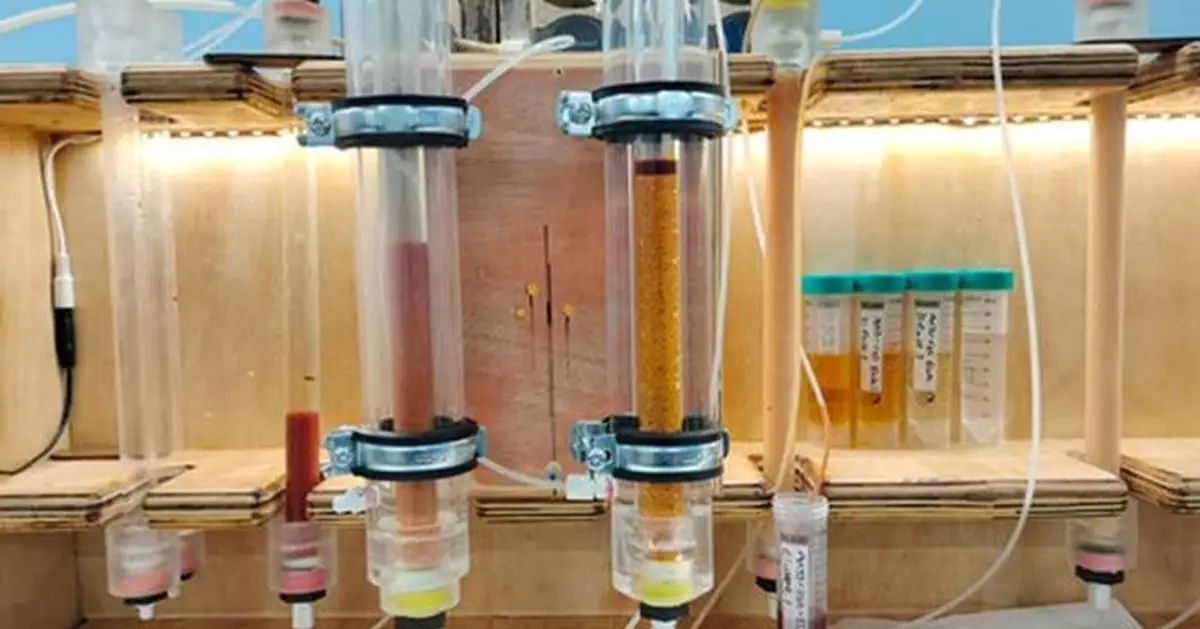
Figure 1: Platinum, palladium and rhodium samples produced by Lifezone’s Hydromet Technology from spent Autocats through pilot test work completed at Lifezone’s Simulus Laboratories in Perth, Australia
The work was undertaken to inform design criteria for a planned Autocats recycling precious metals refinery in the United States and marks the first refined PGMs produced from spent Autocats using Lifezone’s own in-house Hydromet Technology, considered a cleaner, more efficient and integrated processing route for recycling PGMs than traditional smelting and refining.
Highlights:
The United States remains structurally dependent on foreign sources for the ~2 million ounces of PGMs it imports annually, primarily from South Africa and Russia, creating persistent economic and national-security vulnerabilities. PGMs are essential inputs for U.S. automotive emissions systems, defense and aerospace manufacturing, medical technologies, and emerging hydrogen and fuel-cell applications.
Lifezone is now focused on advancing our innovative technology to offer the United States an effective and scalable means to achieve a closed-loop system by producing refined PGMs for North American consumers and government strategic stockpiles. Lifezone’s technology reduces dependency on foreign entities and countries, securing domestic PGM production from secondary sources.
Mr. Showalter stated: “Achieving the first-ever production of platinum, palladium and rhodium metal samples from spent Autocats marks a historic milestone towards industrial implementation of Lifezone’s Hydromet Technology. Our customized flowsheet lays a strong foundation for the Company’s overarching aspiration to become the U.S.’ closed loop, traceable and responsibly sourced critical metals solution.
Our first module alone could produce 220 thousand ounces of 3E PGMs annually, nearly matching the only significant primary PGM mine in the U.S. On rhodium specifically, ranked within the highest U.S. supply chain risk category by the U.S. Geological Survey, this is transformative, as we could produce more than five times the current annual figure coming out of the country’s only producing mine, from a single Lifezone Autocats Recycling plant.”
Dr. Mike Adams added: “The production of platinum, palladium and rhodium metal samples from spent Autocats is a groundbreaking achievement for our integrated technology team at Simulus Laboratories and Engineers. This success highlights the effectiveness of our hydrometallurgical techniques and our commitment to sustainable production of critical metals.
The test work confirmed high recoveries (up to 99% Pt & Pd and 95% Rh, as per test no. 0172 ) of these critical metals to platinum, palladium and rhodium metal products, using our technology. Through completing an extensive 1,179 tests, this step-change result supports our objective – to demonstrate that Lifezone’s Hydromet Technology can process and recover PGMs from responsibly sourced spent automotive catalytic converters in a cleaner and more efficient way than conventional smelting and refining methods.”
Figure 1: Platinum, palladium and rhodium samples produced by Lifezone’s Hydromet Technology from spent Autocats through pilot test work completed at Lifezone’s Simulus Laboratories in Perth, Australia.
Extensive batch, locked-cycle and continuous pilot-plant test work for processing of one ton of monolith material derived from spent Autocats, to refined platinum, palladium and rhodium metals has been completed. Stage 1 metal purities achieved were >99% for Pt and Pd, with process optimizations planned to ultimately target >99.95% platinum and palladium and >99.9% rhodium metal purities. This body of work was undertaken to inform design criteria for the planned Autocats precious metals refinery to be located in the United States.
The pilot plant and batch locked-cycle test work has successfully demonstrated the technology, with high leach extractions, efficient purification and separation steps and reduction to refined metallic products. The production pipeline and, hence, the locked-up metal inventory are expected to be substantially shorter than in conventional pyrometallurgical smelting and refining.
Figure 2: Continuous pilot-plant precious metals refinery test work at Lifezone’s Simulus Laboratories
Simulus is a preeminent hydrometallurgical laboratory, testing, and engineering design group. By bringing its highly trained technicians, engineers, and assets into Lifezone in 2023, Lifezone has been able to shorten laboratory testing times, avoid the regular delays that can occur when using external laboratories, maintain IP confidentiality, and better control costs.
Engineering design and feasibility study work is now advancing, based on the demonstrated process flowsheet and design criteria, to enable a financial investment decision for a commercial plant to be implemented in the United States.
If you would like to sign up for Lifezone Metals news alerts, please register here.
Social Media
LinkedIn | X | YouTube
About Lifezone Metals
Lifezone Metals (NYSE: LZM) is committed to delivering cleaner and more responsible metals production and recycling. Through the application of our Hydromet Technology, we offer the potential for lower energy consumption, lower emissions and lower cost metals production compared to traditional smelting.
Our Kabanga Nickel Project in Tanzania is believed to be one of the world's largest and highest-grade development-ready nickel sulfide deposits. By pairing it with our Hydromet Technology, we are working to unlock a new source of nickel, copper and cobalt for the global battery metals markets and to empower Tanzania to achieve in-country beneficiation.
Through our US-based recycling partnership, we are working towards applying our Hydromet Technology to the recovery of platinum, palladium and rhodium from responsibly sourced spent automotive catalytic converters. Our process is expected to be cleaner and more efficient than conventional smelting and refining methods, supporting a circular economy for precious metals.
https://lifezonemetals.com
Forward-Looking Statements
Certain statements made herein are not historical facts but may be considered “forward-looking statements” within the meaning of the Securities Act of 1933, as amended, the Securities Exchange Act of 1934, as amended, and the “safe harbor” provisions under the Private Securities Litigation Reform Act of 1995 regarding, amongst other things, the plans, strategies, intentions and prospects, both business and financial, of Lifezone Metals Limited and its subsidiaries.
Generally, statements that are not historical facts, including statements concerning possible or assumed future actions, business strategies, events or results of operations, and any statements that refer to projections, forecasts or other characterizations of future events or circumstances, including any underlying assumptions, are forward-looking statements. Forward-looking statements may be accompanied by words such as “believes,” “estimates,” “expects,” “predicts,” “projects,” “forecasts,” “may,” “might,” “will,” “could,” “should,” “would,” “seeks,” “plans,” “scheduled,” “possible,” “continue,” “potential,” “anticipates” or “intends” “or the negatives of these terms or variations of them or similar terminology or expressions that predict or indicate future events or trends or that are not statements of historical matters; provided that the absence of these does not mean that a statement is not forward-looking. These forward-looking statements include, but are not limited to, statements regarding future events, the estimated or anticipated future results of Lifezone Metals, future opportunities for Lifezone Metals, including the efficacy of Lifezone Metals’ hydrometallurgical technology (Hydromet Technology) and the development of, and processing of mineral resources at, the Kabanga Nickel Project, our approach to environmental stewardship, social responsibility, safety and governance (ESG), and other statements that are not historical facts.
These statements are based on the current expectations of Lifezone Metals’ management and are not predictions of actual performance. These forward-looking statements are provided for illustrative purposes only and are not intended to serve as, and must not be relied on, by any investor as a guarantee, an assurance, a prediction or a definitive statement of fact or probability. Actual events and circumstances are difficult or impossible to predict and will differ from assumptions. Many actual events and circumstances are beyond the control of Lifezone Metals and its subsidiaries. These statements are subject to a number of risks and uncertainties regarding Lifezone Metals’ business, and actual results may differ materially. These risks and uncertainties include, but are not limited to: general economic, political and business conditions, including but not limited to economic and operational disruptions; global inflation and cost increases for materials and services; capital and operating costs varying significantly from estimates; delays in obtaining or failures to obtain required governmental, environmental or other project approvals; changes in government regulations, legislation and rates of taxation; inflation; changes in exchange rates and the availability of foreign exchange; fluctuations in commodity prices; delays in the development of projects and other factors; the outcome of any legal proceedings that may be instituted against Lifezone Metals; our ability to obtain additional capital, including use of the debt market, future capital requirements and sources and uses of cash; the risks related to the rollout of Lifezone Metals’ business, the efficacy of the Hydromet Technology, and the timing of expected business milestones; the acquisition of, maintenance of and protection of intellectual property; Lifezone’s ability to achieve projections and anticipate uncertainties (including economic or geopolitical uncertainties) relating to our business, operations and financial performance, including: expectations with respect to financial and business performance, future operating results, financial projections and business metrics and any underlying assumptions; expectations regarding product and technology development and pipeline and market size; events relating to environmental issues, social responsibility, safety and/or governance matters; future acquisitions, partnerships, or other relationships with third parties; maintaining key strategic relationships with partners and customers; the timing and significance of contractual relationships; the effects of competition on Lifezone Metals’ business; the ability of Lifezone Metals to execute its growth strategy; Lifezone’s ability to continue to operate as a going concern; obtaining additional capital, including use of the debt market, future capital requirements, and sources and uses of cash; manage growth profitably and retain its key employees; the ability of Lifezone Metals to reach and maintain profitability; enhancing future operating and financial results; complying with laws and regulations applicable to Lifezone Metals’ business; Lifezone Metals’ ability to continue to comply with applicable listing standards of the NYSE; our ability to comply with applicable laws and regulations, stay abreast of accounting standards, or modified or new laws and regulations applying to our business, including privacy regulation; and other risks that will be detailed from time to time in filings with the U.S. Securities and Exchange Commission (SEC); meeting future liquidity requirements and complying with restrictive covenants related to long-term indebtedness; and dealing effectively with litigation, complaints, and/or adverse publicity.
The foregoing list of risk factors is not exhaustive. There may be additional risks that Lifezone Metals presently does not know or that Lifezone Metals currently believes are immaterial that could also cause actual results to differ from those contained in forward-looking statements. In addition, forward-looking statements provide Lifezone Metals’ expectations, plans or forecasts of future events and views as of the date of this communication. Lifezone Metals anticipates that subsequent events and developments will cause Lifezone Metals’ assessments to change.
These forward-looking statements should not be relied upon as representing Lifezone Metals’ assessments as of any date subsequent to the date of this communication. You should not place undue reliance on forward-looking statements in this communication, which are based upon information available to us as of the date they are made and are qualified in their entirety by reference to the cautionary statements herein. In all cases where historical performance is presented, please note that past performance is not a credible indicator of future results.
Except as otherwise required by applicable law, we disclaim any obligation to publicly update or revise any forward-looking statement to reflect changes in underlying assumptions or factors, new information, data, or methods, future events, or other changes after the date of this communication.
1Lifezone_Metals announces completion of funding for PGM Recycling
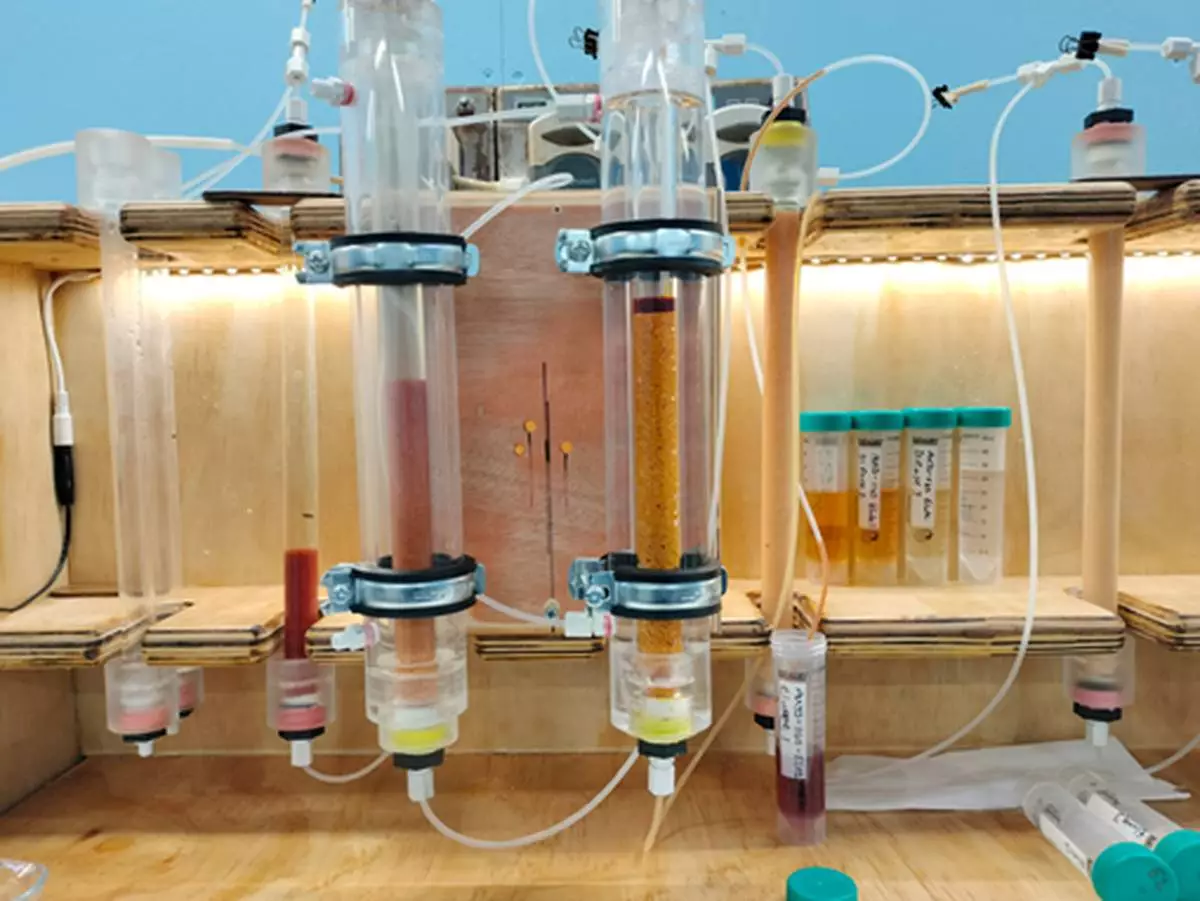
Figure 2: Continuous pilot-plant precious metals refinery test work at Lifezone’s Simulus Laboratories
Iran rejected a 45-day ceasefire proposal and said it wants a permanent end to the war as U.S. President Donald Trump's ultimatum to make a deal ticked closer with an expanded threat of strikes against the Islamic Republic to include all power plants and bridges.
Trump said Monday he is “not at all” concerned about committing possible war crimes as he again threatened to destroy Iranian infrastructure if Tehran does not meet his Tuesday 8 p.m. EST deadline to reopen the Strait of Hormuz.
U.N. Secretary-General António Guterres warned the U.S. that attacking civilian infrastructure is banned under international law, his spokesperson said Monday.
Israel carried out a new wave of attacks on Iran early Tuesday, while Iran responded with missile fire against Israel and its Gulf Arab neighbors.
More than 1,900 people have been killed in Iran since the war began, but the government has not updated the toll for days.
In Lebanon, more than 1,400 people have been killed and more than 1 million people have been displaced. Eleven Israeli soldiers have died there.
In Gulf Arab states and the occupied West Bank, more than two dozen people have died, while 23 have been reported dead in Israel and 13 U.S. service members have been killed.
Here is the latest:
Israel’s Magen David Adom rescue service said a 20-year-old woman was taken to hospital with a mild head injury from shrapnel in the northern town of Nahariya.
Several cars burst into flames and buildings were damaged from a direct impact on a residential street, medics and Israel’s Fire and Rescue service said.
Rocket and drone attacks by the Iran-backed militant group Hezbollah have set off sirens throughout Tuesday in Israeli communities close to the Lebanon border.
A container ship in the Persian Gulf has been hit by a projectile that caused damage, the British military said Tuesday.
The attack happened in international waters south of Iran’s Kish Island, the British military’s United Kingdom Maritime Trade Operations center said.
It said no one was hurt and there was no environmental impact from the apparent attack.
Over 20 ships have been attacked in the Mideast by Iran since the war began.
A gunfight erupted outside a building housing the Israeli Consulate in Istanbul on Tuesday, Turkey’s Haberturk broadcaster reported.
An exchange of gunfire with police left two assailants dead. A third was captured.
One officer sustained injuries during the clash.
The attackers were carrying long-barreled weapons, the report said.
The area surrounding the building was quickly sealed off.
The United Nations health agency has suspended evacuations from the Gaza Strip through the Rafah Crossing with Egypt after the death of one of its contractors.
World Health Organization Director-General Tedros Adhanom Ghebreyesus said in a social media post that the contractor was killed Monday in what he described as a “security incident.”
Two WHO staffers were present but were not hurt, he said without elaborating.
The incident is being investigated and the evacuations of patients and wounded people will be halted until further notice, Tedros said.
The Rafah Crossing was reopened in February after long delays in a key but mostly symbolic step in the Israel-Hamas ceasefire deal.
A previous version of this item incorrectly reported two WHO staffers were wounded.
At least four northern Italian airports have imposed restrictions on jet fuel due to shortages, giving priority to long-haul and medical flights.
The restrictions at Milan Linate, Bologna, Venice and Treviso airports involve supplier Air Bp Italia, the British Petroleum group’s aviation division, and will remain until at least April 9.
Priority will be given to ambulance flights, state flights and flights of more than three hours, according to an official notice.
For nonpriority flights, the airports have imposed a supply ceiling of 2,000 liters (528 gallons) per aircraft.
The Venice airport has requested pilots ensure they have enough fuel from the previous airport for the following flight.
Ahead of U.S. President Donald Trump’s Strait of Hormuz deadline, Iranians have expressed both their hopes and fears about the war.
“I had expected Trump would offer us something fancier than hell,” said Mahmoud Azimi, 35, who was carrying home milk and a sack of potatoes. “We have experienced an inferno because of many bad things like sanctions, assassinations and wars. So, at the end, hell is being replaced by hell!”
Reza Alaghemand 24, who runs an ice cream stall, urged Iran to keep fighting against Israel and the U.S.“
“If we stop the war, they soon wage another war,” he said. “Once and for all, we should teach them an unforgettable lesson not to attack us.”
Maryam Mehrabi, a 67-year-old retiree, recounted how it was the third war she’d seen in her life.
“There was the 1980s war that Iraq waged against Iran. Then the June war that the U.S. and Israel launched and I lost a close friend,” she said. “I have no idea what is waiting for us ahead of these threats.”
One young couple, in a coffee shop in central Tehran, offered their opinions on condition of anonymity for fear of reprisals.
“I hate this situation. Why are officials on both sides only threatening to go into a deeper war with more damages?” the woman asked. “All night long, we hear the sound of strikes and bombings and then in the daytime, we are occasionally stopped by mushrooming checkpoints.”
Her partner shrugged.
“I feel we are stuck between the blades of a pair of scissors,” he said. “It is more than a month that we have had no Internet and now we are going to face a power cut.”
An airstrike targeting Iran’s Alborz province northwest of Tehran killed at least 18 people, state media reported Tuesday.
The strike also wounded 24 people, the judiciary’s Mizan news agency reported.
It wasn’t immediately clear what had been targeted.
A series of intense airstrikes have pounded Iran’s capital, Tehran, including a possible weapons depot in the mountains and residential neighborhoods.
The Israelis have conducted a campaign of airstrikes killing top officials in the theocracy and its military.
Facing a looming U.S. deadline, Iran’s president said Tuesday that 14 million Iranians, including himself, have volunteered to sacrifice their lives in the war.
President Masoud Pezeshkian made the comment on X just ahead of U.S. President Donald Trump’s deadline to bomb power stations and bridges in Iran if it doesn’t loosen its chokehold on the Strait of Hormuz.
The figure is double other figures mentioned by state media in the past about volunteers the government had been soliciting by text messages and media as the war went on.
Iran is home to 90 million people. Many remain angry at the government over its bloody crackdown on nationwide demonstrations and the 14 million figure likely is aimed at trying to dissuade the promised American bombing campaign.
“More than 14 million Iranian people have declared their readiness to sacrifice their lives in the (self-sacrificing) campaign,” Pezeshkian wrote. “I too have been, am, and will remain ready to give my life for Iran.”
Nearly 1-in-5 service stations in France had run dry of at least one type of fuel Tuesday morning as motorists filled tanks after Easter weekend.
There is no risk of broader fuel shortages and “oil is arriving in France,” government spokeswoman Maud Bregeon said, adding that shortages at some pumps resulted from transport difficulties that were being urgently addressed.
Around 18% of service stations were short of at least one fuel type, but 83% of those belong to TotalEnergies, which has capped prices. Weekend lines formed at some of the company’s stations because its fuels are often cheaper than other distributors.
Bregeon said about 900 trucks, hundreds more than a normal day, were traveling to Total stations with resupplies Tuesday.
“There are no problems at the refineries. When trucks go to depots, they can load up” with unleaded and diesel, Bregeon said. “We can expect a progressive improvement.”
Airstrikes pounded sites across Iran’s capital, Tehran, on Monday, including residential areas. Strikes also were reported in Qom, the Shiite seminary city to the south of Tehran.
Iranian state television acknowledged the strikes in an online message, saying more details would be released.
Areas around Parchin, a military base associated with Iran’s ballistic missile program, and points south of downtown Tehran were struck.
Khorramabad International Airport also came under attack Tuesday, the judiciary’s Mizan news agency reported.
Video circulated online showing what appeared to be a cruise missile targeting one site in Iran.
Residential strikes in the past have targeted Iranian government and security officials.
The King Fahd Causeway, a key bridge linking Saudi Arabia and the island of Bahrain, reopened Tuesday morning after closing for hours over possible threats from Iran.
The King Fahd Causeway Authority made the announcement in a post on X, saying the only route by road between Bahrain and the Arabian Peninsula reopened.
Bahrain’s airport has been closed over the Iranian attacks for weeks.
The hourslong closure came after a ballistic missile attack from Iran targeted Saudi Arabia and may have done damage to energy infrastructure there.
The kingdom has not elaborated on damage from that attack.
French Foreign Minister Jean-Noël Barrot said attacks targeting civilian and energy infrastructure “are barred by the rules of war, international law” and would surely trigger reprisals from Iran.
He spoke ahead of the Tuesday evening deadline for possible strikes against Iran set by U.S. President Donald Trump.
“In the framework of the war in Iran, they would without doubt trigger a new phase of escalation, of reprisals, that would drag the region and the world economy into a vicious circle that would be very worrying and, most of all, very damaging to our own interests,” the minister said Tuesday morning on France Info television.
“We’re already seeing a surge of fuel prices. If energy facilities in Iran were struck, we can expect reprisals from the Iranian regime that would further worsen an already worrying situation,” he said.
Pakistan Foreign Minister Ishaq Dar spoke early Tuesday with Egyptian Foreign Minister Badr Abdelatty about the latest regional developments in the face of an approaching deadline for the opening of the Strait of Hormuz set by U.S. President Donald Trump.
Pakistan’s Ministry of Foreign Affairs said the leaders “underscored the need for de-escalation and dialogue” and agreed to remain closely engaged as the situation evolves.
Pakistan, with the support of regional countries, has been engaged in diplomatic efforts to bring the U.S. and Iran to the negotiating table.
Abdelatty also spoke with U.S. envoy Steve Witkoff and Iraqi Foreign Minister Fouad Hussein.
The calls included “an assessment of the rapidly evolving situation and the efforts ... to reach understandings between the U.S. and Iran to achieve de-escalation and reduce tensions,” the Egyptian foreign ministry said.
Iran has reported fatalities from airstrikes overnight into Tuesday.
At least nine people were killed in the city of Shahriar, west of the capital, Tehran, Iranian media reported.
In the city of Pardis, east of Tehran, at least six people were killed in a strike and recovered from buildings, Iranian media reported.
A Revolutionary Guard general in Iran has urged parents to “send your kids to man checkpoints.”
Gen. Hossein Yekta, previously identified as leading plainclothes units of the all-volunteer Basij force, made the comments on an Iranian state television channel.
“Moms, dads, take your kids hands and go out on streets,” he said. “Do you want your kid to become a real man? Let him feel like a hero standing right at the heart of the battlefield. Moms, dads, at night send your kids to man checkpoints. They become men!”
Basij checkpoints have been repeatedly targeted in airstrikes.
The Basij has been accepting children as young as 12 to man checkpoints. Amnesty International has warned some even carry firearms, calling their recruitment a war crime.
During nationwide protests in January, Yekta warned parents to keep their children home or they would be shot.
An adviser to Sheikh Mohamed bin Zayed Al Nahyan, the president of the United Arab Emirates, says they have lost trust in the Iranian government after its attacks on Arab neighbors.
“We are facing a perfidious regime that cannot be trusted,” Anwar Gargash wrote in a social media post Tuesday, adding that his country had sought to avoid the war.
He also claimed the UAE’s position toward Iran’s attacks in the Gulf Arab countries is appreciated across the region.
Iranian state television on Tuesday claimed 14 million people had volunteered to fight for the country if there is a ground invasion by the United States and Israel.
The claim by state TV, which included no other information, doubles an April 2 claim by Iranian Parliament speaker Mohammad Bagher Qalibaf that 7 million had volunteered.
Iran is home to some 90 million people. Iran had conducted a bloody crackdown on nationwide demonstrations in January that killed thousands and saw tens of thousands detained.
State media and text message campaigns have urged people to volunteer. The government also has called on retired soldiers to express their interest in fighting, while the paramilitary Revolutionary Guard’s all-volunteer Basij force has begun accepting children as young as 12 into its ranks.
After the 1979 Islamic Revolution, Ayatollah Ruhollah Khomeini, for instance, called for a 20-million Basij force.
Iranian media reported Tuesday that a synagogue in the capital, Tehran, was damaged in an airstrike.
They identified the house of worship as the Rafi Niya Synagogue.
Video from the site showed rescuers moving around and what looked like a book of Hebrew scripture in the rubble.
Iran has a small Jewish population still living in the country. Many fled during the 1979 Islamic Revolution.
Likely signaling a new target for their airstrikes, the Israeli military warned Iranians in Farsi on Tuesday to avoid taking trains until at least 9 p.m. local time.
“Your presence puts your life at risk,” the warning posted on X read.
Iran has shut off access to the internet for weeks, making it difficult for the average Iranians to see these warnings. However, Farsi-language satellite news networks abroad report them, allowing the information to make its way back into the Islamic Republic.
South Korean President Lee Jae Myung is dispatching his chief of staff as a special envoy to Kazakhstan, Oman and Saudi Arabia in a diplomatic push to secure more fuel and mitigate the energy crunch caused by the war in the Middle East.
Kang Hoon-sik said he will depart Tuesday evening, with the visits aimed at securing additional sources of crude oil and naphtha, a key petroleum product used in plastics manufacturing.
South Korea last month reached an agreement with the United Arab Emirates to receive 24 million barrels of crude and initial shipments have arrived in recent weeks.
More than 60% of crude and 50% of naphtha supplies imported by South Korea last year passed through the Strait of Hormuz, a narrow waterway that is now largely blocked by Iran as it seeks to exert leverage against the U.S. and Israel.
The King Fahd Causeway, a key bridge linking Saudi Arabia to the island kingdom of Bahrain, closed early Tuesday over threats from Iranian attacks.
The King Fahd Causeway Authority made the announcement on X.
Vehicle movements had been “suspended as a precautionary measure” over Iranian attacks targeting Saudi Arabia’s Eastern Province, the authority said.
The 25-kilometer (15.5-mile) bridge is the only connection by road for Bahrain, home to the U.S. Navy’s 5th Fleet, to the Arabian Peninsula.
While there has been no formal threat against the King Fahd Causeway, some hard-liners within Iran have increasingly identified it as a possible target.
That risk likely would grow if Trump carries out his threatened strikes against bridges in Iran.
Saudi Arabia said early Tuesday that seven ballistic missiles from Iran targeted the kingdom’s oil-rich Eastern Province, with “debris from the missiles” crashing into the ground near energy facilities.
The brief statement from Maj. Gen. Turki al-Malki, a spokesman for the Saudi military, did not elaborate on the extent of the damage on the ground, though he said an “assessment is underway.”
It wasn’t immediately clear what energies facilities had been impacted.
A man inspects the damage to cars and an apartment building struck by an Iranian missile in Ramat Gan, Israel, Monday, April 6, 2026. (AP Photo/Oded Balilty)
People drive their motorbikes past a billboard that shows a graphic depicting Iran's Supreme Leader Ayatollah Mojtaba Khamenei in downtown Tehran, Iran, Monday, April 6, 2026. (AP Photo/Vahid Salemi)
An excavator works removing the rubble as people walk at the site of Sunday's Israeli strike on a building in Beirut's Jnah neighborhood, Lebanon, Monday, April 6, 2026. (AP Photo/Emilio Morenatti)
President Donald Trump departs after speaking with reporters in the James Brady Press Briefing Room at the White House, Monday, April 6, 2026, in Washington. (AP Photo/Alex Brandon)
Displaced people wait to receive donated food beside the tents they use as shelters after fleeing Israeli bombardment in southern Lebanon, in Beirut, Lebanon, Monday, April 6, 2026. (AP Photo/Emilio Morenatti)