VAUGHAN, Ontario--(BUSINESS WIRE)--Apr 7, 2026--
Bausch + Lomb Corporation (NYSE/TSX: BLCO), a leading global eye health company dedicated to helping people see better to live better, today announced European commercial availability of the preloaded enVista Envy full range of vision intraocular lens (IOL), which offers excellent dysphotopsia tolerance on the widely used enVista IOL platform.
This press release features multimedia. View the full release here: https://www.businesswire.com/news/home/20260407879269/en/
“Bausch + Lomb now offers two full range of vision premium IOLs - enVista Envy and LuxLife™ to meet the evolving needs of surgeons and patients in Europe,” said Luc Bonnefoy, president, Surgical, Bausch + Lomb. “Envy has performed exceptionally well in the U.S. and Canada, and we anticipate similar results with this launch.”
A multicenter, randomized and controlled clinical trial evaluating 332 subjects demonstrated excellent long-term outcomes with the enVista Envy IOL in the U.S. 1 On average, 86.1 % of patients reported little to no bothersomeness for dysphotopsia (glare, halo, starbursts), showing an impressive tolerance profile overall. 1 In a Canadian clinical study evaluating 110 subjects, 95.4% of patients reported little to no difficulty viewing close objects, and 93 % were completely to moderately satisfied with their vision post-surgery. 2
enVista Envy delivers outstanding performance in all lighting conditions thanks to ActivSync Optic intelligent energy distribution, which optimizes vision in many lighting conditions. The Envy lens also enables surgeons to treat a wider range of astigmatic patients with more accuracy and precision with 0.50 D steps (or less) throughout the cylinder range and starting at an ultra-low correction with 0.90 D at IOL plane.
The EyeGility delivery system, designed specifically for preloaded enVista IOLs including Envy, offers balanced push force for smooth delivery, injection through a 2 mm incision, convenient one-handed operation and an enlarged shuttle tab that enhances comfort for users compressing the IOL during ophthalmic viscosurgical device (OVD) application. EyeGility also features an enlarged viscoport that facilitates more accessible OVD application during preparation and up to 20 minutes of standby time from prep to lens delivery. 3 enVista Envy™ is the first Bausch + Lomb IOL to use EyeGility.
“The enVista Envy performs extremely well in our experience and does so with minimal photic issues, if any,” said Sheraz Daya, MD, Medical Director, Centre for Sight, London, UK. “The combination of the EyeGility delivery system with the lens will make the whole process quick and easy for surgeons.”
About Bausch + Lomb
Our mission is simple – we help people see better to live better, all over the world. For nearly two centuries we’ve evolved with the changing needs of patients and customers, and our commitment to innovation and improving the standard of care in eye health has never been stronger. From contact lenses to prescription products, over-the-counter options, surgical devices and more, we’re turning bold ideas into better outcomes through passion, perseverance and purpose. Learn more at www.bausch.com and connect with us on Facebook, Instagram, LinkedIn, X and YouTube.
Forward-looking Statements
This news release may contain forward-looking information and statements within the meaning of applicable securities laws (collectively, “forward-looking statements”). Forward-looking statements may generally be identified by the use of the words “anticipates,” “seeks,” “expects,” “plans,” “should,” “could,” “would,” “may,” “will,” “believes,” “potential,” “pending” or “proposed” and variations or similar expressions. These statements are based upon the current expectations and beliefs of management and are subject to certain risks and uncertainties that could cause actual results to differ materially from those described in the forward-looking statements. These risks and uncertainties include, but are not limited to, the risks and uncertainties discussed in Bausch + Lomb’s filings with the U.S. Securities and Exchange Commission and the Canadian Securities Administrators, which factors are incorporated herein by reference. Readers are cautioned not to place undue reliance on any of these forward-looking statements. These forward-looking statements speak only as of the date hereof. Bausch + Lomb undertakes no obligation to update any of these forward-looking statements to reflect events or circumstances after the date of this news release or to reflect actual outcomes, unless required by law.
References
© 2026 Bausch + Lomb.
EVE.0030.USA.26

Bausch + Lomb Launches Preloaded enVista Envy™ Full Range of Vision Intraocular Lenses in Europe
WASHINGTON (AP) — Fueled by a dose of high-octane patriotism, President Donald Trump and UFC boss Dana White walked out from the Oval Office to chants of “USA!” to greet military members and political dignitaries set to watch one of the more surreal spectacles in sports and even in the nation's capital: cage fighting on the White House lawn.
A long-time fight fan with a 25-year professional relationship with White, Trump turned 80 on Sunday and fans gathered on a gloomy night on the South Lawn cheered when one fan yelled out “happy birthday!”
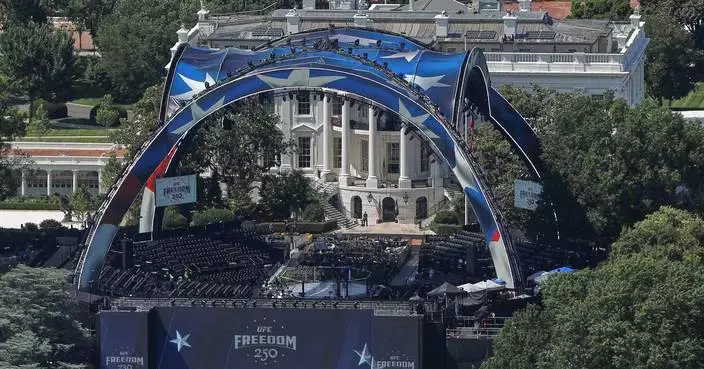
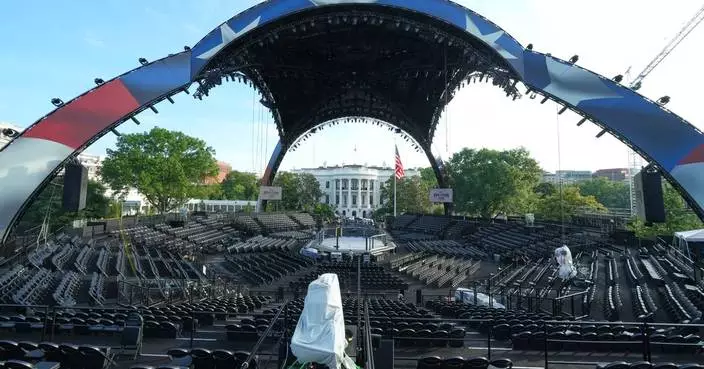
Diego Lopes and Steve Garcia opened UFC Freedom 250 in a featherweight bout under the structure known as the Claw, a four-sided mass that arcs more than 90 feet (27 meters) into the air and features lights, speakers, thick snakes of wiring and four large screens so fans not seated right next to the Octagon can follow the cage fighting below.
Garcia walked out of the White House draped in an American flag and accompanied by two police officers. Lopes walked out to the Mexican song “La Chona.”
Fans were as quiet for the start of the main card Sunday as they might be for the preliminary fights held hours before a pay-per-view event in a normal fight arena, such as Madison Square Garden. Closer to the Rose Garden, fans did come alive when Lopes landed a flurry of punches to knock out Garcia in the second round.
The show was steeped in pageantry and stands as an outlier among UFC events. The Marine Band played from in front of the White House and Zac Brown sang the national anthem — which is never played before normal UFC fight cards because of the mix of nationalities fighting inside the Octagon. The Navy’s Blue Angels and Air Force Thunderbirds zipped overhead as part of a flyover.
UFC’s ring girls, who normally parade around the cage in skimpy outfits, were covered up for a more PG-rated fight night. The women were stylishly dressed in more full-body outfits, some that flowed past the knee or to the ground, that incorporated the American flag into the designs.
Bruce Buffer's voice thundered from the cage as always for fight introductions, and his star-spangled threads fit the occasion: gold stars on the outside of his suit coat and mini American flags stitched inside.
Hours after the United States and Iran reached an agreement to end the war and open the Strait of Hormuz, offering relief to the global economy more than three months since fighting began, the White House — long known as the people’s house and a symbol of American democracy — opened its backyard to stage the fights.
More than $60 million and tens of thousands of hours of labor have been poured into building the arena, according to a court filing from the National Park Service, which oversees the South Lawn.
UFC is staging seven fights with all male fighters under the Freedom 250 banner to celebrate Trump’s birthday and the 250th anniversary of the Declaration of Independence’s signing.
The fight card headlined by two title fights on Paramount+ was scheduled to start at 8 p.m. Eastern. The official televised portion of the show started closer to 30 minutes later and the first fight went off closer to 9 p.m.
Strong thunderstorms and heavy lightning disrupted Friday’s Lincoln Memorial promotional event, and the forecast for Sunday evening also looked menacing.
White said the show will go on rain or shine.
The rare UFC outdoors event marked the pinnacle of the relationship between White and Trump that has yielded personal, political and financial dividends for both parties. White's first card as UFC president came in 2001 at an event held at Trump Taj Mahal.
Trump has attended four UFC cards as sitting president, walking to the cage amid rock music and patriotic chants from fans much like the fighters themselves. White introduced Trump at two Republican National Conventions. White also attended the White House Correspondents’ Association dinner in April that was cut short by a shooting.
In a card that has been panned by fans online as underwhelming, Alex Pereira of Brazil will meet Ciryl Gane of France for the interim UFC heavyweight title. Spanish-Georgian lightweight champion Ilia Topuria then takes on interim champ Justin Gaethje, one of just two Americans who currently hold even a share of the UFC’s 11 championship belts.
There are five other fights on the main card that include former title-fight participants Michael Chandler and Derrick Lewis and former 135-pound champion Sean O’Malley.
Not everyone was able to get tickets to the big event.
Even one of UFC's champions.
UFC middleweight champion Sean Strickland was escorted out of the Ellipse event by a group of police officers and taken into a Park Police van Sunday.
Once a vocal supporter of Trump, Strickland has recently said on social media that he was not invited to participate in the event at the White House because he is an outspoken critic of Israel.
Strickland was wearing a black anorak jacket and was barefoot. It wasn’t immediately clear why law enforcement led him away.
White has rejected Strickland’s accusation that he was banned from UFC Freedom 250 events.
“Nobody is banned. Nothing is banned,” White told reporters earlier this month.
AP MMA: https://apnews.com/hub/mixed-martial-arts
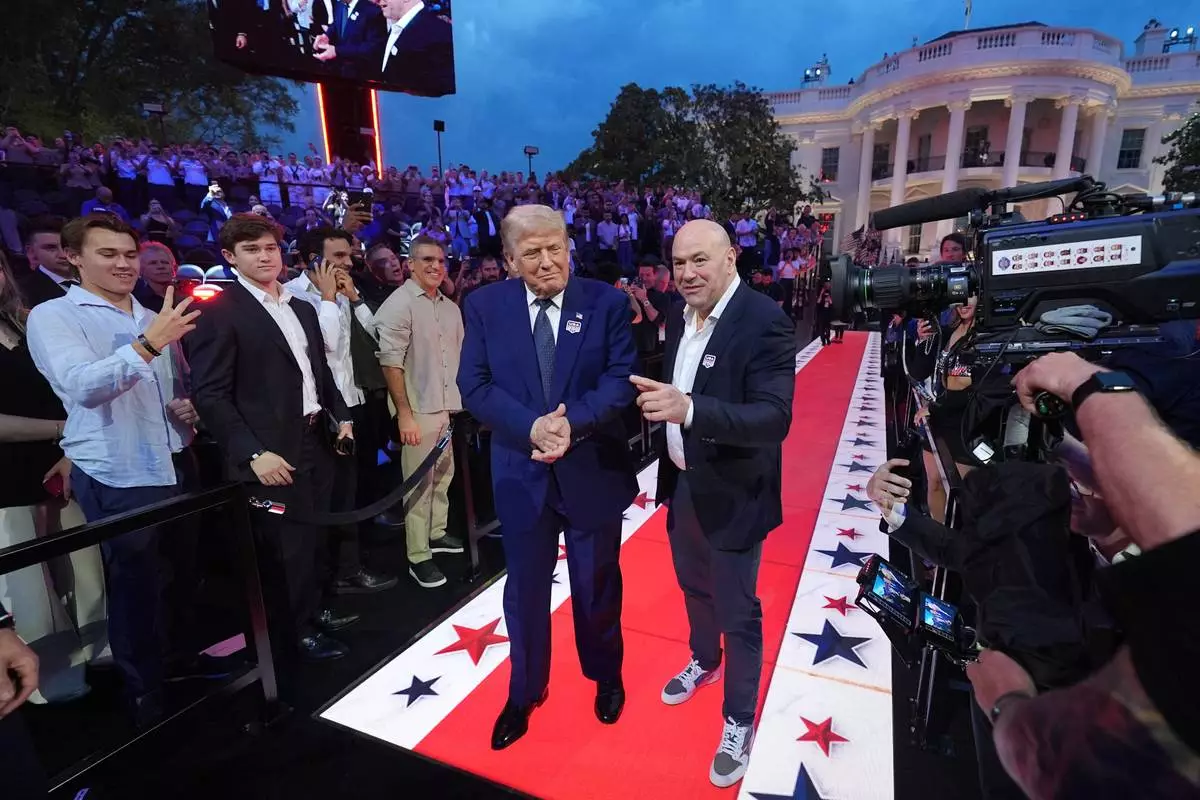
President Donald Trump and Dana White, UFC president and CEO, arrive for UFC Freedom 250 on the South Lawn of the White House, Sunday, June 14, 2026, in Washington. (AP Photo/Alex Brandon)
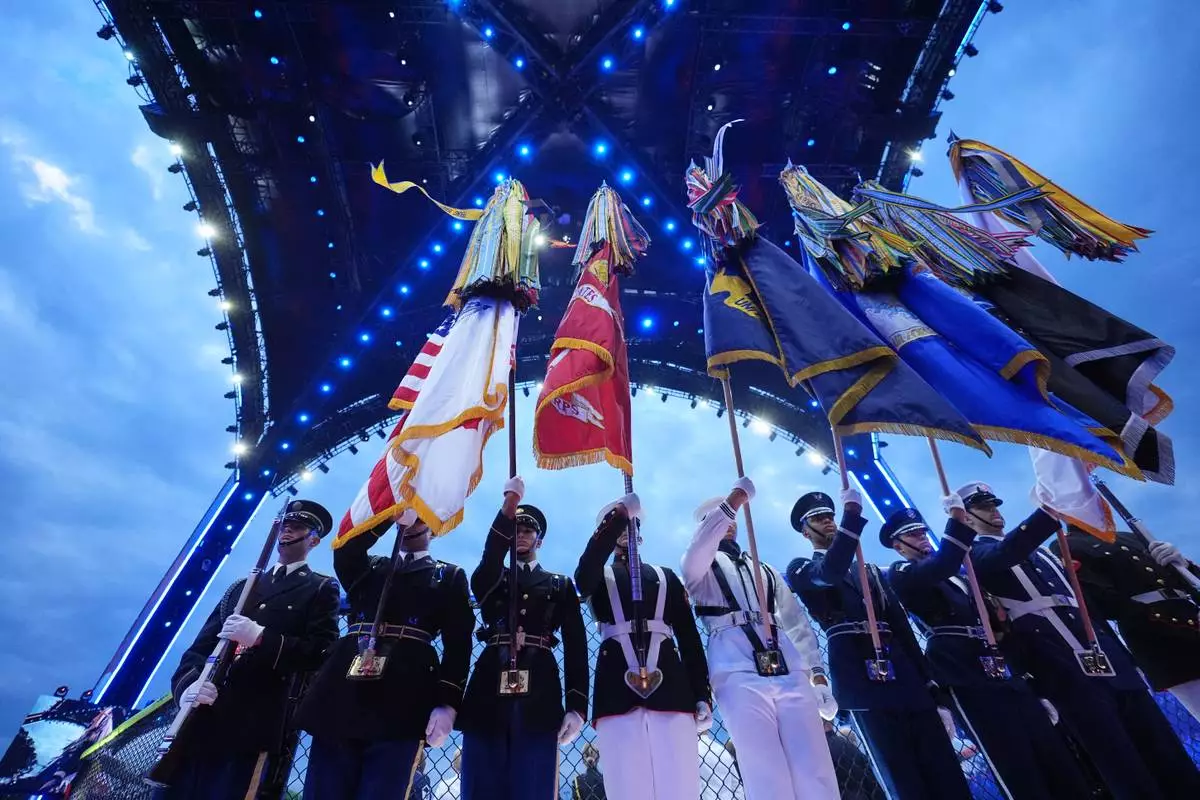
A joint forces honor guard stands during the National Anthem before UFC Freedom 250 on the South Lawn of the White House, Sunday, June 14, 2026, in Washington. (AP Photo/Alex Brandon)
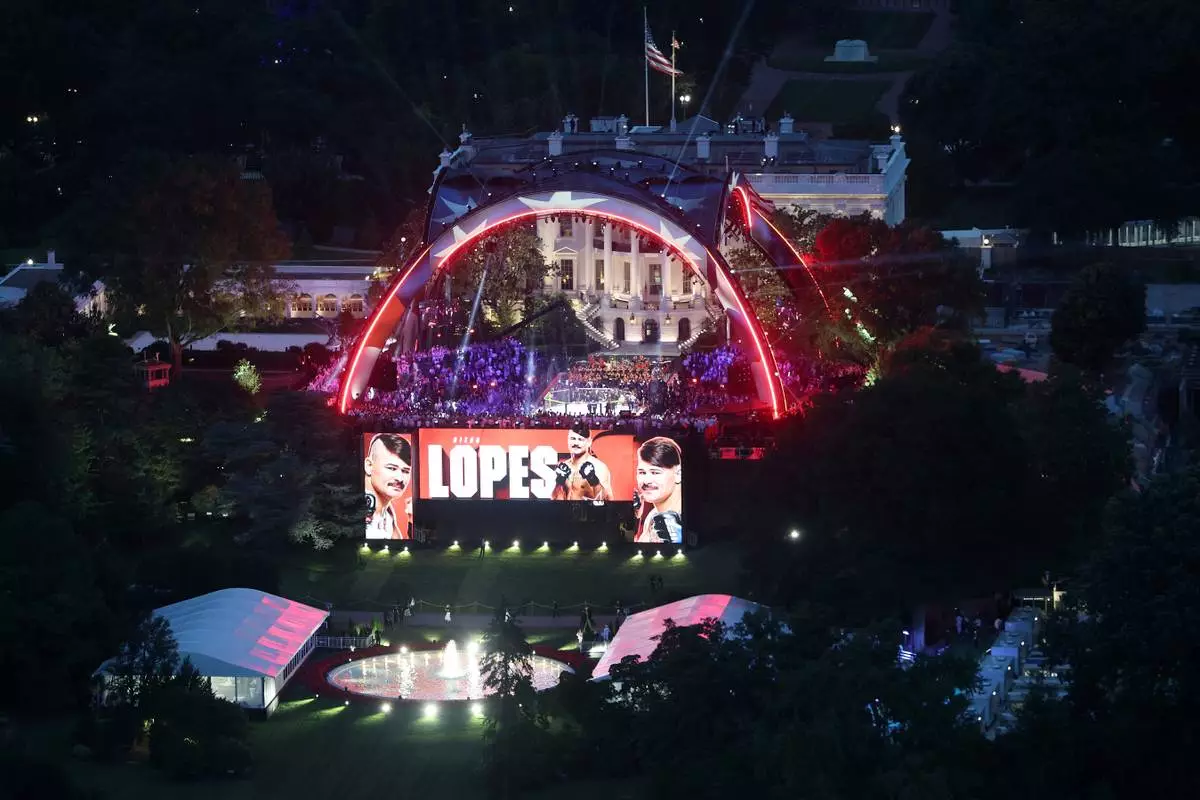
Diego Lopes is introduced during UFC Freedom 250 on the South Lawn of the White House from the top of the Washington Monument on Sunday, June 14, 2026, in Washington. (Win McNamee/Pool Photo via AP)
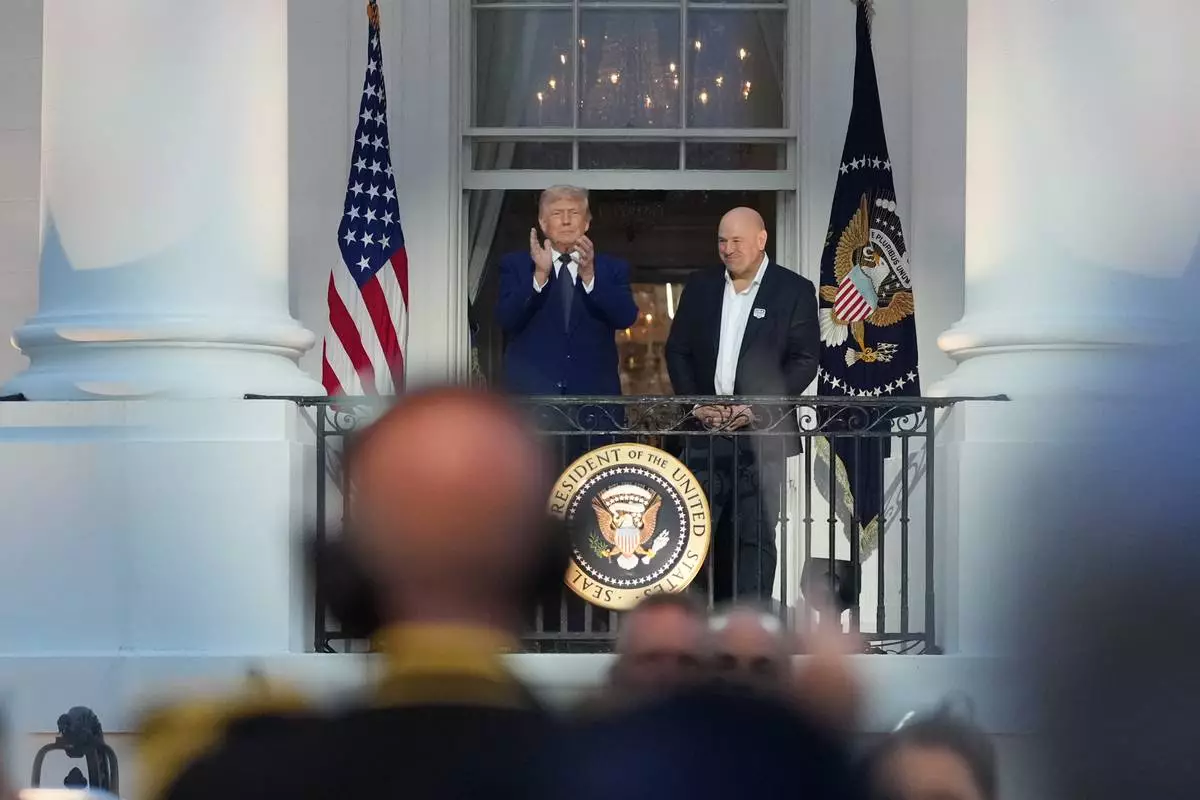
President Donald Trump and Dana White, UFC president and CEO, arrive on the Blue Room Balcony for the National Anthem before UFC Freedom 250 on the South Lawn of the White House, Sunday, June 14, 2026, in Washington. (AP Photo/Alex Brandon)
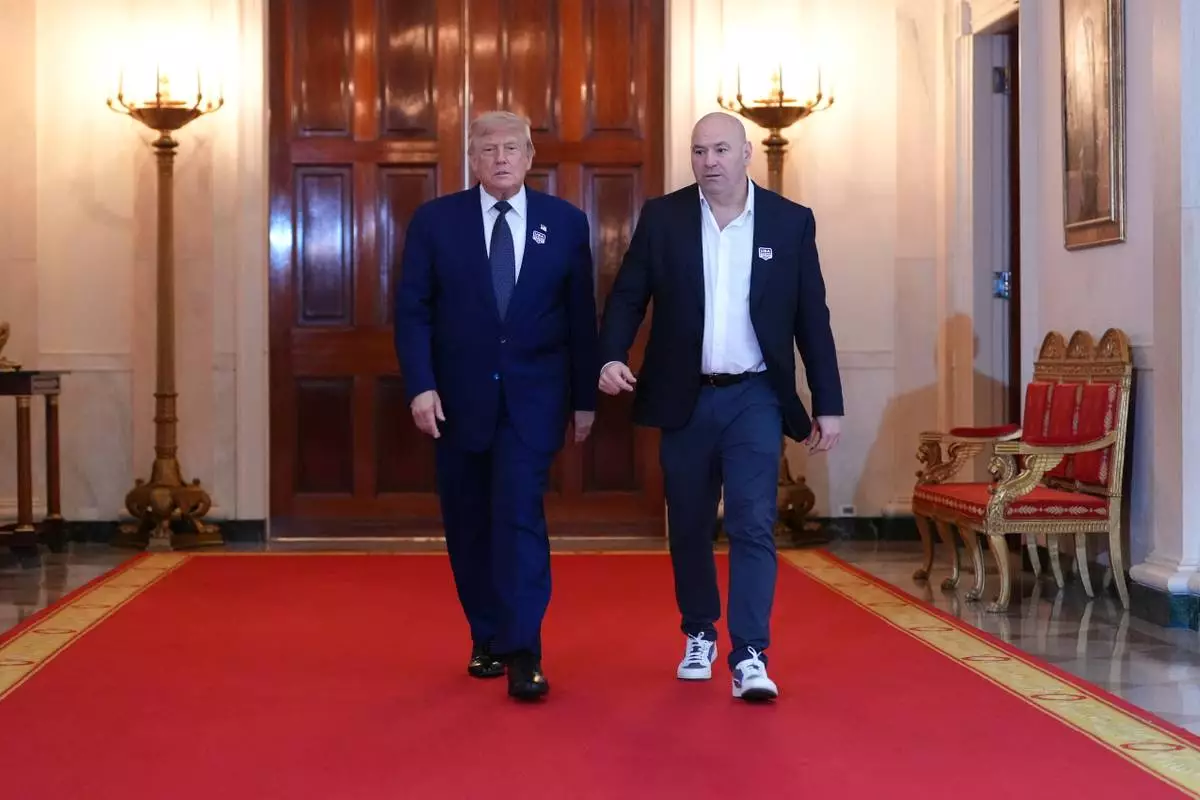
President Donald Trump walks with UFC president and CEO Dana White through the Cross Hall of the White House before attending the UFC Freedom 250 fights on the South Lawn of the White House, Sunday, June 14, 2026, in Washington. (AP Photo/Jacquelyn Martin, Pool)
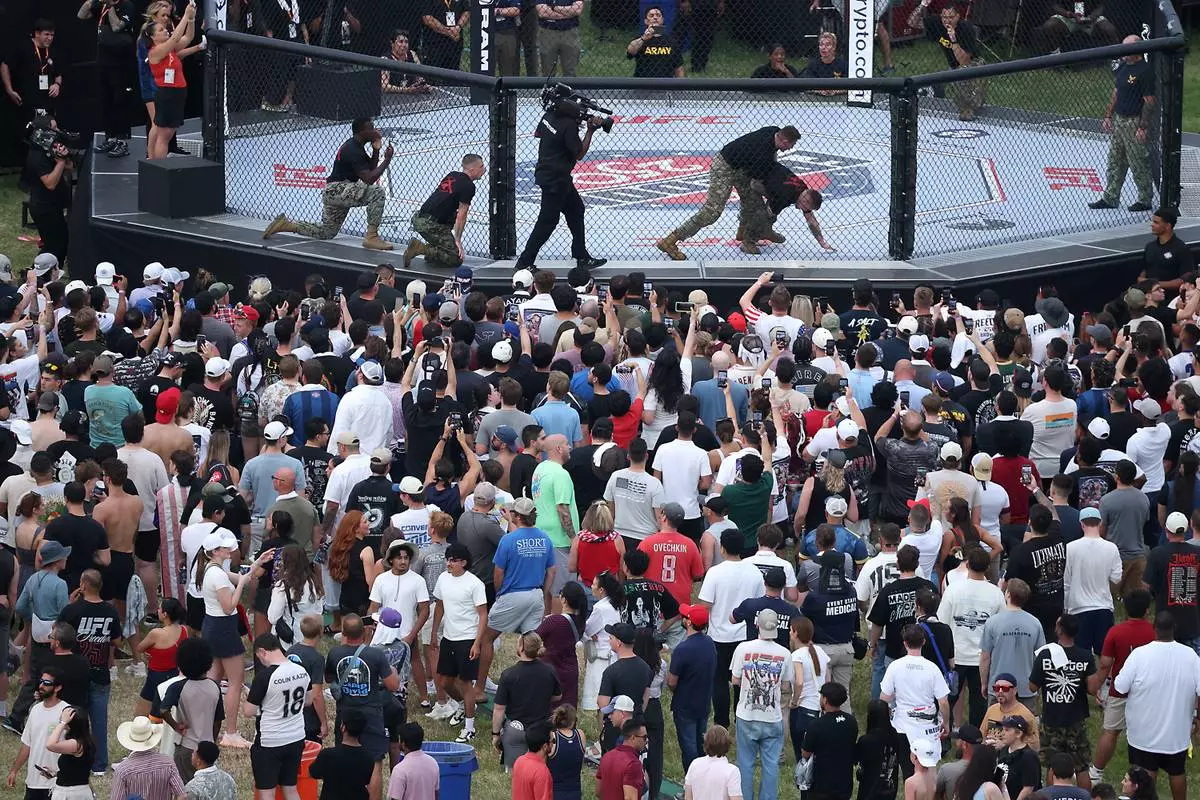
Army soldiers hold a grappling demonstration during the UFC Freedom 250 Fan Fest on The Ellipse ahead of the UFC Freedom 250 fight on the South Lawn of the White House on Sunday, June 14, 2026, in Washington. (Kevin Dietsch/Pool Photo via AP)
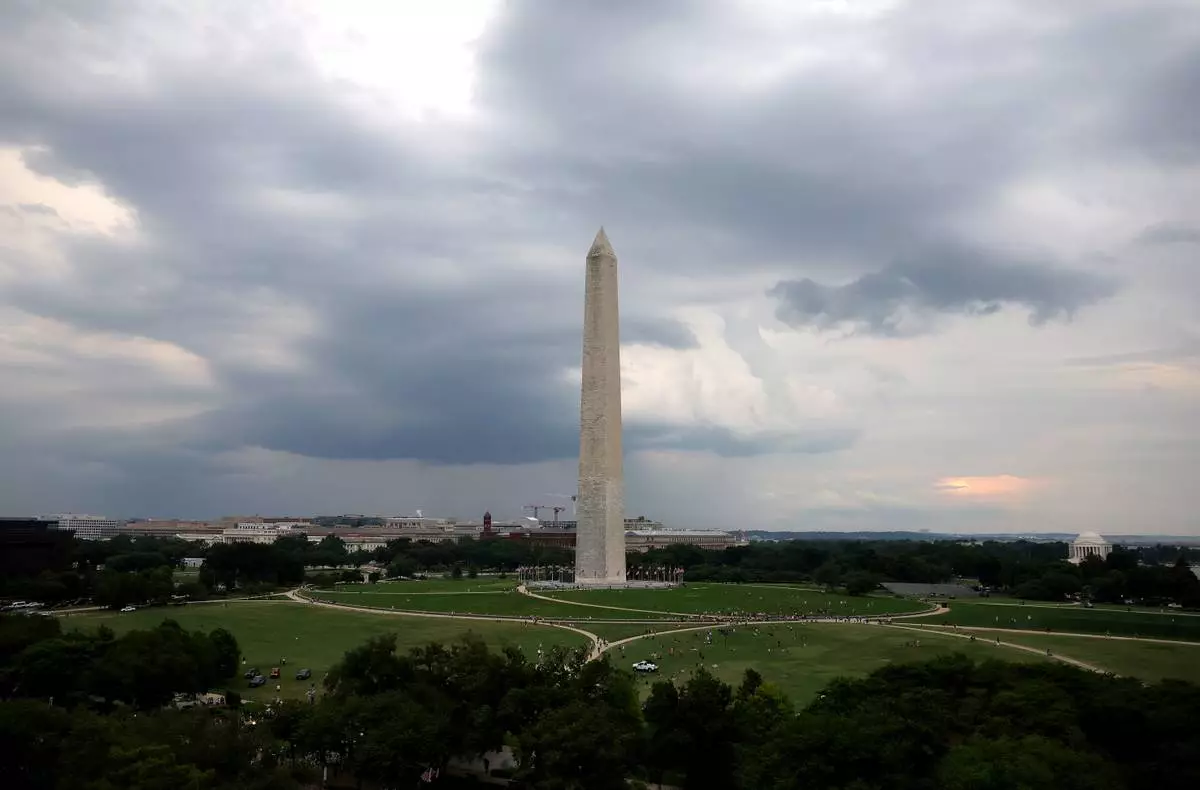
Storm clouds move above the Washington Monument ahead of the UFC Freedom 250 fight on the South Lawn of the White House on Sunday, June 14, 2026, in Washington. (Kevin Dietsch/Pool Photo via AP)
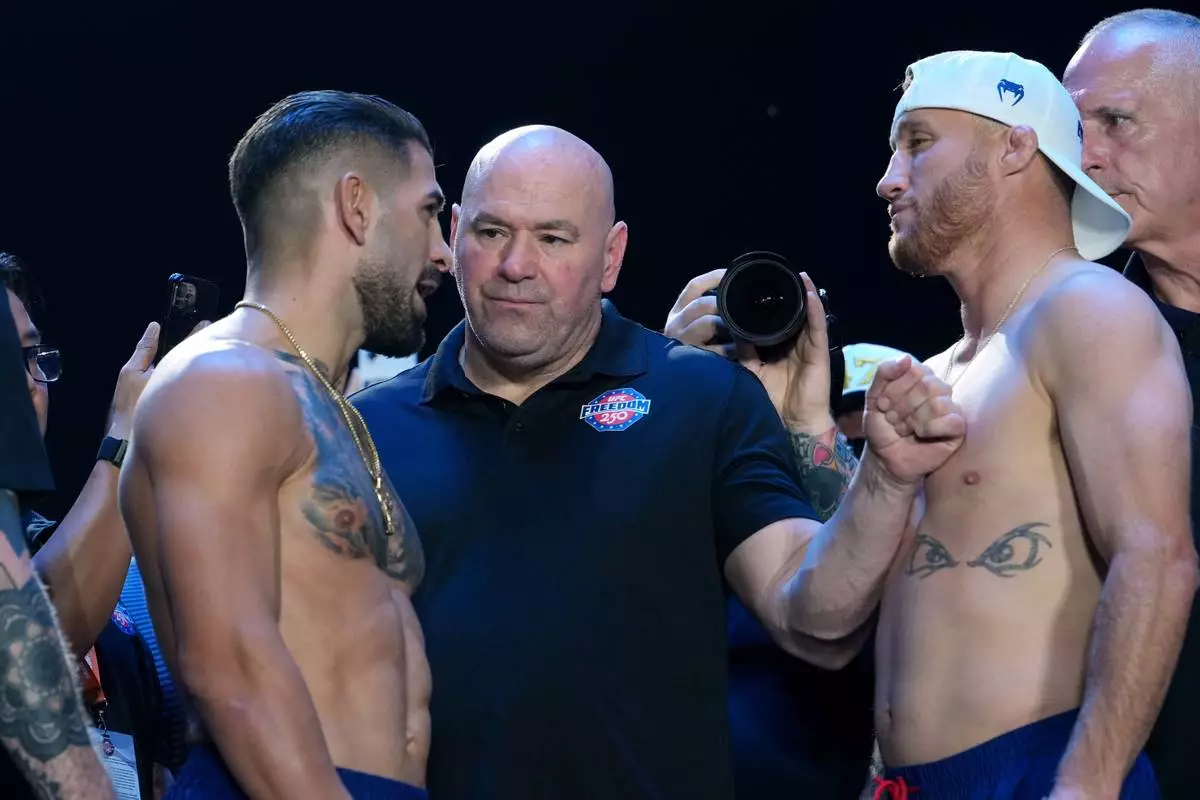
UFC president and CEO Dana White, center, with Ilia Topuria, left, and Justin Gaethje, right, during the ceremonial UFC Freedom 250 weigh-ins on the Ellipse, Saturday, June 13, 2026, in Washington, ahead of Sunday's fight on the South Lawn of the White House. (AP Photo/Julia Demaree Nikhinson) CORRECTION: Changes name from Joe Rogan to Dana White.
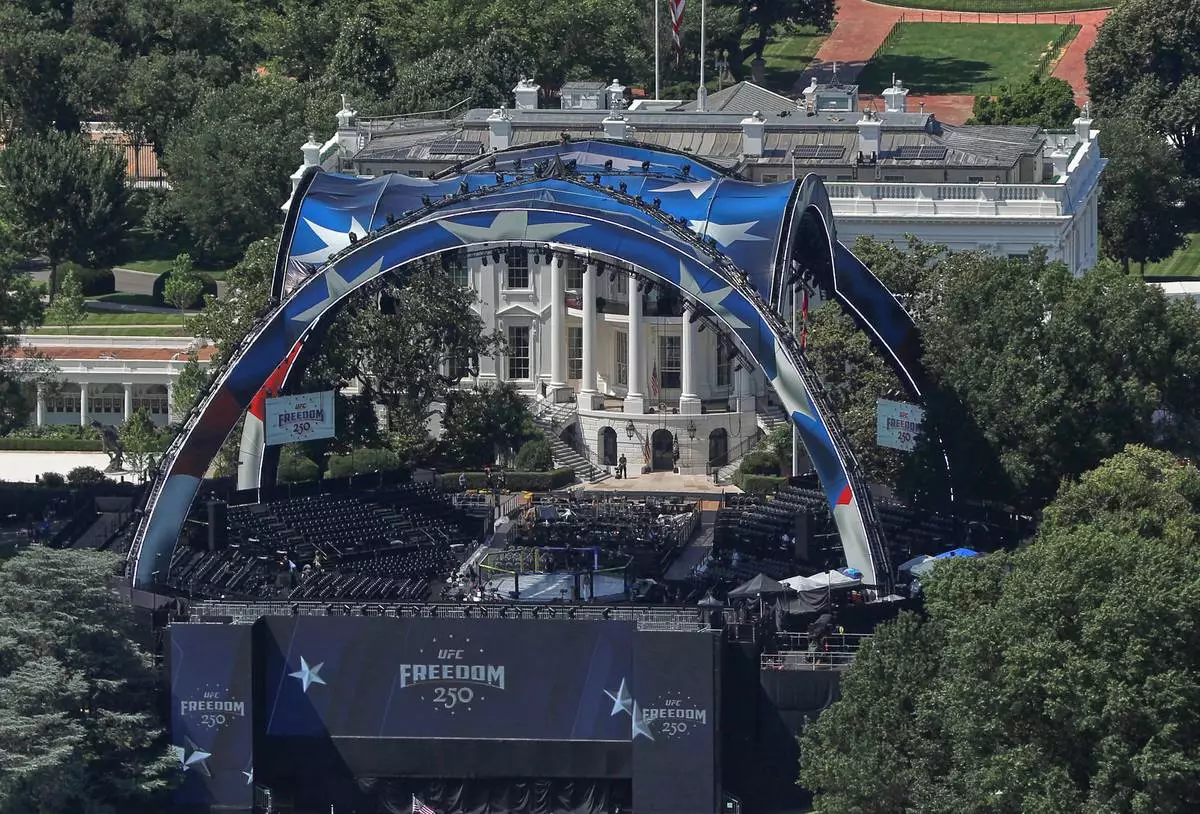
The arena for the UFC Freedom 250 fights is pictured on the South Lawn of the White House, in Washington, Saturday, June 13, 2026. (AP Photo/Rahmat Gul)
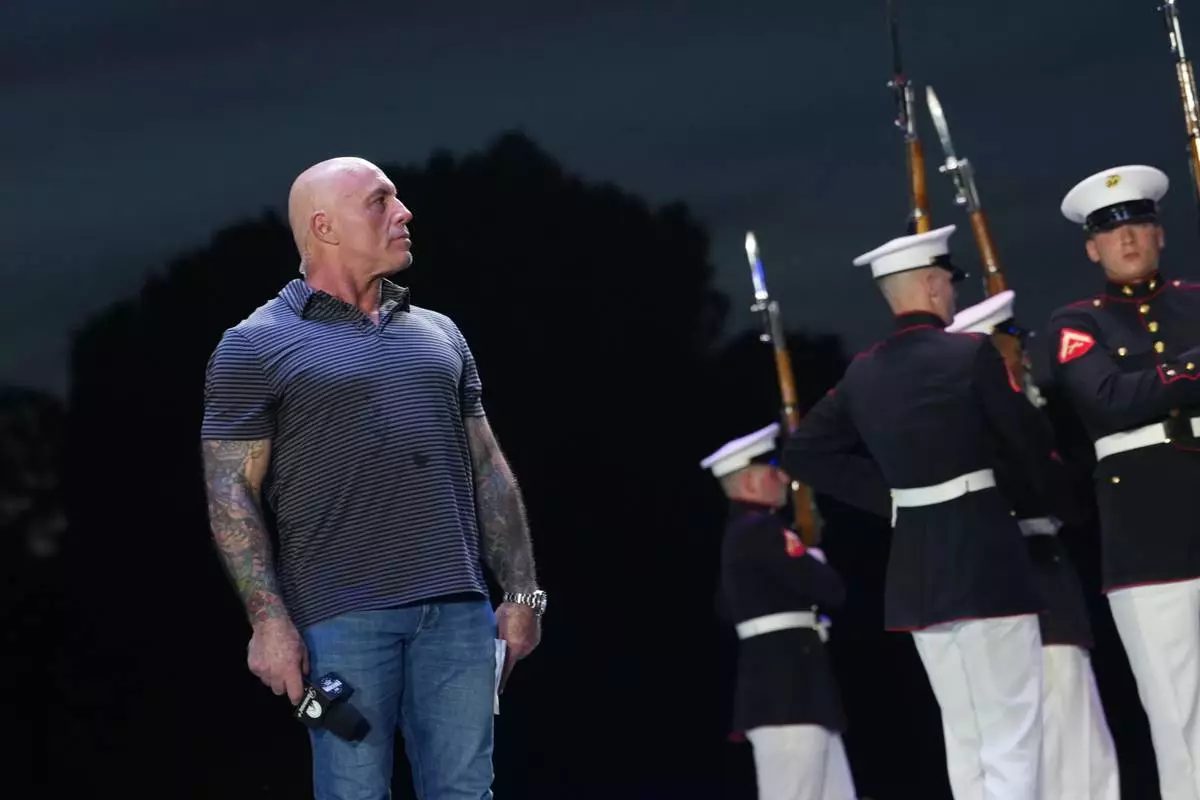
UFC commentator Joe Rogan during the ceremonial UFC Freedom 250 weigh-ins on the Ellipse, Saturday, June 13, 2026, in Washington, ahead of Sunday's fight on the South Lawn of the White House. (AP Photo/Julia Demaree Nikhinson)
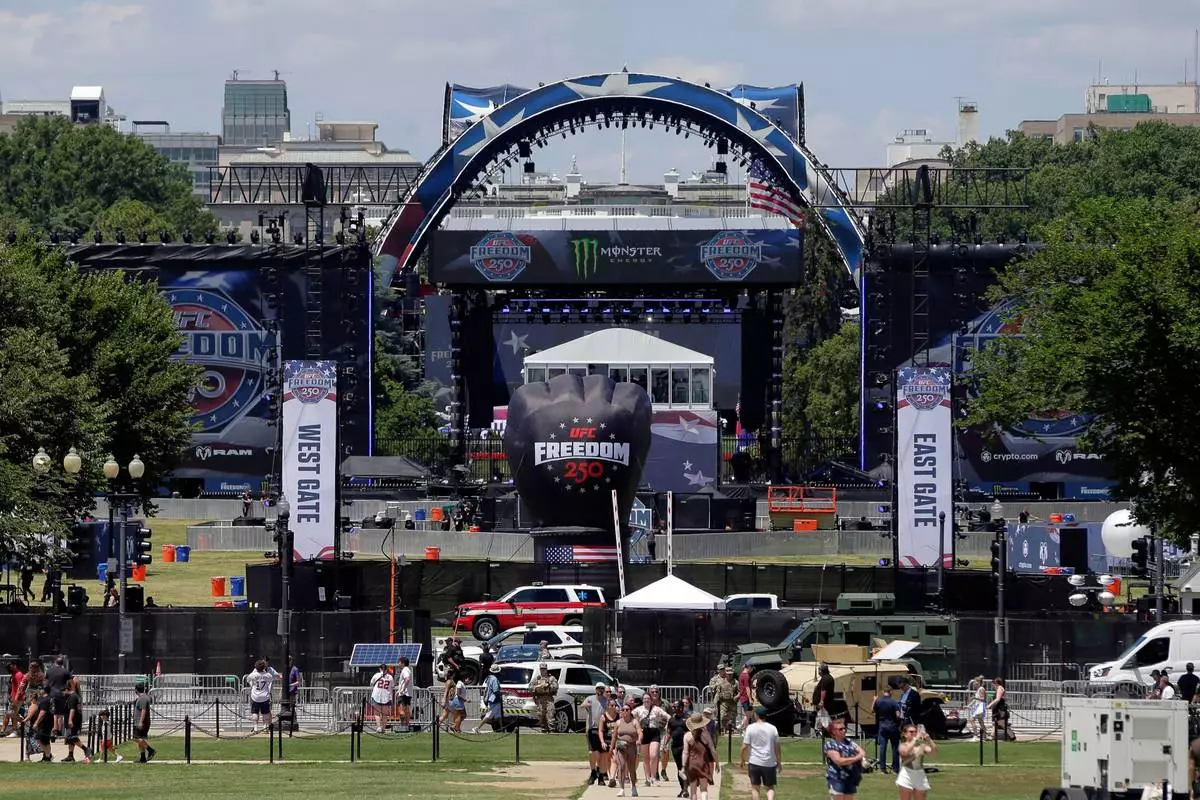
The arena for the UFC Freedom 250 fights is pictured on the South Lawn of the White House, in Washington, Saturday, June 13, 2026. (AP Photo/Rahmat Gul)
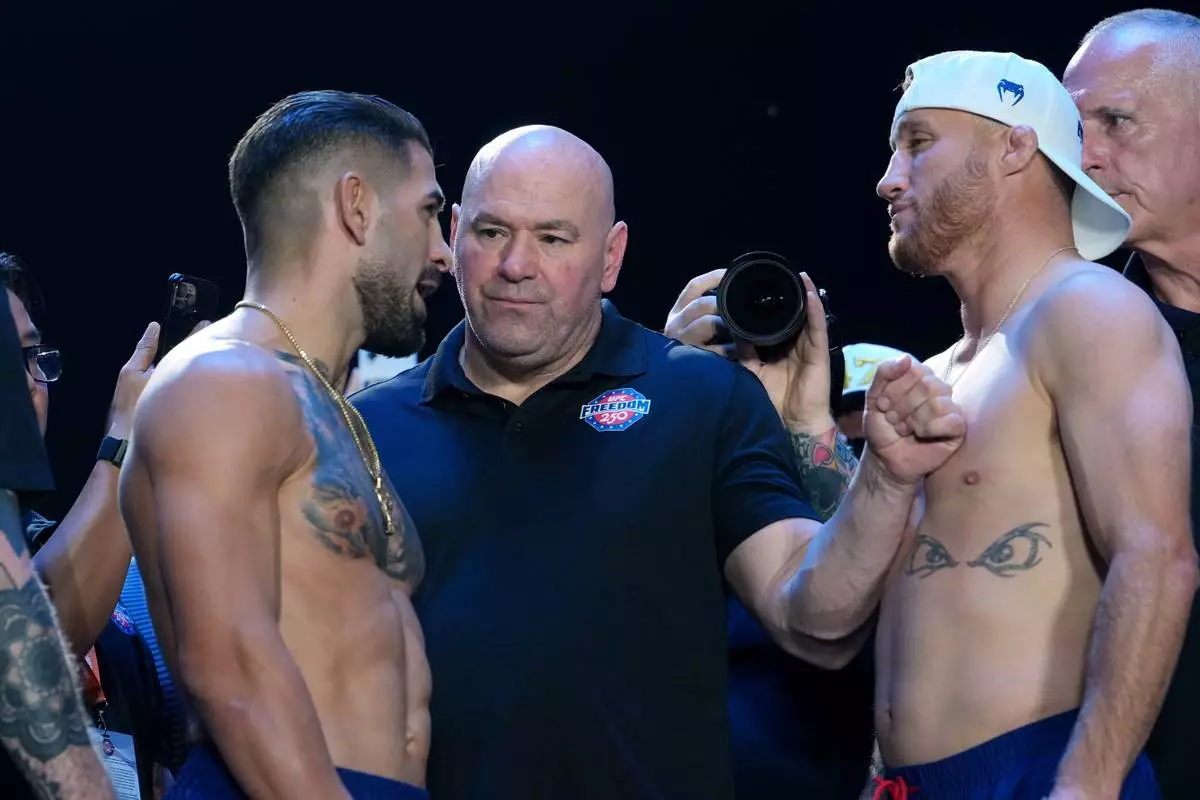
UFC commentator Joe Rogan, center, with Ilia Topuria, left, and Justin Gaethje, right, during the ceremonial UFC Freedom 250 weigh-ins on the Ellipse, Saturday, June 13, 2026, in Washington, ahead of Sunday's fight on the South Lawn of the White House. (AP Photo/Julia Demaree Nikhinson)