BILLERICA, Mass.--(BUSINESS WIRE)--Apr 7, 2026--
Bruker Corporation (Nasdaq: BRKR) today announced accelerated development of its photothermal AFM-IR spectroscopy capabilities to address research challenges facing the semiconductor industry as device architectures continue to shrink and systems become increasingly more complex. As the largest supplier of nanoscale infrared (nanoIR) spectroscopy technology to the semiconductor industry, Bruker is expanding the use of AFM-IR beyond its established role in nanoscale contamination analysis into research areas that underpin next-generation semiconductor technologies. These include EUV photoresist patterning and development, advanced materials for transistor scaling, and site-selective surface functionalization at the nanoscale for emerging sensing and functional device applications.
This press release features multimedia. View the full release here: https://www.businesswire.com/news/home/20260407364625/en/
In a Joint Development Project (JDP) with imec, a world-leading research and innovation hub in advanced semiconductor technologies, Bruker has installed its Dimension IconIR system to help assess the utility of photothermal AFM-IR for addressing these critical step-function research questions. The collaboration is focused on evaluating how nanoscale chemical characterization can shed light on material behavior and interfaces that influence semiconductor process development and device performance.
“Metrology requirements for advanced semiconductor research are evolving rapidly, and together with Bruker we will assess how nanoIR technology can help address emerging requirements in nanoscale materials characterization,” said Albert Minj, senior researcher at imec and project lead of the JDP. “The IconIR system enables label-free chemical analysis with sub-5-nanometer resolution, which supports deeper understanding of EUV resist chemistry and material interactions relevant to next-generation device concepts.”
“Our collaboration with imec allows us to greatly expand the capabilities of photothermal AFM-IR in semiconductor research environments,” added David V. Rossi, President of Bruker’s Nano Surfaces and Metrology Division. “By investigating complex material systems and interfaces, nanoscale infrared spectroscopy can provide chemical insights that are impossible to access with conventional techniques.”
About Dimension IconIR
Dimension IconIR combines nanoscale infrared spectroscopy with scanning probe microscopy (SPM), delivering monolayer sensitivity, high-resolution chemical imaging, and unmatched nanoscale property mapping. Built on the widely adopted Dimension Icon AFM platform, IconIR supports samples up to 150 mm and integrates Bruker’s patented suite of photothermal AFM-IR modes. These capabilities enable precise characterization of complex semiconductor materials and structures, with hundreds of peer-reviewed publications validating its performance and correlation to FTIR techniques.
About Bruker Corporation – Leader of the Post-Genomic Era
Bruker is enabling scientists and engineers to make breakthrough post-genomic discoveries and develop new applications that improve the quality of human life. Bruker’s high-performance scientific instruments and high value analytical and diagnostic solutions enable scientists to explore life and materials at molecular, cellular, and microscopic levels. In close cooperation with our customers, Bruker is enabling innovation, improved productivity, and customer success in post-genomic life science molecular and cell biology research, in applied and biopharma applications, in microscopy and nano-analysis, as well as in industrial and cleantech research, and next-gen semiconductor metrology in support of AI. Bruker offers differentiated, high-value life science and diagnostics systems and solutions in preclinical imaging, clinical phenomics research, proteomics and multi-omics, spatial and single-cell biology, functional structural and condensate biology, as well as in clinical microbiology and molecular diagnostics. For more information, please visit www.bruker.com.
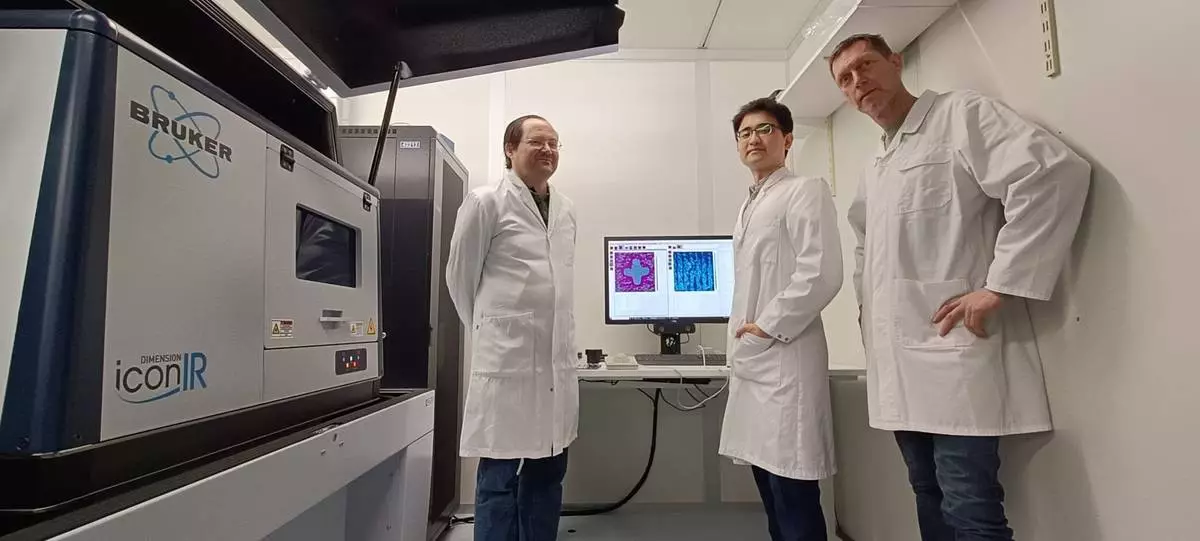
Bruker’s Dimension IconIR system at imec with (left to right) Hartmut Stadler (Bruker), Dowon Kim (imec) and Marcel Laarhoven (Bruker)
TEHRAN, Iran (AP) — Airstrikes pounded Tehran on Tuesday, and Iranian officials urged young people to form human chains to protect power plants, hours before the expiration of U.S. President Donald Trump’s latest deadline for the Islamic Republic to reopen the crucial Strait of Hormuz or face punishing strikes on its infrastructure.
Trump has extended previous deadlines but suggested the one set for 8 p.m. in Washington was final, and the rhetoric on both sides reached a fever pitch, leaving Iranians on edge. Trump threatened to destroy all of Iran’s power plants and bridges if Tehran does not allow traffic to fully resume in the strait, through which a fifth of the world’s oil transits in peacetime. Iran’s president said 14 million people, including himself, have volunteered to fight.
While Iran cannot match the sophistication of U.S. and Israeli weaponry or their dominance in the air, its chokehold on the strait is causing major damage to the world economy and raising the pressure on Trump both at home and abroad to find a way out of the standoff.
Officials involved in diplomatic efforts said talks were ongoing — but Iran has rejected the latest American proposal, and it was unclear if a deal would come in time to head off Trump’s threatened attacks. World leaders and experts warned that strikes as destructive as Trump threatened could constitute a war crime.
Meanwhile, a wave of strikes hit Iran, including in residential areas of Tehran, killing nearly three dozen people. Iran fired on Israel and Saudi Arabia, prompting the temporary closure of a major bridge.
In emphasizing his Tuesday deadline, Trump warned that “the entire country can be taken out in one night.”
“Every bridge in Iran will be decimated by 12 o’clock tomorrow night,” he said Monday, and all power plants will be “burning, exploding and never to be used again.”
In response, Iran called on “all young people, athletes, artists, students and university students and their professors” to form human chains around power plants.
“Power plants that are our national assets and capital,” Alireza Rahimi, identified by Iranian state television as the secretary of the Supreme Council of Youth and Adolescents, said in a video statement.
Iranians have formed human chains in the past around nuclear sites at times of heightened tensions with the West. This time though, it was unclear who would heed the call, and one major power plant in Tehran apparently had been closed off for security purposes at the time the demonstration was to start.
President Masoud Pezeshkian posted on X that 14 million Iranians had answered state media and text message campaigns urging people to volunteer to fight.
“I too have been, am, and will remain ready to give my life for Iran,” Pezeshkian wrote.
The paramilitary Revolutionary Guard, meanwhile, warned that Iran would “deprive the U.S. and its allies of the region’s oil and gas for years” and expand its attacks across the Gulf region if Trump carries out his threat.
A general from the Guard also urged parents to send their children to man checkpoints, which have been repeatedly targeted in airstrikes.
In Tehran, the mood was bleak. One young man in a coffee shop spoke of how the situation was growing increasingly desperate and now the country faces the possibility of massive power cuts, if Trump follows through.
“I feel we are stuck between the blades of a pair of scissors,” said the man, speaking on condition of anonymity because he feared reprisals.
French Foreign Minister Jean-Noël Barrot joined a growing chorus of international voices calling for restraint, saying attacks targeting civilian and energy infrastructure “are barred by the rules of war, international law.”
“They would without doubt trigger a new phase of escalation, of reprisals, that would drag the region and the world economy into a vicious circle,” the minister said on France Info television.
U.N. Secretary-General António Guterres also warned the U.S. that attacks on civilian infrastructure are banned under international law, according to his spokesperson.
Such cases are notoriously difficult to prosecute, and Trump told reporters he’s “not at all” concerned about committing war crimes.
A series of intense airstrikes pounded Tehran, including in residential neighborhoods. Such strikes in the past have targeted Iranian government and security officials.
Israel’s military said it attacked an Iranian petrochemical site in Shiraz, the second day in a row it hit such a facility. Israel also issued a Farsi-language warning telling Iranians to avoid trains throughout the day, likely telegraphing intended strikes on the rail network.
Another strike hit the Khorramabad International Airport in western Iran, and an attack on an unidentified target in Alborz province, northwest of Tehran, killed 18 people, according to state media.
Nine people were killed in the city of Shahriar and six more in Pardis in other airstrikes, Iranian media reported.
Early Tuesday, Tehran launched seven ballistic missiles at Saudi Arabia, which authorities said rained debris near energy facilities as they were intercepted.
The attacks prompted Saudi Arabia to temporarily close the King Fahd Causeway, the only connection by road between Bahrain, home to the U.S. Navy’s 5th Fleet, and the Arabian Peninsula.
Iran also fired on Israel, with reports of incoming missiles in Tel Aviv and Eilat.
More than 1,900 people have been killed in Iran since the war began, but the government has not updated the toll for days.
In Lebanon, where Israel is fighting Iran-backed Hezbollah militants, more than 1,400 people have been killed. and more than 1 million people have been displaced. Eleven Israeli soldiers have died there.
In Gulf Arab states and the occupied West Bank, more than two dozen people have died, while 23 have been reported dead in Israel, and 13 U.S. service members have been killed.
Iran choked off shipping through the strait after Israel and the U.S. attacked on Feb. 28, starting the war. That stranglehold and Iran’s attacks on the energy infrastructure of its Gulf Arab neighbors have sent oil prices skyrocketing, raising the price of gasoline, food and other basics far beyond the Middle East.
In spot trading Tuesday, Brent crude, the international standard, was above $108 per barrel, up around 50% since the start of the war.
On Monday, Tehran rejected a 45-day ceasefire proposal and said it wants a permanent end to the war. But as Trump's deadline neared Tuesday, an official said indirect communications between the United States and Iran remained underway. The official said mediators from Pakistan, Egypt and Turkey “are racing against time” to reach a compromise before the deadline.
He said Iran has linked the reopening of the Strait of Hormuz to sanctions relief, and the U.S. was open to easing some sanctions, especially on Iran's oil sector, in part to stabilize the global oil market.
The official spoke on condition of anonymity to discuss ongoing diplomacy.
Gambrell reported from Dubai, United Arab Emirates, Rising from Bangkok and Magdy from Cairo. John Leicester in Paris, Rod McGuirk in Melbourne, Australia, and Natalie Melzer in Jerusalem contributed to this report.
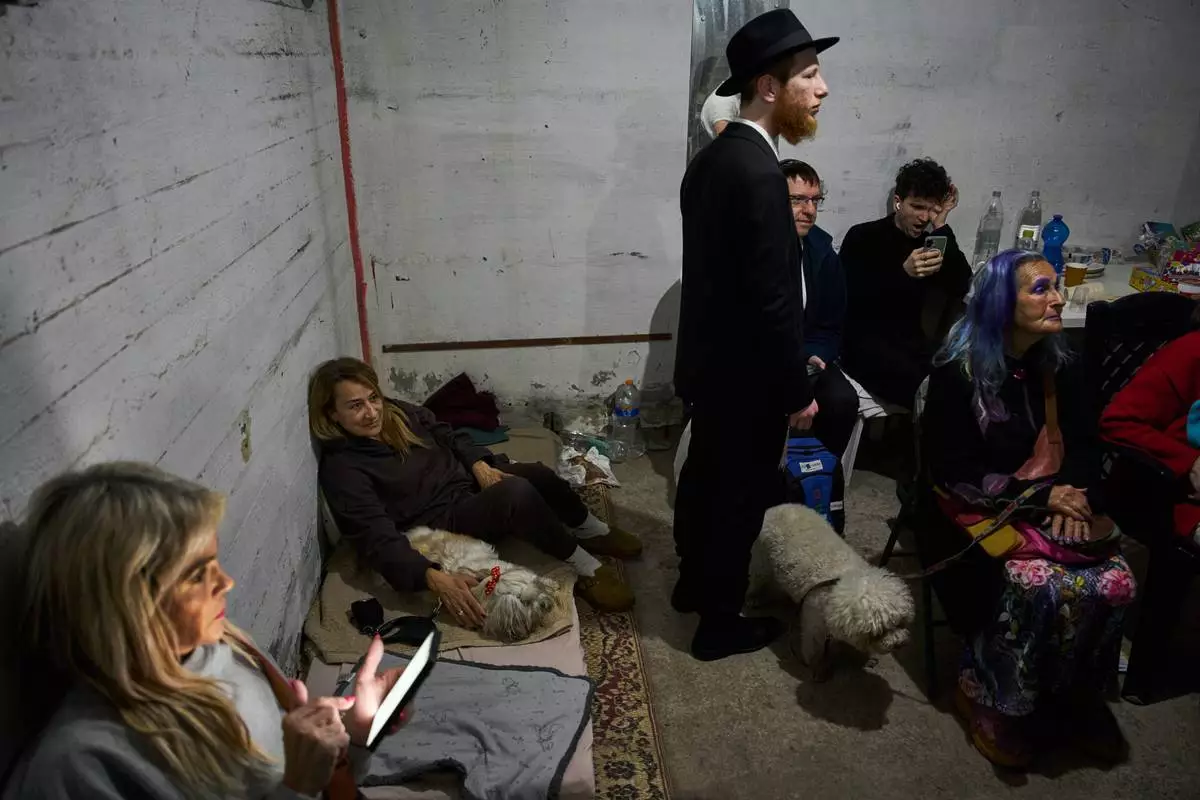
People take cover in a bomb shelter as air raid sirens warn of incoming Iranian missile strikes in Ramat Gan, Israel, Tuesday, April 7, 2026. (AP Photo/Oded Balilty)
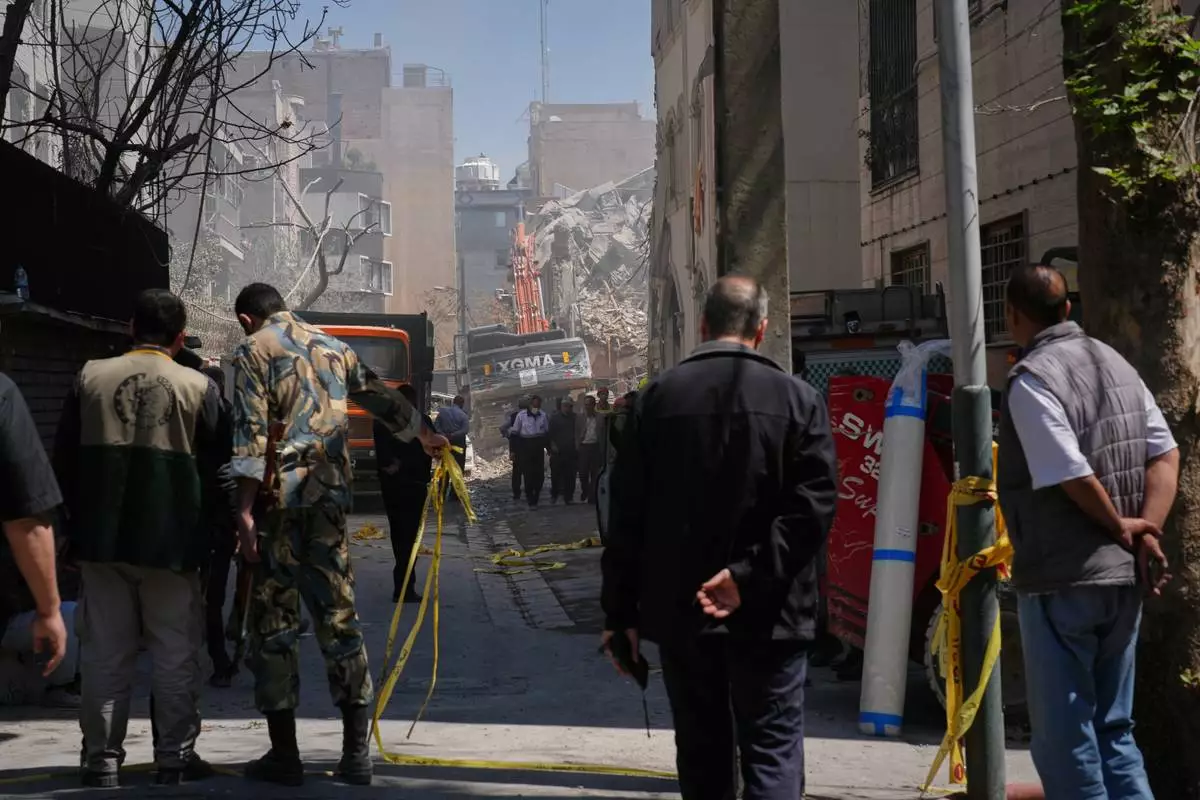
Bystanders watch from a distance as rescue teams and first responders work at the site of a strike that, according to a security official at the scene, destroyed half of the Khorasaniha Synagogue and nearby residential buildings in Tehran, Iran, Tuesday, April 7, 2026. (AP Photo/Francisco Seco)
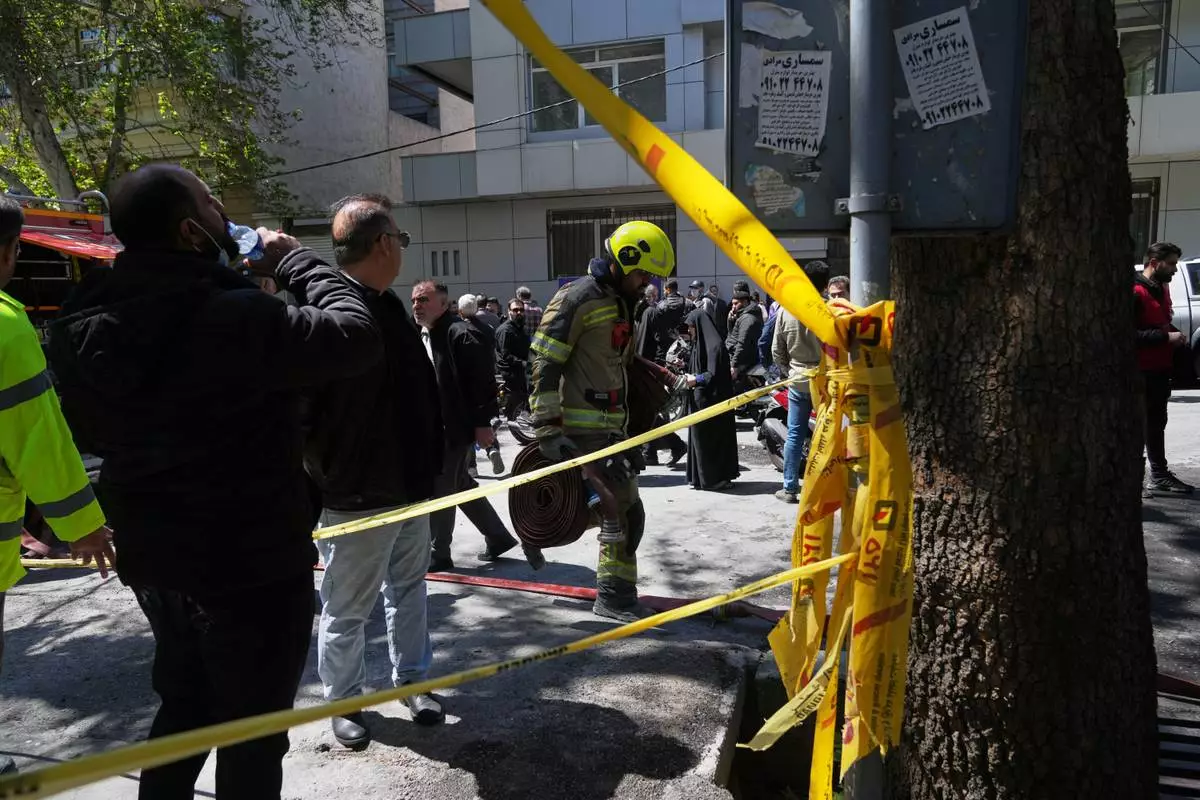
A first responder leaves the site of a strike that, according to a security official at the scene, destroyed half of the Khorasaniha Synagogue and nearby residential buildings in Tehran, Iran, Tuesday, April 7, 2026. (AP Photo/Francisco Seco)
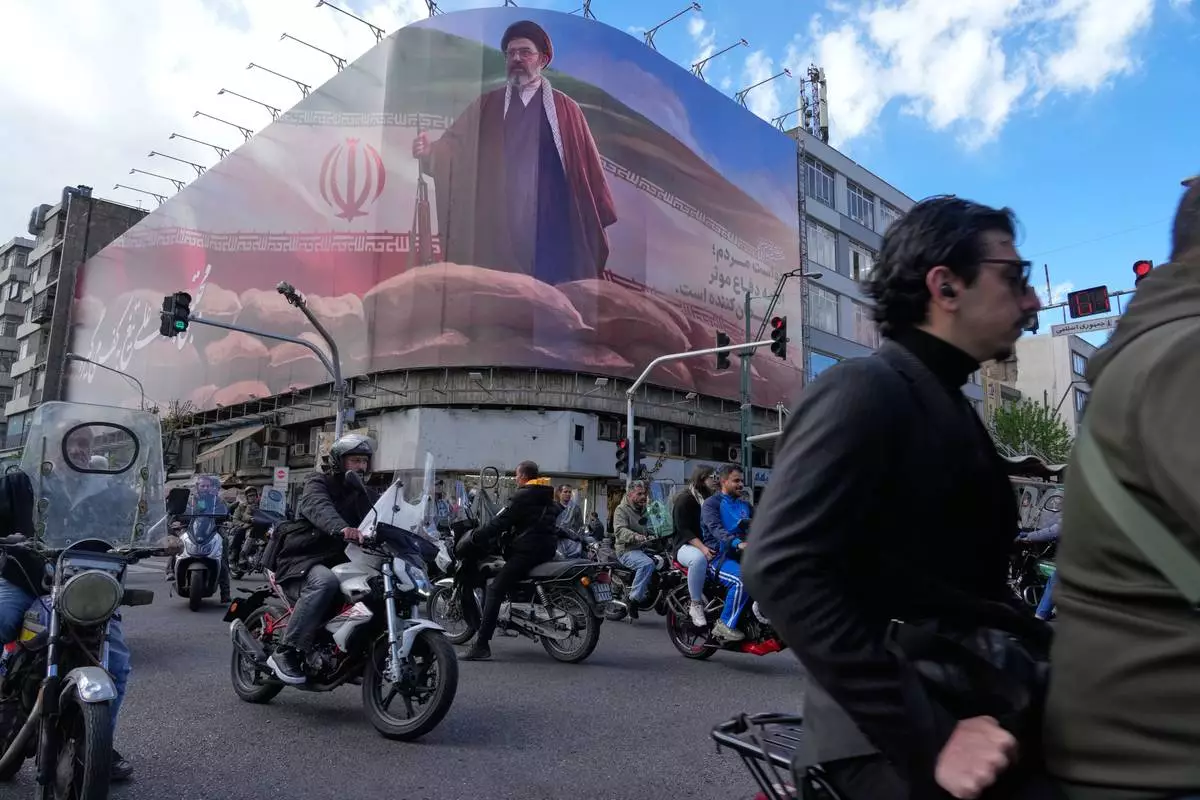
People drive their motorbikes past a billboard that shows a graphic depicting Iran's Supreme Leader Ayatollah Mojtaba Khamenei in downtown Tehran, Iran, Monday, April 6, 2026. (AP Photo/Vahid Salemi)
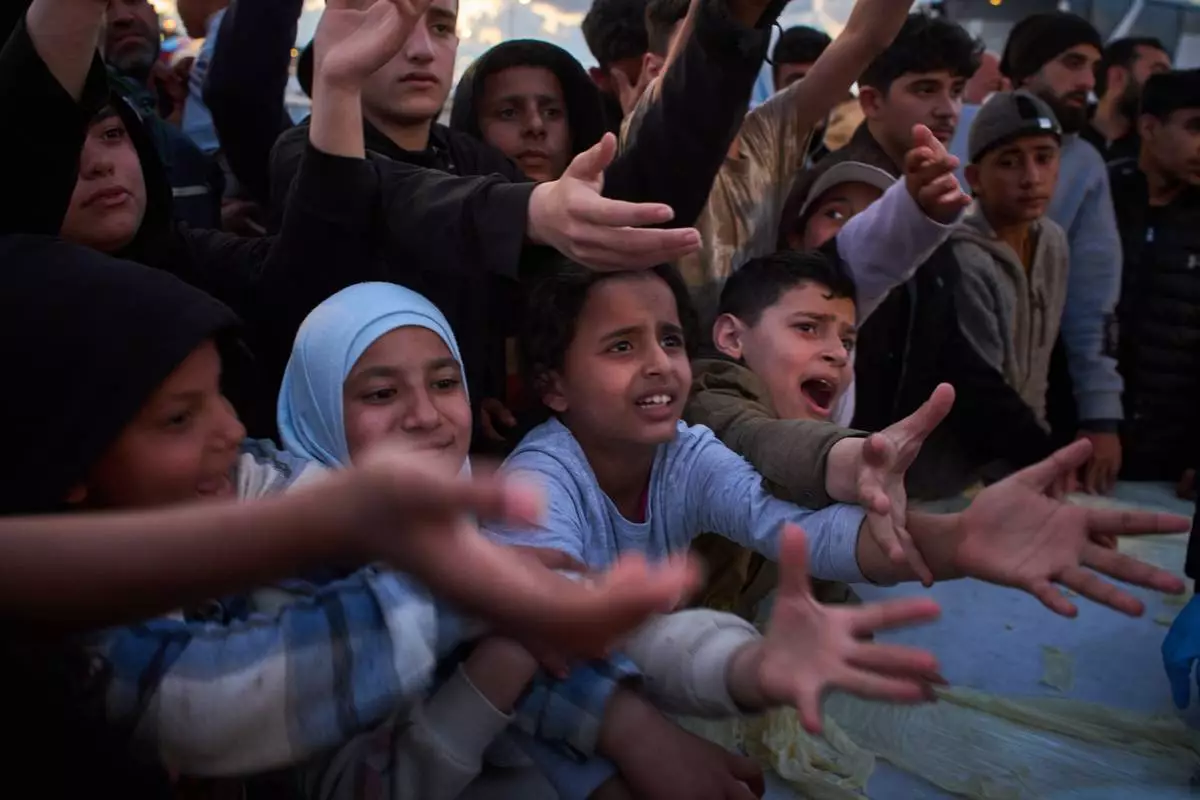
Displaced people wait to receive donated food beside the tents they use as shelters after fleeing Israeli bombardment in southern Lebanon, in Beirut, Lebanon, Monday, April 6, 2026. (AP Photo/Emilio Morenatti)
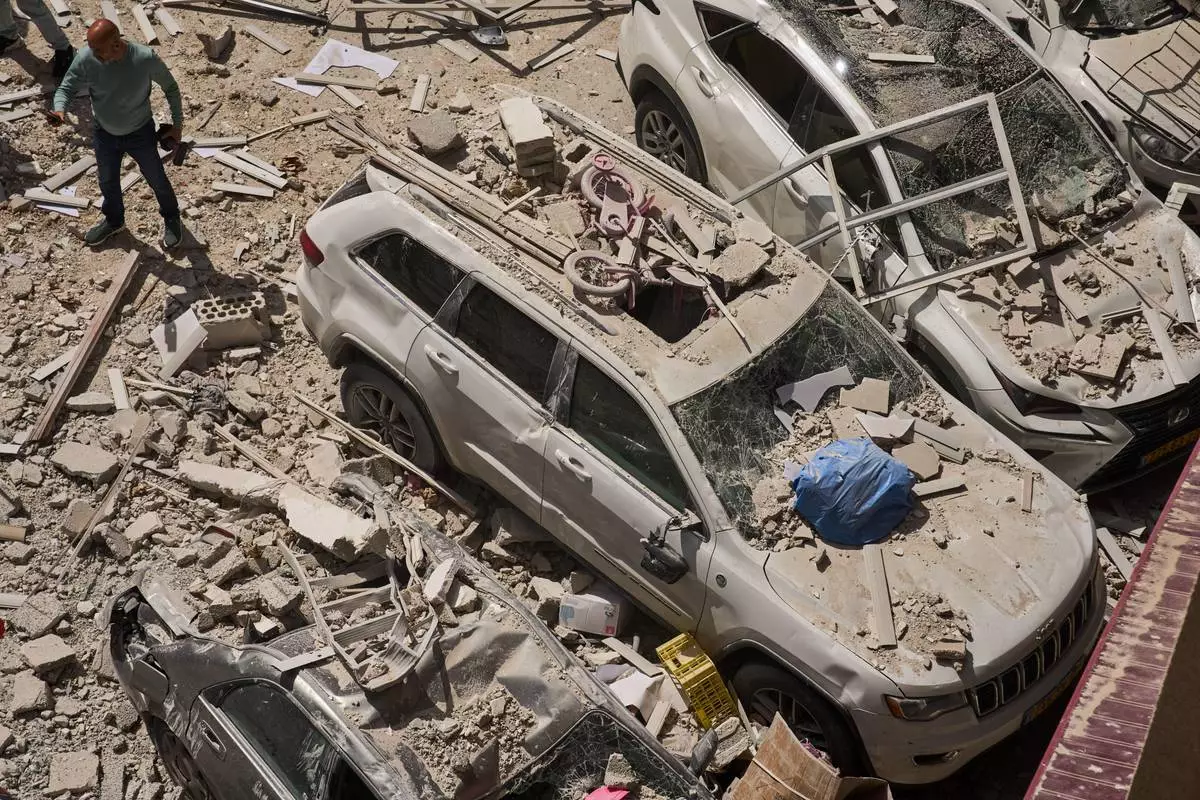
A man inspects the damage to cars and an apartment building struck by an Iranian missile in Ramat Gan, Israel, Monday, April 6, 2026. (AP Photo/Oded Balilty)