The United States and Iran would negotiate with maximum demands, and U.S. President Donald Trump's latest threat to strike Iran's power infrastructure would leave the country devastated and have a long-standing impact on the entire Gulf region, said a Middle East expert.
In an interview with China Global Television Network (CGTN), Sina Azodi, an assistant professor of Middle East politics at George Washington University, analyzed the possibility of a negotiation between the two countries.
Rejecting a U.S.-proposed 15-point peace plan, Tehran has delivered its response via Pakistan in a 10-point document, citing past experience as the reason it would not accept a ceasefire. The response outlines Iran's demands, including ending regional conflicts, establishing safe passage through the Strait of Hormuz, reconstructing war-affected areas, and lifting international sanctions.
"I think both Washington and Tehran would go to the negotiation table with maximum demands. I don't think that the president of the United States would agree to paying fees for, or accepting that. But I think this is again when both sides sit at a negotiation table. If something can be worked out, I think the minimum for Iran is the guarantee that hostilities will not resume once the Iranians agree to cease hostilities. I think this is Iran's bare minimum red line," said Azodi.
"Well, I think again both sides, if they go with, they say go to the negotiation table with their initial demand, with their initial proposal. This is not something that either side can agree. But again, if there's an agreement to meet and discuss issues, or if through the Pakistanis or other nations that are trying to end the hostilities. If there's a proposal and they can sit and talk, I think that reaching a political settlement to this war is feasible," he said.
Trump on Saturday issued a 48-hour ultimatum demanding Iran fully reopen the Strait of Hormuz, warning of sweeping strikes on the country's power infrastructure, while Tehran signaled it would retaliate across the region if attacked.
Azodi warned that the Trump threat cannot be ignored as the possible U.S. strikes on Iran's civil infrastructure would not only undermine Iran's industrial capacity, but also cause severe consequences in the whole Gulf region.
"Well, it would leave Iran devastated, it would certainly push back Iran. Iran's industrial capacity for years, but it would also have severe consequences for a region, its economic viability and prosperity. What I mean by that is that Iranians are not going to sit and watch while the U.S. and the Israelis are going to destroy their civilian infrastructure. They will respond as they have before, and I think the entire region, the GCC, is going to have to face the consequences, which means that for the next few decades, the region is going to suffer from a lack of economic prosperity," he said.
Trump has repeatedly pushed back his ultimatums over the past weeks, demanding that Tehran reopen the Strait of Hormuz.
On March 21, Trump threatened to "hit and obliterate" Iranian power plants if the country fails to fully open the strait within 48 hours. Two days later, he postponed strikes on power plants for 5 days, claiming he had held "productive conversations" with Tehran.
On March 26, Trump again pushed the deadline back, saying that he will pause planned strikes on Iranian energy facilities for 10 days, to April 6, the upcoming Monday at 8 p.m. Eastern Time.
On Saturday, Trump reaffirmed that Iran has 48 hours to strike a deal on opening up the strait or face "Hell." And on Sunday, Trump pushed back the deadline again to 20:00 Washington Time on April 7.
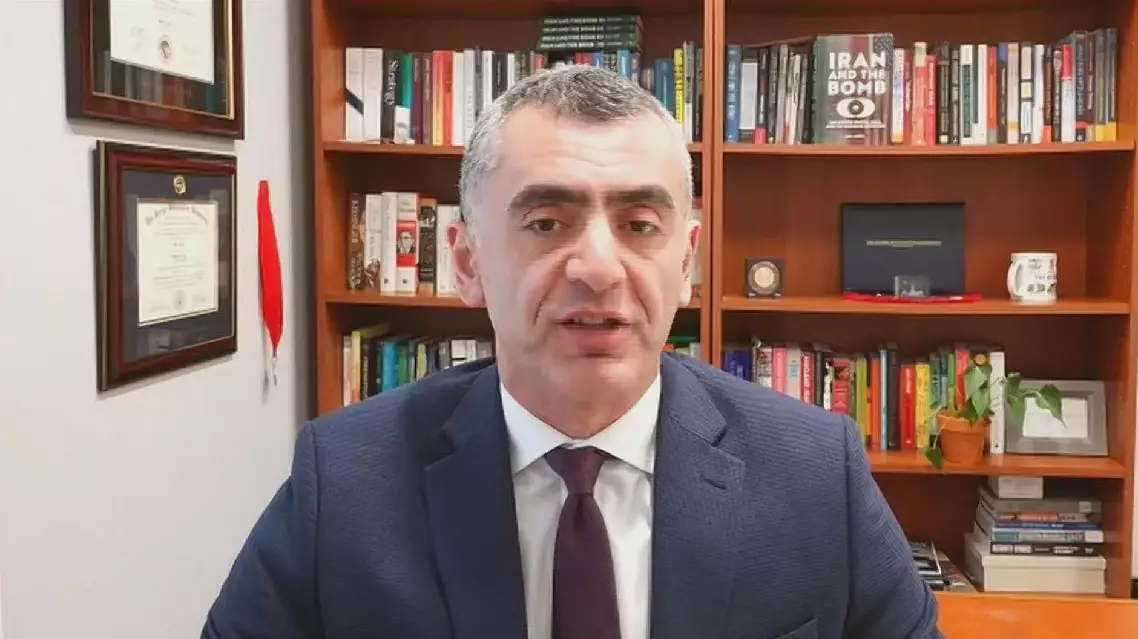
Expert warns of severe consequences of possible US strikes on Iran's power infrastructure