BAGHDAD (AP) — American journalist Shelly Kittleson, who was kidnapped from a Baghdad streetcorner last week, has been released, an Iraqi official with direct knowledge of the situation said on Tuesday.
Kittleson was freed in the afternoon, said the official, who spoke to The Associated Press on condition of anonymity because he was not authorized to comment publicly. He did not share her current whereabouts but said that prior to her release, she had been held in Baghdad.
The powerful Iran-backed Iraqi militia Kataib Hezbollah said in a statement earlier in the day it had decided to free Kittleson, who was abducted on March 31.
The group said its decision came “in appreciation of the patriotic stances of the outgoing prime minister," Mohammed Shia al-Sudani, without giving more details. It added that “this initiative will not be repeated in the future.”
The statement added a condition — that Kittleson must “leave the country immediately” upon her release.
The U.S. State Department did not immediately respond to a request for comment.
Kataib Hezbollah had not previously acknowledged that it was the one responsible for Kittleson’s abduction, although both U.S. and Iraqi officials had pointed fingers at the group.
Two officials within the militia, who spoke on condition of anonymity because they were not authorized to comment publicly, told the AP that in exchange for freeing Kittleson, several members of the group who had previously been detained by Iraqi authorities would be released.
Kittleson, 49, a freelance journalist, had lived abroad for years before the kidnapping, using Rome as her base for a time and building a respected journalism career across the Middle East, particularly in Iraq and Syria. Like many freelancers, she often worked on a shoestring budget and without the protections afforded by large news organizations to staff.
She had entered Iraq again shortly before her abduction. U.S. officials have said that they warned her multiple times of threats against her, but that she did not want to leave.
Iraqi officials have said that two cars were involved in the kidnapping, one of which crashed while being pursued near the town of al-Haswa in Babil province, southwest of Baghdad. The journalist was then transferred to a second car that fled the scene.
Three Iraqi officials said earlier Tuesday that attempts to negotiate her release had run into obstacles.
The two Iraqi security officials and one official from the pro-Iran Coordination Framework political bloc spoke to the AP on condition of anonymity because they were not authorized to speak about the sensitive case publicly.
One of the security officials said that an official with the Popular Mobilization Forces, a coalition of Iran-backed militias that is nominally under the control of the Iraqi military, had been tasked with communicating with the abductors to secure Kittleson’s release but had run into difficulties in communicating with the Kataib Hezbollah leadership.
“The primary challenge is that the leaders of the Kataib militia — specifically, the commanders of the battalions — are nowhere to be found. No one knows their whereabouts, and the process of establishing contact with them is extremely complex,” they said. “These leaders have gone underground, maintaining no active lines of communication, out of fear of being targeted.”
The political official said a message had been sent to the Kataib leadership to determine their demands in exchange for releasing the kidnapped journalist. Iraqi authorities were willing to release six Kataib Hezbollah members who are currently detained, most of them in connection with attacks on a U.S. base in Syria, they said.
Kataib Hezbollah has previously been accused of kidnapping foreigners.
Elizabeth Tsurkov, a Princeton graduate student with Israeli and Russian citizenship, disappeared in Baghdad in 2023. After she was freed and handed over to U.S. authorities in September 2025, she said that she had been held by Kataib Hezbollah.
The group never officially claimed responsibility for kidnapping her.
Iran-backed militias in Iraq have also launched regular attacks on U.S. facilities in the country since the beginning of the U.S.-Israeli war on Iran.
Associated Press writers Matthew Lee and Eric Tucker in Washington contributed to this report.
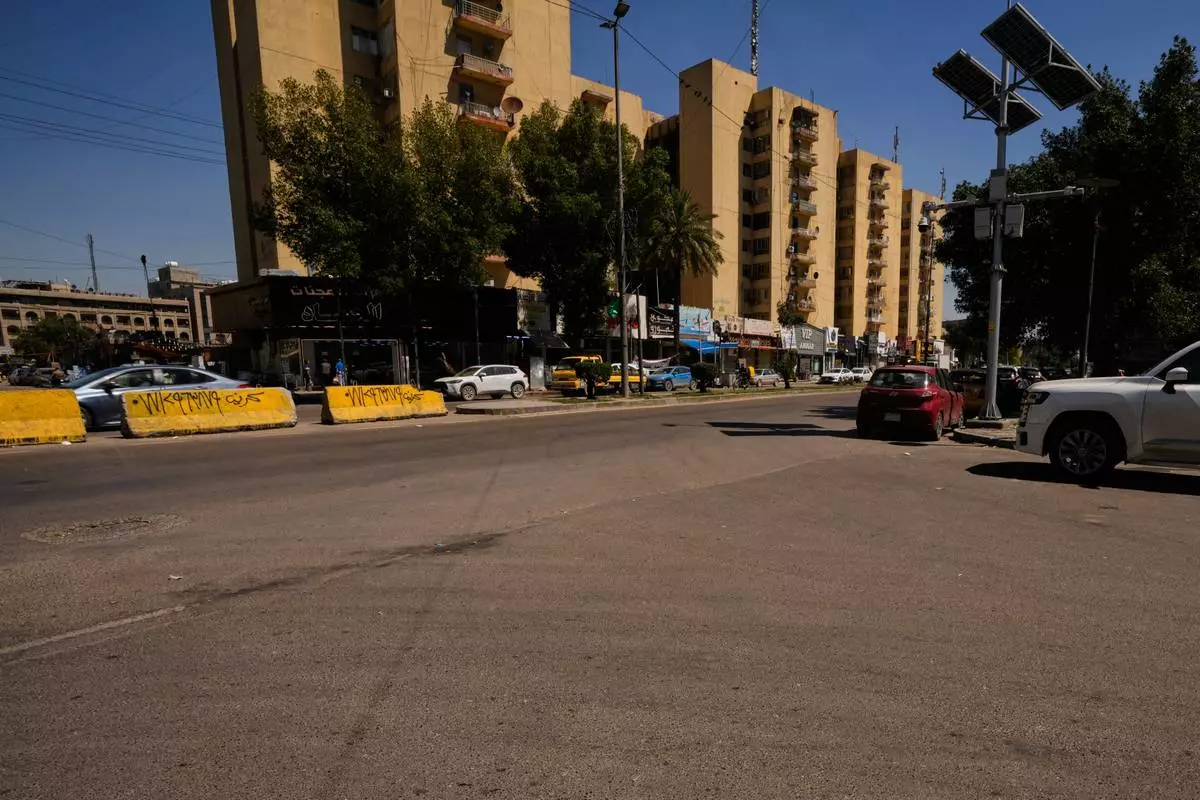
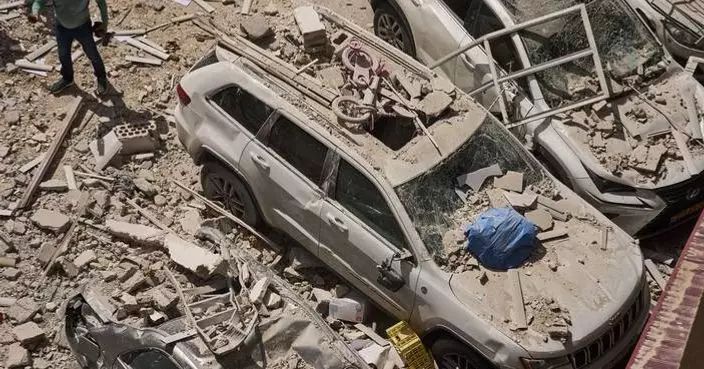
The street corner in central Baghdad's Saadoun Street where U.S. journalist Shelly Kittleson was kidnapped in central Baghdad, Iraq, Wednesday, April 1 2026. (AP Photo/ Hadi Mizban)
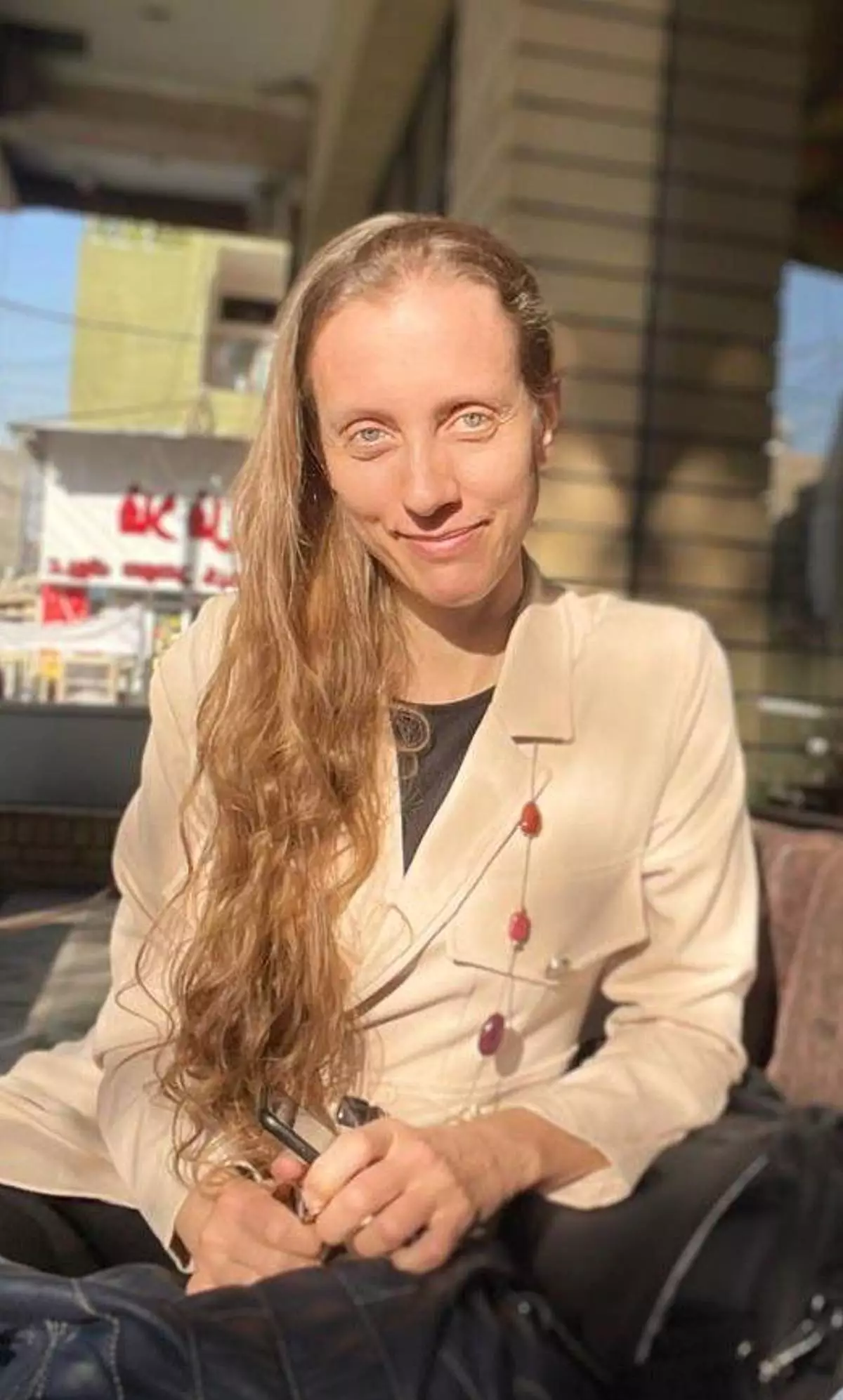
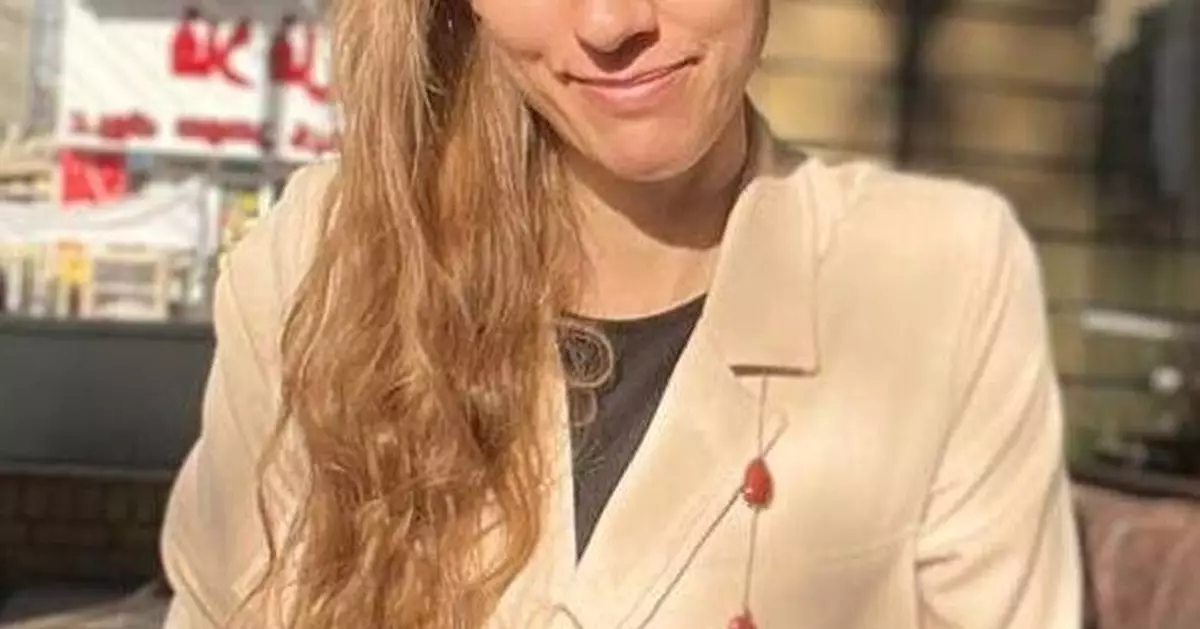
U.S. journalist Shelly Kittleson poses for a cellphone photo in a cafe in Baghdad, Iraq, March 25, 2025. (AP Photo)
WASHINGTON (AP) — President Donald Trump has repeatedly pushed back deadlines for Iran to cut a deal or open the Strait of Hormuz, but his latest deadline for Tuesday came with his most perilous threat yet: “a whole civilization will die tonight, never to be brought back again.”
Trump's previous deadline was weeks ago, but it was postponed several times as the Republican president oscillated between heated threats, announced delays and proclamations that the negotiations were going well, sometimes in the same statement.
That was true in Trump's Truth Social post before his Tuesday 8 p.m. ET deadline. After threatening a “whole civilization," Trump said Iran's new leaders were more reasonable and “maybe something revolutionarily wonderful can happen, WHO KNOWS?”
Officials involved in diplomatic efforts said talks continued, but it was unclear if a deal would be reached by the deadline, which Trump has suggested was final. Trump raised the ante on his threats from Monday.
“They’ll have no bridges," he wrote. “They’ll have no power plants. They’ll have no anything.”
U.N. Secretary-General António Guterres warned the U.S. that attacks on civilian infrastructure are banned under international law, according to his office. Trump, speaking with reporters, said he's “not at all” concerned about committing war crimes with such attacks.
So how did Trump's deadline delays and threats escalate over the last weeks?
On March 21, Trump posted on Truth Social that the U.S. would “hit and obliterate” Iranian power plants if it did not fully reopen the strait within 48 hours.
Iran had until the evening of March 23.
Then 12 hours before the deadline, Trump took to Truth Social to share what seemed good news: that both countries had productive conversations toward concluding the conflict.
He wrote that he had instructed the Pentagon to postpone any strikes on Iranian power plants and energy infrastructure for five days, to give more time for talks.
That pushed the deadline out to the end of that week.
Before that deadline, on March 26, Trump doubled down on his threats on Truth Social: “They better get serious soon, before it is too late, because once that happens, there is NO TURNING BACK, and it won’t be pretty!”
But later that day, he extended the deadline for 10 more days, to April 6 at 8 p.m. Eastern, and said on Truth Social that negotiations were “going very well.”
On March 30, Trump put out a mixed statement: celebrating progress in the talks with Iran while also expanding his threatened bombing if a deal wasn't “shortly reached,” adding that “it probably will be."
“We will conclude our lovely ‘stay’ in Iran by blowing up and completely obliterating all of their Electric Generating Plants, Oil Wells and Kharg Island (and possibly all desalinization plants!),” he wrote.
It's unclear how soon “shortly reached” meant for Trump, but a deal was not made as the deadline loomed.
“Remember when I gave Iran ten days to MAKE A DEAL or OPEN UP THE HORMUZ STRAIT," Trump said in a Truth Social post on Saturday, "Time is running out - 48 hours before all Hell will reign down on them.” He meant rain down.
As the deadline approached, his posts had doubled down on his threats until Sunday, when Trump pushed it again in an expletive-filled post.
“Tuesday will be Power Plant Day, and Bridge Day, all wrapped up in one, in Iran. There will be nothing like it!!! Open the F——-in’ Strait, you crazy bastards, or you’ll be living in Hell,” Trump said on Truth Social, followed by another post that specified 8 p.m. as the deadline.
Trump then suggested on Monday that Tuesday's deadline would be final, saying he'd already given Iran enough extensions.
“The entire country can be taken out in one night, and that night might be tomorrow night,” Trump said. “We have a plan, because of the power of our military, where every bridge in Iran will be decimated by 12 o’clock tomorrow night.”
By Tuesday morning, Trump had sent his statement saying “a whole civilization will die tonight,” to which he added that “I don’t want that to happen, but it probably will.”
Mojtaba Ferdousi Pour, head of Iran’s diplomatic mission in Cairo, said Iran no longer trusts the Trump administration after the U.S. bombed the Islamic Republic twice during previous rounds of talks.
“We only accept an end of the war with guarantees that we won’t be attacked again,” he told The Associated Press.
The talks were continuing as the 8 p.m. Tuesday deadline — 3:30 a.m. Wednesday in Iran — ticked closer.
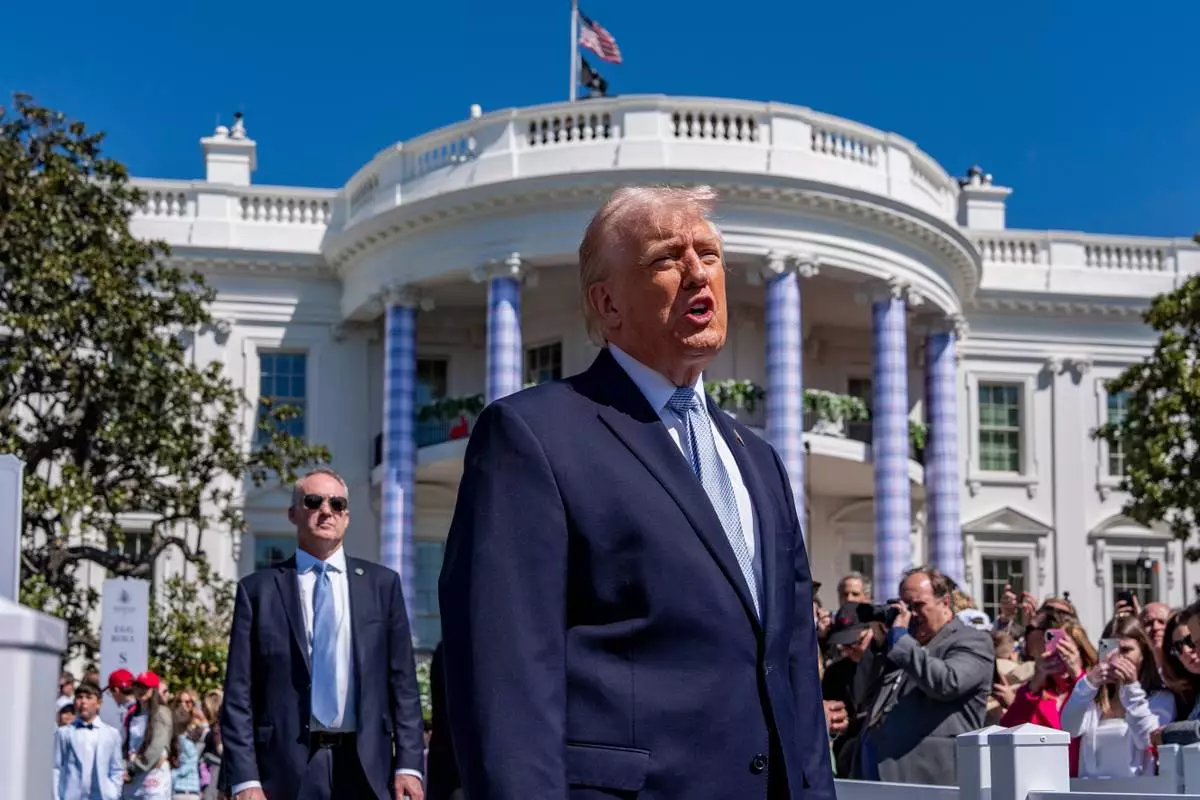
President Donald Trump speaks to the crowd during the White House Easter Egg Roll on the South Lawn of the White House, Monday, April 6, 2026, in Washington. (AP Photo/Alex Brandon)
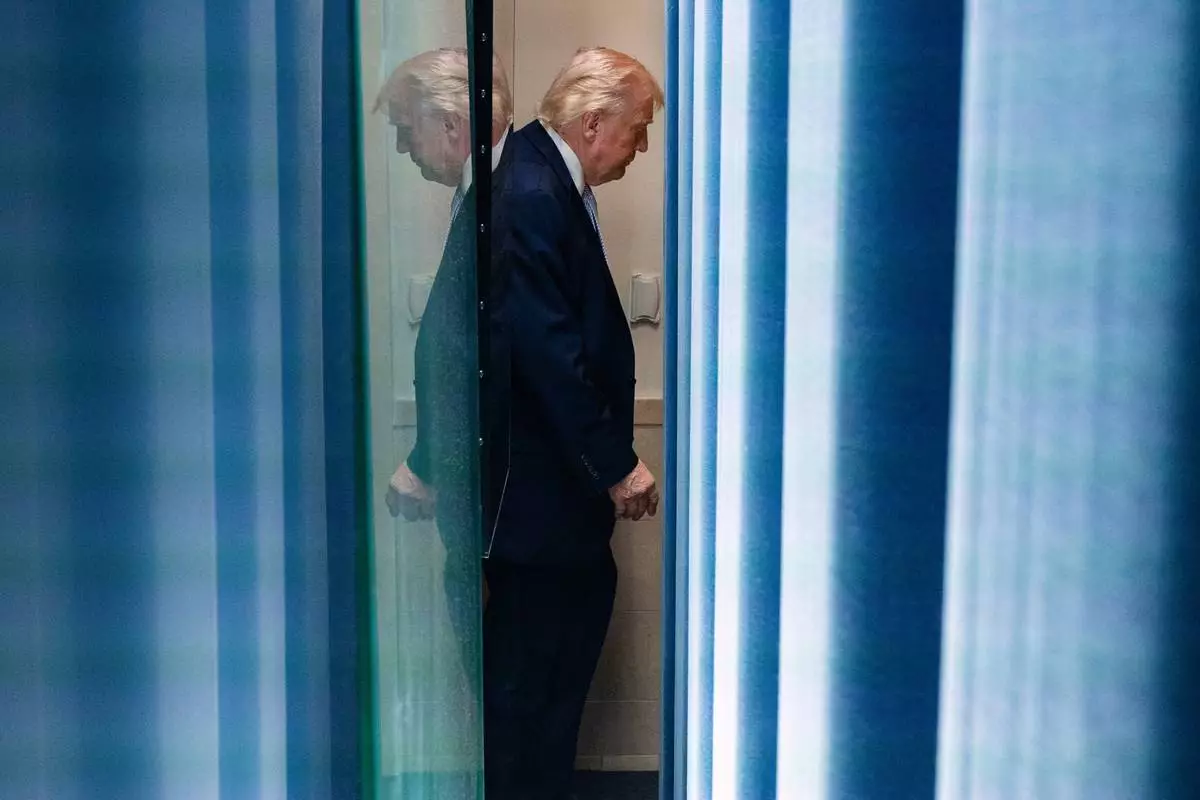
President Donald Trump departs after speaking with reporters in the James Brady Press Briefing Room at the White House, Monday, April 6, 2026, in Washington. (AP Photo/Alex Brandon)
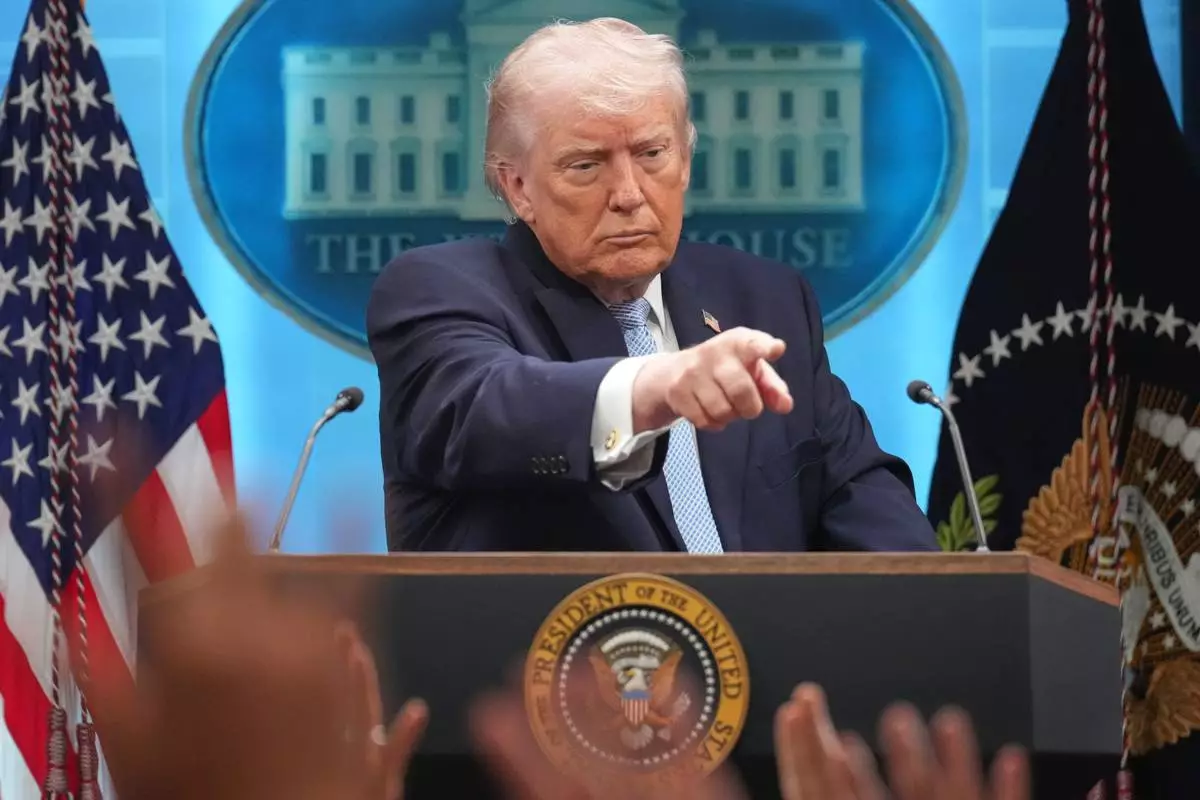
President Donald Trump speaks with reporters during a news conference in the James Brady Press Briefing Room at the White House, Monday, April 6, 2026, in Washington. (AP Photo/Mark Schiefelbein)