HOUSTON (AP) — Still aglow from their triumphant lunar flyby, the Artemis II astronauts put in a call to their friends aboard the International Space Station on Tuesday as they headed home from the moon.
It was the first moonship-to-spaceship radio linkup ever. NASA's Apollo crews had no off-the-planet company back in the 1960s and 1970s, the last time humanity set sail for deep space.
"We have been waiting for this like you can’t imagine,” Artemis II commander Reid Wiseman called out.
For Christina Koch on Artemis II and Jessica Meir aboard the space station, it marked a joyous space reunion despite being 230,000 miles (370,000 kilometers) apart. The two teamed up for the world's first all-female spacewalk in 2019 outside the orbiting lab.
Koch told her “astro-sister” that she'd hoped to meet up with her again in space “but I never thought it would be like this — it's amazing.”
“I'm so happy that we are back in space together,” Meir replied, “even if we are a few miles apart.”
Houston's Mission Control arranged the cosmic chitchat between the four lunar travelers and the space station's three NASA and one French residents.
As Tuesday dawned, Wiseman continued to beam back pictures of the previous day's lunar rendezvous, which set a new distance record for humanity. The highlight: an Earthset photo reminiscent of Apollo 8's Earthrise shot from 1968.
Koch described being awe-struck by not just the beauty of Earth, “but how much blackness there was around it."
“It just made it even more special. It truly emphasized how alike we are, how the same thing keeps every single person on planet Earth alive,” she told the space station crew. “The specialness and preciousness of that really is emphasized" when viewing the home planet from the moon.
In a debriefing later with Mission Control's lead lunar scientist Kelsey Young, the astronauts recounted how they spotted a cascade of pinpricks of light on the lunar surface from impacting cosmic debris. The flashes lasted mere milliseconds and coincided by chance with Monday evening's total solar eclipse.
The first lunar explorers since Apollo 17 in 1972, Wiseman and his crew are aiming for a Friday splashdown off the San Diego coast on Friday to wrap up the nearly 10-day test flight.
It sets the stage for next year's Artemis III, a lunar lander docking demo in orbit around Earth. Artemis IV will follow in 2028 with two astronauts attempting to land near the lunar south pole.
As for the Orion capsule’s pesky potty, Mission Control assured the astronauts that no repairs were required Tuesday. The toilet has been on-and-off limits to the crew ever since last week’s launch, prompting them to rely on a backup bag-and-funnel system for urinating.
NASA Administrator Jared Isaacman told the crew following the lunar flyby Monday night: “We definitely have to fix some of the plumbing” ahead of the next Artemis mission.
The Associated Press Health and Science Department receives support from the Howard Hughes Medical Institute’s Department of Science Education and the Robert Wood Johnson Foundation. The AP is solely responsible for all content.
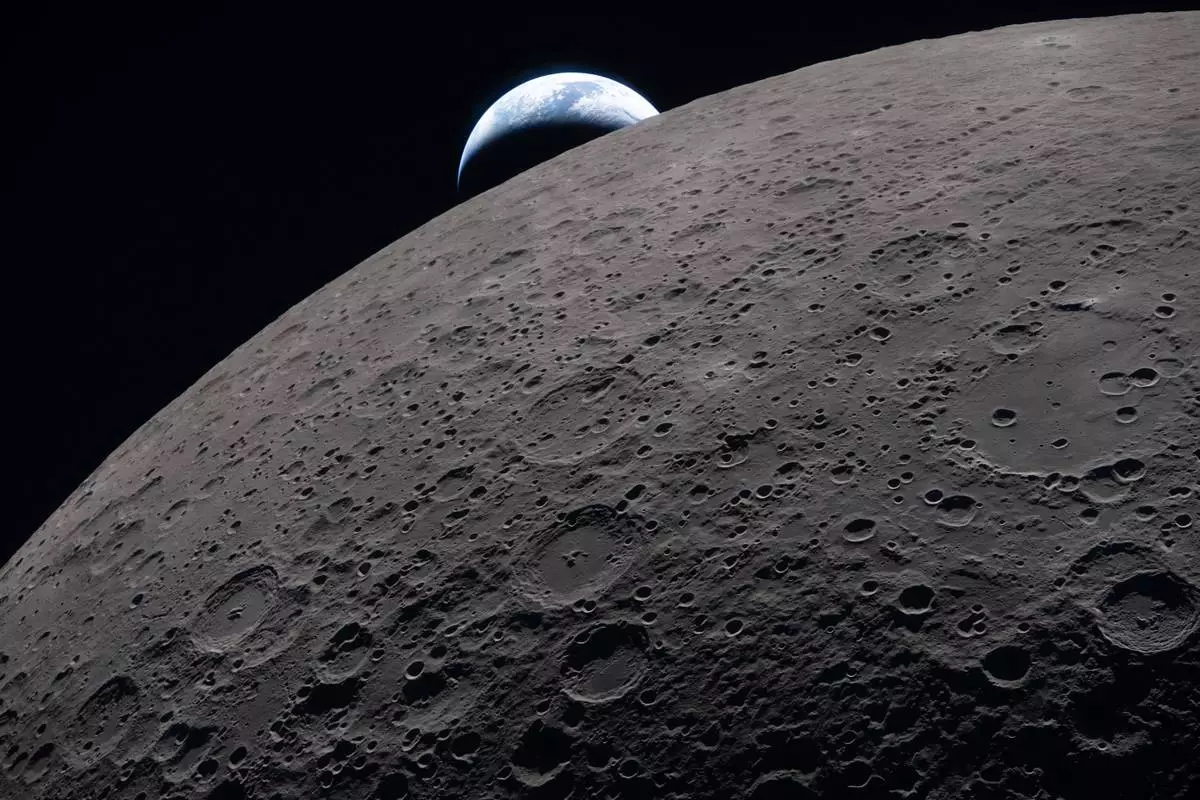
In this image provided by NASA, the Artemis II crew captured this view as the Earth sets behind the Moon during a lunar flyby, Monday, April 6, 2026. (NASA via AP)
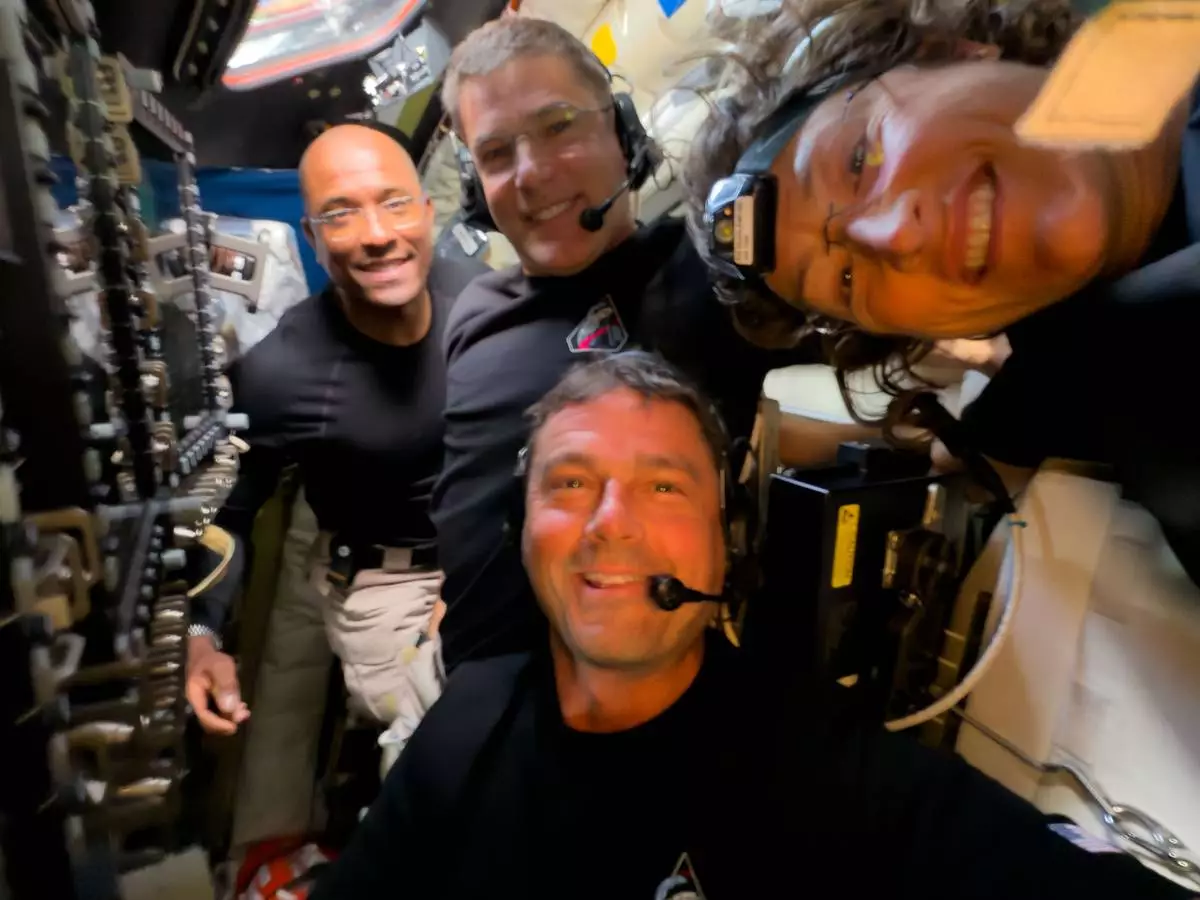
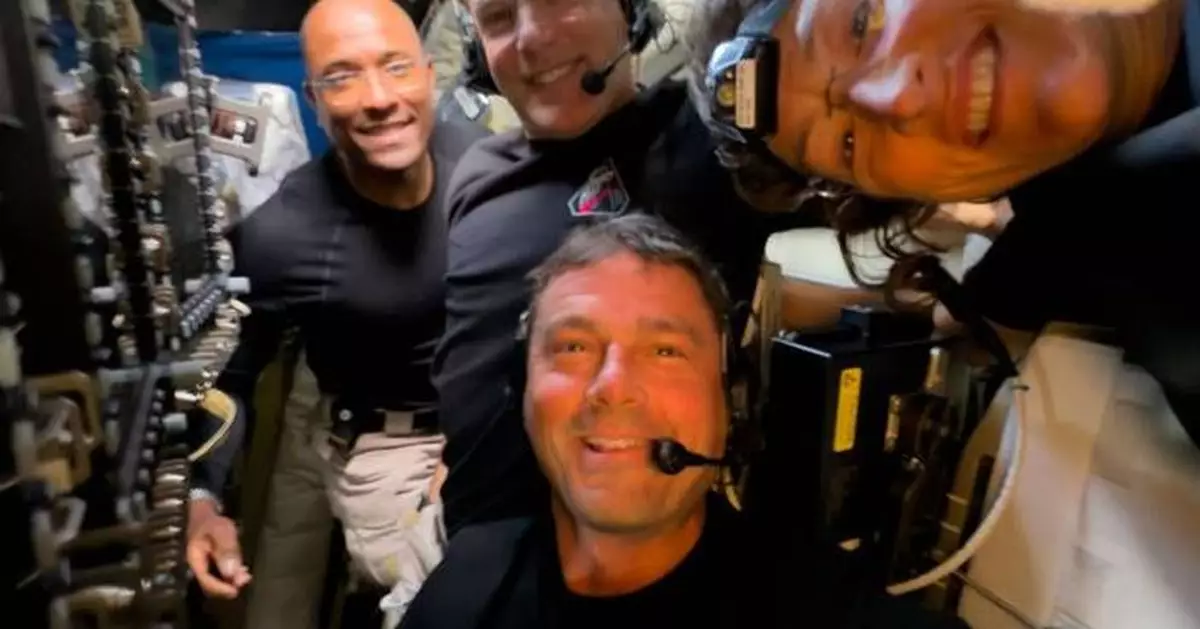
In this image provided by NASA, Artemis II crew members, from left, Victor Glover Jeremy Hansen, Victor Glover, Reid Wiseman and Christina Koch, pause to turn the camera around for a selfie midway through their lunar observation period of the Moon during a lunar flyby, Monday, April 6, 2026. NASA via AP)
NEW YORK (AP) — U.S. stocks swung sharply as uncertainty about what will happen in the war with Iran increased. The S&P 500 fell as much as 1.2% Tuesday, hours ahead ahead of a deadline by President Donald Trump to destroy Iranian power plants and bridges. Stocks rallied back in late trading after Pakistan’s prime minister urged Trump to extend his deadline for another two weeks and asked Iran to open up the Strait of Hormuz for two weeks. The S&P 500 erased all its losses and ended 0.1% higher. The Dow Jones Industrial Average slipped 0.2%, and the Nasdaq composite edged up 0.1%.
THIS IS A BREAKING NEWS UPDATE. AP’s earlier story follows below.
NEW YORK (AP) — U.S. stocks sank Tuesday as the countdown ticked toward the latest deadline set by President Donald Trump to destroy Iranian power plants and bridges.
The S&P 500 fell 0.8% as Trump threatened that a “whole civilization will die tonight, never to be brought back again” if Iran does not meet his deadline at 8 p.m. Eastern time to open the Strait of Hormuz. Iranian officials, meanwhile, urged young people to form human chains to protect sites Trump has threatened to bomb.
The Dow Jones Industrial Average was down 370 points, or 0.8%, with an hour remaining in trading, and the Nasdaq composite was 1% lower.
The moves were tentative, much like they've been since the start of the war with Iran, because of deep uncertainty about when the fighting may end. During the first hour of Tuesday's trading, the Dow careened between a gain of 74 points and a loss of 425.
Oil prices were likewise shaky. The price for a barrel of benchmark U.S. crude to be delivered in May briefly climbed above $117 before settling at $112.95, up 0.5%.
The price for a barrel of Brent crude, the international standard, to be delivered slightly later in the year, in June, eased by 0.5% to $109.27. But it's still well above its roughly $70 level from before the war began in late February.
Oil prices have spiked because the war has snarled the production and transportation of crude in the Persian Gulf. Much of that oil exits the gulf through the Strait of Hormuz to reach customers around the world, but Iran has blocked it to enemies.
The worry in markets has been that a long-term disruption will keep oil prices high for a long time and send a painful wave of inflation crashing through the global economy. Iran on Monday rejected the latest ceasefire proposal and instead said it wants a permanent end to the war.
So far in the war, Trump has made a series of threats to blow up Iranian power plants if it doesn’t open the Strait of Hormuz, only to delay it several times. The possibility remains that Trump could back down again, among other scenarios, which is keeping uncertainty high.
A year ago, Trump ultimately backed off many of the stiff tariffs that he initially threatened to put on imports from other countries, though they ended up higher than from before his second term.
“Investors are likely to remain on edge and markets unable to establish trends, probably until there is a clear outcome later this evening: a deal, the U.S./Israeli strikes intensify, or Iran’s retaliation becomes escalatory instead of proportional,” according to Paul Christopher, head of global investment strategy at Wells Fargo Investment Institute.
On Wall Street, companies with big fuel bills fell to some of the sharpest losses as high oil prices cranked up the pressure.
Norwegian Cruise Line Holdings dropped 4.8%, and United Airlines sank 3.6%.
Companies whose customers may have the least room to absorb the recent jump in gasoline prices also struggled. Dollar Tree slid 5.1%, and Dollar General fell 2.3%.
The average price for a gallon of regular gasoline across the United States has leaped to $4.14, according to AAA. It was below $3 a couple days before the United States and Israel launched attacks to begin the war in late February.
Stocks of health insurers helped limit the market’s losses after the Centers for Medicare & Medicaid Services said Medicare Advantage payments will likely see a net average increase of 2.48% in 2027. That was well ahead of what some investors expected, according to UBS analysts led by AJ Rice.
UnitedHealth Group jumped 9.6%, and Humana rose 8.8%.
Universal Music Group also helped limit losses for global stock indexes after Bill Ackman’s Pershing Square Capital Management offered to buy the record label behind Taylor Swift and Bad Bunny in a cash-and-stock deal valued at approximately $64 billion.
Pershing Square argued the proposed deal would clear uncertainty that’s weighed on UMG’s stock. Its share price in Amsterdam jumped 11.4% but remained below what Pershing said its bid is worth. That could indicate investor doubt that the deal will happen.
In stock markets abroad, indexes fell across much of Europe. Asian stock indexes were stronger, with South Korea’s Kospi up 0.8% for one of the world’s bigger gains.
In the bond market, Treasury yields held relatively steady ahead of Trump’s looming deadline. The yield on the 10-year Treasury held at 4.34%, where it was late Monday.
That's well above its 3.97% level from before the war, and the rise has pushed up rates for mortgages and other loans going to U.S. households and businesses, which slows the economy.
AP Business Writers Yuri Kageyama and Matt Ott contributed.
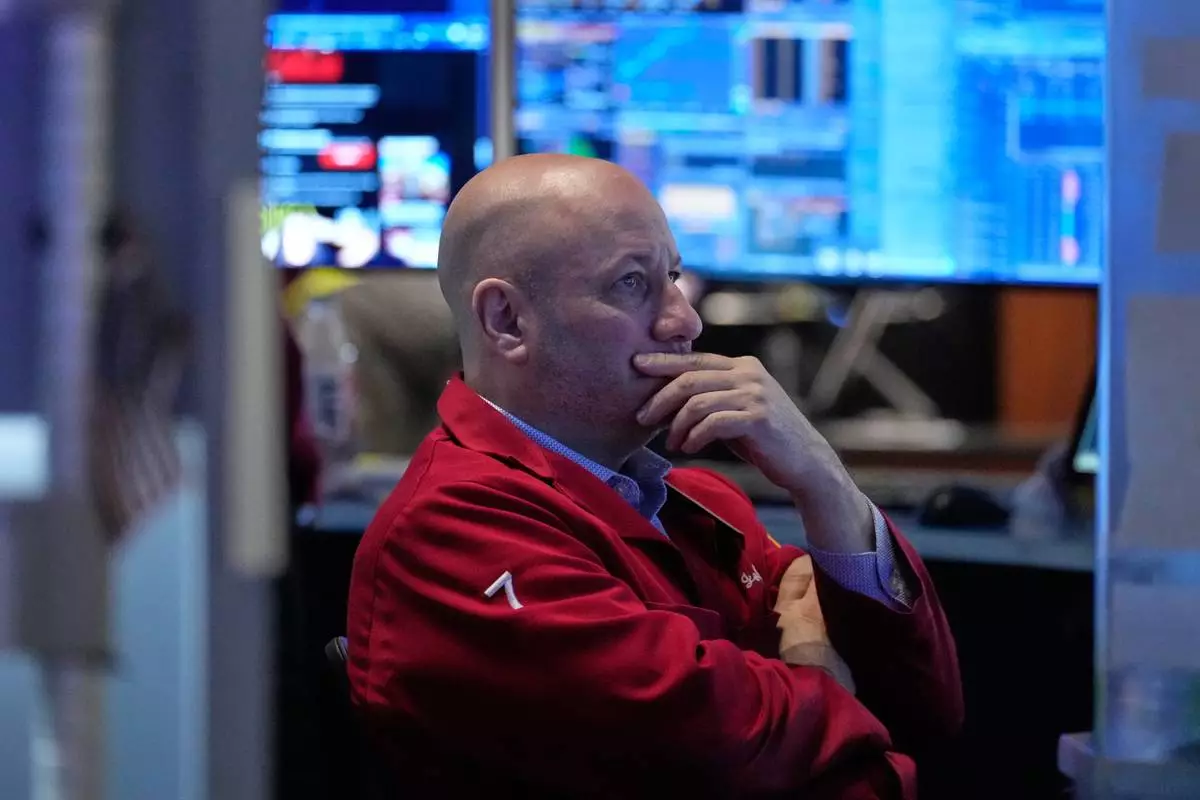
John Mauro works on the floor at the New York Stock Exchange in New York, Tuesday, April 7, 2026. (AP Photo/Seth Wenig)
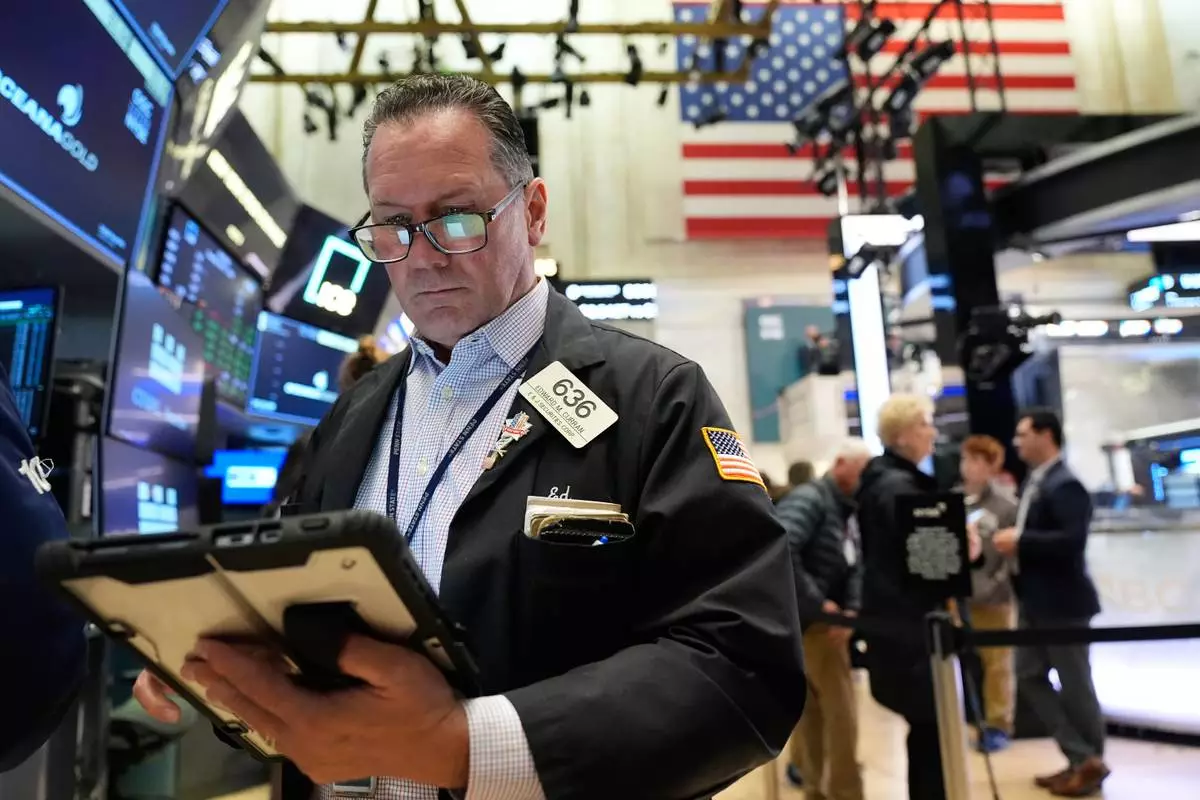
Ed Curran works on the floor at the New York Stock Exchange in New York, Tuesday, April 7, 2026. (AP Photo/Seth Wenig)
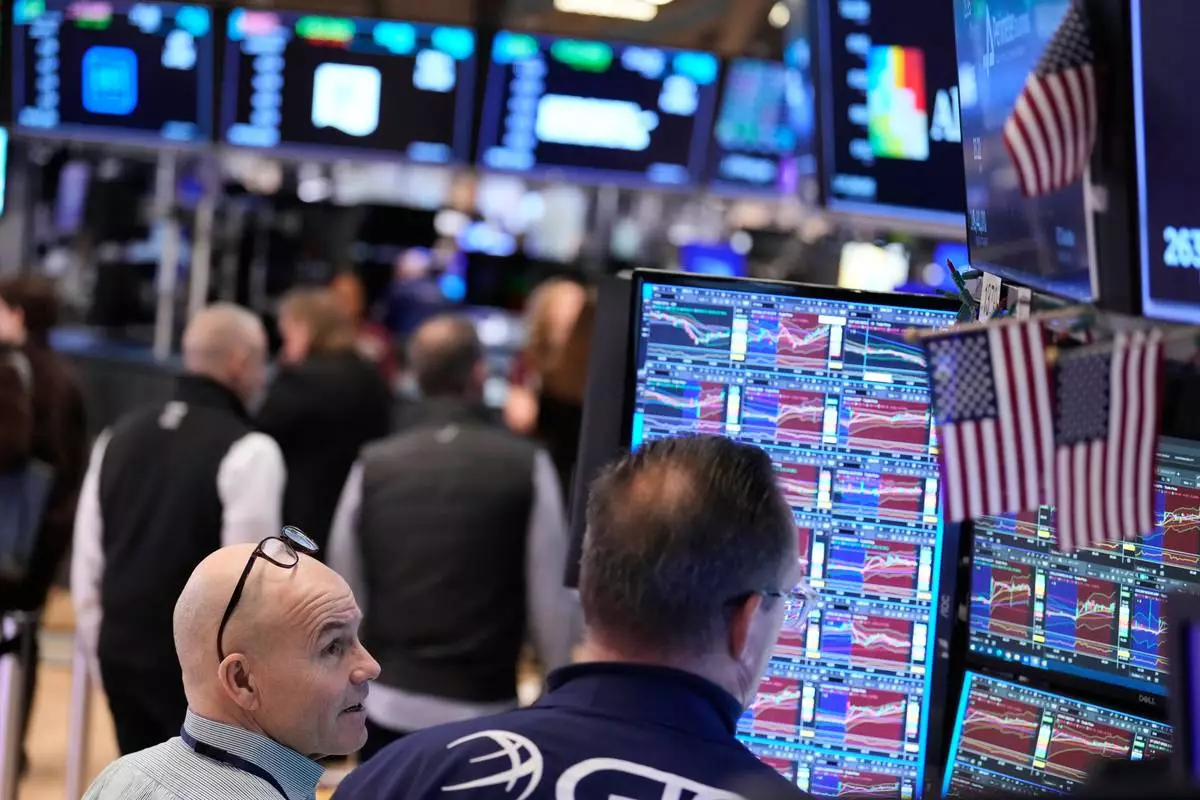
People work on the floor at the New York Stock Exchange in New York, Tuesday, March 31, 2026. (AP Photo/Seth Wenig)
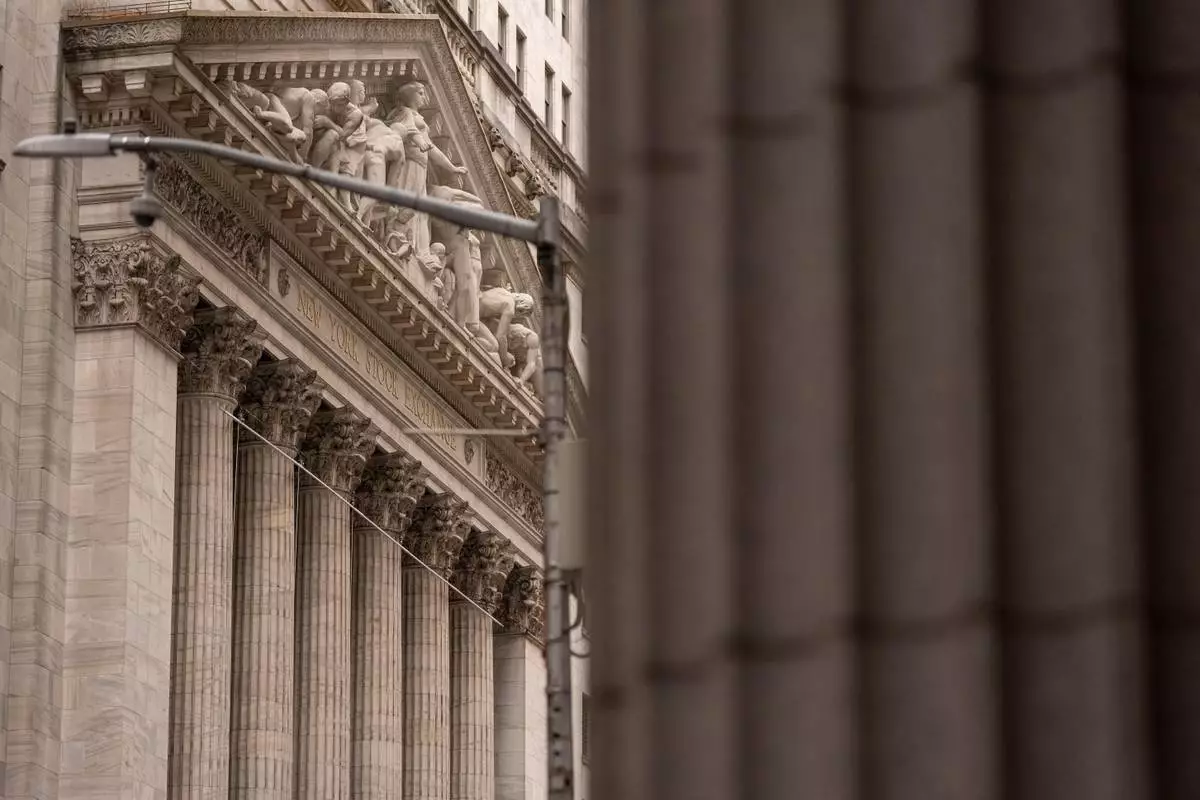
A general view shows the New York Stock Exchange, Friday, March 27, 2026, in New York. (AP Photo/Yuki Iwamura)
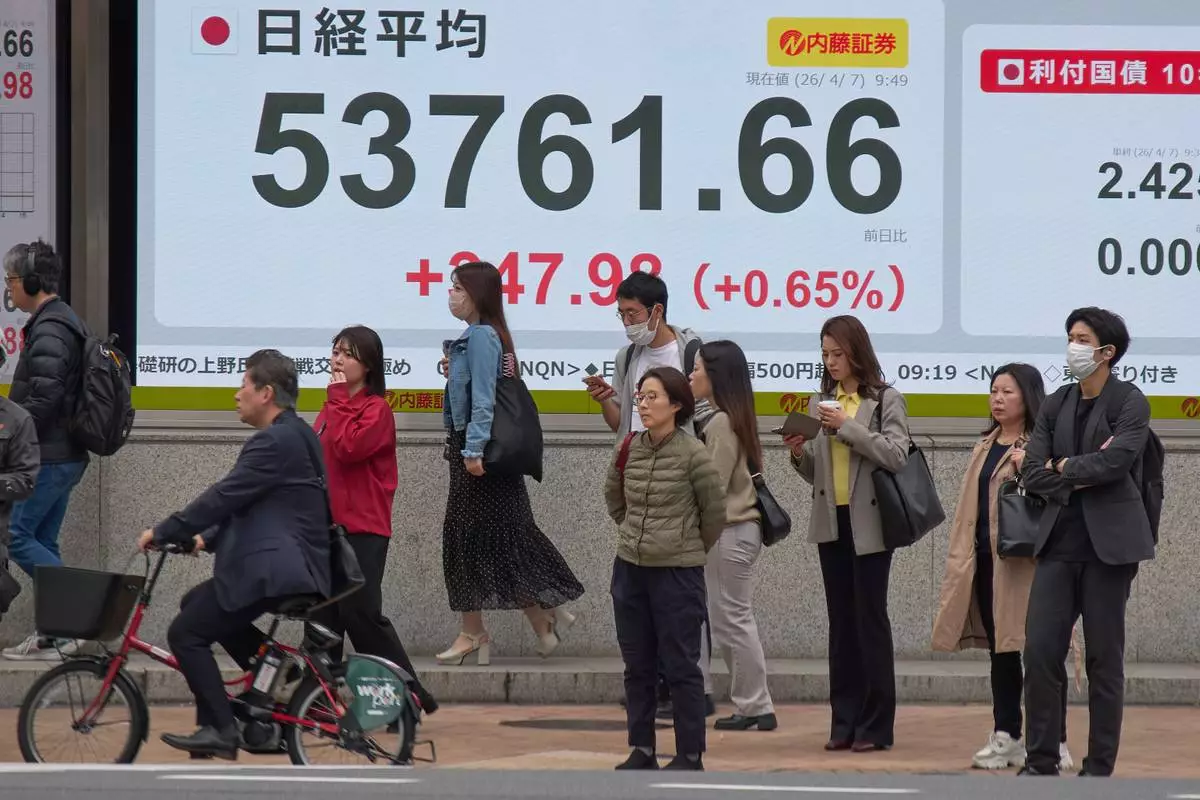
People stand in front of an electronic stock board showing Japan's Nikkei index at a securities firm Tuesday, April 7, 2026, in Tokyo. (AP Photo/Eugene Hoshiko)
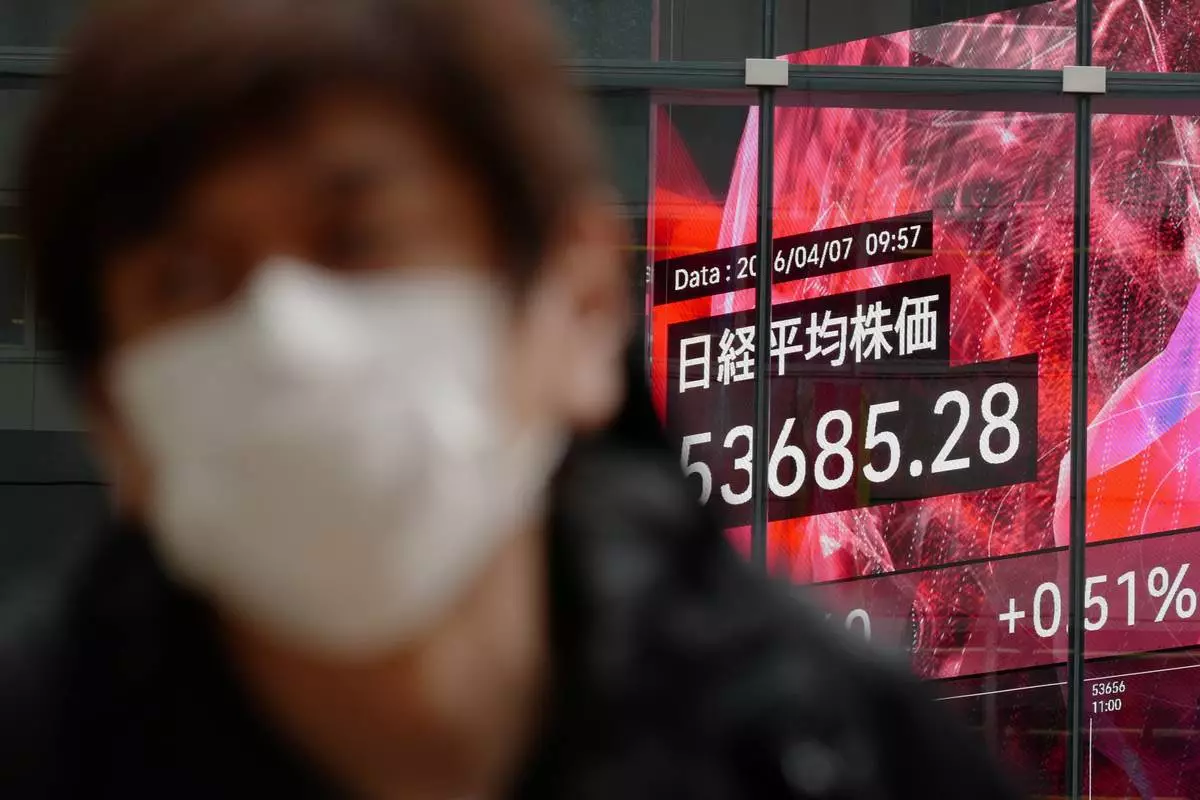
A person walks in front of an electronic stock board showing Japan's Nikkei index at a securities firm Tuesday, April 7, 2026, in Tokyo. (AP Photo/Eugene Hoshiko)
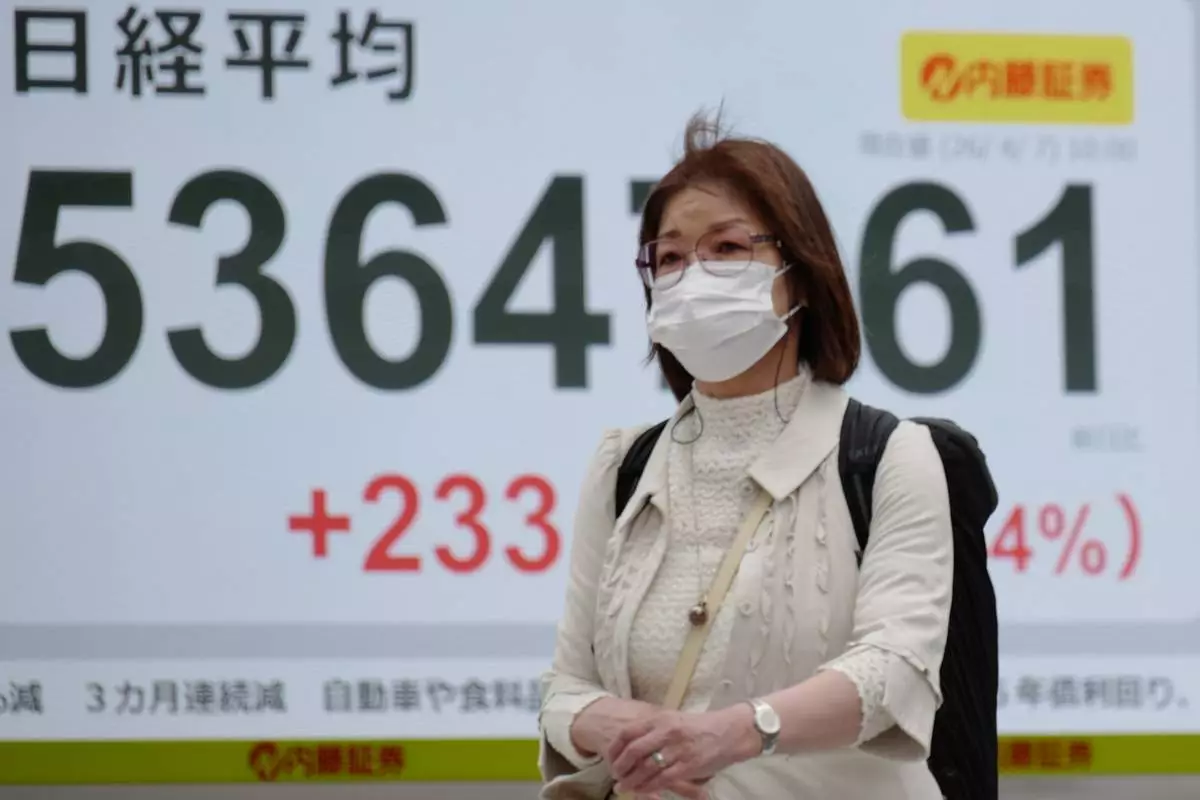
A person walks in front of an electronic stock board showing Japan's Nikkei index at a securities firm Tuesday, April 7, 2026, in Tokyo. (AP Photo/Eugene Hoshiko)