PITTSBURGH (AP) — Konnor Griffin is with the Pittsburgh Pirates for the long haul.
The 19-year-old shortstop agreed to a nine-year, $140 million contract with the Pirates early Wednesday, less than a week after the former first-round pick made his major league debut.
The deal, the largest in club history, includes escalators that could raise the total value to $150 million.
Griffin's Pittsburgh teammates attended Wednesday's news conference to announce the deal.
“This week has been amazing, debut week, and then sitting here signing a contract, it’s been amazing,” Griffin said. “It’s one of the best weeks of my life. ... But it’ll be even better if we can get a win today.”
Pirates owner Bob Nutting said the nine-year contract reflects the team's commitment in winning this season and in the future.
“This is an important step for 2026 as we look at it right now, but obviously this is a long-term commitment,” Nutting said. “It’s a long-term statement of where we’re headed as an organization, where we are headed with this team. ... This obviously is an unusual and dramatic step for the Pittsburgh Pirates. So I’m excited, I hope our fans are excited, I hope the city is excited, I know the organization is excited.”
When asked why it was important to sign for nine years, Griffin said he sees the Pirates as a winning organization.
“I’m pumped to be a Pirate and be a part of this wonderful clubhouse,” Griffin said, looking at his teammates at the back of the room. “A lot of great talent back there and coaches and staff. Thank you all for being here to support me. Y’all made this transition to the big leagues super easy. And I’m just pumped to go compete. The goal is to win. The goal is to win a World Series. And I think we've got a great clubhouse to go do that. I’m pump to be part of it.”
The agreement comes less than 24 hours after general manager Ben Cherington said the “ingredients” were in place for a long-term pact.
The Pirates selected Griffin with the ninth overall pick in the 2024 amateur draft. He sprinted through the team's farm system, hitting .333 with 21 home runs, 94 RBIs and 65 stolen bases. He was one of the final cuts during spring training last month, and his stay at Triple-A Indianapolis was brief.
Pittsburgh called Griffin to the majors after just a week, and he has played well through his first handful of games. Griffin laced an RBI-double in his first big-league at bat against Baltimore last Friday, and added a pair of hits, including a two-run single, in a 7-1 win over San Diego on Tuesday night that helped the Pirates to their sixth win in seven games.
Griffin, who has said repeatedly he wants to stay in Pittsburgh for as long as possible, has impressed teammates with his maturity and his unique skillset.
Reigning NL Cy Young winner Paul Skenes called Griffin “a big leaguer through and through,” though Griffin is doing his best to ignore the attention that has surrounded his arrival for a team that is trying to return to relevance and end a playoff drought that's now over a decade old.
“Just sticking to being myself, not trying to do too much,” Griffin said Tuesday night. "Just let the game tell me the situation. Compete one pitch at a time and let it all happen.”
AP MLB: https://apnews.com/hub/mlb

Pittsburgh Pirates' Konnor Griffin (6) singles off San Diego Padres pitcher Adrian Morejon, driving in two runs, during the eighth inning of a baseball game in Pittsburgh, Tuesday, April 7, 2026. (AP Photo/Gene J. Puskar)

Pittsburgh Pirates' Konnor Griffin celebrates as he rounds second after hitting an RBI double, his first Major League career hit and run, during the second inning of a baseball game against the Baltimore Orioles in Pittsburgh, Friday, April 3, 2026. (AP Photo/Gene J. Puskar)

Pittsburgh Pirates' Konnor Griffin takes infield practice before making his Major League Baseball debut in the Pirates' home-opener against the Baltimore Orioles in Pittsburgh, Friday, April 3, 2026. (AP Photo/Gene J. Puskar)
KIGALI, Rwanda (AP) — The rhythmic sounds of construction muffle the thud of farmers' hoes on a chilly morning in Rwanda 's capital, where new efforts aim to protect remaining agricultural land from relentless development in Africa's most densely populated country.
Eighty-four-year-old Mukarusini Purisikira had been a farmer before she fled the country to Congo during the 1994 Rwandan genocide against the Tutsis. Upon returning, she said, her family's land, which had stretched across the hills, had been taken away for construction. She gestured toward Kigali's high-rise buildings.
Now she grows maize and sweet potatoes on a piece of land the size of a small cottage, which she said is barely enough to feed her.
“It is all I have," she said, looking warily at construction equipment on a ridge nearby.
Now she has a measure of protection. Since September, Rwanda's government has been mapping agricultural land and using satellite imagery to track any development encroaching on farmlands and forests in a country where the population is expected to reach 22 million in a couple of years.
Rwanda is striving to ensure food security amid the latest global pressures on farm inputs like fertilizer, whose prices have been rising since the Iran war began.
The government has imposed fines of up to $3,000 and jail terms of up to six months on developers found to be encroaching.
Some buildings in Kigali have been torn down, though people associated with them didn’t want to comment for fear of government retaliation. The government now plans to incorporate drones for better real-time monitoring.
Meanwhile, land use data from the mayor’s office shows that the Kigali master plan has dedicated nearly a quarter of land — 22% — to agriculture.
City authorities acknowledge that housing construction is attractive due to demand but say future projections show that “farming will be even more productive.” They say the demand for food is also rising and believe that, with innovation, it can be grown on smaller pieces of land.
While most of the food consumed in Kigali comes from other districts in Rwanda, farmland in those areas is shrinking, too, a spokeswoman for the mayor’s office, Emma-Claudine Ntirenganya, told The Associated Press.
The government last year printed and displayed maps showing areas in districts across Rwanda that are designated for construction and reserved for agriculture.
Ntirenganya spoke of going into agriculture “in an urban way. We will be able to show Kigalians that they can also do agriculture and be productive.”
The city administration, which is setting up a greenhouse on its roof, requires developers seeking building permits to include green spaces and gardens in their designs.
Other approaches in Kigali include vertical farms, where vegetables and fruits such as strawberries are grown in stackable plastic containers.
Christian Irakoze co-founded a local company, Eza Neza or “grow well,” that sets up vertical farms in the city and described them as scalable. The AP visited two of them at local homes and another that provides stocks to a grocery store. One grows 600 plants in vertical rows stretching about 50 meters (yards) along a perimeter wall.
Irakoze described his work as “a different way of thinking about farming, from traditional large-scale upcountry farming to something smaller, modular, and that anyone can really do.”
Through the use of locally available inputs such as manure and volcanic sediment in place of soil, Irakoze said farming should be adapted to lessen outside impacts.
“We really have to find ways to find our own solutions, whether through inputs like fertilizers or seeds. Some of these global events are always a reminder that we should definitely have some alternatives,” he said.
Elsewhere in Kigali, a group of young agronomists are training farmers to adopt technologies such as hydroponics to maximize productivity, using water instead of soil.
“The population is increasing, yet our land is not increasing. We make sure that we find solutions that can help farmers to overcome that, and then they produce more,” said one of the agronomists, Richard Bucyana.
Bucyana agreed that solutions such as Rwanda’s help to buffer from global events.
“African governments should start thinking how they can be self-sustainable,” he said.
For more on Africa and development: https://apnews.com/hub/africa-pulse
The Associated Press receives financial support for global health and development coverage in Africa from the Gates Foundation. The AP is solely responsible for all content. Find AP’s standards for working with philanthropies, a list of supporters and funded coverage areas at AP.org.
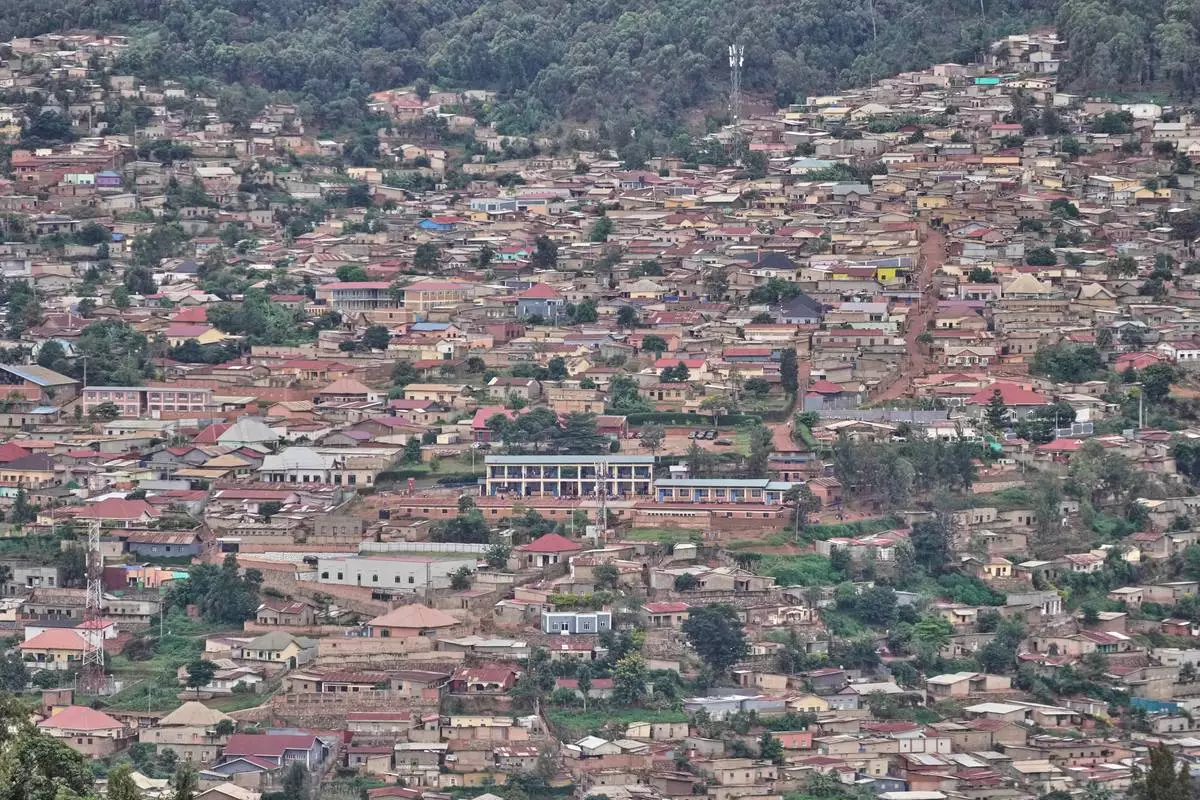
A view of buildings on a hillside in Kigali, Rwanda, March 18, 2026. (AP Photo/Brian Inganga)
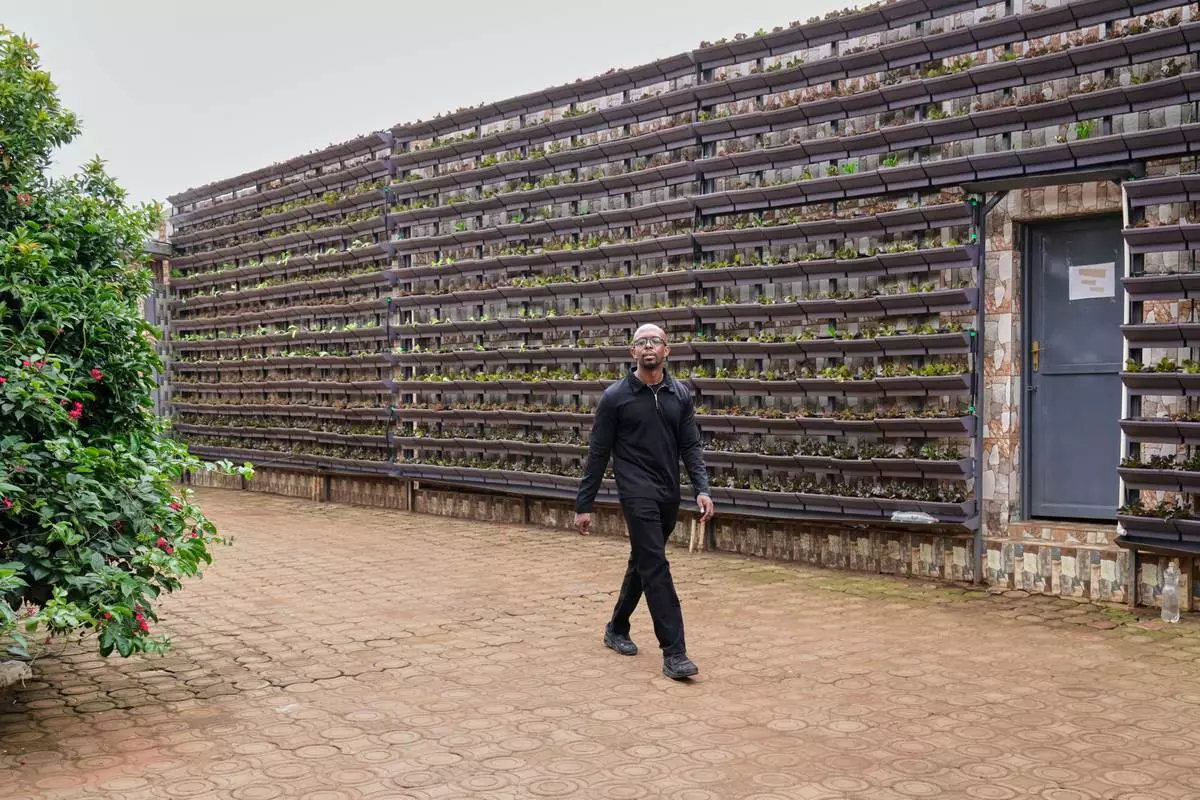
Christian Irakoze, co-founder of Eza Neza, or "Grow Well," a local company that sets up vertical farms in the city and describes them as scalable, walks inside a home compound in Kigali, Rwanda, March 18, 2026. (AP Photo/Brian Inganga)
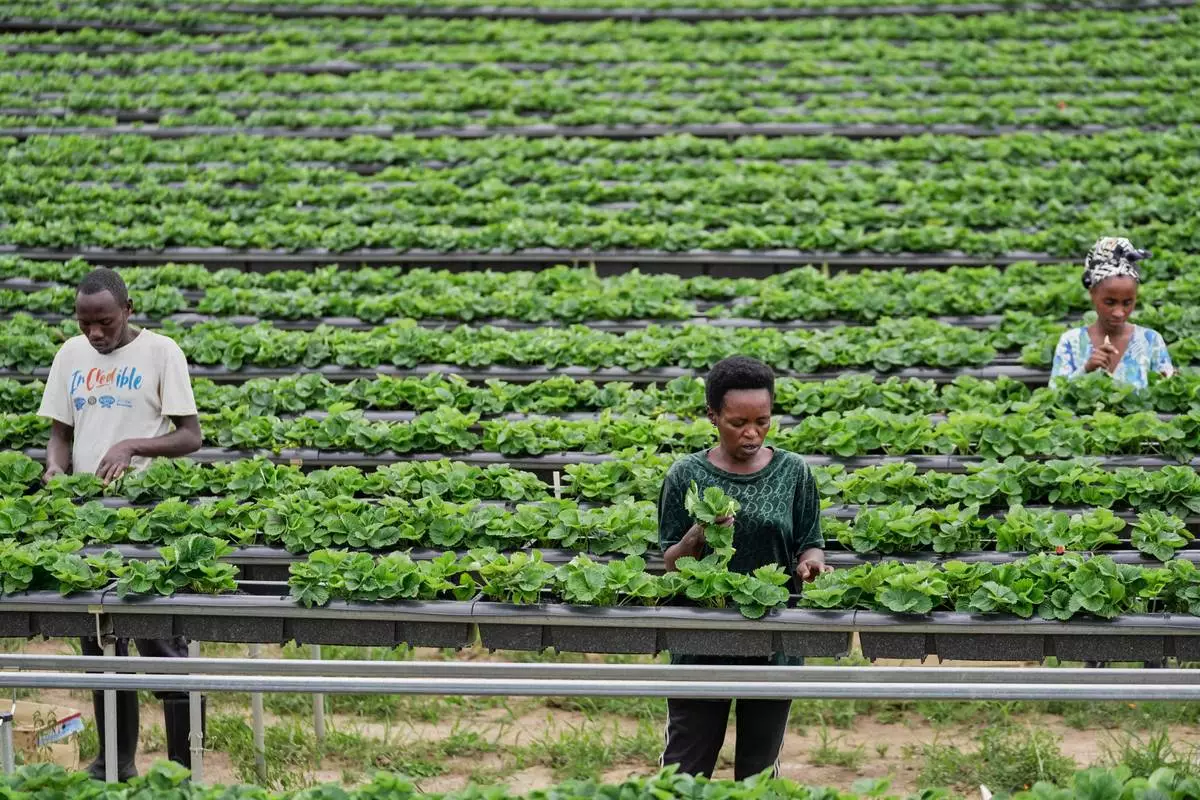
Farmers tend to vegetable seedlings at a farm in Muhanga, Rwanda, March 17, 2026. (AP Photo/Brian Inganga)
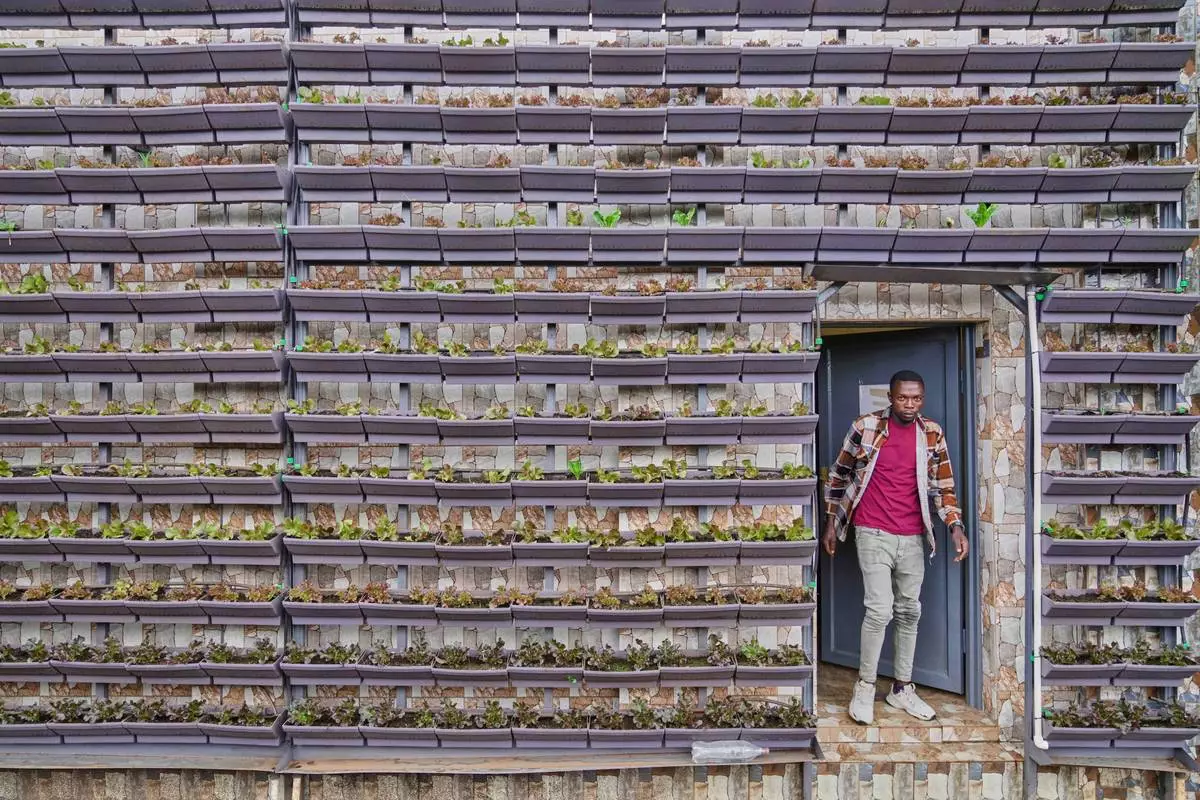
A vertical farm set up in a home compound by Eza Neza, or "Grow Well," which installs vertical farms in the city and describes them as scalable, in Kigali, Rwanda, March 18, 2026. (AP Photo/Brian Inganga)
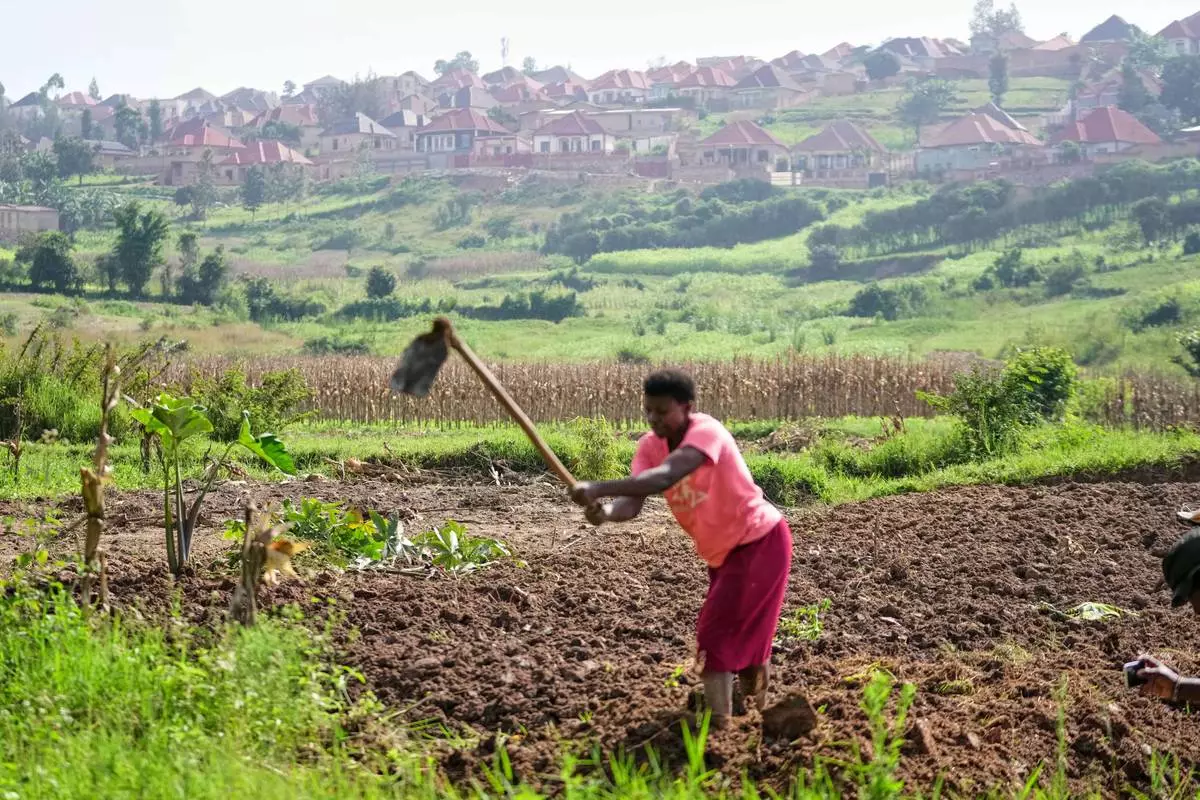
A farmer prepares the soil for planting at a farm in Kigali, Rwanda, March 17, 2026. (AP Photo/Brian Inganga)