ALPHARETTA, Ga.--(BUSINESS WIRE)--Apr 8, 2026--
Stryten Energy LLC, a U.S.-based energy storage solutions provider, today announced the launch of its new E-Series AGM160 and E-Series AGM190 multi‑terminal batteries, designed for long life and high performance in demanding telecommunications and electric utility applications.
This press release features multimedia. View the full release here: https://www.businesswire.com/news/home/20260408238503/en/
What are the features of the AGM160/190 batteries?
The AGM batteries support extended discharge applications where durability, consistency and uptime are critical. The batteries are maintenance-free, support rapid charge, and offer up to 80% depth of discharge without compromising performance.
The AGM batteries are available with front and top terminal options, providing enhanced flexibility during installation and maintenance. The sealed, spill-proof design allows the batteries to be mounted in any orientation, making them an ideal solution for cabinet enclosures and standard relay rack trays.
What are the use cases for the E-Series AGM160/190 batteries?
Stryten Energy’s E-Series AGM batteries are designed for long life and high performance in:
Two models are now available:
“Telecom and utility environments can be harsh. Stryten Energy’s new AGM multi-terminal batteries are built to withstand harsh environments and ensure critical infrastructures are available,” said Matt Gould, Vice President, Industrial Sales and Service. “The launch of these network power batteries reflects Stryten Energy’s extensive experience and leadership in valve‑regulated lead‑acid (VRLA) battery technology.”
For more information, visit the E-Series AGM160/190 web page.
About Stryten Energy
Stryten Energy helps solve the world’s most pressing energy challenges with a broad range of energy storage solutions across the Essential Power, Motive Power, Transportation, Military and Government sectors. Headquartered in Alpharetta, Georgia, we partner with some of the world’s most recognized companies to meet the growing demand for reliable and sustainable energy storage capacity. Stryten powers everything from submarines to subcompacts, microgrids, warehouses, distribution centers, cars, trains and trucks. Our stored energy technologies include advanced lead, lithium and vanadium redox flow batteries, intelligent chargers and energy performance management software that keep people on the move and supply chains running. An industry leader backed by more than a century of expertise, Stryten has The Energy to Challenge the status quo and deliver top-performing energy solutions for today and tomorrow. Learn more at www.stryten.com.
Frequently Asked Questions (FAQ)
What are the E‑Series AGM 160 and AGM 190 batteries?
Maintenance‑free AGM batteries built for long‑duration discharge where uptime, consistency, and durability matter.
What applications are they best for?
Telecom (wireless, broadband, signaling, distributed power, CPE) and electric utility (switchgear control power, SCADA, industrial UPS), plus other critical energy storage needs in harsh environments.
Are they maintenance‑free?
Yes—sealed, maintenance‑free design.
Can they be installed in cabinets or relay racks?
Yes—ideal for cabinet enclosures and standard relay rack trays; fits most standard 23” relay rack applications.
What terminal options are available?
Multi‑terminal design with front and top terminal options to simplify installation and maintenance access.
Can the batteries be mounted in any orientation?
Yes—the sealed, spill‑proof design supports mounting in any orientation.
How much can they be discharged?
Up to 80% depth of discharge without compromising performance.
Do they support rapid charging?
Yes—designed to support rapid charge.
What is the expected service life?
12‑year design life in float applications at 25°C (77°F).
What durability and safety features are included?
Flame‑retardant ABS case (UL94 V‑0), high‑compression AGM technology (>99% recombination efficiency), corrosion‑resistant positive alloy, higher vent opening pressure with self‑resealing device, front‑accessible 8 mm female terminals, terminal post protector, and carry handles.
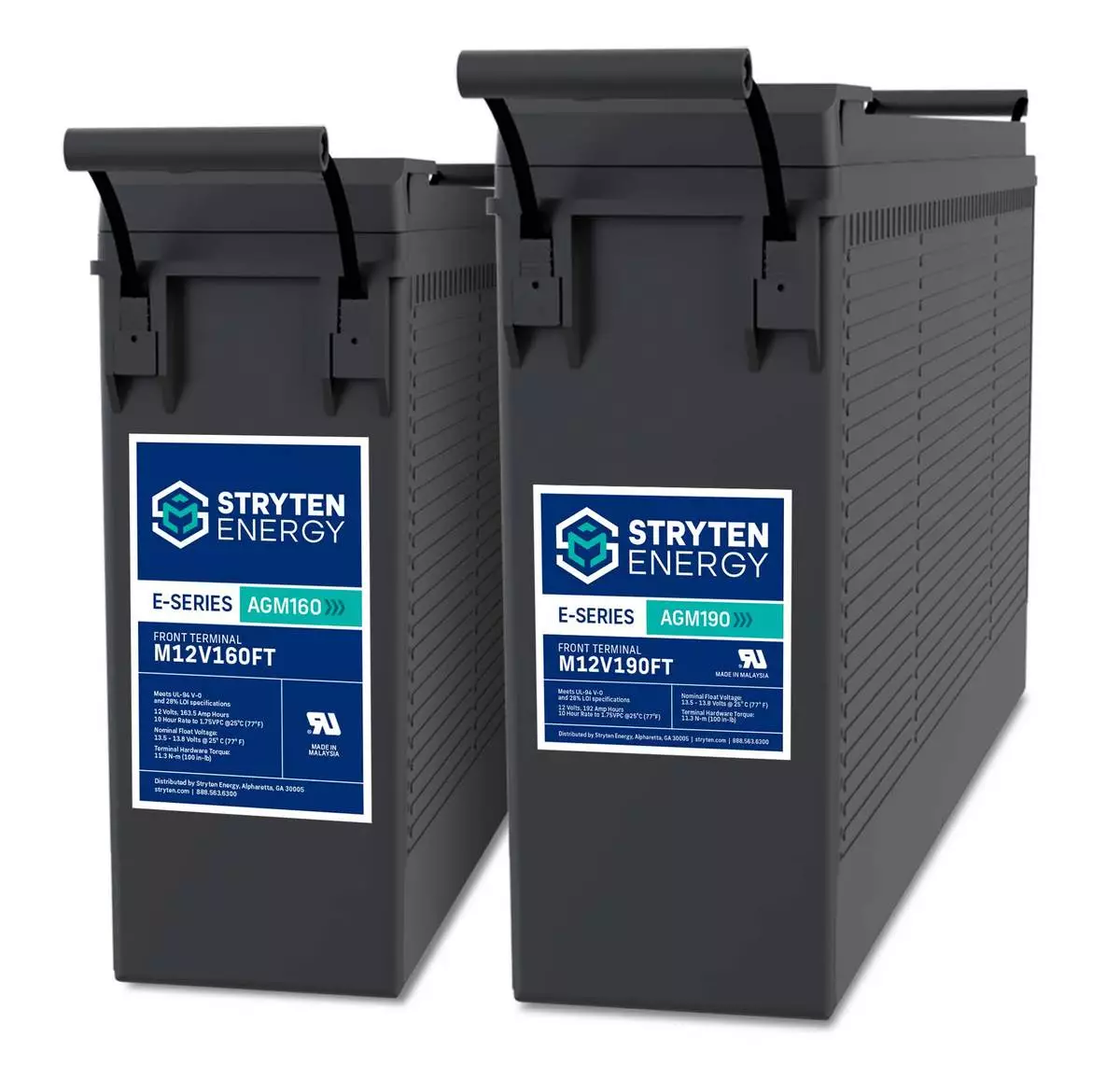
Stryten Energy's E-Series AGM160/190 battery
KYIV, Ukraine (AP) — Russia continued to strike Ukrainian positions with drones after a Kremlin-declared Easter ceasefire took effect on Saturday, a Ukrainian military officer told The Associated Press.
“The ceasefire is not being observed by the Russian side,” said Serhii Kolesnychenko, a communications officer for the 148th Separate Artillery Brigade.
He said that while artillery fire had paused in the sector where his brigade was working, at the junction of the Donetsk, Dnipropetrovsk, and Zaporizhzhia regions, Russian forces continued to use drones to strike Ukrainian positions.
Ukrainian forces were responding with “silence to silence and fire to fire,” Kolesnychenko said.
Russian President Vladimir Putin on Thursday declared a 32-hour ceasefire over the Orthodox Easter weekend, ordering Russian forces to halt hostilities from 4 p.m. on Saturday until the end of Sunday.
Ukrainian President Volodymyr Zelenskyy promised to abide by the ceasefire, describing it as an opportunity to build on peace initiatives. But he warned there would be a swift military response to any violations.
“Easter should be a time of silence and safety. A ceasefire (at) Easter could also become the beginning of real movement toward peace,” Zelenskyy wrote in an online post on Saturday.
But he added: “We all understand who we are dealing with. Ukraine will adhere to the ceasefire and respond strictly in kind.”
Ukraine earlier proposed to Russia a pause in attacks on each other’s energy infrastructure over the Orthodox Easter holiday.
Previous ceasefire attempts have had little impact, with both sides accusing each other of violations.
Kremlin spokesman Dmitry Peskov on Friday described Putin’s move as a “humanitarian” gesture, but said Moscow remains focused on a comprehensive settlement based on its longstanding demands — a key sticking point that has prevented the two sides from reaching an agreement.
Hours before the ceasefire was due to begin, Russian drone strikes overnight killed at least two people in the Ukrainian city of Odesa, local authorities reported.
A further two people were wounded in the attack on the Black Sea port city, when drones hit a residential area, damaging apartment buildings, houses and a kindergarten.
The driver of a public trolley bus was killed after the vehicle was struck by a drone in the southern Ukrainian city of Kherson, less than an hour before the start of the ceasefire, Kherson regional head Oleksandr Prokudin wrote on Telegram.
According to the Ukrainian Air Force, Russia targeted Ukraine with 160 drones overnight, of which 133 were shot down or intercepted, hours before a proposed Easter ceasefire was due to come into force.
Russia’s Defense Ministry said 99 Ukrainian drones were shot down overnight across Russia and occupied Crimea.
Russia’s Defense Ministry said that a prisoner swap Saturday brought home 175 of its soldiers. Zelenskyy confirmed Saturday’s exchange, saying that 175 service members and seven civilians were returned. “Most had been held in captivity since 2022. And finally, they are home,” he wrote on X.
Hundreds of relatives, clutching photos of missing soldiers, crowded around ambulances and buses carrying returned prisoners of war in northern Ukraine. Many called out names and brigade numbers in hopes of finding loved ones faster.
The crowd, many draped in blue and yellow flags, chanted “We welcome you!” as the weary returnees in blue jackets reached through windows to shake hands and embrace well-wishers. Family also members held up portraits of others still-missing, asking the freed prisoners whether they recognized anyone.
Svitlana Pohosyan was waiting for her son’s return. Asked about the ceasefire, she said: “I want to believe it. God willing, may it be so. We will believe and hope that everything will be fine, that a ceasefire will come on such a holy day, and that there will be peace — peace in Ukraine and peace in the whole world.”
“My celebration will come when my son returns,” she added. “I will hold him in my arms — and that will be the greatest celebration for me. And for every mother, every family.”
Periodic prisoner exchanges have been one of the few positive outcomes of otherwise fruitless monthslong U.S.-brokered negotiations between Moscow and Kyiv. The talks have delivered no progress on key issues preventing an end to Russia’s invasion of its neighbor, now in its fifth year.
Separately, seven residents of Russia's Kursk region returned from Ukraine on Saturday after they were captured by the Ukrainian army, Russian state media reported. They were greeted at the Belarusian-Ukrainian border by Russia's human rights ombudswoman, Tatyana Moskalkova.
According to Moskalkova, the returnees were the last of those who were taken to Ukraine from the Kursk region after the Ukrainian army took control of parts of the region in 2024.
Ukrainian forces made a surprise incursion into Kursk in August 2024 in one of their biggest battlefield successes in the war. The incursion was the first time Russian territory was occupied by an invader since World War II and dealt a humiliating blow to the Kremlin.
Zhyhinas reported from northern Ukraine. Morton reported from London.
Follow AP’s coverage of the war in Ukraine at https://apnews.com/hub/russia-ukraine
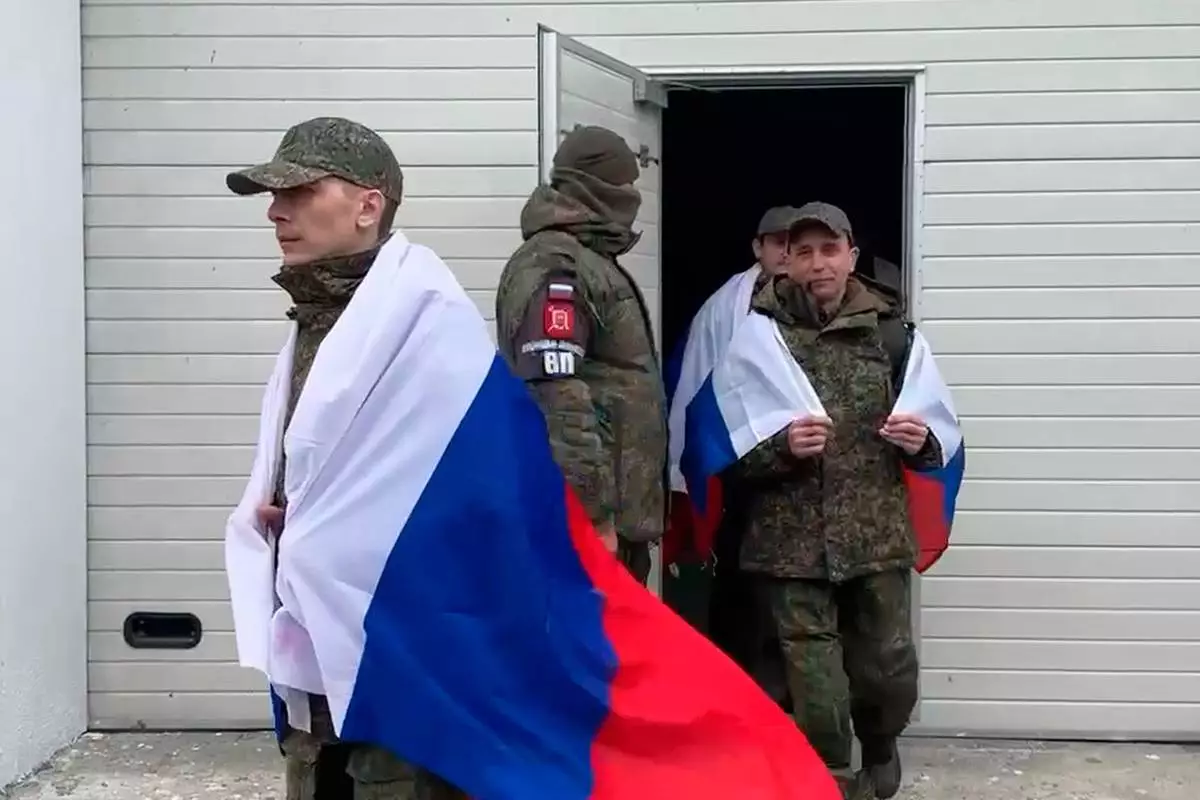
In this image taken from a video provided by Russian Defense Ministry Press Service on Saturday, April 11, 2026, Russian servicemen arrive at an undisclosed location in Belarus after returning from captivity during a POW exchange of a group of servicemen between Russia and Ukraine. (Russian Defense Ministry Press Service via AP)
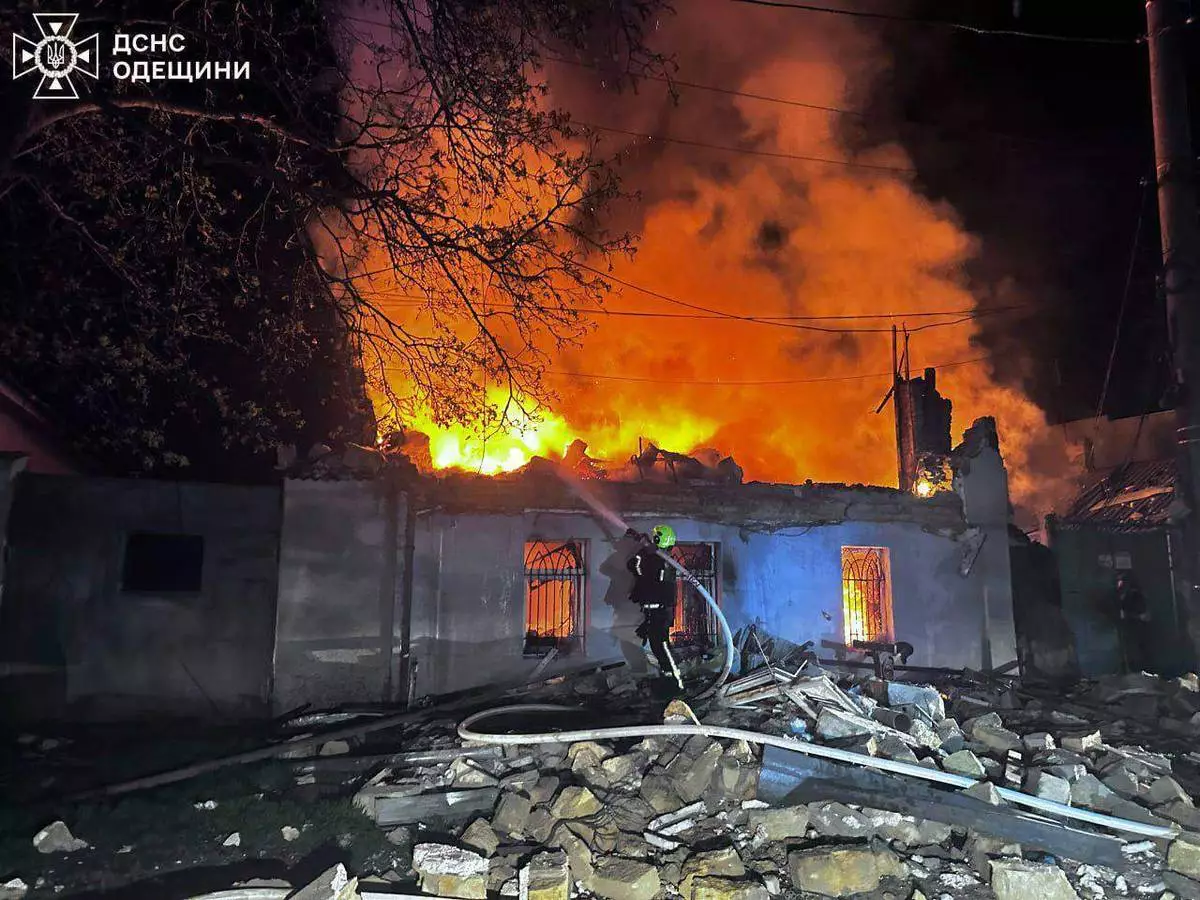
In this photo provided by the Ukrainian Emergency Services on Saturday, April 11, 2026, a rescue worker puts out a fire of residential house destroyed by a Russian drone strike on Odesa, Ukraine. (Ukrainian Emergency Service via AP)
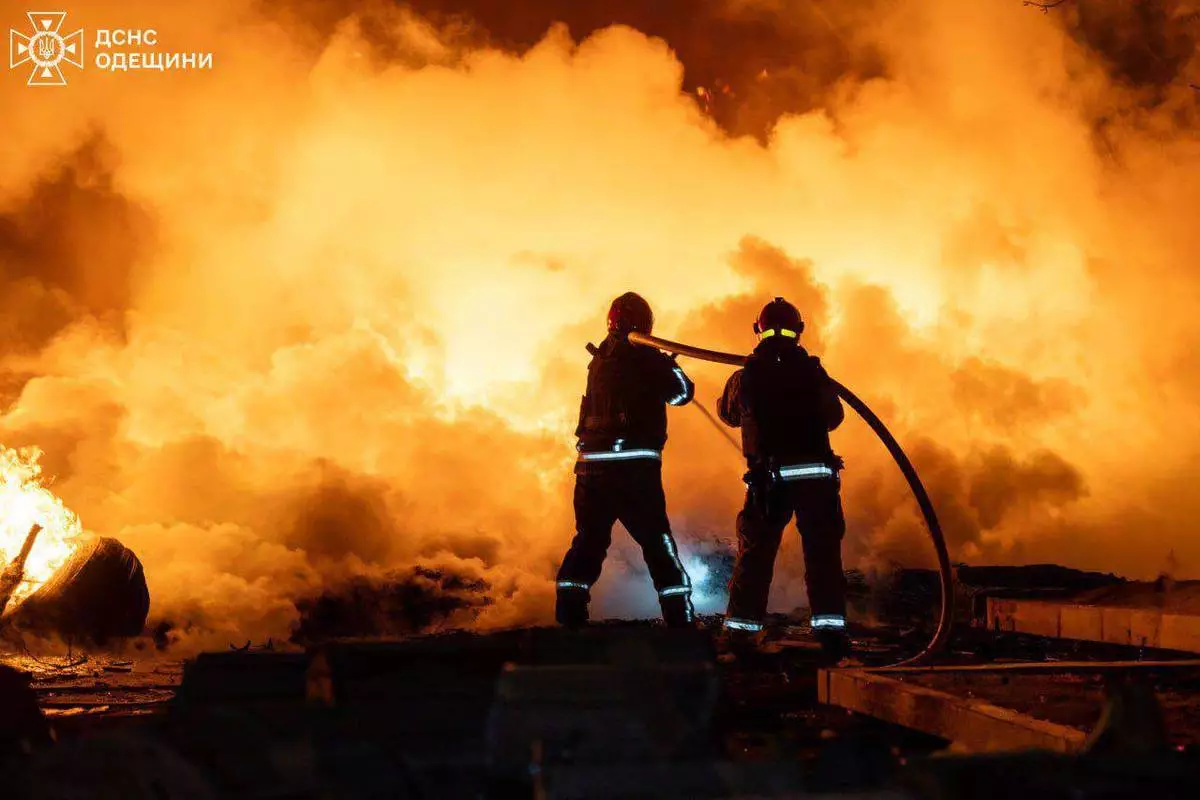
In this photo provided by the Ukrainian Emergency Services on Saturday, April 11, 2026, rescue workers put out a fire of building damaged by a Russian drone strike on Odesa, Ukraine. (Ukrainian Emergency Service via AP)
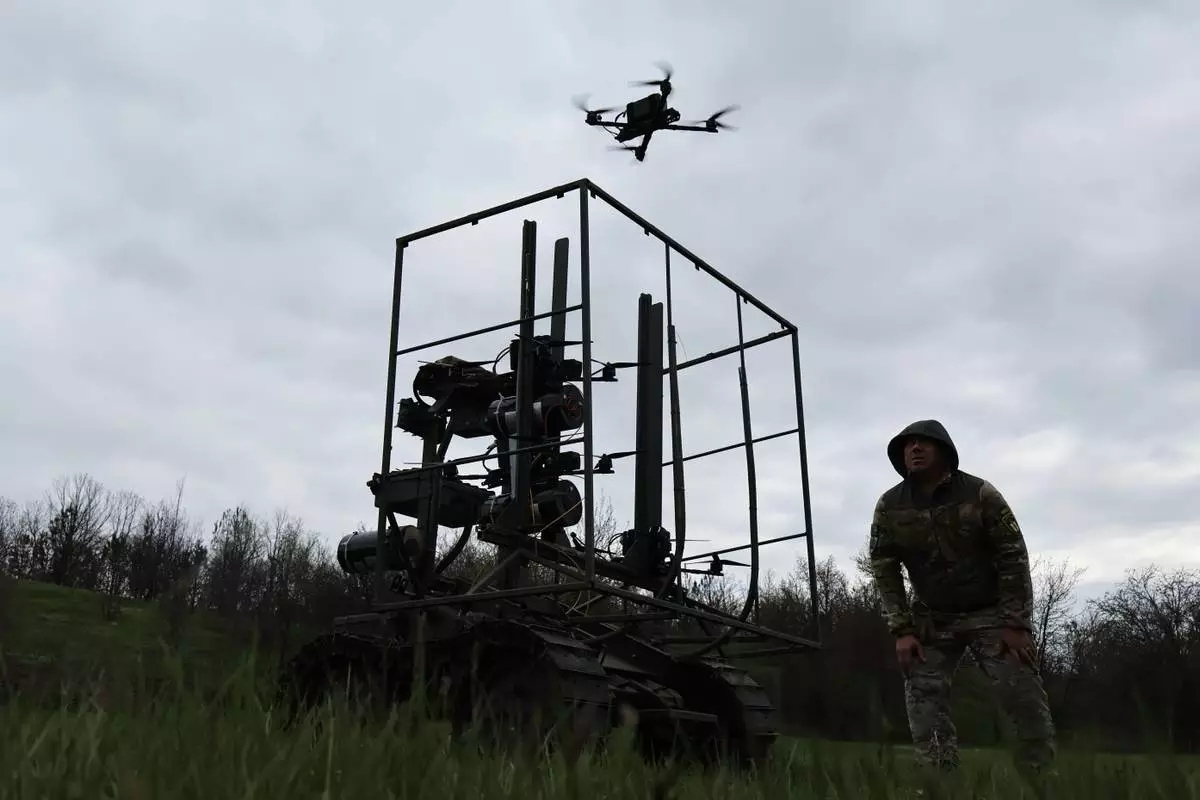
In this photo provided by Ukraine's 65th Mechanised Brigade press service on April 10, 2026, a Ukrainian serviceman looks at FPV drone takeoff during a training at the polygon in Zaporizhzhia region, Ukraine. (Andriy Andriyenko/Ukraine's 65th Mechanised Brigade via AP)
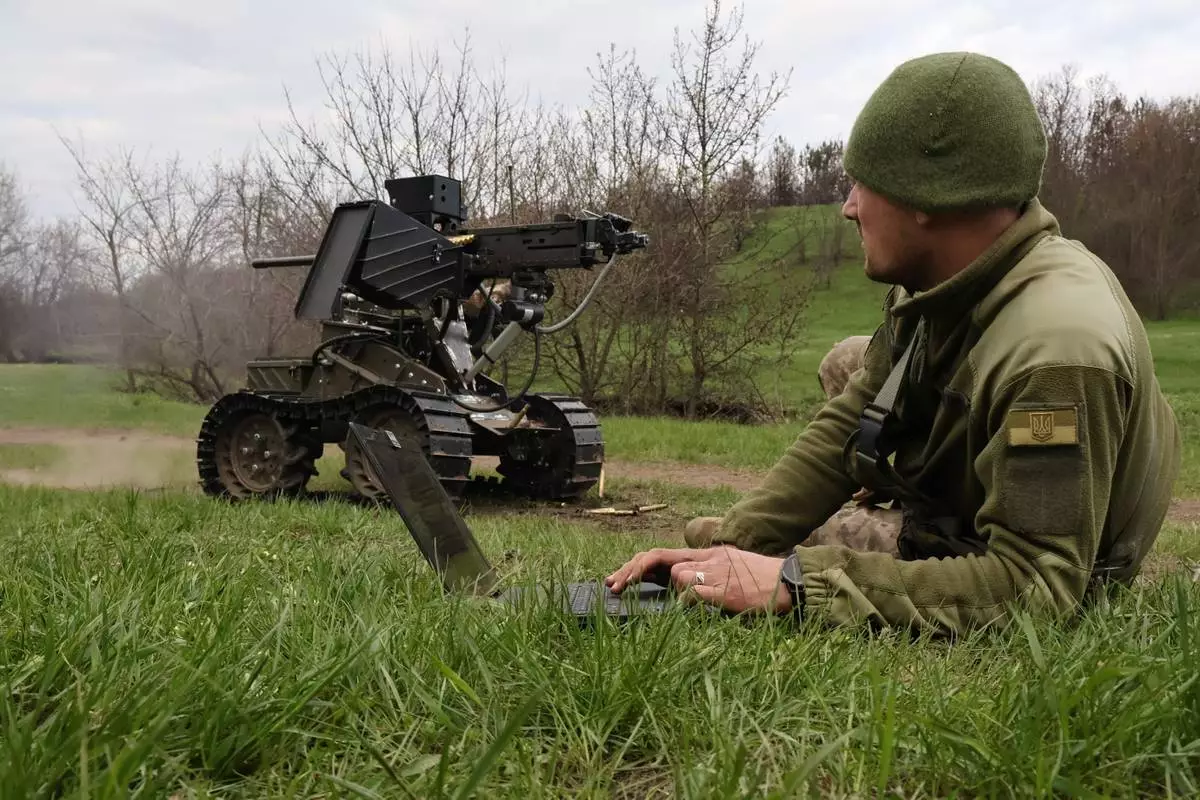
In this photo provided by Ukraine's 65th Mechanised Brigade press service on April 10, 2026, a Ukrainian serviceman prepares a machine gun on a combat ground drone during a training at the polygon in Zaporizhzhia region, Ukraine. (Andriy Andriyenko/Ukraine's 65th Mechanised Brigade via AP)
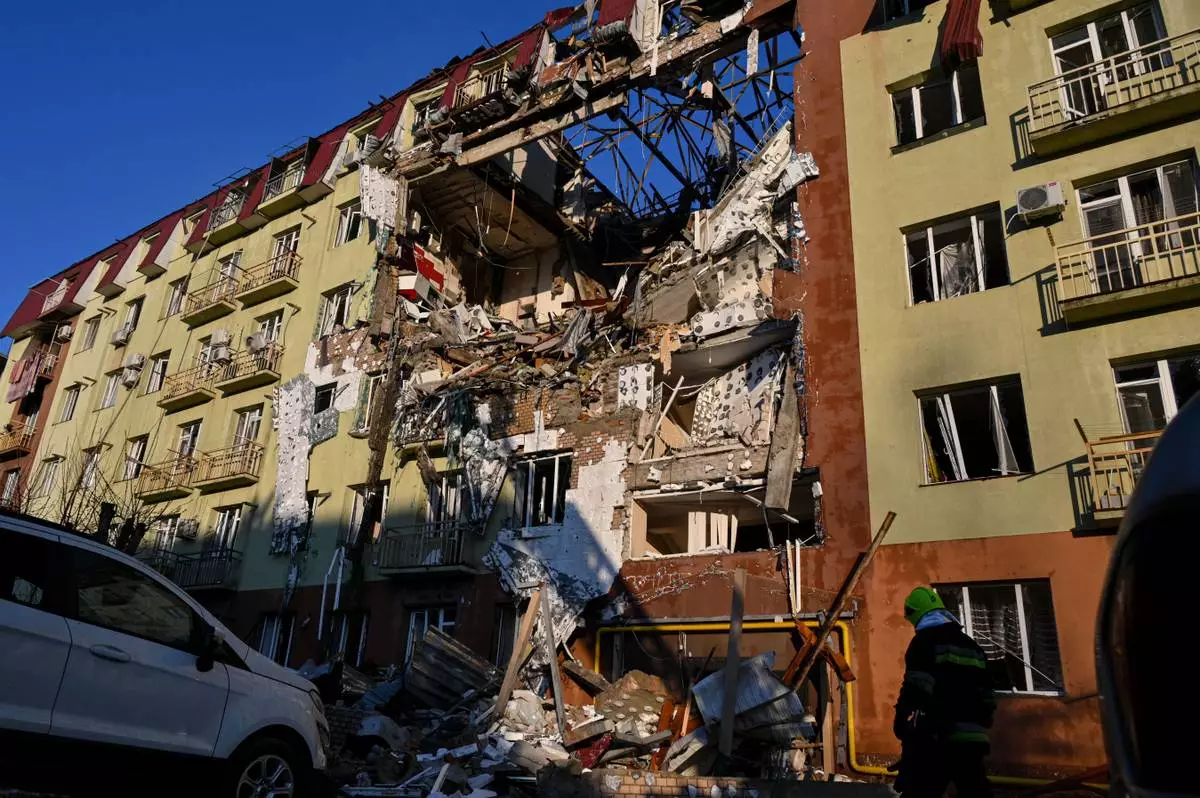
A rescue worker walks in front of residential building which was heavily damaged after a Russian strike in Odesa, Ukraine, Monday, April 6, 2026. (AP Photo/Michael Shtekel)