Skip to Content Facebook Feature Image

A Syrian man buries his wife and 4 children killed in Israeli strikes on Beirut

News

A Syrian man buries his wife and 4 children killed in Israeli strikes on Beirut
News

News

A Syrian man buries his wife and 4 children killed in Israeli strikes on Beirut

2026-04-11 22:50 Last Updated At:23:01

DEIR EL-ZOUR, Syria (AP) — A Syrian man on Saturday buried his wife and four of his five children, killed in the massive wave of Israeli strikes that pounded Beirut earlier this week, laying them to rest in Deir el-Zour province in northeastern Syria.

It was not the homecoming they had anticipated when they fled to Lebanon six years ago.

More Images
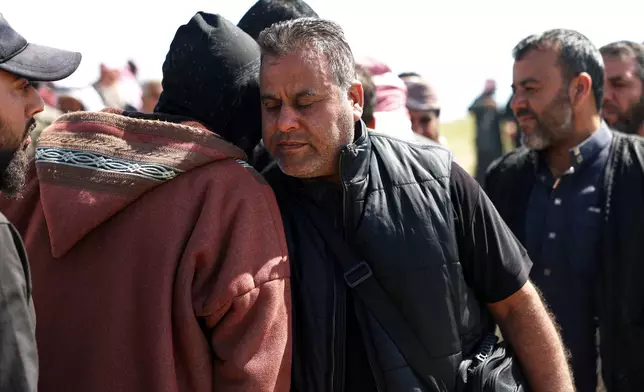
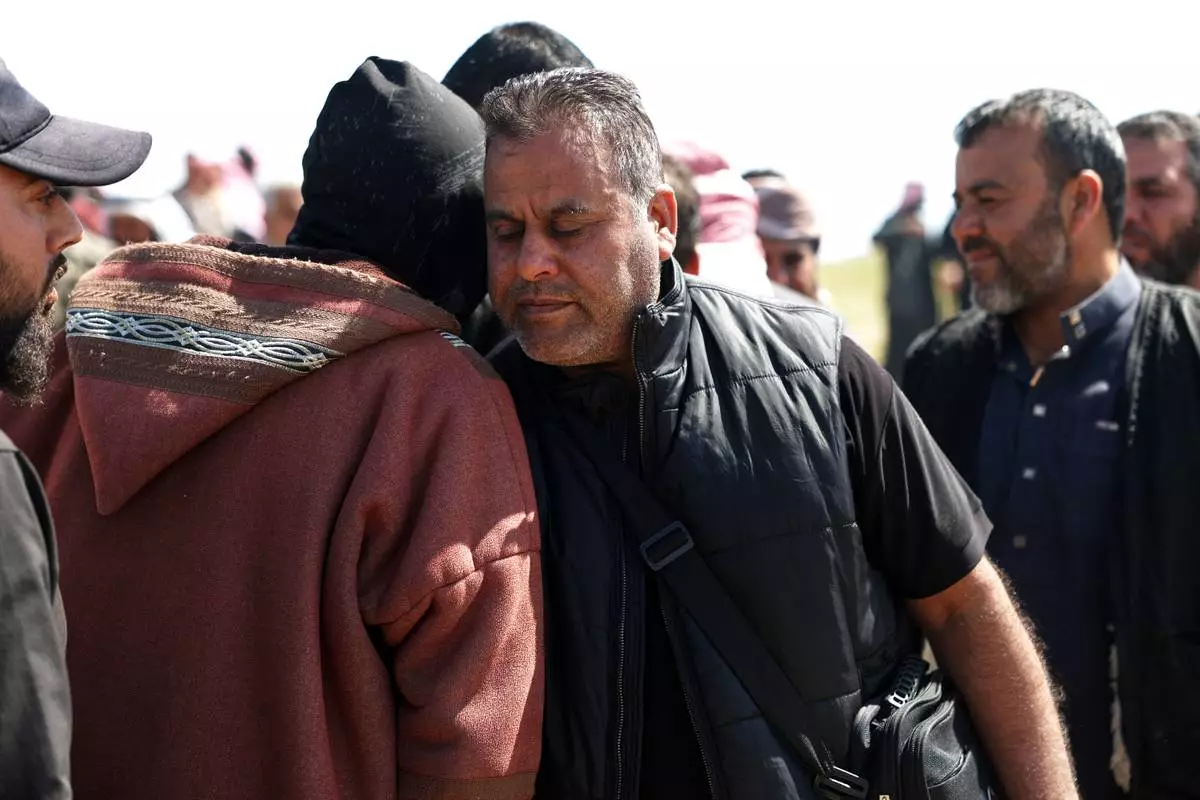
Hamad al-Jalib is comforted by mourners during the funeral of his wife and four of his five children, who were killed in Israeli strikes in Beirut earlier this week, during their funeral in the village of al-Sour, Deir al-Zour province, northeastern Syria, Saturday, April 11, 2026. (AP Photo/Ghaith Alsayed)

Hamad al-Jalib is comforted by mourners during the funeral of his wife and four of his five children, who were killed in Israeli strikes in Beirut earlier this week, during their funeral in the village of al-Sour, Deir al-Zour province, northeastern Syria, Saturday, April 11, 2026. (AP Photo/Ghaith Alsayed)
Two of the six coffins of members of the Al-Jalib family, who were killed Wednesday in Israeli strikes in Beirut, are carried for burial during their funeral in the village of al-Sour, Deir al-Zour province, northeastern Syria, Saturday, April 11, 2026. (AP Photo/Ghaith Alsayed)
Two of the six coffins of members of the Al-Jalib family, who were killed Wednesday in Israeli strikes in Beirut, are carried for burial during their funeral in the village of al-Sour, Deir al-Zour province, northeastern Syria, Saturday, April 11, 2026. (AP Photo/Ghaith Alsayed)

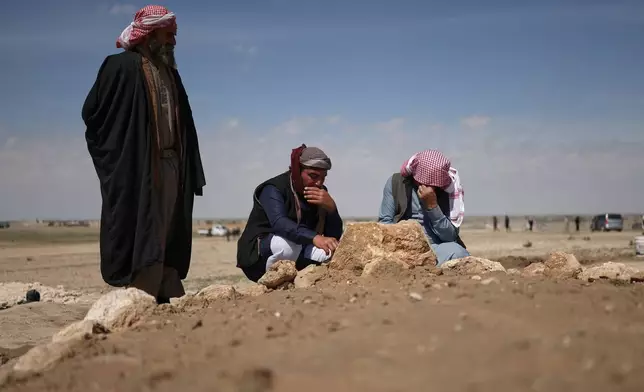
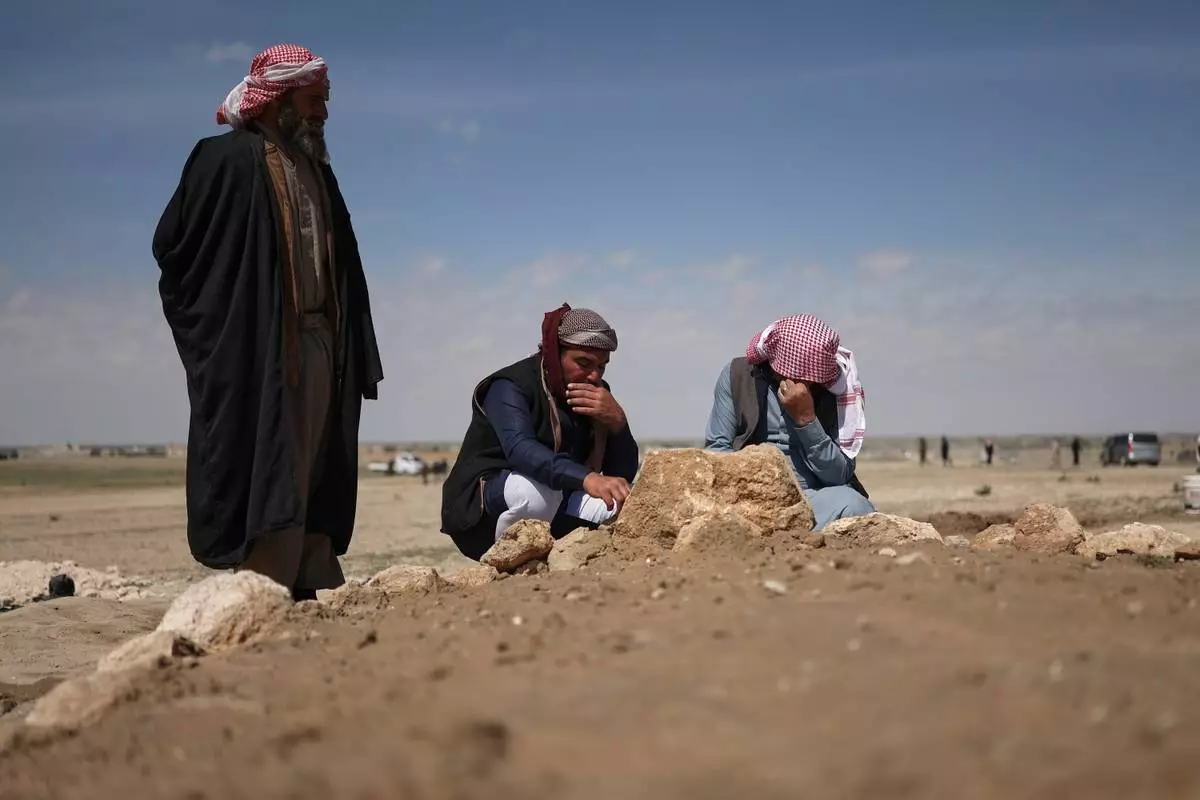
Mourners kneel by the graves of six people from the Al-Jalib family, who were killed Wednesday in Israeli strikes in Beirut, after their burial in the village of al-Sour, Deir al-Zour province, northeastern Syria, Saturday, April 11, 2026. (AP Photo/Ghaith Alsayed)

Mourners kneel by the graves of six people from the Al-Jalib family, who were killed Wednesday in Israeli strikes in Beirut, after their burial in the village of al-Sour, Deir al-Zour province, northeastern Syria, Saturday, April 11, 2026. (AP Photo/Ghaith Alsayed)

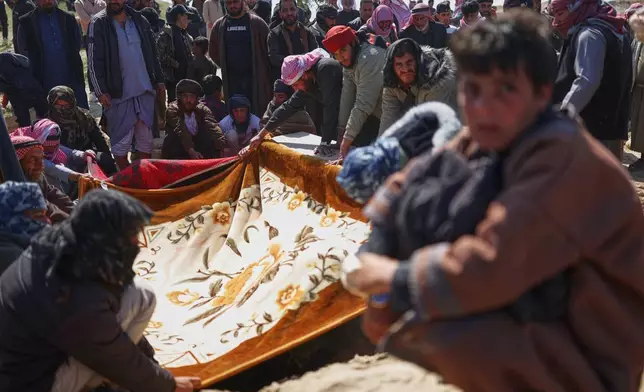
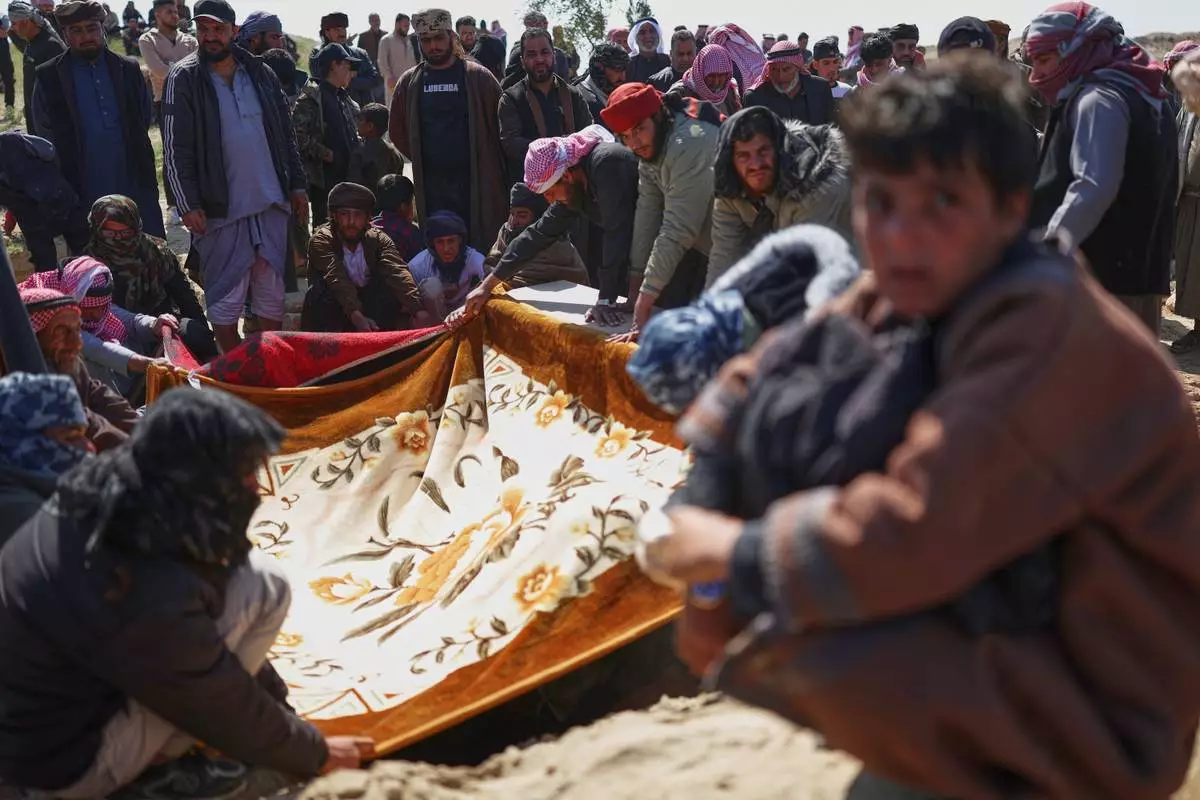
Mourners cover a grave with cloth during the burial of a woman from the Al-Jalib family, among six relatives killed Wednesday in Israeli strikes in Beirut, during their funeral in the village of al-Sour, Deir al-Zour province, northeastern Syria, Saturday, April 11, 2026. The cloth is held to preserve privacy and shield the body from view.(AP Photo/Ghaith Alsayed)
Mourners cover a grave with cloth during the burial of a woman from the Al-Jalib family, among six relatives killed Wednesday in Israeli strikes in Beirut, during their funeral in the village of al-Sour, Deir al-Zour province, northeastern Syria, Saturday, April 11, 2026. The cloth is held to preserve privacy and shield the body from view.(AP Photo/Ghaith Alsayed)

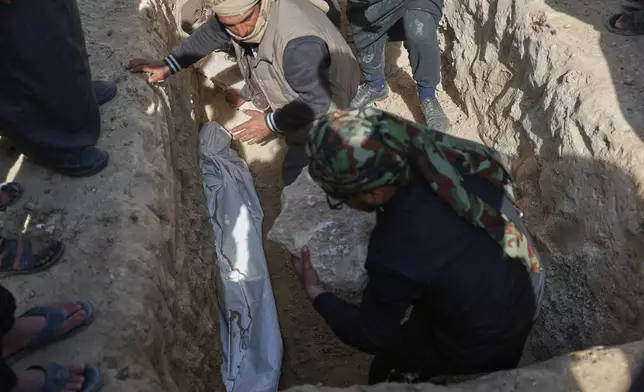
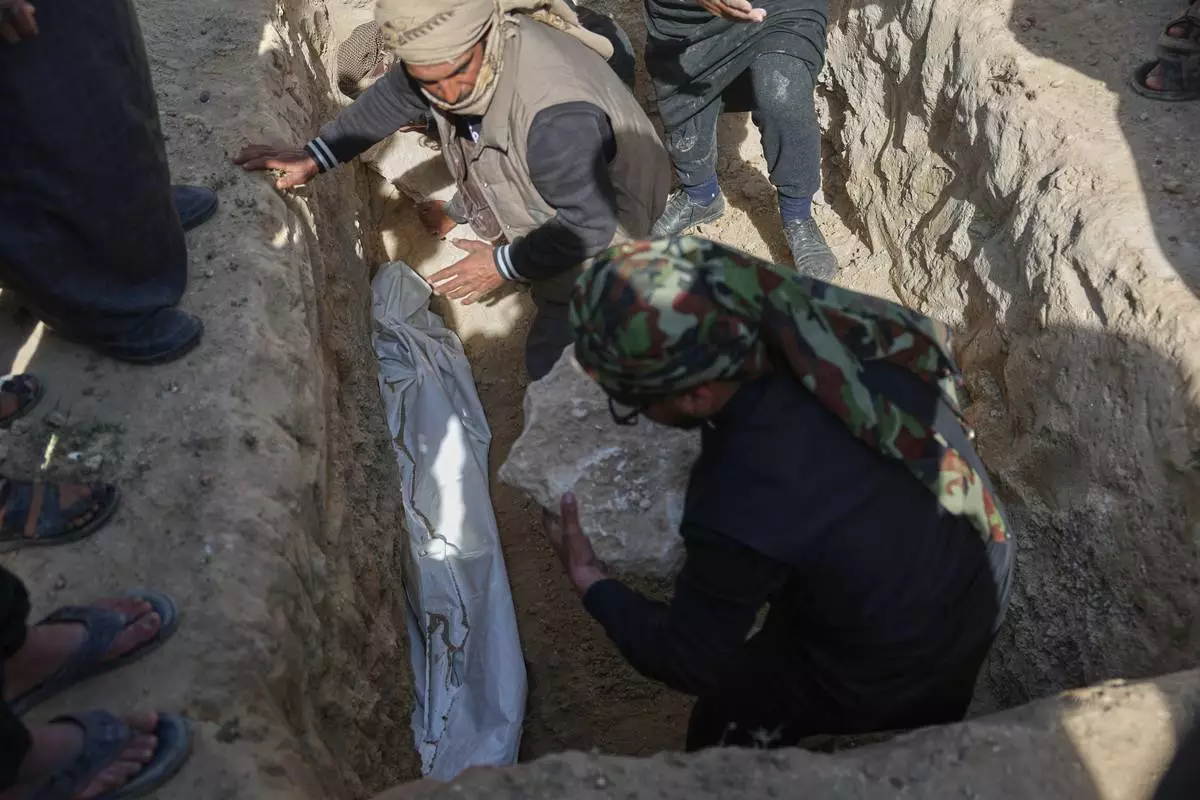
One of six members of the Al-Jalib family killed Wednesday in Israeli strikes in Beirut is covered after being placed in the grave during their funeral in the village of al-Sour, Deir al-Zour province, northeastern Syria, Saturday, April 11, 2026. (AP Photo/Ghaith Alsayed)
One of six members of the Al-Jalib family killed Wednesday in Israeli strikes in Beirut is covered after being placed in the grave during their funeral in the village of al-Sour, Deir al-Zour province, northeastern Syria, Saturday, April 11, 2026. (AP Photo/Ghaith Alsayed)

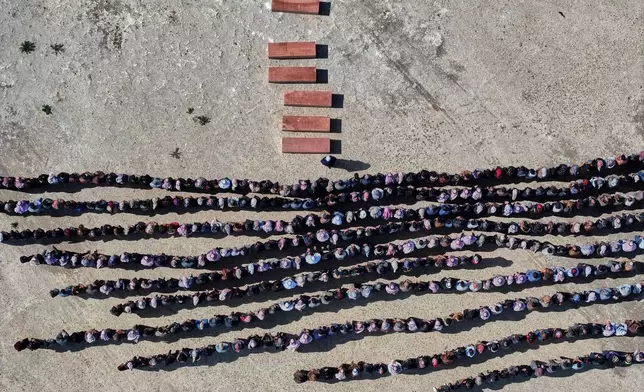
Mourners pray over the six coffins of members of the Al-Jalib family, who were killed Wednesday in Israeli strikes in Beirut, during their funeral in the village of al-Sour, Deir al-Zour province, northeastern Syria, Saturday, April 11, 2026. (AP Photo/Ghaith Alsayed)

Mourners pray over the six coffins of members of the Al-Jalib family, who were killed Wednesday in Israeli strikes in Beirut, during their funeral in the village of al-Sour, Deir al-Zour province, northeastern Syria, Saturday, April 11, 2026. (AP Photo/Ghaith Alsayed)

The bodies, along with that of his six-month pregnant daughter-in-law, arrived in wooden coffins on a bus from Lebanon, their names scribbled on the sides. Men stood beside the bus crying before the burial procession in al-Sour town, as mourners gathered to offer condolences.

The remains of one of his two daughters were still missing, believed to be trapped under rubble, as search operations concluded Saturday, three days after the attacks.

The strike was one of roughly 100 carried out by Israel on Wednesday without warning, targeting what the Israeli military said were Hezbollah-linked sites across Beirut and other parts of Lebanon. More than 350 people were killed that day, a third being women and children, making it the deadliest day in nearly six weeks of war.

Many of the strikes hit commercial streets and densely populated neighborhoods in central Beirut, far from conflict zones, where repeated Israeli evacuation warnings have been issued since March 2, when the Iran-backed militant group Hezbollah fired missiles into Israel in retaliation for the U.S.-Israeli attacks on Iran.

The father, Hamad al-Jalib, survived because he was away fetching a gas canister while working as the building’s concierge. When he heard that a strike had hit the Ain Mreisseh neighborhood, where he lives, he rushed back, only to see a plume of smoke rising from a building behind a mosque across from Beirut’s famous seaside promenade — usually crowded with people walking and exercising.

“The Israeli attack killed my girls, they are innocent, just sitting at home,” al-Jalib said. “They were having lunch.”

He said it took rescue teams three days to extract the bodies of his family from under the rubble. “And I still have a daughter missing, her name is Fatima Hamad al-Jalib.” She is 10 years old. His other daughter was 12 while his sons were 17, 14 and 13 years old.

Three other Syrian relatives were also killed in the Ain Mreisseh strike and were buried on Saturday in the town of al-Shuhail in Deir el-Zour, after the family split upon returning to Syria.

Al-Jalib said his family had been displaced from their area and moved to Lebanon in 2020, as local tensions grew involving tribal groups and the Kurdish-led Syrian Democratic Forces.

The casualties from Wednesday’s strikes and others across the country have pushed the death toll in more than a month of Israel’s war with Hezbollah to over 1,950 killed and more than 6,300 wounded, according to Lebanon’s Health Ministry. The toll includes at least 315 Syrians killed and wounded.

It remains unclear how many of those killed on Wednesday were non-Lebanese, as the Health Ministry did not provide a breakdown by nationality. Officials have reported that at least 39 Syrians were among the dead.

Dalal Harb, a spokesperson for the U.N. refugee agency, said the family killed in Ain Mreisseh was not registered with the UNHCR. There are about 530,000 Syrians refugees registered with UNHCR in Lebanon, with hundreds of thousands more believed to be unregistered.

While hundreds of thousands of Syrians have returned from Lebanon since the ouster of former Syrian President Bashar Assad in December 2024, many others remain reluctant to go back because of the lack of jobs and ongoing violence.

Al-Jalib’s brother, Jomaa, who also lived in Lebanon, said he was about 150 meters (500 feet) away at work when the first blast hit. “We ran and we ran, then the second strike happened.” He said he was arriving at the building as it began to collapse. “It was too late to get anyone out. We yelled for them, but no one answered.”

He said ambulances later recovered the bodies, which he identified at a hospital.

Following the burial on Saturday, men stood shoulder to shoulder in prayer over the fresh graves.

——-

Associated Press writer Abby Sewell in Beirut contributed to this report.
Hamad al-Jalib is comforted by mourners during the funeral of his wife and four of his five children, who were killed in Israeli strikes in Beirut earlier this week, during their funeral in the village of al-Sour, Deir al-Zour province, northeastern Syria, Saturday, April 11, 2026. (AP Photo/Ghaith Alsayed)

Hamad al-Jalib is comforted by mourners during the funeral of his wife and four of his five children, who were killed in Israeli strikes in Beirut earlier this week, during their funeral in the village of al-Sour, Deir al-Zour province, northeastern Syria, Saturday, April 11, 2026. (AP Photo/Ghaith Alsayed)
Two of the six coffins of members of the Al-Jalib family, who were killed Wednesday in Israeli strikes in Beirut, are carried for burial during their funeral in the village of al-Sour, Deir al-Zour province, northeastern Syria, Saturday, April 11, 2026. (AP Photo/Ghaith Alsayed)
Two of the six coffins of members of the Al-Jalib family, who were killed Wednesday in Israeli strikes in Beirut, are carried for burial during their funeral in the village of al-Sour, Deir al-Zour province, northeastern Syria, Saturday, April 11, 2026. (AP Photo/Ghaith Alsayed)

Mourners kneel by the graves of six people from the Al-Jalib family, who were killed Wednesday in Israeli strikes in Beirut, after their burial in the village of al-Sour, Deir al-Zour province, northeastern Syria, Saturday, April 11, 2026. (AP Photo/Ghaith Alsayed)

Mourners kneel by the graves of six people from the Al-Jalib family, who were killed Wednesday in Israeli strikes in Beirut, after their burial in the village of al-Sour, Deir al-Zour province, northeastern Syria, Saturday, April 11, 2026. (AP Photo/Ghaith Alsayed)

Mourners cover a grave with cloth during the burial of a woman from the Al-Jalib family, among six relatives killed Wednesday in Israeli strikes in Beirut, during their funeral in the village of al-Sour, Deir al-Zour province, northeastern Syria, Saturday, April 11, 2026. The cloth is held to preserve privacy and shield the body from view.(AP Photo/Ghaith Alsayed)
Mourners cover a grave with cloth during the burial of a woman from the Al-Jalib family, among six relatives killed Wednesday in Israeli strikes in Beirut, during their funeral in the village of al-Sour, Deir al-Zour province, northeastern Syria, Saturday, April 11, 2026. The cloth is held to preserve privacy and shield the body from view.(AP Photo/Ghaith Alsayed)

One of six members of the Al-Jalib family killed Wednesday in Israeli strikes in Beirut is covered after being placed in the grave during their funeral in the village of al-Sour, Deir al-Zour province, northeastern Syria, Saturday, April 11, 2026. (AP Photo/Ghaith Alsayed)
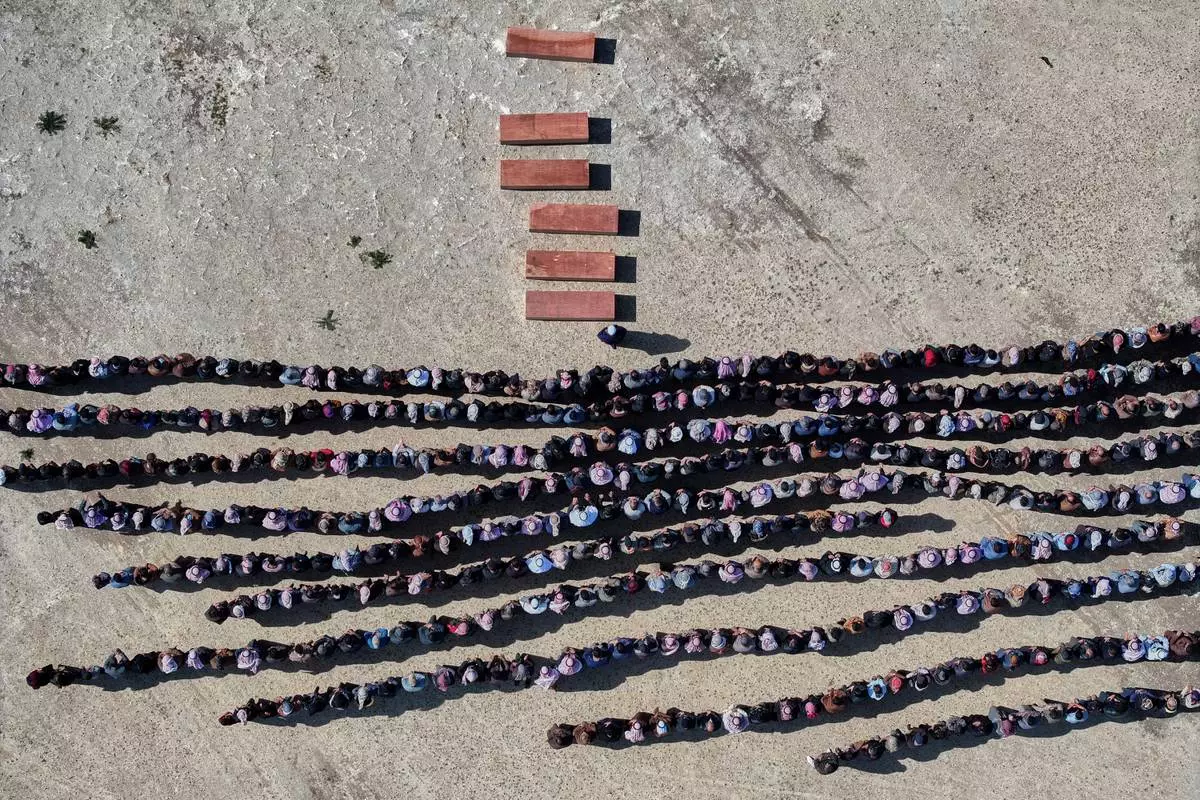
One of six members of the Al-Jalib family killed Wednesday in Israeli strikes in Beirut is covered after being placed in the grave during their funeral in the village of al-Sour, Deir al-Zour province, northeastern Syria, Saturday, April 11, 2026. (AP Photo/Ghaith Alsayed)

Mourners pray over the six coffins of members of the Al-Jalib family, who were killed Wednesday in Israeli strikes in Beirut, during their funeral in the village of al-Sour, Deir al-Zour province, northeastern Syria, Saturday, April 11, 2026. (AP Photo/Ghaith Alsayed)
Mourners pray over the six coffins of members of the Al-Jalib family, who were killed Wednesday in Israeli strikes in Beirut, during their funeral in the village of al-Sour, Deir al-Zour province, northeastern Syria, Saturday, April 11, 2026. (AP Photo/Ghaith Alsayed)
KYIV, Ukraine (AP) — Russia continued to strike Ukrainian positions with drones after a Kremlin-declared Easter ceasefire took effect Saturday, a Ukrainian military officer told The Associated Press, casting immediate doubt over the truce.

“The ceasefire is not being observed by the Russian side,” said Serhii Kolesnychenko, a communications officer for the 148th Separate Artillery Brigade.

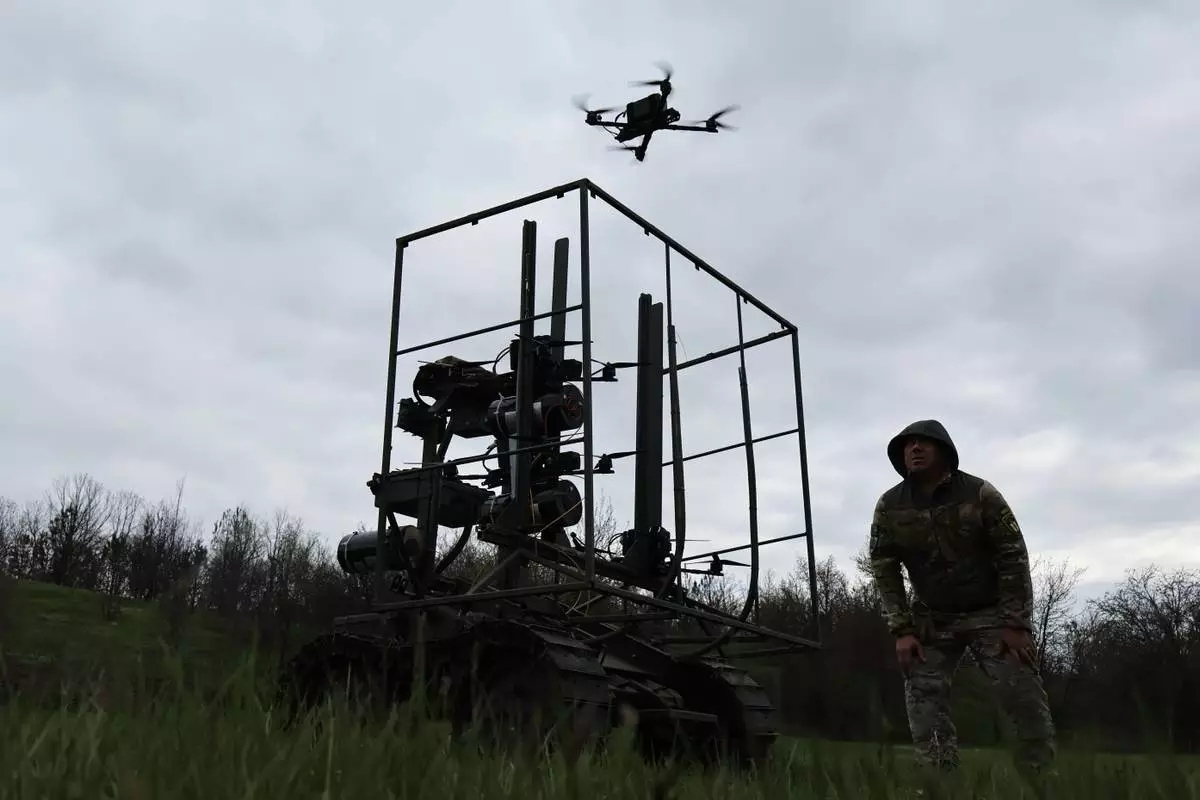
He said that while artillery fire had paused in the sector where his brigade was working, at the junction of the Donetsk, Dnipropetrovsk, and Zaporizhzhia regions, Russian forces continued to use drones to strike Ukrainian positions.

He said Ukrainian forces were responding with “silence to silence and fire to fire.”

Russian President Vladimir Putin on Thursday declared a 32-hour ceasefire over the Orthodox Easter weekend, ordering Russian forces to halt hostilities from 4 p.m. Saturday until the end of Sunday.

Ukrainian President Volodymyr Zelenskyy promised Saturday to abide by the ceasefire, describing it as an opportunity to build on peace initiatives. But he warned there would be a swift military response to any violations.

“Easter should be a time of silence and safety. A ceasefire (at) Easter could also become the beginning of real movement toward peace,” Zelenskyy wrote in an online post on Saturday.

But he added: “We all understand who we are dealing with. Ukraine will adhere to the ceasefire and respond strictly in kind.”

Ukraine earlier proposed to Russia a pause in attacks on each other’s energy infrastructure over the Orthodox Easter holiday.

Previous ceasefire attempts have had little impact, with both sides accusing each other of violations.

Kremlin spokesman Dmitry Peskov on Friday described Putin’s move as a “humanitarian” gesture, but said Moscow remains focused on a comprehensive settlement based on its longstanding demands — a key sticking point that has prevented the two sides from reaching an agreement.

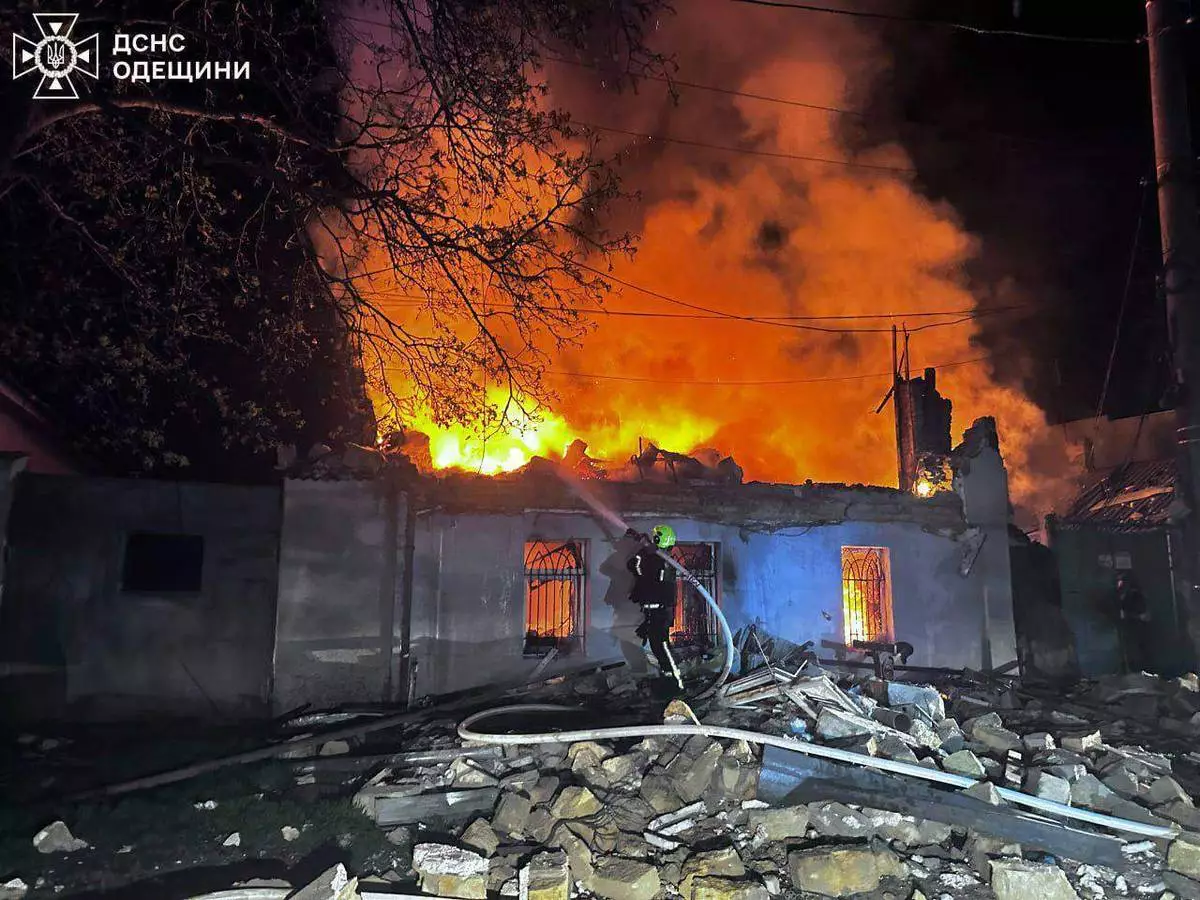
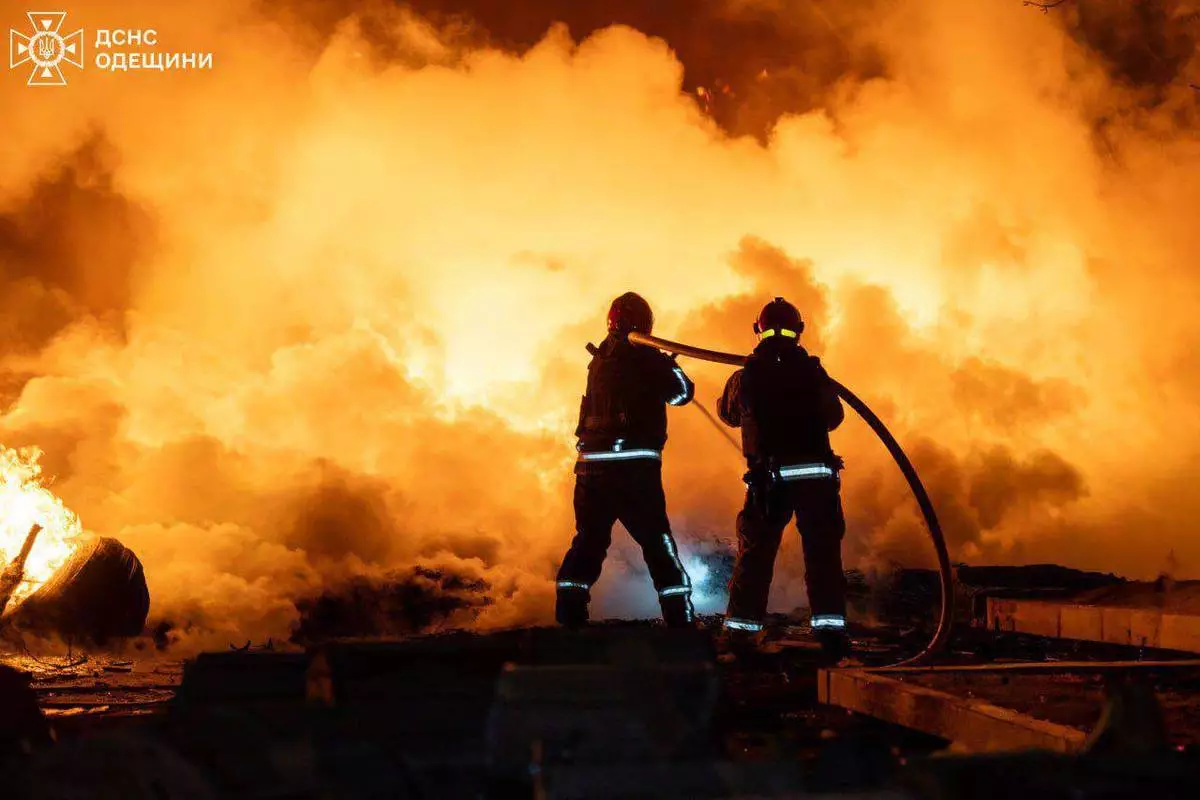
Hours before the ceasefire was due to begin, Russian drone strikes killed at least two people in the Ukrainian city of Odesa overnight into Saturday, local authorities reported.

A further two people were wounded in the attack on the Black Sea port city, when drones hit a residential area, damaging apartment buildings, houses and a kindergarten.

According to the Ukrainian Air Force, Russia targeted Ukraine with 160 drones overnight, of which 133 were shot down or intercepted, hours before a proposed Easter ceasefire was due to come into force.

Russia’s Defense Ministry said 99 Ukrainian drones were shot down overnight across Russia and occupied Crimea.

Russia’s Defense Ministry said that a prisoner swap Saturday brought home 175 of its soldiers.

Zelenskyy confirmed Saturday’s exchange, saying that 175 service members and seven civilians were returned.

“Most had been held in captivity since 2022. And finally, they are home,” he wrote on X.

At the exchange site in northern Ukraine, Svitlana Pohosyan waited for her son’s return. Asked about the ceasefire, she said: “I want to believe it. God willing, may it be so. We will believe and hope that everything will be fine, that a ceasefire will come on such a holy day, and that there will be peace — peace in Ukraine and peace in the whole world.”

“My celebration will come when my son returns,” she added. “I will hold him in my arms — and that will be the greatest celebration for me. And for every mother, every family.”

Periodic prisoner exchanges have been one of the few positive outcomes of otherwise fruitless monthslong U.S.-brokered negotiations between Moscow and Kyiv. The talks have delivered no progress on key issues preventing an end to Russia’s invasion of its neighbor, now in its fifth year.

Separately, seven residents of Russia's Kursk region returned from Ukraine Saturday after they were captured by the Ukrainian army, Russian state media reported. They were greeted at the Belarusian-Ukrainian border by Russia's human rights ombudswoman, Tatyana Moskalkova.

According to Moskalkova, the returnees were the last of those who were taken to Ukraine from the Kursk region after the Ukrainian army took control of parts of the region in 2024.

Ukrainian forces made a surprise incursion into Kursk in August 2024 in one of their biggest battlefield successes in the war. The incursion was the first time Russian territory was occupied by an invader since World War II and dealt a humiliating blow to the Kremlin.

Zhyhinas reported from northern Ukraine. Morton reported from London.

Follow AP’s coverage of the war in Ukraine at https://apnews.com/hub/russia-ukraine

In this image taken from a video provided by Russian Defense Ministry Press Service on Saturday, April 11, 2026, Russian servicemen arrive at an undisclosed location in Belarus after returning from captivity during a POW exchange of a group of servicemen between Russia and Ukraine. (Russian Defense Ministry Press Service via AP)

In this image taken from a video provided by Russian Defense Ministry Press Service on Saturday, April 11, 2026, Russian servicemen arrive at an undisclosed location in Belarus after returning from captivity during a POW exchange of a group of servicemen between Russia and Ukraine. (Russian Defense Ministry Press Service via AP)

In this photo provided by the Ukrainian Emergency Services on Saturday, April 11, 2026, a rescue worker puts out a fire of residential house destroyed by a Russian drone strike on Odesa, Ukraine. (Ukrainian Emergency Service via AP)

In this photo provided by the Ukrainian Emergency Services on Saturday, April 11, 2026, a rescue worker puts out a fire of residential house destroyed by a Russian drone strike on Odesa, Ukraine. (Ukrainian Emergency Service via AP)

In this photo provided by the Ukrainian Emergency Services on Saturday, April 11, 2026, rescue workers put out a fire of building damaged by a Russian drone strike on Odesa, Ukraine. (Ukrainian Emergency Service via AP)

In this photo provided by the Ukrainian Emergency Services on Saturday, April 11, 2026, rescue workers put out a fire of building damaged by a Russian drone strike on Odesa, Ukraine. (Ukrainian Emergency Service via AP)

In this photo provided by Ukraine's 65th Mechanised Brigade press service on April 10, 2026, a Ukrainian serviceman looks at FPV drone takeoff during a training at the polygon in Zaporizhzhia region, Ukraine. (Andriy Andriyenko/Ukraine's 65th Mechanised Brigade via AP)

In this photo provided by Ukraine's 65th Mechanised Brigade press service on April 10, 2026, a Ukrainian serviceman looks at FPV drone takeoff during a training at the polygon in Zaporizhzhia region, Ukraine. (Andriy Andriyenko/Ukraine's 65th Mechanised Brigade via AP)

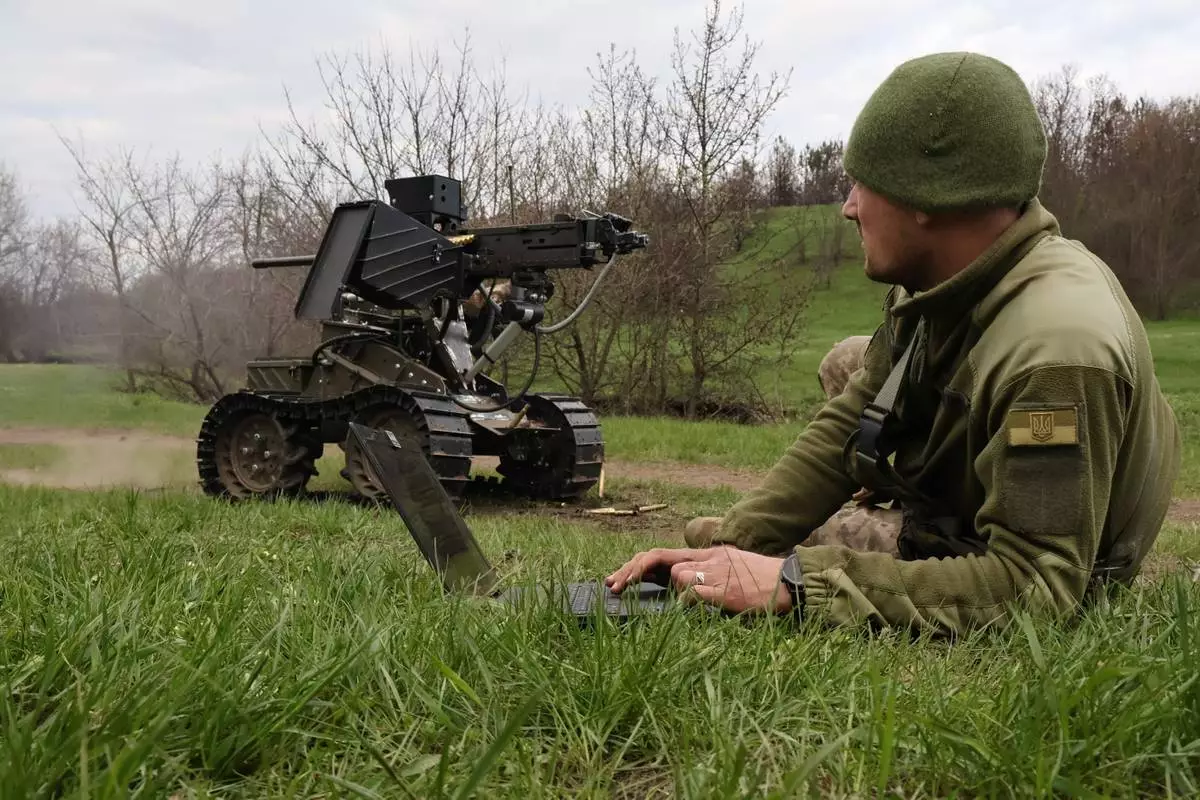
In this photo provided by Ukraine's 65th Mechanised Brigade press service on April 10, 2026, a Ukrainian serviceman prepares a machine gun on a combat ground drone during a training at the polygon in Zaporizhzhia region, Ukraine. (Andriy Andriyenko/Ukraine's 65th Mechanised Brigade via AP)

In this photo provided by Ukraine's 65th Mechanised Brigade press service on April 10, 2026, a Ukrainian serviceman prepares a machine gun on a combat ground drone during a training at the polygon in Zaporizhzhia region, Ukraine. (Andriy Andriyenko/Ukraine's 65th Mechanised Brigade via AP)

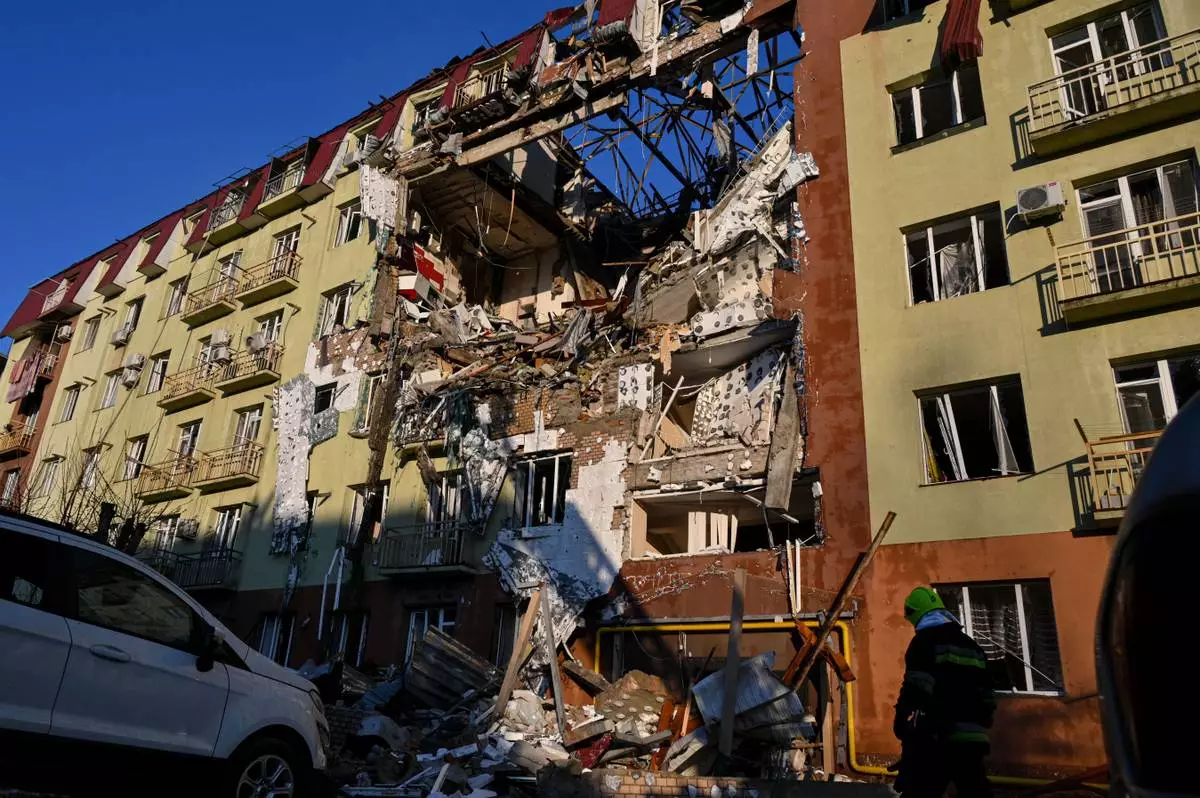
A rescue worker walks in front of residential building which was heavily damaged after a Russian strike in Odesa, Ukraine, Monday, April 6, 2026. (AP Photo/Michael Shtekel)

A rescue worker walks in front of residential building which was heavily damaged after a Russian strike in Odesa, Ukraine, Monday, April 6, 2026. (AP Photo/Michael Shtekel)

Recommended Articles