Skip to Content Facebook Feature Image

Peru election highlights lack of plans to tackle illegal mining despite growing environmental crisis

News

Peru election highlights lack of plans to tackle illegal mining despite growing environmental crisis
News

News

Peru election highlights lack of plans to tackle illegal mining despite growing environmental crisis

2026-04-11 21:44 Last Updated At:21:51

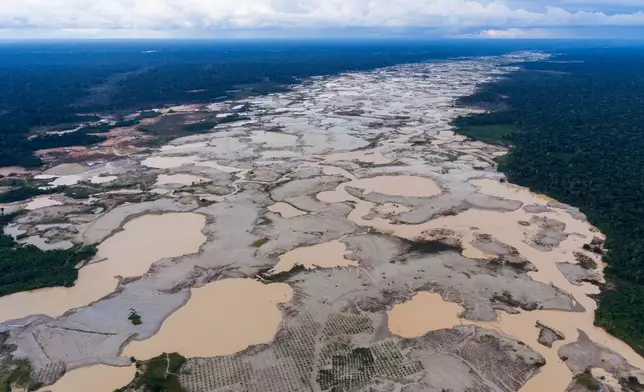
BOGOTA, Colombia (AP) — Peruvians head to the polls Sunday to elect a new president and Congress, but illegal mining — a major driver of deforestation and mercury pollution — has received little attention on the campaign trail, even as it spreads deeper into the Amazon and Indigenous territories.

Experts warn the gap reflects a broader failure to confront what has become the country’s largest illicit economy, with growing impacts on the environment, public health and Indigenous communities.

More Images
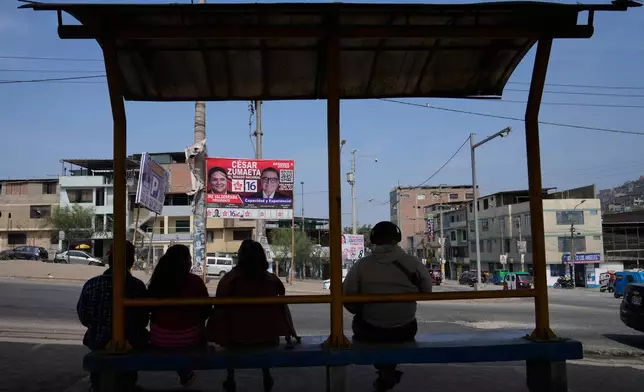
FILE - People sit in a bus station across the street from election campaign signs for presidential and congressional candidates, before the weekend's election in Lima, Peru, Friday, April 10, 2026. (AP Photo/Martin Mejia)
FILE - People sit in a bus station across the street from election campaign signs for presidential and congressional candidates, before the weekend's election in Lima, Peru, Friday, April 10, 2026. (AP Photo/Martin Mejia)

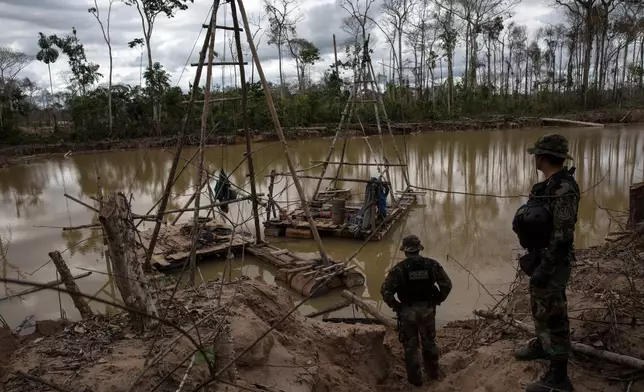
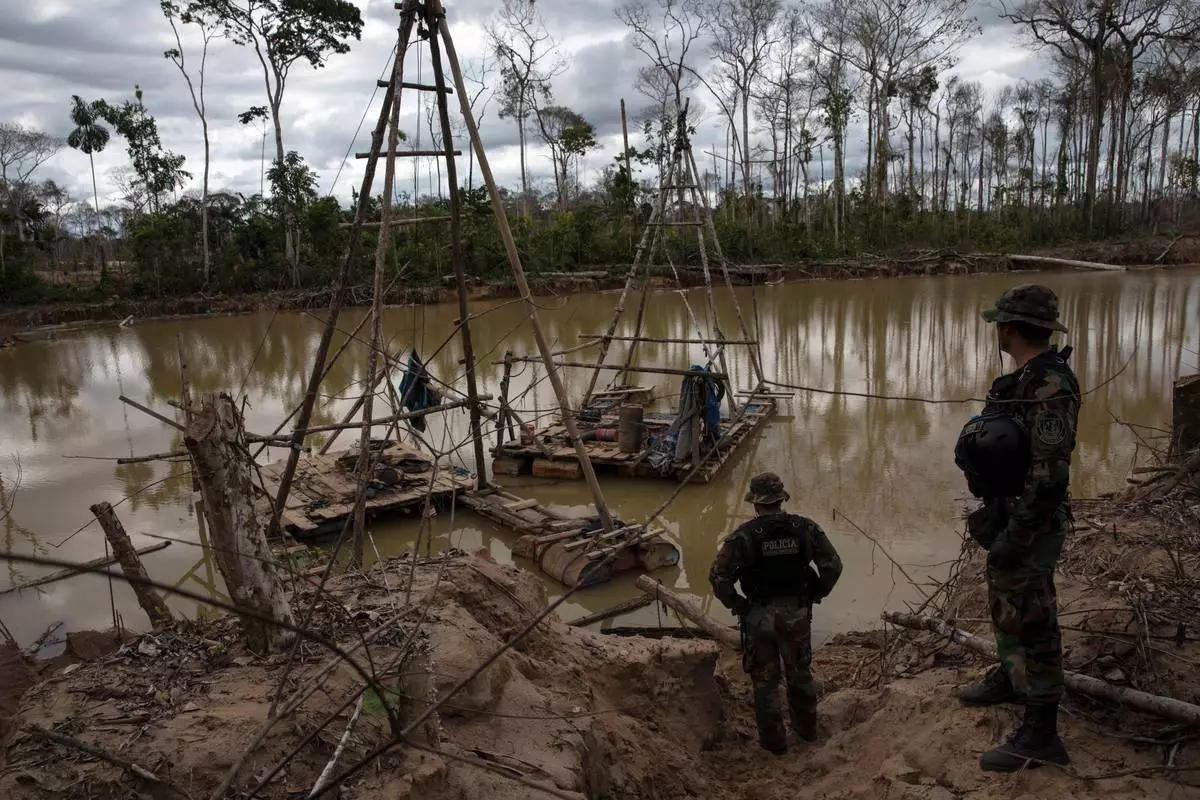
FILE - Police special forces stand next to illegal mining machinery in Peru's Tambopata province on April 1, 2019. (AP Photo/Rodrigo Abd, File)
FILE - Police special forces stand next to illegal mining machinery in Peru's Tambopata province on April 1, 2019. (AP Photo/Rodrigo Abd, File)

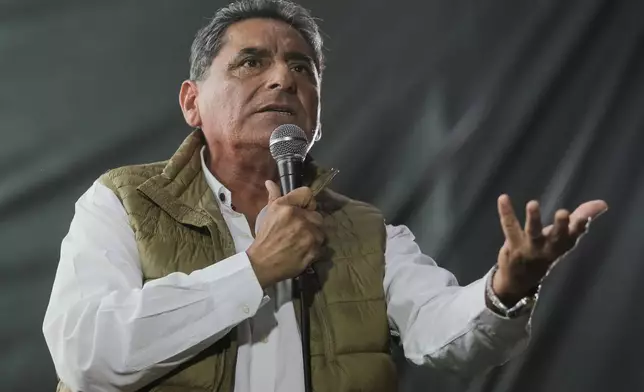
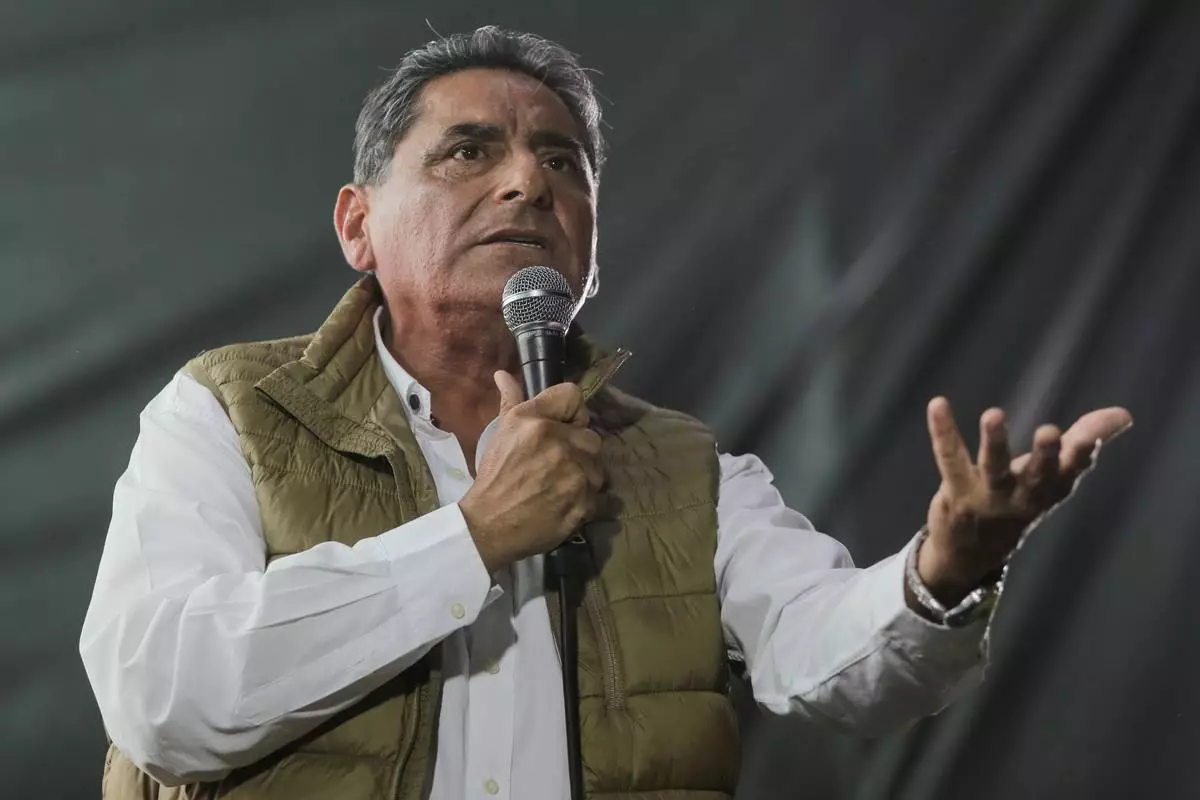
FILE - Presidential candidate Carlos Alvarez, of the Country for All party, delivers a speech during his closing presidential campaign rally in Lima, Peru, April 9, 2026. (AP Photo/Gerardo Marin, File)

FILE - Presidential candidate Carlos Alvarez, of the Country for All party, delivers a speech during his closing presidential campaign rally in Lima, Peru, April 9, 2026. (AP Photo/Gerardo Marin, File)

FILE - Presidential candidate Keiko Fujimori, of the Popular Force party, gestures during her closing campaign rally in Lima, Peru, April 9, 2026. (AP Photo/Guadalupe Pardo, File)
FILE - Presidential candidate Keiko Fujimori, of the Popular Force party, gestures during her closing campaign rally in Lima, Peru, April 9, 2026. (AP Photo/Guadalupe Pardo, File)

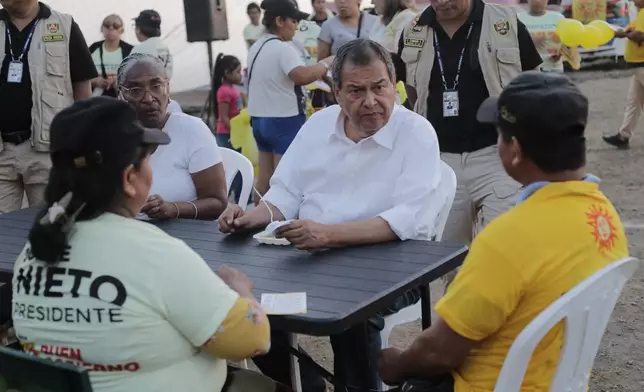
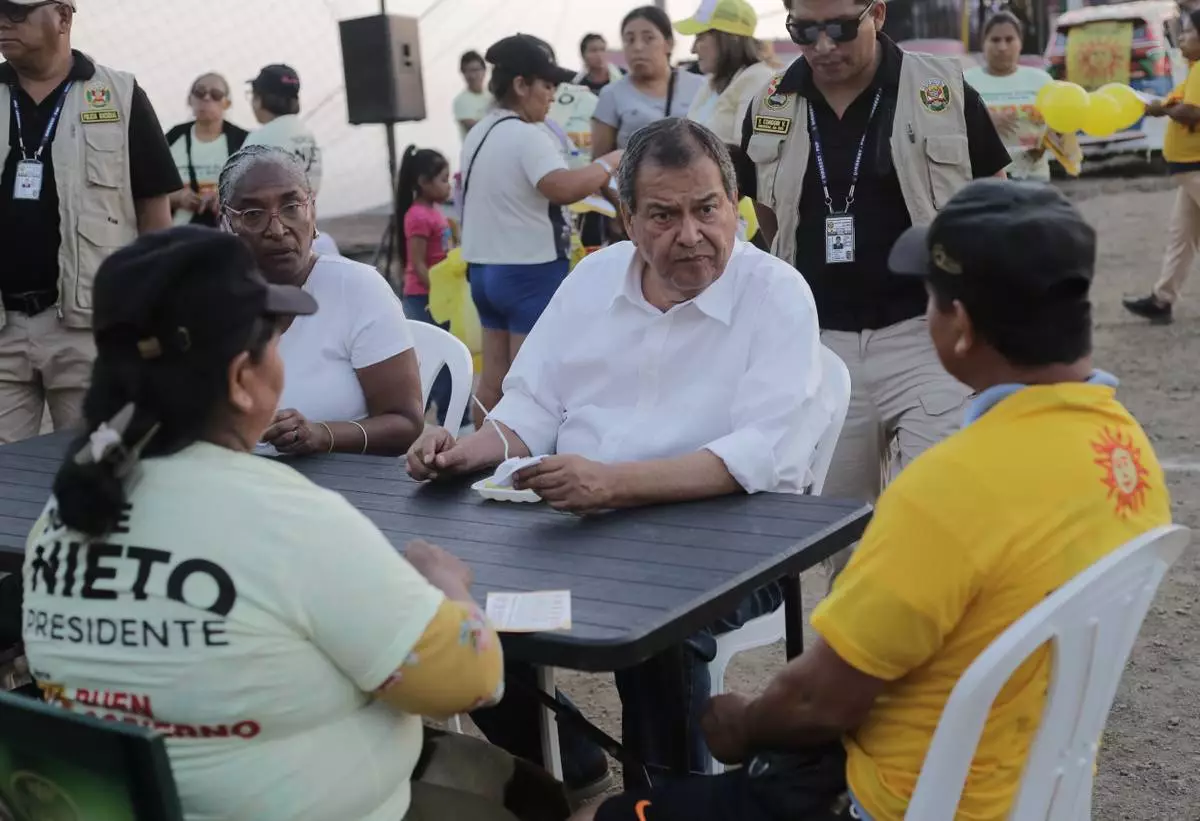
FILE - Presidential candidate Jorge Nieto of the Good Government party talks with a group of supporters during a campaign rally in Lima, Peru, April 8, 2026. (AP Photo/Gerardo Marin, File)
FILE - Presidential candidate Jorge Nieto of the Good Government party talks with a group of supporters during a campaign rally in Lima, Peru, April 8, 2026. (AP Photo/Gerardo Marin, File)

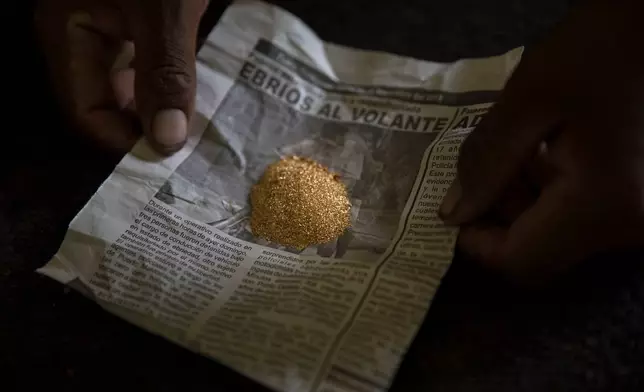
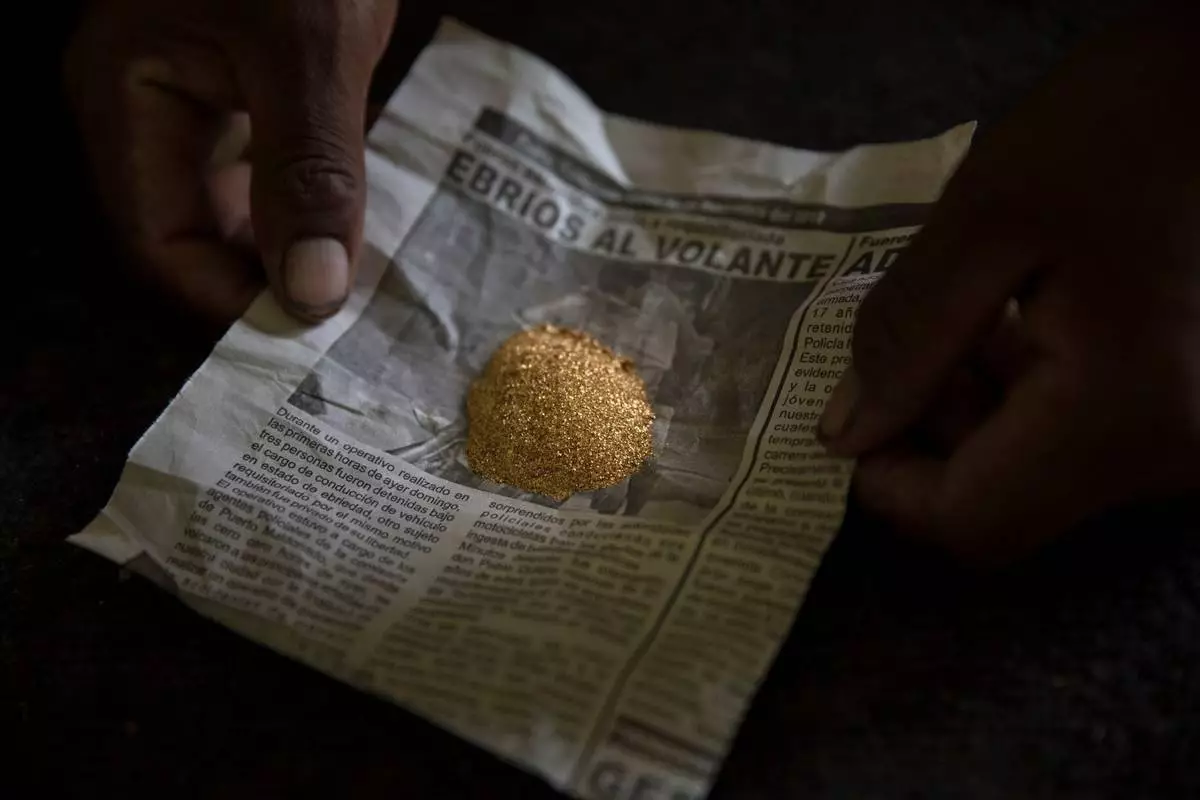
FILE - Gold collected after a day of work is ready to be weighed at a mining camp in Madre de Dios, Peru, April 5, 2019. (AP Photo/Rodrigo Abd, File)
FILE - Gold collected after a day of work is ready to be weighed at a mining camp in Madre de Dios, Peru, April 5, 2019. (AP Photo/Rodrigo Abd, File)

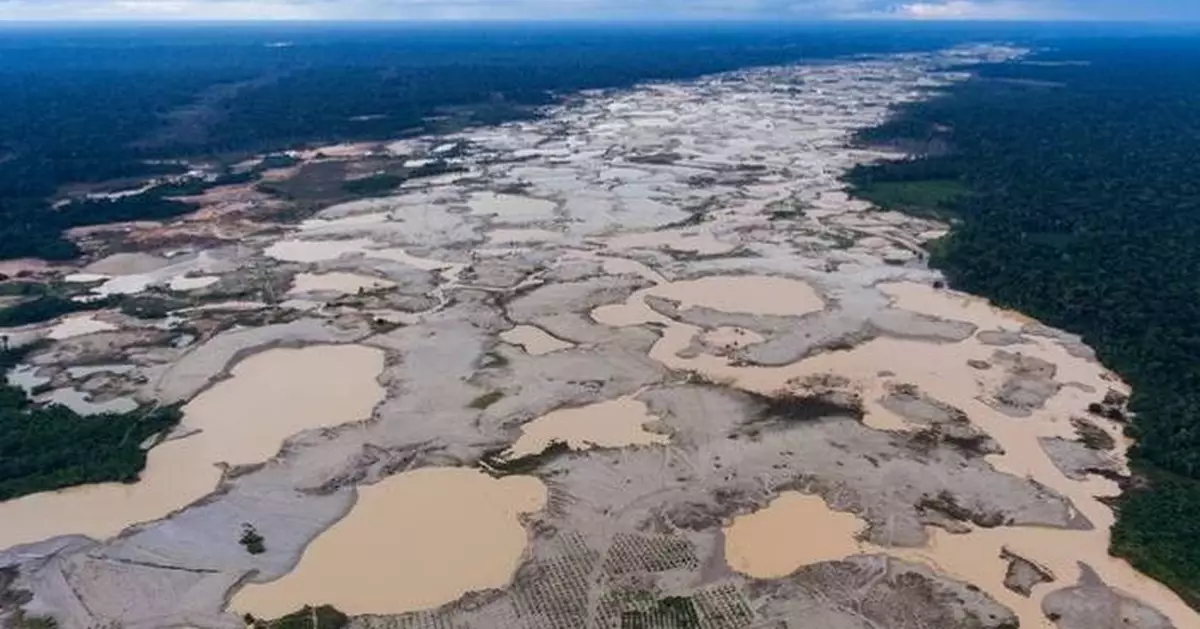
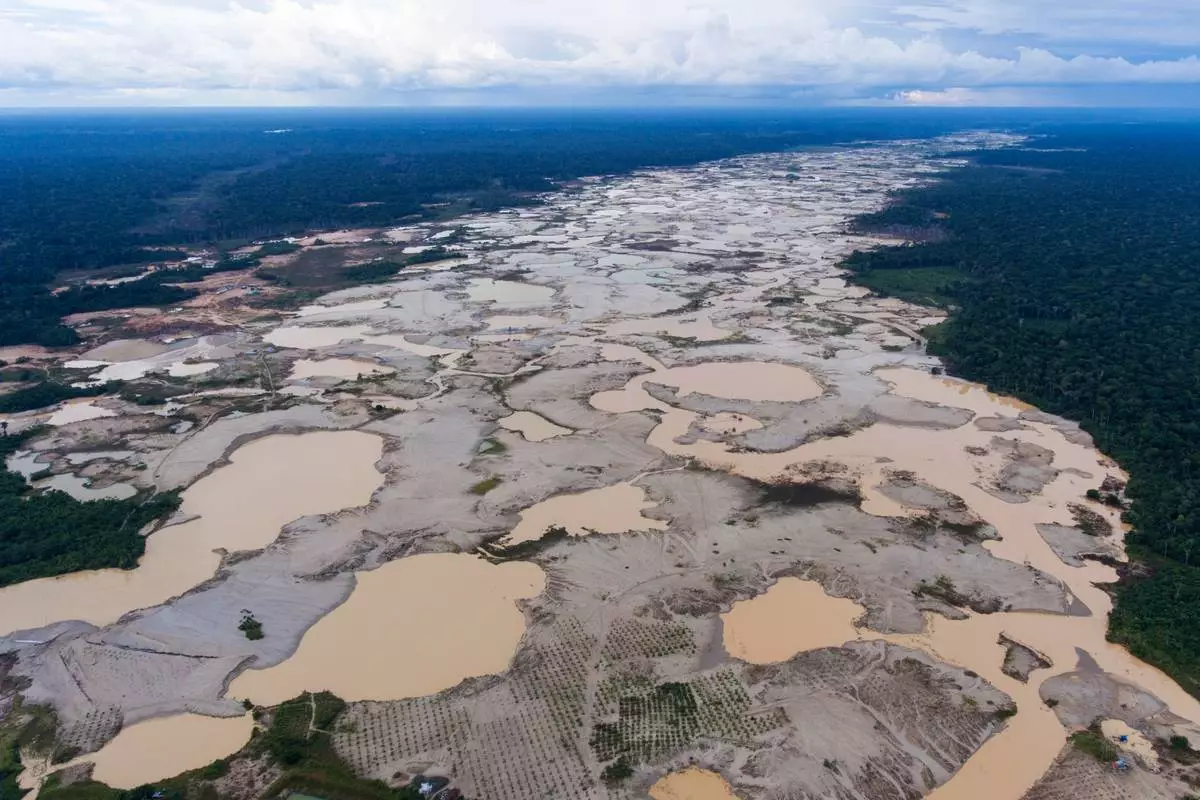
FILE - Deforestation is visible from illegal gold mining in the Madre de Dios province of Peru's Amazon on Jan. 17, 2018. (AP Photo/Rodrigo Abd, File)

FILE - Deforestation is visible from illegal gold mining in the Madre de Dios province of Peru's Amazon on Jan. 17, 2018. (AP Photo/Rodrigo Abd, File)

“Political parties don’t understand that illegal mining has become the country’s main criminal activity and the one that moves the most money,” said environmental lawyer César Ipenza. “There is either ignorance about what this represents for the country — or, in some cases, parties are already part of this economy.”

According to projections by the Peruvian Institute of Economics, illegal mining generated more than $11.5 billion in 2025 and over 100 tons of gold exports — rivaling the formal sector and surpassing drug trafficking.

Some candidates' proposals, including former ministers and technocratic candidates such as Jorge Nieto and Alfonso López Chau, include measures such as gold traceability, financial intelligence and protections for environmental defenders, but these remain fragmented and fall short of a comprehensive strategy.

Others — including candidates from influential conservative and populist parties, such as Keiko Fujimori, Rafael López Aliaga and César Acuña — focus on security, economic growth or extractive development without directly addressing illegal mining or its links to corruption and territorial control in the Amazon. In some cases — including those of Ricardo Belmont and Carlos Álvarez, both media figures turned political candidates — plans omit the issue entirely.

“Illegal mining and illicit economies are not being prioritized in government plans,” said Magaly Ávila, director of environmental governance at Proetica, a Peruvian anti-corruption group, noting that around 64% of party platforms fail to meaningfully address the issue, while only about 5% do so “clearly and explicitly.”

A March analysis by Peru’s Observatory of Illegal Mining reinforces those concerns, finding that only 12 of 36 registered political parties present specific proposals, while others offer only general statements without concrete measures or do not address the issue at all.

Peruvian authorities have previously announced operations and strategies to combat illegal mining, though experts say enforcement remains limited. The Associated Press contacted several government entities for comment on the issue of illegal mining and Indigenous protections but did not receive a response by the time of publication.

Peruvian lawmakers have repeatedly extended a temporary registry that allows informal miners to continue operating while seeking formalization, a system critics say has been widely abused and has helped illegal mining expand.

At the same time, recent legislative changes have undermined the capacity of prosecutors and judges to pursue organized crime, including illegal mining networks, according to rights groups.

Analysts say the measures reflect political pressure from small-scale miners, who have staged protests to demand looser regulations, complicating efforts to tighten enforcement.

The protests appear highly organized, suggesting the involvement of more powerful actors behind the scenes, said Julia Urrunaga, Peru program director at the Environmental Investigation Agency (EIA).

Illegal mining has grown rapidly in recent years, fueled by soaring gold prices, which have climbed to around $4,500 to $5,000 per ounce — making even small amounts of gold highly valuable. Once concentrated in regions such as Madre de Dios, the activity has spread into other parts of the Amazon and beyond.

“The price of gold has reached historic highs, and that has obviously driven illegal mining to expand,” Ipenza said. “The state does not have the capacity to respond or pursue this activity.”

Illegal mining operations often rely on mercury to extract gold, contaminating rivers and entering the food chain through fish.

“In Amazonian river communities, between 50% and 70% of the diet is fish,” said Mariano Castro, Peru’s former vice minister of environment. “So exposure increases exponentially, and mercury is highly toxic, with serious neurological impacts.”

Environmental and health experts warn contamination in some regions already exceeds safety standards, posing long-term risks.

Expected expansion throughout the Amazon “will bring contamination, transnational criminal groups and direct impacts on Indigenous and local populations,” Ipenza said.

Illegal mining already “puts at risk our health, biodiversity and ways of life,” said Tabea Casique, a board member of AIDESEP, Peru’s largest Indigenous organization.

“Most political parties are not taking this problem into account or presenting concrete proposals,” she said.

Former vice minister Castro called state efforts “insufficient” and said lawmakers have also weakened legal tools to prosecute illegal mining, including reducing penalties and limiting the ability to treat such operations as organized crime. Gaps in oversight allow illegally mined gold to enter legal supply chains, often through processing plants where it is laundered.

Ipenza called for the government to better control small-scale processing plants and for stronger coordination across government agencies — including customs, financial intelligence units and prosecutors — to track gold flows and identify illegal activity.

Analysts say weak traceability systems are a central vulnerability.

“There is no real way to trace mining production in Peru,” said EIA's Urrunaga. “Authorities hold fragmented pieces of information, but there is no system — and apparently no political will — to connect them.”

“We are talking about more than $12 billion in illegal gold exports,” she added. “How can this be happening in almost total impunity?”

Experts warn that failing to act will make the problem harder to contain. The next government will face growing pressure to confront a crisis that they say is already spiraling.

“Authorities cannot fulfill their responsibility to protect citizens if they continue to normalize an activity that causes significant harm,” Castro said.

The Associated Press’ climate and environmental coverage receives financial support from multiple private foundations. AP is solely responsible for all content. Find AP’s standards for working with philanthropies, a list of supporters and funded coverage areas at AP.org.
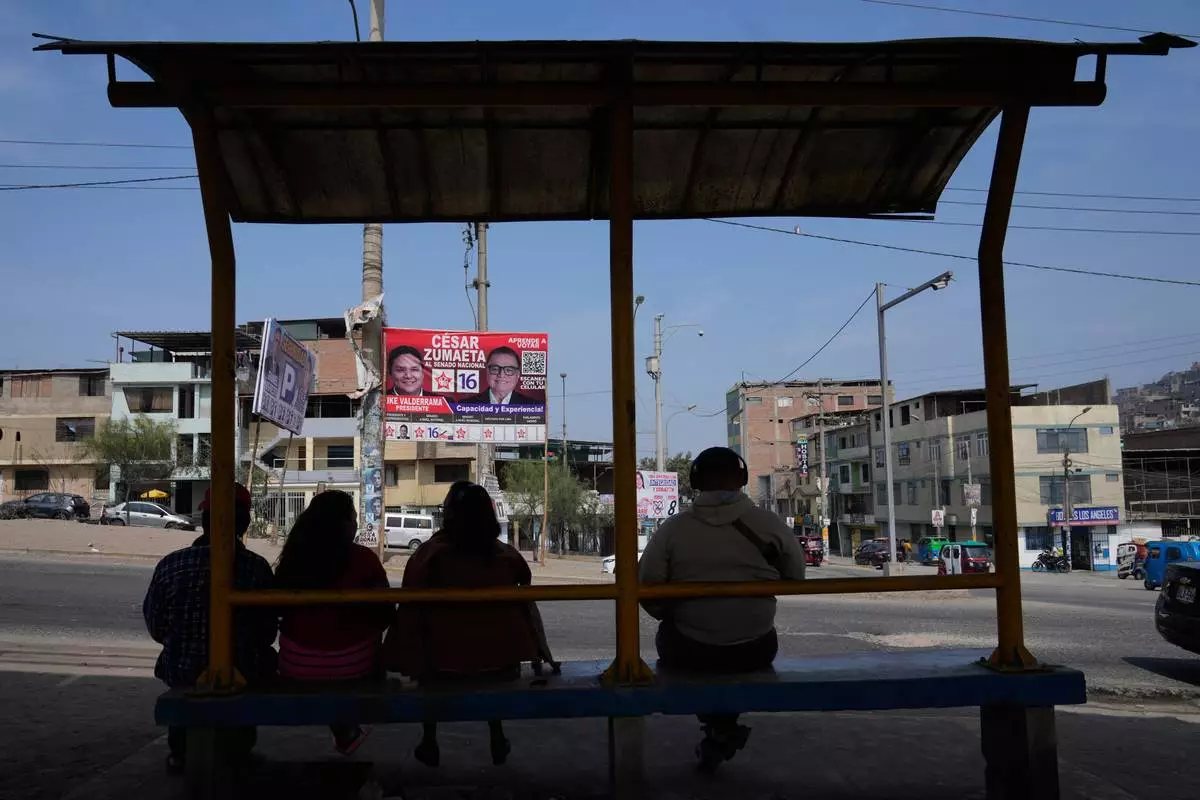
FILE - People sit in a bus station across the street from election campaign signs for presidential and congressional candidates, before the weekend's election in Lima, Peru, Friday, April 10, 2026. (AP Photo/Martin Mejia)
FILE - People sit in a bus station across the street from election campaign signs for presidential and congressional candidates, before the weekend's election in Lima, Peru, Friday, April 10, 2026. (AP Photo/Martin Mejia)

FILE - Police special forces stand next to illegal mining machinery in Peru's Tambopata province on April 1, 2019. (AP Photo/Rodrigo Abd, File)
FILE - Police special forces stand next to illegal mining machinery in Peru's Tambopata province on April 1, 2019. (AP Photo/Rodrigo Abd, File)

FILE - Presidential candidate Carlos Alvarez, of the Country for All party, delivers a speech during his closing presidential campaign rally in Lima, Peru, April 9, 2026. (AP Photo/Gerardo Marin, File)

FILE - Presidential candidate Carlos Alvarez, of the Country for All party, delivers a speech during his closing presidential campaign rally in Lima, Peru, April 9, 2026. (AP Photo/Gerardo Marin, File)

FILE - Presidential candidate Keiko Fujimori, of the Popular Force party, gestures during her closing campaign rally in Lima, Peru, April 9, 2026. (AP Photo/Guadalupe Pardo, File)
FILE - Presidential candidate Keiko Fujimori, of the Popular Force party, gestures during her closing campaign rally in Lima, Peru, April 9, 2026. (AP Photo/Guadalupe Pardo, File)

FILE - Presidential candidate Jorge Nieto of the Good Government party talks with a group of supporters during a campaign rally in Lima, Peru, April 8, 2026. (AP Photo/Gerardo Marin, File)
FILE - Presidential candidate Jorge Nieto of the Good Government party talks with a group of supporters during a campaign rally in Lima, Peru, April 8, 2026. (AP Photo/Gerardo Marin, File)

FILE - Gold collected after a day of work is ready to be weighed at a mining camp in Madre de Dios, Peru, April 5, 2019. (AP Photo/Rodrigo Abd, File)
FILE - Gold collected after a day of work is ready to be weighed at a mining camp in Madre de Dios, Peru, April 5, 2019. (AP Photo/Rodrigo Abd, File)

FILE - Deforestation is visible from illegal gold mining in the Madre de Dios province of Peru's Amazon on Jan. 17, 2018. (AP Photo/Rodrigo Abd, File)

FILE - Deforestation is visible from illegal gold mining in the Madre de Dios province of Peru's Amazon on Jan. 17, 2018. (AP Photo/Rodrigo Abd, File)
ISLAMABAD (AP) — The United States and Iran began negotiations Saturday in Pakistan, days after a fragile, two-week ceasefire was announced, as the war that has killed thousands of people and shaken global markets entered its seventh week.

Iran's state-run news agency said three-party talks had begun after Iran preconditions, including a reduction in Israeli strikes on southern Lebanon, were met, and after U.S. and Iranian officials met separately with Pakistani Prime Minister Shehbaz Sharif. There were no immediate further details, nor U.S. comment.

The U.S. delegation led by Vice President JD Vance and the Iranian delegation led by Parliament Speaker Mohammad Bagher Qalibaf were discussing how to advance the ceasefire already threatened by deep disagreements and Israel's continued attacks against the Iranian-backed Hezbollah in Lebanon.

“I cannot say whether they are sitting in the same room or in separate rooms, but talks have started and are progressing well,” said one Pakistani official with knowledge of the peace efforts, speaking on condition of anonymity because they were not authorized to talk to the media.

Iran doubled down on parts of its earlier proposal, with its delegation telling Iranian state television it had presented some of the plan’s ideas as “red lines” in meetings with Sharif. Those included compensation for damage caused by the U.S.-Israeli strikes that launched the war on Feb. 28 and releasing Iran’s frozen assets.

The war has killed at least 3,000 people in Iran, 1,953 in Lebanon, 23 in Israel and more than a dozen in Gulf Arab states. Iran's chokehold on the vital Strait of Hormuz has largely cut off the Persian Gulf and its oil and gas exports from the global economy, sending energy prices soaring. Attacks have caused lasting damage on infrastructure in half a dozen countries in the Middle East.

In Tehran, residents told The Associated Press they were skeptical yet hopeful about the talks after weeks of airstrikes left destruction across their country of some 93 million people. Some said the path to recovery would be long.

“Peace alone is not enough for our country, because we’ve been hit very hard, there have been huge costs,” 62-year-old Amir Razzai Far said.

Meanwhile, Israel pressed ahead with strikes in Lebanon. The Lebanese state-run news agency reported at least three people killed. There were no reported strikes in the afternoon.

U.S. and Iranian officials claimed leverage and issued new demands and preconditions as talks approached. President Donald Trump posted repeatedly on social media leading up to Saturday, saying Iranian officials “have no cards” to negotiate with.

“The only reason they are alive today is to negotiate!” he wrote.

He accused Iran of using the Strait of Hormuz, a key artery for global energy supplies, for extortion, and told reporters Friday it would be opened “with or without them.”

On Saturday, Trump said on social media that the U.S. had begun “clearing out” the strait, but it was unclear whether he was referring to the reported use of mines there or Iran’s broader ability to control the area.

Islamabad was deserted as security forces sealed roads and authorities urged residents to stay inside.

Vance said Friday that the U.S. was optimistic about the talks, but warned: “If they’re going to try and play us, then they’re going to find that the negotiating team is not that receptive.”

Iranian Foreign Minister Abbas Araghchi had said Tehran was entering negotiations with “deep distrust” after strikes on Iran during previous rounds of talks. Araghchi, who is part of Iran’s delegation in Pakistan, said Saturday that his country was prepared to retaliate if attacked again.

Iran and the United States outlined competing proposals ahead of the talks reflecting the wide gulf on key issues.

Iran’s 10-point proposal called for a guaranteed end to the war and sought control over the Strait of Hormuz. It included ending fighting against Iran’s “regional allies," explicitly calling for a halt to Israeli strikes on Hezbollah.

The United States’ 15-point proposal includes restricting Iran’s nuclear program and reopening the strait.

Negotiations between Israel and Lebanon are expected to begin Tuesday in Washington, Lebanese President Joseph Aoun’s office said Friday.

Israel wants the Lebanese government to assume responsibility for disarming Hezbollah, much like was envisaged in a November 2024 ceasefire. But it is unclear whether Lebanon's army can establish a monopoly on arms or confiscate weapons from the militant group, which has survived efforts to curb its strength for decades.

Israel’s insistence that the ceasefire in Iran does not include a pause in its fighting with Hezbollah has threatened to sink the deal. The militant group joined the war in support of Iran in the opening days of the war.

The day the truce was announced, Israel pounded Beirut with airstrikes, killing more than 300 people in the deadliest day in the country since the war began, according to the Lebanese Health Ministry.

Iran’s closure of the Strait of Hormuz has proved its biggest strategic advantage in the war. Commercial vessels have avoided the strait, effectively blocking the passage of oil, natural gas and fertilizer.

The spot price of Brent crude, the international standard for oil prices, was above $94 on Saturday, up more than 30% since the war started.

Before the conflict, around a fifth of the world’s traded oil typically passed through the strait on more than 100 ships a day. With the ceasefire in place, only 12 have been recorded traversing the strait.

Iran has floated charging ships passing through the strait as part of a peace deal, though the idea has been widely rejected by countries including the United States and Iran's neighbor Oman.

Metz reported from Jerusalem, Castillo from Beijing and Magdy from Cairo.

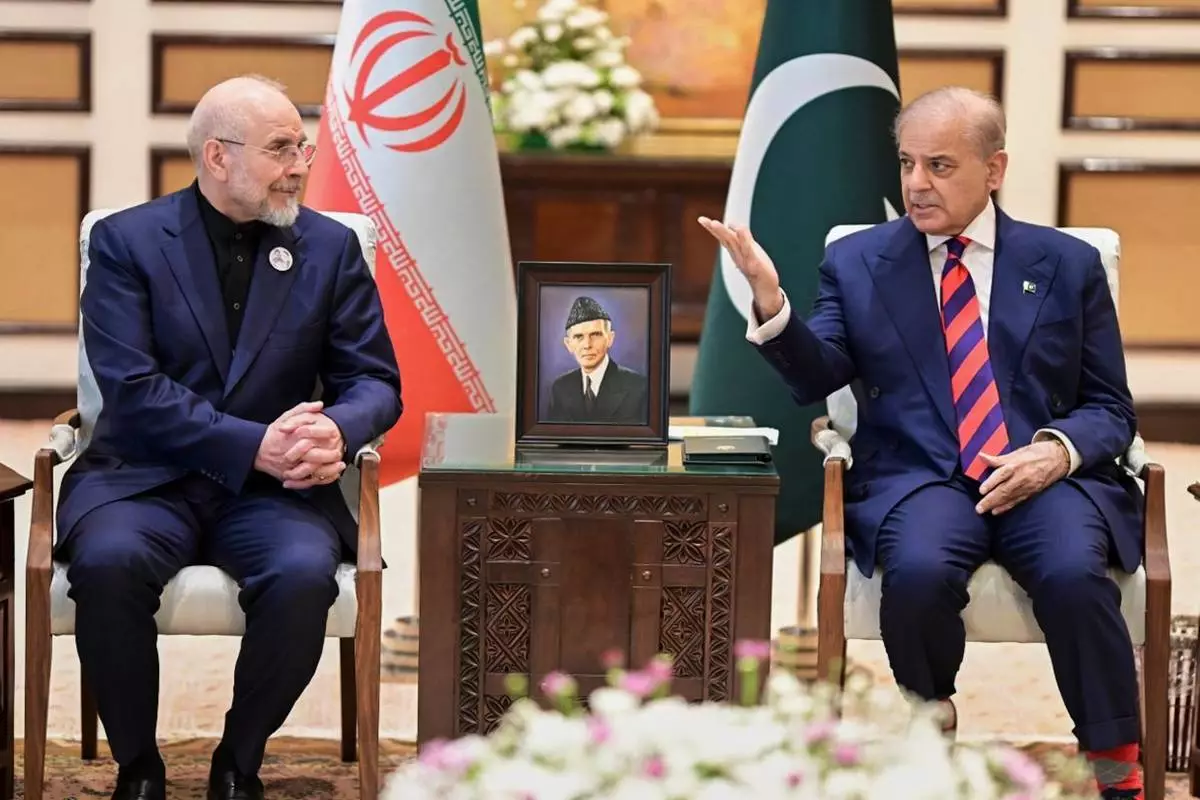
In this photo released by the Pakistan Prime Minister Office, Iran's Parliament Speaker Mohammad Bagher Ghalibaf, left, meets with hand with Pakistani Prime Minister Shehbaz Sharif, in Islamabad, Pakistan, Saturday, April 11, 2026 (Pakistan Prime Minister Office via AP)

In this photo released by the Pakistan Prime Minister Office, Iran's Parliament Speaker Mohammad Bagher Ghalibaf, left, meets with hand with Pakistani Prime Minister Shehbaz Sharif, in Islamabad, Pakistan, Saturday, April 11, 2026 (Pakistan Prime Minister Office via AP)

Mohammed, 8, weeps next to the coffin of his father, Hussein Makkah, during the funeral of 13 state security officers killed the previous day in an Israeli strike in Lebanon’s coastal city of Sidon, Lebanon, Saturday, April 11, 2026. (AP Photo/Emilio Morenatti)

Mohammed, 8, weeps next to the coffin of his father, Hussein Makkah, during the funeral of 13 state security officers killed the previous day in an Israeli strike in Lebanon’s coastal city of Sidon, Lebanon, Saturday, April 11, 2026. (AP Photo/Emilio Morenatti)

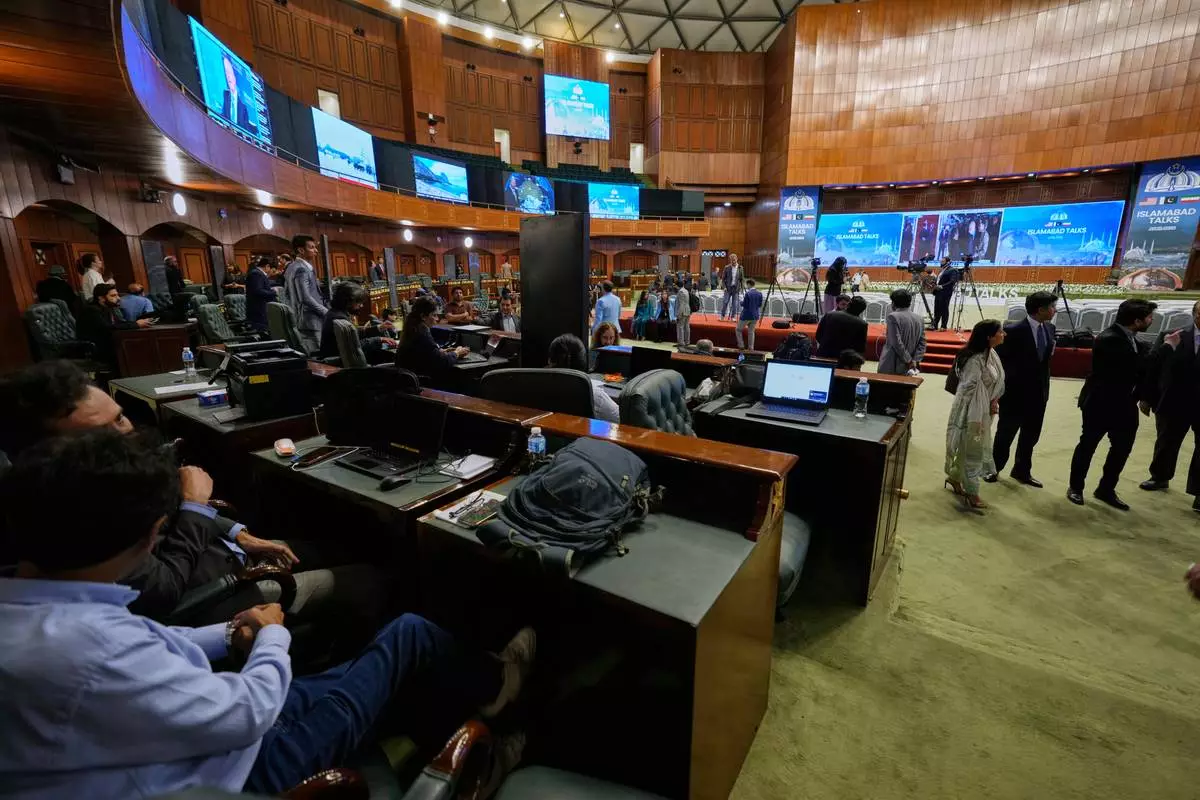
Members of the media work at a media center setup for the coverage of the US-Iran talks, in Islamabad, Pakistan, Saturday, April 11, 2026. (AP Photo/Anjum Naveed)

Members of the media work at a media center setup for the coverage of the US-Iran talks, in Islamabad, Pakistan, Saturday, April 11, 2026. (AP Photo/Anjum Naveed)

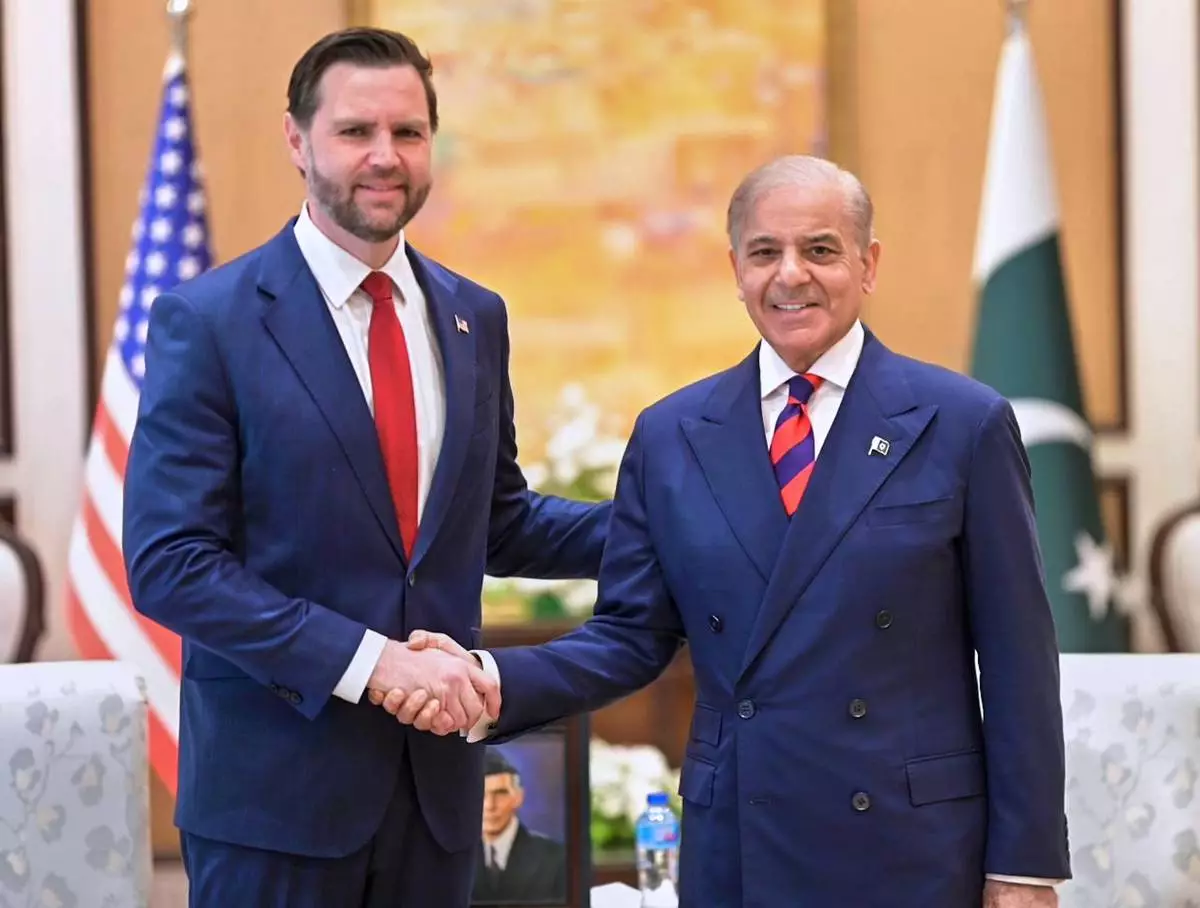
In this photo released by the Pakistan Prime Minister Office, U.S. Vice President JD Vance, left, shakes hand with Pakistani Prime Minister Shehbaz Sharif prior to their meeting, in Islamabad, Pakistan, Saturday, April 11, 2026 (Pakistan Prime Minister Office via AP)

In this photo released by the Pakistan Prime Minister Office, U.S. Vice President JD Vance, left, shakes hand with Pakistani Prime Minister Shehbaz Sharif prior to their meeting, in Islamabad, Pakistan, Saturday, April 11, 2026 (Pakistan Prime Minister Office via AP)

Mohammed, 8, weeps next to the coffin of his father, Hussein Makkah, during the funeral of 13 state security officers killed the previous day in an Israeli strike in Lebanon’s coastal city of Sidon, Lebanon, Saturday, April 11, 2026. (AP Photo/Emilio Morenatti)

Mohammed, 8, weeps next to the coffin of his father, Hussein Makkah, during the funeral of 13 state security officers killed the previous day in an Israeli strike in Lebanon’s coastal city of Sidon, Lebanon, Saturday, April 11, 2026. (AP Photo/Emilio Morenatti)

A Pakistani official is seen during the arrival of the U.S. Vice President JD Vance for talks with Iranian officials in Islamabad, Pakistan, Saturday, April 11, 2026. (AP Photo/Jacquelyn Martin, Pool)

A Pakistani official is seen during the arrival of the U.S. Vice President JD Vance for talks with Iranian officials in Islamabad, Pakistan, Saturday, April 11, 2026. (AP Photo/Jacquelyn Martin, Pool)

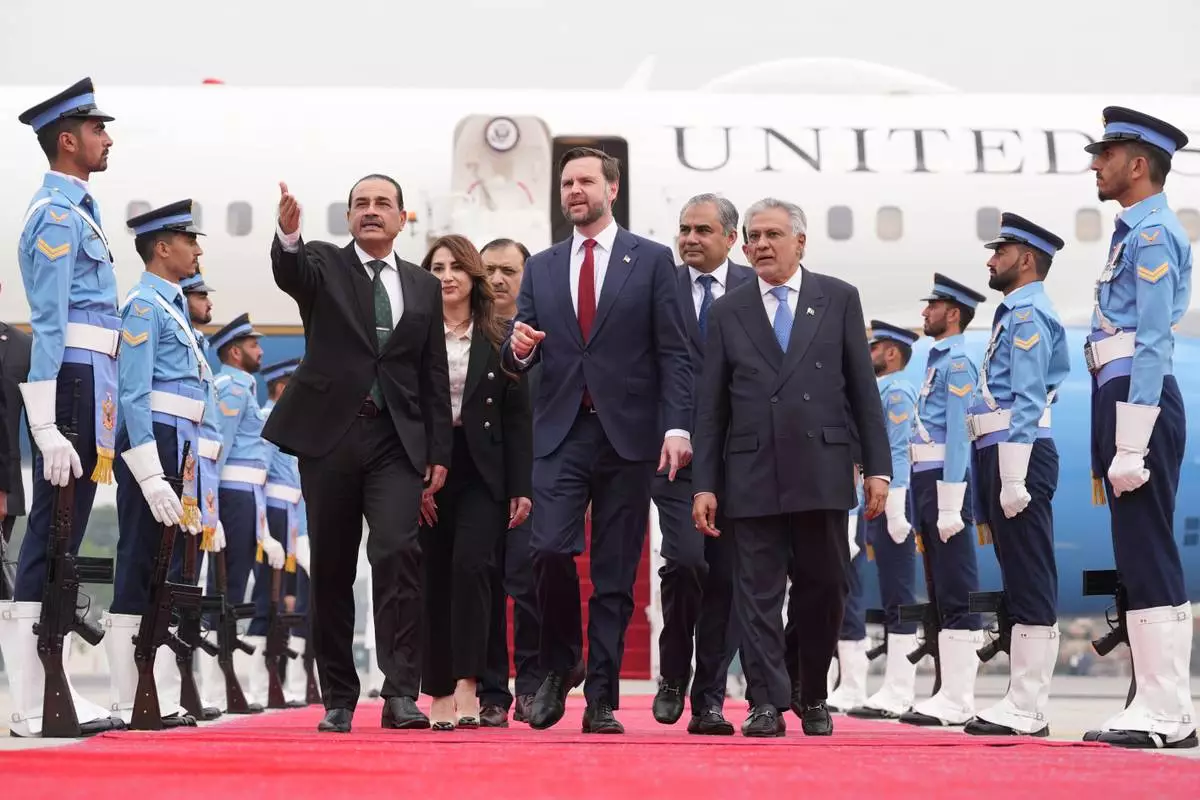
U.S. Vice President JD Vance, center, walks with Pakistan's Chief of Defence Forces and Chief of Army Staff Field Marshall Asim Munir, left, and Pakistani Deputy Prime Minister and Foreign Minister Mohammad Ishaq Dar after arriving for talks with Iranian officials in Islamabad, Pakistan, Saturday, April 11, 2026. (AP Photo/Jacquelyn Martin, Pool)

U.S. Vice President JD Vance, center, walks with Pakistan's Chief of Defence Forces and Chief of Army Staff Field Marshall Asim Munir, left, and Pakistani Deputy Prime Minister and Foreign Minister Mohammad Ishaq Dar after arriving for talks with Iranian officials in Islamabad, Pakistan, Saturday, April 11, 2026. (AP Photo/Jacquelyn Martin, Pool)

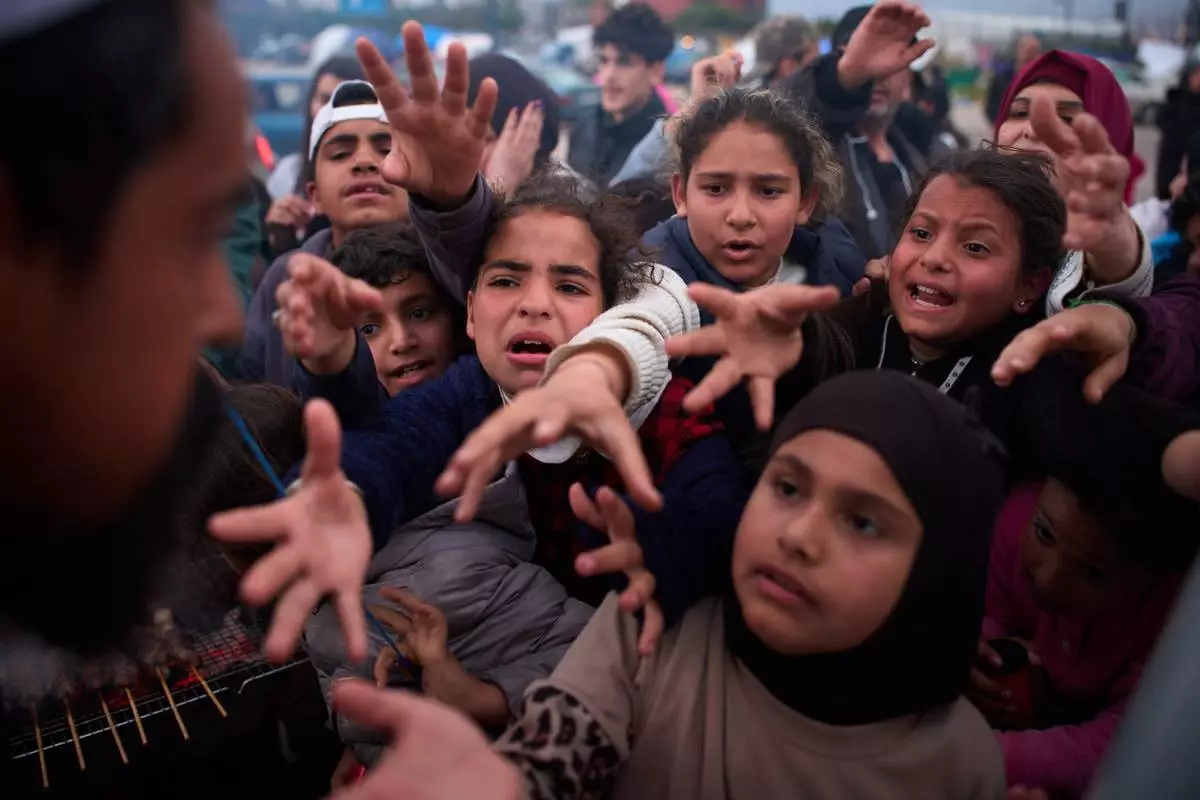
Displaced families extend their hands while waiting for donated food beside the tents they use as shelters after fleeing Israeli bombardment in southern Lebanon, in Beirut, Lebanon, Thursday, April 9, 2026. (AP Photo/Emilio Morenatti)

Displaced families extend their hands while waiting for donated food beside the tents they use as shelters after fleeing Israeli bombardment in southern Lebanon, in Beirut, Lebanon, Thursday, April 9, 2026. (AP Photo/Emilio Morenatti)

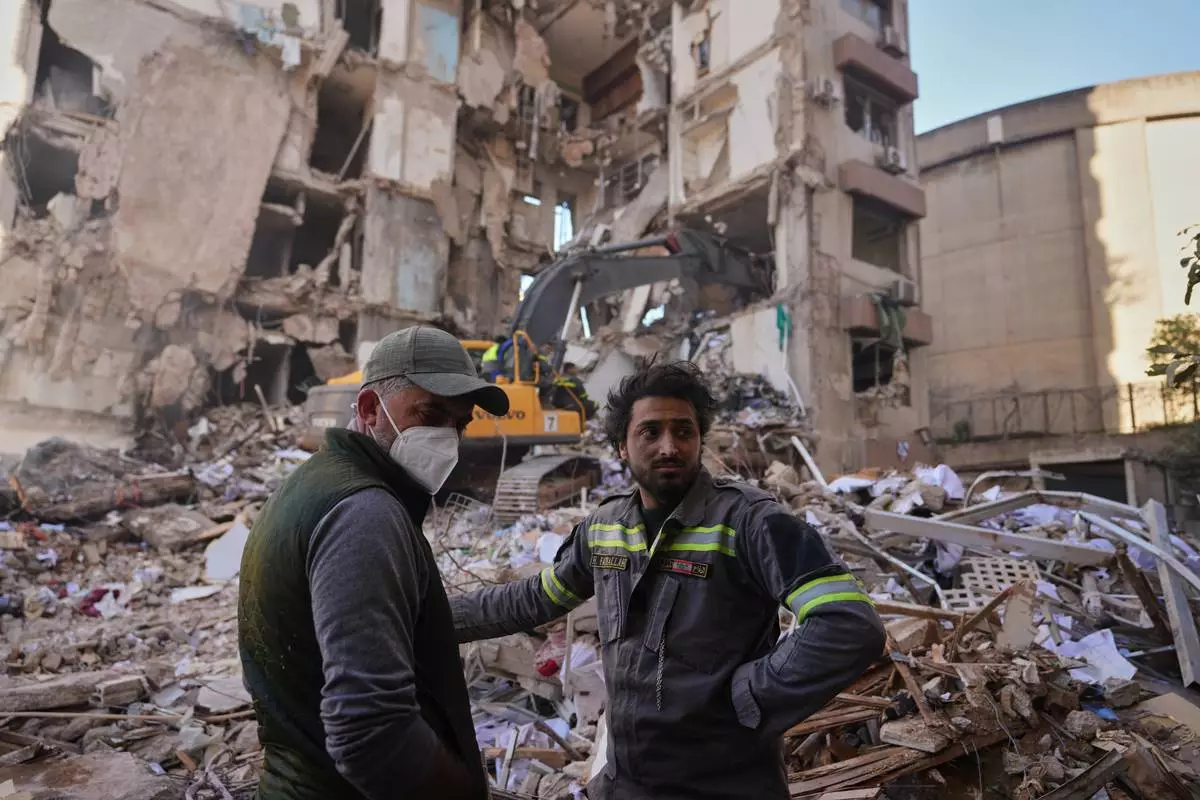
A Lebanese civil defense worker, right, stands with a resident at the site of a building destroyed in an Israeli airstrike a day earlier in central Beirut, Lebanon, Thursday, April 9, 2026. (AP Photo/Hassan Ammar)

A Lebanese civil defense worker, right, stands with a resident at the site of a building destroyed in an Israeli airstrike a day earlier in central Beirut, Lebanon, Thursday, April 9, 2026. (AP Photo/Hassan Ammar)

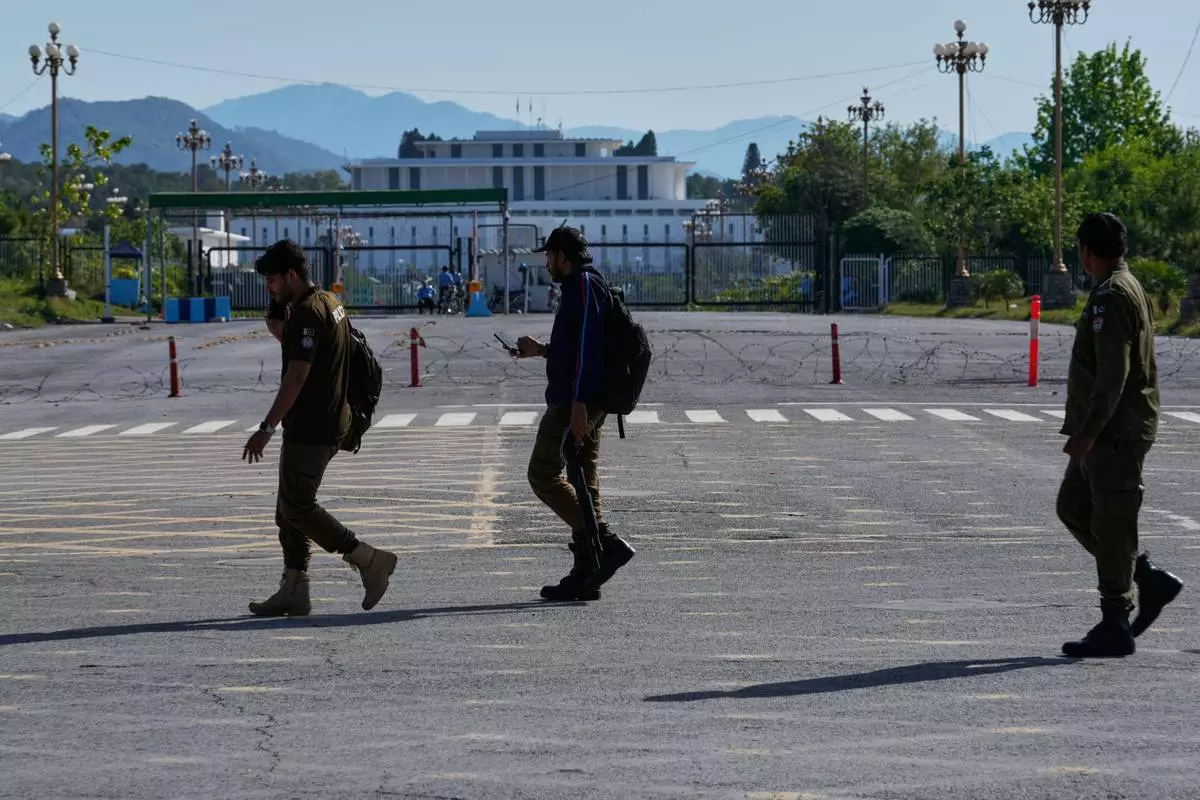
Police officers take position in Islamabad, Pakistan, to ensure security ahead of possible negotiations between Iran and the United States, Friday, April 10, 2026. (AP Photo/Anjum Naveed)

Police officers take position in Islamabad, Pakistan, to ensure security ahead of possible negotiations between Iran and the United States, Friday, April 10, 2026. (AP Photo/Anjum Naveed)

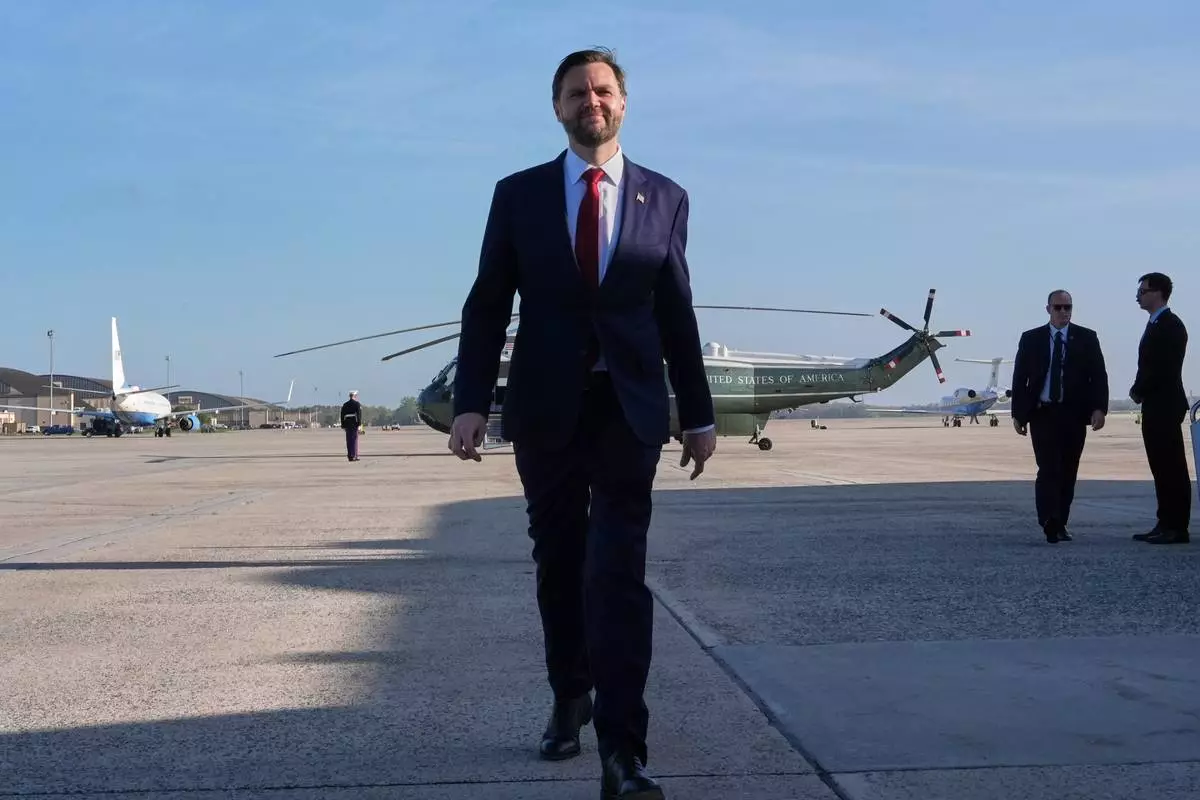
Vice President JD Vance walks to speak with the Press before boarding Air Force Two, Friday, April 10, 2026, at Joint Base Andrews, Md., for expected departure to Pakistan, for talks on Iran. (AP Photo/Jacquelyn Martin, pool)

Vice President JD Vance walks to speak with the Press before boarding Air Force Two, Friday, April 10, 2026, at Joint Base Andrews, Md., for expected departure to Pakistan, for talks on Iran. (AP Photo/Jacquelyn Martin, pool)

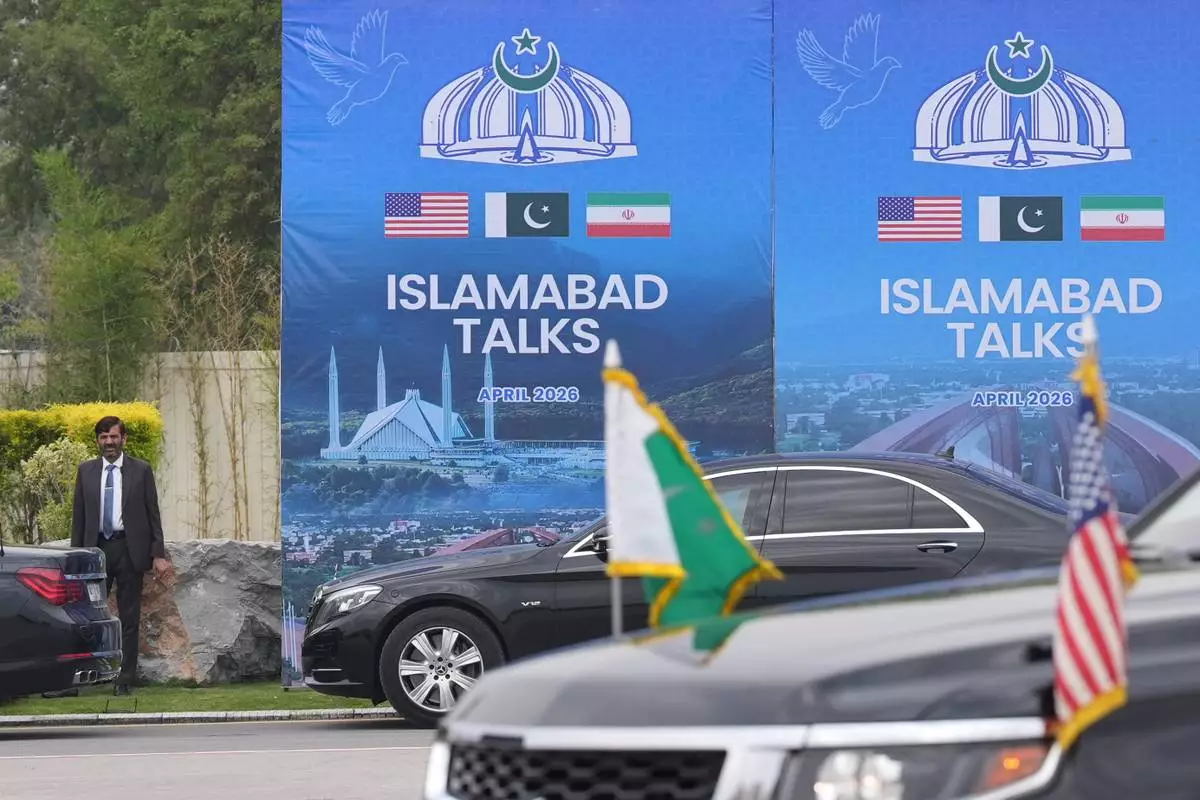
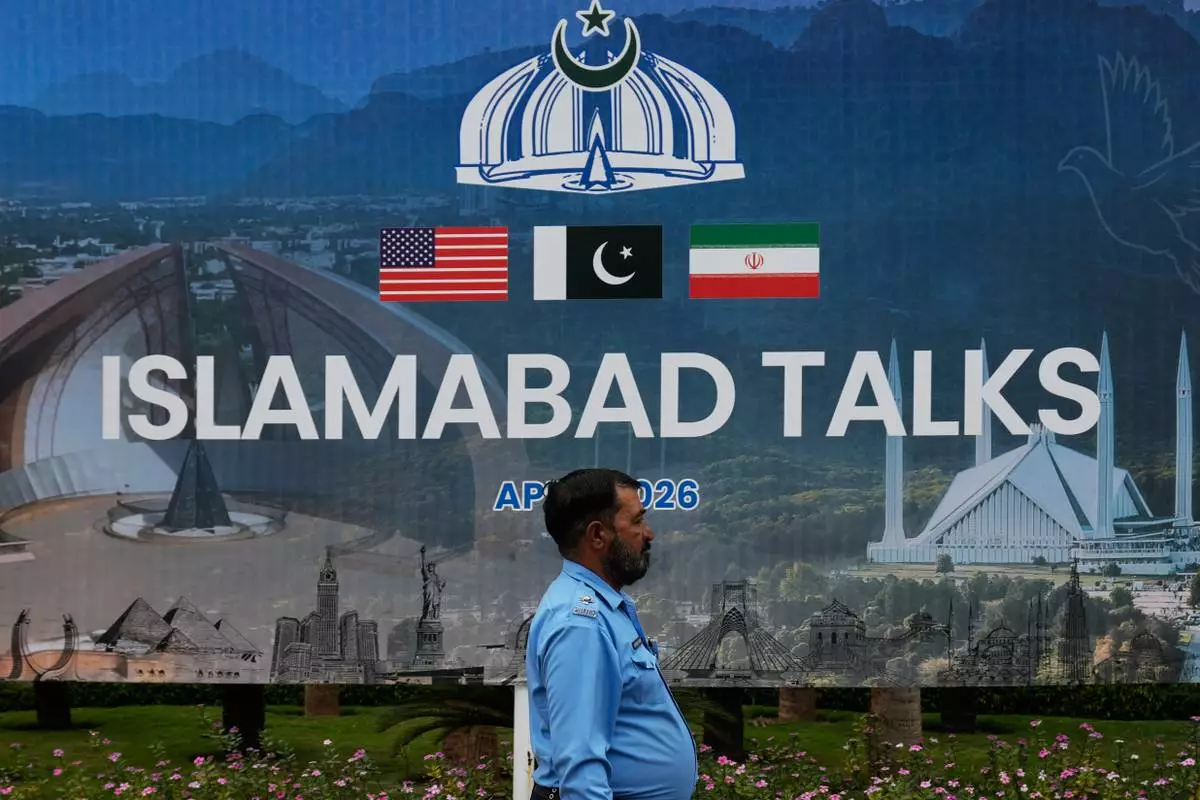
A police officer walks past a billboard regarding the United States and Iran negotiations, outside a media facilitation center in Islamabad, Pakistan, Saturday, April 11, 2026. (AP Photo/Anjum Naveed)

A police officer walks past a billboard regarding the United States and Iran negotiations, outside a media facilitation center in Islamabad, Pakistan, Saturday, April 11, 2026. (AP Photo/Anjum Naveed)

Recommended Articles