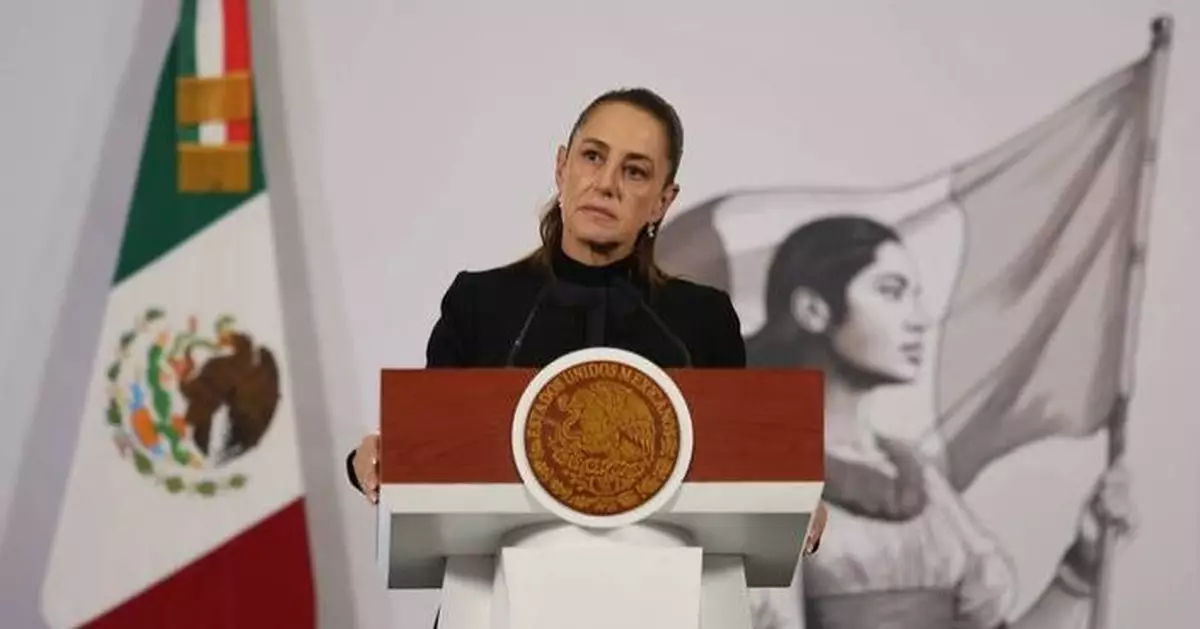
MEXICO CITY (AP) — Mexican President Claudia Sheinbaum on Wednesday announced plans to tap into unconventional natural gas deposits in an effort to lower her country's reliance on foreign energy at a time when the Iran war is disrupting global energy markets.
But Sheinbaum — a scientist and climate expert — notably avoided the term hydraulic fracturing or “fracking,” a drilling method used to extract oil and natural gas from deep underground bedrock using a highly pressurized liquid. Instead, she framed the initiative as a quest for “sustainable” extraction, emphasizing that environmental impacts would be minimized to the greatest extent possible.
The technical feasibility of “sustainable fracking” is a subject of significant debate among environmental scientists and energy experts. But Sheinbaum said a technical committee will spend two months evaluating less harmful methods, such as utilizing nonpotable water and reducing chemical additives. The committee will also assess the potential costs of these mitigations, she said.
“All the gas we import comes from a type of extraction that has environmental impacts” and is “100 meters from the Mexican border,” she noted, alluding to fracking projects in Texas.
Mexico is the world’s single largest buyer of U.S. gas.
While noting that natural gas import contracts with the U.S. remain secure and the bilateral relationship is strong, she argued that increasing energy sovereignty is a responsible necessity. “Is more gas needed? Yes. Can all gas be replaced? Hardly,” she added.
Since assuming power in October 2024, Sheinbaum has pledged to expand renewable energy while maintaining firm support for the state-owned Petróleos Mexicanos. On Wednesday, she defended this stance by arguing that fossil fuels remain an essential component of Mexico’s energy landscape.
Sheinbaum said the priority is to reduce external energy dependence in turbulent times and avoid situations like the one experienced in Europe with the shortage of Russian gas during the war in Ukraine or the one caused by the current war in the Middle East.
Wednesday's proposal — which is certain to spark controversy — comes amid a surge in infrastructure projects designed to increase U.S. gas imports. These developments aim to satisfy Mexico’s rising domestic electricity demand while positioning the country as a hub for re-exporting gas to Asian and European markets.
Follow AP’s coverage of Latin America and the Caribbean at https://apnews.com/hub/latin-america
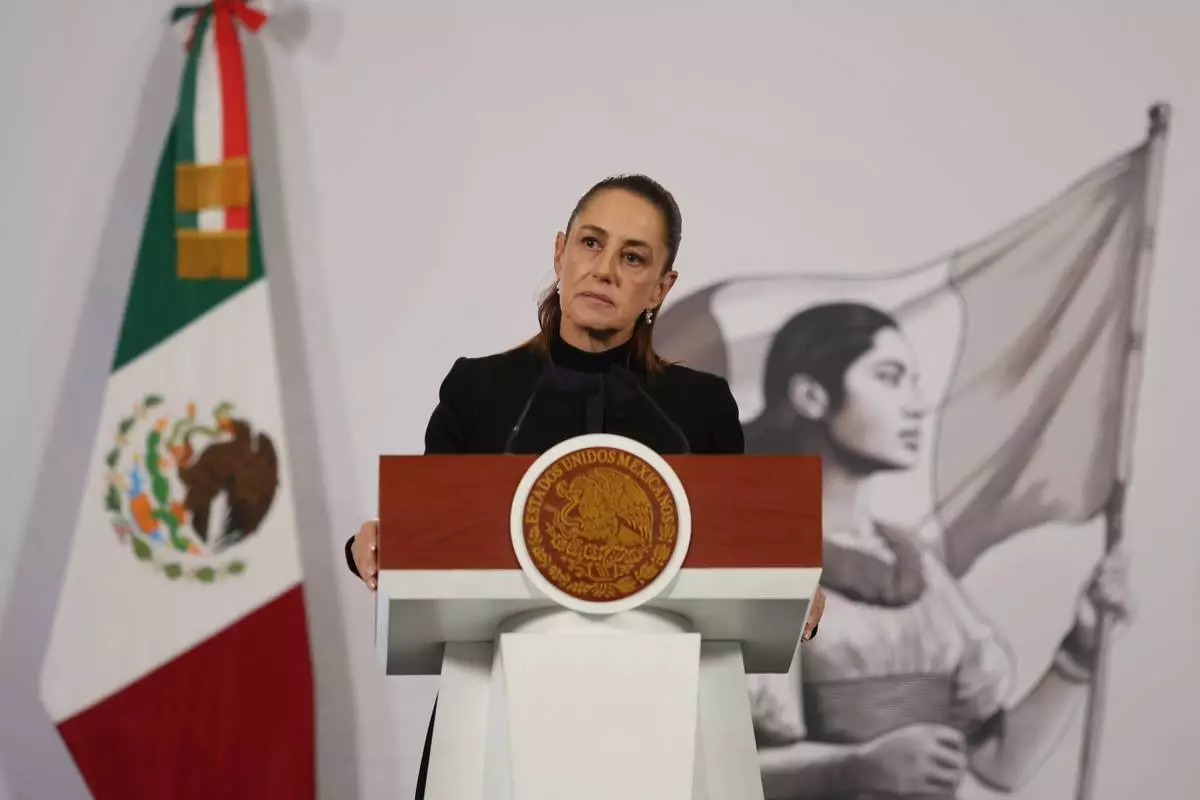
FILE - Mexican President Claudia Sheinbaum gives her the daily, morning news conference at the National Palace in Mexico City, Feb. 23, 2026. (AP Photo/Ginnette Riquelme, File)
NEW YORK (AP) — Oil prices are plunging back toward $95 per barrel, and stock markets are surging worldwide on Wednesday after President Donald Trump pulled back from his threat to force a “whole civilization” to die in the war with Iran.
The S&P 500 leaped 2.6% after Trump announced a two-week ceasefire with Iran, less than 90 minutes before a deadline Trump had set for it to open the Strait of Hormuz and allow oil tankers to exit the Persian Gulf. The Dow Jones Industrial Average was up 1,254 points, or 2.7%, as of 1:03 p.m. Eastern time, and the Nasdaq composite was 3.2% higher following even bigger gains in European and Asian stock markets.
To be sure, stock prices are still below where they were before the war. And oil prices are still significantly higher because the threat remains that the war could continue and keep oil produced in the Persian Gulf area blocked in the Middle East.
Some of the euphoria that launched explosive moves for stock and oil prices early Wednesday faded as the day progressed, and financial markets have been prone to sharp and sudden reversals because of deep uncertainty about what will happen next in the war.
“There is a reason to be optimistic, but it is still too early to tell, because, as you know, after all, it is Trump,” said Takashi Hiroki, chief strategist at MONEX.
So far in the war, Trump has set several deadlines for Iran to open the Strait of Hormuz, a main thoroughfare for oil to reach customers worldwide from the Persian Gulf, and has threatened big repercussions if Iran doesn’t, only to delay them.
It’s similar to a year ago, when Trump threatened stiff tariffs on imports from other countries on “Liberation Day.” After a couple delays, his administration eventually negotiated lower tariffs with many countries, though they were still higher than from before his second term. That led some investors to allege Trump “always chickens out,” or “TACO,” if financial markets show enough pain.
“Is it just kicking of the can down the road, moving the goalposts, TACO Tuesday, or whatever metaphor we’d like, to only to have tempers flare and bombs drop again?” Brian Jacobsen, chief economic strategist at Annex Wealth Management, asked about the two-week ceasefire with Iran. “Who knows? But it’s good enough for now to elicit a positive response from the markets.”
The price for a barrel of benchmark U.S. crude oil plunged 16.1% to $94.72 after almost dropping to $91 earlier in the morning.
Brent crude, the international standard, tumbled 13.5% to $94.59 per barrel. It had briefly topped $119 when worries about the war with Iran were at their highest, but it's still above its roughly $70 price from before the war.
The average price for a gallon of regular gasoline has already topped $4.16 in the United States, according to AAA. That’s up from less than $3 a couple days before the war began in late February. If oil prices stay high for a long time, it would push up the price of nearly everything that’s moved by truck, plane or boat.
The next moves for oil prices will likely depend on how many oil tankers can start exiting the Strait of Hormuz and how easy their passage is. Iran said the deal would allow it to formalize its new practice of charging ships passing through the Strait of Hormuz, but the terms were not clear.
In Asia, where countries are more reliant on oil from the Middle East, South Korea’s Kospi stock index surged 6.9%. Japan’s Nikkei 225 leaped 5.4%, and Hong Kong’s Hang Seng jumped 3.1%.
European stock indexes rose nearly as much. Germany’s DAX returned 5.1%, and France’s CAC 40 rallied 4.5%.
On Wall Street, companies with big fuel bills roared back to trim some of the sharp losses taken on worries about oil prices staying high.
United Airlines soared 10.2%, which could count as a decent year for the stock. It cut into its loss for the year that came into the day at 20.1%.
Delta Air Lines climbed 6.1% after it also reported stronger results for the latest quarter than analysts expected. CEO Ed Bastian said demand for flights remains strong, and it's making moves to make up for higher fuel bills. Delta on Tuesday became the latest airline to raise its fees for checking bags.
Cruise ship operator Carnival climbed 11.2%.
In the bond market, Treasury yields dropped as hopes built that easing oil prices could let the Federal Reserve resume its cuts to interest rates later this year.
The yield on the 10-year Treasury fell to 4.28% from 4.33% late Tuesday. That’s a notable move for the bond market, and lower Treasury yields give a boost to prices for stocks, bonds and all kinds of other investments. The drop should also ease some of the recent rise in rates for mortgages and other loans taken out by U.S. households and businesses.
When oil prices were screaming higher because of the war, some traders were betting on the possibility that the Fed would have to raise interest rates to keep a lid on inflation. Now, they're seeing a roughly 1-in-3 chance that the Fed could resume its cuts to rates in 2026, according to data from CME Group.
AP journalists Yuri Kageyama, Matt Ott, Mayuko Ono and Jon Gambrell contributed to this report.
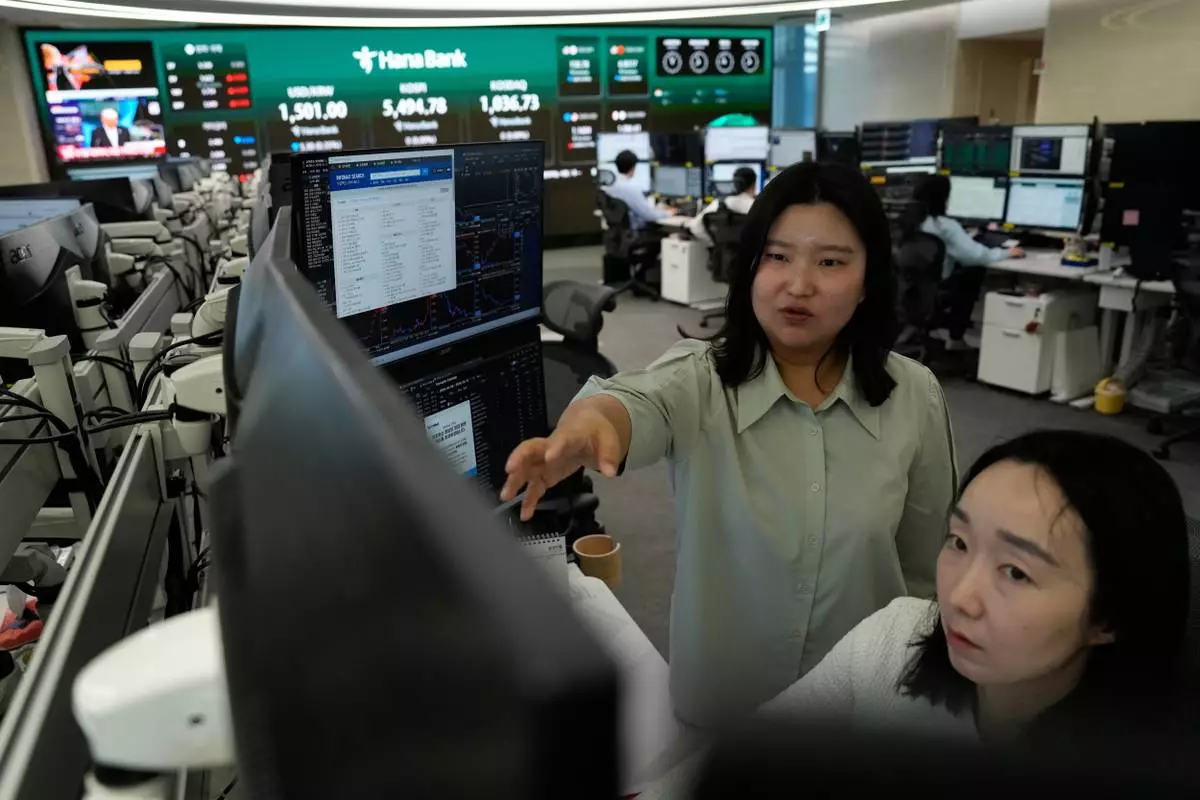
Currency traders work at the foreign exchange dealing room of the Hana Bank headquarters in Seoul, South Korea, Wednesday, April 8, 2026. (AP Photo/Ahn Young-joon)
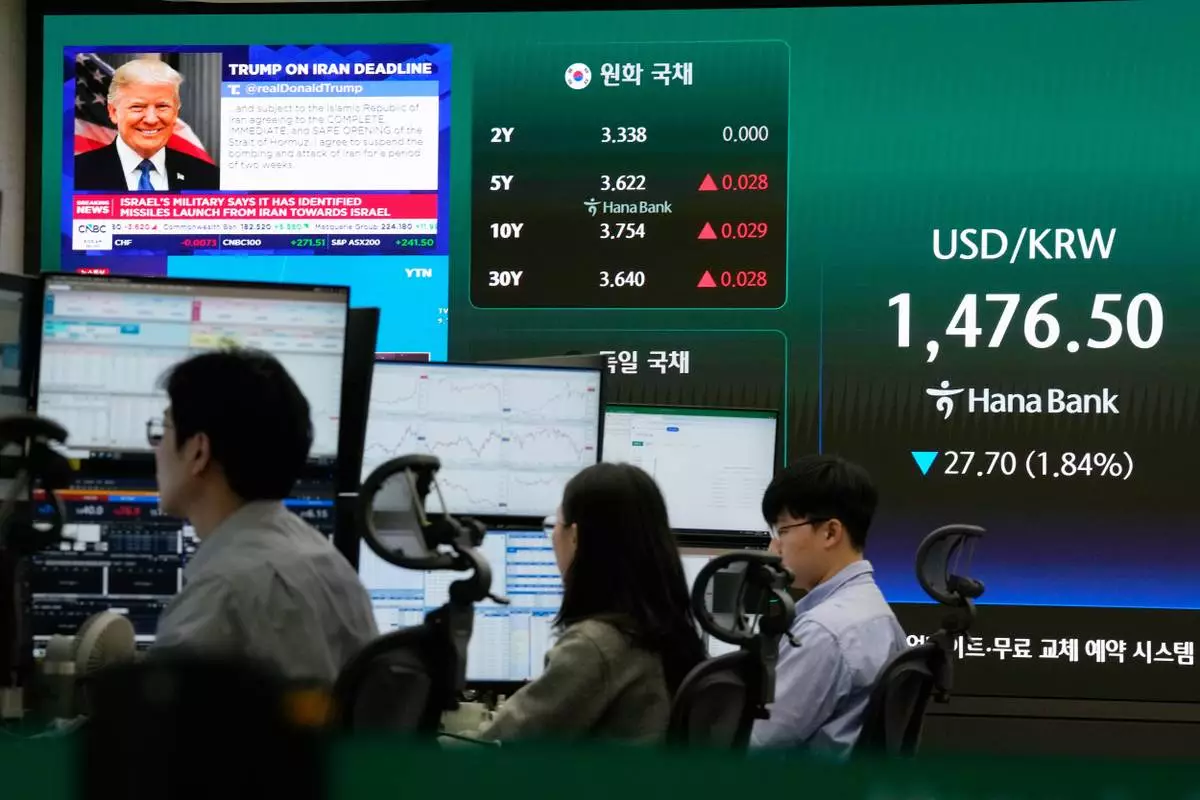
U.S. President Donald Trump is seen on a screen as traders work at the foreign exchange dealing room of the Hana Bank headquarters in Seoul, South Korea, Wednesday, April 8, 2026. (AP Photo/Ahn Young-joon)
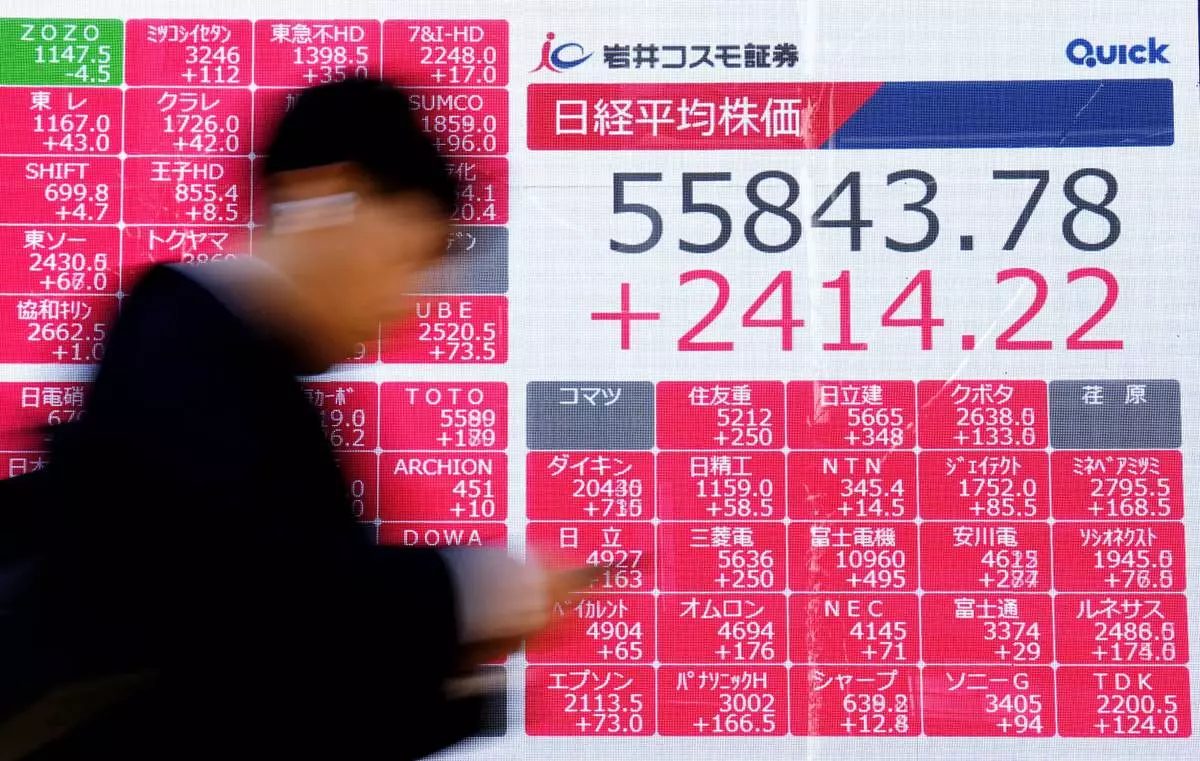
A person walks by an electronic stock board showing Japan's Nikkei index in Tokyo Wednesday, April 8, 2026. (Yuya Shino/Kyodo News via AP)
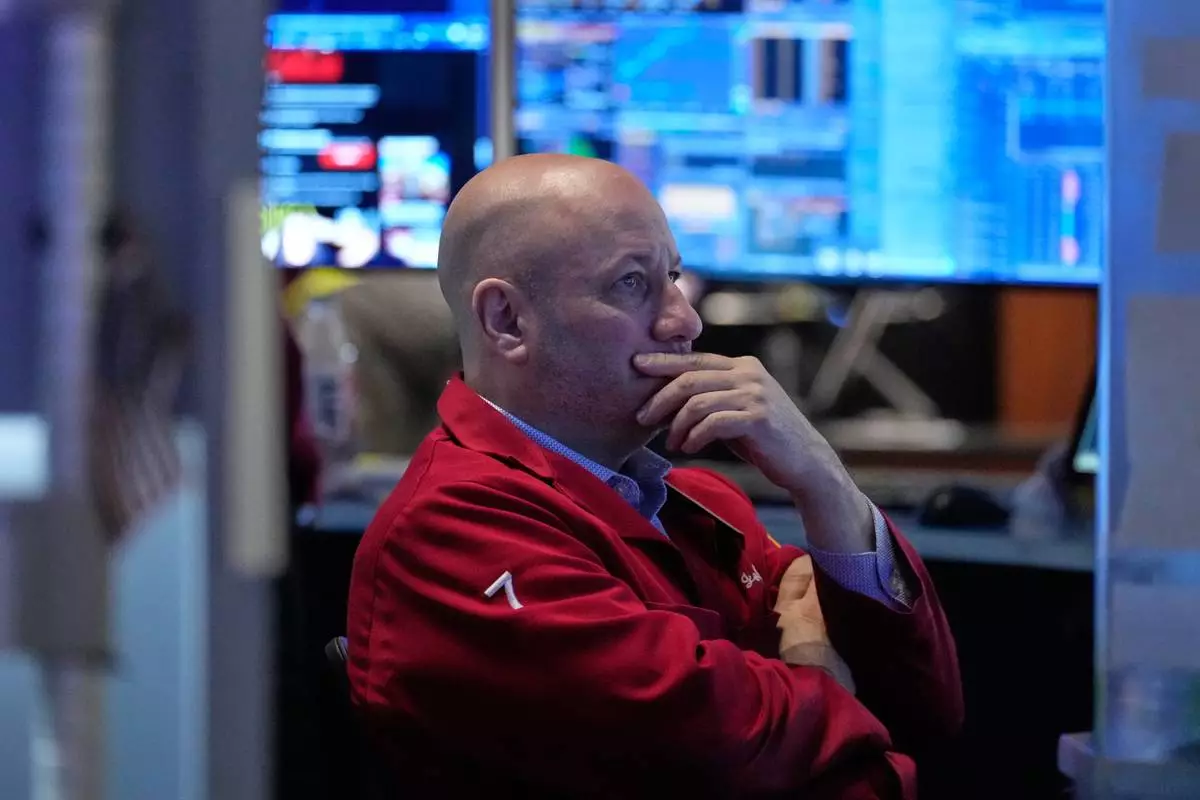
John Mauro works on the floor at the New York Stock Exchange in New York, Tuesday, April 7, 2026. (AP Photo/Seth Wenig)
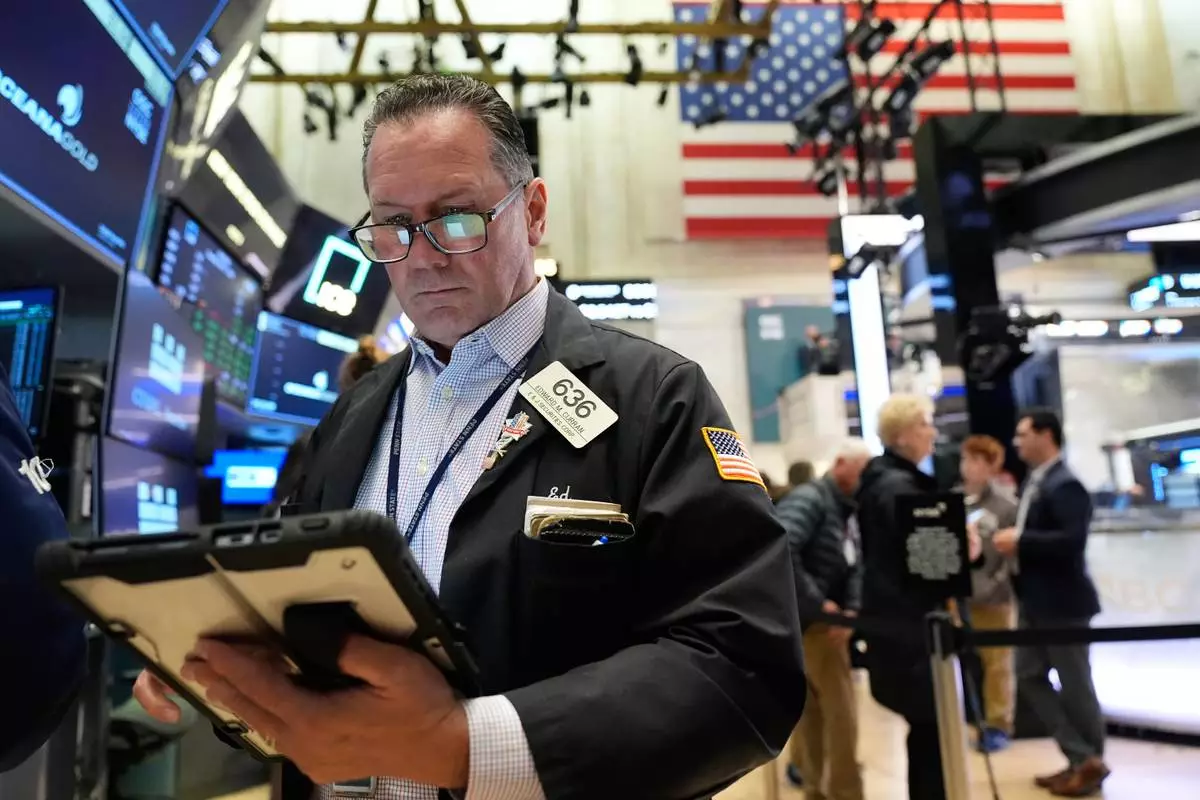
Ed Curran works on the floor at the New York Stock Exchange in New York, Tuesday, April 7, 2026. (AP Photo/Seth Wenig)