Guangzhou, a major city in southern China, has been expanding the use of hydrogen as an energy source for transportation in several key sectors, as the local government seeks to expand green energy options to better fit the needs of industries.
The city has more than 4,000 hydrogen fuel-cell vehicles, the highest number in China.
On a construction site in Guangzhou, hydrogen is being used to power all construction vehicles, including heavy trucks that haul earth to disposal sites, replacing traditional diesel. Compared with diesel trucks, the hydrogen trucks carry larger loads, have stronger power and are more environment-friendly.
"Previously, a truck could carry about 12 cubic meters of earth per load, but now that has increased to 20 cubic meters. The larger capacity helps reduce overall costs. The trucks also produce less noise, which means they have less impact on nearby residents," said Wang Liming, project manager at Felicity Solar photovoltaic storage base of CSCES Xinjiang Construction and Engineering Group.
Hydrogen-powered trucks offer a clear advantage for logistics firms focusing on speed and cost. Besides, cold‑chain trucks, which transport temperature-controlled goods, can be refueled in just five to ten minutes, giving them a range of up to 500 kilometers.
"Charging a 400-kWh electric truck takes over an hour, but refueling with hydrogen takes about eight minutes. Using hydrogen costs around 1.35 yuan per kilometer," said Ke Maoguo, general manager of Guangzhou Zhika Logistics Technology.
Ke said that his company purchased more than 110 hydrogen trucks late last year, and their safety and stability were proven after months of operation. The fleet will continue to expand, he said.
The wider use of hydrogen as energy is driving its prices lower, according to authorities.
Some hydrogen refueling stations in Guangzhou are already selling at 25.9 yuan per kilogram, just above the target set in March by the Ministry of Industry and Information Technology, which aims to bring end-user prices below 25 yuan per kilogram by 2030.
"We use 30-MPa tube trailers, so the overall volume of hydrogen transported has increased significantly. At the same time, we've also introduced a new unloading technology that achieves an efficiency rate of over 95 percent. With the same transport costs, we can now deliver more hydrogen, which helps lower the overall cost," said Liu Wei, co-president of Guangdong Yuntao Hydrogen Technology.
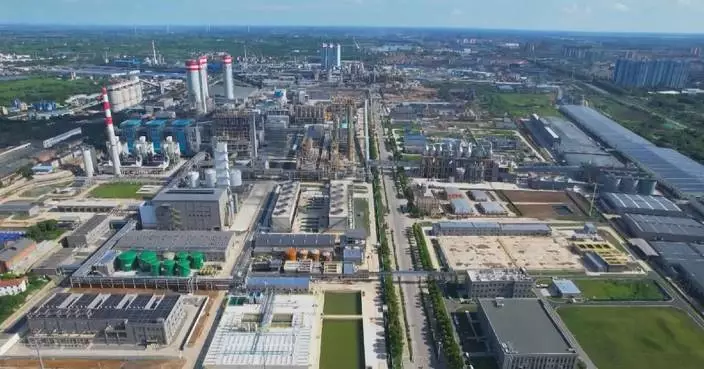
Innovation at the user end is also spurring production upgrades and lowering costs. Last year, a hydrogen fuel cell supply center -- the largest one in southern China -- was opened with an annual capacity of 5,100 tonnes, ensuring hydrogen supply for vehicles in Guangzhou and nearby cities.
"We tallied the sales over the past three years. In 2025, sales rose about 200 percent from the 2024 level, and sales in the first quarter of 2026 recorded another 200 percent year-on-year increase. This shows that the demand from end-users is growing exponentially, which provides strong support for the hydrogen industry chain," said Cao Jingsong, deputy manager of the planning department at Guangzhou Petrochemical.
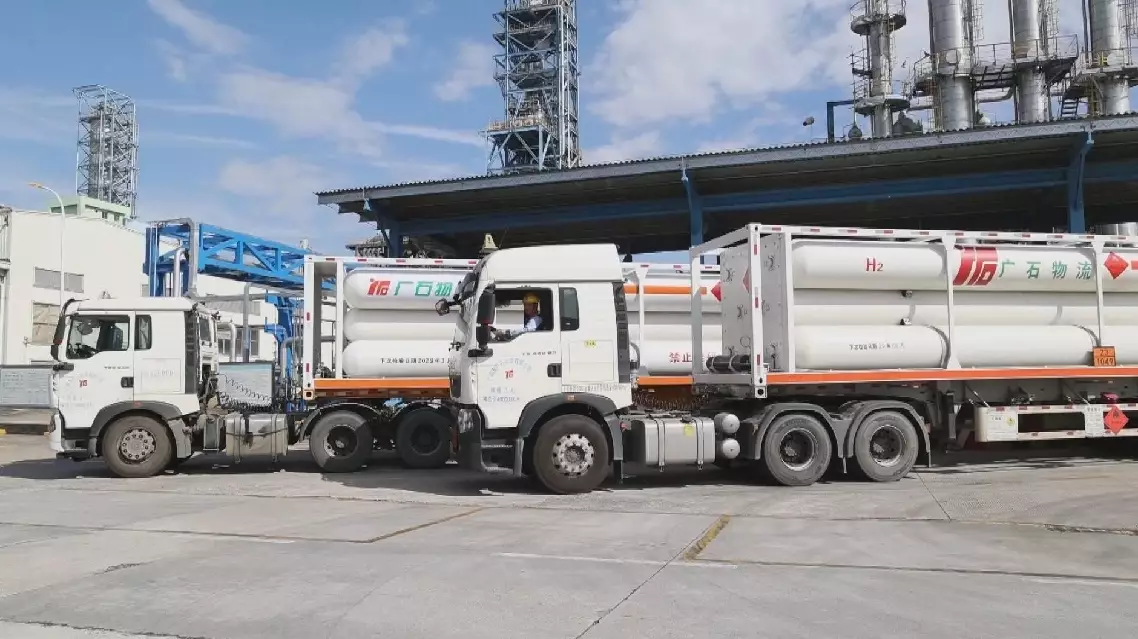
Guangzhou expands use of hydrogen in transport