China's service sector is getting a modern makeover as high-tech solutions help meet the demand for greater convenience and higher-quality consumption, with a popular AI-powered canteen in the center of Beijing offering a glimpse of these latest trends and swiftly serving up tasty treats for local diners.
Tucked away in a traditional alleyway in one of the Chinese capital's historic hutong areas, the Jingshan AI Dining Hall is delivering delicious dishes to hungry customers thanks to the culinary skills of some of its hard-working and high-tech 'staff' behind the scenes.
In the kitchen, a special 'cooking robot' boosted by AI operates much like an experienced chef, minus the uniform. With a human cook standing by to oversee things, this robot can automatically heat the wok, add oil, place ingredients into a pan, and precisely dispense the right amount of seasoning.
In less than three minutes, this robotic masterchef's can turn out a portion of food large enough to serve around 50 people.
With two AI cooking robots and two cooks on duty in the kitchen, the canteen is able to handle peak meal times each day, creating enough food to feed more than 200 diners in this buffet-style environment.
The robot-made dishes in the dining hall have won a thumbs up from locals, many of whom say they regularly pop in for a bite to eat.
"I come here almost every day. Mainly because it's healthy, and the robots do the cooking, the taste is very consistent," said a customer named Qiao Bingbing.
Management at the canteen say that introducing the cooking robots has not only improved overall efficiency, but also helped address the issue over limited space in the narrow traditional hutong venue, with the compact robot chefs allowing more room for customers in the main dining hall area.
There's also good news for frequent visitors, as the diverse menu is regularly refreshed.
"The robot's system currently holds the capacity to create about 300 dishes, and we update the menu weekly. Roughly one-third [of the diners] are neighborhood residents. And the majority are the elderly," said Ma Lin, person in charge of the Jingshan AI Dining Hall.
Among the canteen's loyal customers are Sheng Chunling and her husband, who come here on an almost daily basis. She commended the affordable price of items and also enjoys the idea of being able to eat in this traditional-looking courtyard while a modern innovation does the work.
"It costs about 25 to 30 yuan (around 4 U.S. dollars) per person. We basically don't cook lunch at home anymore, and just eat here every day. It's so convenient and offers a great nutritional balance. If we want fish, meat and vegetables in one meal, they have it all. And dining in this traditional old building also feels very nice," said Sheng.
In recent years, community canteens have been incorporated into the development of China's "15-minute convenient living circles" initiative, with local governments exploring a range of operating models, including property-service transformation, partnerships between social organizations and businesses, and delivery from central kitchens.
So far, more than 8,000 of these "15-minute convenient living circles" have been established nationwide, serving about 170 million residents across China.
China has also taken multiple steps to improve the quality and efficiency of the service sector so far this year, with new growth drivers continuing to gain strength. Official data showed that in the first two months of 2026, China's service production index rose 5.2 percent year on year.
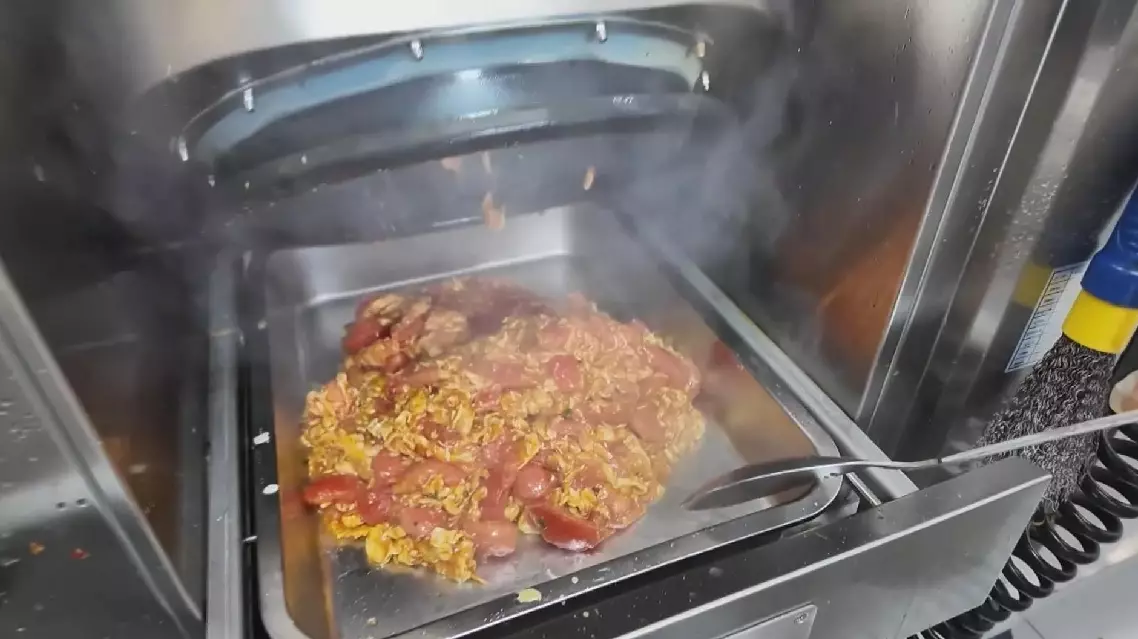
AI-powered robot chefs swiftly serve up delicious dishes to Beijing community diners