The Big Ten Conference amassed nearly $70 million from NCAA distributions that will be paid for team appearances and performances in the 2026 men's and women's basketball tournaments.
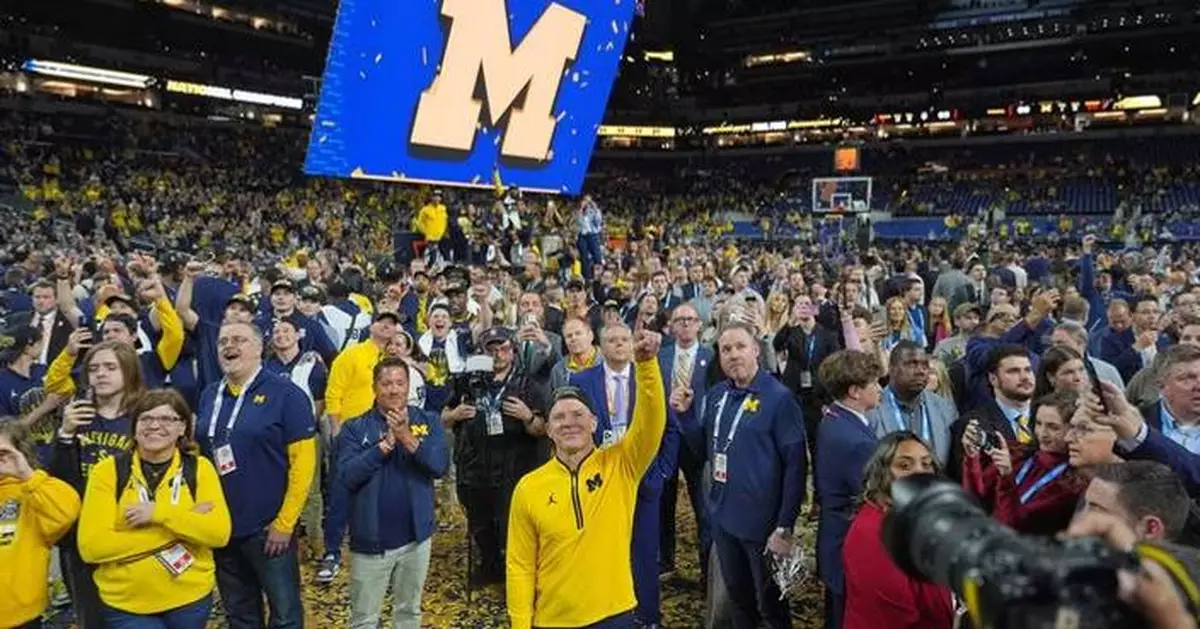
That is by far the most among conferences, largely because the Big Ten swept the national championships — Michigan won the men's and UCLA the women's — and had Illinois advance to the men's Final Four.
The NCAA, which has multibillion-dollar broadcast deals for the two tournaments, since 1991 has rewarded conferences for their number of tournament bids and how far those teams advance in the men’s tournament. A similar system for the women’s tournament began in 2025.
The dollars are piling up:
— For this year's tournaments, nine men's teams and 12 women's teams from the Big Ten combined to make at least $69.4 million, with $63 million coming from the men's side.
— The Southeastern Conference, which had 10 teams in each tournament, totaled at least $56.2 million ($50.4 million for men, $5.8 million for women).
— Distributions will total at least $42.9 million for the Big 12, $34.2 million for the Atlantic Coast Conference and $22.2 million for the Big East.
The NCAA sends payments directly to the conferences, which distribute the money among their teams according to their policies. Payments for the 2026 tournament will begin in April 2027.
Teams in each tournament earn what's known as a “unit” for making the field of 68 and an additional unit for each round in which it appears. The national champion is awarded an extra unit. The value of a unit increases each year. A portion of revenue from the tournaments' broadcast agreements are directed to distribution payments, 24% for the men and 41% for the women.
The estimated value of a unit for the 2026 men’s tournament will be about $350,000, an NCAA spokeswoman said, and that amount will be paid annually for six years. So a single unit earned in 2026 would have a total value of at least $2.1 million over those six years and probably more because Division I distribution funds — including the basketball funds — are scheduled to increase each year, typically by 2.9%.
For the women's tournament, full funding for units earned will be achieved in 2027. Payments for each unit earned will be made for three years rather than six. The unit value was $75,000 for 2026 and will decrease to about $63,000 next year as part of the NCAA’s formula for getting the fund fully up and running. Using $63,000 as an estimate for the 2028 value, a single unit earned in 2026 would be worth at least $201,000 by the time it is paid off over three years.
The Big Ten's nine teams in the men's tournament appeared in 29 games. Michigan earned $14.7 million for the conference by playing in six games and receiving a seventh unit for winning the championship. Illinois earned five units for making the Final Four ($10.5 million) and Iowa and Purdue four apiece for reaching the Elite Eight ($8.4 million each).
The Big Ten landed 12 teams in the women's tournament, and they combined to play in 31 games. UCLA earned just over $1.4 million by playing in six games and receiving an extra unit for winning the championship. Michigan's four games earned $804,000 and Minnesota's three earned $603,000.
The championships in men's and women's basketball continued what's been a banner 2025-26 for the Big Ten. Indiana won the conference's third straight College Football Playoff, and other national championships have been won in men's wrestling (Penn State), women's ice hockey (Wisconsin), men's water polo (UCLA), men's soccer (Washington) and field hockey (Northwestern). Wisconsin also reached Saturday's men's hockey championship game, where the Badgers will face Denver, a winner over Michigan.
AP college basketball: https://apnews.com/hub/ap-top-25-college-basketball-poll and https://apnews.com/hub/college-basketball
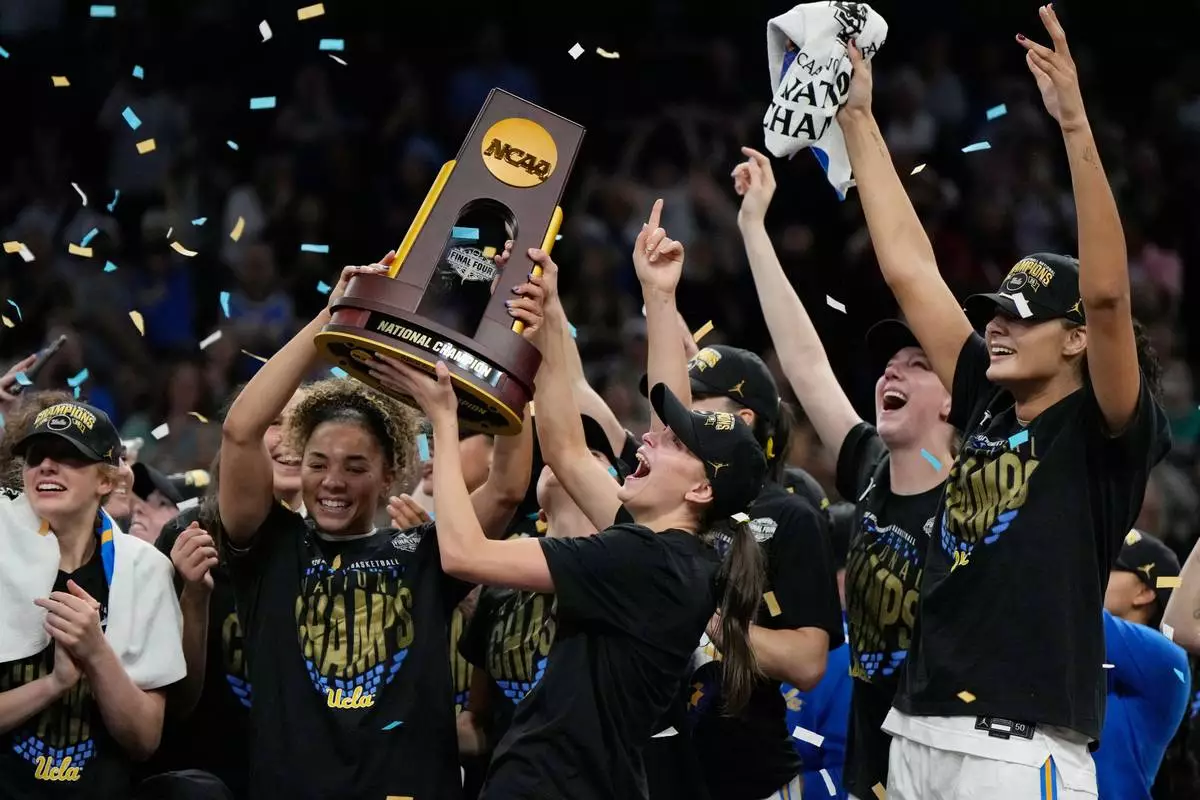
UCLA players celebrate after defeating South Carolina in the women's National Championship Final Four NCAA college basketball tournament game, Sunday, April 5, 2026, in Phoenix. (AP Photo/Ross D. Franklin)
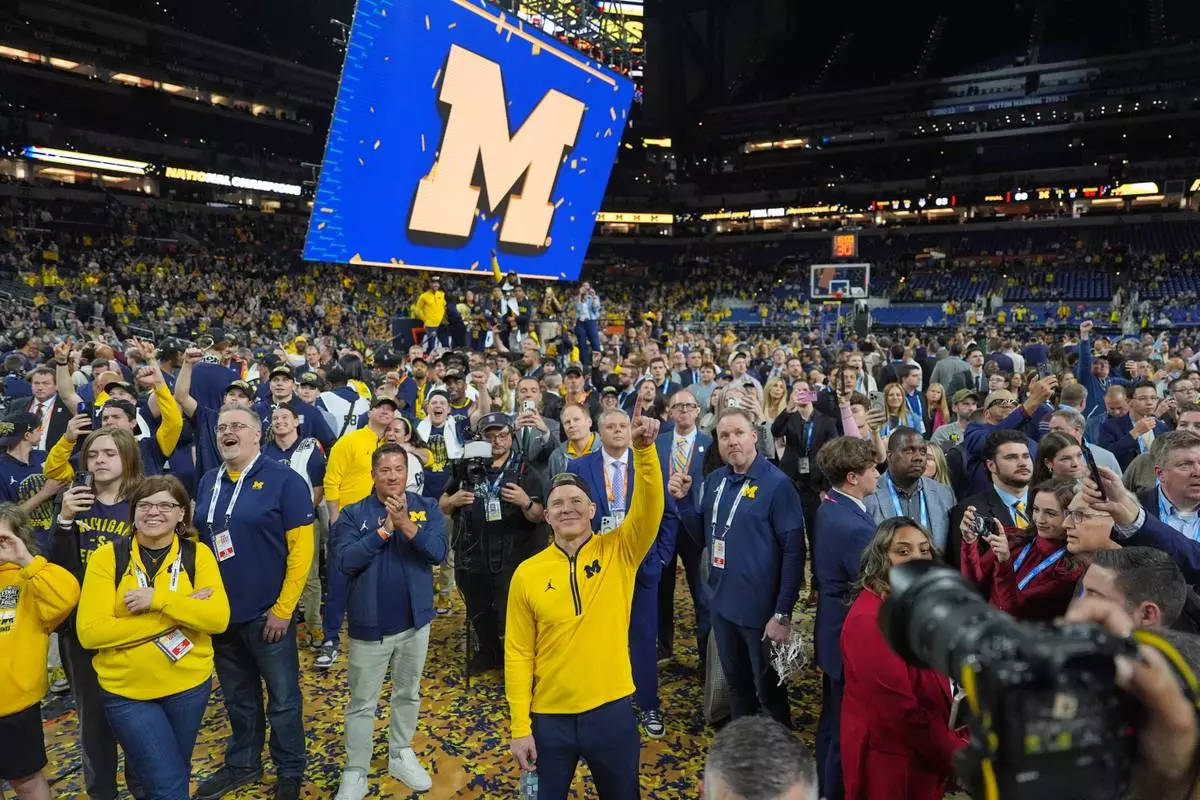
Michigan head coach Dusty May celebrates after defeating UConn in the NCAA college basketball tournament national championship game at the Final Four, Tuesday, April 7, 2026, in Indianapolis. (AP Photo/Michael Conroy)
DUBAI, United Arab Emirates (AP) — With the ceasefire in Iran still shaky, U.S. Vice President JD Vance headed Friday to Pakistan for high-level talks with Iranian officials, as Israel and Hezbollah traded fire and Tehran maintained its stranglehold on the Strait of Hormuz.
Many issues could derail the truce and the negotiations aimed at making a broader deal to stop the fighting permanently.
Iran’s semiofficial Tasnim news agency, close to the paramilitary Revolutionary Guard, claimed that the talks set for Saturday would not happen unless Israel stopped its attacks in Lebanon. And U.S. President Donald Trump complained that Iran was “doing a very poor job” by not allowing the free flow of ships through the strait, through which 20% of the world’s traded oil once passed.
Kuwait, meanwhile, said it was targeted by seven drone attacks since Thursday that it blamed on Iran and its militia allies in the region. Though the Guard denied launching any assault, it has carried out attacks across the Mideast in the past that it did not claim.
Preparations for the talks between Iran and the U.S. appeared to be moving forward, with Vance boarding Air Force Two for the long flight to Islamabad.
Elsewhere, negotiations between Israel and Lebanon were expected to begin next week in the U.S. capital, according to a U.S. official and a person familiar with the plans, who spoke on condition of anonymity due to the delicacy of the matter.
Before his departure, Vance said he believes negotiation with Iran will be “positive.”
But he added, “If they’re going to try and play us, then they’re going to find that the negotiating team is not that receptive.”
In Islamabad, security forces locked down key parts of the Pakistani capital, erecting barricades along routes from the airport to the city before the delegations arrived.
Israel’s insistence that the ceasefire in Iran does not include a pause in its fighting with Hezbollah has threatened to sink the deal. The militant group joined the war in support of its backer, Iran.
The day the truce was announced, Israel pounded Beirut with airstrikes, killing more than 300 people, according to the Lebanese Health Ministry. It was the deadliest day in the country since the war began Feb. 28. On Friday, Lebanon’s state-run new agency said Israeli warplanes struck near a state security office in the southern town of Nabatieh, killing eight officers.
Trump said Thursday that he has asked Israeli Prime Minister Benjamin Netanyahu to dial back the strikes. Early Friday, Israel’s military said it hit approximately 10 launchers in Lebanon that had fired rockets toward northern Israel a day earlier.
Iran’s parliament speaker, Mohammad Bagher Qalibaf, warned that continued Israeli attacks on Hezbollah would bring “explicit costs and STRONG responses.”
Also Thursday, Netanyahu said he authorized the negotiations with Lebanon “as soon as possible” with the aim of disarming Hezbollah militants and establishing relations between the neighbors, which have technically been at war since Israel was established in 1948.
The Lebanese government did not respond.
In a first statement since Israel announced direct negotiations with Lebanon, Hezbollah chief Naim Kassem urged Lebanese officials to stop offering “free concessions,” but he did not take a clear stance on the talks.
Two days after Israel's intense barrage, people sifted through the wreckage of their homes, trying to salvage furniture and personal mementos. Some expressed gratitude that they did not lose loved ones.
“There is no substitute for family,” said Wissam Tabila, 35. “Everything else can be replaced.”
Iran’s closure of the Strait of Hormuz has sent oil prices skyrocketing, driven stocks down and roiled the world economy. Tehran's control over the waterway has proved its biggest strategic advantage in the war.
The spot price of Brent crude, the international standard, was around $97 Friday, up more than 30% since the war started.
Before the conflict, over 100 ships passed through the strait each day — many carrying oil to Asia. With the ceasefire in place, only 12 have been recorded passing through.
Trump complained about that situation, writing on his social media platform: “Iran is doing a very poor job, dishonorable some would say, of allowing Oil to go through the Strait of Hormuz.”
“That is not the agreement we have!” Trump wrote of the trickle of ships Iran has allowed to pass.
Questions also remain over the fate of Iran’s missile and nuclear programs, which the U.S. and Israel sought to eliminate in going to war.
The U.S. insists Iran must never be able to build nuclear weapons and wants to remove Tehran’s stockpile of highly enriched uranium, which could be used to make them. Iran insists its program is peaceful.
Trump has said that the U.S. would work with Iran to remove the uranium, though Tehran has not confirmed that.
More than 3,000 people have been killed in Iran, a top Iranian officer told the state-run Iran newspaper. Iran’s government has not provided any definitive death toll from the war.
In Lebanon, more than 1,888 people have been killed and 1 million have been displaced. Over a dozen people have died in Gulf Arab states and the occupied West Bank, while 23 civilians were killed in Israel. Thirteen U.S. service members have been killed.
In other developments, Ukrainian President Volodymyr Zelenskyy said Ukrainian forces shot down Iranian‑designed Shahed drones in several Middle Eastern countries during the Iran war. The missions, carried out with domestically produced interceptor drones, were part of efforts to help partners counter the same weapons Russia uses in Ukraine, he said.
Mednick reported from Tel Aviv, Israel. Associated Press writers Chan Ho-him in Hong Kong; Zeke Miller, Matthew Lee and Will Weissert in Washington; Hannah Schoenbaum in Salt Lake City; and Kareem Chehayeb and Hussein Malla in Beirut contributed to this report.
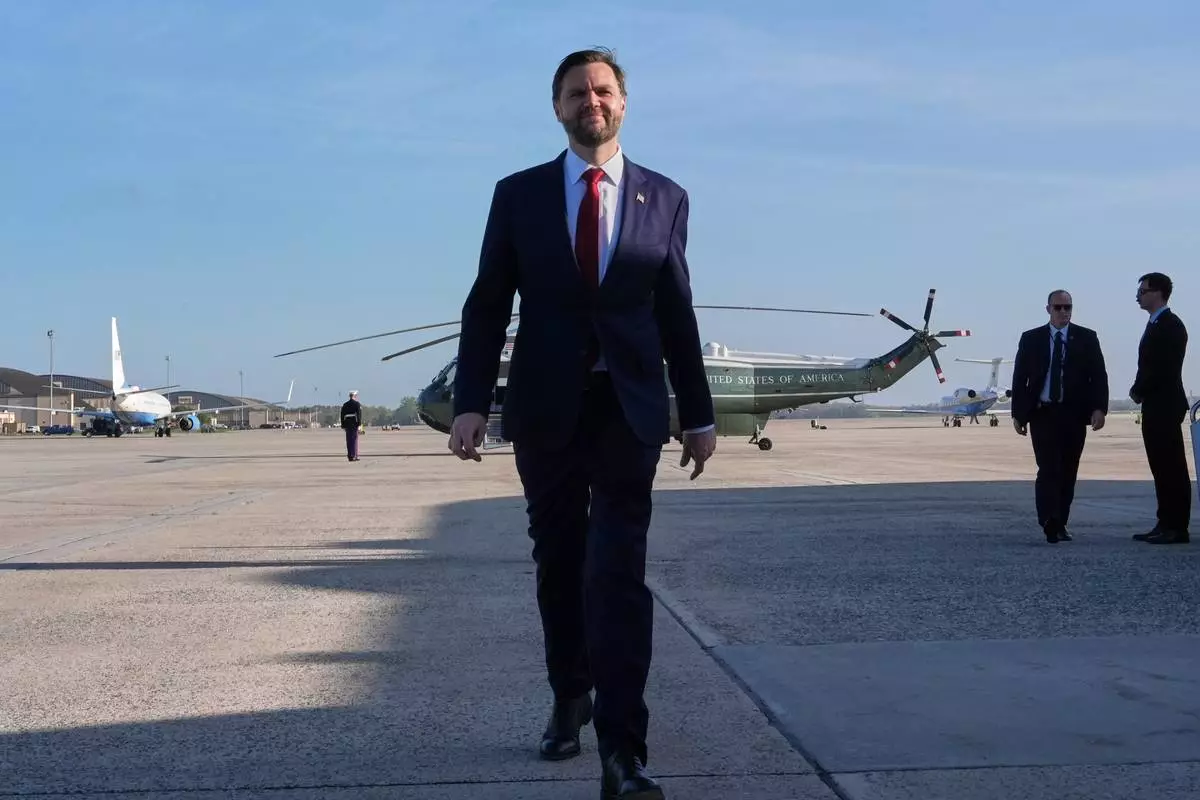
Vice President JD Vance walks to speak with the Press before boarding Air Force Two, Friday, April 10, 2026, at Joint Base Andrews, Md., for expected departure to Pakistan, for talks on Iran. (AP Photo/Jacquelyn Martin, pool)
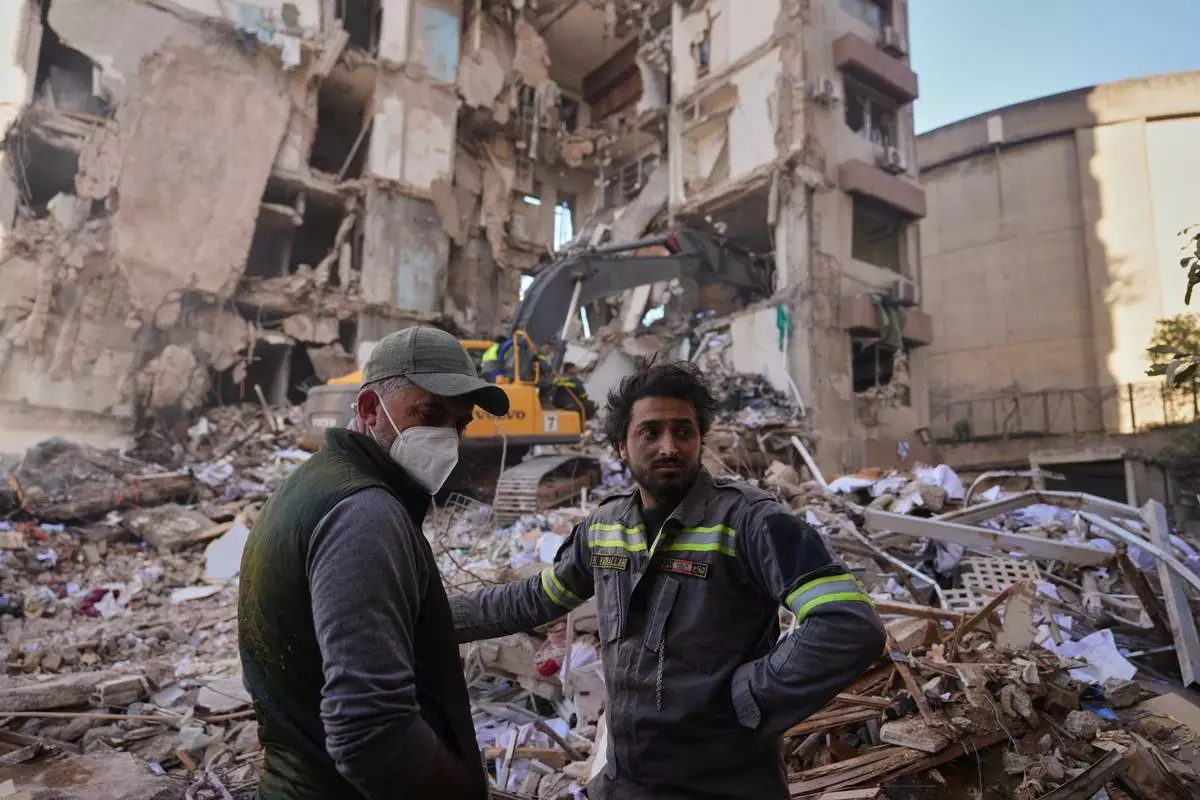
A Lebanese civil defense worker, right, stands with a resident at the site of a building destroyed in an Israeli airstrike a day earlier in central Beirut, Lebanon, Thursday, April 9, 2026. (AP Photo/Hassan Ammar)
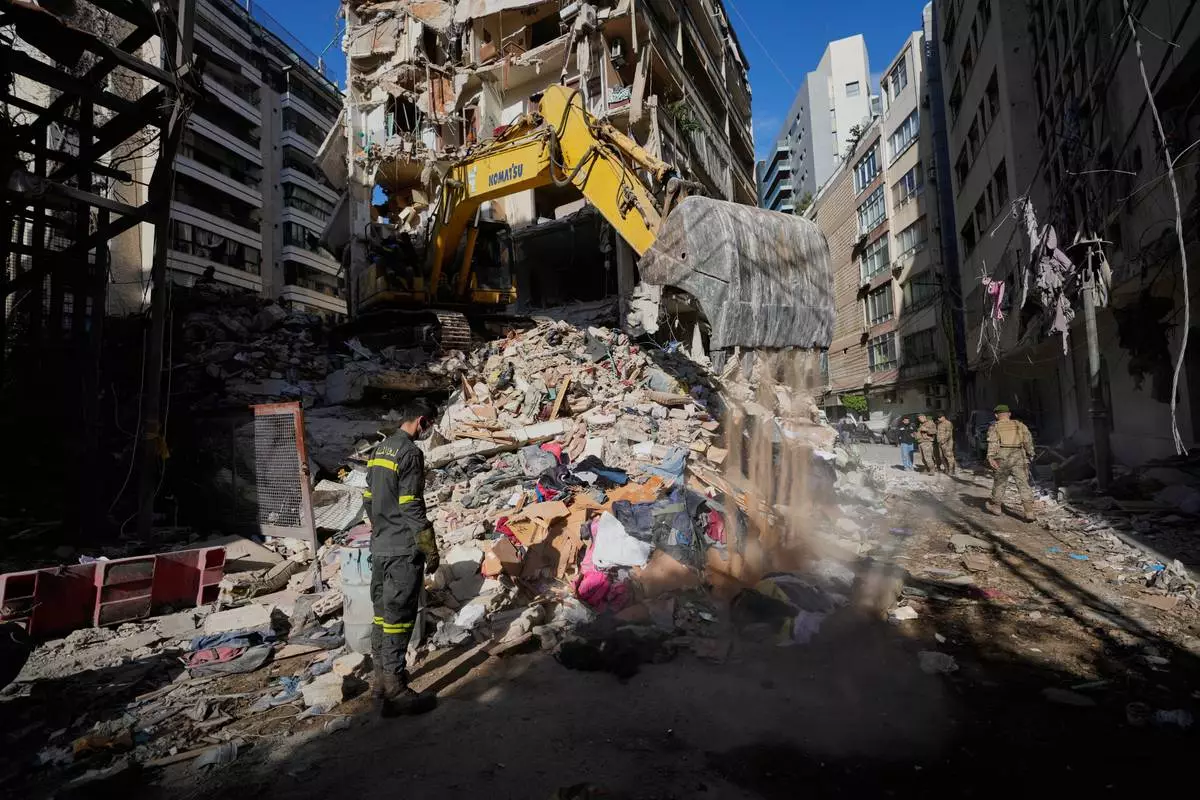
A Lebanese civil defense worker looks on as an excavator operates on the rubble of a building destroyed in an Israeli airstrike a day earlier in Beirut, Lebanon, Thursday, April 9, 2026. (AP Photo/Hussein Malla)
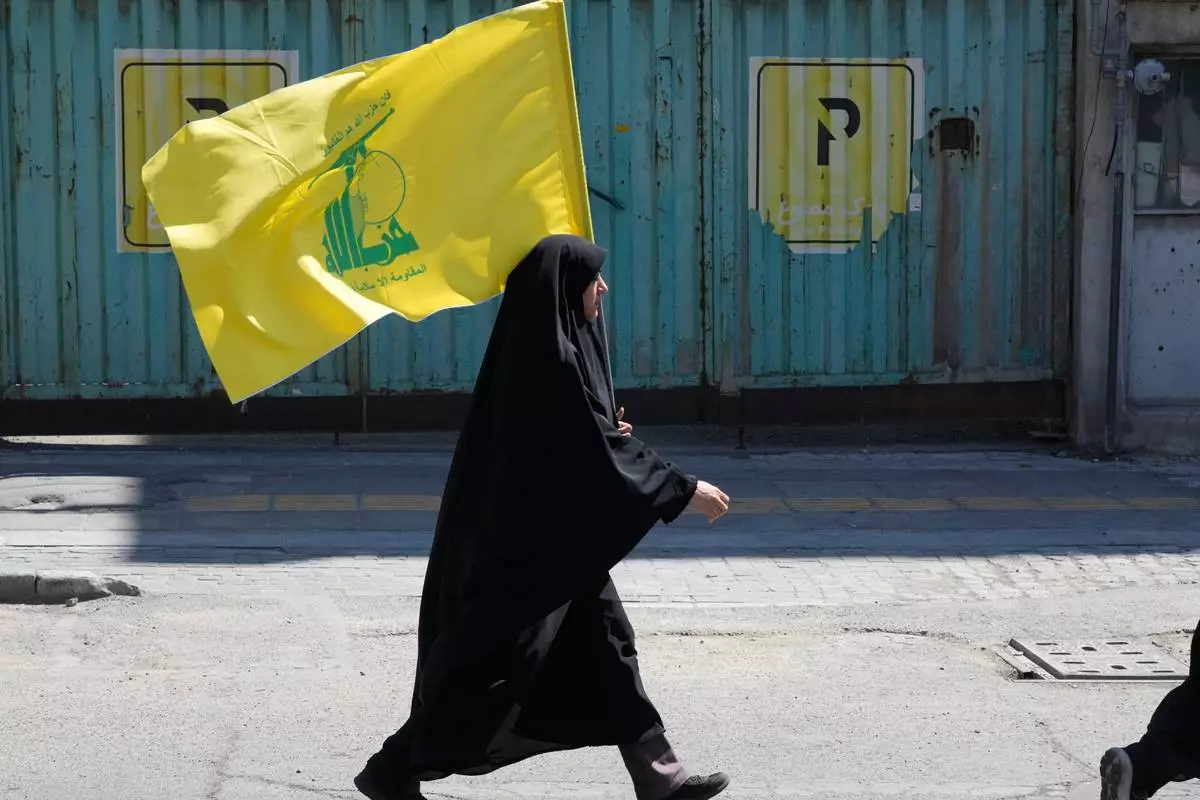
A woman carries a flag of Lebanon's militant Hezbollah group during a ceremony marking the 40th day since the death of Iranian Supreme Leader Ayatollah Ali Khamenei in Tehran, Iran, Thursday, April 9, 2026. (AP Photo/Vahid Salemi)
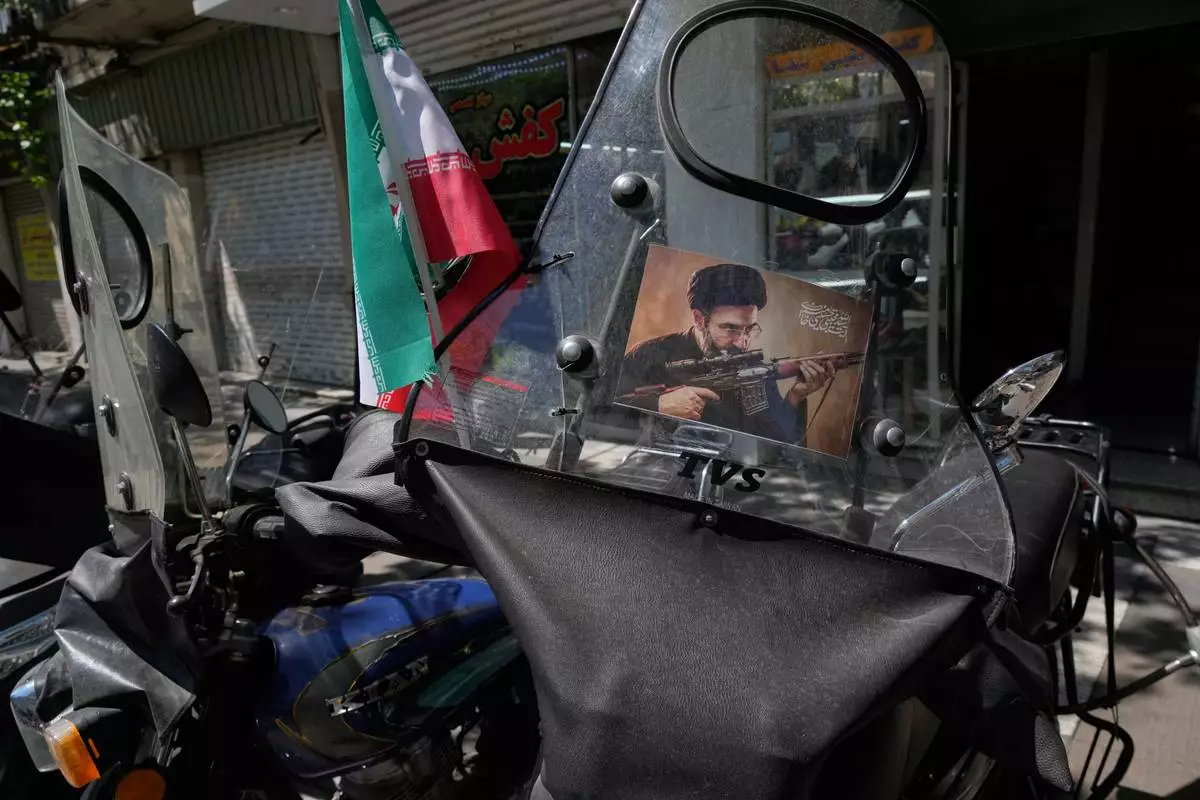
A poster is pasted on a motorbike windshield with graphic depicting Iran's Supreme Leader Ayatollah Mojtaba Khamenei as government supporters gather to mark the 40th day since the killing of his father, Supreme Leader Ayatollah Ali Khamenei, in Tehran, Iran, Thursday, April 9, 2026. (AP Photo/Vahid Salemi)
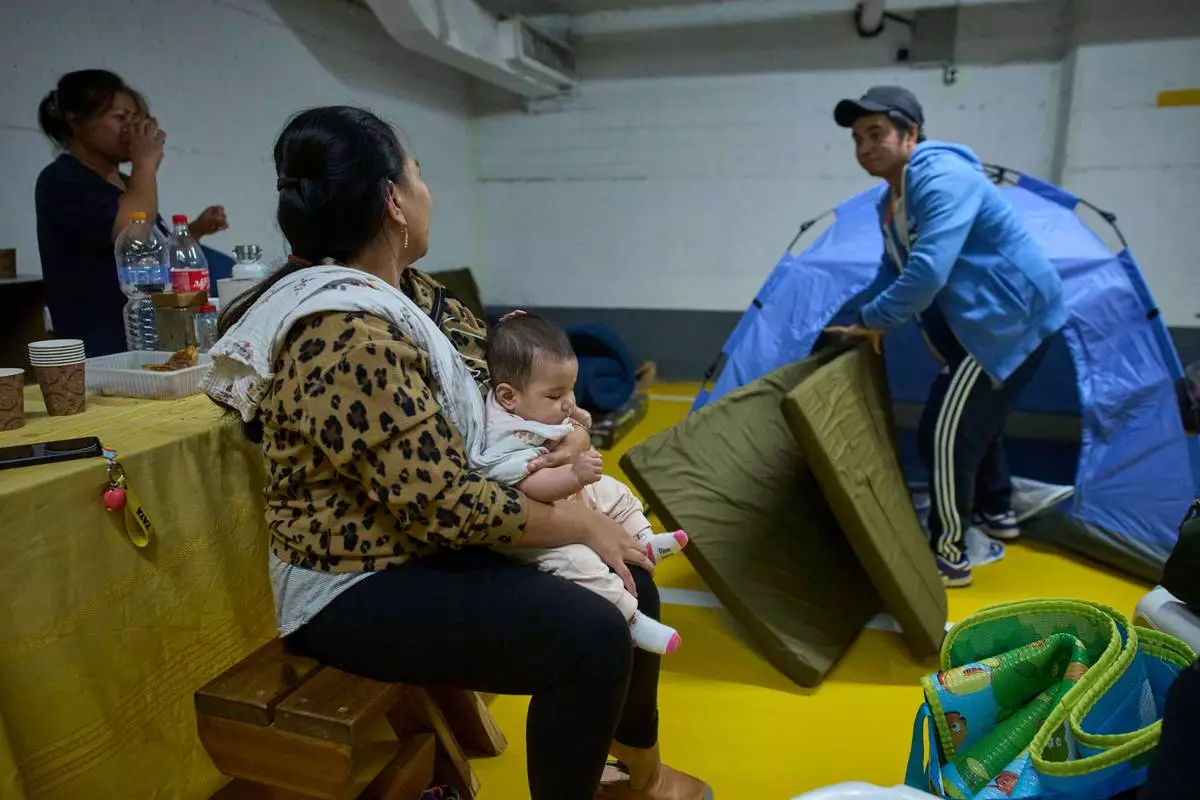
People residing in an underground shelter pack up their belongings as they prepare to leave after the announcement of a two-week ceasefire agreement between Iran and the US, in Tel Aviv, Israel, Thursday, April 9, 2026. (AP Photo/Ohad Zwigenberg)
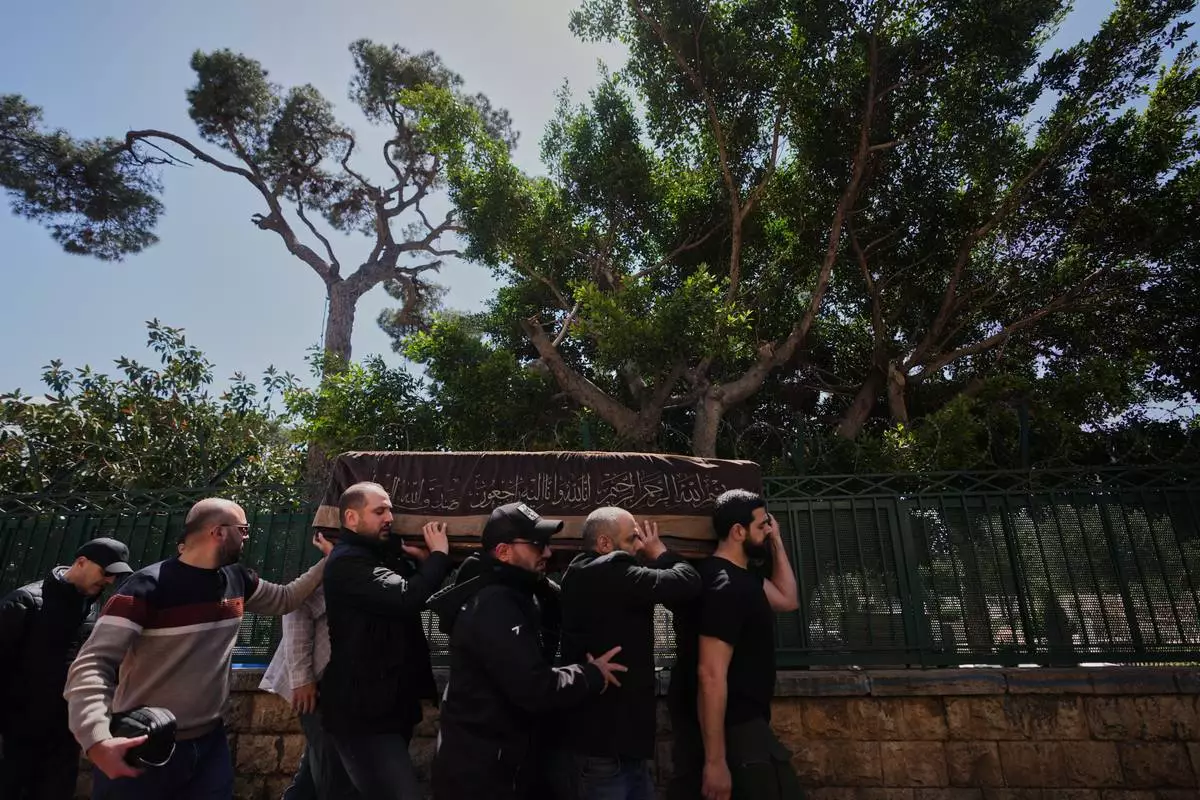
Mourners carry the coffin of Mohammad Zein al-Abedin Shehab, who was killed in an Israeli airstrike a day earlier, during his funeral procession in Beirut, Lebanon, Thursday, April 9, 2026. (AP Photo/Hassan Ammar)
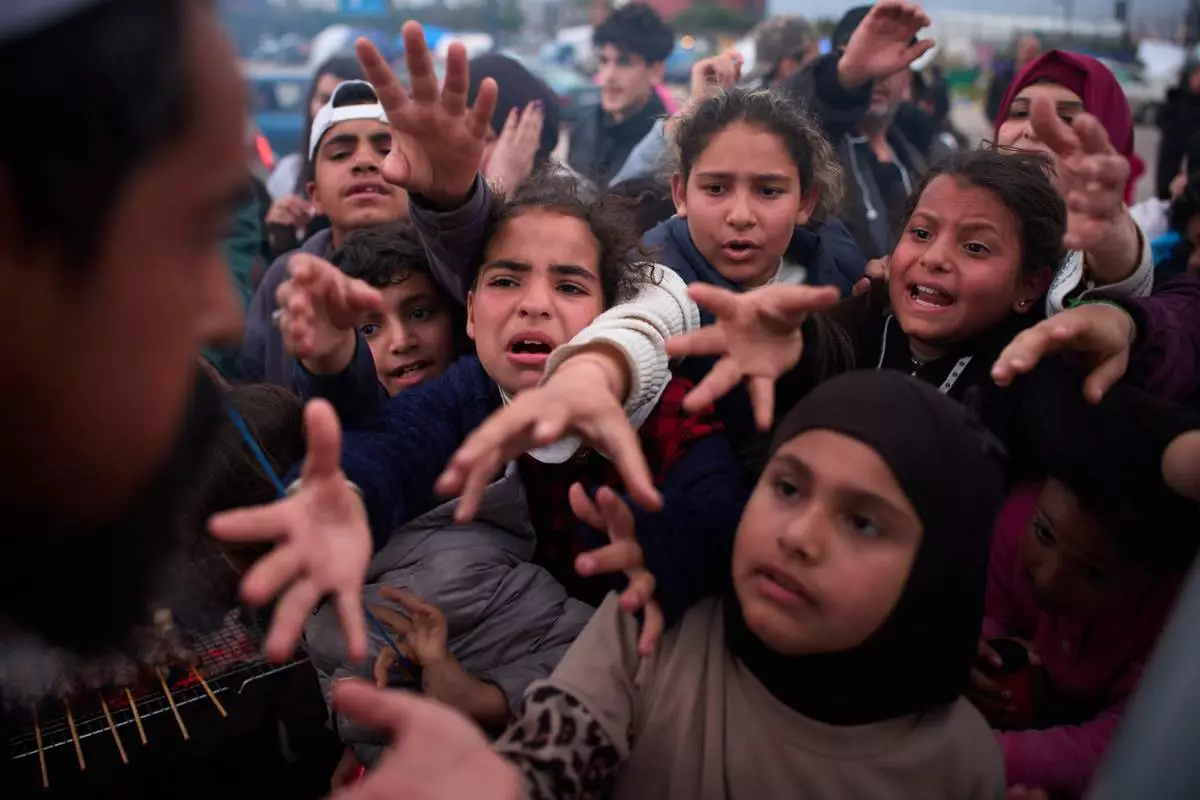
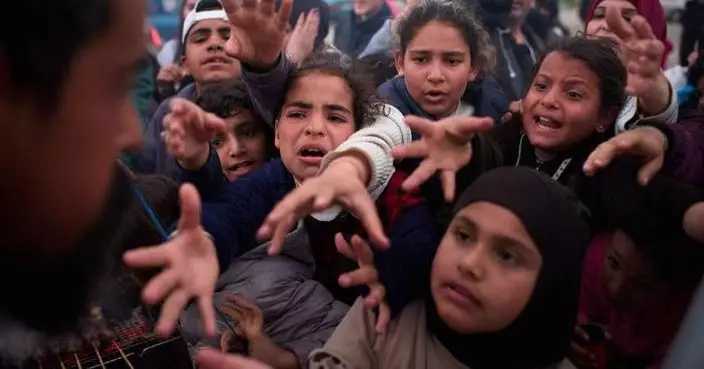
Displaced families extend their hands while waiting for donated food beside the tents they use as shelters after fleeing Israeli bombardment in southern Lebanon, in Beirut, Lebanon, Thursday, April 9, 2026. (AP Photo/Emilio Morenatti)