With the ceasefire in Iran still shaky, U.S. Vice President JD Vance headed Friday to Pakistan for high-level talks with Iranian officials, as Israel and Hezbollah traded fire and Tehran maintained its stranglehold on the Strait of Hormuz.
Many issues could derail the truce and the negotiations aimed at making a broader deal to stop the fighting permanently.
Click to Gallery
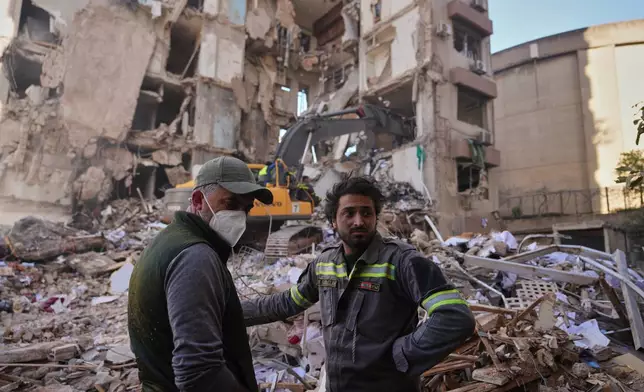
A Lebanese civil defense worker, right, stands with a resident at the site of a building destroyed in an Israeli airstrike a day earlier in central Beirut, Lebanon, Thursday, April 9, 2026. (AP Photo/Hassan Ammar)
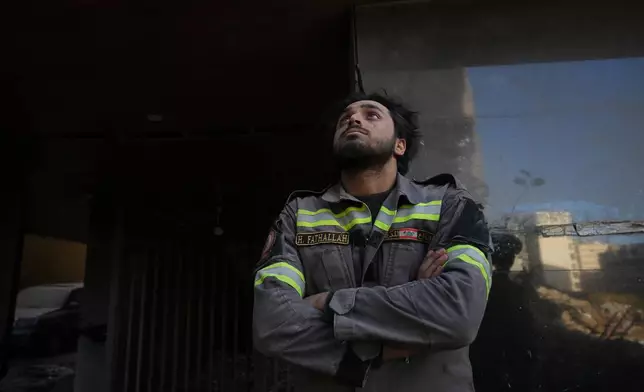
A Lebanese civil defense worker looks upward near the site of a building destroyed in an Israeli airstrike a day earlier in central Beirut, Lebanon, Thursday, April 9, 2026. (AP Photo/Hassan Ammar)
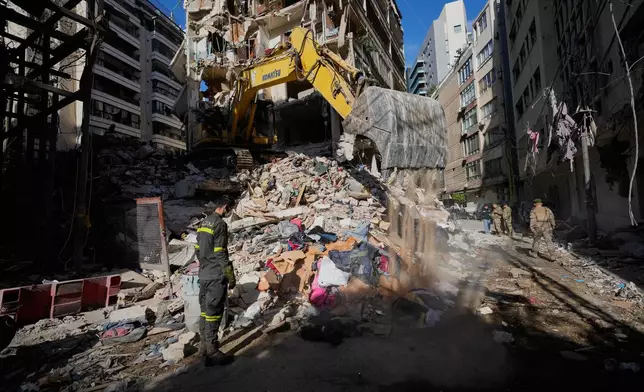
A Lebanese civil defense worker looks on as an excavator operates on the rubble of a building destroyed in an Israeli airstrike a day earlier in Beirut, Lebanon, Thursday, April 9, 2026. (AP Photo/Hussein Malla)
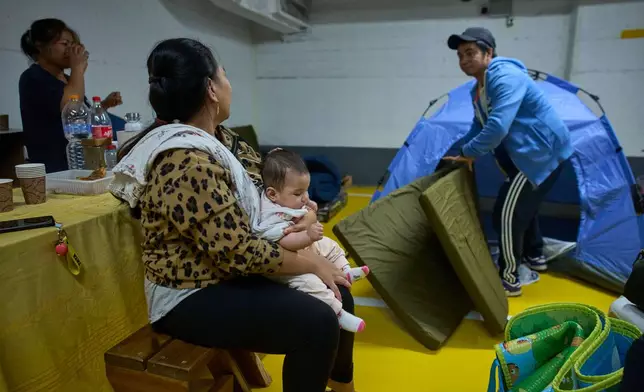
People residing in an underground shelter pack up their belongings as they prepare to leave after the announcement of a two-week ceasefire agreement between Iran and the US, in Tel Aviv, Israel, Thursday, April 9, 2026. (AP Photo/Ohad Zwigenberg)
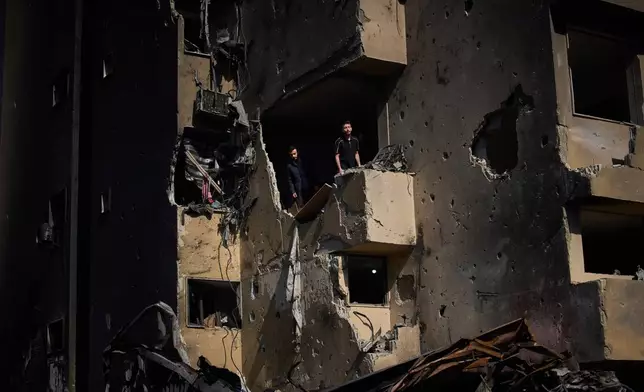
Men inspect the damage to their home destroyed in an Israeli airstrike a day earlier in Beirut, Lebanon, Thursday, April 9, 2026. (AP Photo/Emilio Morenatti)
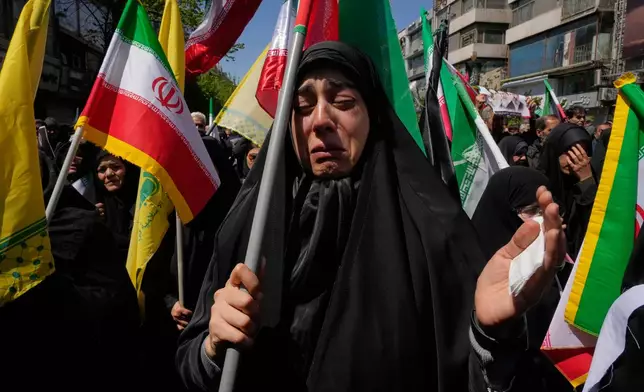
A government supporter weeps during a mourning ceremony marking the 40th day since the death of Iranian Supreme Leader Ayatollah Ali Khamenei, who was killed in the U.S. and Israel strikes in Tehran, Iran, Thursday, April 9, 2026. (AP Photo/Vahid Salemi)
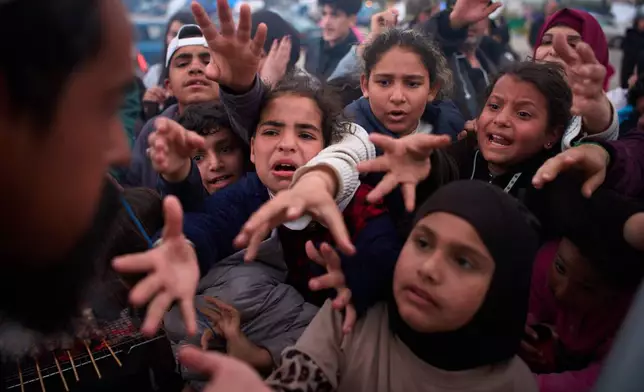
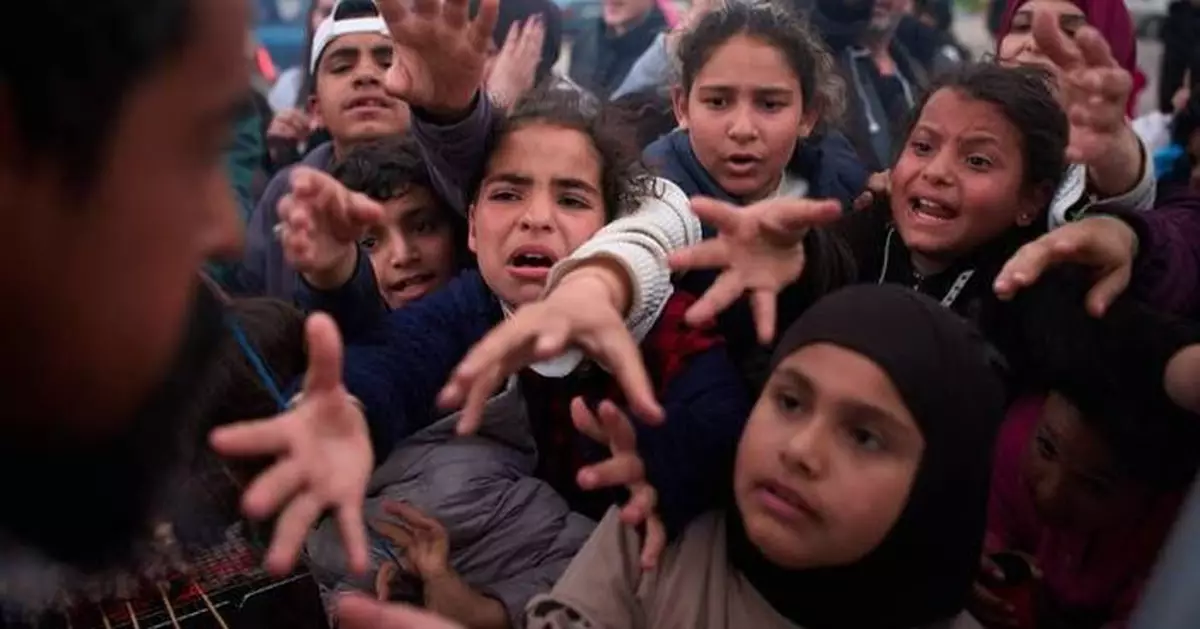
Displaced families extend their hands while waiting for donated food beside the tents they use as shelters after fleeing Israeli bombardment in southern Lebanon, in Beirut, Lebanon, Thursday, April 9, 2026. (AP Photo/Emilio Morenatti)
Earlier, President Donald Trump appeared to cast doubt on the effectiveness of the two-week ceasefire over Iran's continued chokehold on the Strait of Hormuz, while Kuwait accused Iran and its proxies of launching drone attacks despite the ceasefire.
Iran’s paramilitary Revolutionary Guard denied launching attacks Thursday night on Persian Gulf states.
Israeli Prime Minister Benjamin Netanyahu offered a potential boost to ceasefire efforts in the region when he said he had approved direct talks with Lebanon. The Lebanese government has not responded as of Friday morning.
Talks between the United States and Iran on a resolution to the conflict are expected to start Saturday in Islamabad, with the White House saying Vice President JD Vance would lead the U.S. delegation.
Here is the latest:
Pakistan’s government has set up a state-of-the-art media center to facilitate Pakistani and foreign journalists covering the talks between the United States and Iran, Information Minister Attaullah Tarar said.
Tarar told reporters the facility at the Jinnah Convention Center offers high-speed internet and a range of free services to support media coverage. Shuttle services have been arranged to transport journalists between the media center and a hotel in the city’s main shopping mall.
Pakistan has announced visa-on-arrival for journalists and official delegations traveling from the United States and Iran for the talks, which have been dubbed the “Islamabad talks.”
Inside the media center, rows of workstations equipped with laptops and charging points allow reporters to file stories. Large screens broadcast major domestic and international television channels. The facility also has designated areas for live stand-ups, press briefings and interviews.
The streets of Pakistan’s normally bustling capital were deserted Saturday as security forces sealed roads ahead of talks between high-level officials from Iran and the U.S. to end their nearly six-week war. Pakistani authorities urged Islamabad residents to stay inside, leading the city to look like it was under curfew.
U.S. Vice President JD Vance is leading the American delegation, which was expected to arrive before noon.
Iranian negotiators, headed by Parliament Speaker Mohammad Bagher Qalibaf, arrived late Friday.
Pakistan Prime Minister Shehbaz Sharif the conflict was entering a “difficult phase” as the sides try to shift from a temporary pause in fighting to a more lasting settlement. He said they were at a “make-or-break” moment.
Iran Parliament Speaker Mohammad Bagher Qalibaf posted a photo on X of him looking at portraits of children killed in a U.S. missile strike on a school, saying they were his companions on a flight to Pakistan for peace talks.
The photo showed Qalibaf looking at four headshots of children, each placed on an airplane seat with a backpack and a flower.
Qalibaf is leading Iran’s delegation to the negotiations with the U.S.
A preliminary U.S. military investigation into the strike said outdated intelligence likely led the U.S. to bomb the school. The Feb. 28 strike killed over 165 people, many of them children, in the opening hours of the conflict.
“I wished him luck. He’s got a big thing,” Trump said of his parting message to Vance before he began his journey to lead the president’s delegation for the critical talks. “We’ll find out what’s going on. They’re militarily defeated.”
Trump, who spoke to reporters before boarding Air Force One to head to a Friday evening fundraiser in Charlottesville, Virginia, also reiterated his confidence that the Strait of Hormuz will soon be opened up.
“And now we’re going to open up the Gulf with or without them,” Trump said referring to the Iranians, who have effectively shuttered the critical waterway. “But that’ll be open.”
First Vice President Mohammad Reza Aref, in a post on X, wished Parliament Speaker Mohammad Bagher Qalibaf success as he leads his country’s delegation to high-level peace talks with the U.S. in Pakistan.
Aref said “we are supporters” of the negotiators, just as they were supporters of the military in the war.
Pakistan’s Ministry of Foreign Affairs says a high-powered delegation from Iran, led by Parliament Speaker Mohammad Bagher Qalibaf accompanied by Foreign Minister Abbas Araghchi, arrived in Islamabad late Friday to participate in the peace talks.
In a statement, the ministry said the delegation was received at the airport by Pakistan’s Foreign Minister Ishaq Dar, National Assembly Speaker Sardar Ayaz Sadiq, Army Chief Field Marshal Asim Munir and Interior Minister Mohsin Naqvi.
Dar expressed hope that the parties would engage constructively and reiterated Pakistan’s desire to continue facilitating efforts toward a lasting and durable solution to the conflict
The U.S. defense contractor announced the Pentagon order on Friday for the critical interceptors that have been in heavy use since the U.S. and Israel launched their war on Iran six weeks ago.
The Associated Press reported last month that a sizable number of U.S. Patriot air defense missiles have been moved from Europe toward the Middle East as Washington diverts resources toward its war on Iran. The shift has left concerning gaps in Europe’s air defenses against Russia.
Lockheed in a statement said the order is part of the company’s agreement to increase production of the Patriot interceptor from 620 last year to 2,000 per year by 2030, a deal the defense contractor and the Pentagon signed in January.
The statement from Joseph Aoun’s office comes after Lebanon and Israel’s ambassadors to the U.S. held a call with Washington’s ambassador to Lebanon to discuss the terms of the negotiations, slated for next Tuesday in Washington D.C. with State Department mediating.
Beirut is keen to hold direct talks to end the ongoing war between Israel and the Hezbollah militant group, but under a ceasefire or truce similar to that of Washington’s talks with Iran.
Israel announced that it authorized direct talks after Lebanon’s request, but did not immediately issue a statement following the call.
Hezbollah did not immediately comment on the development, though has opposed direct talks with Israel.
During the past 40 days of war, more than 1,900 people in Lebanon have been killed in Israeli strikes and more that 1 million others have been displaced, according to government figures.
The Iranian delegation led by Parliament Speaker Mohammad Bagher Qalibaf arrived early Saturday in Islamabad, Iranian state TV reported.
The delegation included security, political, military, economic and legal teams. The report said negotiations will begin only if the other side accepts Iran’s preconditions.
Hours earlier, Qalibaf posted on social media that two points that he said had been mutually agreed on — a ceasefire in Lebanon and the release of blocked Iranian assets — have yet to be implemented.
“These two matters must be fulfilled before negotiations begin,” he wrote.
▶ Read more
Britain will convene another planning meeting next week of countries aiming to restore free movement of ships through the Strait of Hormuz.
A British official with knowledge of the planning said the meeting will involve senior officials and will stress opposition to the idea of tolls being charged for passage through the waterway.
The official spoke on condition of anonymity to discuss government plans.
The meeting follows an April 2 foreign ministers’ call involving about 40 countries, and a military planning meeting this week attended by about 30 nations.
The talks have discussed using diplomatic and economic pressure, such as sanctions, on Iran to reopen the key oil route, as well as military plans for ensure ships’ safety once the conflict ends.
Prime Minister Keir Starmer has said it’s essential to have a “viable plan” to reopen the strait and get the global economy moving again.
—- Jill Lawless
In its latest update, the Lebanese health ministry said at least 357 people were killed and more than 1,223 wounded in widespread Israeli strikes on central Beirut and other areas on Wednesday, noting the toll is not final as rescue and identification efforts continue.
Wednesday marked the deadliest day in more than five weeks of renewed fighting between Israel and Hezbollah.
Among the 1,953 killed, more than 102 were women, over 130 were children, and at least 57 were paramedics, according to the health ministry.
More than 6,300 people have been wounded, the ministry added, while over 1 million people have been displaced by the war.
Pakistan’s Prime Minister Shehbaz Sharif said Friday that delegations from Iran and the United States are arriving in Islamabad to take part in talks aimed at ensuring durable peace in the region.
In a televised address to the nation, Sharif described the current stage as a “make-or-break moment.”
He thanked the leadership of Iran and the United States for agreeing to a ceasefire and holding peace talks at his request.
He said his government would do its best to ensure the success of the peace process and urged citizens to pray for the talks to succeed.
The Athens-based Marine Traffic said on Friday that only 14 vessels, half of which were laden, have crossed the Strait of Hormuz since a ceasefire was declared on April 8, according to a statement on X.
Vessels exiting the Persian Gulf accounted for 70% of all crossings.
“Sanctioned or shadow-fleet-linked vessels accounted for nearly two-thirds of all crossings,” added the statement.
Before the conflict, over 100 ships passed through the strait each day — many carrying oil to Asia.
Pakistan’s Prime Minister Shehbaz Sharif on Friday received a phone call from British Prime Minister Keir Starmer, who praised Pakistan’s diplomatic efforts in facilitating a U.S.-Iran ceasefire and hosting peace talks in Islamabad.
A statement from Sharif’s office said both leaders stressed the importance of ensuring the ceasefire holds and of creating conditions for lasting peace and stability in the region.
Spanish Prime Minister Pedro Sánchez on Friday once again called for the European Union to scuttle its association agreement with Israel over its military actions in the Middle East, which he said violate international law.
“It’s clear that it is trampling on and violating many of the articles of that association agreement, especially those related to respect for international law and humanitarian law,” Sánchez said at the European Pulse Forum in Barcelona. “Let us not allow a new Gaza in Lebanon,” he said.
Sánchez’s remarks came after Israel expelled Spain from a U.S.-led group that manages humanitarian aid to Gaza, though he did not directly address the decision.
Israel’s Foreign Minister Gideon Saar on X wrote that he had briefed U.S. officials on the decision to expel Spain beforehand, due to the country’s “obsessive anti-Israel bias under Sánchez’s leadership.”
The president offered his assessment in a Truth Social post as Vice President JD Vance is flying to Islamabad for talks that aimed at finding a permanent end to the conflict.
“The Iranians don’t seem to realize they have no cards, other than a short term extortion of the World by using International Waterways,” Trump posted. “The only reason they are alive today is to negotiate!”
To be certain, Iran’s effective shuttering of the waterway, which about 20% of the world’s oil normally flows through, has had major impact on the U.S. and global economy.
In the United States, consumer prices rose 3.3% in March from a year earlier, the Labor Department reported Friday The largest monthly jump in gas prices in six decades spurred the sharp spike in inflation.
Abbas Araghchi stressed in a call Friday with Tehran’s incoming ambassador to Beirut the need to halt Israeli attacks on Lebanon and called on Washington “to adhere to its commitments in this regard,” according to a post on Araghchi’s Telegram channel.
Lebanon had declared Iran’s ambassador, Mohammad Reza Sheibani, persona non grata and ordered him to leave.
Israeli Prime Minister Benjamin Netanyahu has instructed his cabinet to begin direct negotiations with Lebanon, but said a ceasefire there is not on the table.
Israeli strikes continued Friday, hitting multiple areas across southern Lebanon.
Mohammad Bagher Qalibaf claimed in a social media post Friday that two of the mutually agreed-upon points between the parties have yet to be implemented: a ceasefire in Lebanon and the release of blocked Iranian assets ahead of the negotiations.
“These two matters must be fulfilled before negotiations begin,” he wrote. He did not elaborate.
Iran has not yet said who it will send to the ceasefire talks in Pakistan that are expected to start Saturday.
“We remain cautious, and our hands remain on the trigger because we do not trust them,” Ambassador Mir Massoud Hosseinian told The Associated Press on Friday.
He blamed the U.S. and Israel for reported ceasefire violations in the Iran war and said Iran is prepared to defend itself should there not be a satisfactory outcome in the next two weeks.
He said Iran has been caught in “a vicious cycle” of negotiations, war, ceasefire and another war for years, adding: “We want to break this cycle.”
Hosseinian also said the administration of the Strait of Hormuz after the war “will inevitably differ from before.”
He added that Iran’s right to enrich uranium is “not negotiable,” although the level of enrichment is, framing his country’s nuclear program as a necessary part of its future energy security.
Kuwait’s army said Friday it had engaged with seven Iranian drones over the last 24 hours. In a statement on the social platform X, it said the attacks targeted vital facilities affiliated with the National Guard.
The post did not mention the number of injuries, adding only that they were in stable condition.
The attacks resulted in “significant material damage,” the military said.
Kuwait earlier had said it faced a drone attack Thursday night that it blamed on Iran and its militia allies in the region.
Iran’s IRGC denied launching an assault.
It was initially seen as an unexpected mediator, but this week Pakistan has established itself as a key player in bringing Iran and the United States to the negotiating table. Now, it is awaiting representatives from both countries to meet in Islamabad, as the world watches to see whether the talks could lead to an end to the war.
Since Washington and Tehran agreed to an initial 14-day ceasefire on Tuesday, Pakistan’s Prime Minister Shehbaz Sharif, Foreign Minister Ishaq Dar and the powerful army chief Field Marshal Asim Munir have been sharing messages about conversations with world leaders, highlighting their role as mediators.
Islamabad isn’t often called on to act as an intermediary in high-stakes diplomacy, but it’s stepped into the role this time for a number of reasons, both because it has relatively good ties with both Washington and Tehran and because it has a lot at stake in seeing the war resolved.
▶ Read more
Commandos, police and other security personnel set up barricades as dusk fell along routes linking the airport to the city, particularly those expected to be used by U.S. and Iranian delegations arriving for high-stakes talks.
During their stay in Pakistan, the two delegations will also meet with Prime Minister Shehbaz Sharif.
The delegations arriving in Islamabad are scheduled to stay at a hotel where negotiations are expected to take place on Saturday.
Ahead of the talks, Pakistan’s Interior Minister Mohsin Naqvi reviewed security arrangements for the delegations.
In a statement, the Interior Ministry said Islamabad’s Red Zone would be completely sealed on Saturday, with entry restricted to authorized individuals.
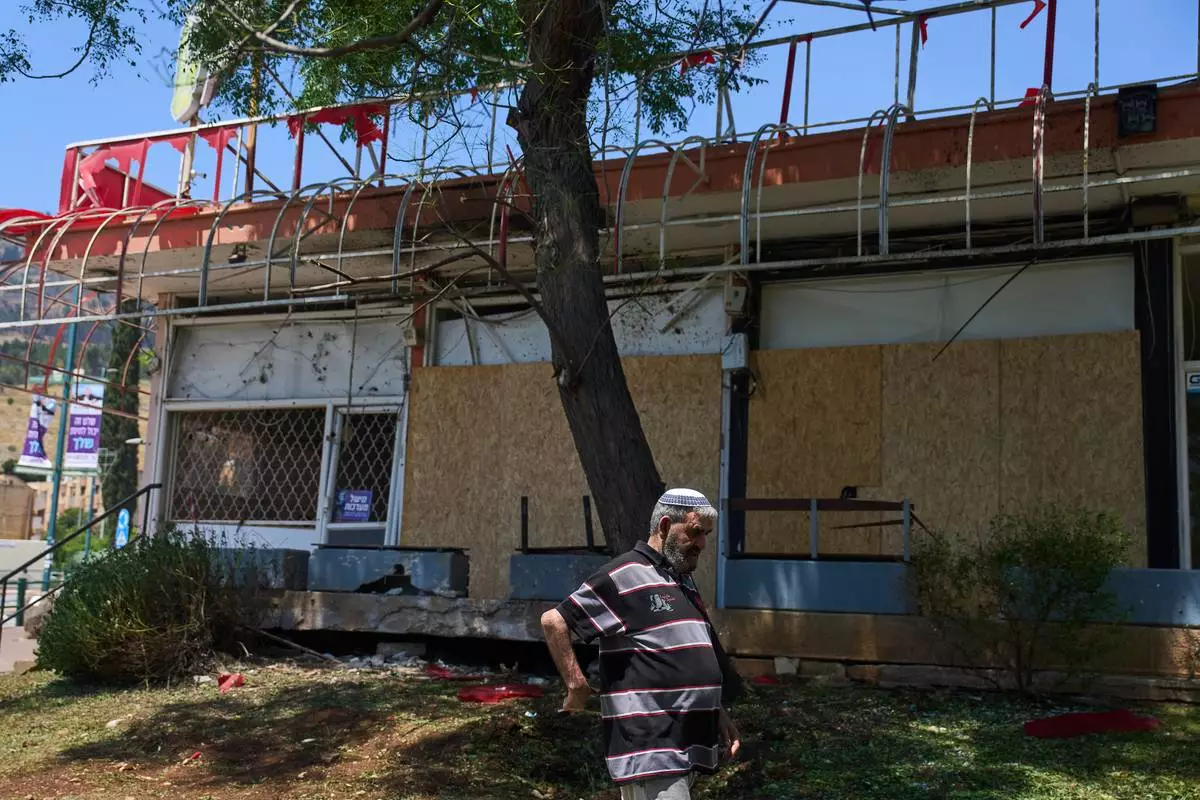
Sirens signaling incoming fire from the militant Hezbollah group sounded in repeated waves across northern Israel on Friday, including in border communities and areas such as Nahariya and Karmiel.
The Israeli military said around 30 projectiles were fired toward the area since morning.
President Donald Trump’s search for an off-ramp from the war with Iran is getting bumpy inside his Republican Party.
In the decade since Trump’s “America First” movement rose to power by rejecting military intervention, his coalition has rarely been tested the way it is now. Trump’s exit efforts — first through threats of annihilation, then with a ceasefire that is proving precarious — are doing little to paper over tensions that have festered since the war began six weeks ago.
Despite the growing criticism, Republican leaders in Congress were largely silent. Many were privately uncomfortable with Trump’s threats on social media and were concerned about how the war would play out, especially in an election year.
But with Congress on recess for the opening two weeks of April, House Speaker Mike Johnson, R-La., and Senate Majority Leader John Thune, R-S.D., have offered little public reaction to Trump’s moves.
▶ Read more
Israeli Prime Minister Benjamin Netanyahu said Friday that the Spanish government will be cast out of a U.S.-led coordination center in charge of maintaining peace in Gaza, citing Spain’s alleged anti-Israeli bias amid the war with Iran.
“Israel will not remain silent in the face of those who attack us. Spain has defamed our heroes, the soldiers of the IDF, the soldiers of the most moral army in the world,” he said in a video statement.
The Kiryat Gat-based Civil-Military Coordination Center was established in October 2025 as a multinational body charged with monitoring implementation of the peace agreement sponsored by Trump in Gaza.
“Those who attack the State of Israel instead of terrorist regimes will not be our partners regarding the future of the region,” added Netanyahu.
Spanish Prime Minister Pedro Sánchez has been one of the most outspoken critics of the war on Iran, which he denounced as “illegal, reckless and unjust.”
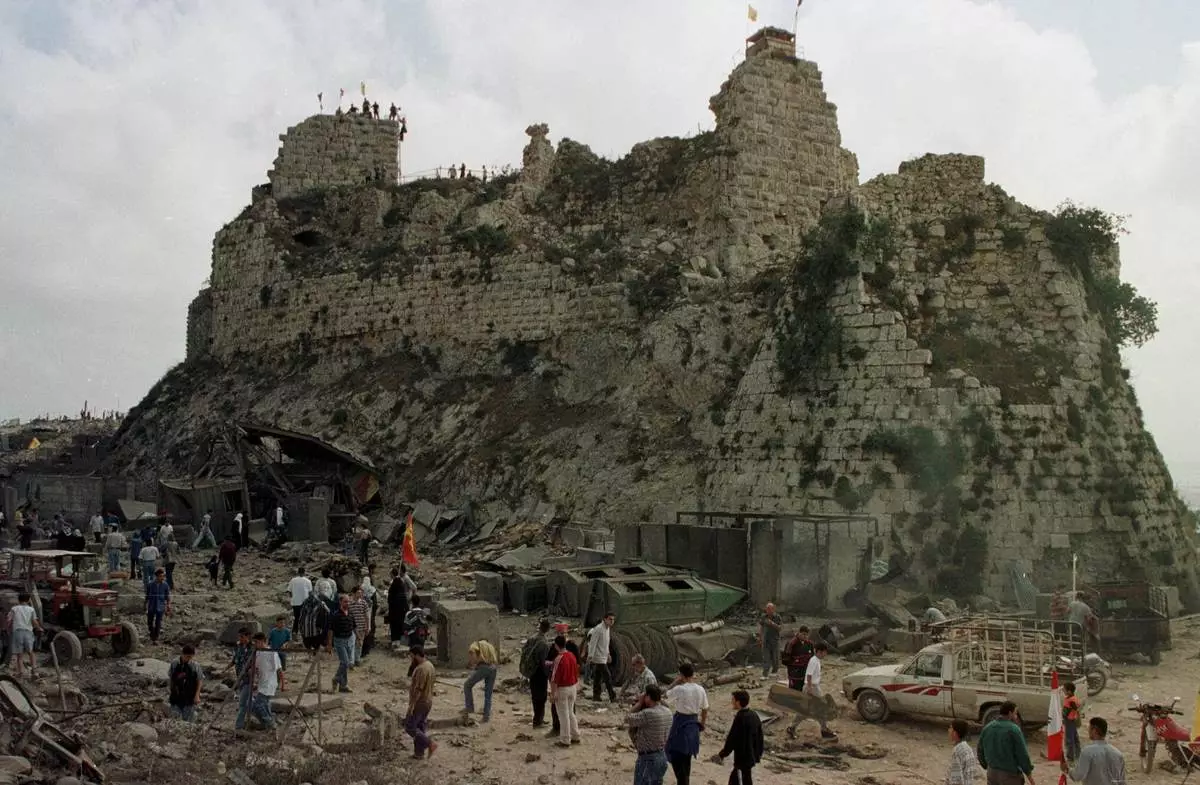
The NNA news agency reported that Israeli warplanes on Friday struck near a State Security agency office in the southern town of Nabatieh, causing extensive damage at the government building. It said others were wounded in the strike and were being transferred to hospitals, without specifying how many.
At least 13 State Security officers were killed, according to a statement from the agency.
There was no immediate comment from the Israeli military on the specific strike. Its Arabic-language spokesperson, Avichay Adraee, claimed that Israel had hit more than 120 Hezbollah militant sites in the past 24 hours.
Hezbollah has claimed a series of air and ground attacks against Israel in the last day after initially holding fire following news of the wider ceasefire deal in the Iran war.
Iranians have welcomed a fragile ceasefire deal after weeks of Israeli and American bombardment, but many fear the war is far from over. For some, there is also a sense of whiplash, after U.S. President Donald Trump threatened to wipe out their civilization hours before he reversed course and agreed to an uneasy truce.
The ceasefire that took effect Wednesday has brought relative quiet to the capital, Tehran, after more than a month of heavy strikes that targeted mainly government and security buildings but also destroyed many homes.
“Everyone I’ve spoken with, it’s given them a new life,” a university student told The Associated Press in an audio note via WhatsApp, speaking on condition of anonymity over fears for his safety.
AP spoke to half a dozen residents, despite an ongoing nationwide internet shutdown imposed during mass protests before the war.
▶ Read more
Japan said it is deeply concerned about escalating Israeli attacks on Lebanon, urging all parties to immediately stop hostilities and comply with international law.
Foreign Minister Toshimitsu Motegi, in a statement Friday, expressed Japan’s “serious concern” over Israel’s ground operation against the Lebanese militant group Hezbollah, calling for respect for Lebanese sovereignty and territorial integrity.
Boarding Air Force Two on his way to Pakistan, the vice president said, “We’re looking forward to the negotiation. I think it’s gonna be positive. We’ll, of course, see.”
He cited Trump in saying, “If the Iranians are willing to negotiate in good faith, we’re certainly willing to extend the open hand.”
But Vance also added, “If they’re gonna try and play us, then they’re gonna find that the negotiating team is not that receptive.”
Vance also said that Trump “gave us some pretty clear guidelines” on how talks should go, but didn’t elaborate.
The vice president did not take questions from reporters traveling with him.
In the streets of downtown Jerusalem, some Israelis said they believe peace with Lebanon is not possible before a decisive victory against the Iran-backed Hezbollah militant group.
“I think we should finish with them. After we finished with Hezbollah, we can try and make peace with Lebanon,” said Yaniv Matsree.
A little over a month of hiding in shelters has inconvenienced the lives of many Israelis, they said, but has done little to change their views of the war with Hezbollah that has killed more than 1,850 people in Lebanon, according to Lebanon’s health ministry.
For some Israelis, their country should press on to evade future threats from the militant group.
“The people of Israel want peace and seek peace, but those who want war will get war, and this war is very justified,” said Benhamo Momen, who fled from northern Israel, where the impact of the war is most severe. “Hezbollah will not disarm on their own.”
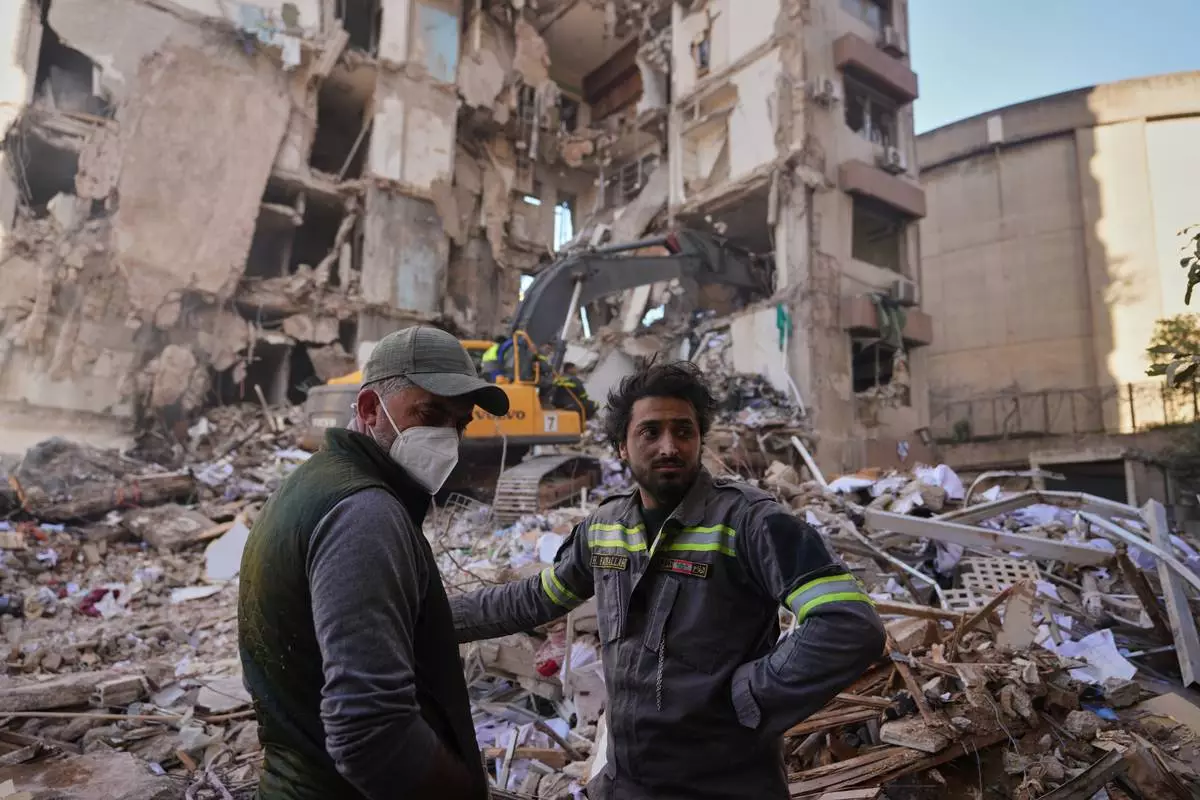
A Lebanese civil defense worker, right, stands with a resident at the site of a building destroyed in an Israeli airstrike a day earlier in central Beirut, Lebanon, Thursday, April 9, 2026. (AP Photo/Hassan Ammar)
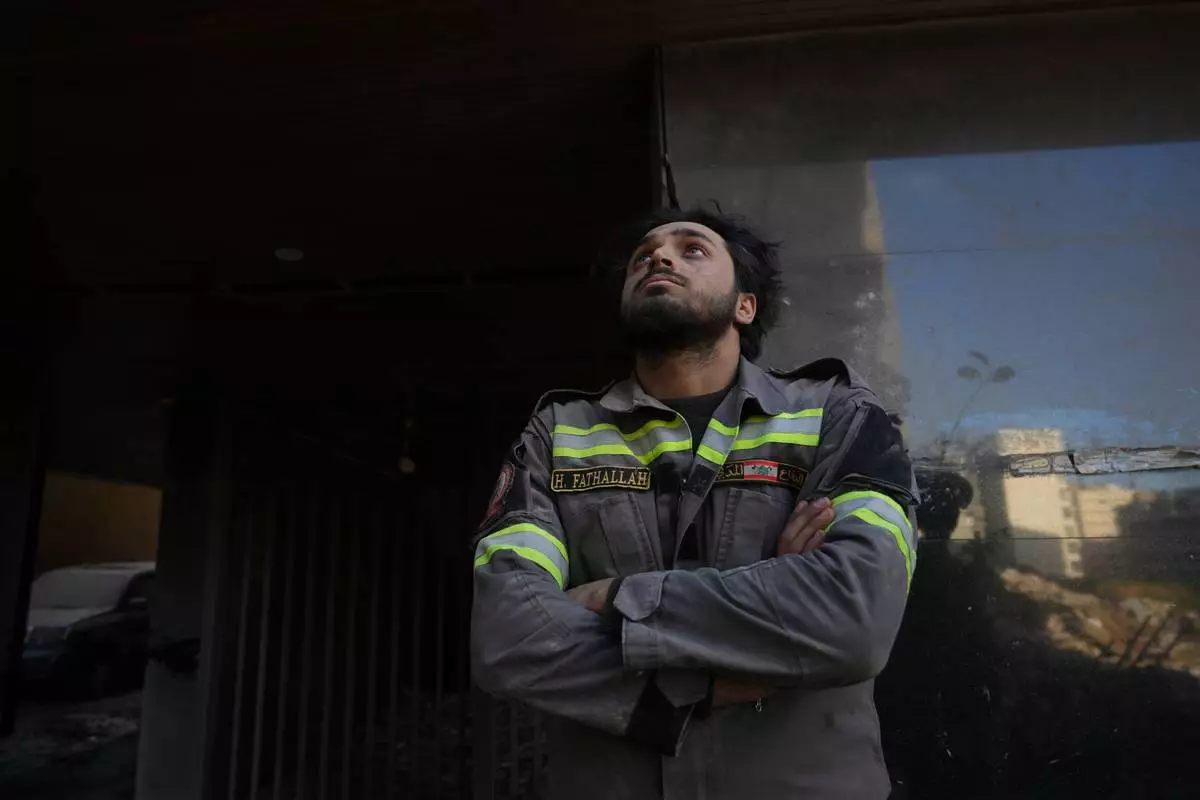
A Lebanese civil defense worker looks upward near the site of a building destroyed in an Israeli airstrike a day earlier in central Beirut, Lebanon, Thursday, April 9, 2026. (AP Photo/Hassan Ammar)
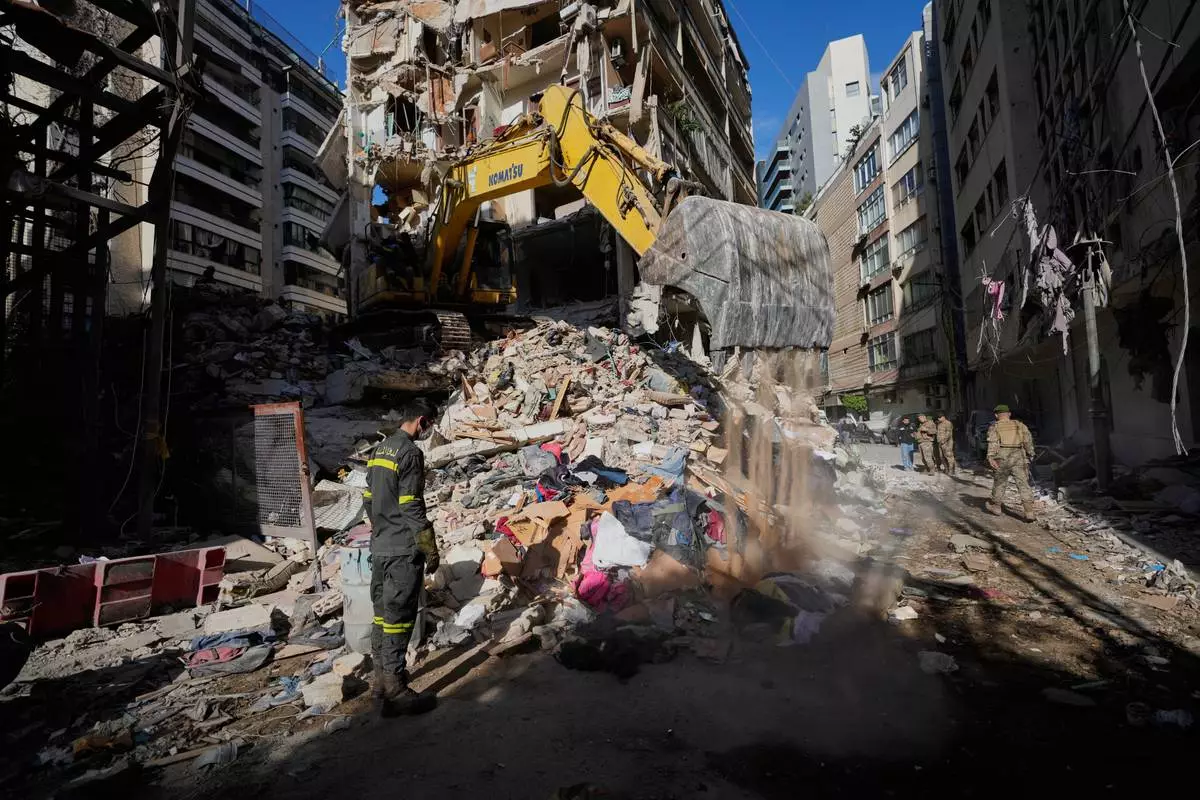
A Lebanese civil defense worker looks on as an excavator operates on the rubble of a building destroyed in an Israeli airstrike a day earlier in Beirut, Lebanon, Thursday, April 9, 2026. (AP Photo/Hussein Malla)
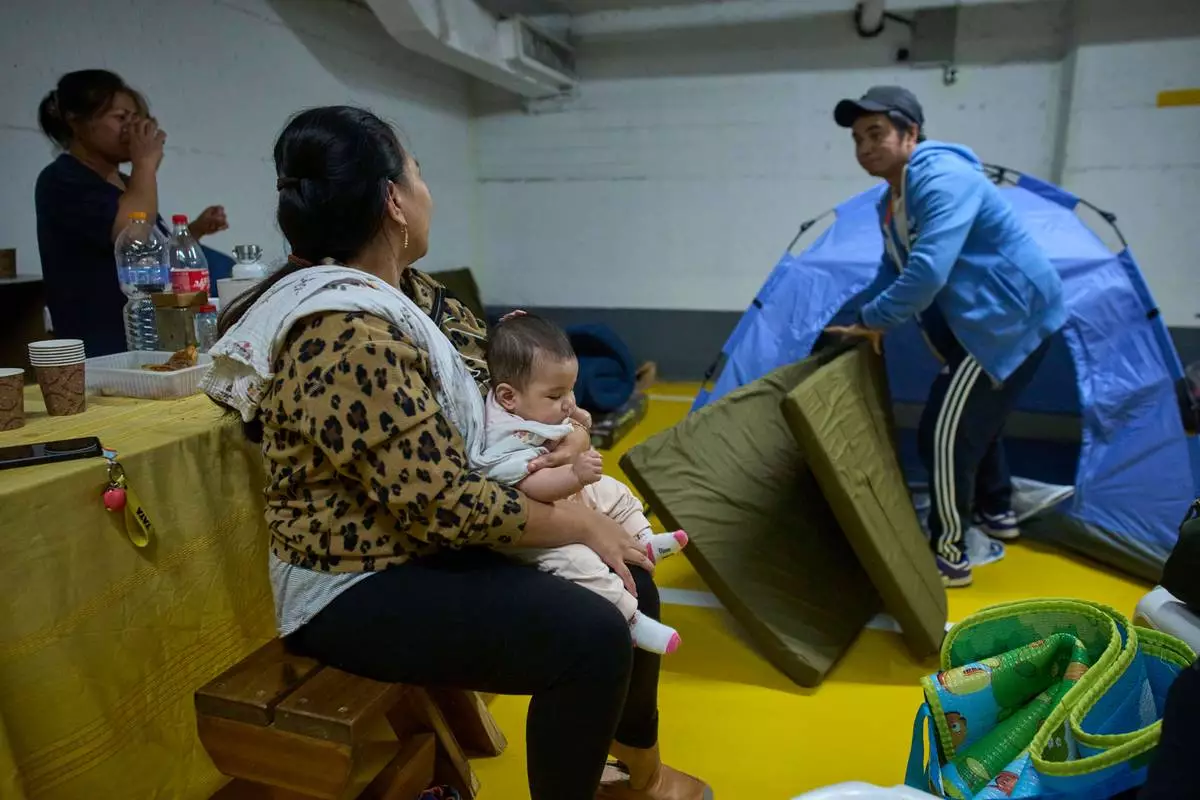
People residing in an underground shelter pack up their belongings as they prepare to leave after the announcement of a two-week ceasefire agreement between Iran and the US, in Tel Aviv, Israel, Thursday, April 9, 2026. (AP Photo/Ohad Zwigenberg)
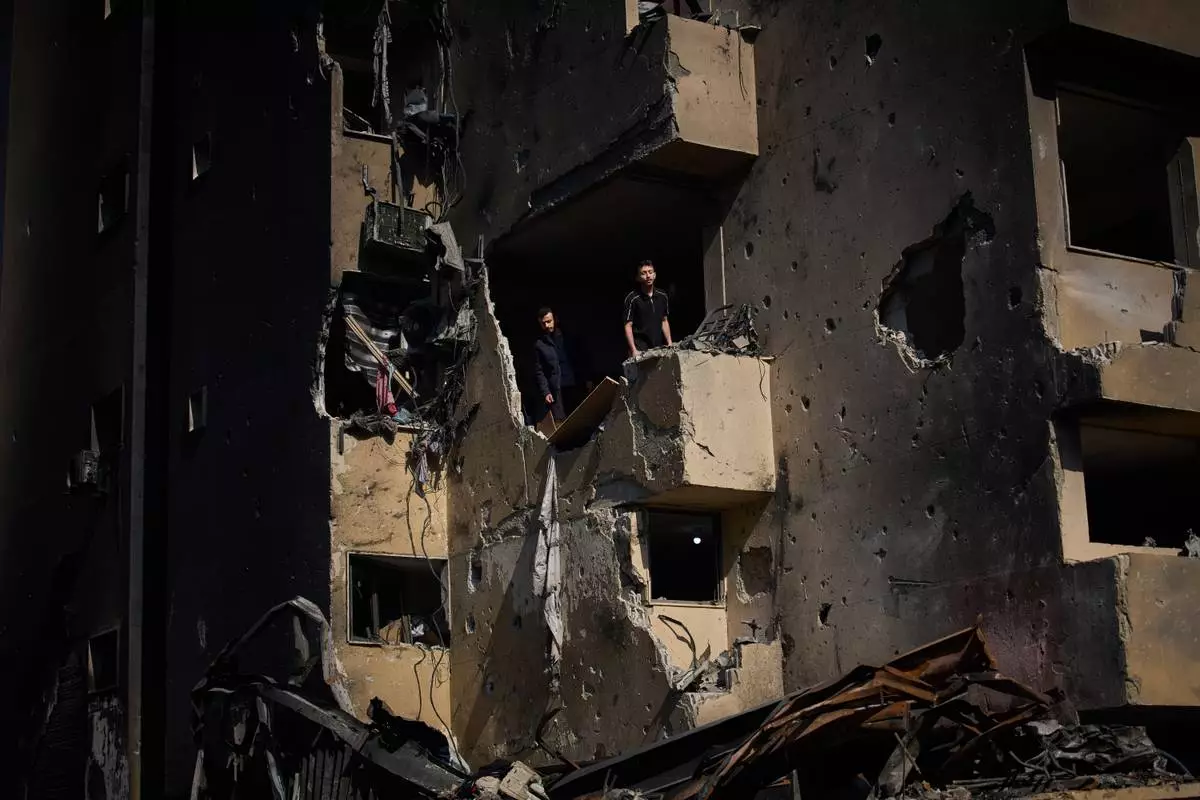
Men inspect the damage to their home destroyed in an Israeli airstrike a day earlier in Beirut, Lebanon, Thursday, April 9, 2026. (AP Photo/Emilio Morenatti)
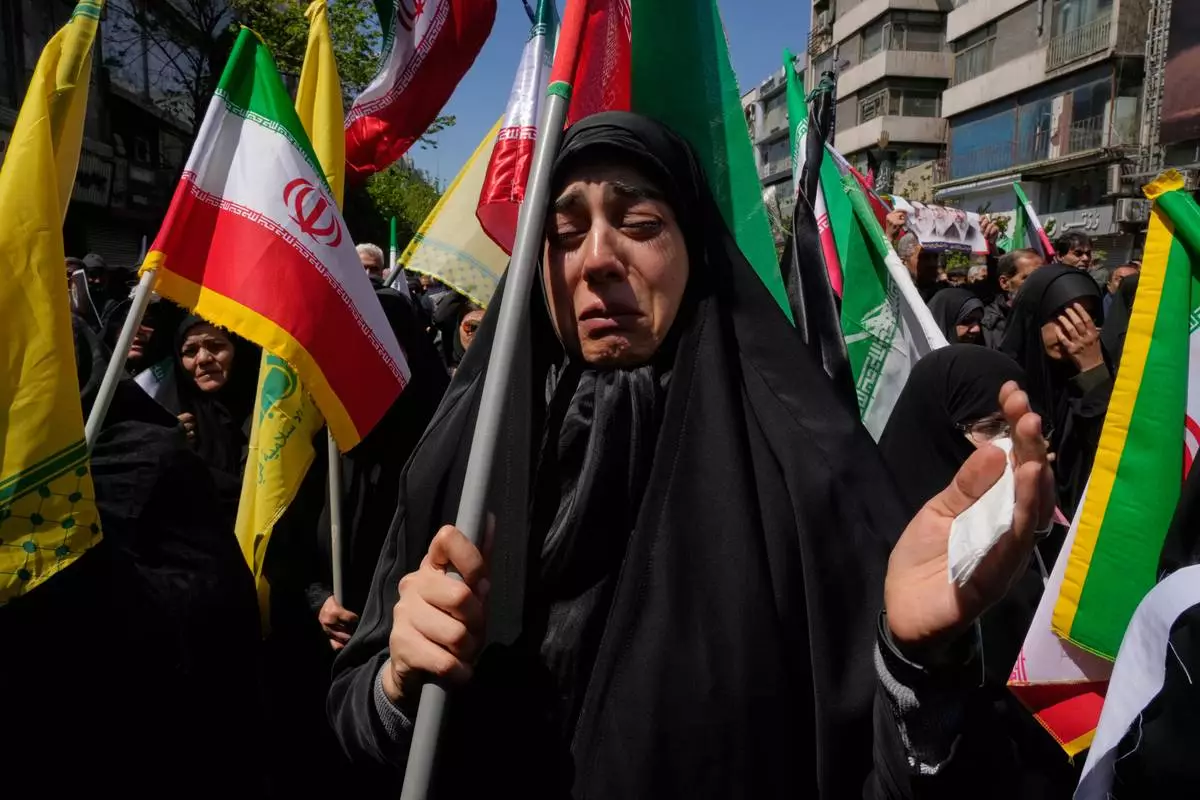
A government supporter weeps during a mourning ceremony marking the 40th day since the death of Iranian Supreme Leader Ayatollah Ali Khamenei, who was killed in the U.S. and Israel strikes in Tehran, Iran, Thursday, April 9, 2026. (AP Photo/Vahid Salemi)
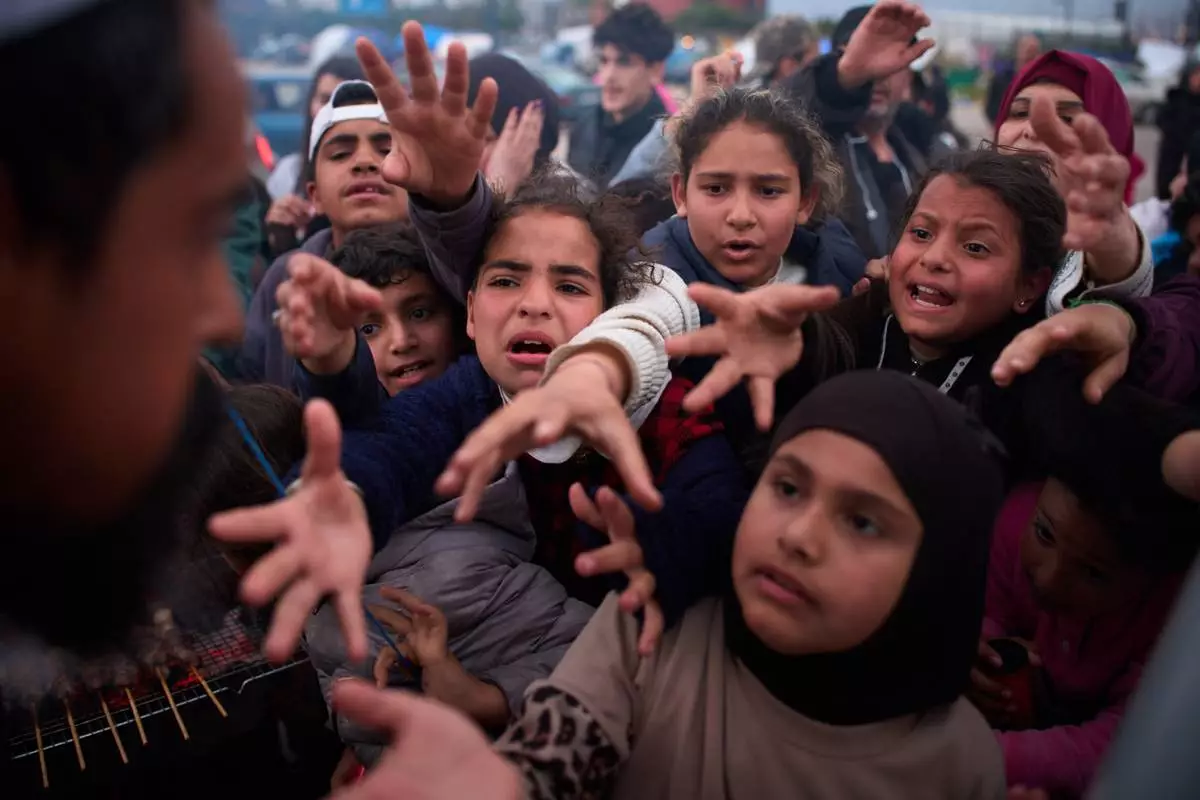
Displaced families extend their hands while waiting for donated food beside the tents they use as shelters after fleeing Israeli bombardment in southern Lebanon, in Beirut, Lebanon, Thursday, April 9, 2026. (AP Photo/Emilio Morenatti)