CARACAS, Venezuela (AP) — Venezuelan lawmakers on Thursday approved a bill to regulate the country’s mining as it seeks to attract leery foreign investors to a once-private industry that has long been exploited by criminal groups with ties to the government.
It is the latest legislative initiative by acting President Delcy Rodríguez since the self-proclaimed socialist government that has ruled Venezuela for 26 years came under pressure from the Trump administration in January, when the U.S. military deposed then-President Nicolás Maduro.
The lengthy bill will now undergo a review by the country’s high court to determine if it is constitutional.
The bill regulates mineral rights, establishes small, medium and large-scale mining categories, and allows for independent arbitration of disputes, which foreign investors view as key to guard against the government seizing their assets. It also bans the president, vice president, ministers, governors and others from holding mining titles.
The bill is a “vehicle for the construction of future prosperity” and an “instrument that protects” mining workers across the country, National Assembly president Jorge Rodríguez told lawmakers after the measure was approved.
The approval came a day after the acting president asked public and private sector workers, whose wages have long not allowed them to afford basic necessities, for patience as her government works to improve the country’s economy. She promised them a wage increase on May 1 but did not disclose the amount.
On Thursday, as workers protested for better wages in the capital, Caracas, Delcy Rodríguez arrived in Grenada on her first official international trip as acting president.
Two decades ago, many foreign firms in the mining and oil sectors saw their assets seized by the Venezuelan government. However, as crucial oil revenues plummeted, Maduro’s government in 2016 designated more than 10% of Venezuela’s territory as a mining development zone stretching across the central area of the country.
Since then, mining operations for gold, diamonds, copper and other minerals have proliferated. Many of these sites are informal, unlicensed mines operating under brutal conditions and the presence of criminal groups.
Homicides, human trafficking, fuel smuggling and other crimes are commonplace in mining areas, but ordinary Venezuelans continue to flock there in hopes of getting rich quick and escaping poverty.
Officials and members of the military take cuts from the illegal mining revenue in exchange for allowing the operation of mines.
“The mining and subsequent sale of gold has proven to be a lucrative financial scheme for some well-connected Venezuelans and senior officers within the National Bolivarian Armed Forces, which profits from charging criminal organizations for access and inputs, such as fuel,” the U.S. State Department reported to Congress last year.
“The estimated market value of gold mined in Venezuela is difficult to confirm, but well-respected sources estimate that it averaged $2.2 billion annually over the past five years.”
The newly approved bill sets royalties and taxes and caps mining concessions at 30 years, with the possibility of renewal. It also establishes prison penalties for those who participate in illegal activities and those who cause environmental damages, and allows for the seizure of illegally obtained minerals.
Follow AP’s coverage of Latin America and the Caribbean at https://apnews.com/hub/latin-america
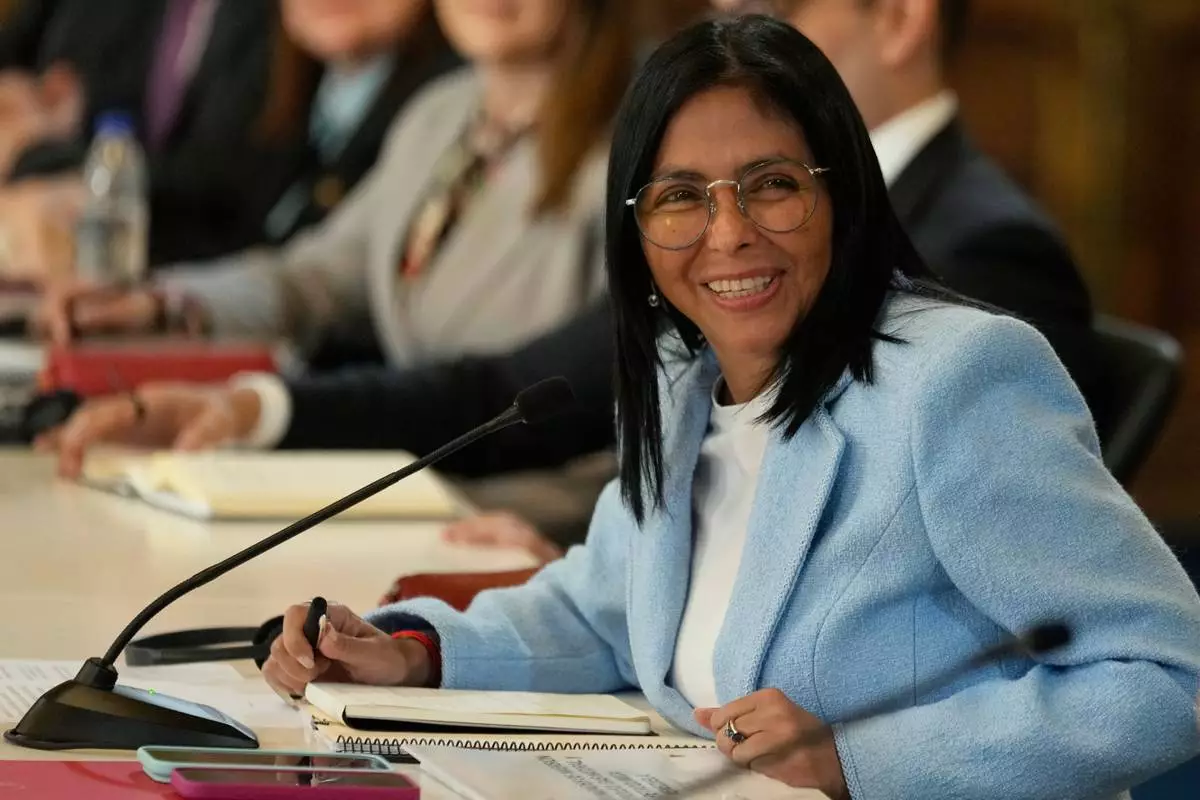
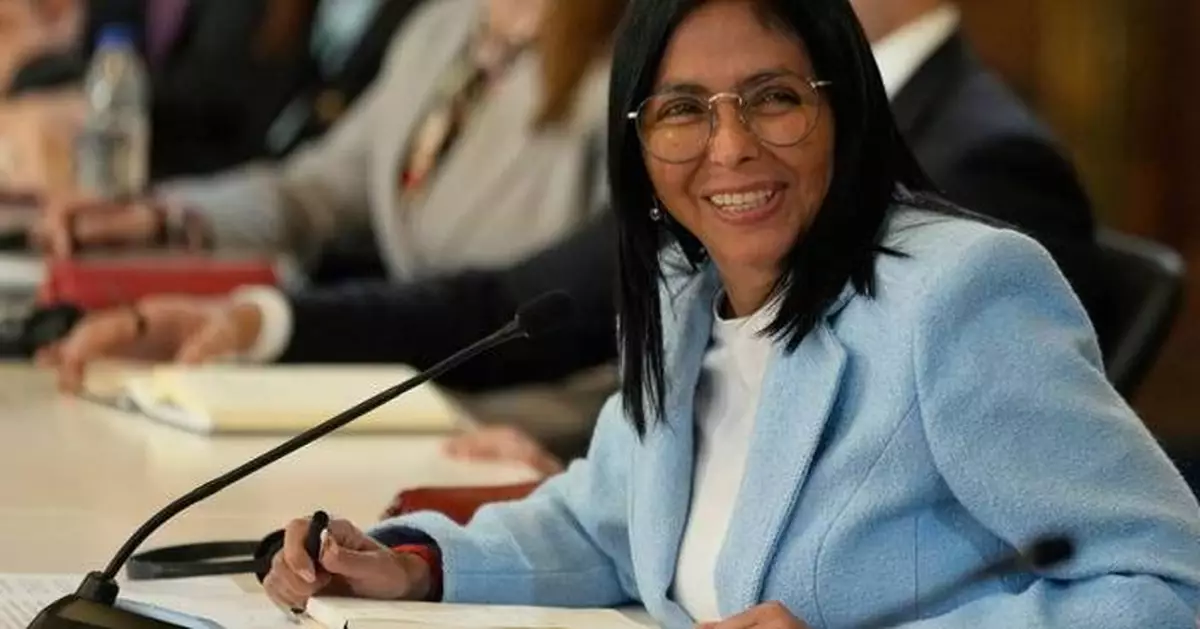
FILE - Venezuela's acting President Delcy Rodriguez smiles during a meeting with a delegation led by U.S. Energy Secretary Chris Wright at Miraflores Palace in Caracas, Venezuela, Feb. 11, 2026. (AP Photo/Ariana Cubillos, File)
A tentative U.S.-Iran ceasefire is faltering after Israel pounded Beirut and as Iran maintains its grip on the Strait of Hormuz while truce talks remain uncertain.
Both Tehran and Washington are claiming victory and exerting pressure, with talks on a permanent deal set to begin soon in Islamabad and U.S. Vice President JD Vance set to lead the U.S. delegation.
Israeli strikes made Wednesday the deadliest day in Lebanon since the war began, with more than 300 people killed. There are lingering disagreements over whether the ceasefire covers the Lebanese militant group Hezbollah. Iran is warning of “STRONG responses” if attacks on its militant ally don’t stop.
Israel-Lebanon negotiations are expected next week in Washington, according to a person familiar with the matter. Israeli Prime Minister Benjamin Netanyahu said he had approved direct talks, while the Lebanese government did not immediately respond. Netanyahu said there is no ceasefire in Lebanon and his country will keep striking Hezbollah.
Although the Strait of Hormuz is closed, there were no reports of strikes inside Iran or attacks against Israel or neighboring Gulf Arab nations, leaving Lebanon as the only country where the conflict is still burning.
Here is the latest:
Israel’s military said the launchers had fired rockets toward northern Israel on Thursday and that it was working to locate and dismantle more.
Throughout Thursday, sirens had repeatedly alerted communities in northern Israel — especially along the border with Lebanon — that Hezbollah was firing in their direction.
A former Iranian foreign minister who once suggested Tehran could seek a nuclear weapon died late Thursday after being wounded in an airstrike last week, Iranian state television reported.
Kamal Kharazi had served as a foreign minister for Iran’s reformist President Mohammad Khatami, then as a foreign affairs adviser to the late Supreme Leader Ayatollah Ali Khamenei.
In 2022, he told news network Al Jazeera that Tehran has “the technical means to produce a nuclear bomb but there has been no decision by Iran to build one,” sparking concern about Tehran’s intentions.
In a social media post, the president wrote, “There are reports that Iran is charging fees to tankers going through the Hormuz Strait — They better not be and, if they are, they better stop now!”
He offered no further details. The White House supports Iran reopening the strait as part of a tenuous ceasefire deal but says Trump opposes that country’s military using its continued control of the waterway to raise revenue by charging tolls on passing ships.
Trump has spent much of Thursday in closed-door meetings. He does not have any scheduled public events the rest of the day.
British Prime Minister Keir Starmer was traveling in Qatar and spoke to Trump about efforts to restore tanker traffic through the waterway, Starmer’s office said in a statement.
Starmer has visited Saudi Arabia, Bahrain, the United Arab Emirates and Qatar in the last two days as he tries to build momentum behind the ceasefire and the reopening of the strait.
Trump has taken repeated potshots at the British leader over Starmer’s reluctance to join the U.S.-Israeli war.
While acknowledging that Iraqi forces have made efforts to respond to these attacks, Deputy Secretary of State Christopher Landau said Baghdad had not done enough to prevent them, according to a statement.
He warned Iraq’s envoy that support for militias by “elements associated with the Iraqi government” is harming U.S.-Iraq ties, adding that Washington expects immediate steps to dismantle the groups.
U.S. stocks rose, even though oil prices did too, as financial markets moved more modestly a day after surging on optimism about a ceasefire.
After beginning Thursday with moderate losses following drops for Asian and European stocks, the S&P 500 erased its dip and rose 0.6%.
The Dow Jones Industrial Average climbed 0.6%, and the Nasdaq composite added 0.8% after Israel’s prime minister authorized direct negotiations with Lebanon. That eased worries that the two-week ceasefire announced late Tuesday may already be in trouble.
Oil prices pared some of their earlier gains but nevertheless remained higher.
The price for a barrel of benchmark U.S. crude rose 3.7% to settle at $97.87 after briefly nearing $103 in the morning. Brent crude, the international standard, added 1.2% to $95.92 per barrel.
▶ Read more
Late on Thursday, sirens blared in northern Israel’s Haifa, Nahariya and other cities along the Mediterranean coast, warning about incoming fire from Hezbollah.
Earlier in the evening, Israel’s military had alerted the population that it expected more areas of the country might come under fire after launches from Lebanese territory throughout the day had targeted the northern part of the country along the border.
For the first time, Saudi Arabia laid out the scale of damage to its oil output and exports, although it didn’t specify when the attacks occurred.
The Energy Ministry statement also gave the first public confirmation of Saudi casualties during the war, saying one citizen working as an industrial security guard was killed and seven others wounded.
Thursday’s statement said strikes targeted production, transport and refining sites, as well as petrochemical and power facilities in Riyadh, the Eastern Province, and Yanbu on the Red Sea. The statement didn’t attribute responsibility.
A pumping station on the East-West Pipeline was among the hardest hit, cutting throughput by about 700,000 barrels per day, while outages at Manifa and Khurais reduced output by 600,000 more barrels per day.
Major refineries, including SATORP, Ras Tanura and SAMREF, were also hit, with fires at Ju’aymah disrupting exports of liquefied petroleum gas and natural gas liquids.
A U.S. official is confirming that talks between Israel and Lebanon on ending the current hostilities between Israel and Hezbollah will take place starting next week at the State Department in Washington.
The official offered no other details of the negotiations but a person familiar with the planning for the talks said they would be led on the U.S. side by Ambassador to Lebanon Michel Issa and on the Israeli side by Israel’s Ambassador to the U.S. Yechiel Leiter.
Both the U.S. official and the person familiar with the planning spoke on condition of anonymity due to the delicacy of the matter. It was not immediately clear who would represent Lebanon.
Analysts say the memes appear to be coming from groups linked to the government in Tehran and are part of a strategy of leveraging its limited resources to inflict damage on the U.S., even indirectly.
“Their goal is to sow enough discontent with the conflict as to eventually force the West to cave in, so it is massively important to them,” Neil Lavie-Driver, an AI researcher at the University of Cambridge, said, referring to Iran.
The memes are fluent not just in English but in American culture and trolling. They portray Trump as old, out of step and internationally isolated, and include a series that uses the style of the “Lego” animated movies.
Published on various social platforms, they are racking up millions of views — although it’s not clear how much influence they have had.
▶ Read more
The ongoing war between Israel and the Lebanese militant group Hezbollah is far from the first conflict between them. The two have an enmity that goes back more than four decades, with outbursts of fighting or outright war punctuated by periods of tense calm.
▶ Read a timeline of some significant events in their hostilities
A group of new accounts on the prediction market Polymarket made highly specific, well-timed bets on whether the U.S. and Iran would reach a ceasefire on April 7, resulting in hundreds of thousands of dollars in profits for these new customers.
Calls are increasing in Congress for investigations into the prediction market platform Polymarket after the latest instance where groups of anonymous traders made strategic, well-timed bets on a major geopolitical event hours before it occurred.
Rep. Ritchie Torres, a Democrat from New York who sits on the House Financial Services Committee as well as the subcommittee on digital assets and financial technology, sent a letter Thursday to the Commodity Futures Trading Commission demanding the regulator review and investigate these well-timed trades.
“This pattern raises serious concerns that certain market participants may have had access to material nonpublic information regarding a market-moving geopolitical event,” Torres wrote. The letter was shared exclusively with the AP.
▶ Read more
The U.S. president said Netanyahu agreed to dial back Israel’s military campaign in Lebanon ahead of peace talks in Pakistan.
“I spoke with Bibi and he’s going to low-key it. I just think we have to be sort of a little more low-key,” Trump told NBC News in a phone interview.
Wednesday was the deadliest day of Israeli strikes in Lebanon since the war began.
Netanyahu on Thursday said there’s no ceasefire in Lebanon, and Israel will keep striking Iran-backed Hezbollah militants there until security is restored in northern Israel. But he said he authorized direct negotiations with Lebanon “as soon as possible” aimed at disarming Hezbollah.
The Israeli military also said it had begun striking Hezbollah launch sites in Lebanon on Thursday evening.
Trump says Iranian leaders are more amendable to dealmaking in private conversations than they are in their public statements.
The Iranians “talk much differently when you’re at a meeting than they do to the press. They’re much more reasonable,” Trump told NBC News during a phone interview. “They’re agreeing to all the things that they have to agree to. Remember, they’ve been conquered. They have no military.”
He added: “If they don’t make a deal, it’s going to be very painful.”
The president also said he’s “very optimistic” about the prospects of reaching a peace deal during talks in Pakistan.
Ayatollah Mojtaba Khamenei says the Iranian people are the “definitive victors” in the conflict.
“Today, it is clear before everyone’s eyes, the dawn of the Islamic Republic’s emergence as a great power while the evil is facing the downhill slope of weakness,” he said in a statement read by an anchor on state TV.
Khamenei has not been seen or heard in public since he replaced his father, Ali Khamenei, who was killed in an Israeli airstrike on the first day of the war.
The younger Khamenei also mentioned the upcoming ceasefire talks with the U.S. and pledged there would be a “new era” in the Strait of Hormuz.
The U.S. has demanded that Iran reopen the strategic waterway as part of the ceasefire.
Lt. Gen. Eyal Zamir, speaking to troops inside Lebanon, said the army’s mission is to “continue deepening the damage and to continue weakening Hezbollah.” He said the objective is to remove the direct threat to residents of northern Israel.
Tedros Adhanom Ghebreyesus, the head of the World Health Organization, issued a statement Thursday outlining the dire access issues for medical assistance in Beirut’s Jnah area after a series of deadly Israeli strikes in the last 24 hours.
He said that the Israeli military evacuation order covers two major hospitals including Rafik Hariri, the main public hospital in Beirut. These facilities, according to Ghebreyesus, have been crucial for the hundreds of civilians who need assistance. The order also includes five shelters that are currently accommodating more than 5,000 people.
“At this time, no alternative medical facilities are available to receive approximately 450 patients from the two hospitals (including 40 patients in the ICU), rendering their evacuation operationally unfeasible,” he posted on X. “Both facilities are operating at full capacity, including treating the injured from the strikes of 8 April.”
U.N. Secretary-General Antonio Guterres called for an immediate ceasefire in Lebanon and welcomed potential Israel-Lebanon talks, saying there is “no military solution” to the conflict, according to his spokesman.
Ongoing Israeli military activity jeopardizes the U.S.-Iran ceasefire, spokesman Stephane Dujarric said, adding that Israeli evacuation orders in Beirut’s southern suburbs cover U.N. sites, refugee camps, aid hubs, a major public hospital, and 13 shelters hosting over 6,000 displaced people.
Asim Iftikhar Ahmad, Islamabad’s representative at the U.N., told a group of reporters Thursday that he doesn’t know why there was confusion about Lebanon being included in the ceasefire deal agreed to by U.S., Israel and Iran, when it was “clearly” cited in the prime minister’s statement.
“I believe this will be addressed also as part of these discussions, because there are many points on the agenda,” Ahmad said about the planned talks in Islamabad this weekend. “I think we should not let anything come in the way of these talks, which are very important.”
Increased risks to shipping in the Mideast have forced vessels to change their routes, making trips 14 days longer on average, according to ALIS, an Italy-based logistics services association of 2,500 companies globally.
The ordinary insurance costs related to a ship’s value have also gone up by about 10% during the war, ALIS vice president Marcello Di Caterina told The Associated Press.
He warned that the Iran crisis could have a more devastating impact on the shipping industry than the COVID-19 pandemic.
In a video statement, the Israeli leader says his country will keep striking Hezbollah until security is restored in northern Israel.
He confirmed that he is opening direct negotiations with Lebanon, the aim or which are Hezbollah’s disarmament and a sustainable peace agreement.
Jean Arnault, the U.N. secretary-general’s personal envoy for the Iran war, met Thursday with an Iranian deputy foreign minister, Kazem Gharibabadi, as the diplomat makes his way through countries impacted by the conflict.
Stephane Dujarric, the U.N. spokesperson, said Arnault heard Iranian officials’ “views on the way forward” as a shaky day-old ceasefire holds. He also met with representatives from the Iranian Red Crescent, who took him on a tour of some of the sites damaged by weeks of U.S.-Israeli strikes, including a university that was destroyed and an apartment block.
Asked if Arnault or any U.N. personnel will be playing a role in the upcoming negotiations in Pakistan, Dujarric said that world body is currently discussing with all parties “the structural role that we can play” in bringing an end to this conflict.
Correction: This post has been updated to correct that the U.N. misidentified one of Iran’s deputy foreign ministers. He is Kazem Gharibabadi, not Majid Takht-Ravanchi.
President Masoud Pezeshkian said the decision to accept a ceasefire was made unanimously by top officials and approved by the supreme leader.
In a statement posted Thursday on the Telegram messaging app, he said the ceasefire “is not a sign of weakness but a way to solidify Iran’s proud victories,” adding that the pause in fighting followed more than a month of Iranian public resilience and support.
House Democrats gathered at the U.S. Capitol and lambasted the Trump administration’s ceasefire negotiations with Iran as chaotic and unworkable, and characterized the president’s threats about wiping out a civilization as the musings of madness.
The lawmakers warned they would keep proposing resolutions to end the war, and use their votes to block any requests from the administration for more money to fund it.
“It’s clear that their ability to negotiate with Iran is nonexistent,” said Rep. Glenn Ivey of Maryland.
He called Trump’s plans for tolls on the strait particularly outrageous.
“How did we end up at a point where he’s talking about a joint venture with Iran with respect to charging tolls at the Strait of Hormuz?” he asked.
Rep. Madeleine Dean from Pennsylvania, who supports efforts to force Trump to step aside under the Constitution’s 25th Amendment, pointed back to the president’s days of escalatory rhetoric.
“The president brought the entire globe to watch his madness,” she said.
Israel said it launched 100 strikes in 10 minutes across Lebanon on Wednesday, targeting what they said were Hezbollah operatives and infrastructure. The strikes hit busy residential and commercial areas without warning.
The Lebanese Health Ministry said the death toll is likely to rise as search and rescue teams continue to find remains under the rubble, and as more people identify dozens of bodies at hospitals.
It was the deadliest day in over a month of war between Israel and the Hezbollah militant group. Around 1,150 people were wounded.
Israel-Lebanon negotiations are expected to begin next week at the State Department in Washington, according to a person familiar with the plans.
The talks are expected to be handled on the American side by U.S. Ambassador to Lebanon Michel Issa, and on the Israeli side by Israel’s Ambassador to the U.S. Yechiel Leiter, according to the person, who spoke on condition of anonymity due to the delicacy of the situation.
It was not immediately clear whom Lebanon was sending.
Axios first reported the timing and location of the talks.
— By Matthew Lee
Democrats in the U.S. House of Representatives made a quick but unsuccessful effort Thursday to pass a bill that would force Trump to get congressional approval before carrying out any more attacks on Iran.
The effort had no chance of passage during a short, minutes-long “pro forma session” of the House during which legislative business is rarely conducted.
But that didn’t stop Democrats from trying to make the point that they oppose the war in Iran.
Rep. Glenn Ivey, a Democrat from Maryland, tried to force a vote on the resolution, but Rep. Christopher Smith, a Republican from New Jersey, declared the House was adjourned.
“Let us vote!” yelled Rep. James Walkinshaw, a Democrat from Virginia.
“The time has come. The time has come,” Ivey said.
Democrats will look to force a vote on the measure again next week, when the full House has returned from a two-week stint back in their congressional districts.
The NATO secretary-general said Tehran and Moscow have been working together on military technology, and alleged Iran has been sowing chaos in the region.
“Particularly when it comes to Iran and Russia, it is drone technology, it is other military technology,” Rutte said while giving a talk at the Reagan Center in Washington. “And the Russians are returning with money. And the money is being spent for Iran to create utter chaos.”
Foreign Minister Hakan Fidan said Turkey sees signs both sides are willing to compromise, including on Iran’s nuclear program and uranium enrichment.
Speaking in Ankara, he said there had been “certain changes” in negotiating positions and cited a global consensus that attacks on Iran were a “mistake” as reason for cautious optimism.
He warned that Israeli “provocations,” including its invasion of Lebanon, could threaten talks that are due to start Saturday in Pakistan.
Fidan said the region is “tired of occupations and wars,” urged reconciliation between Iran and Gulf states and said “international players” should be ready to curb Israel’s “expansionism.”
He also suggested the two-week ceasefire could be extended to allow talks to continue.
A day after Israel’s deadliest strikes killed over 200 people in Lebanon, Abdul Rahman Mohammad, a Syrian who lost family members in the Hay al-Sellom neighborhood, waited at Rafic Hariri Hospital morgue to retrieve the bodies of his mother, two sisters, brother and brother-in-law.
“They were struck without any warning. This is Israeli brutality,” he said. “I’m just waiting for the Syrian embassy procedures so I can take them back to Syria.”
Dr. Mohamad El Zaatari, director of the public hospital, said the facility had treated 45 people, including 10 critical cases in intensive care.
“The situation is difficult and the numbers are large, but things are gradually taking the right path,” he said.
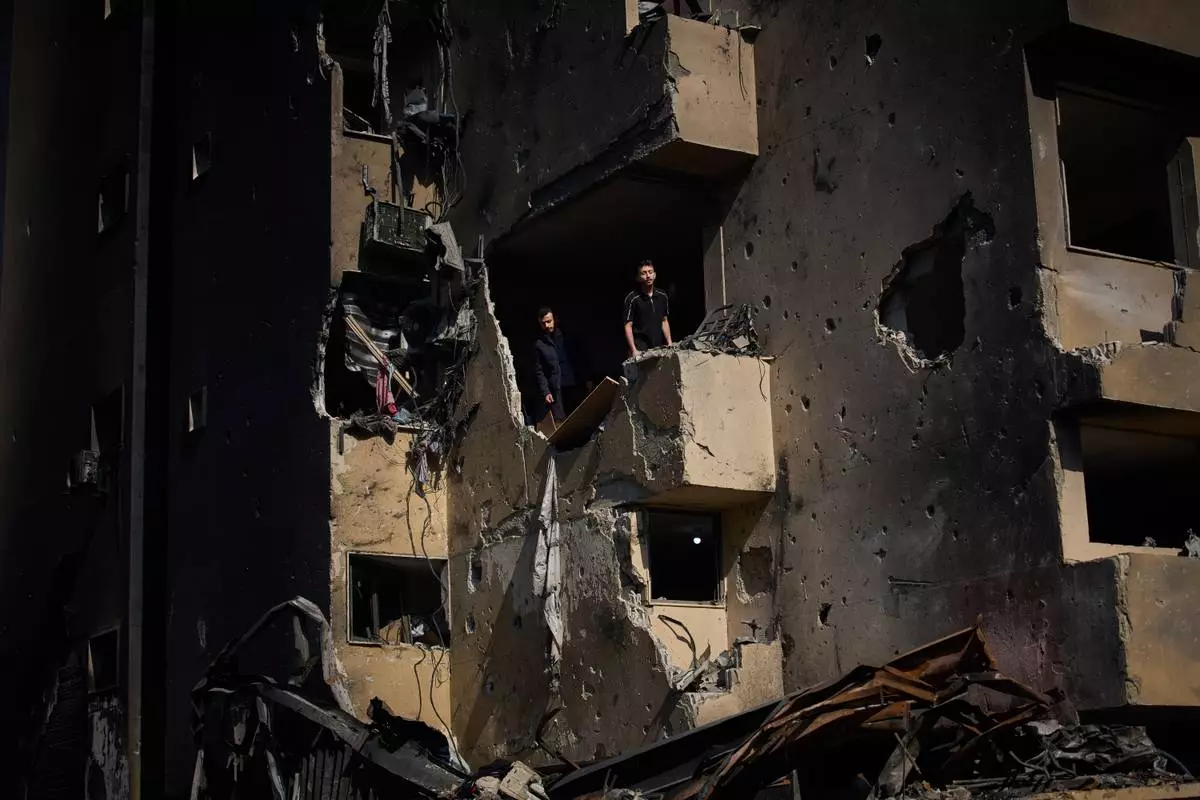
Men inspect the damage to their home destroyed in an Israeli airstrike a day earlier in Beirut, Lebanon, Thursday, April 9, 2026. (AP Photo/Emilio Morenatti)
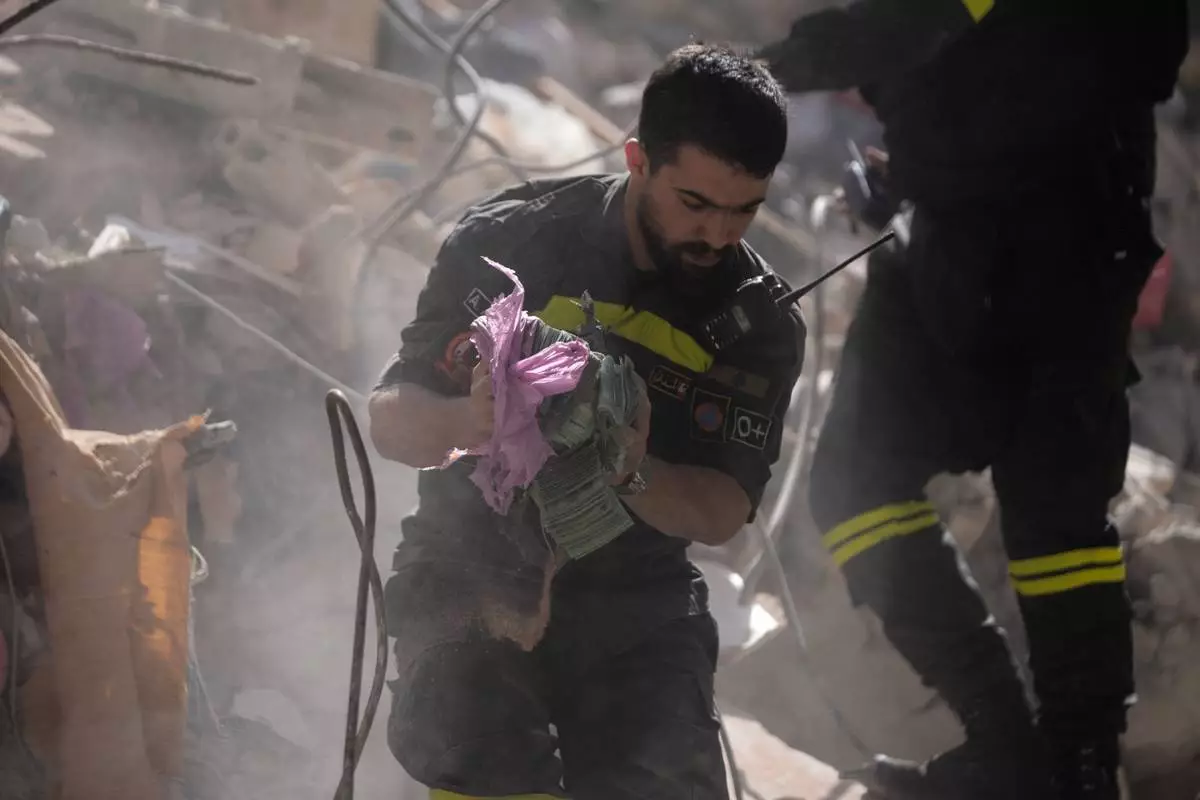
A rescue worker holds money recovered from the rubble of a destroyed building that was hit a day ahead in an Israeli airstrike in central Beirut, Lebanon, Thursday, April 9, 2026. (AP Photo/Hussein Malla)

People play on the beachfront in Tel Aviv, Israel, after the announcement of a two-week ceasefire with Iran, Wednesday, April 8, 2026. (AP Photo/Oded Balilty)
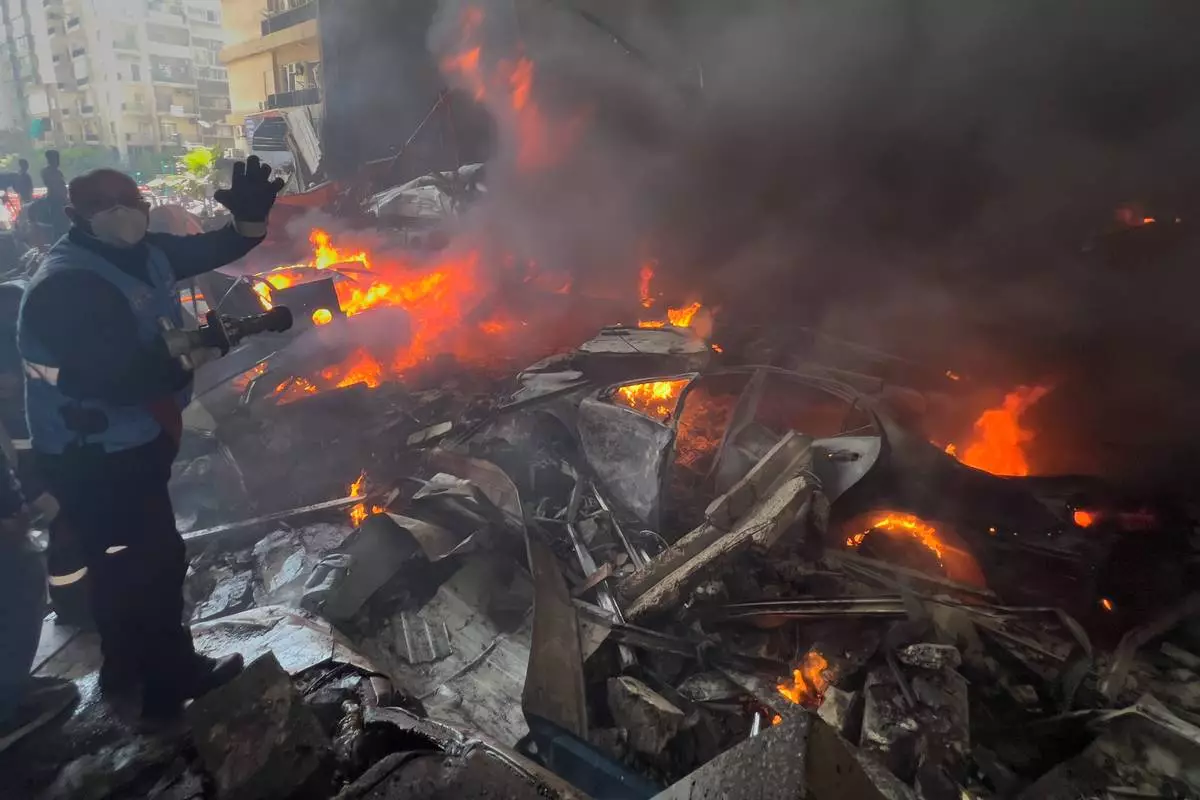
A rescue worker extinguishes burning cars at the site of an Israeli airstrike in central Beirut, Lebanon, Wednesday, April 8, 2026. (AP Photo/Hussein Malla)
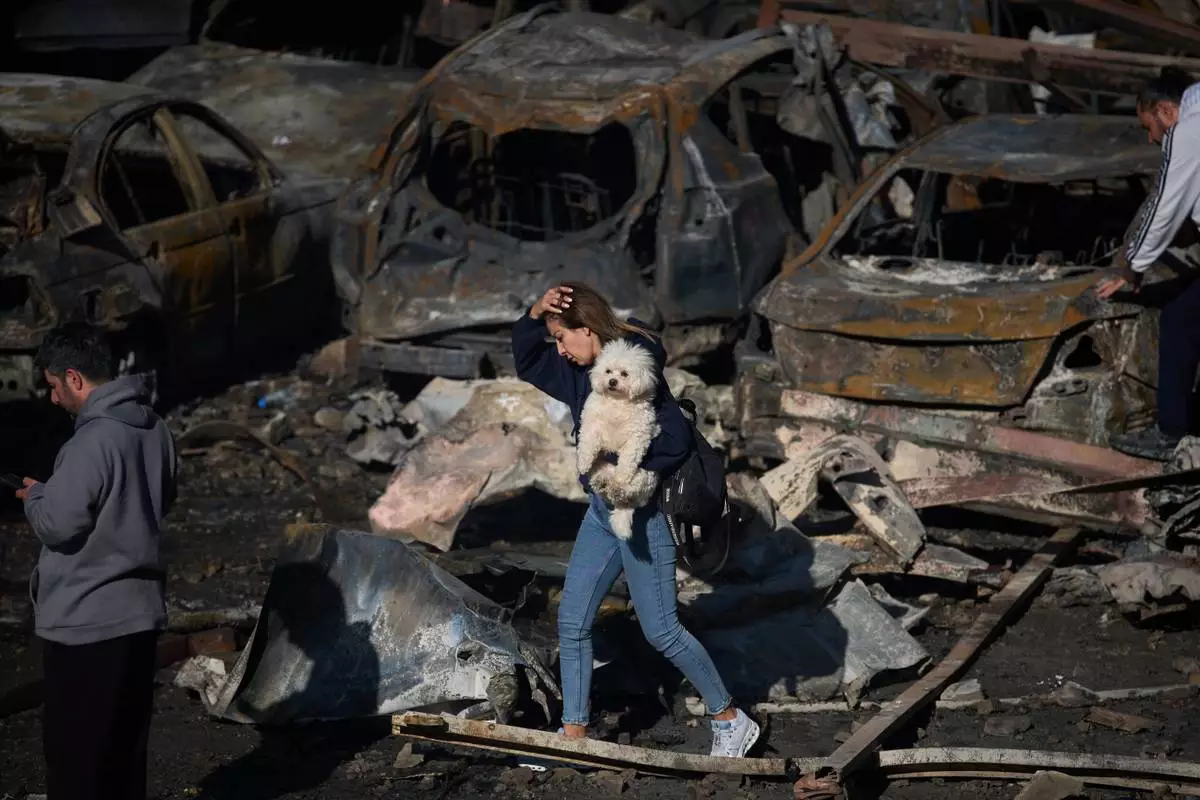
A woman holds her dog as she walks past burned cars a day after an Israeli airstrike in Beirut, Lebanon, Thursday, April 9, 2026. (AP Photo/Emilio Morenatti)
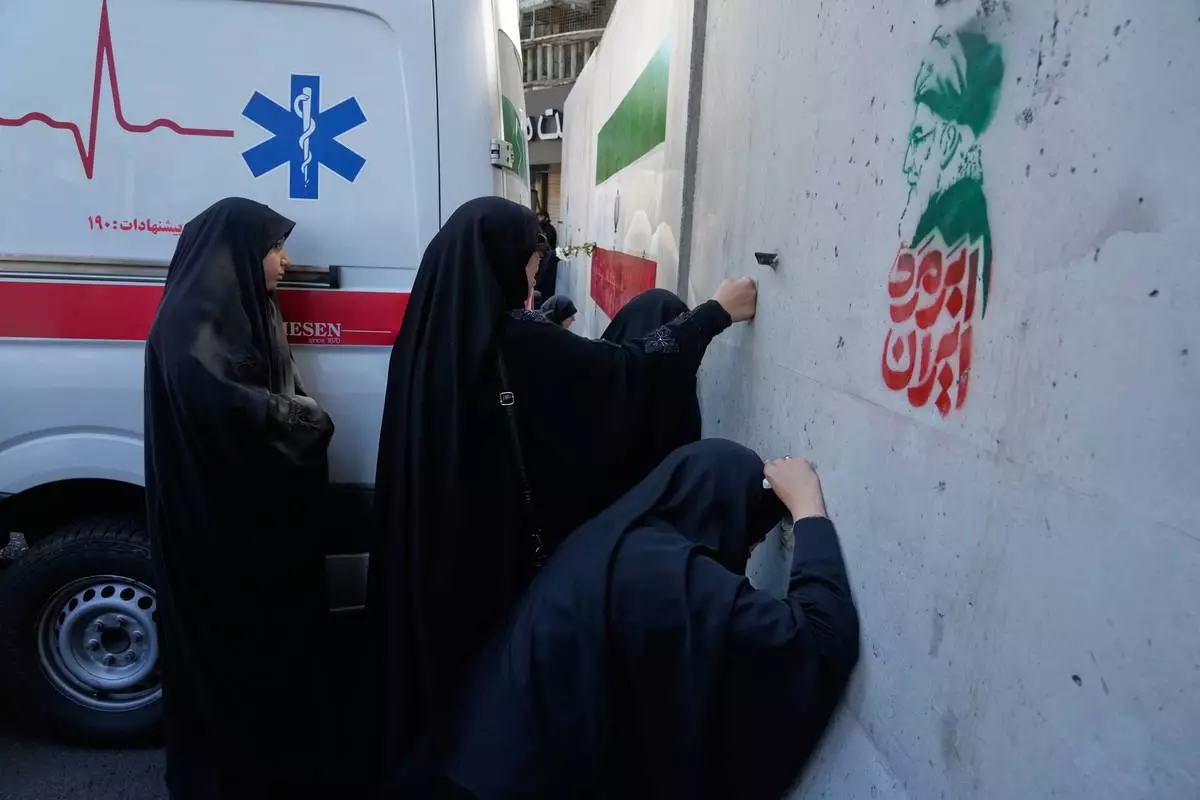
Women mourn during a ceremony marking the 40th day since the killing of the Iranian Supreme Leader Ayatollah Ali Khamenei, as the cement barricades are placed on the street leading to his residence in Tehran, Iran, Thursday, April 9, 2026. (AP Photo/Vahid Salemi)
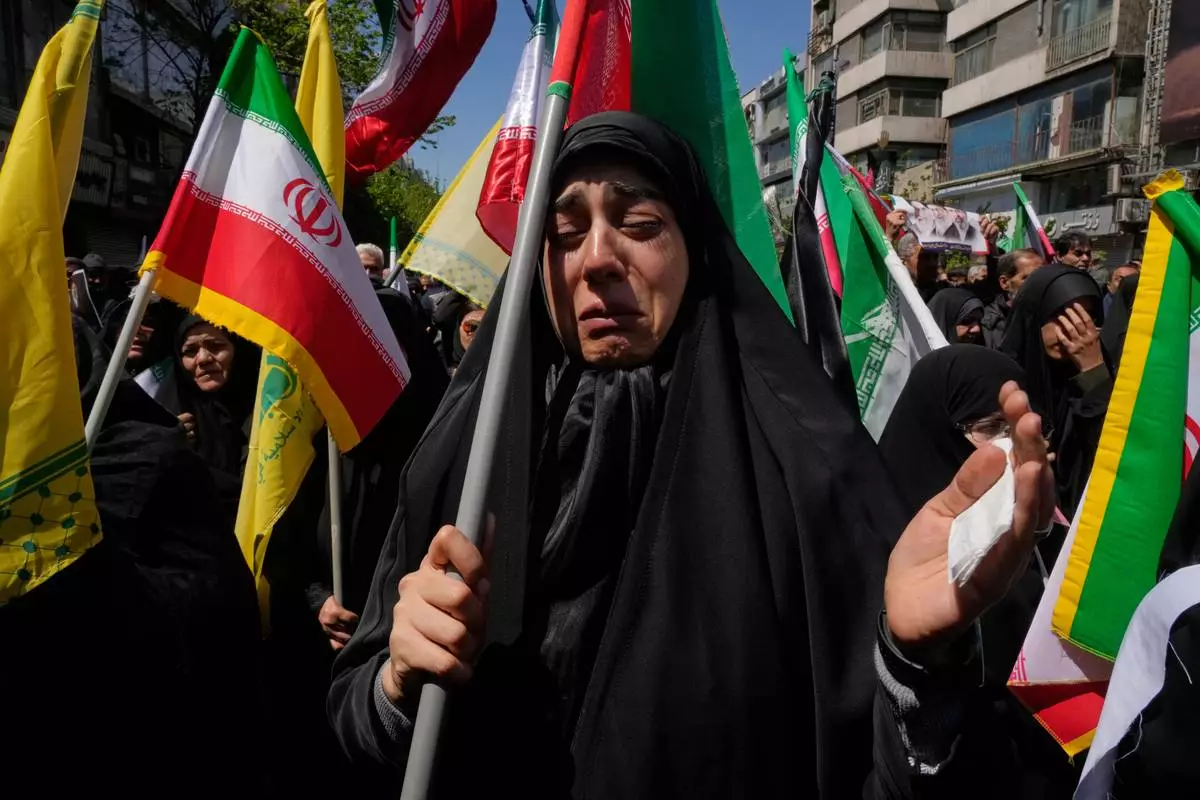
A government supporter weeps during a mourning ceremony marking the 40th day since the death of Iranian Supreme Leader Ayatollah Ali Khamenei, who was killed in the U.S. and Israel strikes in Tehran, Iran, Thursday, April 9, 2026. (AP Photo/Vahid Salemi)
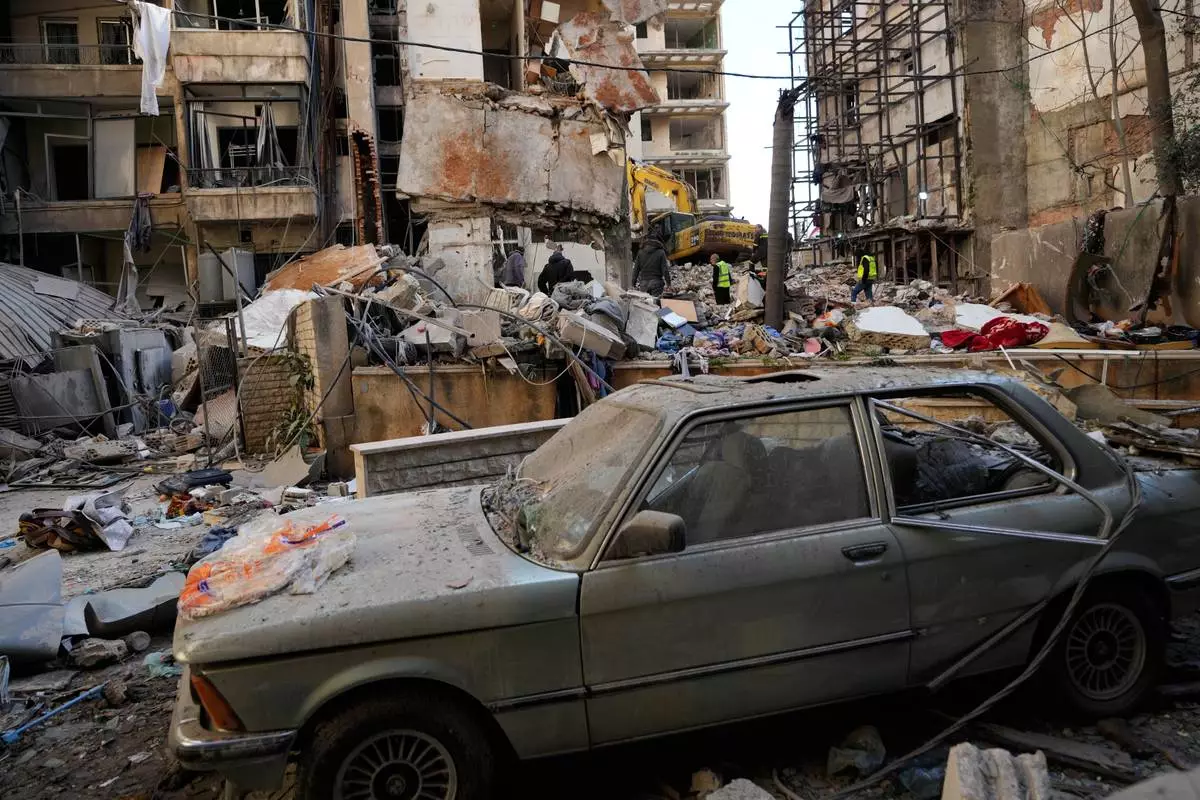
A damaged car is seen in an area as Lebanese civil defense workers search for victims in the rubble of a building destroyed in an Israeli airstrike a day earlier in central Beirut, Lebanon, Thursday, April 9, 2026. (AP Photo/Hussein Malla)
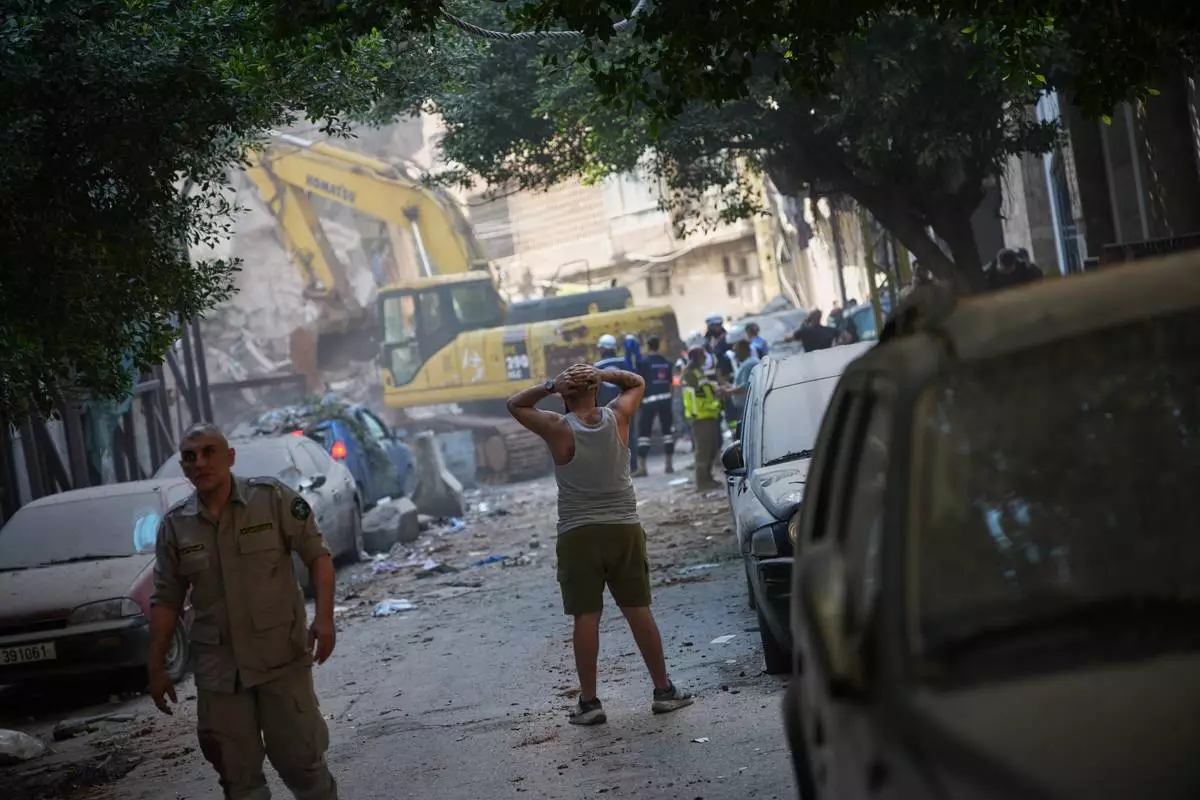
A man reacts as he watches an excavator remove debris at the site of an Israeli airstrike in Beirut, Lebanon, Wednesday, April 8, 2026. (AP Photo/Emilio Morenatti)
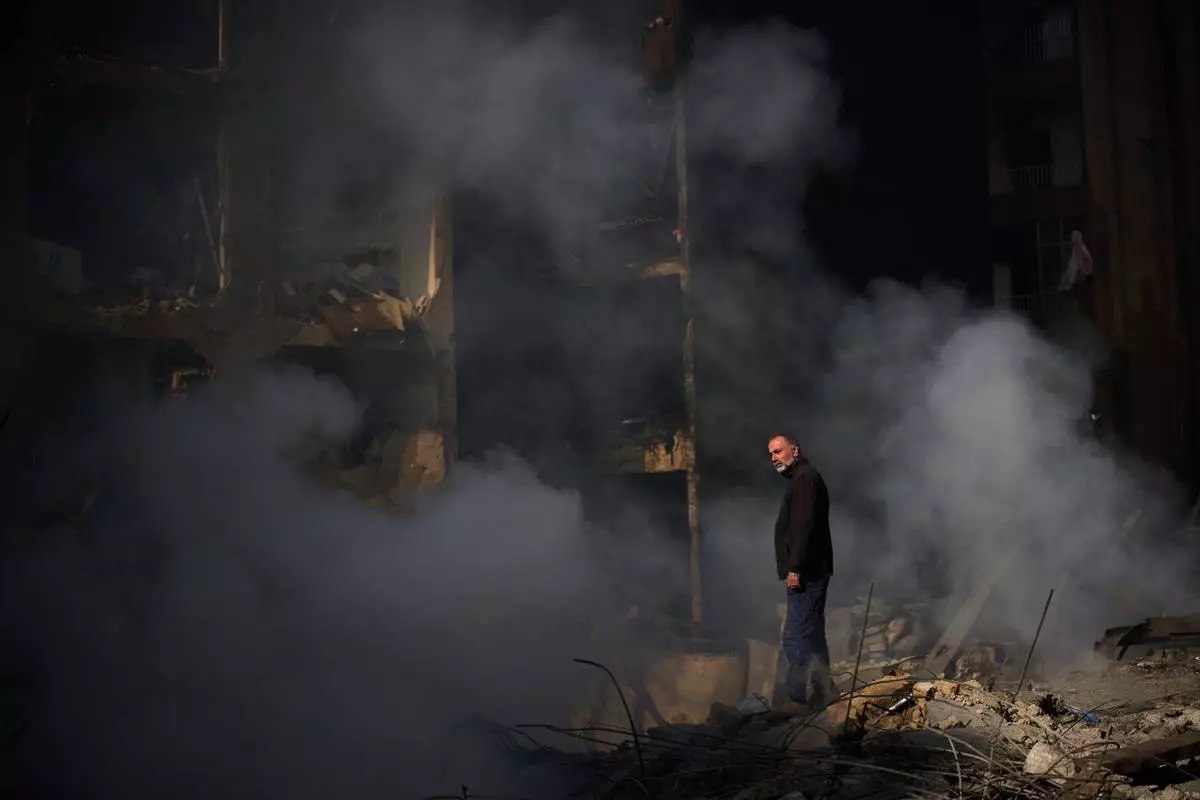
A man stands next to an apartment building destroyed in an Israeli airstrike a day earlier in Beirut, Lebanon, Thursday, April 9, 2026. (AP Photo/Emilio Morenatti)
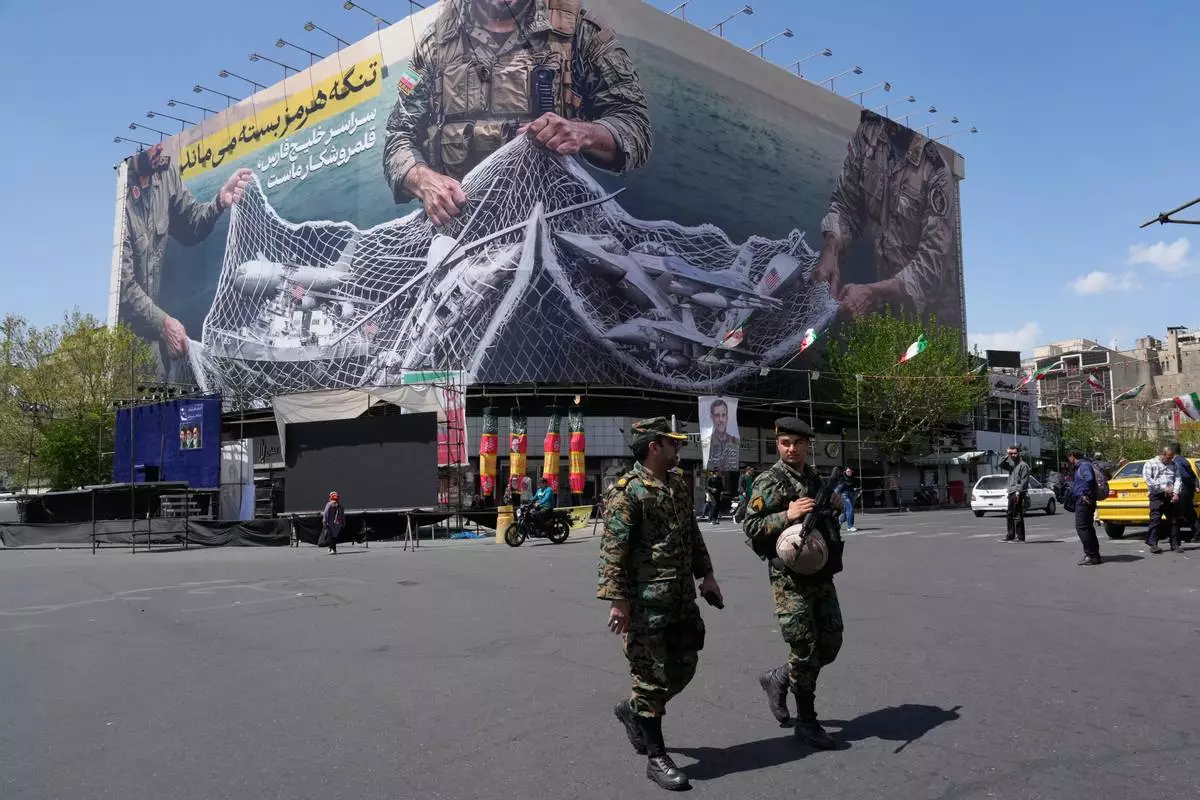
FILE - Two police officers walk in front of an anti-U.S. billboard depicting American aircraft being caught by Iranian armed forces in a fishing net beneath the words in Farsi, "The Strait of Hormuz will remain closed, The entire Persian Gulf is our hunting ground," in Tehran, Iran, Sunday, April 5, 2026. (AP Photo/Vahid Salemi, File)
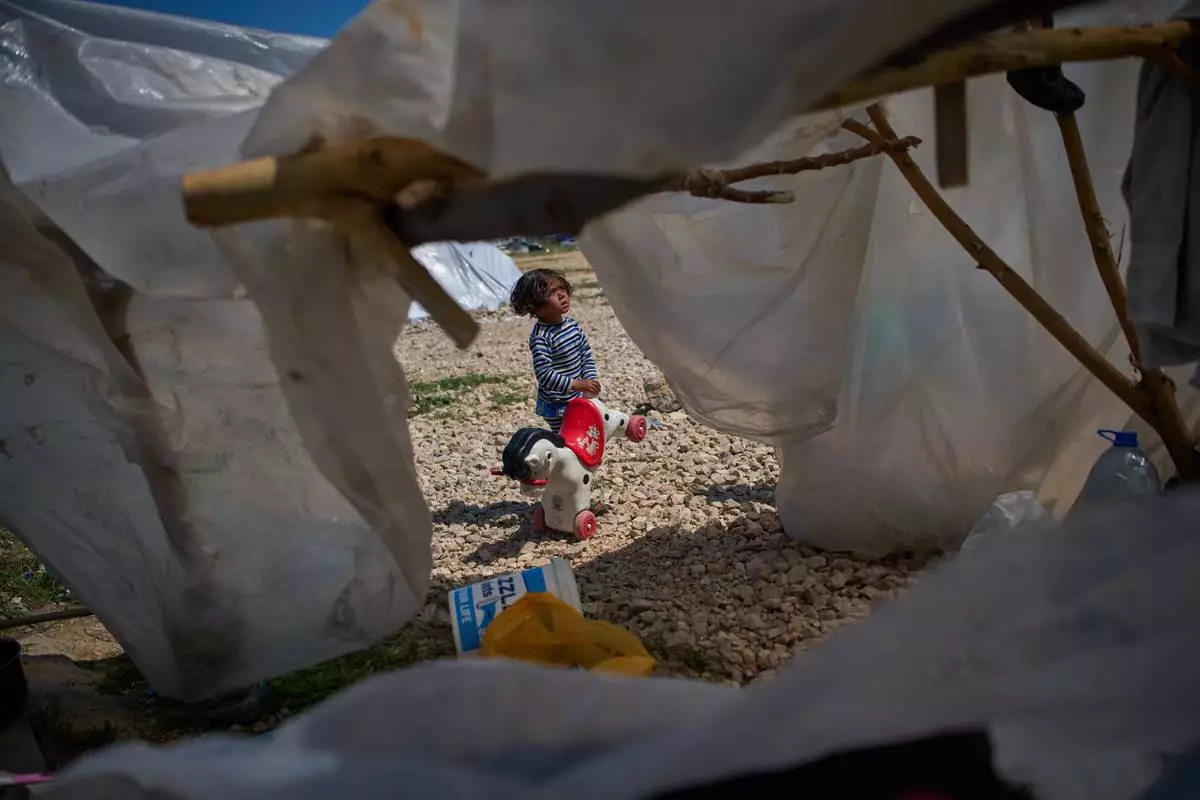
Ali, 4, holds a toy horse next to the tent his family uses as a shelter after fleeing Israeli bombardment in southern Lebanon, in Beirut, Lebanon, Wednesday, April 8, 2026. (AP Photo/Emilio Morenatti)
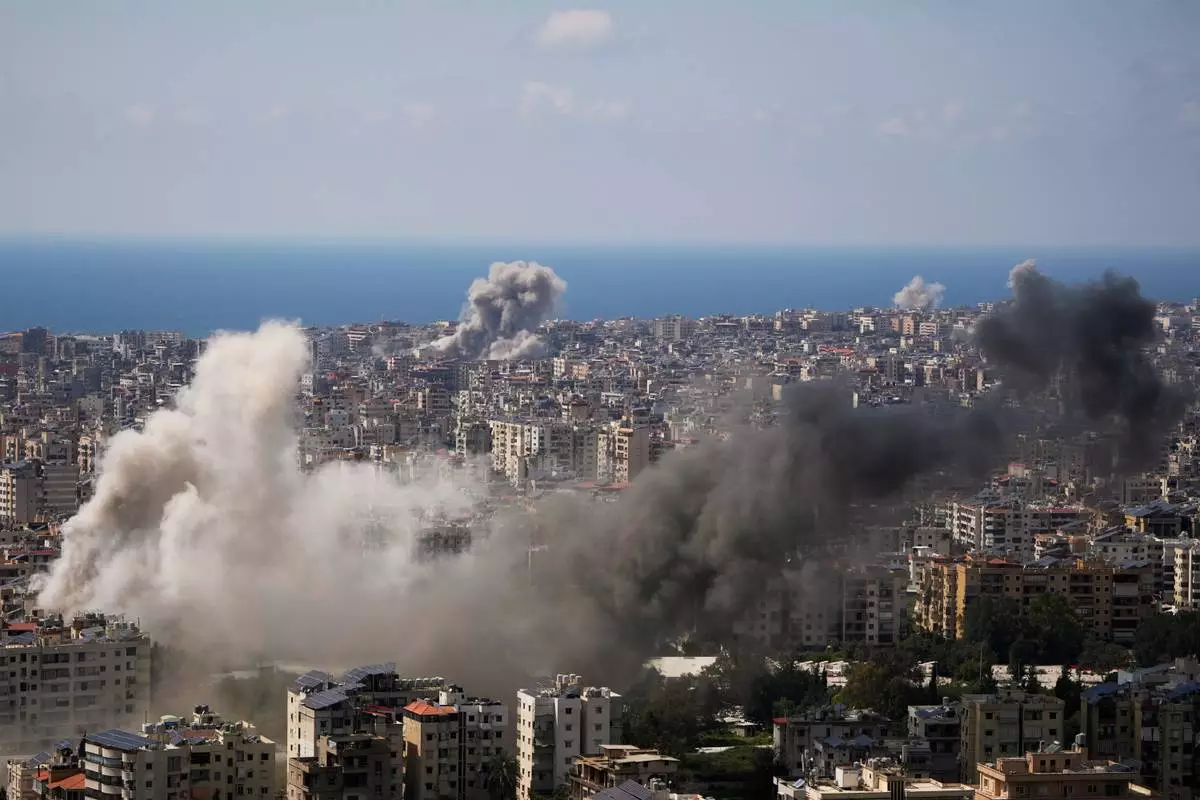
Smoke rises following several Israeli airstrikes in Beirut, Lebanon, Wednesday, April 8, 2026. (AP Photo/Hassan Ammar)
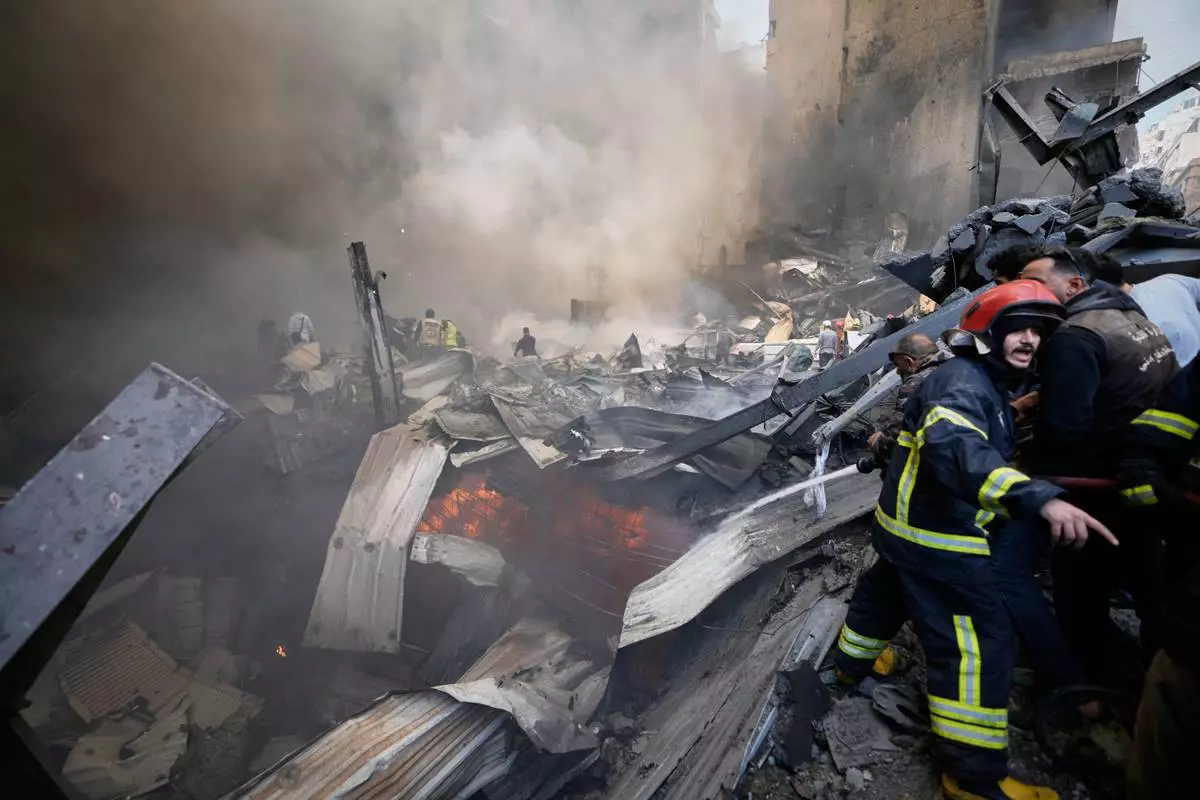
Firefighters, first responders, and volunteers work on smoldering debris at the site of an Israeli airstrike that struck an apartment building in Beirut, Lebanon, Wednesday, April 8, 2026. (AP Photo/Bilal Hussein)