Skip to Content Facebook Feature Image

The Latest: Ceasefire at risk over Israel's attacks in Lebanon, possible mines in Strait of Hormuz

News

The Latest: Ceasefire at risk over Israel's attacks in Lebanon, possible mines in Strait of Hormuz
News

News

The Latest: Ceasefire at risk over Israel's attacks in Lebanon, possible mines in Strait of Hormuz

2026-04-09 14:22 Last Updated At:14:30

Semiofficial news agencies in Iran published a chart Thursday suggesting the country’s paramilitary Revolutionary Guard put sea mines into the Strait of Hormuz during the war, a likely pressure tactic as Iran, Israel and the United States are now in an uneasy, two-week ceasefire ahead of possible negotiations in Islamabad.

Meanwhile, in unusually strong language, U.N. Secretary-General António Guterres “unequivocally” condemned Israeli strikes in Lebanon that killed and injured hundreds Wednesday after the ceasefire was announced, according to a statement by his spokesperson, Stéphane Dujarric.

More Images
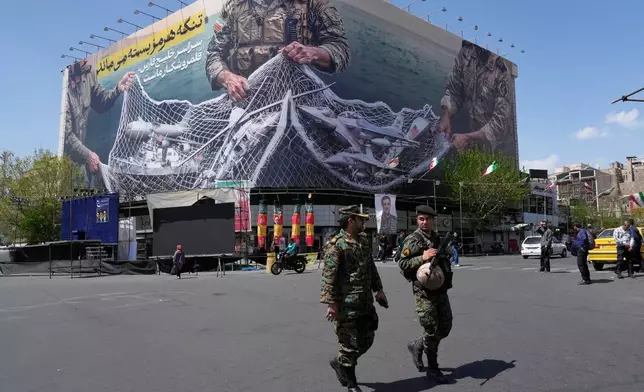
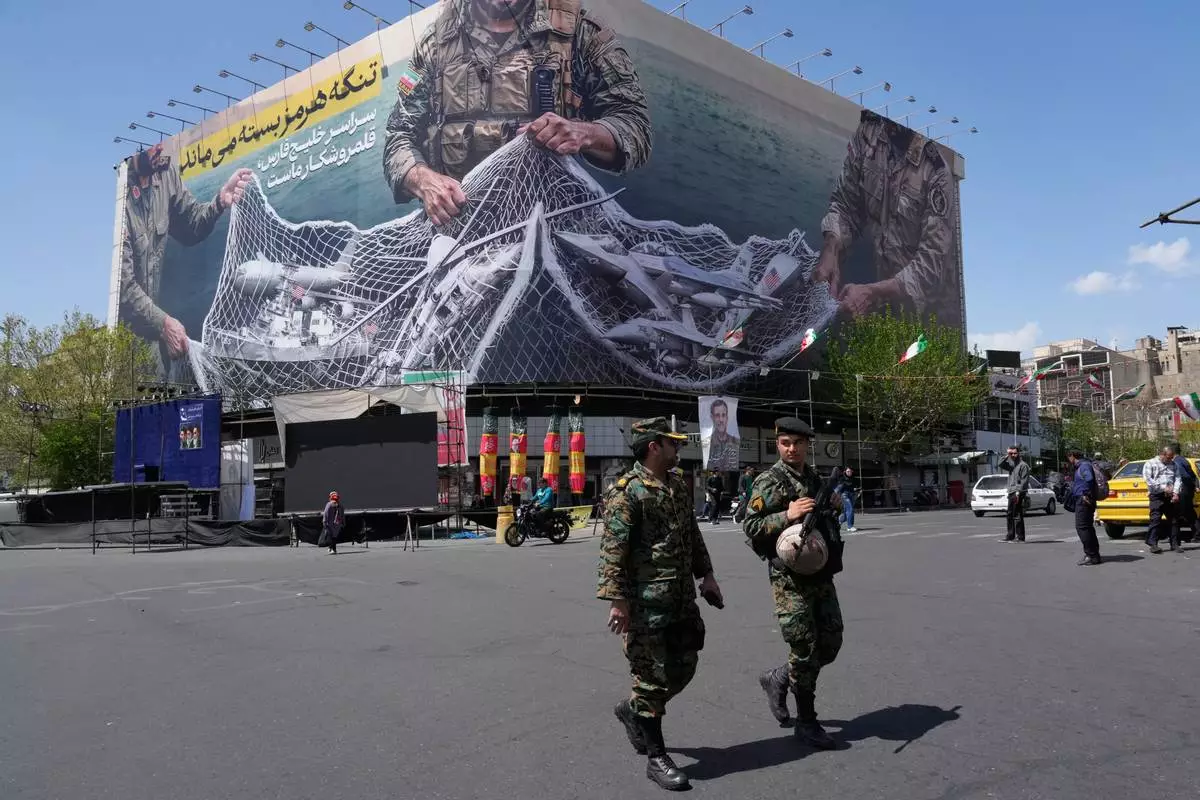
FILE - Two police officers walk in front of an anti-U.S. billboard depicting American aircraft being caught by Iranian armed forces in a fishing net beneath the words in Farsi, "The Strait of Hormuz will remain closed, The entire Persian Gulf is our hunting ground," in Tehran, Iran, Sunday, April 5, 2026. (AP Photo/Vahid Salemi, File)
FILE - Two police officers walk in front of an anti-U.S. billboard depicting American aircraft being caught by Iranian armed forces in a fishing net beneath the words in Farsi, "The Strait of Hormuz will remain closed, The entire Persian Gulf is our hunting ground," in Tehran, Iran, Sunday, April 5, 2026. (AP Photo/Vahid Salemi, File)

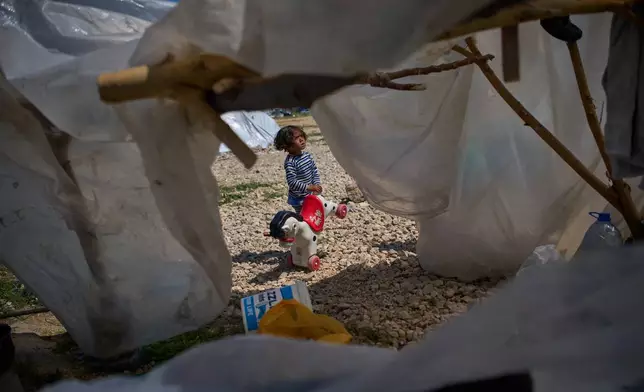
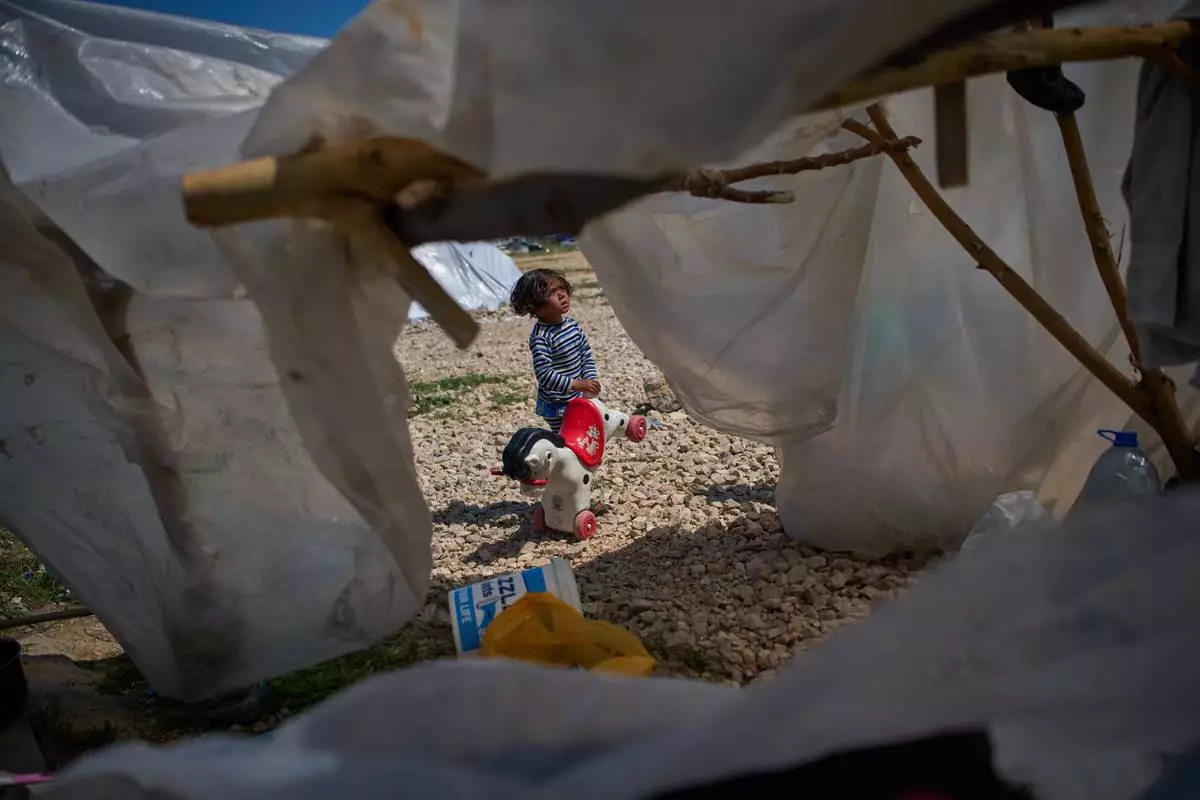
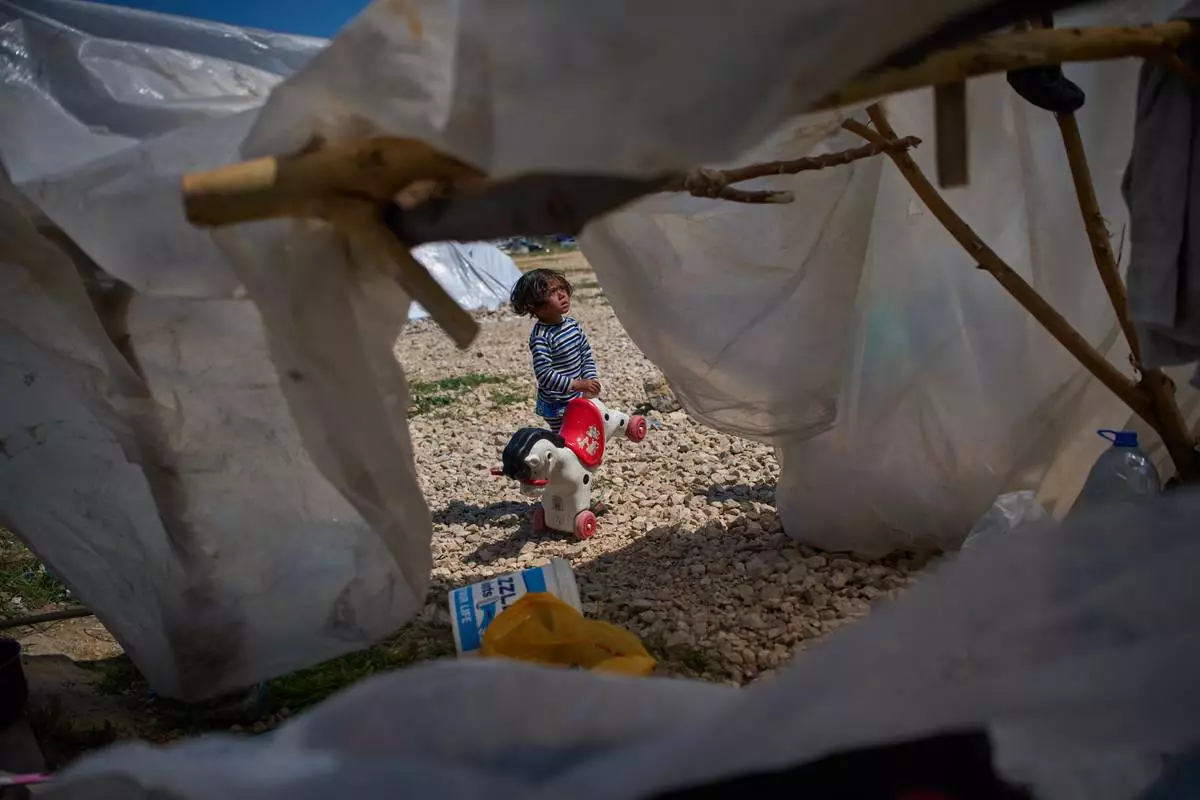
Ali, 4, holds a toy horse next to the tent his family uses as a shelter after fleeing Israeli bombardment in southern Lebanon, in Beirut, Lebanon, Wednesday, April 8, 2026. (AP Photo/Emilio Morenatti)
Ali, 4, holds a toy horse next to the tent his family uses as a shelter after fleeing Israeli bombardment in southern Lebanon, in Beirut, Lebanon, Wednesday, April 8, 2026. (AP Photo/Emilio Morenatti)

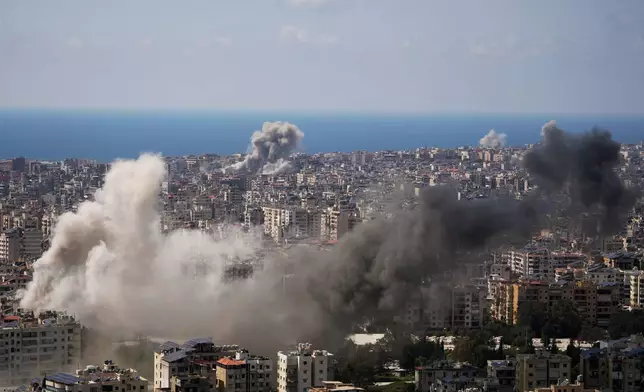
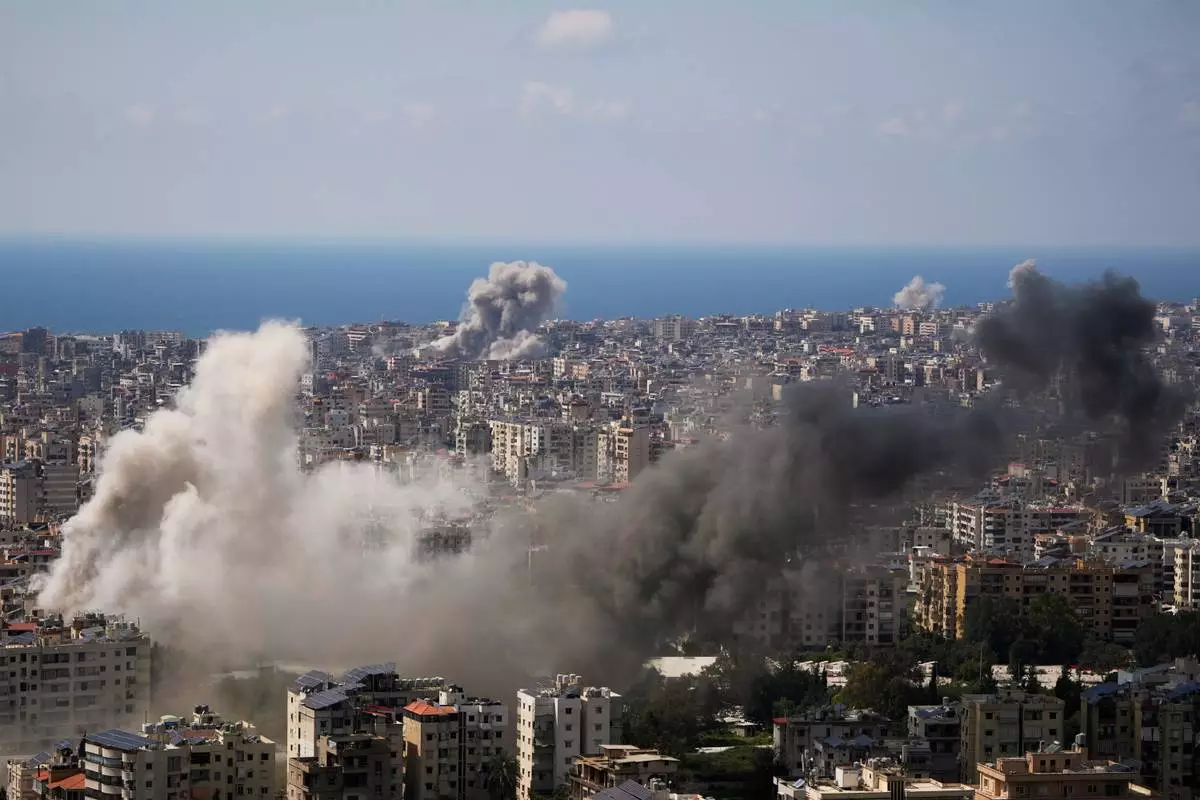
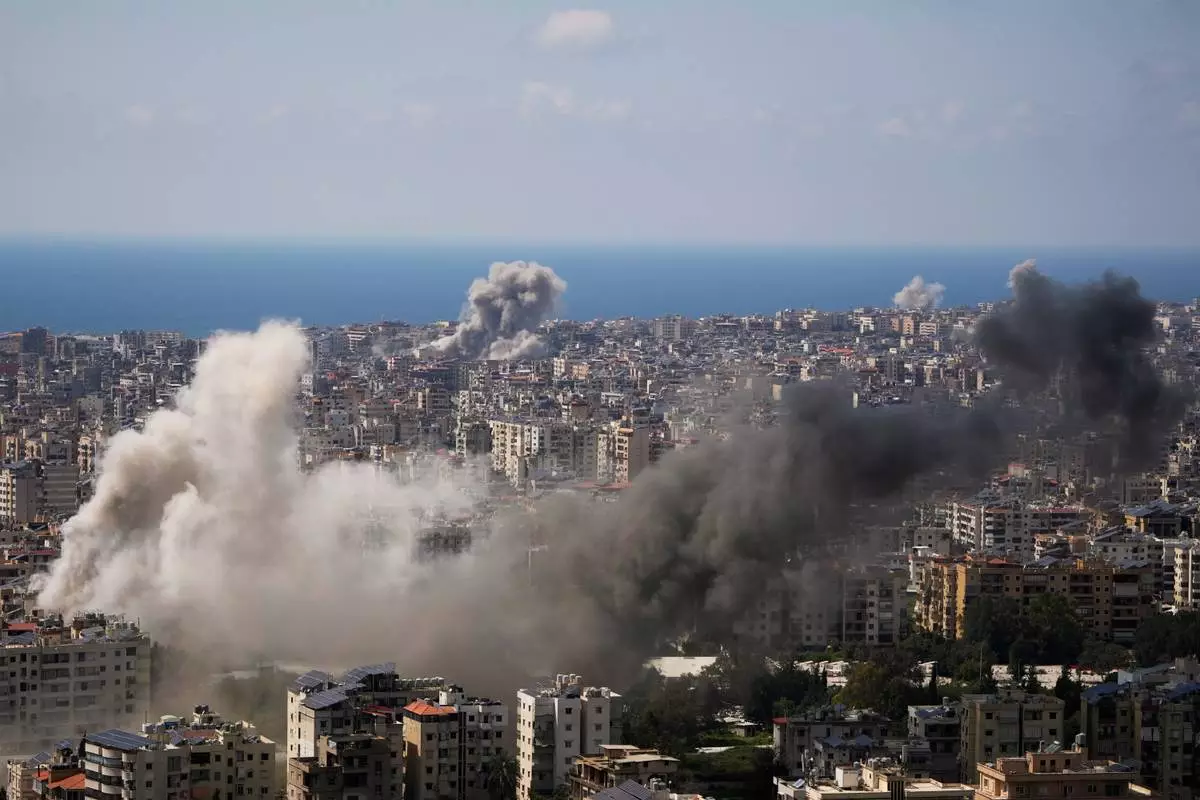
Smoke rises following several Israeli airstrikes in Beirut, Lebanon, Wednesday, April 8, 2026. (AP Photo/Hassan Ammar)
Smoke rises following several Israeli airstrikes in Beirut, Lebanon, Wednesday, April 8, 2026. (AP Photo/Hassan Ammar)

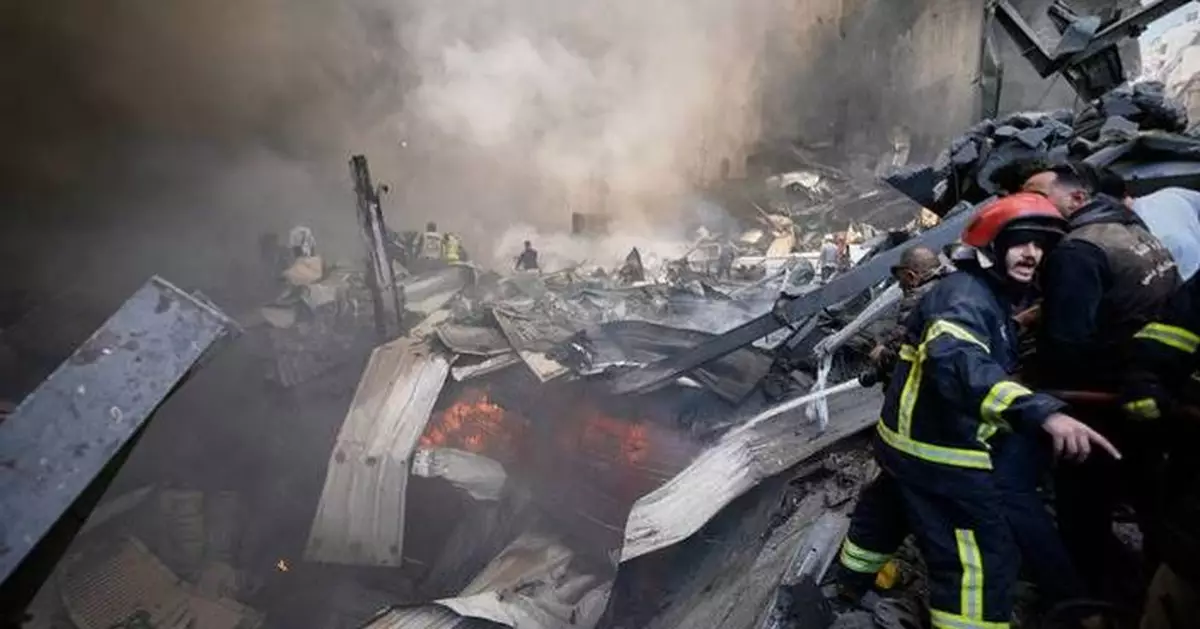
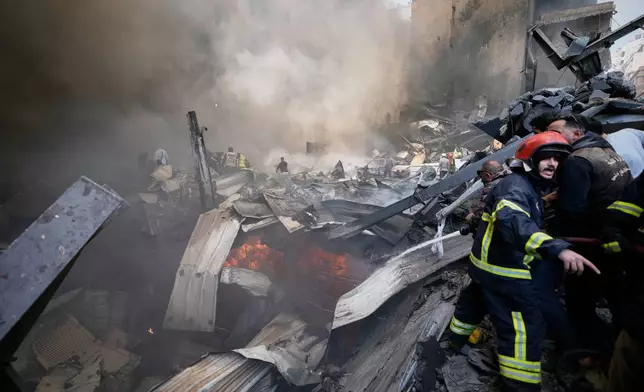
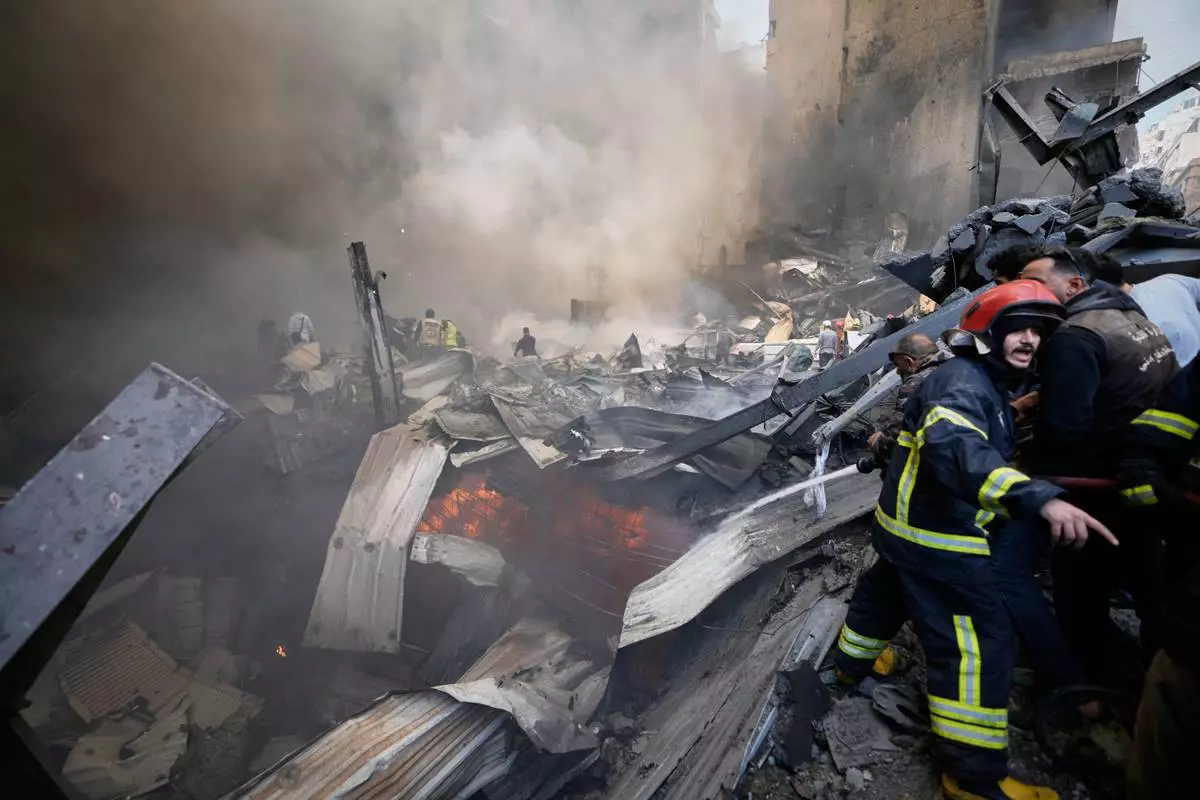
Firefighters, first responders, and volunteers work on smoldering debris at the site of an Israeli airstrike that struck an apartment building in Beirut, Lebanon, Wednesday, April 8, 2026. (AP Photo/Bilal Hussein)

Firefighters, first responders, and volunteers work on smoldering debris at the site of an Israeli airstrike that struck an apartment building in Beirut, Lebanon, Wednesday, April 8, 2026. (AP Photo/Bilal Hussein)

Israel has said the ceasefire agreement does not extend to its war in Lebanon with the Iran-backed Hezbollah militant group, although Iran and mediator Pakistan said it does. Sirens sounded in northern Israel early Thursday as Hezbollah claimed it was attacking with rocket fire.

Iran closed the Strait of Hormuz again Wednesday in response to Israeli attacks against Hezbollah in Lebanon.

Here is the latest:

The widespread Israeli strikes Wednesday killed at least 182 people and wounded 890 others, according to Lebanon’s Health Ministry.

Civil Defense spokesperson Elie Khairallah told The Associated Press that a wounded woman was found alive under the rubble overnight in the seaside Beirut neighborhood of Ain Mreisseh.

A man whose building collapsed after strikes in the capital’s southern suburbs was also found alive in rubble.

“The others so far have been killed,” Khairallah said.

Meanwhile, others like Mohammad Chehab, a Syrian man from Deir el-Zour, are anxiously waiting.

Six of his 10 family members have been found but others are still missing. He tries to stay hopeful.

“They’ve been searching all day,” he said nervously, watching rescue workers dig through the rubble.

Pakistani authorities have stepped-up security in the capital, Islamabad, deploying hundreds of additional police and paramilitary forces ahead of much-awaited peace talks between the United States and Iran.

The talks, seen as a potentially significant diplomatic opening to end the war in the region, will begin later this week.

On Thursday, authorities also moved to seal off parts of the city by placing shipping containers along key roads leading to the city’s Red Zone, a heavily fortified enclave that houses the president and prime minister’s office, the Foreign Ministry, and foreign embassies.

A nearby hotel, where the delegations are expected to stay, has also been brought under tight security.

Iran has not said who will represent its delegation, which is due to arrive in Islamabad later Thursday.

The White House, however, has confirmed that Vice President JD Vance will lead the U.S. negotiating team in talks with Iran aimed at reaching a permanent end to the war.

Iran’s negotiating team for talks with the United States will arrive Thursday night in Islamabad, the Iranian ambassador there said.

Reza Amiri Moghadam made the comment on X, without identifying who was on the Iranian team.

He wrote that the “Iranian delegation arrives tonight in Islamabad for serious talks based on 10 points proposed by Iran.”

Those points include Iran enriching uranium, maintaining its control of the Strait of Hormuz and other issues that have been nonstarters in the past for U.S. President Donald Trump.

The White House has repeatedly described the 10 points issued by Iran as false.

Moghadam wrote that the Iranians would come to Islamabad despite “skepticism of Iranian public opinion due to repeated ceasefire violations by Israeli regime to sabotage the diplomatic initiative.”

That refers to Israel’s strikes on Lebanon, which Israel and the U.S. have said wasn’t included in the shaky ceasefire.

Oil rose again to above $97 a barrel and Asian stocks were trading lower Thursday on skepticism over a fragile ceasefire between the U.S. and Iran.

Brent crude was up 2.9% to $97.46 per barrel. It previously fell briefly to below $92 following the temporary ceasefire announcement.

Benchmark U.S. crude was 3.7% higher Thursday at $97.94 per barrel.

Tokyo’s Nikkei 225 dropped 0.8% to 55,855.57, while South Korea’s Kospi lost 1.7% to 5,773.03.

Hong Kong’s Hang Seng fell 0.2% to 25,831.21. The Shanghai Composite index was down 0.8% to 3,961.31.

Ship-tracking data from trade data and analytics platform Kpler showed only four vessels with their Automatic Identification System trackers on passed through the Strait of Hormuz on Wednesday, the first day of the ceasefire.

However, this total does not include so-called “dark fleet” vessels — those with their AIS trackers turned off.

Many of those “dark fleet” ships carry sanctioned Iranian crude oil out to the open market.

U.S. President Donald Trump issued an online statement Thursday insisting that his surge of warships and troops will remain around Iran “until such time as the REAL AGREEMENT reached is fully complied with.”

Trump’s comments on his Truth Social platform appear to be a way to pressure Iran as uncertainty hangs over the tentative two-week ceasefire now holding in the war.

“If for any reason it is not, which is highly unlikely, then the ‘Shootin’ Starts,’ bigger, and better, and stronger than anyone has ever seen before,” Trump wrote.

He also insisted Iran would not be able to build nuclear weapons and “the Strait of Hormuz WILL BE OPEN & SAFE.” That comes as vessels are not moving through that waterway, the narrow mouth of the Persian Gulf through which 20% of all oil and natural gas traded once passed.

A New York-based think tank is warning that the tentative ceasefire in the Iran war “hovers on the verge of collapse.”

The Soufan Center said the Israeli strikes on Lebanon on Wednesday risked the deal falling apart.

“Even if Lebanon was formally outside the deal, the scale of Israel’s strikes was likely to be viewed as escalatory, nonetheless,” it wrote in an analysis published Thursday.

“Israel’s strikes can be understood both as an effort to drive a wedge between Iran and its proxies and as a response to being allegedly sidelined in the original ceasefire discussions.”

The Al-Aqsa Mosque compound reopened with dawn prayer Thursday after being closed for the duration of the Iran war, according to Jerusalem’s Islamic Waqf, the Jordanian religious authority that administers the compound.

Jerusalem’s police said Wednesday that it would lift restrictions on all holy sites in Jerusalem’s Old City starting Thursday morning. It added that hundreds of officers and volunteers would be active in the city.

Access had been prohibited altogether, or restricted to a few dozen faithful, at Christian, Jewish and Muslim sites during the now-paused conflict, when missile attacks from Iran often sent Jerusalem residents into shelters.

The restrictions subdued Lent, Passover and Ramadan celebrations for many in some of the holiest sites for adherents of Christianity, Islam and Judaism.

But they’re lifted just in time for Orthodox Christians, who celebrate Easter (Pascha) on Sunday, a week after Catholic and Protestant observances.
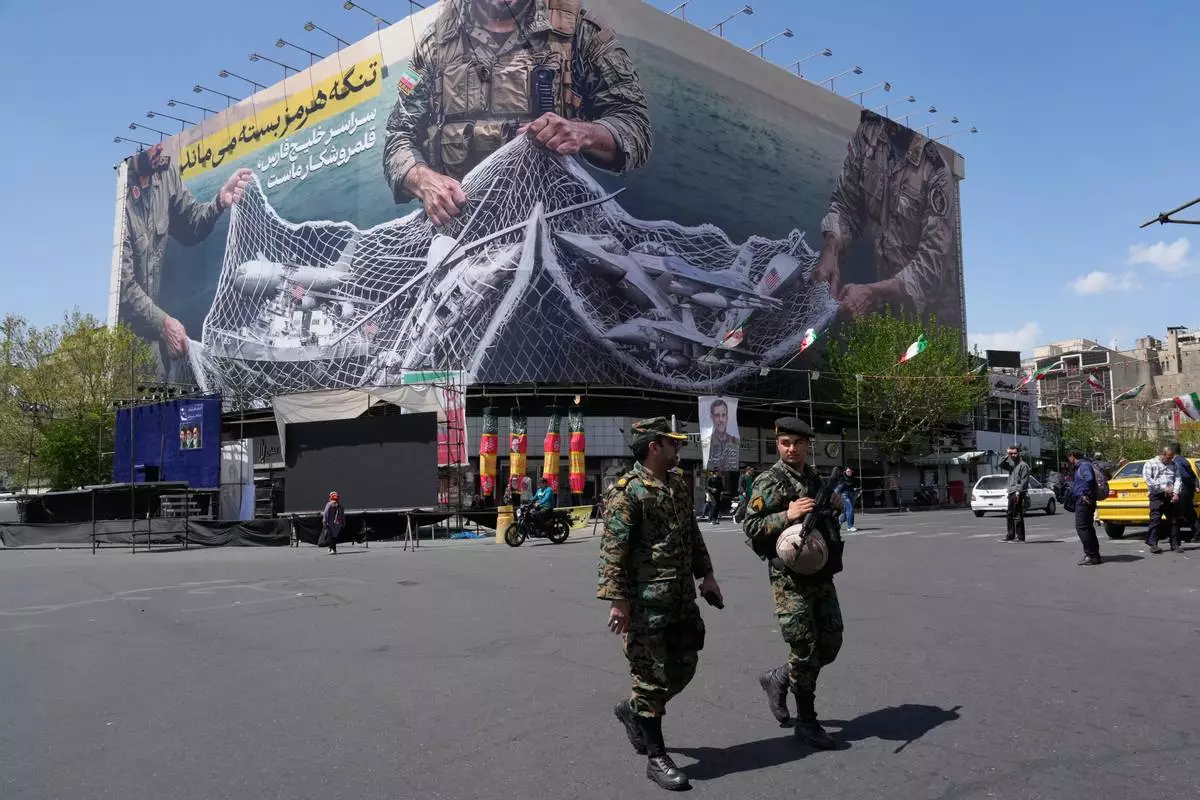
FILE - Two police officers walk in front of an anti-U.S. billboard depicting American aircraft being caught by Iranian armed forces in a fishing net beneath the words in Farsi, "The Strait of Hormuz will remain closed, The entire Persian Gulf is our hunting ground," in Tehran, Iran, Sunday, April 5, 2026. (AP Photo/Vahid Salemi, File)
FILE - Two police officers walk in front of an anti-U.S. billboard depicting American aircraft being caught by Iranian armed forces in a fishing net beneath the words in Farsi, "The Strait of Hormuz will remain closed, The entire Persian Gulf is our hunting ground," in Tehran, Iran, Sunday, April 5, 2026. (AP Photo/Vahid Salemi, File)

Ali, 4, holds a toy horse next to the tent his family uses as a shelter after fleeing Israeli bombardment in southern Lebanon, in Beirut, Lebanon, Wednesday, April 8, 2026. (AP Photo/Emilio Morenatti)
Ali, 4, holds a toy horse next to the tent his family uses as a shelter after fleeing Israeli bombardment in southern Lebanon, in Beirut, Lebanon, Wednesday, April 8, 2026. (AP Photo/Emilio Morenatti)

Smoke rises following several Israeli airstrikes in Beirut, Lebanon, Wednesday, April 8, 2026. (AP Photo/Hassan Ammar)
Smoke rises following several Israeli airstrikes in Beirut, Lebanon, Wednesday, April 8, 2026. (AP Photo/Hassan Ammar)

Firefighters, first responders, and volunteers work on smoldering debris at the site of an Israeli airstrike that struck an apartment building in Beirut, Lebanon, Wednesday, April 8, 2026. (AP Photo/Bilal Hussein)
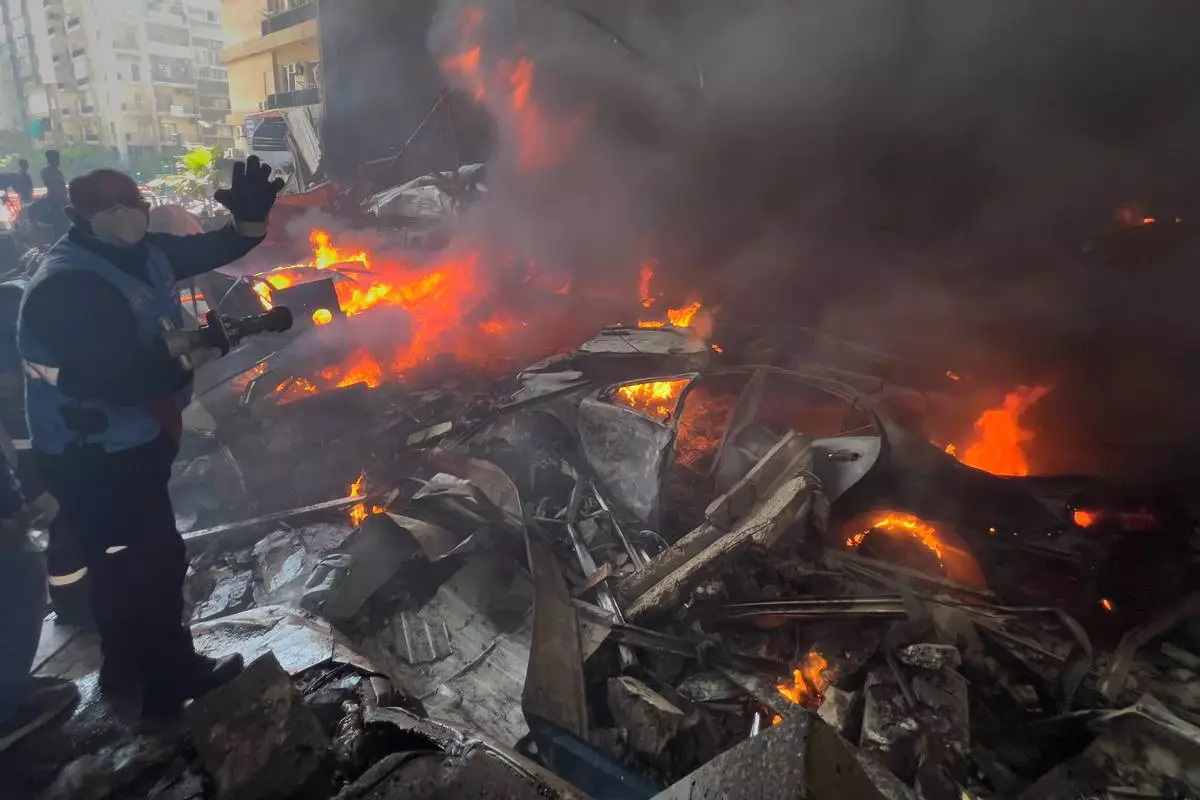
Firefighters, first responders, and volunteers work on smoldering debris at the site of an Israeli airstrike that struck an apartment building in Beirut, Lebanon, Wednesday, April 8, 2026. (AP Photo/Bilal Hussein)
DUBAI, United Arab Emirates (AP) — Semiofficial news agencies in Iran published a chart Thursday suggesting the country’s paramilitary Revolutionary Guard put sea mines into the Strait of Hormuz during the war, in a message that may be intended to pressure the U.S. as uncertainty hangs over a days-old two-week ceasefire and further negotiations are expected in Pakistan.

The charts were released by the ISNA news agency, as well as Tasnim, which is believed to be close to the Guard. They showed a large circle marked “danger zone” in Farsi over the Traffic Separation Scheme, which was the route ships take through the strait, the narrow mouth of the Persian Gulf through which 20% of all oil and natural gas traded once passed.

The chart suggested ships travel further north through waters closer to Iran’s mainland near Larak Island, a route that some ships were observed taking during the war.

The charts were dated from Feb. 28 until Thursday, April 9, and it was unclear if the Guard had cleared any mining on the route since then.

Oil rose again to above $97 a barrel and Asian stocks were trading lower Thursday on skepticism over the ceasefire. Brent crude, the international standard, was up 2.9% to $97.46 per barrel. It had fallen briefly to below $92 following the temporary ceasefire announcement. Benchmark U.S. crude was 3.7% higher Thursday at $97.94 per barrel.

Ship-tracking data from Kpler showed only four vessels with their Automatic Identification System trackers on passed through the Strait of Hormuz on Wednesday, the first day of the ceasefire. However, that does not include so-called “dark fleet” vessels, which travel with their AIS trackers turned off. Many of those “dark fleet” ships carry sanctioned Iranian crude oil out to the open market.

U.S. President Donald Trump posted a statement insisting that his surge of warships and troops will remain around Iran “until such time as the REAL AGREEMENT reached is fully complied with.”

Trump’s comments on his Truth Social platform appeared to be a way to pressure Iran.

“If for any reason it is not, which is highly unlikely, then the ‘Shootin’ Starts,’ bigger, and better, and stronger than anyone has ever seen before,” Trump wrote.

He also insisted Iran would not be able to build nuclear weapons and “the Strait of Hormuz WILL BE OPEN & SAFE.”

The U.S. and Iran both claimed victory after reaching the ceasefire agreement, and world leaders expressed relief. But more drones and missiles hit Iran and Gulf Arab countries after the deal was announced.

Israel also intensified its attacks on the Hezbollah militant group in Lebanon on Wednesday, hitting commercial and residential areas in Beirut. At least 182 people were killed in the deadliest day of fighting there. First responders searched overnight for missing people still under the rubble after the deadly Israeli strikes.

The violence threatened to scuttle what U.S. Vice President JD Vance called a “fragile” deal.

Iran's parliament speaker said Wednesday that planned talks were “unreasonable” because Washington had broken three of Tehran’s 10 conditions for an end to the fighting. In a social media post, Mohammad Bagher Qalibaf objected to Israeli attacks on Hezbollah, an alleged drone incursion into Iranian airspace after the ceasefire took effect and U.S. refusal to accept any Iranian enrichment capabilities in a final agreement.

Iranian Foreign Minister Abbas Araghchi insisted that an end to the war in Lebanon was part of the ceasefire deal, but Israeli Prime Minister Benjamin Netanyahu and Trump said the truce did not cover Lebanon. When the deal was announced, the prime minister of Pakistan, which served as a mediator, said in a social media post that it applied to “everywhere including Lebanon and elsewhere.”

A New York-based think tank warned the ceasefire “hovers on the verge of collapse.”

The Soufan Center said Israel's strikes on Lebanon on Wednesday added to the risk the deal would fall apart.

“Even if Lebanon was formally outside the deal, the scale of Israel’s strikes was likely to be viewed as escalatory, nonetheless,” it wrote in an analysis published Thursday. “Israel’s strikes can be understood both as an effort to drive a wedge between Iran and its proxies and as a response to being allegedly sidelined in the original ceasefire discussions.”

The White House said that Vice President JD Vance would lead the U.S. delegation to talks in Islamabad aimed at ending the war, which are set to start Saturday.

Iran’s negotiating team will arrive in Islamabad on Thursday night, the Iranian ambassador there said.

Reza Amiri Moghadam wrote on X that the “Iranian delegation arrives tonight in Islamabad for serious talks based on 10 points proposed by Iran,” without identifying who was on the Iranian team.

Those points include Iran enriching uranium, maintaining its control of the Strait of Hormuz and other issues that have been nonstarters in the past for Trump. The White House has repeatedly described the 10 points issued by Iran as false.

Moghadam wrote that the Iranians would come to Islamabad despite “skepticism of Iranian public opinion due to repeated ceasefire violations by Israeli regime to sabotage the diplomatic initiative,” likely referring to Israel’s strikes on Lebanon, which Israel and the U.S. have said wasn’t included in the shaky ceasefire.

Becatoros reported from Athens, Greece. Chan Ho-him in Hong Kong, Zeke Miller in Washington and Kareem Chehayeb and Hussein Malla contributed to this report.

A rescue worker extinguishes burning cars at the site of an Israeli airstrike in central Beirut, Lebanon, Wednesday, April 8, 2026. (AP Photo/Hussein Malla)

A rescue worker extinguishes burning cars at the site of an Israeli airstrike in central Beirut, Lebanon, Wednesday, April 8, 2026. (AP Photo/Hussein Malla)

Smoke rises following several Israeli airstrikes in Beirut, Lebanon, Wednesday, April 8, 2026. (AP Photo/Hassan Ammar)

Smoke rises following several Israeli airstrikes in Beirut, Lebanon, Wednesday, April 8, 2026. (AP Photo/Hassan Ammar)

Ali, 4, holds a toy horse next to the tent his family uses as a shelter after fleeing Israeli bombardment in southern Lebanon, in Beirut, Lebanon, Wednesday, April 8, 2026. (AP Photo/Emilio Morenatti)

Ali, 4, holds a toy horse next to the tent his family uses as a shelter after fleeing Israeli bombardment in southern Lebanon, in Beirut, Lebanon, Wednesday, April 8, 2026. (AP Photo/Emilio Morenatti)

Government supporters gather ahead of the funeral procession for Maj. Gen. Majid Khademi, head of intelligence for Iran's paramilitary Revolutionary Guard, in Tehran, Iran, Wednesday, April 8, 2026. (AP Photo/Francisco Seco)

Government supporters gather ahead of the funeral procession for Maj. Gen. Majid Khademi, head of intelligence for Iran's paramilitary Revolutionary Guard, in Tehran, Iran, Wednesday, April 8, 2026. (AP Photo/Francisco Seco)

FILE - Two police officers walk in front of an anti-U.S. billboard depicting American aircraft being caught by Iranian armed forces in a fishing net beneath the words in Farsi, "The Strait of Hormuz will remain closed, The entire Persian Gulf is our hunting ground," in Tehran, Iran, Sunday, April 5, 2026. (AP Photo/Vahid Salemi, File)

FILE - Two police officers walk in front of an anti-U.S. billboard depicting American aircraft being caught by Iranian armed forces in a fishing net beneath the words in Farsi, "The Strait of Hormuz will remain closed, The entire Persian Gulf is our hunting ground," in Tehran, Iran, Sunday, April 5, 2026. (AP Photo/Vahid Salemi, File)

Recommended Articles