Pro-Iran groups have used artificial intelligence to create slick internet memes in English to try to shape the narrative during the war against the U.S. and Israel and foster opposition to it.
Analysts say the memes appear to be coming from groups linked to the government in Tehran and are part of a strategy of leveraging its limited resources to inflict damage on the U.S., even indirectly. That includes how Iran has used attacks and threats to control the flow of traffic through the Strait of Hormuz and maintain a stranglehold on the world’s economy. A ceasefire raised hopes Wednesday of halting hostilities, but many issues remained unresolved.
“This is a propaganda war for them,” Neil Lavie-Driver, an AI researcher at the University of Cambridge, said, referring to Iran. “Their goal is to sow enough discontent with the conflict as to eventually force the West to cave in, so it is massively important to them.”
It's not the first time memes have been used in a conflict, and they have evolved to include AI images in recent years. AI imagery bombarded Ukrainians after the Russian invasion in 2022. Last year, the term “AI slop” became widely used to describe the glut of imperfect images posted online during the Israel-Iran war to try to destroy the country’s nuclear program.
In the conflict that began Feb. 28 with joint U.S.-Israel strikes, the memes have used well-honed cartoons that lambast U.S. officials.
The memes are fluent not just in English but in American culture and trolling. Published on various social platforms, they are racking up millions of views — though it’s not clear how much influence they have had.
They have portrayed U.S. President Donald Trump as old, out of step and internationally isolated. They have referenced bruising on the back of Trump's right hand that prompted speculation about his health; infighting in Trump's MAGA base; and U.S. Secretary of Defense Pete Hegseth’s fiery confirmation hearing, among other things.
“They’re using popular culture against the No. 1 pop culture country, the United States,” said Nancy Snow, a scholar who has written more than a dozen books on propaganda.
The pro-Iran images circulating online include a series that uses the style of the “Lego” animated movies. In one, an Iranian military commander raps, “You thought you ran the globe, sitting on your throne. Now we turning every base into a bed of stone,” as Trump falls into a bullseye built of “Epstein files,” the U.S. government’s investigative records on disgraced financier and convicted sex offender Jeffrey Epstein.
The animations show levels of sophistication and internet access that indicate ties to government offices, said Mahsa Alimardani, a director of WITNESS, a human-rights group working on AI video evidence.
“If you’re able to have the bandwidth needed to generate content like that and upload it, you are officially or unofficially cooperating with the regime,” she said — pointing to severe restrictions Iran has imposed on the internet as part of a crackdown on nationwide protests earlier this year.
State media has reposted some of the memes, including some from the account behind the “Lego”-style videos, Akhbar Enfejari, which means Explosive News.
Akhbar Enfejari described themselves as Iranians producing and uploading from within Iran in an effort to disrupt decades-long dominance of Western control of the airwaves.
“They’ve long dominated the media landscape and, through that power, imposed narratives on many nations,” the group told The Associated Press on the messaging app Telegram. “But this time, something feels different. This time, we’ve disrupted the game. This time, we’re doing it better.”
After the ceasefire was announced, Akhbar Enfejari posted: “IRAN WON! The way to crush imperialism has been shown to the world. Trump Surrendered.”
In addition to the memes coming from pro-Iran groups, Iranian government accounts have trolled the U.S., including in a post Wednesday from Iran's Embassy in South Africa that said, “Say hello to the new world superpower,” with a picture of the Iranian flag. Both the U.S. and Iran declared victory after agreeing to a ceasefire.
Analysts say the deep grasp of U.S. politics and culture is the fruit of more old-school methods of propaganda: a decades-long Iranian government program to promote narratives against the U.S. and Israel.
“This meme war comes from institutions that are very aware what the American public is aware of and pop cultural references that can appeal to them,” Alimardani said.
Analysts say the U.S. and Israel do not appear to be engaging in the same kind of campaign — and given the restrictions Iran has put on internet access in the country, getting such messages to ordinary Iranians would be difficult.
Early in the war, Israeli Prime Minister Benjamin Netanyahu released a video that used AI to make it seem like he was speaking in Farsi, in which he urged Iranians to overthrow their government. The White House has published a steady stream of memes, but those are aimed at a U.S. audience and feature clips from American TV shows and sports.
The U.S. government-run Voice of America, which for decades beamed news reports to many countries that had no tradition of a free press, does still broadcast in Farsi, though it is has been operating with a skeleton staff since Trump ordered it shut down.
“This world order is really changing overnight and the U.S. is not going to end up necessarily as the state that everybody listens to,” Snow said.

An AI-generated animation created by a pro-Iran studio and depicting an Iranian man grilling four U.S. aircrafts like a kebab over a campfire is seen on a computer screen in Brussels, Wednesday, April 8, 2026. (AP Photo/Sam McNeil)
Semiofficial news agencies in Iran published a chart Thursday suggesting the country’s paramilitary Revolutionary Guard put sea mines into the Strait of Hormuz during the war, a likely pressure tactic as Iran, Israel and the United States are now in an uneasy, two-week ceasefire ahead of possible negotiations in Islamabad.
Meanwhile, in unusually strong language, U.N. Secretary-General António Guterres “unequivocally” condemned Israeli strikes in Lebanon that killed and injured hundreds Wednesday after the ceasefire was announced, according to a statement by his spokesperson, Stéphane Dujarric.
Israel has said the ceasefire agreement does not extend to its war in Lebanon with the Iran-backed Hezbollah militant group, although Iran and mediator Pakistan said it does. Sirens sounded in northern Israel early Thursday as Hezbollah claimed it was attacking with rocket fire.
Iran closed the Strait of Hormuz again Wednesday in response to Israeli attacks against Hezbollah in Lebanon.
Here is the latest:
Iran’s negotiating team for talks with the United States will arrive Thursday night in Islamabad, the Iranian ambassador there said.
Reza Amiri Moghadam made the comment on X, without identifying who was on the Iranian team.
He wrote that the “Iranian delegation arrives tonight in Islamabad for serious talks based on 10 points proposed by Iran.”
Those points include Iran enriching uranium, maintaining its control of the Strait of Hormuz and other issues that have been nonstarters in the past for U.S. President Donald Trump.
The White House has repeatedly described the 10 points issued by Iran as false.
Moghadam wrote that the Iranians would come to Islamabad despite “skepticism of Iranian public opinion due to repeated ceasefire violations by Israeli regime to sabotage the diplomatic initiative.”
That refers to Israel’s strikes on Lebanon, which Israel and the U.S. have said wasn’t included in the shaky ceasefire.
Oil rose again to above $97 a barrel and Asian stocks were trading lower Thursday on skepticism over a fragile ceasefire between the U.S. and Iran.
Brent crude was up 2.9% to $97.46 per barrel. It previously fell briefly to below $92 following the temporary ceasefire announcement.
Benchmark U.S. crude was 3.7% higher Thursday at $97.94 per barrel.
Tokyo’s Nikkei 225 dropped 0.8% to 55,855.57, while South Korea’s Kospi lost 1.7% to 5,773.03.
Hong Kong’s Hang Seng fell 0.2% to 25,831.21. The Shanghai Composite index was down 0.8% to 3,961.31.
Ship-tracking data from trade data and analytics platform Kpler showed only four vessels with their Automatic Identification System trackers on passed through the Strait of Hormuz on Wednesday, the first day of the ceasefire.
However, this total does not include so-called “dark fleet” vessels — those with their AIS trackers turned off.
Many of those “dark fleet” ships carry sanctioned Iranian crude oil out to the open market.
U.S. President Donald Trump issued an online statement Thursday insisting that his surge of warships and troops will remain around Iran “until such time as the REAL AGREEMENT reached is fully complied with.”
Trump’s comments on his Truth Social platform appear to be a way to pressure Iran as uncertainty hangs over the tentative two-week ceasefire now holding in the war.
“If for any reason it is not, which is highly unlikely, then the ‘Shootin’ Starts,’ bigger, and better, and stronger than anyone has ever seen before,” Trump wrote.
He also insisted Iran would not be able to build nuclear weapons and “the Strait of Hormuz WILL BE OPEN & SAFE.” That comes as vessels are not moving through that waterway, the narrow mouth of the Persian Gulf through which 20% of all oil and natural gas traded once passed.
A New York-based think tank is warning that the tentative ceasefire in the Iran war “hovers on the verge of collapse.”
The Soufan Center said the Israeli strikes on Lebanon on Wednesday risked the deal falling apart.
“Even if Lebanon was formally outside the deal, the scale of Israel’s strikes was likely to be viewed as escalatory, nonetheless,” it wrote in an analysis published Thursday.
“Israel’s strikes can be understood both as an effort to drive a wedge between Iran and its proxies and as a response to being allegedly sidelined in the original ceasefire discussions.”
The Al-Aqsa Mosque compound reopened with dawn prayer Thursday after being closed for the duration of the Iran war, according to Jerusalem’s Islamic Waqf, the Jordanian religious authority that administers the compound.
Jerusalem’s police said Wednesday that it would lift restrictions on all holy sites in Jerusalem’s Old City starting Thursday morning. It added that hundreds of officers and volunteers would be active in the city.
Access had been prohibited altogether, or restricted to a few dozen faithful, at Christian, Jewish and Muslim sites during the now-paused conflict, when missile attacks from Iran often sent Jerusalem residents into shelters.
The restrictions subdued Lent, Passover and Ramadan celebrations for many in some of the holiest sites for adherents of Christianity, Islam and Judaism.
But they’re lifted just in time for Orthodox Christians, who celebrate Easter (Pascha) on Sunday, a week after Catholic and Protestant observances.
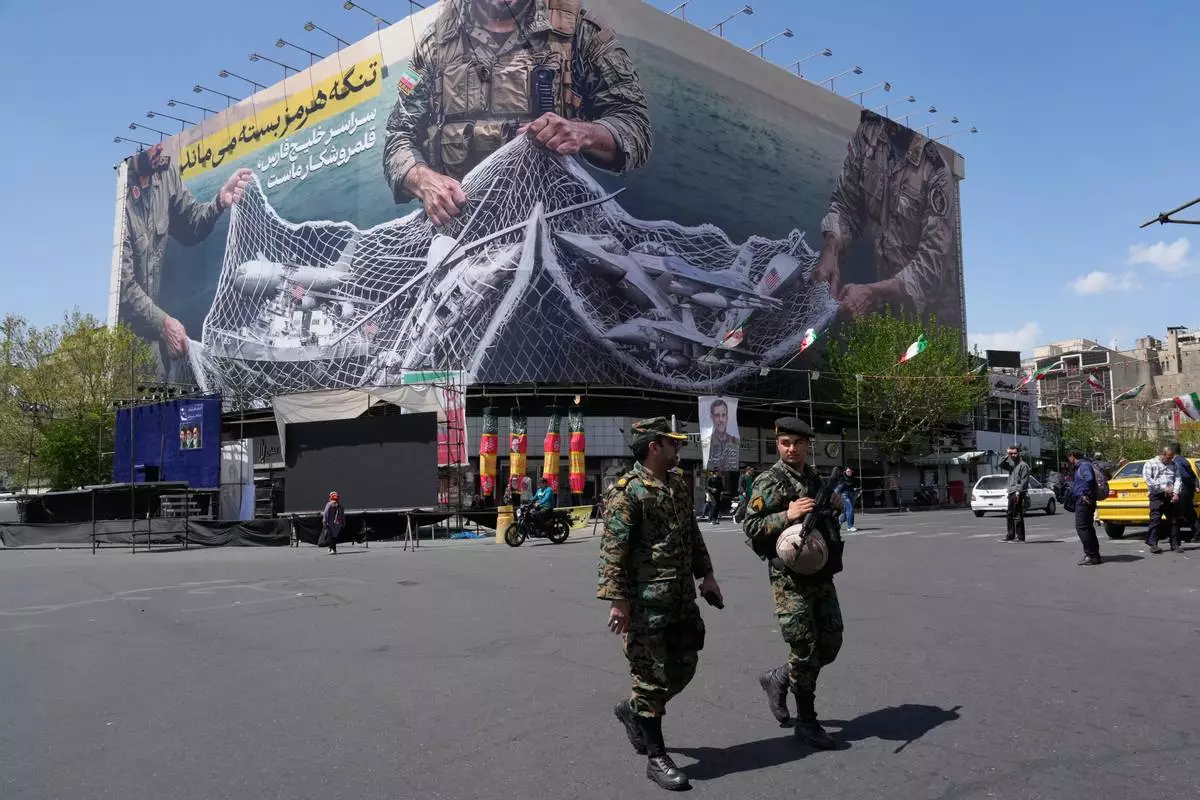
FILE - Two police officers walk in front of an anti-U.S. billboard depicting American aircraft being caught by Iranian armed forces in a fishing net beneath the words in Farsi, "The Strait of Hormuz will remain closed, The entire Persian Gulf is our hunting ground," in Tehran, Iran, Sunday, April 5, 2026. (AP Photo/Vahid Salemi, File)
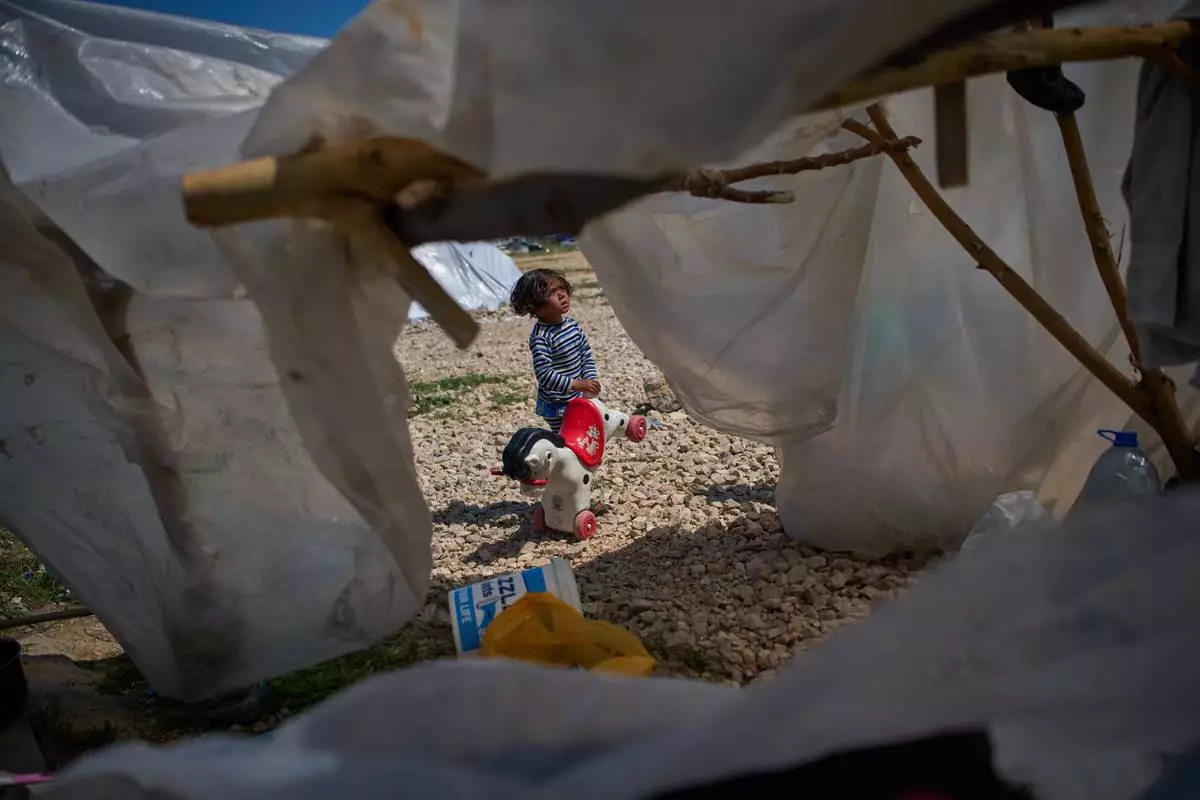
Ali, 4, holds a toy horse next to the tent his family uses as a shelter after fleeing Israeli bombardment in southern Lebanon, in Beirut, Lebanon, Wednesday, April 8, 2026. (AP Photo/Emilio Morenatti)
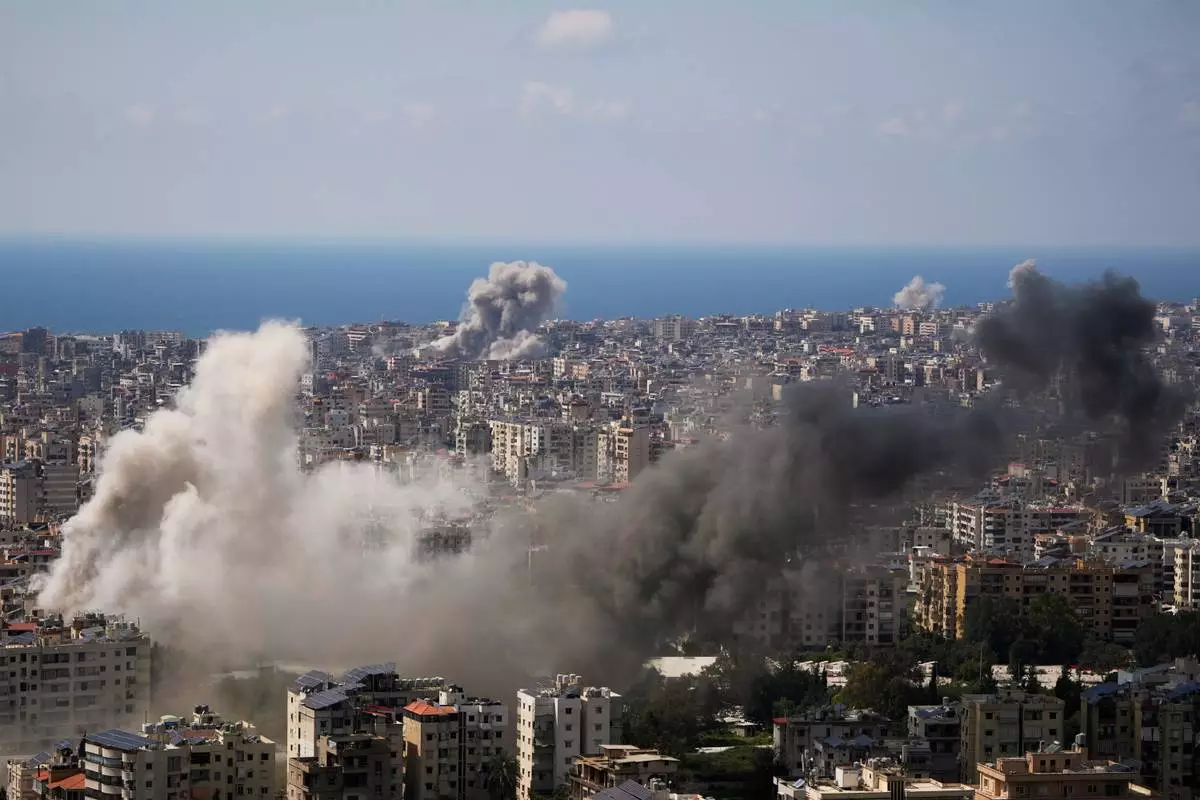
Smoke rises following several Israeli airstrikes in Beirut, Lebanon, Wednesday, April 8, 2026. (AP Photo/Hassan Ammar)
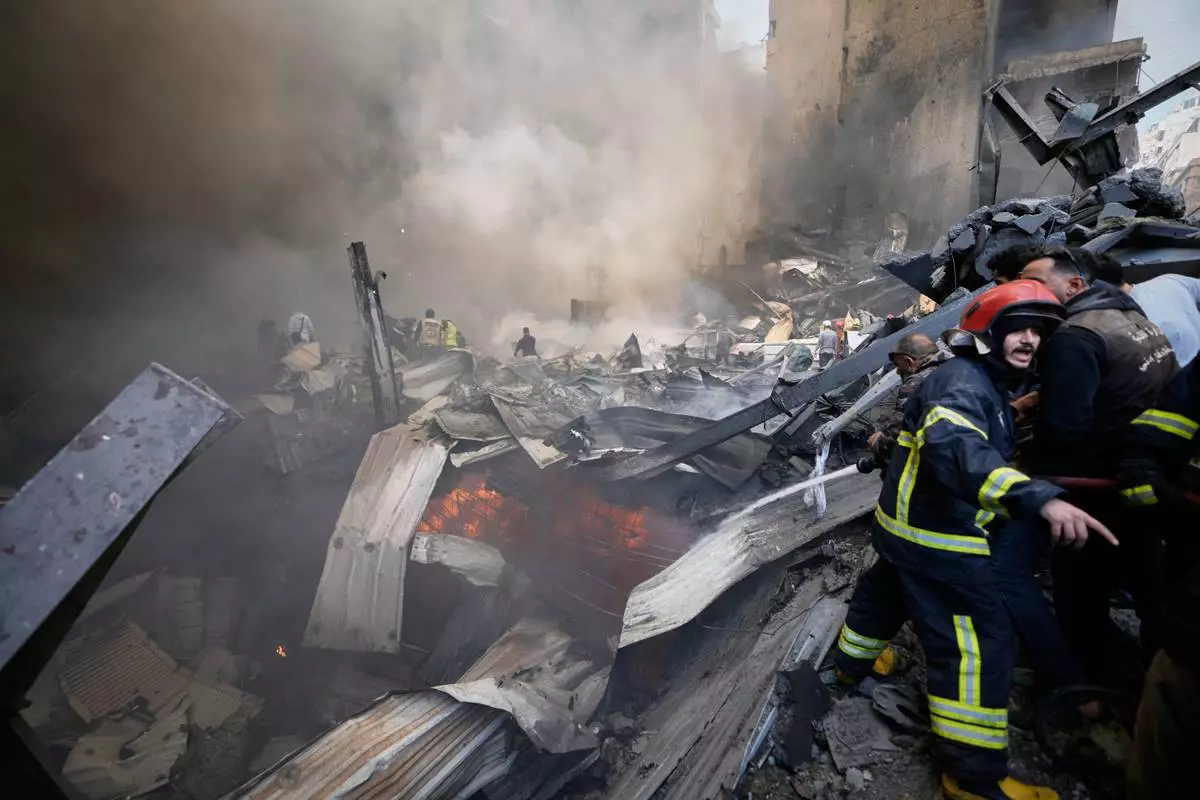
Firefighters, first responders, and volunteers work on smoldering debris at the site of an Israeli airstrike that struck an apartment building in Beirut, Lebanon, Wednesday, April 8, 2026. (AP Photo/Bilal Hussein)