NEW DELHI (AP) — Voters in India's Assam and Kerala states and the federally administered region of Puducherry began casting ballots Thursday in local elections seen as a test of support for Prime Minister Narendra Modi and his Bharatiya Janata Party.
The elections pit the BJP and its regional allies against a range of opposition parties. Assam and Puducherry are governed by the BJP-led National Democratic Alliance, while Kerala is ruled by the opposition.
Click to Gallery
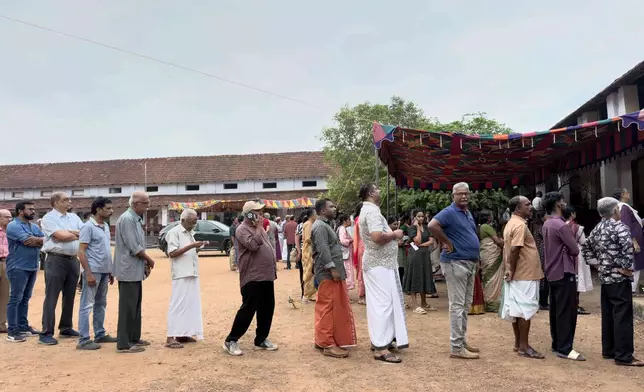
People queue up to vote outside a polling booth during the Kerala state election in Kochi, India, Thursday, April 9, 2026. (AP Photo/ R S Iyer)
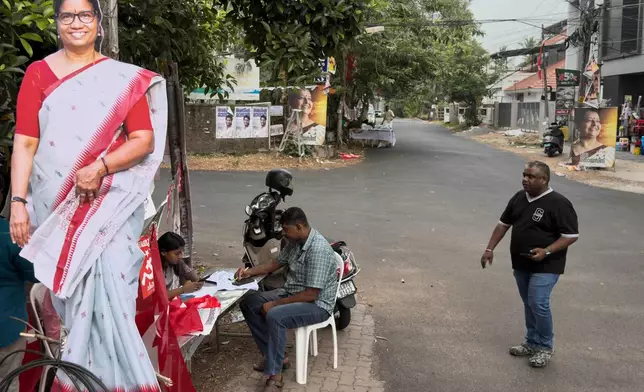
A voter, right, arrives to check his name at an assistance booth set up by party workers as a candidate's cut out photo is displayed on left during the Kerala state election in Kochi, India, Thursday, April 9, 2026. (AP Photo/ R S Iyer)
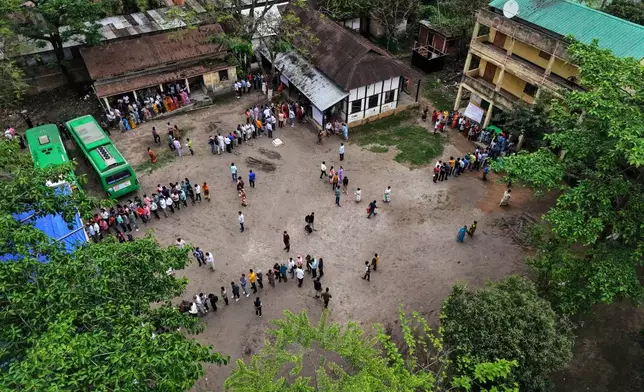
People stand in queue to cast their votes at a polling center during the state election in Guwahati, India, Thursday, April 9, 2026. (AP Photo/Anupam Nath)
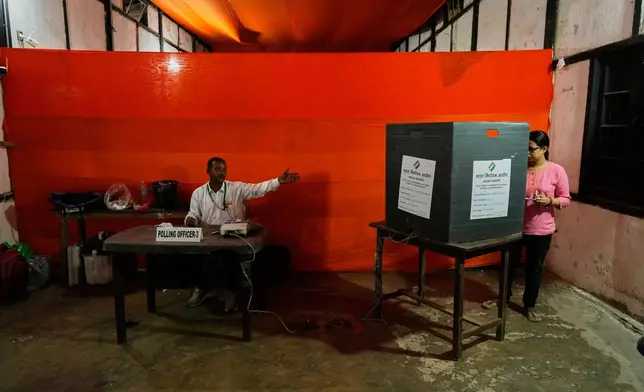
A woman casts her vote at a polling center during the state election in Guwahati, India, Thursday, April 9, 2026. (AP Photo/Anupam Nath)
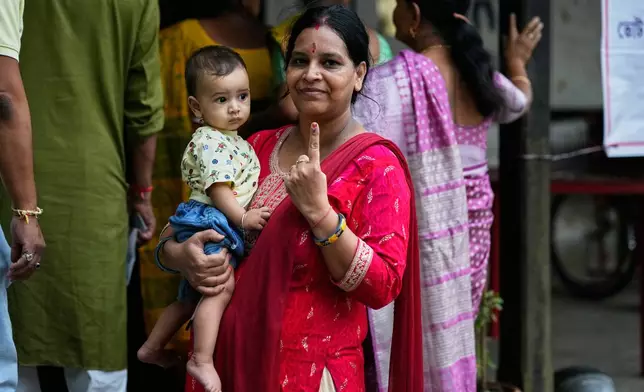
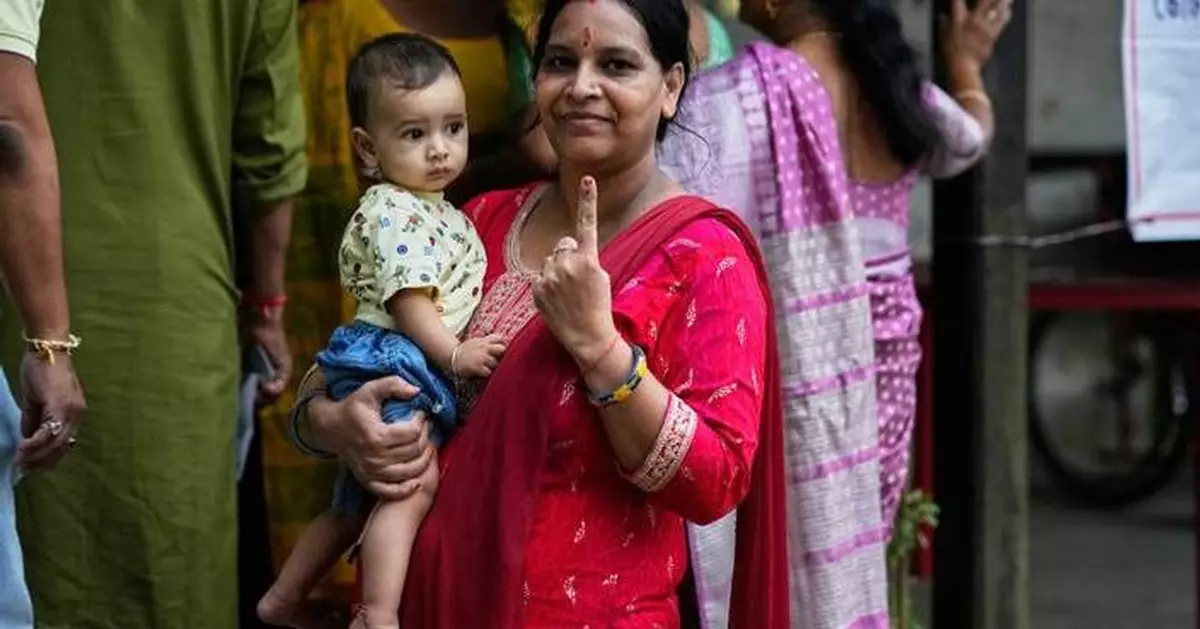
A woman shows the indelible ink mark on her index finger after casting her vote at a polling center during the state election in Guwahati, India, Thursday, April 9, 2026. (AP Photo/Anupam Nath)
Two other opposition-ruled states, West Bengal and Tamil Nadu, will vote later this month. The results for all five regions are expected May 4.
The polls come while the public is concerned about rising energy costs and tighter cooking gas supplies due to the war in the Middle East.
The outcome could show whether Modi’s party can extend its dominance by making inroads into opposition strongholds. A strong showing would also bolster his federal government, as the 2024 national election forced his ruling party to rely on regional allies to form the government.
The elections are also crucial for opposition parties seeking to build a sustained challenge to the BJP’s dominance across the country.
In northeastern Assam, the BJP is seeking to retain power by emphasizing a hard line on immigration, a long-standing and contentious issue in the state bordering Bangladesh. The state’s campaign featured sharp rhetoric from the ruling BJP, which cast the election around claims of illegal immigration by Bengali-speaking Muslims.
Southern Kerala state presents a different challenge, where power has traditionally alternated between alliances led by the Indian National Congress and communist parties. Modi's party has struggled to gain ground in the state but has invested heavily to expand its presence.
In Puducherry, a small federal territory, the BJP is relying on coalition with a regional party to strengthen its position.
The most keenly watched and also the most contentious of the upcoming electoral contests is West Bengal, where the regional Trinamool Congress party has been in power for three consecutive terms. Modi's party has never governed West Bengal, and allegations of irregularities in the revision of electoral rolls have intensified political tensions.
Opposition parties say the exercise by election officials called the Special Intensive Revision has rendered millions of citizens unable to vote, particularly minority Muslims. The Election Commission of India has denied the allegations, saying the exercise eliminated dead, duplicate and fake voters on the electoral roll.
Similar exercises have been done in several states.

People queue up to vote outside a polling booth during the Kerala state election in Kochi, India, Thursday, April 9, 2026. (AP Photo/ R S Iyer)
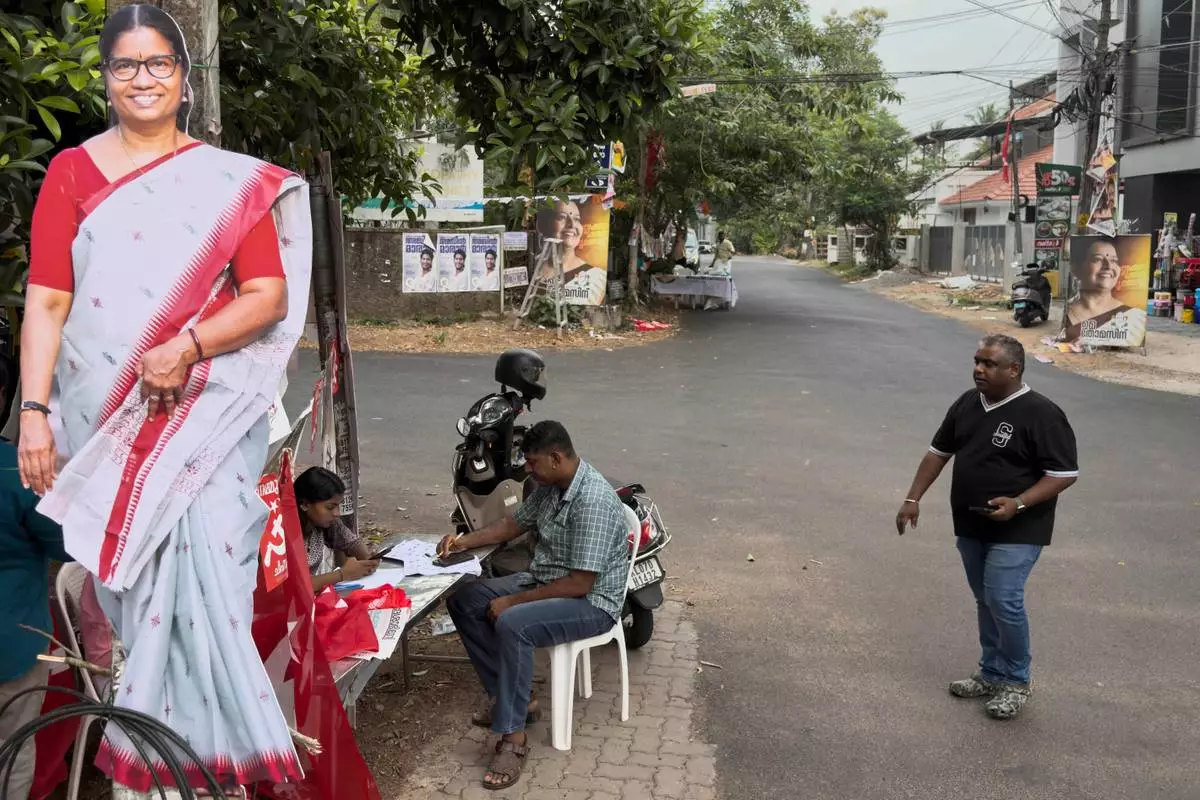
A voter, right, arrives to check his name at an assistance booth set up by party workers as a candidate's cut out photo is displayed on left during the Kerala state election in Kochi, India, Thursday, April 9, 2026. (AP Photo/ R S Iyer)
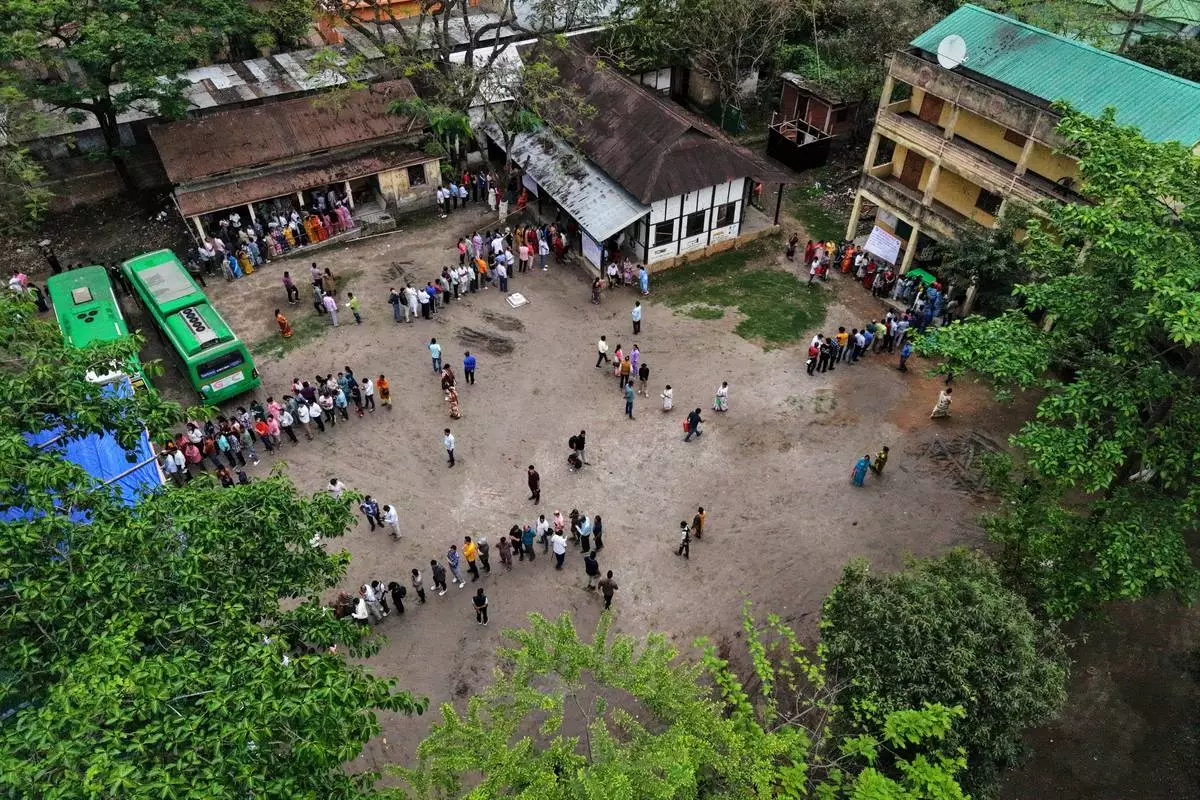
People stand in queue to cast their votes at a polling center during the state election in Guwahati, India, Thursday, April 9, 2026. (AP Photo/Anupam Nath)
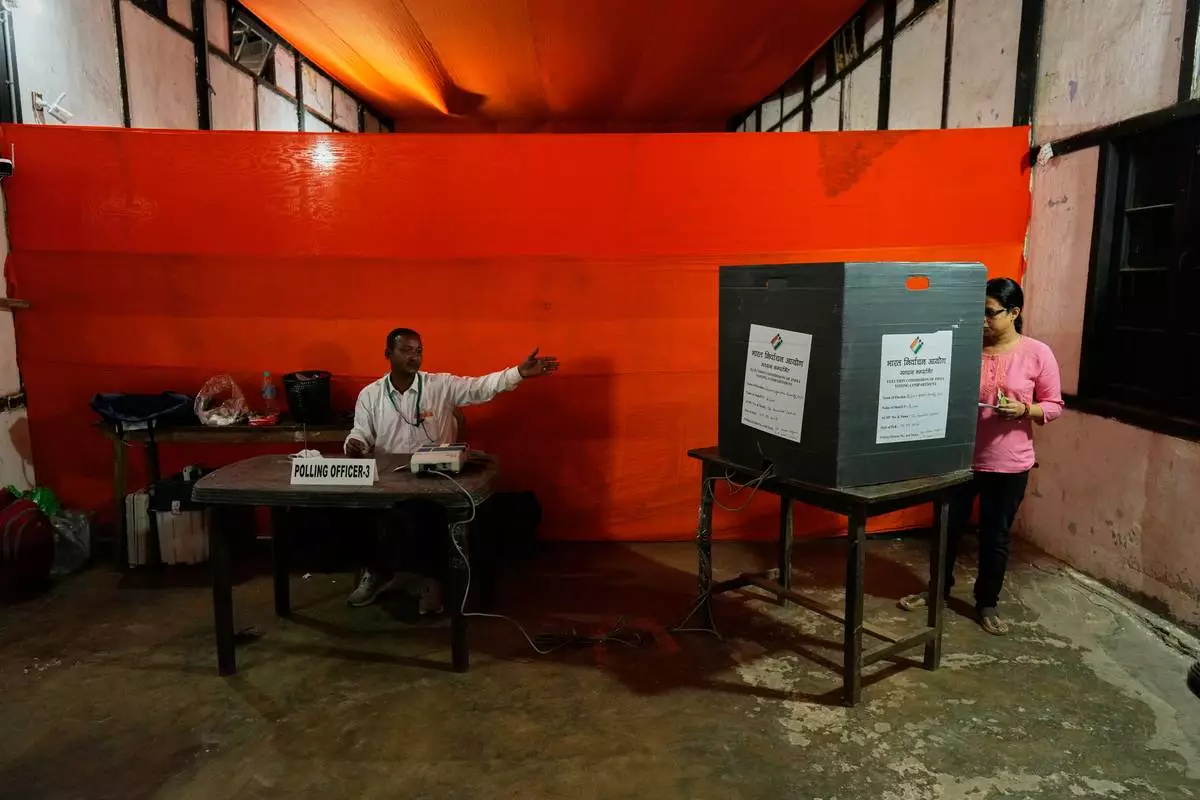
A woman casts her vote at a polling center during the state election in Guwahati, India, Thursday, April 9, 2026. (AP Photo/Anupam Nath)
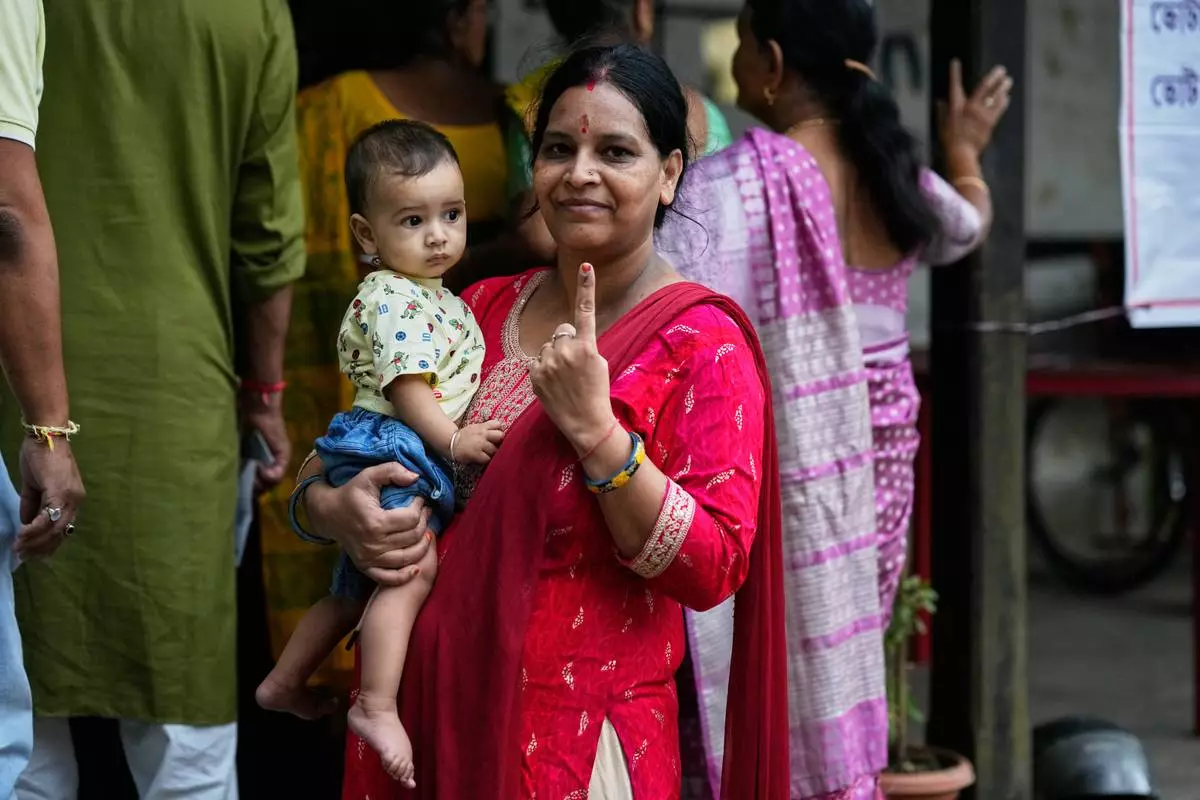
A woman shows the indelible ink mark on her index finger after casting her vote at a polling center during the state election in Guwahati, India, Thursday, April 9, 2026. (AP Photo/Anupam Nath)
DUBAI, United Arab Emirates (AP) — Semiofficial news agencies in Iran published a chart Thursday suggesting the country’s paramilitary Revolutionary Guard put sea mines into the Strait of Hormuz during the war, in a message that may be intended to pressure the U.S. as uncertainty hangs over a days-old two-week ceasefire and further negotiations are set to begin in Pakistan.
The charts were released by the ISNA news agency, as well as Tasnim, which is believed to be close to the Guard, and showed a large circle marked “danger zone” in Farsi over the Traffic Separation Scheme, which was the route ships used to take through the strait, the narrow mouth of the Persian Gulf through which 20% of all oil and natural gas traded once passed.
The chart suggested ships travel further north through waters closer to Iran’s mainland near Larak Island, a route that some ships were observed taking during the war.
The charts were dated from Feb. 28 until Thursday, April 9, and it was unclear if the Guard had cleared any mining on the route since then.
U.S. President Donald Trump posted a statement insisting that his surge of warships and troops will remain around Iran “until such time as the REAL AGREEMENT reached is fully complied with.”
Trump’s comments on his Truth Social platform appeared to be a way to pressure Iran.
“If for any reason it is not, which is highly unlikely, then the ‘Shootin’ Starts,’ bigger, and better, and stronger than anyone has ever seen before,” Trump wrote.
He also insisted Iran would not be able to build nuclear weapons and “the Strait of Hormuz WILL BE OPEN & SAFE.”
The U.S. and Iran both claimed victory after reaching the ceasefire agreement, and world leaders expressed relief. But more drones and missiles hit Iran and Gulf Arab countries after the deal was announced.
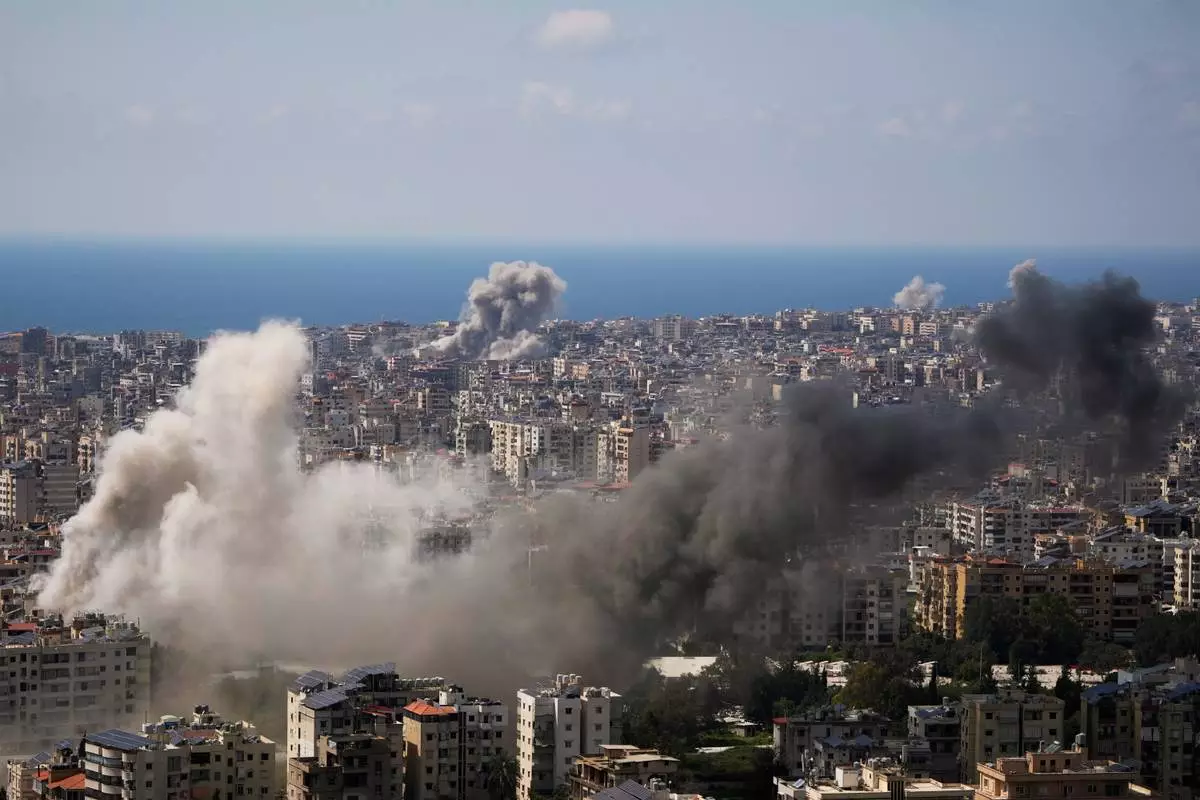
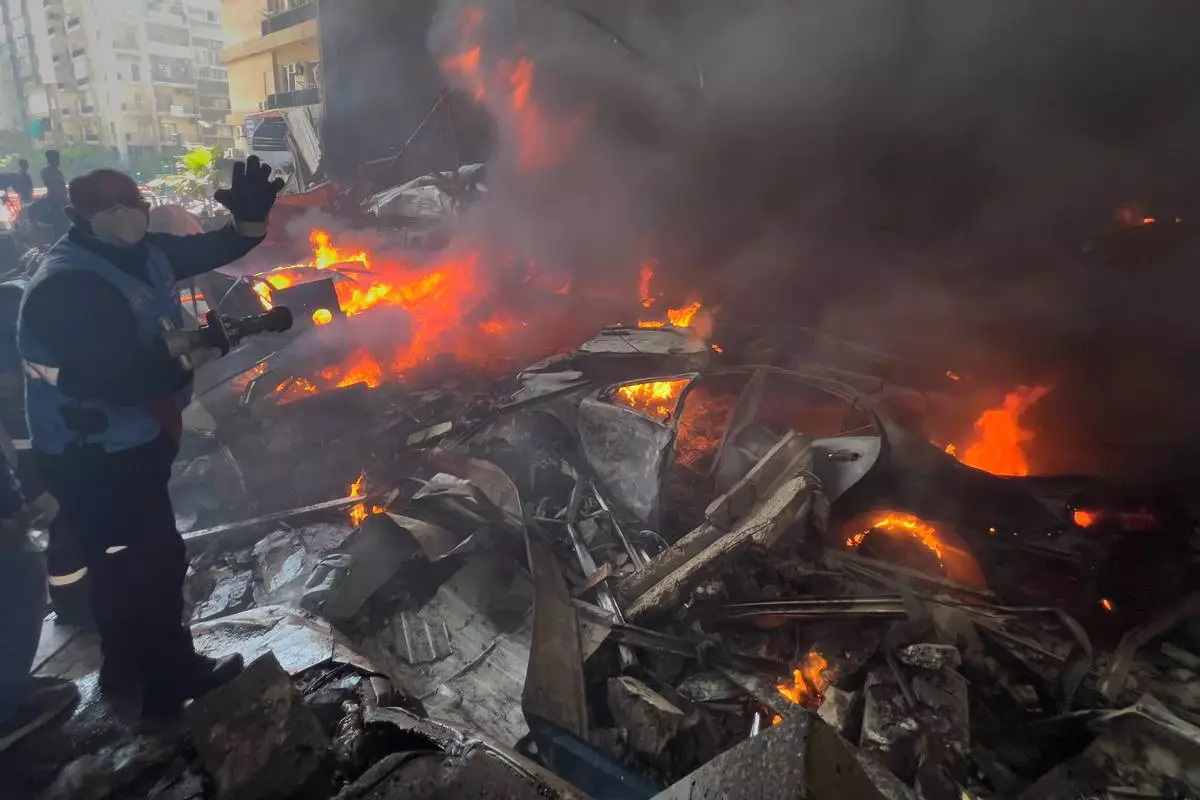
At the same time, Israel intensified its attacks on the Hezbollah militant group in Lebanon, hitting commercial and residential areas in Beirut. At least 182 people were killed Wednesday in the deadliest day of fighting there.
The violence threatened to scuttle what U.S. Vice President JD Vance called a “fragile” deal.
Iran's parliament speaker said Wednesday that planned talks were “unreasonable” because Washington had broken three of Tehran’s 10 conditions for an end to the fighting. In a social media post, Mohammad Bagher Qalibaf objected to Israeli attacks on Hezbollah, an alleged drone incursion into Iranian airspace after the ceasefire took effect and U.S. refusal to accept any Iranian enrichment capabilities in a final agreement.
Iranian Foreign Minister Abbas Araghchi insisted that an end to the war in Lebanon was part of the ceasefire deal, but Israeli Prime Minister Benjamin Netanyahu and Trump said the truce did not cover Lebanon. When the deal was announced, the prime minister of Pakistan, which served as a mediator, said in a social media post that it applied to “everywhere including Lebanon and elsewhere.”
A New York-based think tank warned the ceasefire “hovers on the verge of collapse.”
The Soufan Center said Israel's strikes on Lebanon on Wednesday added to the risk the deal would fall apart.
“Even if Lebanon was formally outside the deal, the scale of Israel’s strikes was likely to be viewed as escalatory, nonetheless,” it wrote in an analysis published Thursday. “Israel’s strikes can be understood both as an effort to drive a wedge between Iran and its proxies and as a response to being allegedly sidelined in the original ceasefire discussions.”
Becatoros reported from Athens, Greece.
A rescue worker extinguishes burning cars at the site of an Israeli airstrike in central Beirut, Lebanon, Wednesday, April 8, 2026. (AP Photo/Hussein Malla)
Smoke rises following several Israeli airstrikes in Beirut, Lebanon, Wednesday, April 8, 2026. (AP Photo/Hassan Ammar)
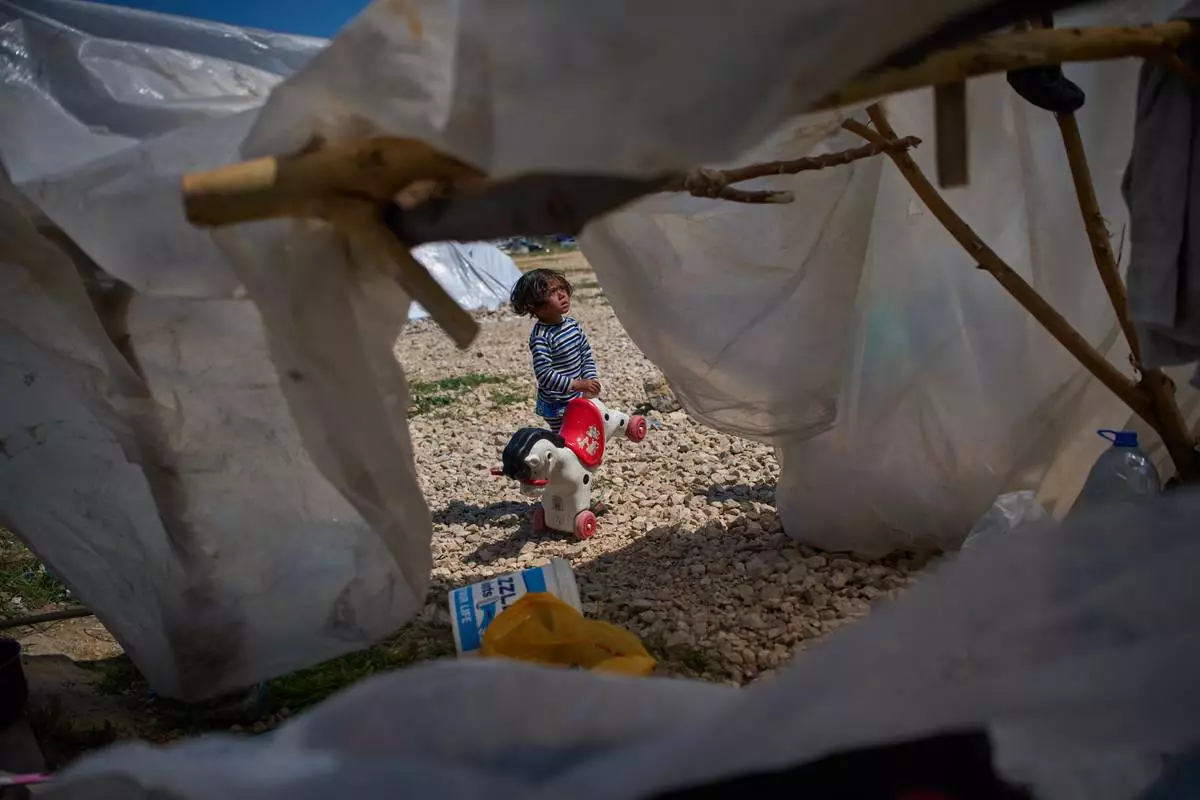
Ali, 4, holds a toy horse next to the tent his family uses as a shelter after fleeing Israeli bombardment in southern Lebanon, in Beirut, Lebanon, Wednesday, April 8, 2026. (AP Photo/Emilio Morenatti)
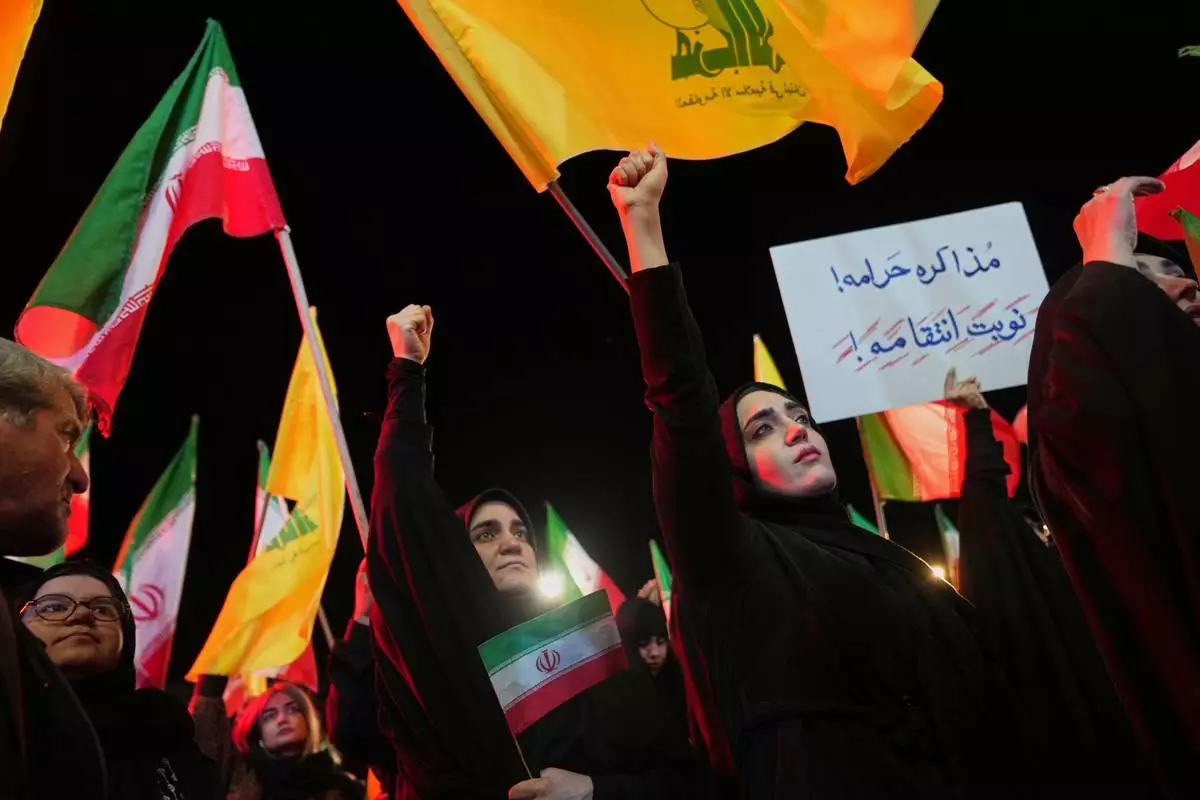
Government supporters gather ahead of the funeral procession for Maj. Gen. Majid Khademi, head of intelligence for Iran's paramilitary Revolutionary Guard, in Tehran, Iran, Wednesday, April 8, 2026. (AP Photo/Francisco Seco)
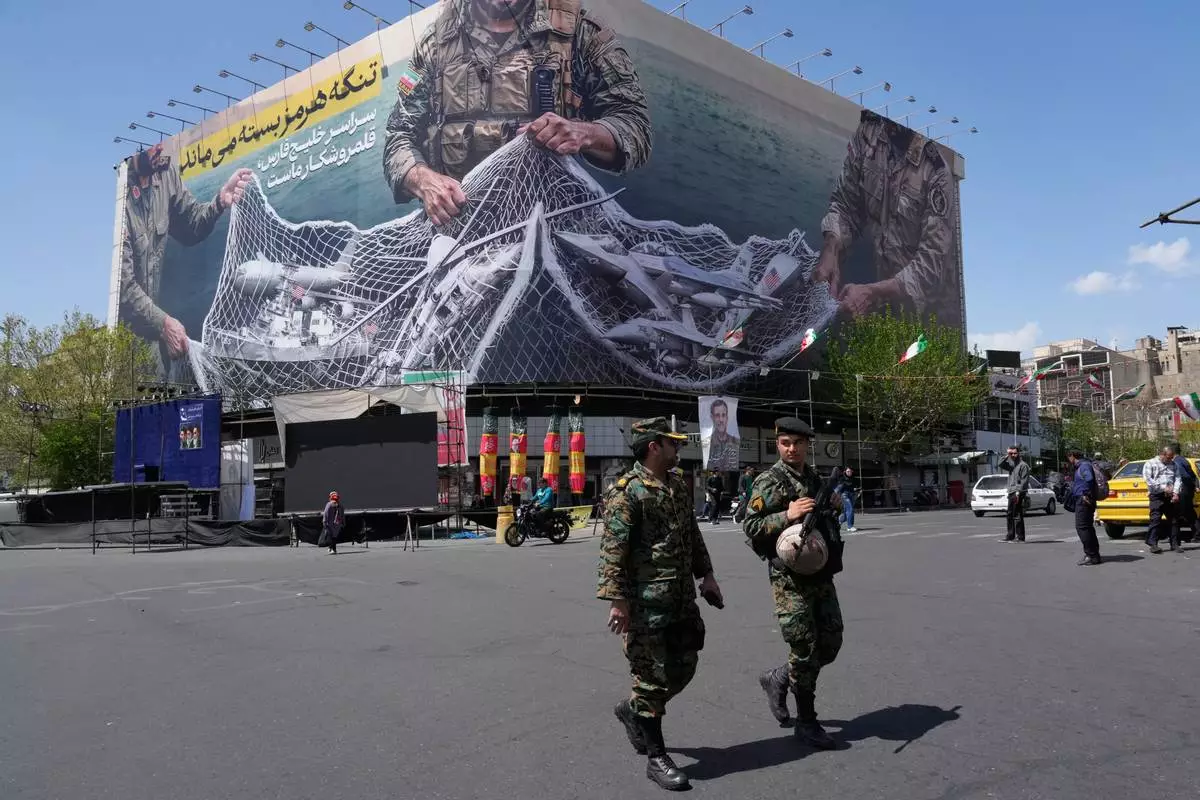
FILE - Two police officers walk in front of an anti-U.S. billboard depicting American aircraft being caught by Iranian armed forces in a fishing net beneath the words in Farsi, "The Strait of Hormuz will remain closed, The entire Persian Gulf is our hunting ground," in Tehran, Iran, Sunday, April 5, 2026. (AP Photo/Vahid Salemi, File)