Skip to Content Facebook Feature Image

Benin is holding an election for a new president as security worsens and critics denounce clampdown

News

Benin is holding an election for a new president as security worsens and critics denounce clampdown
News

News

Benin is holding an election for a new president as security worsens and critics denounce clampdown

2026-04-09 13:48 Last Updated At:14:01

COTONOU, Benin (AP) — Voters in Benin will vote Sunday to elect a new president as outgoing leader Patrice Talon steps down after a decade in power with a mixed legacy of economic growth, but also a growing jihadi insurgency in the north and a clamp down on the opposition and critics.

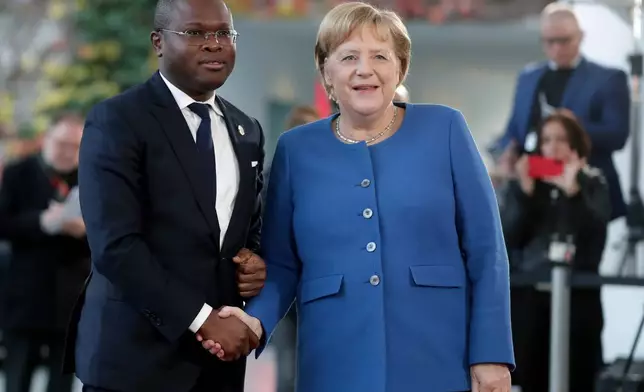
Romuald Wadagni, the 49-year-old finance minister and governing coalition standard-bearer, is considered Talon's anointed successor. Wadagni is being challenged by Paul Hounkpè, the sole opposition candidate.

More Images
FILE - A woman casts her vote at a polling station during an election, in Seme Podji, Benin, March 6, 2016. (AP Photo/Virgile Ahissou, File)
FILE - A woman casts her vote at a polling station during an election, in Seme Podji, Benin, March 6, 2016. (AP Photo/Virgile Ahissou, File)

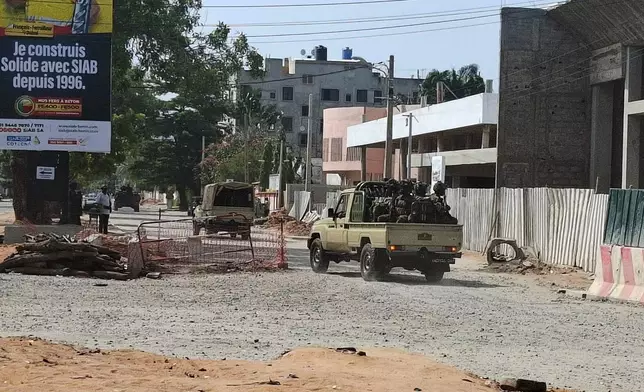
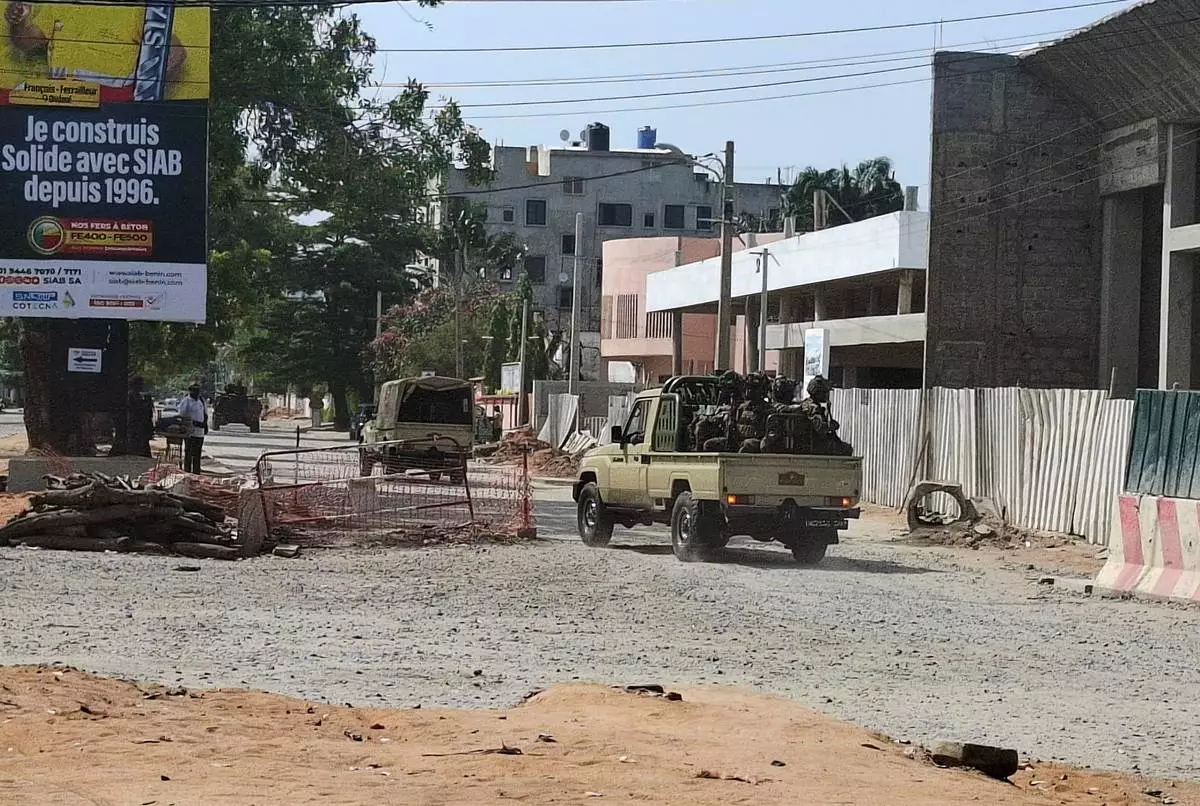
FILE - Soldiers ride in a military vehicle along a street amid an attempted coup, in Cotonou, Benin, Dec. 6, 2025. (AP Photo, File)
FILE - Soldiers ride in a military vehicle along a street amid an attempted coup, in Cotonou, Benin, Dec. 6, 2025. (AP Photo, File)

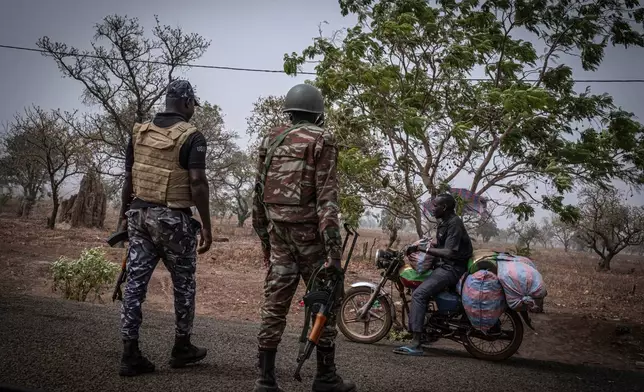
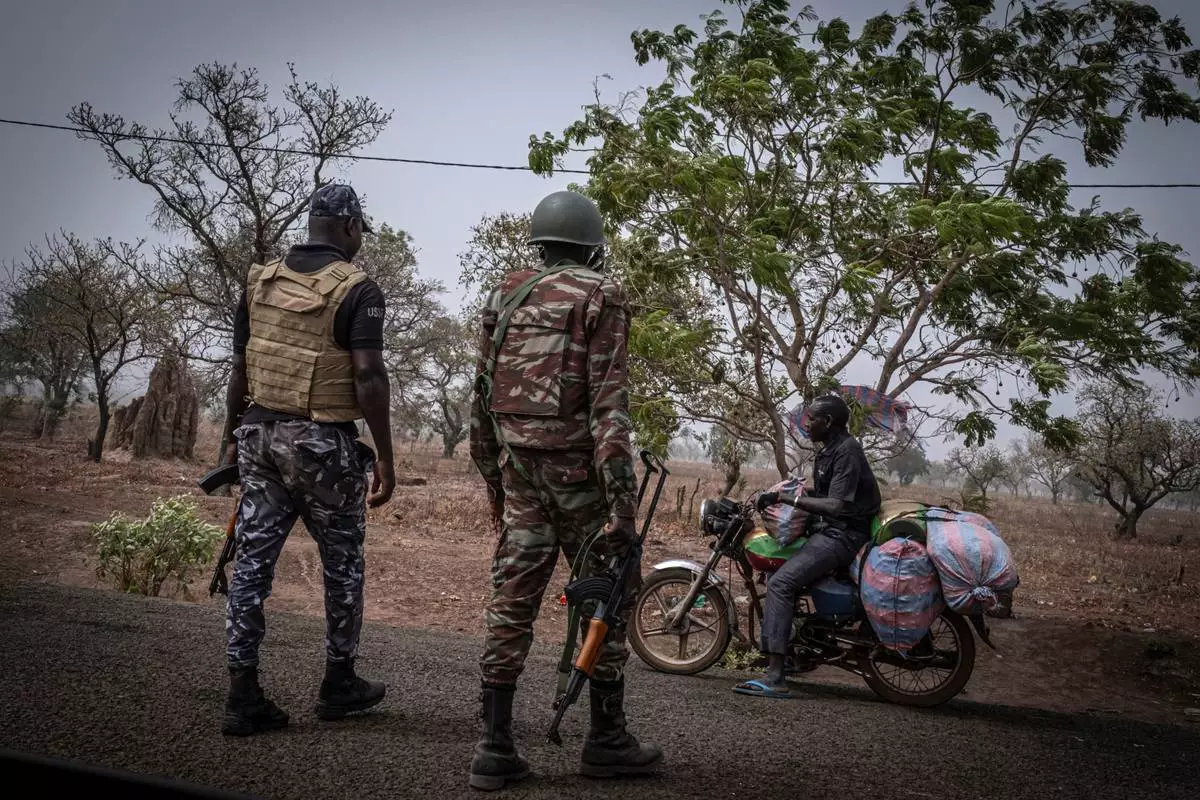
FILE - A police officer and a soldier from Benin stop a motorcyclist at a checkpoint, outside Porga, Benin, March 26, 2022. (AP Photo/ Marco Simoncelli, File)
FILE - A police officer and a soldier from Benin stop a motorcyclist at a checkpoint, outside Porga, Benin, March 26, 2022. (AP Photo/ Marco Simoncelli, File)

FILE - Benin's Economy and Finance Minister Romuald Wadagni, left, and German Chancellor Angela Merkel shake hands prior to a meeting at the chancellery as part of the "Compact with Africa" conference, in Berlin, Nov. 19, 2019. (AP Photo/Michael Sohn, File)
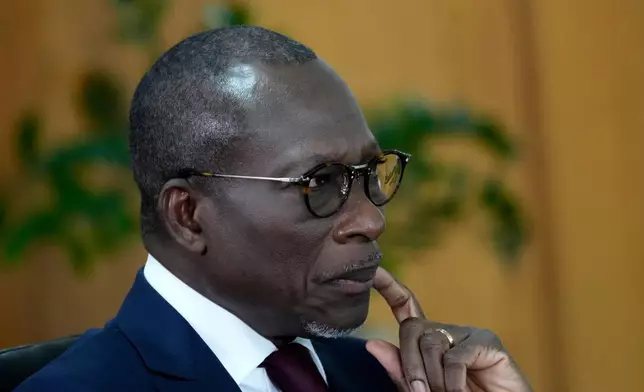
FILE - Benin's Economy and Finance Minister Romuald Wadagni, left, and German Chancellor Angela Merkel shake hands prior to a meeting at the chancellery as part of the "Compact with Africa" conference, in Berlin, Nov. 19, 2019. (AP Photo/Michael Sohn, File)

FILE - Benin's President Patrice Talon attends a meeting with Brazilian President Luiz Inacio Lula da Silva at Planalto presidential palace, in Brasilia, Brazil, May 23, 2024. (AP Photo/Eraldo Peres, File)

FILE - Benin's President Patrice Talon attends a meeting with Brazilian President Luiz Inacio Lula da Silva at Planalto presidential palace, in Brasilia, Brazil, May 23, 2024. (AP Photo/Eraldo Peres, File)

In the parliamentary election in January, the opposition failed to cross the 20% electoral threshold required to win seats, leaving Talon’s two allied parties in control of all 109 seats in the National Assembly and in good position before Sunday's vote.

Renaud Agbodjo, leader of The Democrats, was barred from competing after failing to secure a sufficient number of parliamentary endorsements — a threshold critics say was engineered to keep rivals out.

With the main opposition sidelined, Wadagni is widely considered a favorite due in part to his strong economic track record and broad support from influential figures across historically rival camps, said Fiacre Vidjingninou, political analyst at the Lagos-based Béhanzin Institute.

“Ten years at the Finance Ministry have given him something rare in African politics: a quantified record — verifiable and difficult to dismantle in a serious debate,” Vidjingninou said.

The first round of the vote is set for April 12. In order to secure an outright victory, the winner would need to secure at least 50% of the votes. If that doesn't happen, a runoff will be conducted on May 10 between the top two candidates.

Nearly 8 million people are eligible to vote in the election.

Wadagni is campaigning heavily on the country’s economic performance during his decade as finance minister. Benin’s economy grew 7% last year, according to the International Monetary Fund, making it one of West Africa’s steadiest performers.

Under Talon, the country sustained robust growth for nearly a decade, driven by agriculture, trade and a major port expansion in the economic hub Cotonou that turned Benin into a key transit point for landlocked neighbors. Infrastructure has also expanded.

However, the gains have been unequally shared, with poverty remaining widespread in rural areas and in the poorer northern region.

While Benin has historically been among the most stable democracies in Africa, opposition leaders and human rights organizations have accused Talon of using the justice system as a tool to sideline his political opponents, after taking office in 2016 and changing electoral rules.

In November, a constitutional reform extended presidential terms from five to seven years, established a partially presidential-appointed senate, and further raised the bar for opposition parties to enter parliament.

Rights groups Amnesty International and Human Rights Watch have denounced a sustained crackdown on dissent under Talon, citing arbitrary detentions, tight restrictions on public demonstrations and mounting pressure on independent media outlets.

Protests over the rising cost of living sprang up in recent years, but the government and security forces clamped down on them.

Last December, a group of military officers attempted to topple Talon’s government in a failed coup, the latest in a series of recent military takeover attempts across Africa. Most of the coups and attempted coups follow a similar pattern of disputed elections, constitutional upheaval, security crises and youth discontent.

Among the coup leaders’ key complaints was the deterioration of security in northern Benin.

For years, the country has faced spillover violence in its north from neighboring Burkina Faso and Niger in their battle against the al-Qaida-affiliated extremist group Jama’at Nusrat al-Islam wal-Muslimin, or JNIM.

The tri-border area has long been a hotbed for extremist violence, a trend worsened by the lack of security cooperation with Niger and Burkina Faso, both now led by military juntas.

Last year, an attack by Islamic militants on military posts killed 54 soldiers.

Vidjingninou said that while the foiled coup in Benin has weakened the narrative of stability of the outgoing administration, the climate of instability might work in favor of the governing party candidate.

“In a context perceived as unstable, cautious voters tend to choose continuity and familiarity over the risk of the unknown,” he said.

Roch Gbenou, a civil servant living in Cotonou, said two key issues stand out for him before Sunday's vote: Equal distribution of wealth, and restoration of democratic freedoms, which “appear to have been substantially restricted” in recent years.

Gbenou, however, said that he has little hope for the election, because “it will ultimately only serve to legitimize a choice already made,” suggesting it won't be a credible process.

Mathias Salanon, a retired police officer, said that he believes Talon has done well and hopes the next president will stabilize the economic and political situations of the country.

"In more than 50 years of my life I have not seen such a fierce will to develop the country as during President Patrice Talon’s 10 years,” he said.

For Sofiath Akadiri, another resident of Cotonou, the most important campaign issues for her are access to health care, education and jobs.

“We also need social justice and the restoration of democratic norms,” she said.

Mark Banchereau reported from Dakar, Senegal.

FILE - A woman casts her vote at a polling station during an election, in Seme Podji, Benin, March 6, 2016. (AP Photo/Virgile Ahissou, File)
FILE - A woman casts her vote at a polling station during an election, in Seme Podji, Benin, March 6, 2016. (AP Photo/Virgile Ahissou, File)

FILE - Soldiers ride in a military vehicle along a street amid an attempted coup, in Cotonou, Benin, Dec. 6, 2025. (AP Photo, File)
FILE - Soldiers ride in a military vehicle along a street amid an attempted coup, in Cotonou, Benin, Dec. 6, 2025. (AP Photo, File)

FILE - A police officer and a soldier from Benin stop a motorcyclist at a checkpoint, outside Porga, Benin, March 26, 2022. (AP Photo/ Marco Simoncelli, File)

FILE - A police officer and a soldier from Benin stop a motorcyclist at a checkpoint, outside Porga, Benin, March 26, 2022. (AP Photo/ Marco Simoncelli, File)

FILE - Benin's Economy and Finance Minister Romuald Wadagni, left, and German Chancellor Angela Merkel shake hands prior to a meeting at the chancellery as part of the "Compact with Africa" conference, in Berlin, Nov. 19, 2019. (AP Photo/Michael Sohn, File)
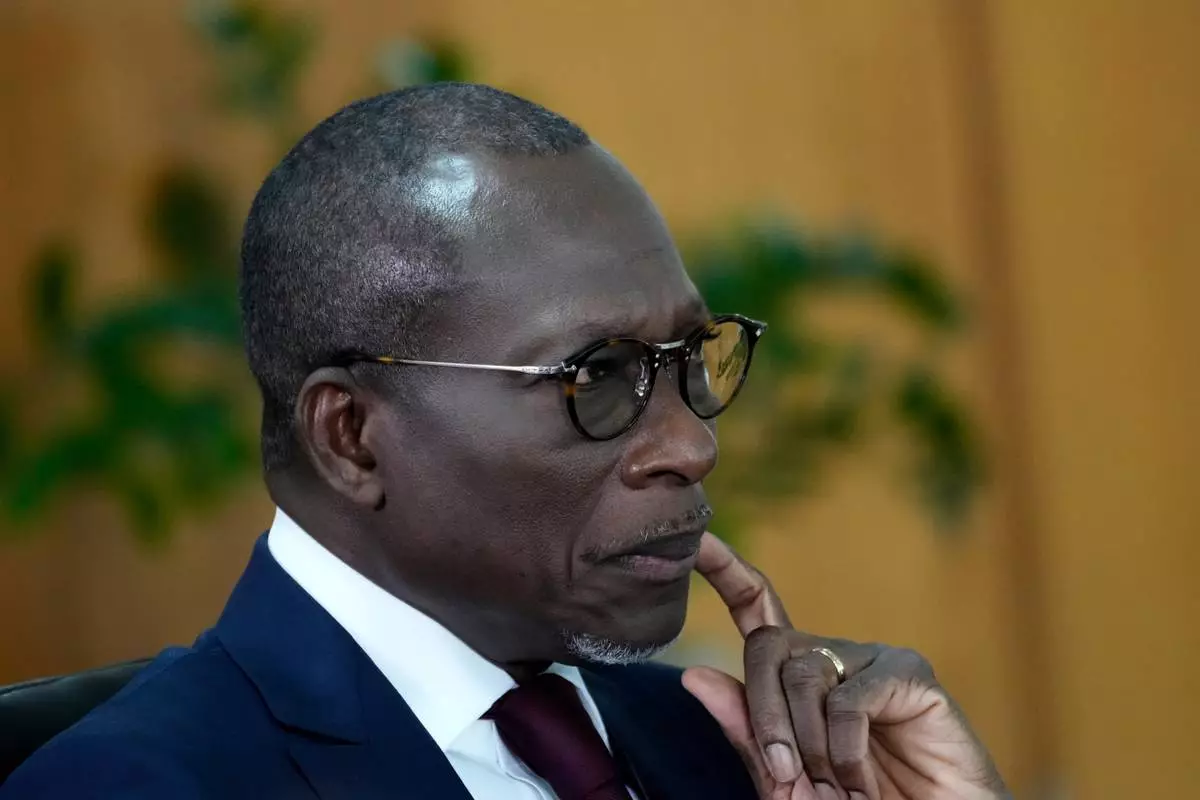
FILE - Benin's Economy and Finance Minister Romuald Wadagni, left, and German Chancellor Angela Merkel shake hands prior to a meeting at the chancellery as part of the "Compact with Africa" conference, in Berlin, Nov. 19, 2019. (AP Photo/Michael Sohn, File)

FILE - Benin's President Patrice Talon attends a meeting with Brazilian President Luiz Inacio Lula da Silva at Planalto presidential palace, in Brasilia, Brazil, May 23, 2024. (AP Photo/Eraldo Peres, File)
FILE - Benin's President Patrice Talon attends a meeting with Brazilian President Luiz Inacio Lula da Silva at Planalto presidential palace, in Brasilia, Brazil, May 23, 2024. (AP Photo/Eraldo Peres, File)
DUBAI, United Arab Emirates (AP) — Semiofficial news agencies in Iran published a chart Thursday suggesting the country’s paramilitary Revolutionary Guard put sea mines into the Strait of Hormuz during the war, in a message that may be intended to pressure the U.S. as uncertainty hangs over a days-old two-week ceasefire and further negotiations are expected in Pakistan.

The charts were released by the ISNA news agency, as well as Tasnim, which is believed to be close to the Guard. They showed a large circle marked “danger zone” in Farsi over the Traffic Separation Scheme, which was the route ships take through the strait, the narrow mouth of the Persian Gulf through which 20% of all oil and natural gas traded once passed.

The chart suggested ships travel further north through waters closer to Iran’s mainland near Larak Island, a route that some ships were observed taking during the war.

The charts were dated from Feb. 28 until Thursday, April 9, and it was unclear if the Guard had cleared any mining on the route since then.

Oil rose again to above $97 a barrel and Asian stocks were trading lower Thursday on skepticism over the ceasefire. Brent crude, the international standard, was up 2.9% to $97.46 per barrel. It had fallen briefly to below $92 following the temporary ceasefire announcement. Benchmark U.S. crude was 3.7% higher Thursday at $97.94 per barrel.

Ship-tracking data from Kpler showed only four vessels with their Automatic Identification System trackers on passed through the Strait of Hormuz on Wednesday, the first day of the ceasefire. However, that does not include so-called “dark fleet” vessels, which travel with their AIS trackers turned off. Many of those “dark fleet” ships carry sanctioned Iranian crude oil out to the open market.

U.S. President Donald Trump posted a statement insisting that his surge of warships and troops will remain around Iran “until such time as the REAL AGREEMENT reached is fully complied with.”

Trump’s comments on his Truth Social platform appeared to be a way to pressure Iran.

“If for any reason it is not, which is highly unlikely, then the ‘Shootin’ Starts,’ bigger, and better, and stronger than anyone has ever seen before,” Trump wrote.

He also insisted Iran would not be able to build nuclear weapons and “the Strait of Hormuz WILL BE OPEN & SAFE.”

The U.S. and Iran both claimed victory after reaching the ceasefire agreement, and world leaders expressed relief. But more drones and missiles hit Iran and Gulf Arab countries after the deal was announced.

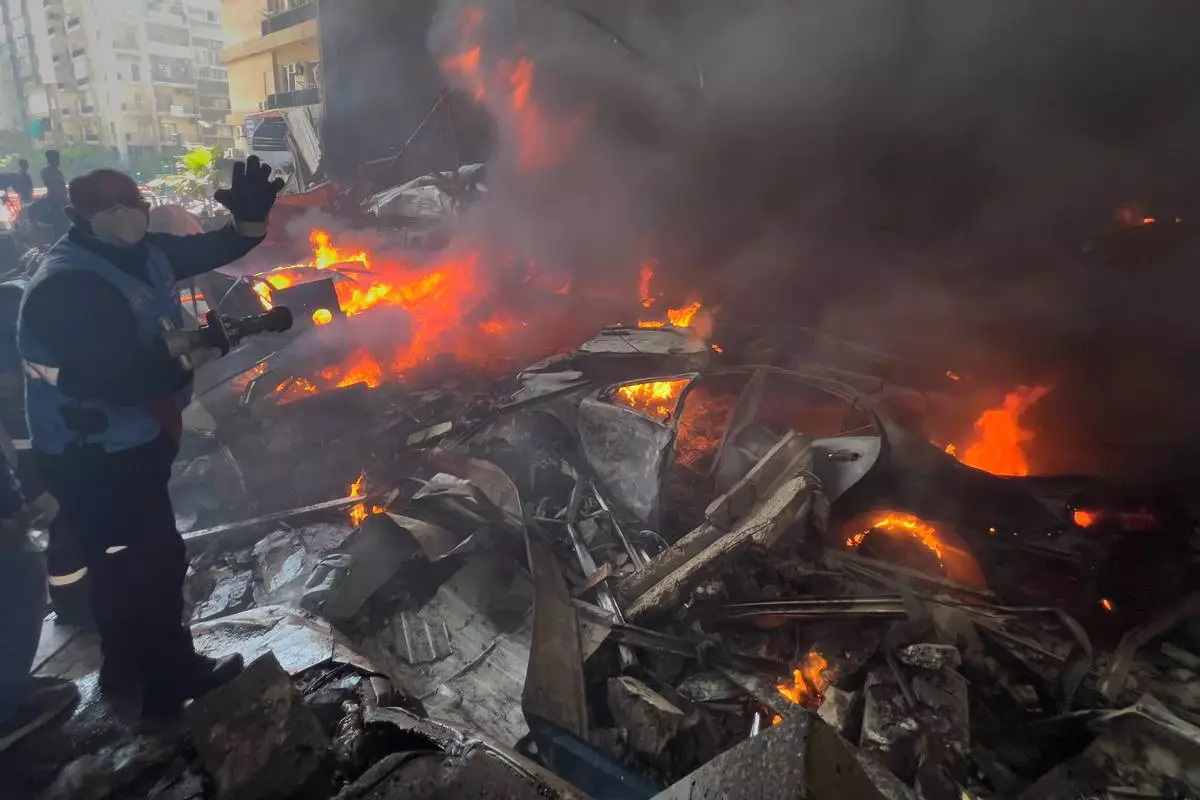
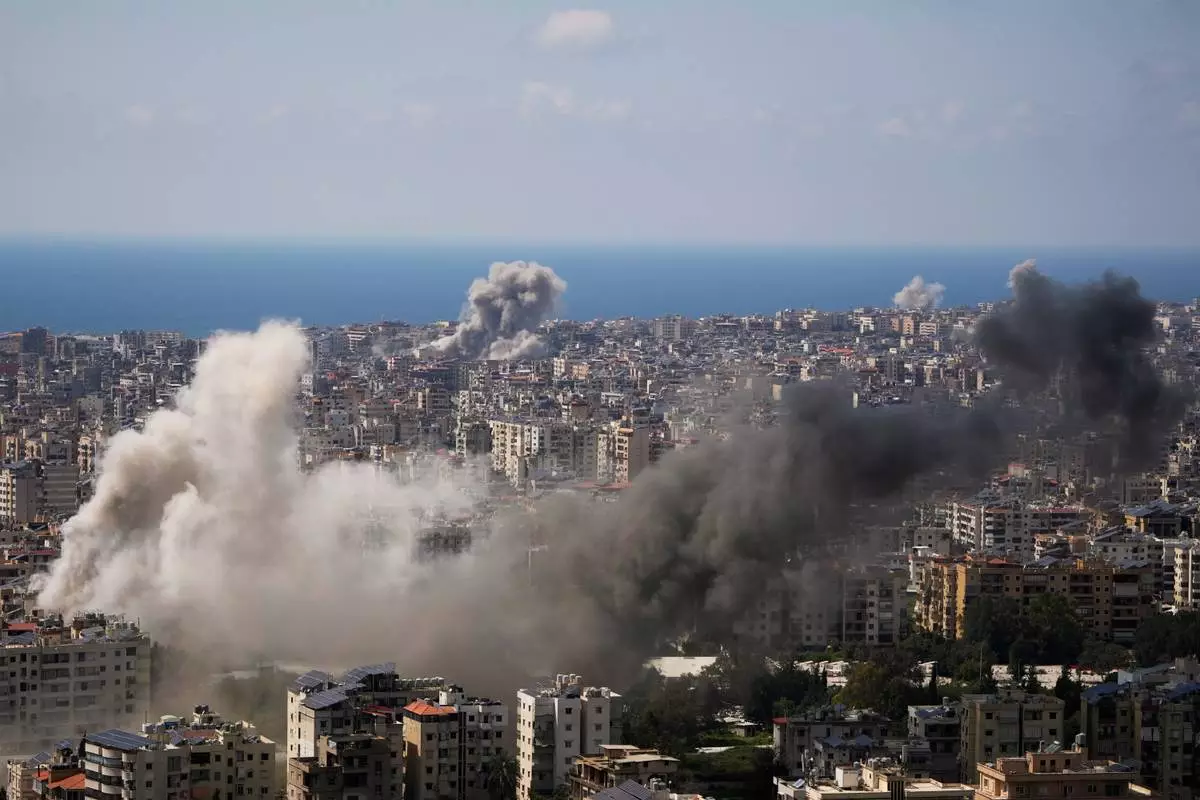
Israel also intensified its attacks on the Hezbollah militant group in Lebanon on Wednesday, hitting commercial and residential areas in Beirut. At least 182 people were killed in the deadliest day of fighting there.

The violence threatened to scuttle what U.S. Vice President JD Vance called a “fragile” deal.

Iran's parliament speaker said Wednesday that planned talks were “unreasonable” because Washington had broken three of Tehran’s 10 conditions for an end to the fighting. In a social media post, Mohammad Bagher Qalibaf objected to Israeli attacks on Hezbollah, an alleged drone incursion into Iranian airspace after the ceasefire took effect and U.S. refusal to accept any Iranian enrichment capabilities in a final agreement.

Iranian Foreign Minister Abbas Araghchi insisted that an end to the war in Lebanon was part of the ceasefire deal, but Israeli Prime Minister Benjamin Netanyahu and Trump said the truce did not cover Lebanon. When the deal was announced, the prime minister of Pakistan, which served as a mediator, said in a social media post that it applied to “everywhere including Lebanon and elsewhere.”

A New York-based think tank warned the ceasefire “hovers on the verge of collapse.”

The Soufan Center said Israel's strikes on Lebanon on Wednesday added to the risk the deal would fall apart.

“Even if Lebanon was formally outside the deal, the scale of Israel’s strikes was likely to be viewed as escalatory, nonetheless,” it wrote in an analysis published Thursday. “Israel’s strikes can be understood both as an effort to drive a wedge between Iran and its proxies and as a response to being allegedly sidelined in the original ceasefire discussions.”

Iran’s negotiating team for talks with the United States are to arrive in Islamabad on Thursday night, the Iranian ambassador there said.

Reza Amiri Moghadam wrote on X that the “Iranian delegation arrives tonight in Islamabad for serious talks based on 10 points proposed by Iran,” without identifying who was on the Iranian team.

Those points include Iran enriching uranium, maintaining its control of the Strait of Hormuz and other issues that have been nonstarters in the past for Trump. The White House has repeatedly described the 10 points issued by Iran as false.

Moghadam wrote that the Iranians would come to Islamabad despite “skepticism of Iranian public opinion due to repeated ceasefire violations by Israeli regime to sabotage the diplomatic initiative,” likely referring to Israel’s strikes on Lebanon, which Israel and the U.S. have said wasn’t included in the shaky ceasefire.

Becatoros reported from Athens, Greece. Chan Ho-him in Hong Kong and Zeke Miller in Washington contributed to this report.

A rescue worker extinguishes burning cars at the site of an Israeli airstrike in central Beirut, Lebanon, Wednesday, April 8, 2026. (AP Photo/Hussein Malla)

A rescue worker extinguishes burning cars at the site of an Israeli airstrike in central Beirut, Lebanon, Wednesday, April 8, 2026. (AP Photo/Hussein Malla)

Smoke rises following several Israeli airstrikes in Beirut, Lebanon, Wednesday, April 8, 2026. (AP Photo/Hassan Ammar)

Smoke rises following several Israeli airstrikes in Beirut, Lebanon, Wednesday, April 8, 2026. (AP Photo/Hassan Ammar)

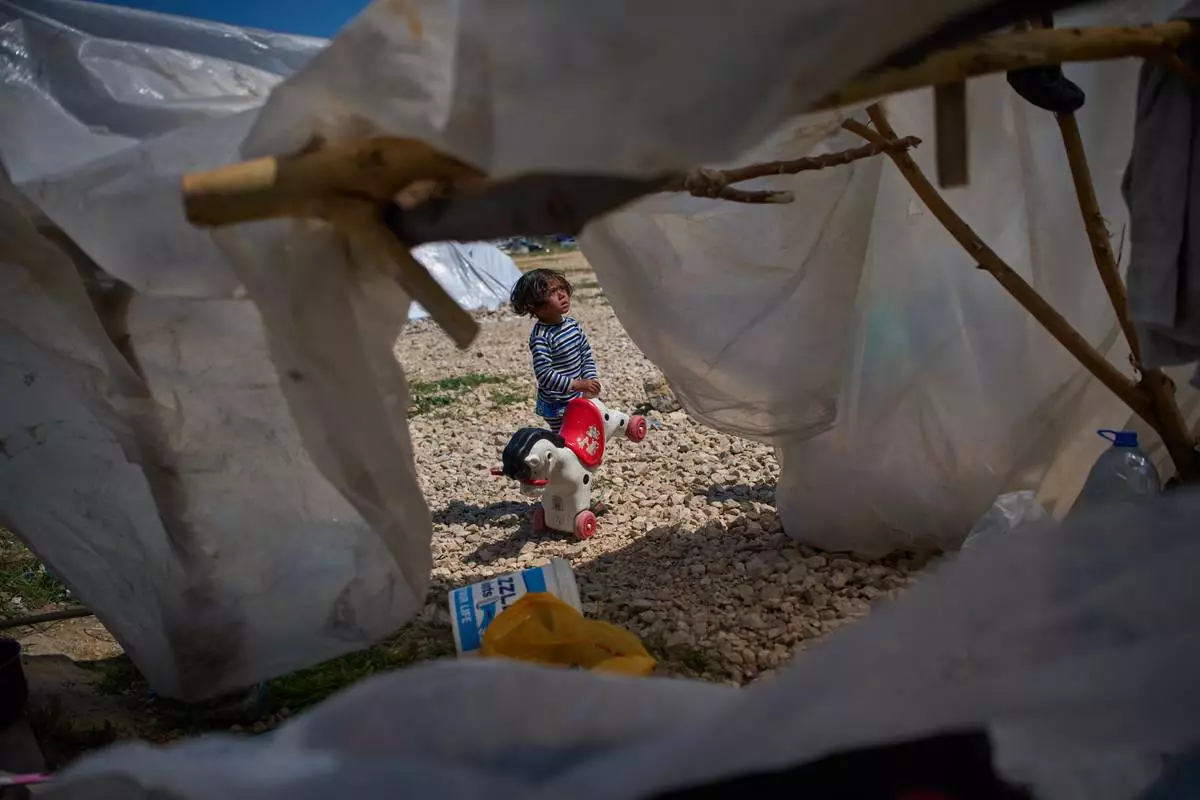
Ali, 4, holds a toy horse next to the tent his family uses as a shelter after fleeing Israeli bombardment in southern Lebanon, in Beirut, Lebanon, Wednesday, April 8, 2026. (AP Photo/Emilio Morenatti)

Ali, 4, holds a toy horse next to the tent his family uses as a shelter after fleeing Israeli bombardment in southern Lebanon, in Beirut, Lebanon, Wednesday, April 8, 2026. (AP Photo/Emilio Morenatti)

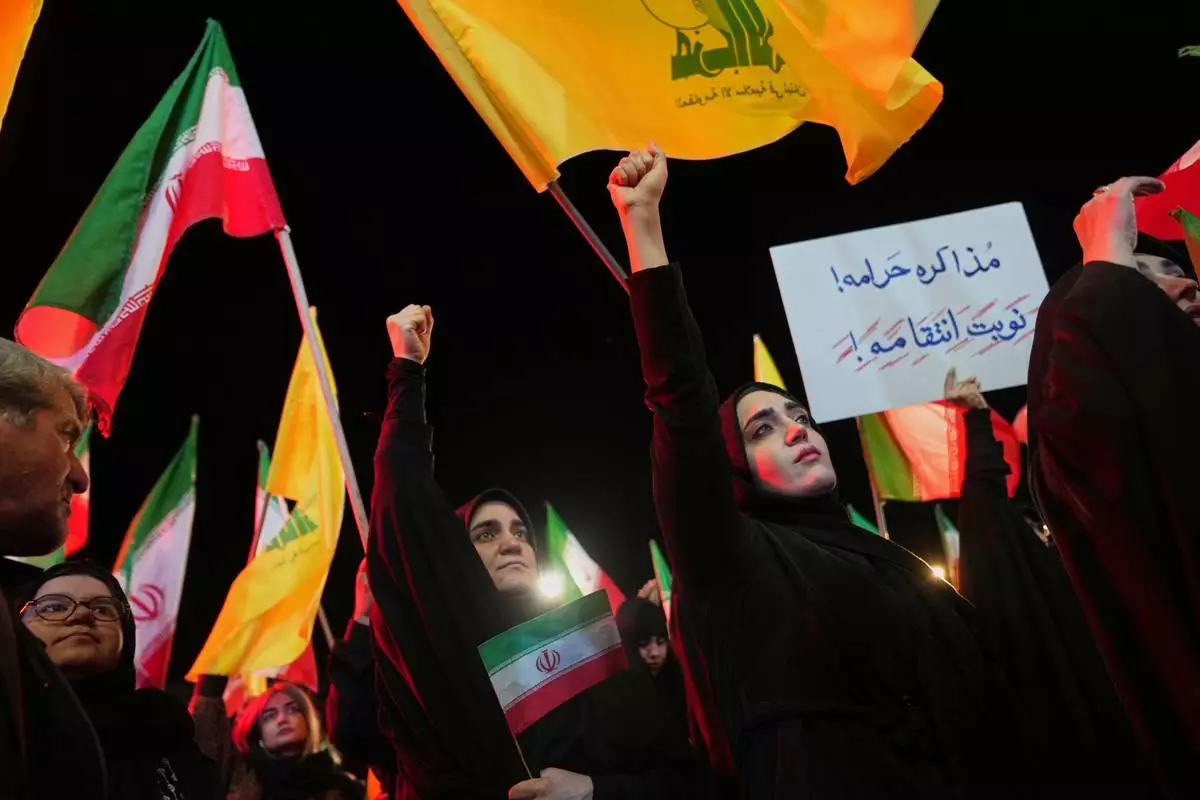
Government supporters gather ahead of the funeral procession for Maj. Gen. Majid Khademi, head of intelligence for Iran's paramilitary Revolutionary Guard, in Tehran, Iran, Wednesday, April 8, 2026. (AP Photo/Francisco Seco)

Government supporters gather ahead of the funeral procession for Maj. Gen. Majid Khademi, head of intelligence for Iran's paramilitary Revolutionary Guard, in Tehran, Iran, Wednesday, April 8, 2026. (AP Photo/Francisco Seco)

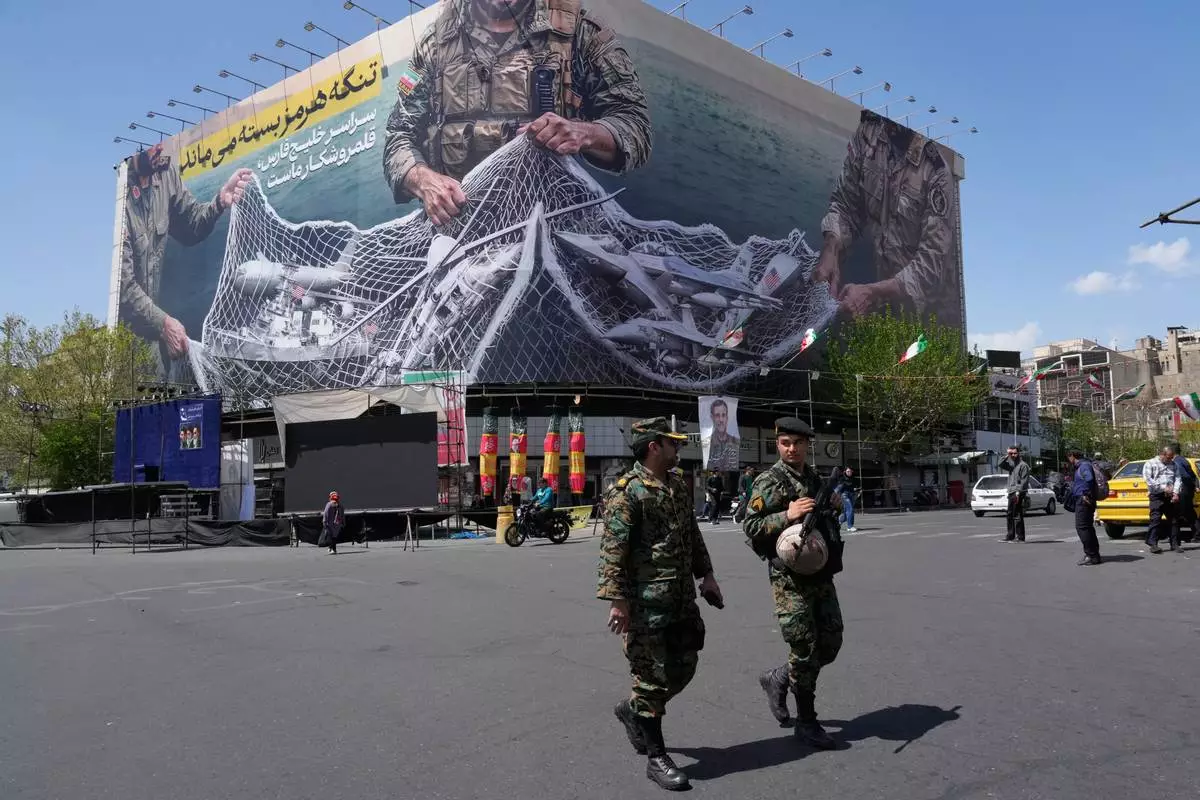
FILE - Two police officers walk in front of an anti-U.S. billboard depicting American aircraft being caught by Iranian armed forces in a fishing net beneath the words in Farsi, "The Strait of Hormuz will remain closed, The entire Persian Gulf is our hunting ground," in Tehran, Iran, Sunday, April 5, 2026. (AP Photo/Vahid Salemi, File)

FILE - Two police officers walk in front of an anti-U.S. billboard depicting American aircraft being caught by Iranian armed forces in a fishing net beneath the words in Farsi, "The Strait of Hormuz will remain closed, The entire Persian Gulf is our hunting ground," in Tehran, Iran, Sunday, April 5, 2026. (AP Photo/Vahid Salemi, File)

Recommended Articles