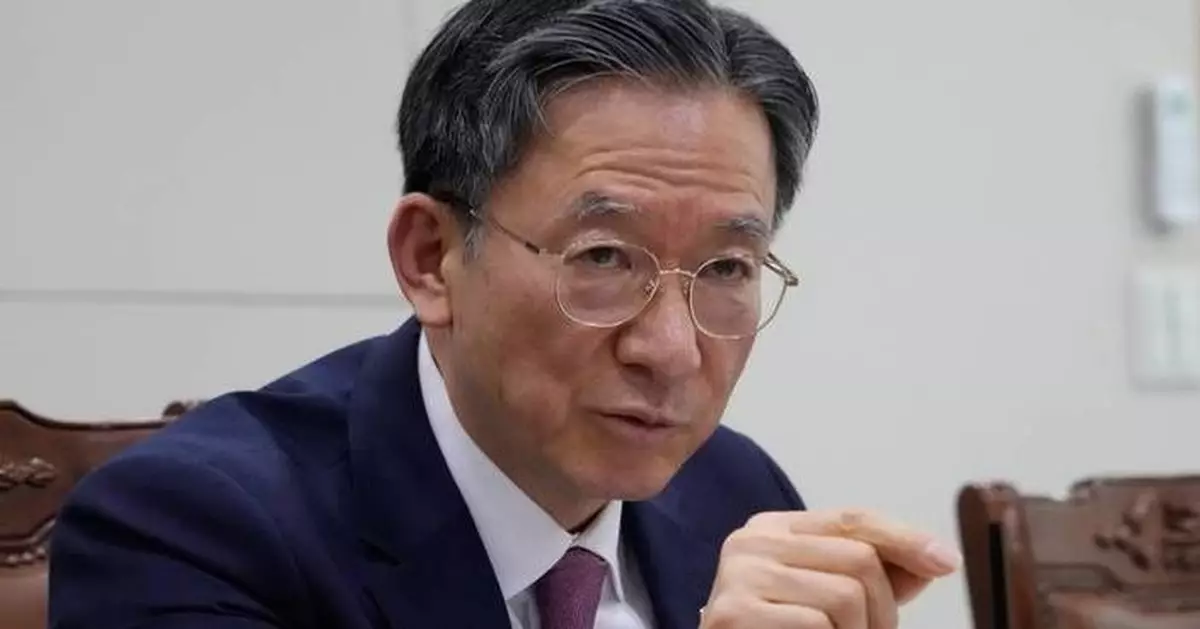
GWACHEON, South Korea (AP) — South Korea's justice minister has pledged to expand access to judicial remedies for victims of state-led abuses, including foreign adoptees whose adoptions were marred by widespread fraud under previous military governments.
Using unusually strong language for a senior South Korean official, Justice Minister Jung Sung-ho said the country’s past adoptions amounted to “forced child trafficking” and that the government will largely refrain from appealing rulings in cases brought by victims seeking compensation for government wrongdoing. Jung spoke Thursday in a roundtable interview with selected journalists.
Click to Gallery
FILE - Peter Møller, left, Boonyoung Han, second from left, co-founders of the Danish Korea Rights Group, and adoptee Yooree Kim, second from right, attend a press conference at the Truth and Reconciliation Commission in Seoul, South Korea, March 26, 2025. (AP Photo/Ahn Young-joon, File)
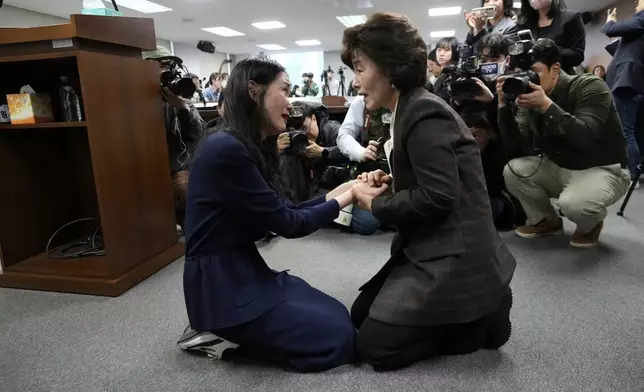
FILE - Truth and Reconciliation Commission Chairperson Park Sun Young, right, comforts adoptee Yooree Kim during a press conference in Seoul, South Korea, March 26, 2025. (AP Photo/Ahn Young-joon, File)
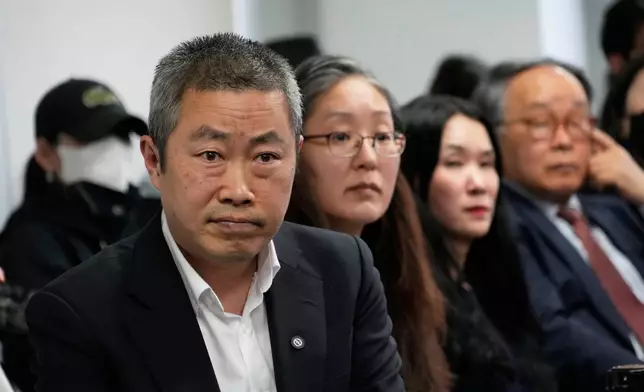
FILE - Peter Møller, left, Boonyoung Han, second from left, co-founders of the Danish Korea Rights Group, and adoptee Yooree Kim, second from right, attend a press conference at the Truth and Reconciliation Commission in Seoul, South Korea, March 26, 2025. (AP Photo/Ahn Young-joon, File)
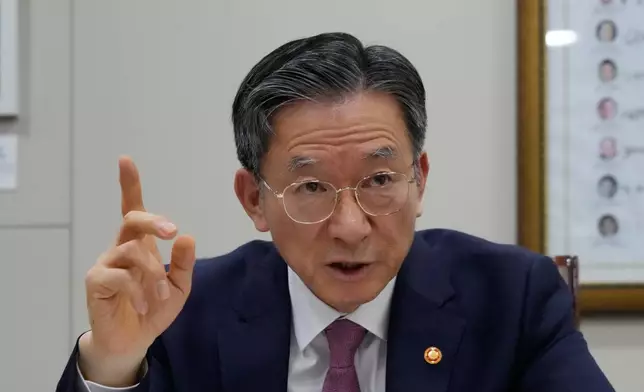
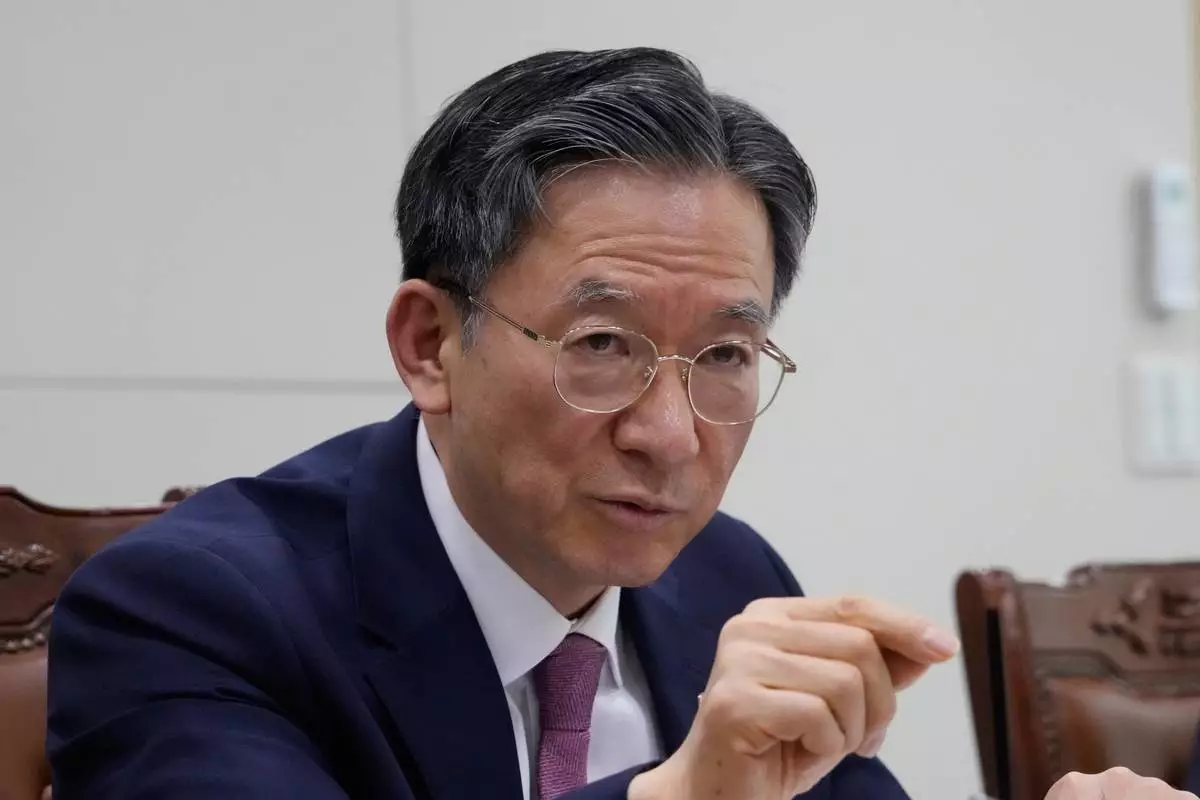
South Korean Justice Minister Jung Sung-ho speaks during a roundtable interview at the Justice Ministry in Gwacheon, South Korea, Thursday, April 9, 2026. (AP Photo/Ahn Young-joon)
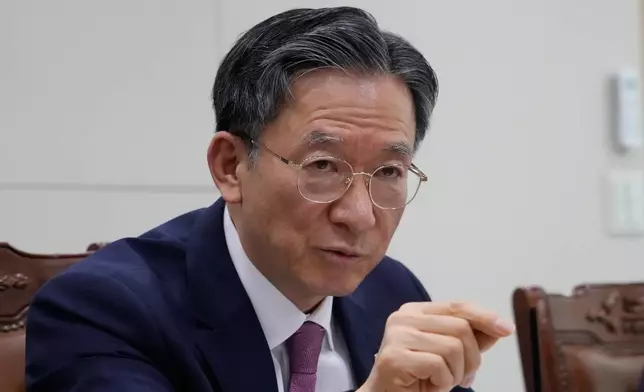
Hundreds of Korean adoptees in the West have already requested that their cases be investigated by a fact-finding commission reviewing past human rights violations. The body was relaunched in February after its previous mandate ended in November. That earlier Truth and Reconciliation Commission concluded that the government bore responsibility for an adoption program riddled with fraud and malfeasance, driven by efforts to cut welfare costs and carried out by state-authorized private agencies that systematically manipulated children’s origins.
Some adoptees hope the commission’s findings will provide legal grounds for damages lawsuits against the government or their adoption agencies. But victims of other government abuses recognized by the commission have often been locked in lengthy legal battles after state prosecutors appealed rulings in their favor, citing expired statutes of limitations or deeming the commission’s findings inconclusive.
President Lee Jae Myung in October issued an apology over South Korea's past adoption problems.
Jung, a close ally of Lee, said the government is willing to expand legal redress and speed compensation for victims of government abuses whose cases have been verified by the truth commission.
Under a new law that took effect in February giving those victims a three-year window to sue for damages even after statutes of limitations had expired, Jung’s ministry, which represents the government in lawsuits, said last week it plans to withdraw time-limit appeals in more than 800 cases.
Jung said the ministry plans to extend a similar approach to lawsuits by adoptees in the future.
“Once the truth commission firmly establishes the basic facts (regarding the abuses), we intend to cooperate to ensure the process moves swiftly,” Jung said.
Some adoptees, including Yooree Kim, who was sent to a French family in 1984 without her biological parents’ consent and says she was abused by her adopters, have sought compensation under the state compensation act, which in theory allows victims to pursue claims without lengthy court battles. But while the Justice Ministry technically has four weeks to decide on the requests, it has failed to do so for more than six months, according to the adoptees’ lawyer, Choi Jung Kyu.
Jung said he would instruct officials to address the delays but does not see a need for a separate new process to expedite compensation, as called for by some advocates.
South Korea sent thousands of children annually to the United States, Europe and Australia from the 1970s to the early 2000s, peaking at an average of more than 6,000 a year in the 1980s. The country was then ruled by a military government that saw population growth as a major threat to its economic goals and treated adoptions as a way to reduce the number of mouths to feed.
The previous truth commission’s findings broadly aligned with prior reporting by The Associated Press. The AP investigations, in collaboration with Frontline (PBS), drew on thousands of documents and dozens of interviews to show how South Korea’s government, Western nations and adoption agencies worked in tandem to send about 200,000 Korean children overseas, despite years of evidence that many were procured through corrupt or illegal means.
Jung also discussed efforts to combat trafficking and forced labor at salt farms and other sites and the widespread abuse of migrant workers, which has fueled long-standing criticism of South Korea’s exploitation of some of Asia’s most vulnerable people.
These issues have gained urgency after the Trump administration last month launched investigations into dozens of countries it accused of failing to curb forced labor.
The move was part of an effort to impose new tariffs and other trade restrictions after the U.S. Supreme Court struck down President Donald Trump’s earlier tariffs based on emergency powers. The United States last year also blocked imports from a major South Korean salt farm accused of using slave labor, becoming the first trade partner to take punitive action against a decadeslong problem on salt farms in islands off the country’s southwest coast.
Jung vowed to step up efforts to “uproot” trafficking and labor abuses, including instructing prosecutors to seek tougher penalties for violations and strengthening oversight of companies employing foreign workers.
“We cannot monitor every corner of the private sector, but I think we are capable of supervising these matters more thoroughly than almost any other country,” Jung said.
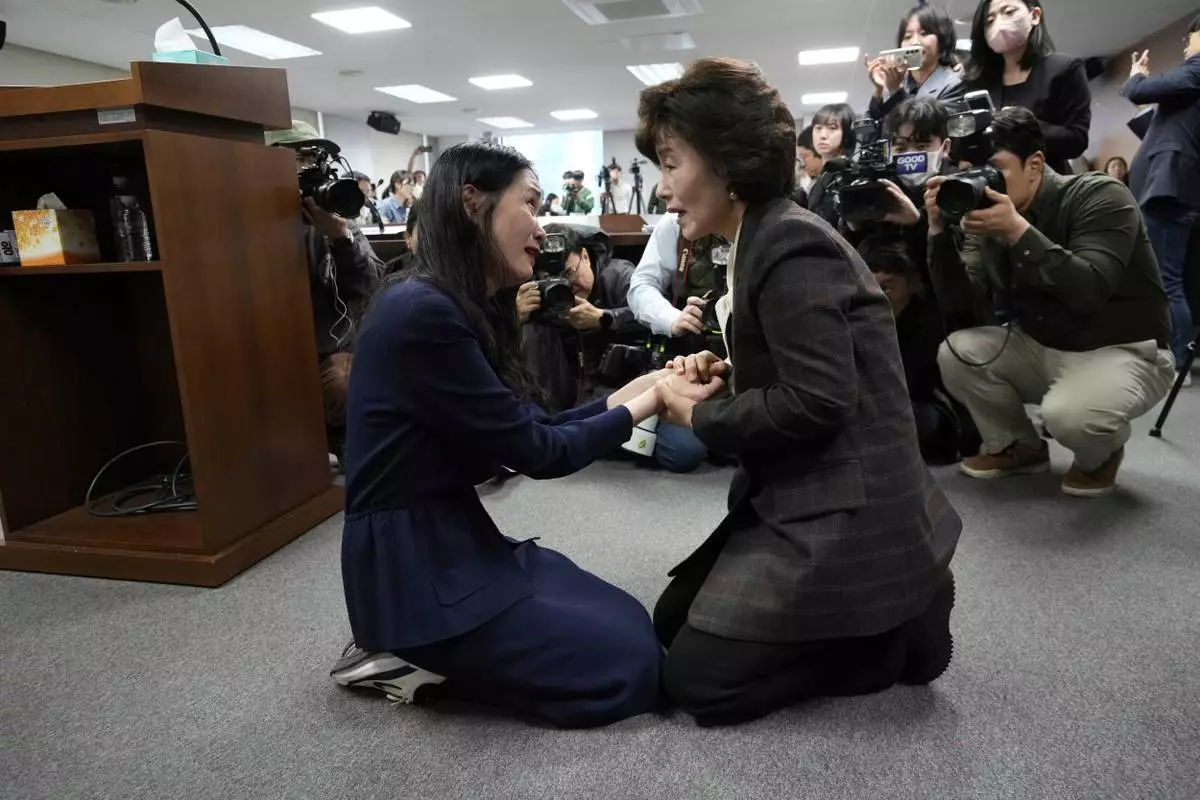
FILE - Truth and Reconciliation Commission Chairperson Park Sun Young, right, comforts adoptee Yooree Kim during a press conference in Seoul, South Korea, March 26, 2025. (AP Photo/Ahn Young-joon, File)
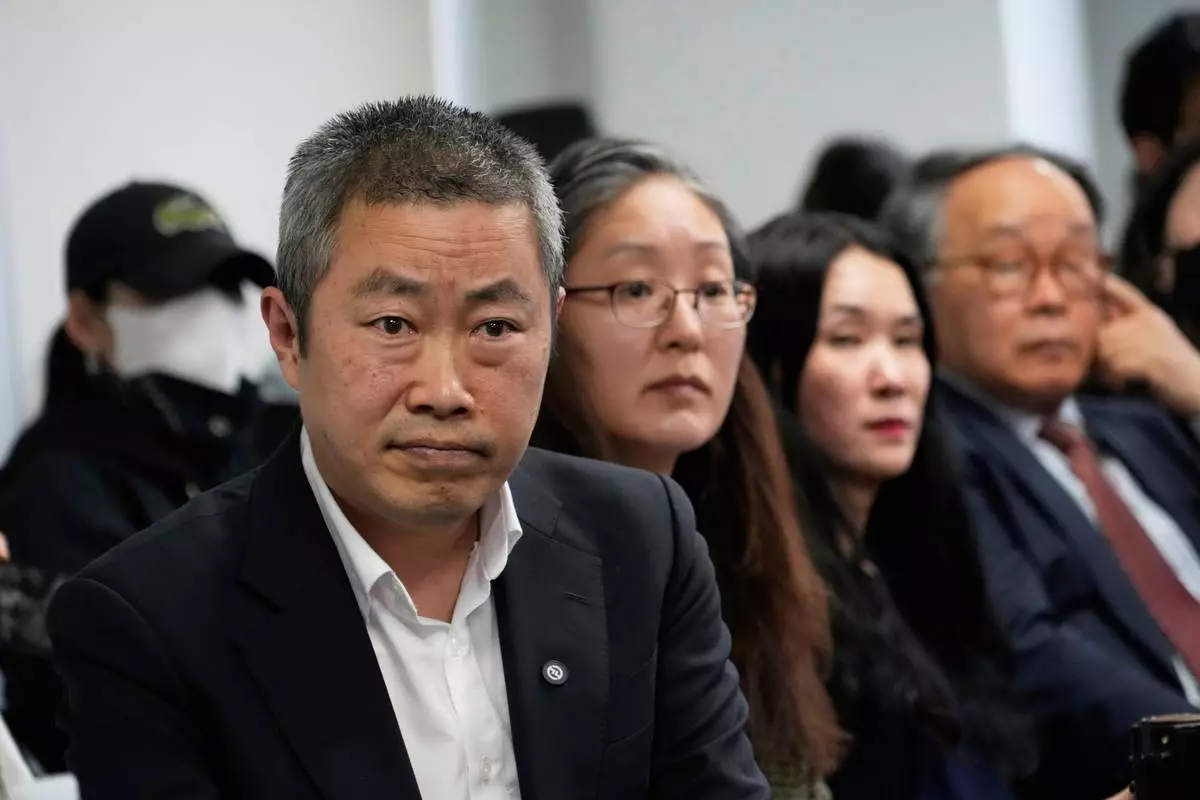
FILE - Peter Møller, left, Boonyoung Han, second from left, co-founders of the Danish Korea Rights Group, and adoptee Yooree Kim, second from right, attend a press conference at the Truth and Reconciliation Commission in Seoul, South Korea, March 26, 2025. (AP Photo/Ahn Young-joon, File)
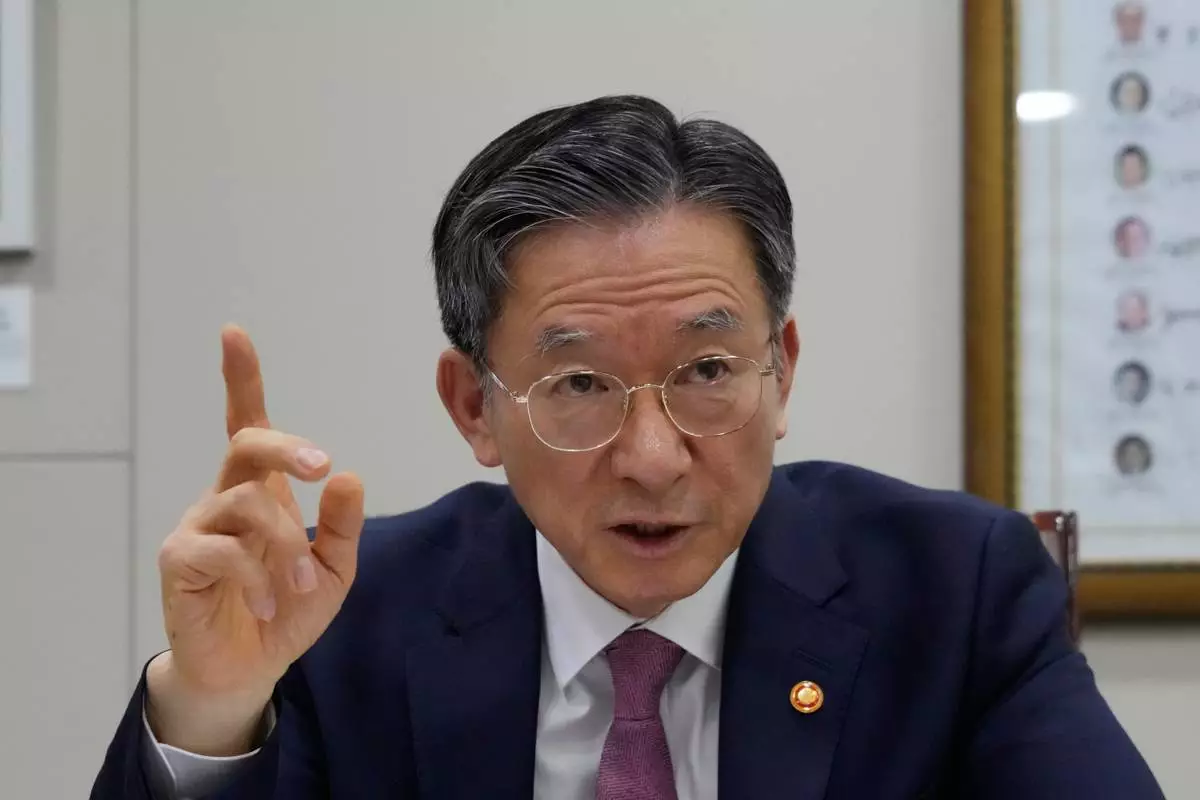
South Korean Justice Minister Jung Sung-ho speaks during a roundtable interview at the Justice Ministry in Gwacheon, South Korea, Thursday, April 9, 2026. (AP Photo/Ahn Young-joon)
U.S. President Donald Trump appeared to cast doubt on the effectiveness of the two-week ceasefire over Iran's continued chokehold on the Strait of Hormuz, while Kuwait accused Iran and its proxies of launching drone attacks despite the ceasefire.
Iran’s paramilitary Revolutionary Guard denied launching attacks Thursday night on Persian Gulf states.
Israeli Prime Minister Benjamin Netanyahu offered a potential boost to ceasefire efforts in the region when he said he had approved direct talks with Lebanon. The Lebanese government has not responded as of Friday morning.
The announcement came after Israel’s pounding of Beirut Wednesday killed more than 300 people. The negotiations are expected next week in Washington, according to a person familiar with the matter.
Questions remained over what will happen to Iran’s stockpile of enriched uranium at the heart of tensions, how and when normal traffic will resume through the Strait of Hormuz, and what happens to Iran’s ability to launch future missile attacks and support armed proxies in the region.
Talks between the United States and Iran on a resolution to the conflict are expected to start Saturday in Islamabad, with the White House saying Vice President JD Vance would lead the U.S. delegation.
Here is the latest:
Singapore’s Prime Minister Lawrence Wong said the island state will not restrict fuel exports from its refineries due to Iran war disruptions. Singapore was Australia’s largest supplier of refined petroleum products.
“We do not plan to restrict exports. We didn’t have to do so even in the darkest days of COVID and we will not do so during this energy crisis,” Wong said at a news conference with his Australian counterpart Anthony Albanese. “It’s hypothetical. It won’t happen,” Wong added.
Albanese said Wong had given the same assurance in their bilateral meeting. “The prime minister’s just as confident in private as he is in public,” Albanese said.
Ukrainian military personnel shot down Iranian-designed Shahed drones in multiple Middle Eastern countries during the Iran war, President Volodymyr Zelenskyy said, describing the operations as part of a broader effort to help partners counter the same weapons used by Russia in Ukraine.
Zelenskyy made his first public acknowledgment of the operations Wednesday in remarks to reporters that were embargoed until Friday.
Zelenskyy said Ukrainian forces took part in active operations abroad using domestically produced, battle-tested interceptor drones.
Asian stocks were mostly up Friday while oil prices also rose on the fragile Iran war ceasefire and ahead of Iran-U.S. negotiations in Pakistan over the weekend.
South Korea’s Kospi was up 1.5% to 5,862.58. Tokyo’s Nikkei 225 climbed 1.9% to 56,952.60.
Hong Kong’s Hang Seng gained 0.8% to 25,954.15, while the Shanghai Composite index was also 0.8% higher at 3,996.34.
Brent crude, the international standard, was 1% higher at $96.92 per barrel. Benchmark U.S. crude was up 0.8% to $98.62 a barrel.
For oil prices, “$65-70 a barrel is not coming back,” Ajay Rajadhyaksha of Barclays wrote in a recent research note, referring to the pre-Iran war oil price levels. The bank predicts that Brent crude could remain at around $85 per barrel on average for this year.
“A ceasefire is not a refund,” he wrote. “Ceasefires end wars; they don’t undo them.”
Pakistan’s capital fell unusually quiet Friday as authorities locked down Islamabad ahead of high-stakes talks between the United States and Iran aimed at securing a lasting ceasefire after weeks of war.
Roads lay nearly empty, checkpoints were set up at major arteries, and a two-day public holiday kept residents indoors.
Behind the calm, diplomatic activity intensified.
U.S. Vice President JD Vance is set to leave for Pakistan Friday, while an Iranian delegation was also expected there.
Security was tightened, with additional troops and police deployed across Islamabad.
Talks are set to begin Saturday, drawing global attention and placing Islamabad at the center of efforts to bring an end to the war.
Multiple times overnight into Friday morning, people around Iran’s capital, Tehran, and other parts of the country said they heard what sounded like air defense fire and explosions.
However, Iran’s government did not acknowledge any attack during that period.
After past exchanges of fire with Israel, similar incidents happened as troops remained on edge.
Japan said it will release an additional 20 days’ worth of oil reserves in May, in a second round address supply uncertainty over the war in the Middle East.
Japanese Prime Minister Sanae Takaichi said the planned release of the government reserves will start in early May, after an earlier release last month.
Japan started releasing about 50 days’ worth of oil reserves in March, including from those held by the state, the private sector and oil-producing Gulf nations.
As of April 6, Japan had 230 days’ worth oil reserves, including 143 days’ worth in government stockpiles, according to the Natural Resources and Energy Agency.
Takaichi said her government is working to secure oil imports via routes that do not include the Strait of Hormuz, while Japan seeks to diversify suppliers.
Pakistan said Friday it would issue visas on arrival for those traveling to Islamabad for the Iran-U.S. talks, signaling the interest in the world’s media in the event.
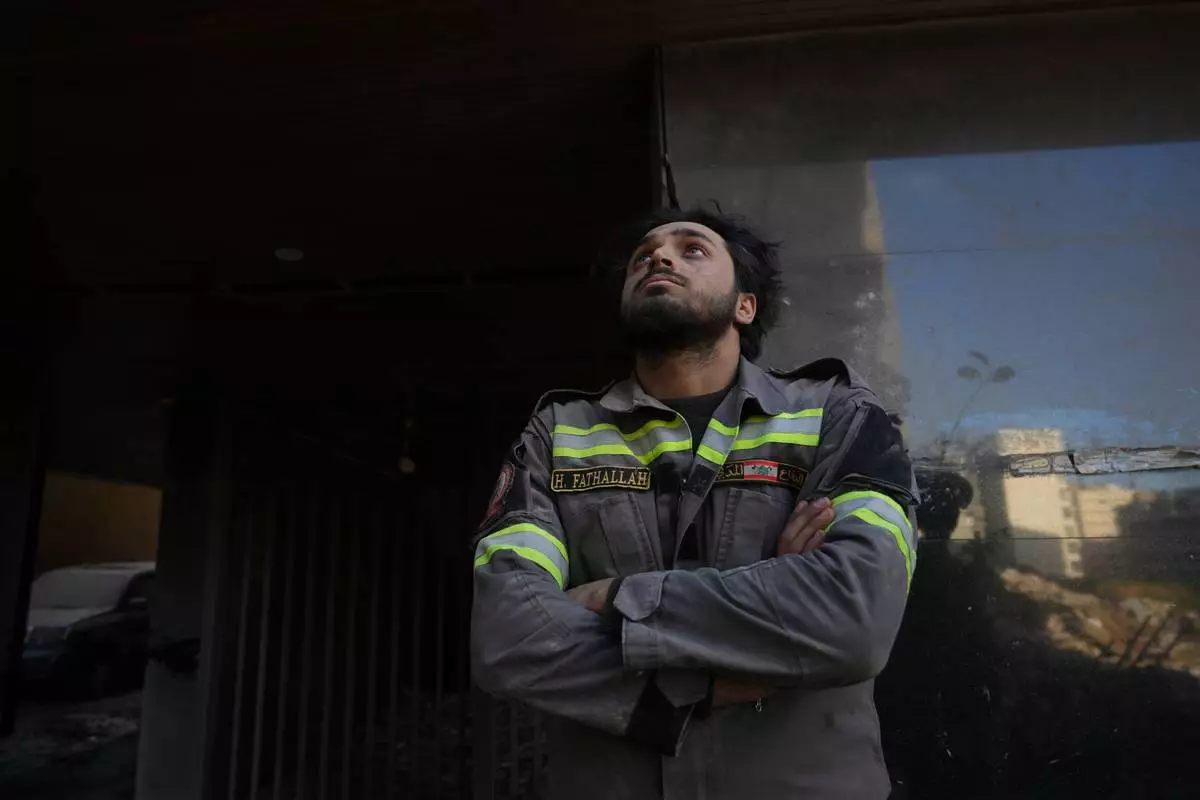
A Lebanese civil defense worker looks upward near the site of a building destroyed in an Israeli airstrike a day earlier in central Beirut, Lebanon, Thursday, April 9, 2026. (AP Photo/Hassan Ammar)
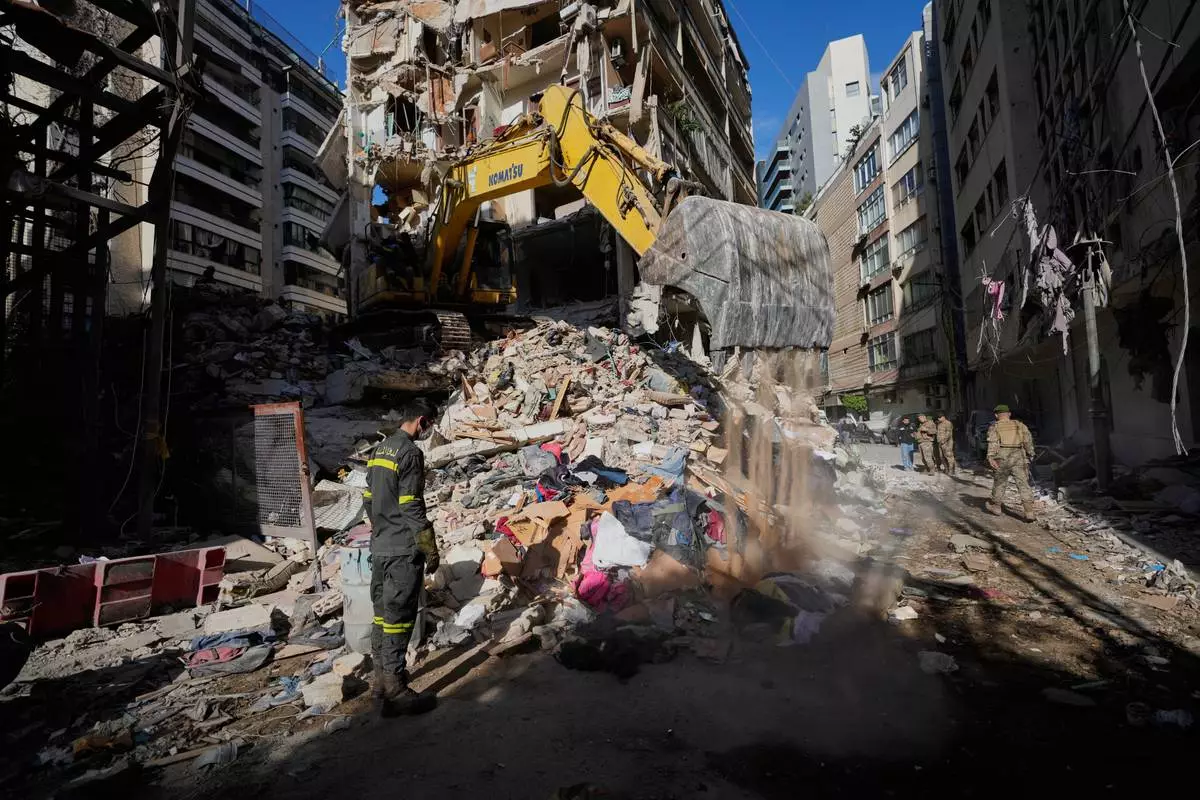
A Lebanese civil defense worker looks on as an excavator operates on the rubble of a building destroyed in an Israeli airstrike a day earlier in Beirut, Lebanon, Thursday, April 9, 2026. (AP Photo/Hussein Malla)
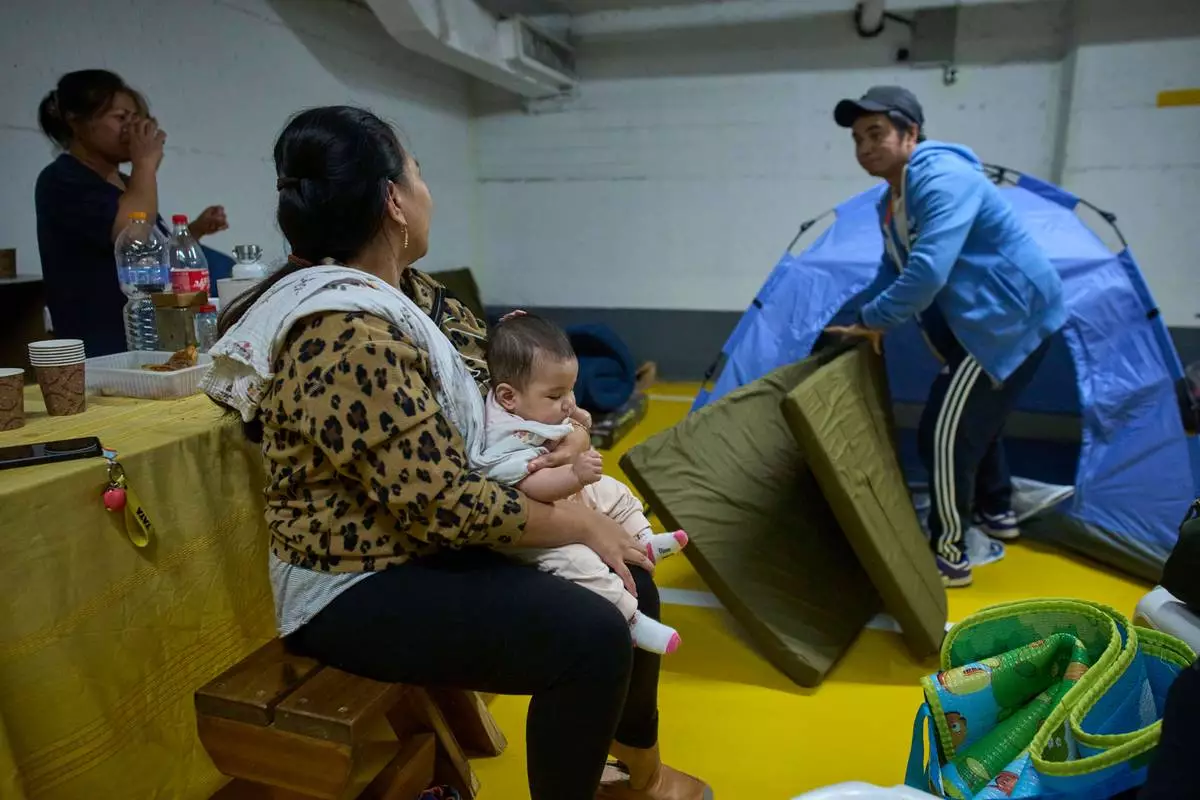
People residing in an underground shelter pack up their belongings as they prepare to leave after the announcement of a two-week ceasefire agreement between Iran and the US, in Tel Aviv, Israel, Thursday, April 9, 2026. (AP Photo/Ohad Zwigenberg)
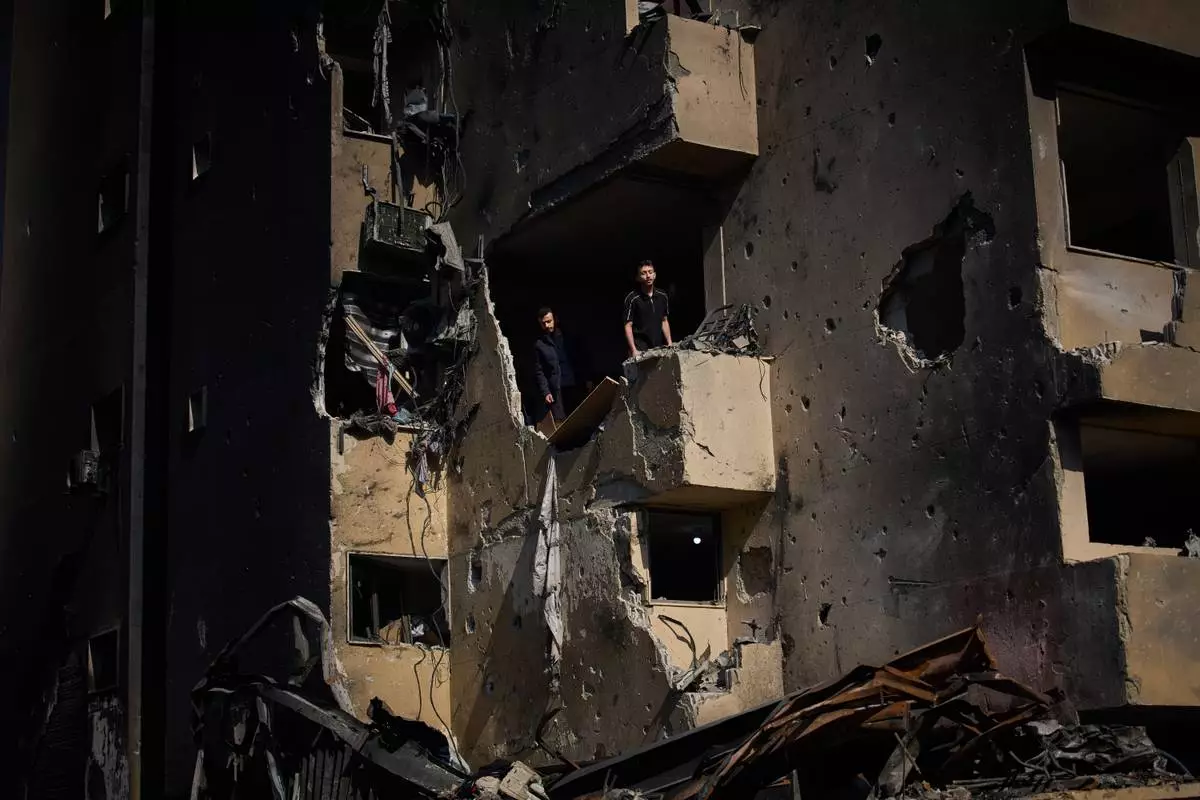
Men inspect the damage to their home destroyed in an Israeli airstrike a day earlier in Beirut, Lebanon, Thursday, April 9, 2026. (AP Photo/Emilio Morenatti)
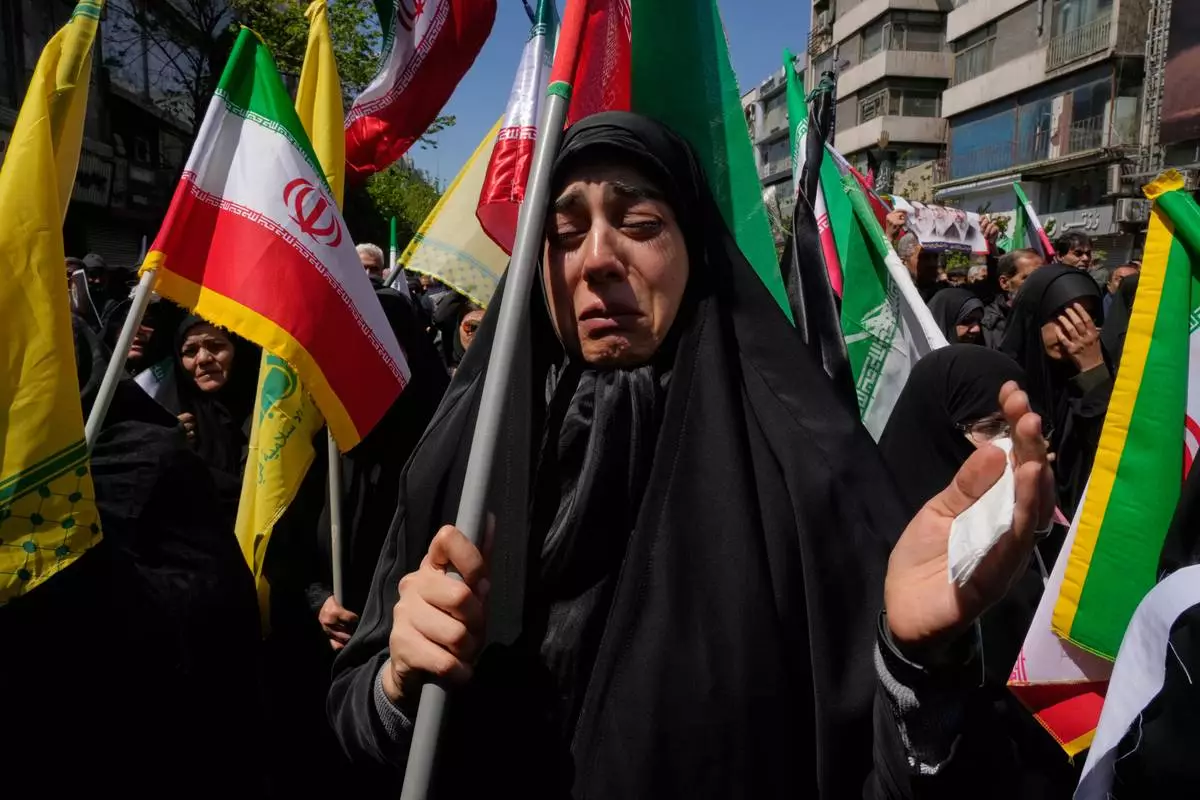
A government supporter weeps during a mourning ceremony marking the 40th day since the death of Iranian Supreme Leader Ayatollah Ali Khamenei, who was killed in the U.S. and Israel strikes in Tehran, Iran, Thursday, April 9, 2026. (AP Photo/Vahid Salemi)
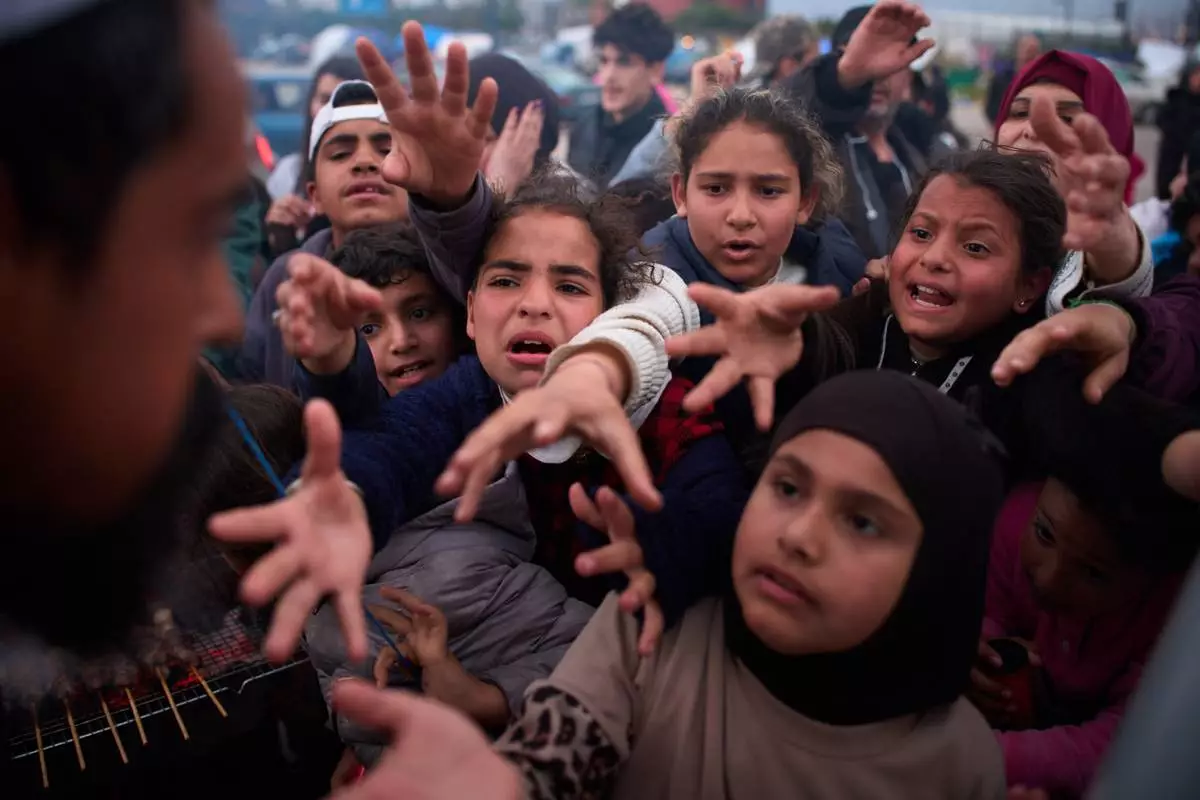
Displaced families extend their hands while waiting for donated food beside the tents they use as shelters after fleeing Israeli bombardment in southern Lebanon, in Beirut, Lebanon, Thursday, April 9, 2026. (AP Photo/Emilio Morenatti)