Skip to Content Facebook Feature Image

Gaza marks 6 months of a ceasefire that may offer lessons for the Iran war

News

Gaza marks 6 months of a ceasefire that may offer lessons for the Iran war
News

News

Gaza marks 6 months of a ceasefire that may offer lessons for the Iran war

2026-04-10 19:09 Last Updated At:19:10

DEIR AL-BALAH, Gaza Strip (AP) — Friday marks six months since Gaza's ceasefire deal took effect, a milestone largely lost in the confusion over the new and even more fragile ceasefire in the Iran war.

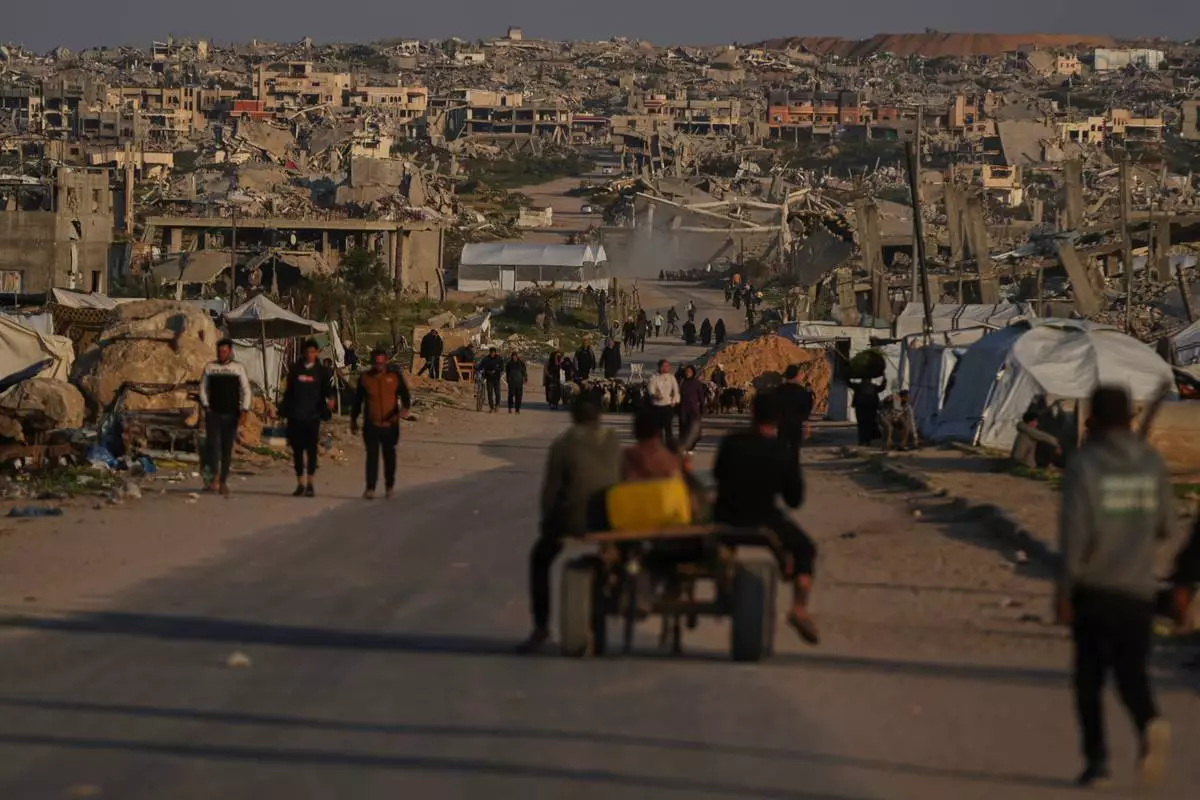
The ravaged Palestinian territory of 2 million people has seen the most intense fighting stop between Israeli forces and Hamas-led militants. But most of the ceasefire work remains to be done, from disarming Hamas and ending its two-decade rule to deploying an international stabilization force and beginning vast reconstruction. Gaza residents are in limbo, with limited aid entering through a single, Israeli-controlled border post.

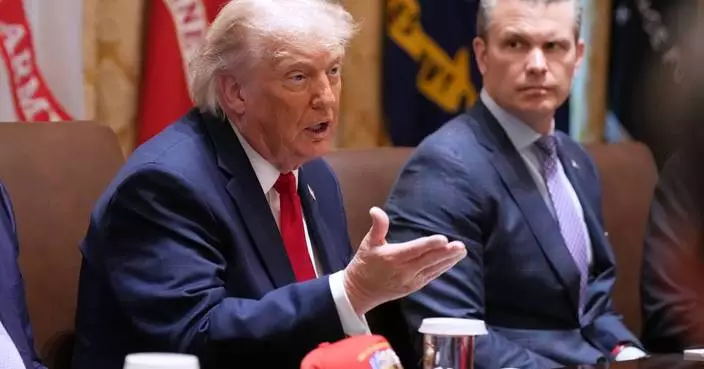
Such challenges could represent what’s to come in the latest war, as U.S. President Donald Trump’s approach to peacemaking appears to be stopping bombardment and leaving the bigger picture for others to work out.

Whether Trump can force through that kind of deal on Iran, with more actors in play and global markets quivering at every statement, is yet to be seen.

Focusing on a deal's details is crucial. Already the Iran war's two-week ceasefire has created deadly confusion over Lebanon as Israel insists the deal doesn’t apply there and continues to attack the Iranian-backed Hezbollah, while Iran insists it does and threatens to upend the agreement. Israel made a surprise announcement Thursday authorizing direct negotiations with Lebanon, despite the lack of diplomatic ties.

Not long ago, the U.S.-created and Trump-led Board of Peace kicked off with $7 billion in pledges and sweeping intentions of resolving not only Gaza but other conflicts that emerge around the world.

Nine days after the board's initial meeting, the U.S. and Israel attacked Iran.

The Board of Peace has not met again, and it's still waiting for Hamas to respond to its proposal on disarming, a major concession and perhaps the hardest step. Hamas’ charter calls for destroying Israel.

A U.S. official said Hamas has not been given a definite deadline to respond to the proposal but added that “patience is not unlimited.” The official was not authorized to comment publicly and spoke on condition of anonymity.

The lack of a deadline can weaken pressure to act. Meanwhile, diplomacy is busy putting out different flames.

Board of Peace director Nickolay Mladenov told the U.N. Security Council last month that the world should not lose sight of Gaza as a new war flared. The choice in Gaza is between “a renewed war, or a new beginning; the status quo, or a better future,” he added. “There is no third option.”

Palestinians might suggest a third option: neglect.

Six months into the Gaza ceasefire that took effect on Oct. 10, little beyond the largely silenced explosions has changed.

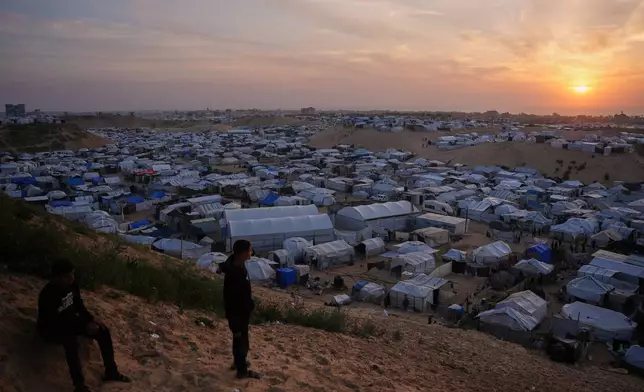
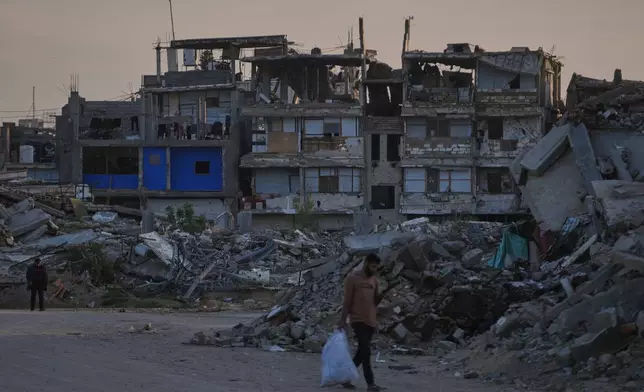
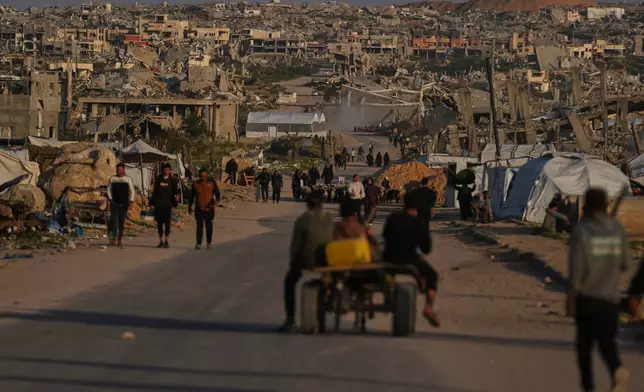
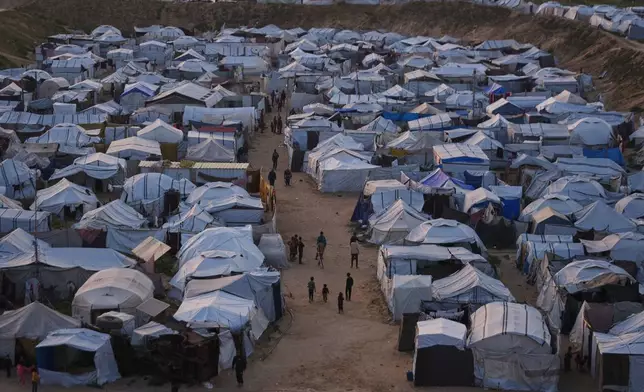
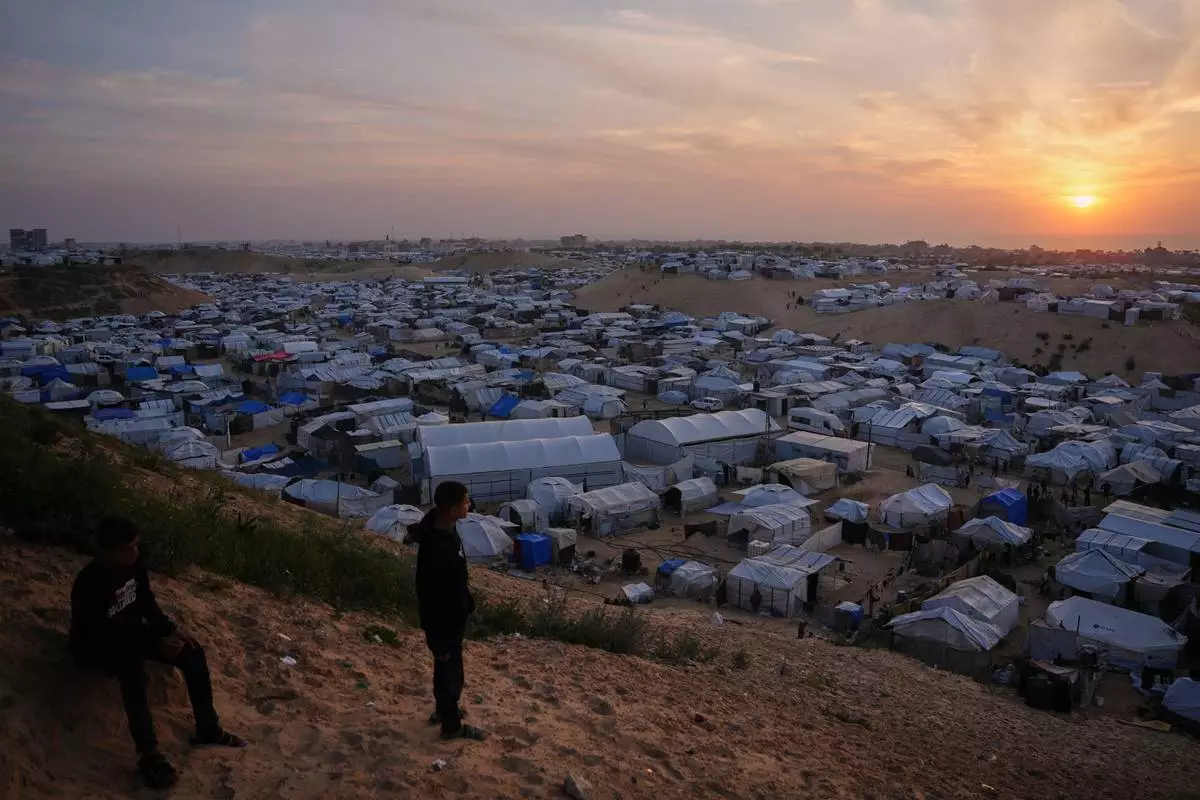
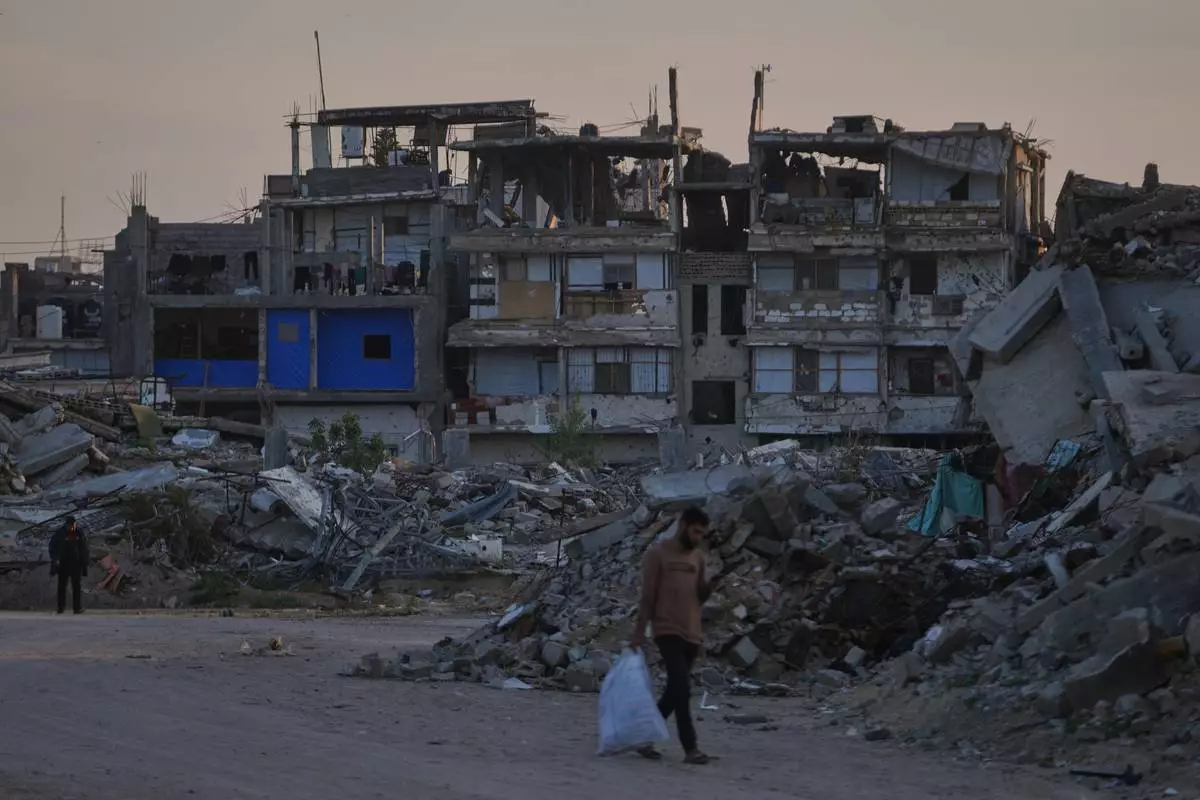
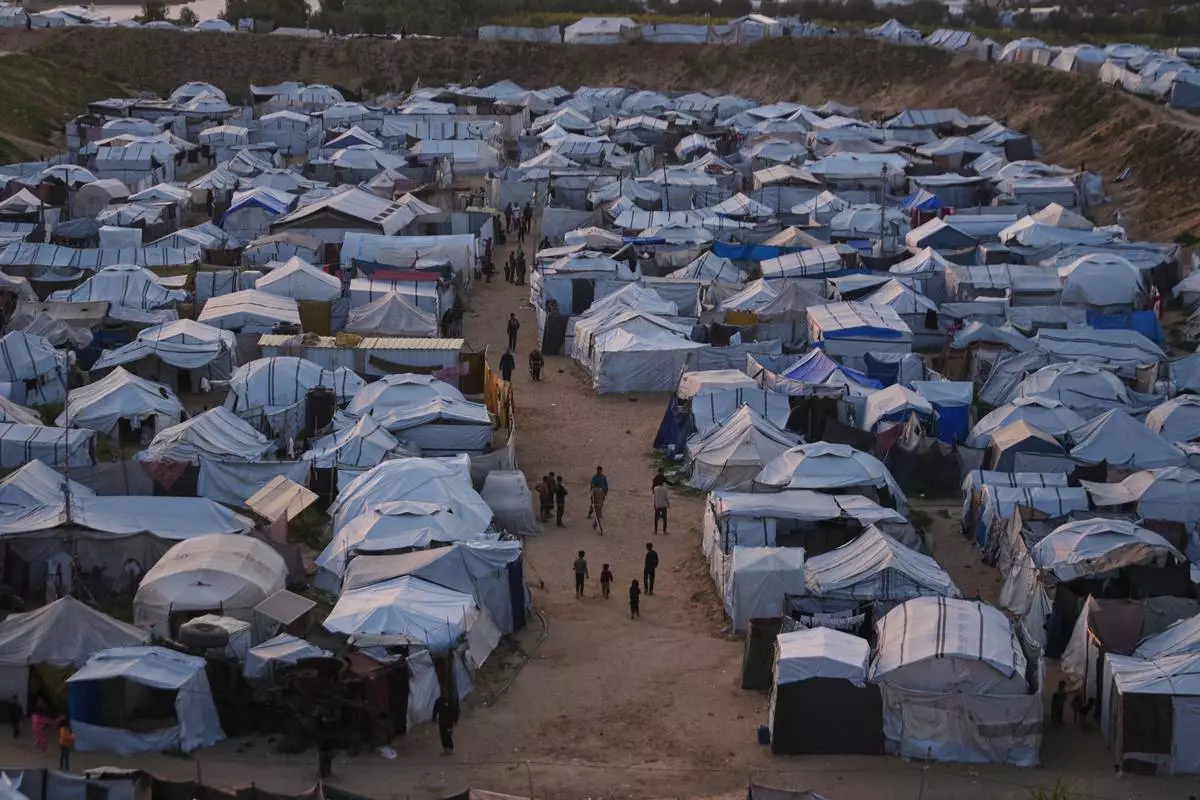
Vast tent camps house most of the territory’s population. Other residents shelter in damaged apartment buildings. Health workers and other humanitarian workers say there has been little progress in the expected surge of medical supplies and other aid.

The U.S. 20-point ceasefire plan for Gaza is largely failing on the humanitarian front, five international aid groups said in a scorecard released Thursday. They said conditions have deteriorated further in Gaza since the Iran war began.

“During the first two weeks of March 2026, trucks entering Gaza declined by 80%, and the price of basic goods increased dramatically,” they said. Medical evacuations have stalled.

Palestinians expressed fading hopes for any immediate improvement in their lives.

"There is pollution and disease. It’s as if there’s no ceasefire at all,” said Maysa Abu Jedian, a displaced woman from Beit Lahiya.

“The war is still ongoing and life is still terrible as it is,” said Eyad Abu Dagga, also sheltering in a camp in Khan Younis.

Tents rippled in the breeze, and children played on the sand against a backdrop of shattered buildings.

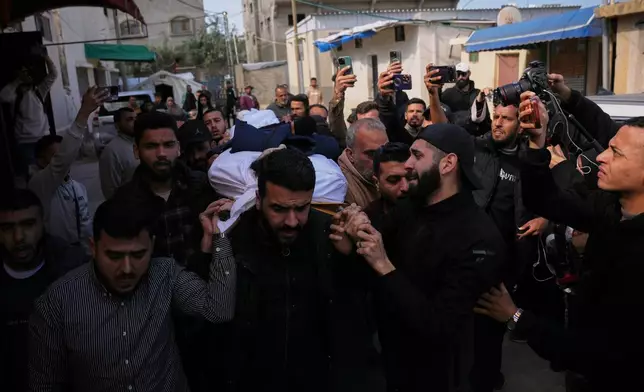
While the heaviest fighting has subsided, Israeli forces have carried out airstrikes and fired on Palestinians near military-held zones. Militants have carried out shooting attacks on troops, and Israel has said its strikes are in response to that and other ceasefire violations.

As of Thursday, Israeli attacks have killed 738 people in the six months since the ceasefire, according to Gaza’s Health Ministry. The ministry, part of the Hamas-led government, maintains detailed casualty records that are seen as generally reliable by U.N. agencies and independent experts. It does not give a breakdown of civilians and militants.

Overall, the ministry says 72,317 Palestinians had been killed since the war in Gaza began with the Oct. 7, 2023, Hamas-led attack on Israel.

Unwavering focus on Gaza, once at the heart of a passionate international outcry, has been lost with the rise of a new regional war. That, too, has decreased pressure for progress on the ceasefire.

The humanitarian groups' scorecard notes that any forward movement on aid issues in the Palestinian territory has “generally required sustained diplomatic pressure at the highest levels, particularly from the United States. That pressure, however, has not been applied consistently or at the scale needed to secure full implementation.”

The Trump administration is not the only player to be distracted. The entire Middle East, including key Gaza mediators Egypt and Qatar, now focuses on Iran and that war’s effects on their economies.

With the added uncertainty over Israel’s renewed war with Hezbollah in Lebanon, there could be even less interest from countries to contribute troops to a Gaza stabilization force. One of the few confirmed troop contributors, Indonesia, already has seen three of its peacekeepers in southern Lebanon killed in recent days.

Anna reported from Lowville, New York. Associated Press writers Matthew Lee in Washington and Edith M. Lederer at the United Nations contributed.

Find more of AP’s coverage at https://apnews.com/hub/israel-hamas-war
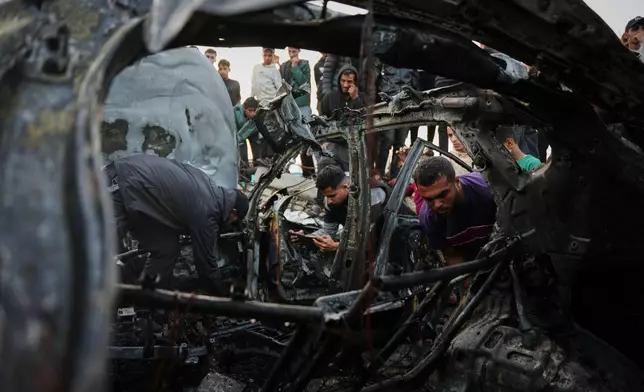
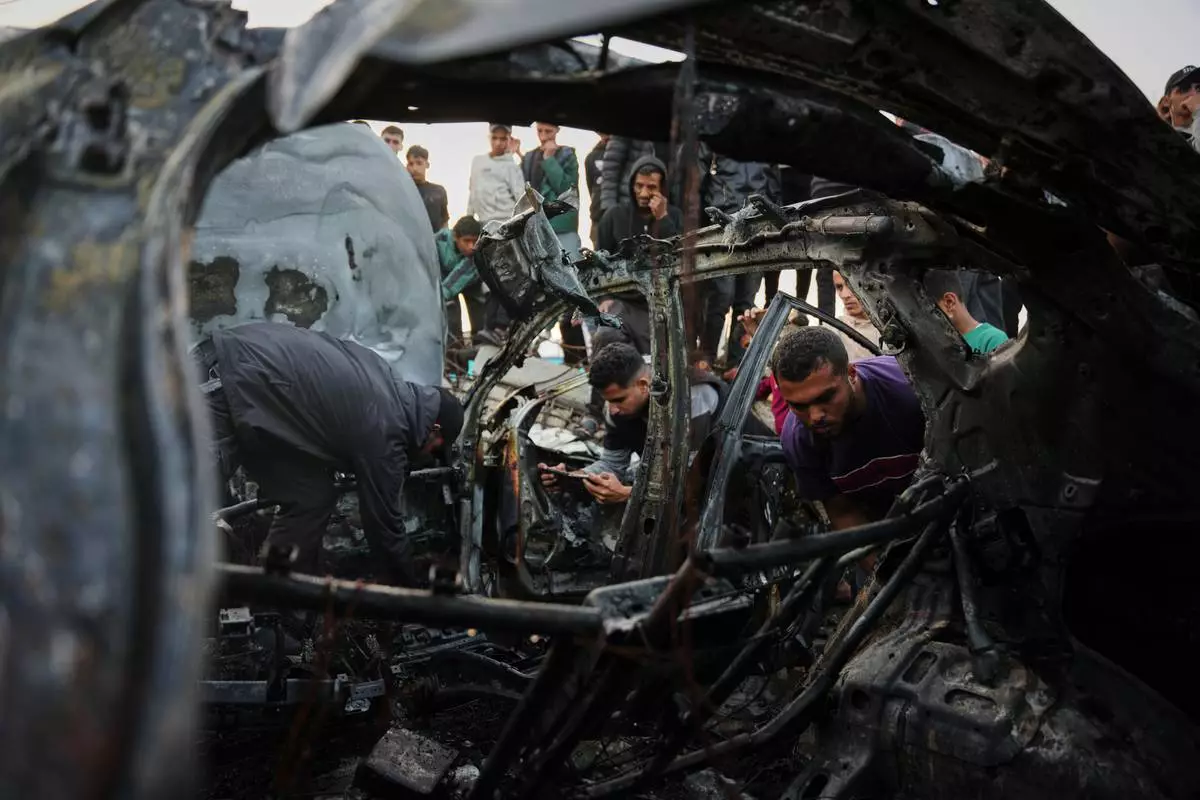
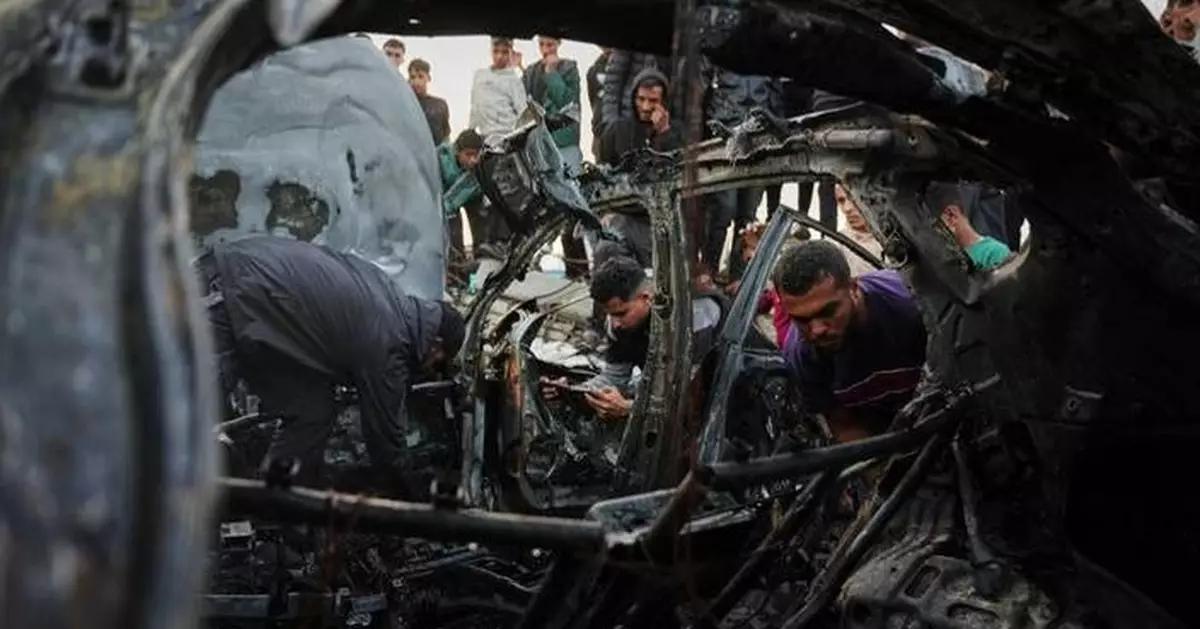
Palestinians inspect a vehicle struck by an Israeli airstrike in the Maghazi refugee camp in the central Gaza Strip, Saturday, April 4, 2026. (AP Photo/Abdel Kareem Hana)


Palestinians inspect a vehicle struck by an Israeli airstrike in the Maghazi refugee camp in the central Gaza Strip, Saturday, April 4, 2026. (AP Photo/Abdel Kareem Hana)
U.S. President Donald Trump appeared to cast doubt on the effectiveness of the two-week ceasefire over Iran's continued chokehold on the Strait of Hormuz, while Kuwait accused Iran and its proxies of launching drone attacks despite the ceasefire.

Iran’s paramilitary Revolutionary Guard denied launching attacks Thursday night on Persian Gulf states.

Israeli Prime Minister Benjamin Netanyahu offered a potential boost to ceasefire efforts in the region when he said he had approved direct talks with Lebanon. The Lebanese government has not responded as of Friday morning.

The announcement came after Israel’s pounding of Beirut Wednesday killed more than 300 people. The negotiations are expected next week in Washington, according to a person familiar with the matter.

Questions remained over what will happen to Iran’s stockpile of enriched uranium at the heart of tensions, how and when normal traffic will resume through the Strait of Hormuz, and what happens to Iran’s ability to launch future missile attacks and support armed proxies in the region.

Talks between the United States and Iran on a resolution to the conflict are expected to start Saturday in Islamabad, with the White House saying Vice President JD Vance would lead the U.S. delegation.

Here is the latest:

British Prime Minister Keir Starmer says reopening the Strait of Hormuz is vital to strengthening a “fragile” ceasefire in the U.S.-Israeli war on Iran.

Speaking Friday as he left Qatar after a three-day visit to the Gulf, Starmer said leaders in the region were adamant that “there can’t be tolling or restrictions” on commercial shipping through the waterway, which has effectively been shut by Iran.

Starmer said he told U.S. President Donald Trump in a call on Thursday that ending the conflict “has to involve” Iran’s Gulf neighbors, who “have very strong views on the Strait of Hormuz.” Britain is involved with other countries in military planning to ensure security in the strait, if the ceasefire turns into a longer peace.

The World Food Program said that 874,000 people in Lebanon were already facing “acute food insecurity” before the latest escalation. Despite the risks, the WFP is continuing to send humanitarian convoys to southern Lebanon to villages on the border with Israel, which have been subject to heavy bombing, the agency said in a statement.

It says it has provided emergency food and assistance to over 440,000 people since March 2.

Some Beirut residents, desperate for any sign of the war ending, welcomed the prospect of talks between their government and Israel for the first time in decades.

“Negotiations are the only way to peace,” said Iyad al‑Kilani. “People are displaced, living on the streets. People aren’t living.”

Other residents, sleeping in tents and cars after fleeing their homes in southern Lebanon, where Hezbollah is battling an Israeli ground invasion and heavy aerial bombardment, said they didn’t trust Israel’s intentions in the talks. “If we negotiate, we will be negotiating with someone who only understands force,” said Rabih Hammoud. “They (Israel) must stop the war and leave. Then we can talk.”

Israeli Prime Minister Benjamin Netanyahu says the Israeli military will continue strikes on the Iran-backed group while the talks in Washington focus on disarming Hezbollah. In just one of many obstacles, the Lebanese government has no direct control over Hezbollah. It also insists on a ceasefire before wider discussions about the future of Hezbollah can take place.

In the Ain al-Mraisseh neighborhood along Beirut’s coastal corniche, where an Israeli strike on Wednesday wiped out the bottom floors of a multi-story building, causing a partial collapse, stunned residents tried to salvage whatever furniture and personal mementos they could find in the rubble.

Although now homeless, some men at the scene expressed gratitude that they lost only their apartments, not their loved ones. The strikes killed more than 300 people and wounded over 1,800, authorities said.

“There is no substitute for family,” said Wissam Tabila, 35. “Everything else can be replaced. The house and other things can be replaced, but parents, children, or a wife, this is the most important.”

The World Health Organization said Israel forces had previously issued an evacuation order for Beirut’s Jnah area, which includes the Rafik Hariri — the main public hospital in the city — and Al Zahraa Hospital.

WHO’s top representative in Lebanon said Friday that Israel provided “assurance” after late night talks with U.N. officials that Israeli forces would not attack the hospitals as they continue military action against Hezbollah.

Dr. Abdinasir Abubakar, speaking to reporters in Geneva, said U.N. officials “got some assurance back saying that these two hospitals will not be attacked.”

Separately, Abubakar said Israeli forces warned that “ambulances will be attacked.” An Israeli army spokesman wrote on X that Hezbollah is “deliberately using ambulances for terror purposes.” Abubakar said WHO was not able to independently confirm those claims.

A top medical official in Iran has put the death toll in the war with Israel and the United States at over 3,000 people.

The state-run IRAN daily newspaper quoted Abbas Masjedi, head of the Legal Medicine Organization, as saying “more than 3,000 people were killed in enemy attacks.” Masjedi did not elaborate on the breakdown in civilian versus military casualties. Iran’s government has not provided any definitive death toll from the weekslong war.

South Korean President Lee Jae Myung shared on his X account what appeared to be a 2024 video showing Israeli soldiers throwing a body from a rooftop in the occupied West Bank, and wrote: “humanitarian law must be observed under any circumstances.”

Lee in his posts Friday did not make a direct comment on the ongoing conflict in the Middle East or Israel’s current war operations, but said “lessons marked on the painful wounds of the past must not be repeated as recurring tragedies.”

Lee said the video, which he reposted from another account, was from a “shocking” incident in September 2024 that was also investigated by Israeli authorities. Lee’s office did not immediately provide an explanation why he posted those messages. Lee’s government earlier on Friday said it was sending senior diplomat Chung Byung-ha as a special envoy to Iran to discuss the safety of its citizens and Iran’s chokehold on the Strait of Hormuz.

Singapore’s Prime Minister Lawrence Wong said the island state will not restrict fuel exports from its refineries due to Iran war disruptions. Singapore was Australia’s largest supplier of refined petroleum products.

“We do not plan to restrict exports. We didn’t have to do so even in the darkest days of COVID and we will not do so during this energy crisis,” Wong said at a news conference with his Australian counterpart Anthony Albanese. “It’s hypothetical. It won’t happen,” Wong added.

Albanese said Wong had given the same assurance in their bilateral meeting. “The prime minister’s just as confident in private as he is in public,” Albanese said.

Ukrainian military personnel shot down Iranian-designed Shahed drones in multiple Middle Eastern countries during the Iran war, President Volodymyr Zelenskyy said, describing the operations as part of a broader effort to help partners counter the same weapons used by Russia in Ukraine.

Zelenskyy made his first public acknowledgment of the operations Wednesday in remarks to reporters that were embargoed until Friday.

Zelenskyy said Ukrainian forces took part in active operations abroad using domestically produced, battle-tested interceptor drones.

Asian stocks were mostly up Friday while oil prices also rose on the fragile Iran war ceasefire and ahead of Iran-U.S. negotiations in Pakistan over the weekend.

South Korea’s Kospi was up 1.5% to 5,862.58. Tokyo’s Nikkei 225 climbed 1.9% to 56,952.60.

Hong Kong’s Hang Seng gained 0.8% to 25,954.15, while the Shanghai Composite index was also 0.8% higher at 3,996.34.

Brent crude, the international standard, was 1% higher at $96.92 per barrel. Benchmark U.S. crude was up 0.8% to $98.62 a barrel.

For oil prices, “$65-70 a barrel is not coming back,” Ajay Rajadhyaksha of Barclays wrote in a recent research note, referring to the pre-Iran war oil price levels. The bank predicts that Brent crude could remain at around $85 per barrel on average for this year.

“A ceasefire is not a refund,” he wrote. “Ceasefires end wars; they don’t undo them.”

Pakistan’s capital fell unusually quiet Friday as authorities locked down Islamabad ahead of high-stakes talks between the United States and Iran aimed at securing a lasting ceasefire after weeks of war.

Roads lay nearly empty, checkpoints were set up at major arteries, and a two-day public holiday kept residents indoors.

Behind the calm, diplomatic activity intensified.

U.S. Vice President JD Vance is set to leave for Pakistan Friday, while an Iranian delegation was also expected there.

Security was tightened, with additional troops and police deployed across Islamabad.

Talks are set to begin Saturday, drawing global attention and placing Islamabad at the center of efforts to bring an end to the war.

Multiple times overnight into Friday morning, people around Iran’s capital, Tehran, and other parts of the country said they heard what sounded like air defense fire and explosions.

However, Iran’s government did not acknowledge any attack during that period.

After past exchanges of fire with Israel, similar incidents happened as troops remained on edge.

Japan said it will release an additional 20 days’ worth of oil reserves in May, in a second round address supply uncertainty over the war in the Middle East.

Japanese Prime Minister Sanae Takaichi said the planned release of the government reserves will start in early May, after an earlier release last month.

Japan started releasing about 50 days’ worth of oil reserves in March, including from those held by the state, the private sector and oil-producing Gulf nations.

As of April 6, Japan had 230 days’ worth oil reserves, including 143 days’ worth in government stockpiles, according to the Natural Resources and Energy Agency.

Takaichi said her government is working to secure oil imports via routes that do not include the Strait of Hormuz, while Japan seeks to diversify suppliers.

Pakistan said Friday it would issue visas on arrival for those traveling to Islamabad for the Iran-U.S. talks, signaling the interest in the world’s media in the event.

A Lebanese civil defense worker looks upward near the site of a building destroyed in an Israeli airstrike a day earlier in central Beirut, Lebanon, Thursday, April 9, 2026. (AP Photo/Hassan Ammar)

A Lebanese civil defense worker looks upward near the site of a building destroyed in an Israeli airstrike a day earlier in central Beirut, Lebanon, Thursday, April 9, 2026. (AP Photo/Hassan Ammar)

A Lebanese civil defense worker looks on as an excavator operates on the rubble of a building destroyed in an Israeli airstrike a day earlier in Beirut, Lebanon, Thursday, April 9, 2026. (AP Photo/Hussein Malla)

A Lebanese civil defense worker looks on as an excavator operates on the rubble of a building destroyed in an Israeli airstrike a day earlier in Beirut, Lebanon, Thursday, April 9, 2026. (AP Photo/Hussein Malla)

People residing in an underground shelter pack up their belongings as they prepare to leave after the announcement of a two-week ceasefire agreement between Iran and the US, in Tel Aviv, Israel, Thursday, April 9, 2026. (AP Photo/Ohad Zwigenberg)

People residing in an underground shelter pack up their belongings as they prepare to leave after the announcement of a two-week ceasefire agreement between Iran and the US, in Tel Aviv, Israel, Thursday, April 9, 2026. (AP Photo/Ohad Zwigenberg)

Men inspect the damage to their home destroyed in an Israeli airstrike a day earlier in Beirut, Lebanon, Thursday, April 9, 2026. (AP Photo/Emilio Morenatti)

Men inspect the damage to their home destroyed in an Israeli airstrike a day earlier in Beirut, Lebanon, Thursday, April 9, 2026. (AP Photo/Emilio Morenatti)

A government supporter weeps during a mourning ceremony marking the 40th day since the death of Iranian Supreme Leader Ayatollah Ali Khamenei, who was killed in the U.S. and Israel strikes in Tehran, Iran, Thursday, April 9, 2026. (AP Photo/Vahid Salemi)

A government supporter weeps during a mourning ceremony marking the 40th day since the death of Iranian Supreme Leader Ayatollah Ali Khamenei, who was killed in the U.S. and Israel strikes in Tehran, Iran, Thursday, April 9, 2026. (AP Photo/Vahid Salemi)

Displaced families extend their hands while waiting for donated food beside the tents they use as shelters after fleeing Israeli bombardment in southern Lebanon, in Beirut, Lebanon, Thursday, April 9, 2026. (AP Photo/Emilio Morenatti)

Displaced families extend their hands while waiting for donated food beside the tents they use as shelters after fleeing Israeli bombardment in southern Lebanon, in Beirut, Lebanon, Thursday, April 9, 2026. (AP Photo/Emilio Morenatti)

Recommended Articles