HO CHI MINH CITY, VIETNAM - Media OutReach Newswire - 10 April 2026 - Vinhomes Green Paradise - Can Gio is introducing a new concept to Vietnam's real estate landscape: critical mass. Located immediately adjacent to a mega-city (Ho Chi Minh City), with nearly 3,000 hectares, an integrated all-in-one model, and a professional commitment to ESG principles, the developer is building not just a township, but a lasting legacy for both people and the planet.

Troy Griffiths, Deputy Managing Director of Savills Vietnam, underscored Vietnam’s growing prominence in Asia’s competitive investment landscape at the forum “Foreign Capital Inflows – Opportunities for Vietnam’s Real Estate Market”.
International experts have increasingly identified a defining distinction within Southeast Asia's real estate landscape. While some countries host numerous fragmented, small-scale developments, the ability to achieve true critical mass - a fully integrated, large-scale urban ecosystem - remains rare.
Critical mass refers to master-planned environments where residential, educational, healthcare, retail, and leisure components coexist and are seamlessly linked by robust transport infrastructure. This model has become the defining competitive advantage of Vinhomes-led developments.
Simultaneously, ESG considerations have evolved from a compliance checkbox into a strategic differentiator, increasingly shaping capital allocation. Institutional investors are no longer driven solely by short-term yield but are prioritizing long-duration assets that demonstrate sustainability, resilience, and measurable societal impact.
Vietnam continues to stand out due to its stable political framework, consistent macroeconomic management, and strong FDI performance. In Q1 2026 alone, FDI inflows rose approximately 22% year-on-year, with Ho Chi Minh City recording an exceptional 220% surge. Experts at the forum reached a consensus: global capital is entering a new allocation cycle, concentrating in developments capable of generating intrinsic value through operational sustainability and integrated urban functionality.
The Rise of ESG-Driven Integrated Ecosystems
Geopolitical instability and energy market disruptions have accelerated demand for next-generation urban models, specifically green, smart, and sustainable mega-urban developments structured as holistic ecosystems. Stephen Higgins, Director of Capital Markets at Cushman & Wakefield, noted that contemporary capital flows increasingly target assets with sufficient scale to form comprehensive ecosystems, what he describes as "urban marvels."
Vietnam holds a unique structural advantage: large-scale developments exceeding 1,000 hectares, common in emerging urban corridors, offer rare opportunities for fully integrated master planning, a scale virtually unattainable in many mature markets. ESG standards have become decisive in investment underwriting. While ESG gained traction in the early 2000s, its acceleration post-2020, following net-zero commitments by 2050, has been dramatic. In Vietnam, both investors and multinational tenants prioritize ESG-compliant assets for higher occupancy rate, lower operational risk, and long-term value preservation.
Although Vietnam remains at an early stage in ESG-aligned real estate, it benefits from a "late-mover advantage," adopting global best practices without legacy constraints. Large-scale projects by established developers can create market-wide spillover effects, raising environmental standards, reinforcing social responsibility and setting new benchmarks for governance.
Infrastructure as the Anchor of Capital Allocation
As Griffiths emphasized, capital tends to "follow infrastructure." Metro systems, ring roads, airports, and seaports reshape urban geography and redefine growth corridors. Areas once considered peripheral transform into economic hubs, while traditional centers may gradually lose dominance. This dynamic enables forward-looking investment based on anticipated infrastructure-driven value creation.
Can Gio exemplifies this shift. Historically constrained by limited connectivity, it remained excluded from previous growth cycles. However, with major infrastructure projects underway, market fundamentals are changing decisively. Griffiths noted that coastal destinations are globally competitive; to differentiate, Vietnam must offer compelling value in pricing, quality, and integrated experiences within master-planned estates. Few markets achieve the critical mass required for a fully self-sufficient urban ecosystem. Developments led by Vingroup, such as Vinhomes Green Paradise in Can Gio, provide residents with comprehensive amenities (education, healthcare, wellness, entertainment) within a unified urban framework, supported by strong transport connectivity, ensuring accessibility and long-term viability.
A Blueprint for Integrated Living: The Scale and Scope of Vinhomes Green Paradise
Against this backdrop, Vinhomes Green Paradise is emerging as a flagship next-generation asset in Asia. The convergence of evolving investment preferences and infrastructure expansion has created a clear blueprint: large-scale, integrated urban developments capable of sustaining long-term operations and diversified revenue streams.
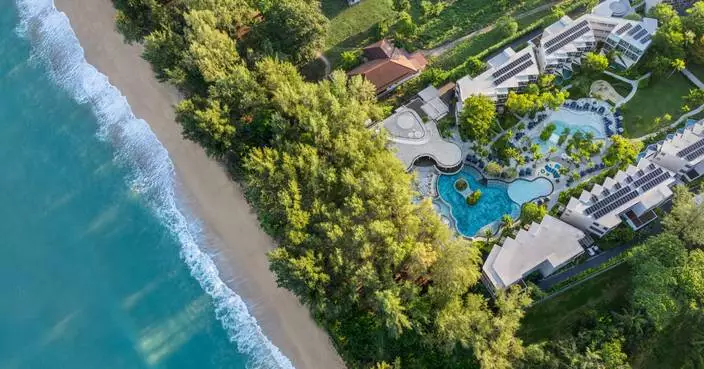
Strategically located along over 13 kilometers of coastline, close to Ho Chi Minh City, the project serves both residential and tourism demand. Its scale, approximately 2,870 hectares, enables a fully integrated master plan combining residential zones, hospitality assets, commercial centers, and leisure facilities. This multi-layered revenue structure reduces reliance on capital appreciation alone, enhancing income stability, aligning closely with institutional investment criteria, particularly for long-term capital seeking predictable cash flows.
A defining feature is its adjacency to a UNESCO-recognized biosphere reserve, providing a strong foundation for ESG-aligned development. As global funds tighten sustainability requirements, projects balancing economic growth with environmental preservation hold distinct competitive advantage. Experts have drawn parallels between Vinhomes Green Paradise and global icons like Marina Bay Sands in Singapore and Palm Jumeirah in Dubai. Notably, no other location in Asia currently offers the conditions to replicate such a development so close to an existing major metropolis, positioning this project as a uniquely scarce asset.
Large conglomerates like Vingroup possess the execution capability to deliver such complexity, offering a diverse product mix, villas, high-end apartments, smart urban infrastructure, within a single ecosystem. Capital from markets such as Japan is increasingly focusing on Vietnam, seeking entry opportunities.
Vietnam is entering a new investment cycle, characterized by macroeconomic stability, accelerated infrastructure development, and rapid urbanization. These factors together create a strong gravitational pull for global capital. However, international capital is not merely seeking large markets, it seeks points of convergence where capital can be preserved and compounded over the long term.
In this context, Vinhomes Green Paradise is positioning itself as a new capital "sink" – where scale, location, ecosystem integration, and ESG alignment intersect. As often observed in early-stage investment cycles, the greatest advantages accrue to those who recognize structural growth patterns before they are fully priced into the market. Vietnam, and projects like Vinhomes Green Paradise, are increasingly entering this phase of asymmetric opportunity.
Hashtag: #Vinhomes
The issuer is solely responsible for the content of this announcement.
** This press release is distributed by Media OutReach Newswire through automated distribution system, for which the client assumes full responsibility. **