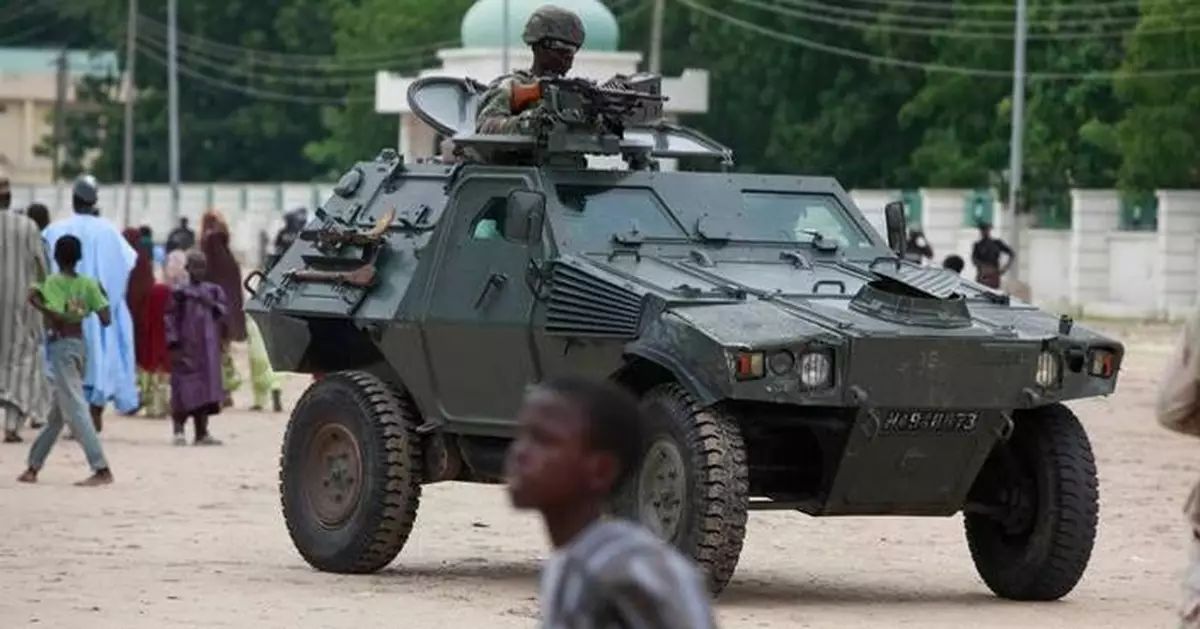
ABUJA, Nigeria (AP) — An army general and several soldiers were killed during an attempt to raid a military base in northeastern Nigeria early Thursday, officials said.
The attack occurred in Benisheikh in Borno State, army spokesman Michael Onoja said in a statement, but it was repelled.
Onoja described the assailants as “terrorists,” which is the term the military uses to describe members of Islamic militant groups in the northeast of the country.
President Bola Tinubu confirmed that a general was killed in the attack.
“The insurgents’ counterattack is a sign of desperation,” he said in a statement. “I extend my condolences to the families of our gallant soldiers, led by Brigadier General Oseni Omoh Braimah, who made the ultimate sacrifice in the defense of our country today in Borno State. The government will never forget their sacrifices.”
“Their sacrifices will not be in vain," Tinubu said. "Because of the courage and dedication of our troops on the front line, our resolve to defeat terrorism and all forms of violence across Nigeria is stronger than ever.”
Onoja didn’t specify how many soldiers were killed in the latest attack on military bases.
“This attack is a clear indication of the desperation of terrorist elements who, having suffered significant losses in recent operations, continue to resort to futile and ill-fated offensives against well-defended military positions,” he said. “Regrettably, the encounter resulted in the loss of a few brave and gallant soldiers who paid the supreme price in the line of duty.”
Nigeria, which is Africa’s most populous country, is battling a complex security crisis, especially in the north where there is a decadelong insurgency and several armed groups who kidnap for ransom.
Among the most prominent Islamic militant groups are Boko Haram and its breakaway faction, which is affiliated with the Islamic State group and known as Islamic State West Africa Province. There is also the IS-linked Lakurawa group operating in communities in the northwestern part of the country that borders Niger Republic.
The crisis has worsened recently to include other militants from the neighboring Sahel region, including the Jama’at Nusrat al-Islam wal-Muslimin, or JNIM, which claimed its first attack on Nigerian soil last year.
Earlier this year, the U.S. sent 200 troops and drones to Nigeria to assist the Nigerian military in fighting extremists. The U.S. military said that the American troops won’t engage in combat or have a direct operational role, and that Nigerian forces will have complete command authority.
The deployment is part of a new security partnership agreed on after U.S. President Donald Trump alleged that Christians are being targeted in Nigeria’s security crisis. The U.S. launched strikes against IS forces on Dec. 26.
Several thousand people in Nigeria have been killed, according to data from the United Nations. Analysts say not enough is being done by the government to protect its citizens.
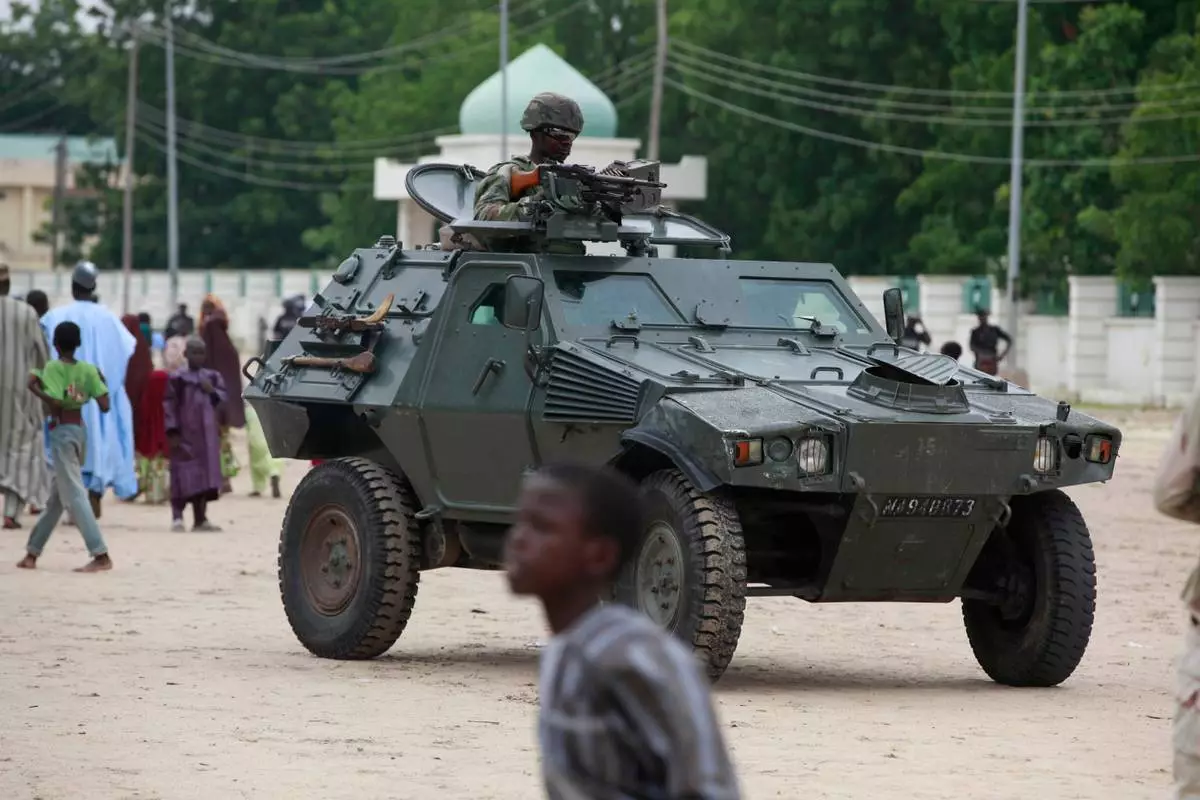
FILE - Nigerian soldiers ride on an armored personnel carrier during Eid al-Fitr celebrations in Maiduguri, in Borno state, Nigeria. Thursday, Aug. 8, 2013. (AP Photo/Sunday Alamba, File)
MELBOURNE, Australia (AP) — Two planes carrying 19 Australian women and children linked to the Islamic State group landed in Melbourne and Sydney on Tuesday, despite Australia's government warning that the returnees could face charges.
The government earlier confirmed seven women and 12 children were heading home on Qatar Airways flights, less than three weeks after a group of 13 people in similar situations returned to Australia’s two largest cities.
Two women with seven children flew to Melbourne. Four women with six children landed about an hour later in Sydney, news media reported.
It was no immediately apparent if any arrests were made at the airports.
Three of the four women on the earlier flights were charged with slavery and terrorism offenses and remain behind bars.
Home Affairs Minister Tony Burke said anyone among the 19 on their way to Australia who has committed crimes "can expect to face the full force of the law.”
“The government has not and will not provide any assistance to this group,” Burke said in a statement.
“These are people who have made the horrific choice to join a dangerous terrorist organisation and to place their children in an unspeakable situation,” he added.
Australian law enforcement and intelligence agencies have been preparing for their return since 2014 and have long-standing plans in place to manage and monitor them, Burke said.
“The priority of the government, as always, is the safety of the Australian community,” he said.
Prime Minister Anthony Albanese had earlier old Parliament: “I have nothing but contempt for anyone who has any sympathy for ISIS,” referring to IS by an acronym for the Islamic State of Iraq and Syria.
After the departure of the latest group, at least two Australians remain in Roj camp, a location in northeast Syria near the Iraq border where people linked to IS have been held since IS forces in the Middle East were defeated in 2019.
A mother who was prevented from returning to Australia in February by a temporary exclusion order did not not travel with the group.
The woman, who is aged around 29, had remained at Roj with her daughter who had been disabled by shrapnel wounds, The Australian newspaper reported.
She left her Sydney home at the age of 18 in 2015 to marry an IS fighter in Syria, the newspaper reported.
Their family has engaged a Sydney lawyer to challenge the order, which would bar the mother from Australia until February 2028.
Exclusion orders were created by laws introduced in 2019 to prevent defeated IS fighters from returning to Australia for up to two years.
The last Australian cohort returned from Syria on May 7, similarly without government help.
Kawsar Ahmed, also known Kawsar Abbas, 53, and her daughter Zeinab Ahmed, 31, were arrested when they landed in Melbourne over allegations that their family had bought a female Yazidi slave.
Janai Safar, 32, was arrested at Sydney Airport when she arrived with her 9-year-old son on charges of being a member of a terrorist organization and with entering or remaining in a region controlled by a terrorist organization.
Australian governments have repatriated Australian women and children from Syrian detention camps on two occasions. Other Australians have returned quietly without government assistance.
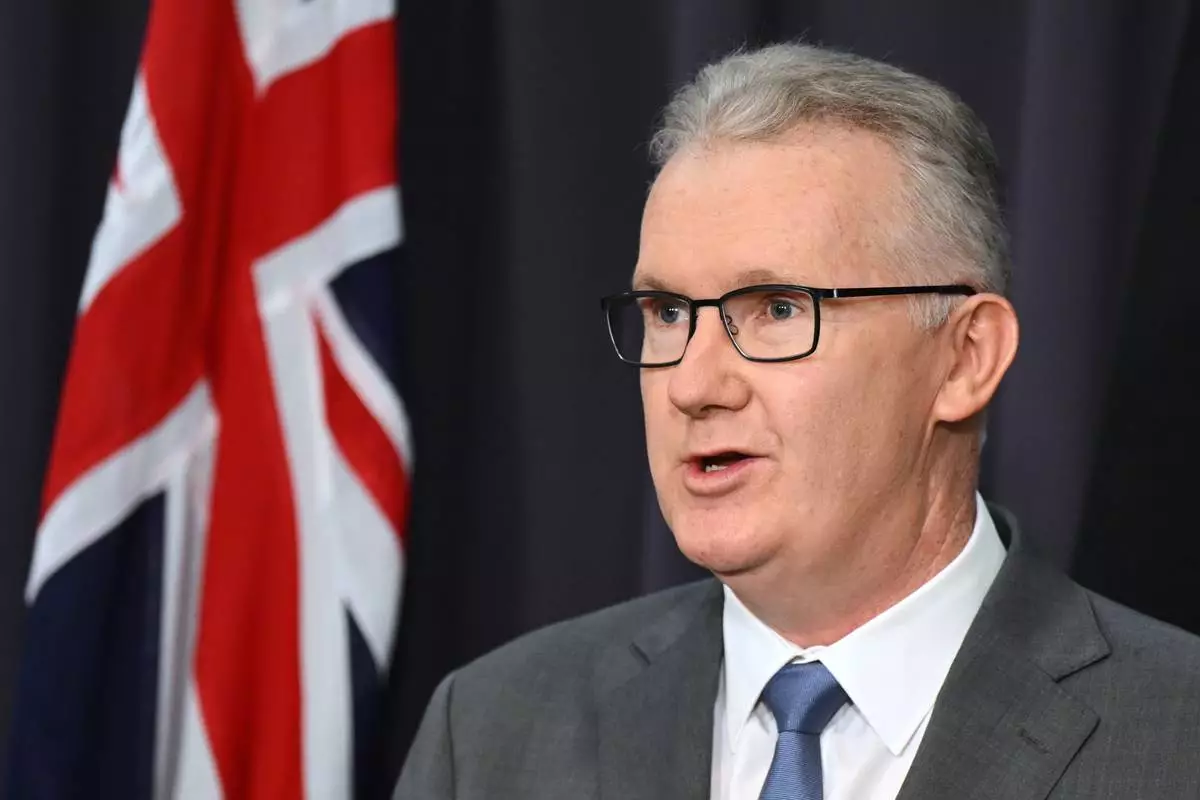
FILE - Australian Home Affairs Minister Tony Burke speaks to the media during a press conference at Parliament House in Canberra, Australia, Wednesday, March 11, 2026. (Lukas Coch/AAPImage via AP, File)
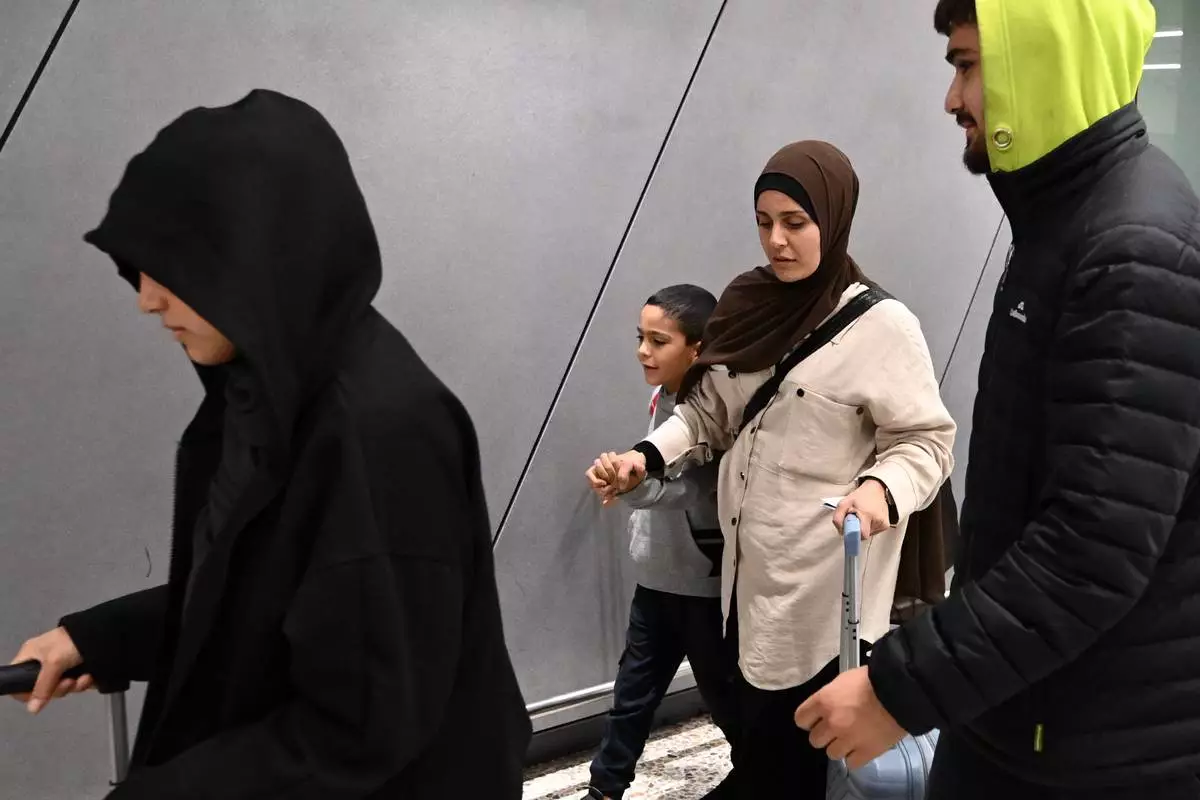
FILE - A group of supporters surround a woman and child with alleged ties to the Islamic State as they arrive at Melbourne international Airport, in Melbourne, Australia, Thursday, May 7, 2026. (Joel Carrett/AAP Image via AP, File)
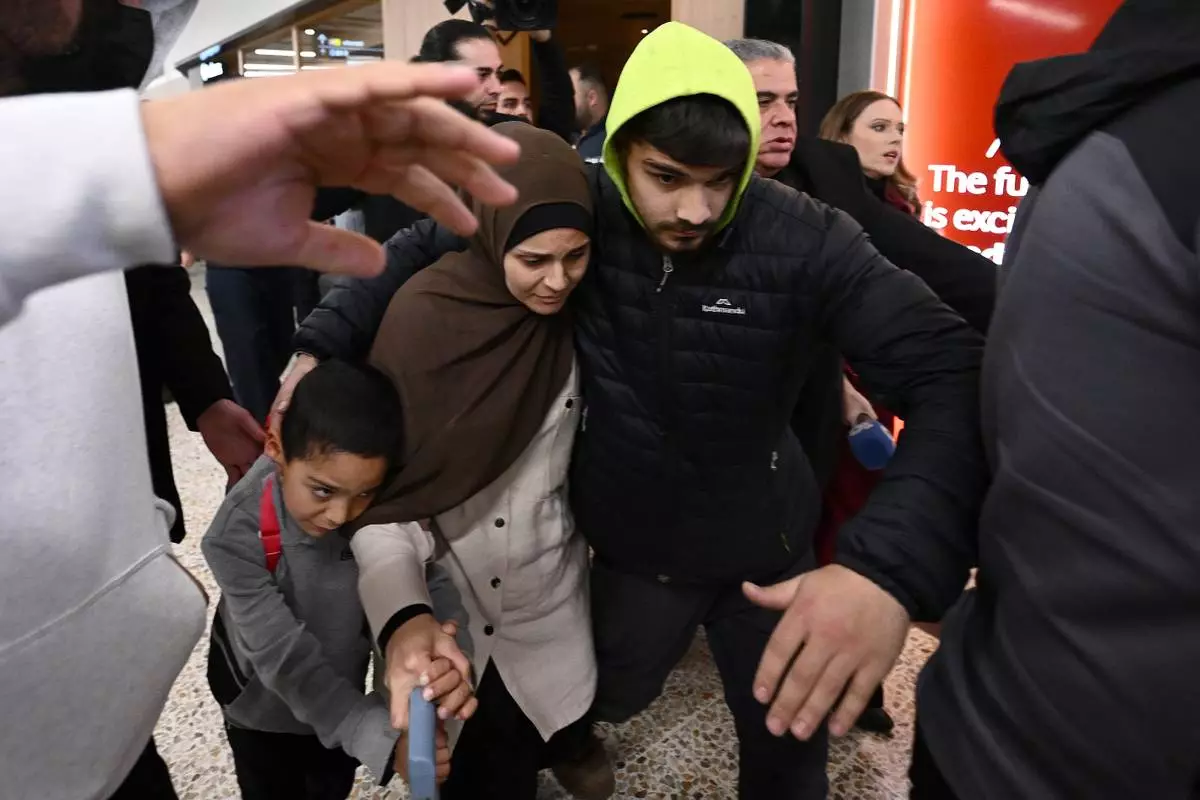
FILE - A group of supporters surround a woman and child with alleged ties to the Islamic State as they arrive at Melbourne international Airport, in Melbourne, Australia, Thursday, May 7, 2026. (Joel Carrett/AAP Image via AP, File)