The HumanX artificial intelligence (AI) conference wrapped up Thursday in San Francisco, drawing more than 6,500 experts and innovators from around the world to showcase breakthroughs and confront the technology’s double-edged impact.
Over four days, technologists, investors, startup founders and industry leaders tackled urgent challenges ranging from AI-driven cyber threats to its sweeping effect on jobs and the global workforce.
Speakers emphasized both the unprecedented potential of AI and the pressing need for responsible deployment, underscoring how the technology is reshaping security, employment and consumer innovation.
"People here are very serious about that because they recognize the power that we're all given. This is a Promethean gift that we've been given. And we can choose to deploy it rationally and responsibly, or we can choose to deploy it in rogue ways," said Stefan Weitz, co-founder and CEO of HumanX.
One of the most urgent risks spotlighted at the conference was AI's growing role in ransomware, where cybercriminals are now deploying AI agents and generative tools to intensify attacks and refine negotiations.
"You see them use agents and use generative AI to do communications, which is different than we would previously see with ransomware negotiations and have an even deeper understanding now of what's going on inside a business," said Wendi Whitmore, chief security intelligence officer at Palo Alto Networks.
Attendees also debated whether AI will displace workers or fundamentally redefine the nature of employment.
On the expo floor, startup Artisan drew attention with its proposal to replace human marketing hires with its AI system Ava, highlighting how automation is moving rapidly into core business functions.
"Really, the whole idea is we're freeing humans from work that they don't like to be doing. I think there will be a shift in employment, but not taking away jobs. Jobs are just going to be changing, right? Instead of the traditional types of jobs we might think of them today, they're now going to be looked at as in a little bit of a different way," said Jacob Ballachino, manager at Artisan.
While some startups promoted AI as a tool to free workers from repetitive tasks, former U.S. vice president Al Gore warned the technology could wipe out swaths of knowledge-based jobs.
"We should be preparing for the loss of knowledge work jobs, right, in a number of categories. I don't pretend to have the expertise to pick out which ones and calculate how many in each category. I don't know that anybody can do that, but I think that we have seen enough now, and the evidence is sufficiently in to conclude we got a lot of work to do," Gore said.
Amid the robust discussions over risks and challenges, the conference also showcased a wide array of cutting-edge AI applications already reshaping daily consumer experiences, including an innovative virtual try-on application from AI firm Decart.
Powered by a proprietary AI foundational model, the technology works with any screen to let users virtually try on various outfits in real time, with the AI accurately simulating body physics and clothing movements, even allowing users to open a jacket they are not physically wearing.
"Traditionally, people spend weeks or even months designing 3D models to plug this into AI technologies. For us, you only need to upload a 2D image and you can see yourself in any outfits and any costumes or characters instantly. It understands body physics really, really well," said Ellen Xu, group product manager at Decart AI.
Organizers, drawn from veteran entrepreneurs and Fortune 500 backgrounds, positioned the gathering as a forum for actionable insights and real‑world applications, rather than hype.
The HumanX conference concluded with a showcase of both promise and peril, underscoring AI's expanding influence across security, employment and consumer technology.
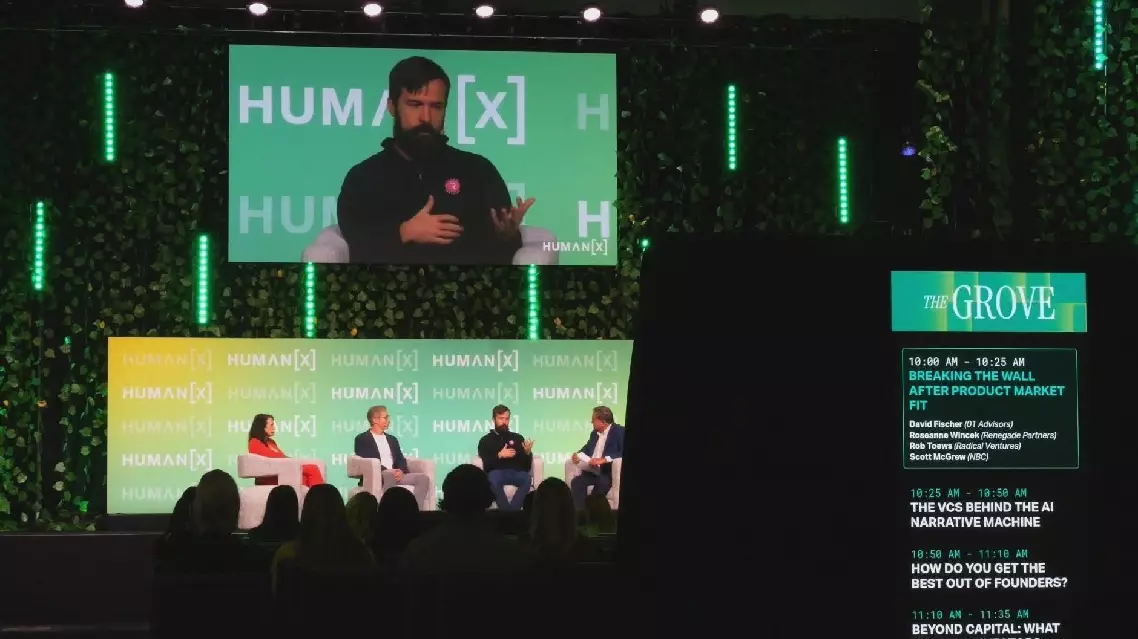
HumanX conference wraps up amid warnings on AI's double-edged impact