China has allocated 62.5 billion yuan (about 9.1 billion U.S. dollars) in new ultra-long special treasury bonds to fund consumer goods trade-in programs in 2026, according to the country's top economic planner.
This marks the second batch of funds raised through such bonds for the programs this year, and has been earmarked to various regions, the National Development and Reform Commission (NDRC) said in a statement.
The NDRC said it will provide further guidance for local regions to optimize fund utilization plans, strengthen supervision, standardize subsidy applications and reviews, and crack down on fraudulent practices.
According to the optimized policy, local regions will make up plans for the balanced use of funds by sector and implement advance funding in home appliances, digital products and smart products to ease the pressure of advance payments on sales companies.
In late December 2025, the first batch of funds raised through ultra-long treasury bonds carrying the same value was allocated for the year 2026 to support the trade-in programs aimed at boosting consumption.
The government plans to allocate a total of 250 billion yuan in ultra-long special treasury bonds to support trade-in programs in 2026.
Official data showed that the sales of consumer goods under China's policy-backed trade-in programs have reached 433.17 billion yuan this year, benefiting 60.93 million people.
From January to February, the total retail sales of consumer goods increased by 2.8 percent year on year, which was 1.9 percentage points higher than the growth rate in December 2025.
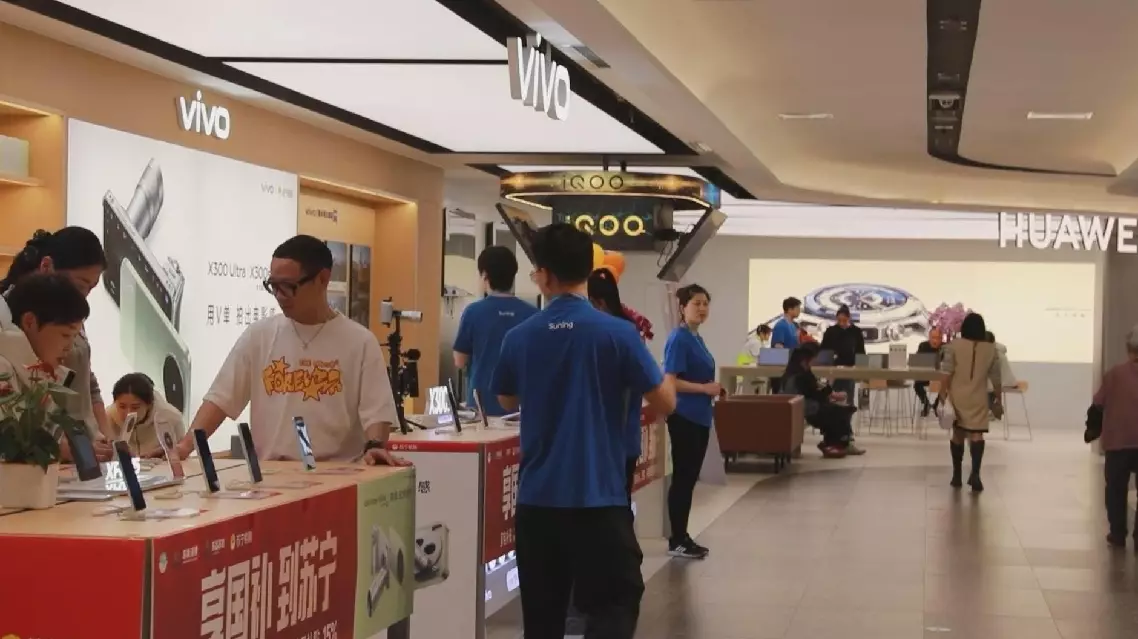
62.5 billion yuan allocated to fund 2026 trade-in programs
China's Hong Kong Special Administrative Region (HKSAR) overtook Switzerland as the world's largest cross-border booking center for the first time, with its cross-border wealth growing 10.7 percent year on year in 2025, according to a report released by the Boston Consulting Group (BCG) on Wednesday.
Hong Kong's cross-border wealth assets totaled 2.95 trillion U.S. dollars last year, driven by Chinese mainland flows and a vigorous stock market that delivered significant IPO activity and strong gains in benchmark-heavy internet platforms, the report said.
Flows from the Chinese mainland represented over 60 percent of assets under management, further cementing Hong Kong's role as China's gateway to global markets, the BCG said in the report.
The consulting firm projected the city's cross-border wealth to grow about 9 percent annually through 2030.
Paul Chan, financial secretary of the HKSAR government said Hong Kong, under the "one country, two systems" principle, continues to serve as a trusted safe haven for global investors amid geopolitical uncertainties.
"In the current geopolitical landscape, many international investors are seeking to diversify risks and are looking for a safe and reliable harbor. Under the framework of 'one country, two systems', Hong Kong benefits from the strong and stable support of our country," said Chan.
The strong inflow of capital is already contributing to Hong Kong's economic performance.
"Hong Kong's GDP grew by 5.9 percent in the first quarter of 2026, greatly beating market expectations. This reflects the recovery in the local property market and overall consumption, and the positive impact of capital inflows as well," said Liu Gang, chief overseas strategist at China International Capital Corporation (CICC).
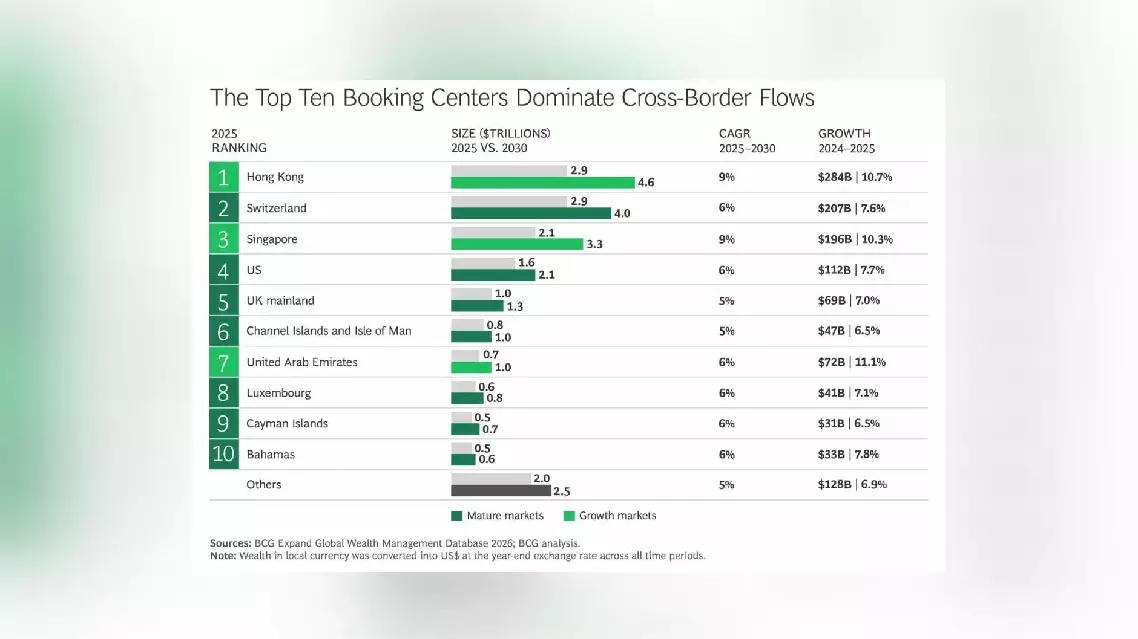
Hong Kong overtakes Switzerland as world's largest cross-border wealth hub: BCG