TURIN, Italy (AP) — Juventus coach Luciano Spalletti has signed a new two-year contract with the Serie A club after a largely encouraging six months in charge.
Spalletti told his players first on Friday ahead of training, with Juventus publishing a video of the announcement on its social media channels.
“I considered it most important, first of all, to tell you this fact, that we decided to extend this contract for another two years,” Spalletti said. “I want you to know first before it gets out. I’m telling you today.
“Naturally, we have challenges ahead of us, but I’m convinced that together with you, they will become great challenges because I will face them with your attitude and your strength, as you have always done.”
Spalletti was hired back at the end of October to replace Igor Tudor, who was fired following three straight losses and an eight-match winless run.
Juventus announced at the time that it had signed Spalletti to an eight-month contract, which Italian media reported would be automatically renewed for two years if the club qualified for the Champions League.
Juventus is currently just outside the Champions League qualifying spots, a point behind fourth-placed Como, with seven matches remaining in the Serie A season.
“When I arrived seven months ago, they offered me this contract,” Spalletti said. “It was a bit like saying: let’s hang out a bit, let’s spend some time together, let’s get to know each other and then at the end of the season we’ll be free to decide what we want based on what we’ve done.”
When Spalletti took over, Juventus was seventh in Serie A and in the elimination places in the Champions League.
Under Spalletti, Juventus has won 17 of 31 matches, lost six and drawn eight. The Bianconeri managed to reach the playoff round of the Champions League, but lost to Galatasaray.
“Since Luciano joined our great Juventus family, he has had an immediate and very positive impact on our players, the whole club and the entire Bianconeri community,” Juventus chief executive Damien Comolli said in a statement. “It was immediately clear to everyone that Luciano was the right person to lead the team on a path of growth.
“His ambitious style of play reflects the expectations of our fans and the club, and his values embody our identity. We have therefore decided to continue working together beyond the previously agreed contract term because we believe that stability and continuity are two essential pillars for future success.”
Juventus hasn’t won Serie A since 2020 when it concluded a run of nine straight titles.
Spalletti is best known for leading Napoli to the Serie A title in 2023. Then he had an unsuccessful run with Italy and was fired last June when the Azzurri got off to a poor start in World Cup qualifying.
AP soccer: https://apnews.com/hub/soccer
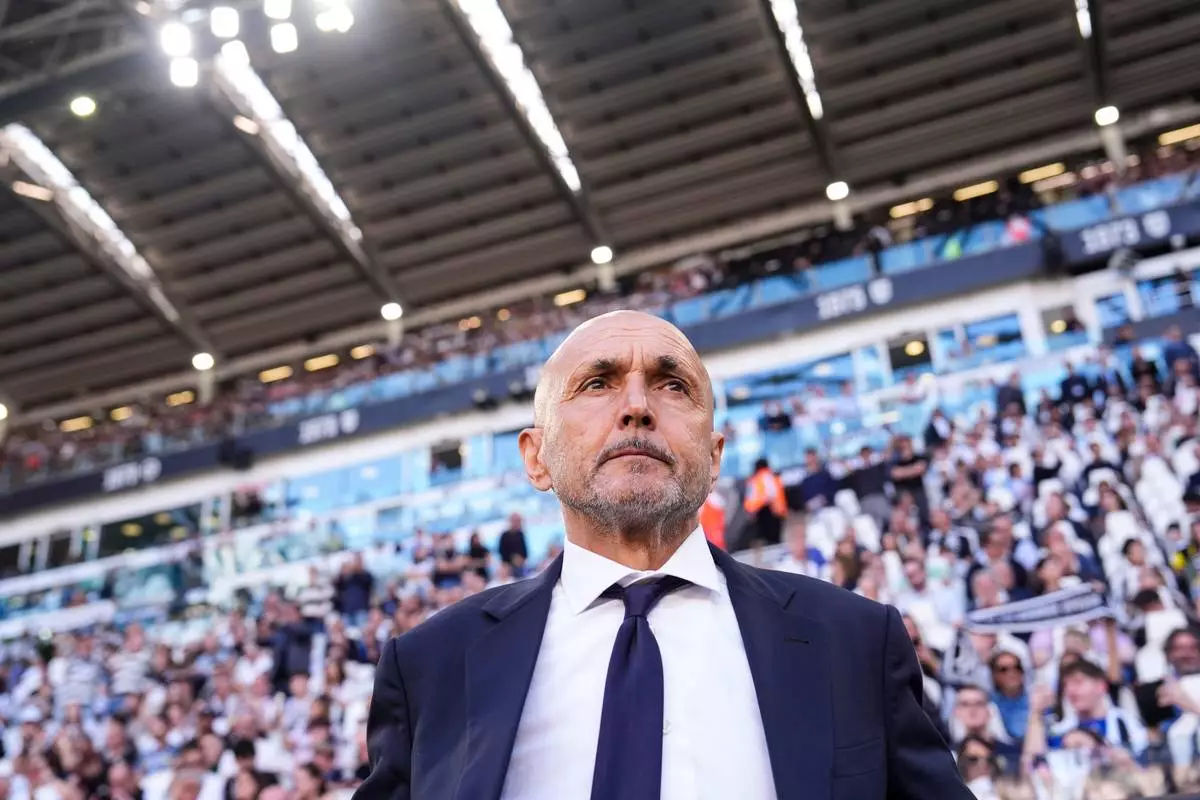
Juventus' head coach Luciano Spalletti looks on during the Serie A soccer match between Juventus Fc and Genoa in Turin, Italy, Monday April 6, 2026. (Fabio Ferrari/LaPresse via AP)
JUNEAU, Alaska (AP) — Alaska U.S. Senate candidate Dan Sullivan acknowledges that sharing a name and party affiliation with the incumbent Republican gives him “an instant megaphone" in the crowded primary race. But Sullivan said his campaign isn't a sham or something Democrats put him up to doing.
He said friends for years have jokingly referred to him as senator and asked if he has ever thought about running. He said he’s been considering it for more than a decade.
“This is my choice,” Sullivan, who lives in the small fishing community of Petersburg, said in a telephone interview Monday.
Last week, Sen. Dan Sullivan accused the challenger Sullivan of “trying to trick” voters to help his main rival in the race, Democratic former U.S. Rep. Mary Peltola. The senator suggested the other Sullivan's entrance in the August primary was part of a coordinated effort by Democrats and Peltola's campaign to confuse voters, an accusation they deny. He threatened litigation to get to the bottom of it.
The issue is of national concern to Republicans because they are seeking to hold onto their majority in the U.S. Senate in what is expected to be a difficult midterm election year for the party in power. Sullivan, the challenger, dismissed claims that his candidacy is a merely a ruse to undermine the senator's reelection chances.
He said he has had no contact with Peltola's campaign — “zero, none, zilch” — and said “no” when asked if anyone from the state Democratic Party or any national Democratic operatives had contacted him to run.
A Peltola spokesperson, Harry Child, has said the campaign “has no involvement with either Sullivan campaign.” The executive director of the Alaska Democratic Party, Jenny-Marie Stryker, said her organization “is in no way affiliated with either Dan Sullivan.” A Democratic Senatorial Campaign Committee spokesperson, Monica Robinson, replied “no” when asked if the group had been involved in urging the challenger Sullivan to run.
Sullivan called sharing a name with the Alaska's incumbent U.S. senator “a matter of fate” and said he had done nothing wrong.
“I have every right to run for whatever office I'm qualified for, and I’m qualified for this office,” the challenger said, adding: “I think I’m doing what most Americans would think would be a patriotic thing to do when you’re unsatisfied with the status quo. You stand up and say, I’m going to fight for things I believe that are going to make my community better.”
Ballots in prior years in Alaska have not identified the incumbent, but the Alaska Division of Elections’ current candidate list online does. It also distinguishes the candidates using a middle initial — Dan S. Sullivan for the senator and Dan J. Sullivan for the challenger.
Alaska has open primaries in which the top four vote-getters, regardless of party, advance to the ranked choice general election in November. Sen. Sullivan's campaign worries having two Dan Sullivans on the ballot could confuse voters.
Sen. Sullivan's campaign, in a statement Monday, said, “Alaskans deserve a fair and honest election — not political games meant to manipulate the ballot and benefit Democrats.”
The challenger said he was registered with the limited government-leaning Alaskan Independence Party for decades, until the party's dissolution late last year. Election officials had said voters registered with the party could change their affiliation but if they did not, they'd be shown as “undeclared.” Sullivan said he then was listed as undeclared until filing to run for office, when he registered as Republican.
He said he was motivated in part by his late father, whom he described as a “true, compassionate, conservative Republican.” He said if he had to label himself, it would be “a pragmatic Republican centrist” — similar to Alaska's senior U.S. senator, Lisa Murkowski, but “with touches of a Rand Paul Republican in there.”
He said he grew up in the Chicago area but was drawn to Alaska and put down roots nearly 50 years ago in Petersburg. The fishing community of about 3,400 in southeast Alaska's Tongass National Forest is known as “Little Norway” for its many residents with Scandinavian roots. He worked for the U.S. Forest Service before changing careers and becoming a teacher. He has since retired.
Like most communities in Alaska, Petersburg isn't connected to the state's main road system and is accessible only by air or water. Juneau, the nearest city, is about 45 minutes away by plane.
Petersburg sits on Mitkof Island, which is distinguished by mountains, thick stands of forest and boggy areas called muskeg. Sea lions hauled up on buoys and humpback whales and orcas are common sights off its shores.
Sullivan, who will turn 69 this weekend, passed on an interview request last Friday, he said, because the king salmon were running and he wanted to fish.
As far as his run for office, the challenger said he plans to do some fundraising and hopes to campaign in the state's larger cities, including Anchorage and Juneau, but he so far has no firm plans to do so and is working on the details.
He finds the current dustup over his Senate run — and the incumbent's reaction — a bit surprising.
“I guess my thought would be, ‘Dude, why don’t you just run your campaign?’ If you’ve got a strong record, run on your record. People will love you for it and you’ll be swept back into office,” he said Monday. “Why would he be concerned that a guy out of Petersburg is this huge threat?”
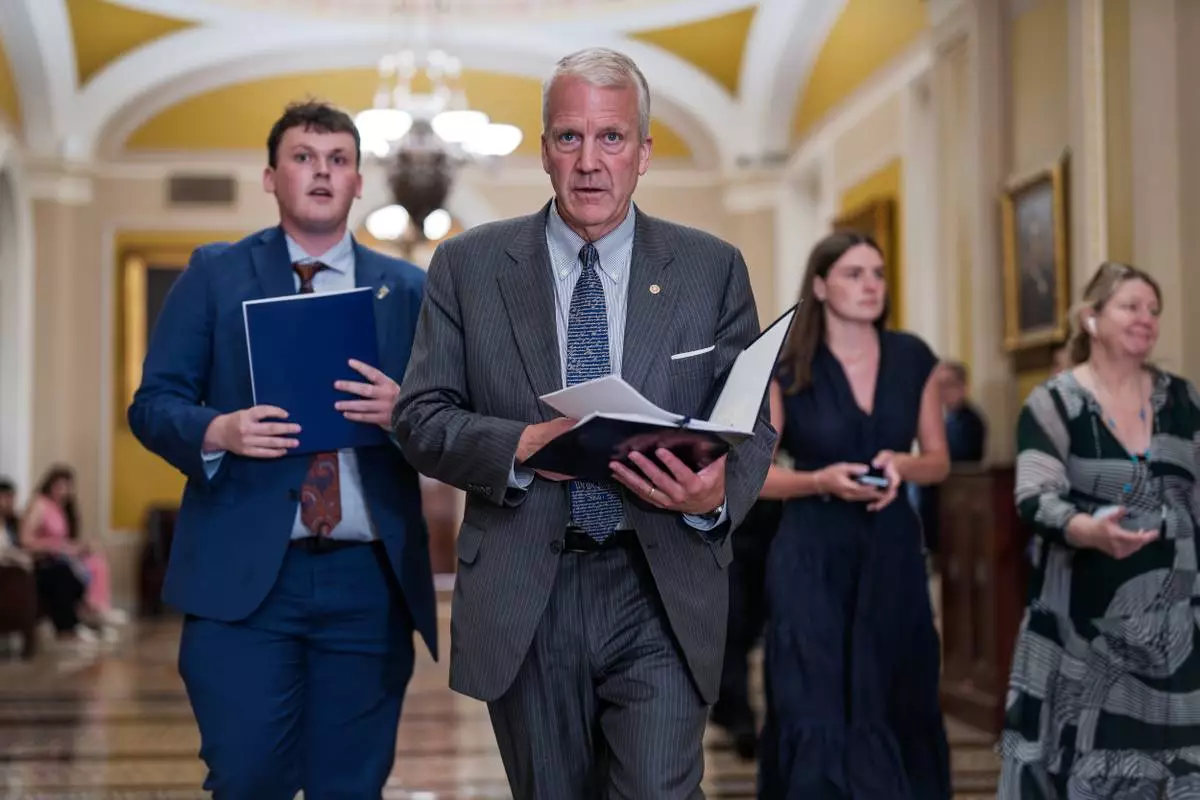
Sen. Dan Sullivan, R-Alaska, heads to a closed-door meeting with fellow Republicans, at the Capitol in Washington, Tuesday, June 2, 2026. (AP Photo/J. Scott Applewhite)