LONDON (AP) — Roberto De Zerbi wants Tottenham to keep it simple.
The new Spurs manager knows there's little time for anything else in a relegation battle.
“I don’t want to put confusion inside of the players. They have to be with a clear plan of the game and not too much instruction, not too much thinking,” the Italian said Friday at his first press conference.
"They have to play with courage, with personality and they have to fight. My demand is to show the right spirit I want to see.”
De Zerbi was handed a five-year contract — though with no escape clause if relegated — with the immediate task of Premier League survival. Tottenham is one point above the drop zone with seven matches remaining.
De Zerbi previously worked in the Premier League as Brighton’s manager and was most recently at Marseille, which he left in February after a disagreement with the French club’s leadership.
Tottenham's first test under the new boss comes Sunday at Sunderland. He's not overly concerned about implementing his style of play.
“What I want to do, what I want to achieve immediately is the character, is the right spirit, the right courage to play, to attack, because the DNA of this club, of this squad, is to find the goal, to score,” he said.
After a week or so of working with the players, he said “I’m more positive, for sure” about Premier League survival.
Spurs, the reigning Europa League champions, fired Igor Tudor after 44 days of an interim coaching spell that worsened Tottenham’s plight. Tudor was brought in after Thomas Frank lasted just eight months on the job.
De Zerbi paid them respect on Friday.
“I’m not better than Thomas Frank or Igor Tudor because I consider them very good coaches,” he said.
"I try to bring my style, myself, my character, my personality, my passion to help the players. First of all, to show their qualities, because they have a lot of qualities and then to achieve our target, because the most important part now is our target.”
AP soccer: https://apnews.com/hub/soccer

FILE - Marseille's head coach Roberto De Zerbi gives instructions during the French League One soccer match between Paris FC and Marseille in Paris, Jan. 31, 2026. (AP Photo/Thibault Camus, File)
NEW YORK (AP) — Stocks wavered on Wall Street Friday and oil prices held steady amid a shaky ceasefire agreement between the U.S. and Iran.
The S&P 500 fell 0.1% in afternoon trading, but is still heading for a second consecutive winning week. The Dow Jones Industrial Average fell 261 points, or 0.5%, as of 12:27 p.m. Eastern. The Nasdaq composite rose 0.3%.
Major indexes have been gaining ground over the last two weeks amid optimism that the war with Iran could be heading toward a resolution. The S&P 500 has erased most of its losses from March and is just 2.3% short of its all-time high set in January. The market is still prone to big swings on developments around the war.
Trading on Wall Street remained choppy. Most companies in the benchmark S&P 500 were losing ground, but technology stocks with hefty values helped offset losses elsewhere. Nvidia rose 2.4% and Broadcom rose 4.6%.
Markets in Asia gained ground while markets in Europe were mixed.
Oil prices have been behind many of the stock market’s sharp movements. Oil prices have surged as shipping through the vital Strait of Hormuz essentially stalled since the war began.
Brent crude oil, the international standard, has gone from roughly $70 per barrel before the war in late February to more than $119 at times. Brent rose 1.1% to $96.49 Friday.
U.S. crude oil prices rose 1% to $98.88 per barrel.
Negotiators from Iran and the U.S. are preparing for high-level talks on Saturday. The situation remains uncertain. Iran’s semiofficial Tasnim news agency claimed that talks wouldn’t happen unless Israel stopped its attacks in Lebanon.
The conflict is behind surging inflation in the U.S. in March. The government reported the biggest spike in inflation in four years as prices at the gas pump jumped. But, the inflation increase was just short of what economists expected.
Bond yields held mostly steady following the latest inflation update. The yield on the 10-year Treasury rose to 4.31% from 4.29% late Thursday.
Inflation has been a lingering concern for economists. Prices on a range of consumer goods and services are already stubbornly high, in part from the impact of extensive global tariffs. Higher gas prices are immediately felt by drivers at the pump, but they could eventually raise prices on everything from food to airfare as companies pass along higher costs for shipping and fuel.
Analysts are warning that there might be a drawn out impact from the oil supply shock in the months ahead.
“While I’m glad to see the effects to be less than expected in March, the effects in April are now more likely to be worse,” Jamie Cox, managing partner for Harris Financial Group, wrote in a research note.
Consumer sentiment slumped 10.7% percent in April, according to a closely watched monthly survey from the University of Michigan. It also shows that consumers are growing more worried about inflation, with year-ahead expectations surging to 4.8% in April from 3.8% in March.
Inflation remains a major concern for the Federal Reserve, which has signaled more caution amid worries about inflation reheating. The rate of inflation remains above the central bank's 2% target. The threat of rising inflation will likely mean the central bank continues to hold interest rates steady. Several Fed officials have also said a rate hike may be needed if inflation doesn’t cool.
Lower interest rates help boost stocks and other investments by lowering borrowing costs. Interest rate cuts also risk worsening inflation.
Wall Street is forecasting that the Fed will likely hold its interest rate steady through 2026.
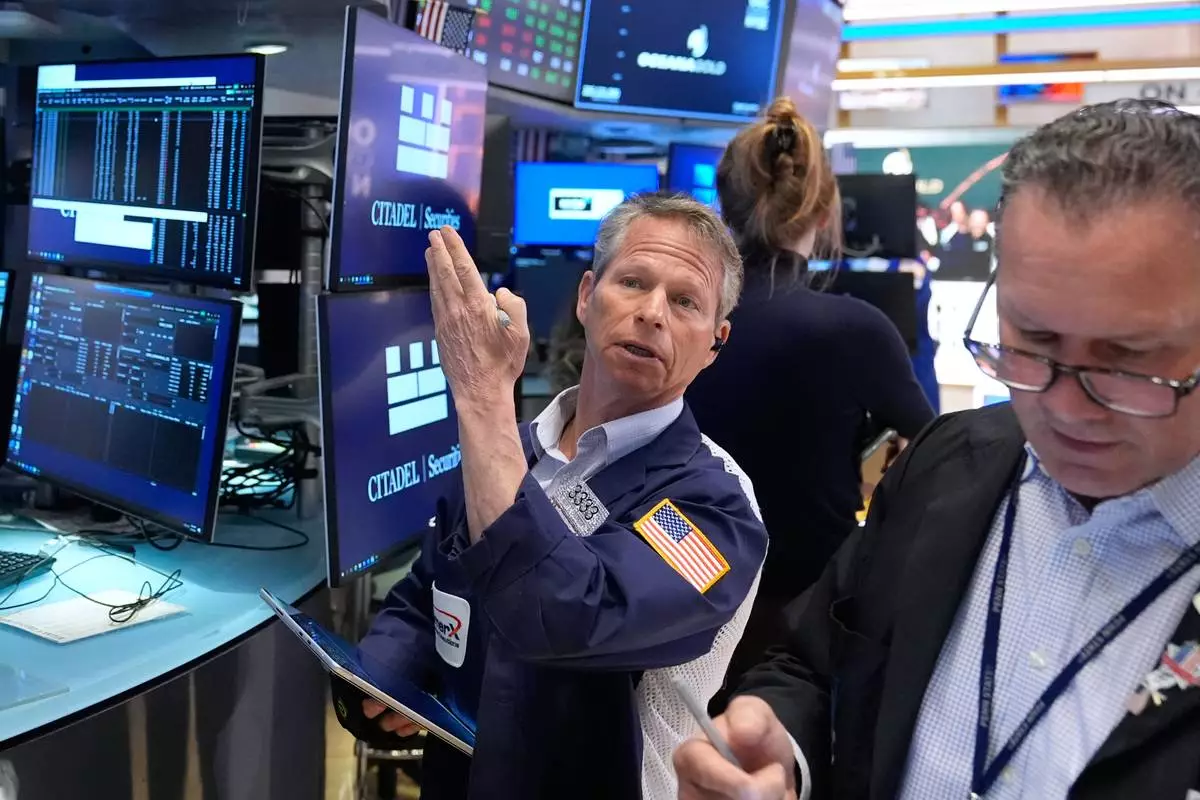
Bobby Charmak works on the floor at the New York Stock Exchange in New York, Tuesday, April 7, 2026. (AP Photo/Seth Wenig)
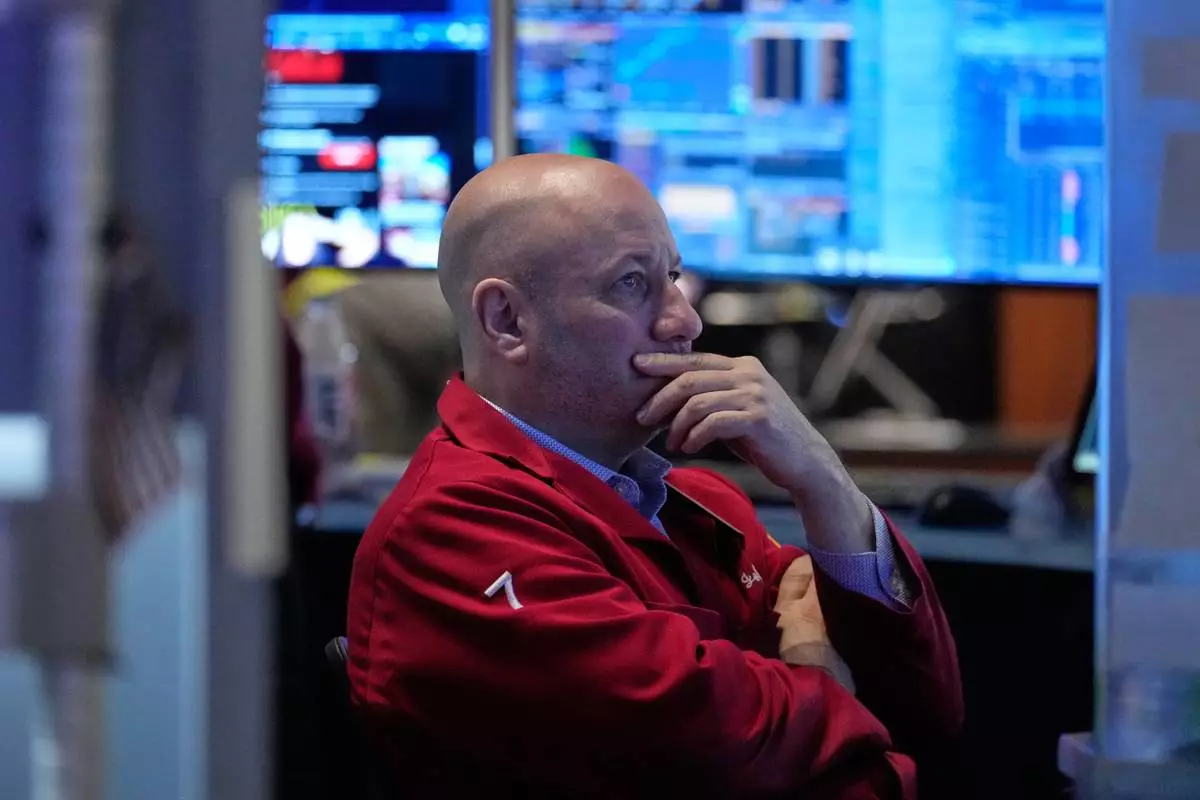
John Mauro works on the floor at the New York Stock Exchange in New York, Tuesday, April 7, 2026. (AP Photo/Seth Wenig)
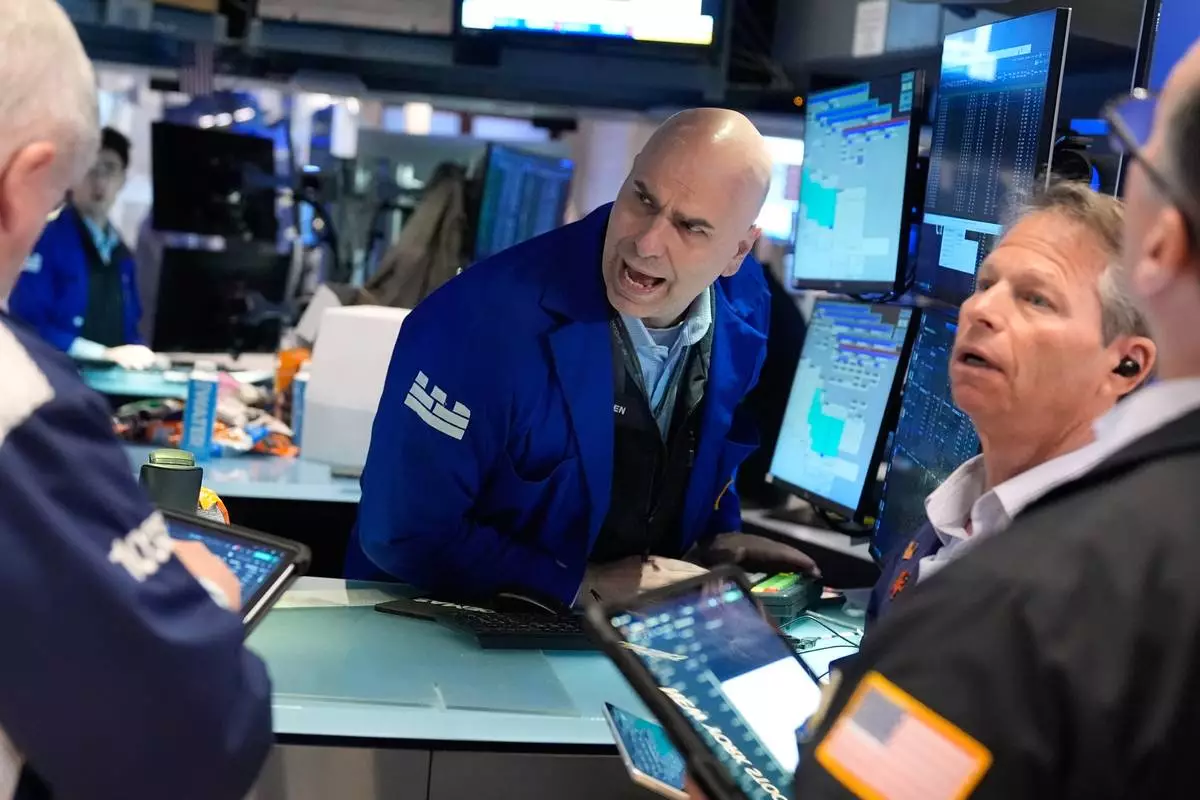
Philip Finale works on the floor at the New York Stock Exchange in New York, Tuesday, April 7, 2026. (AP Photo/Seth Wenig)
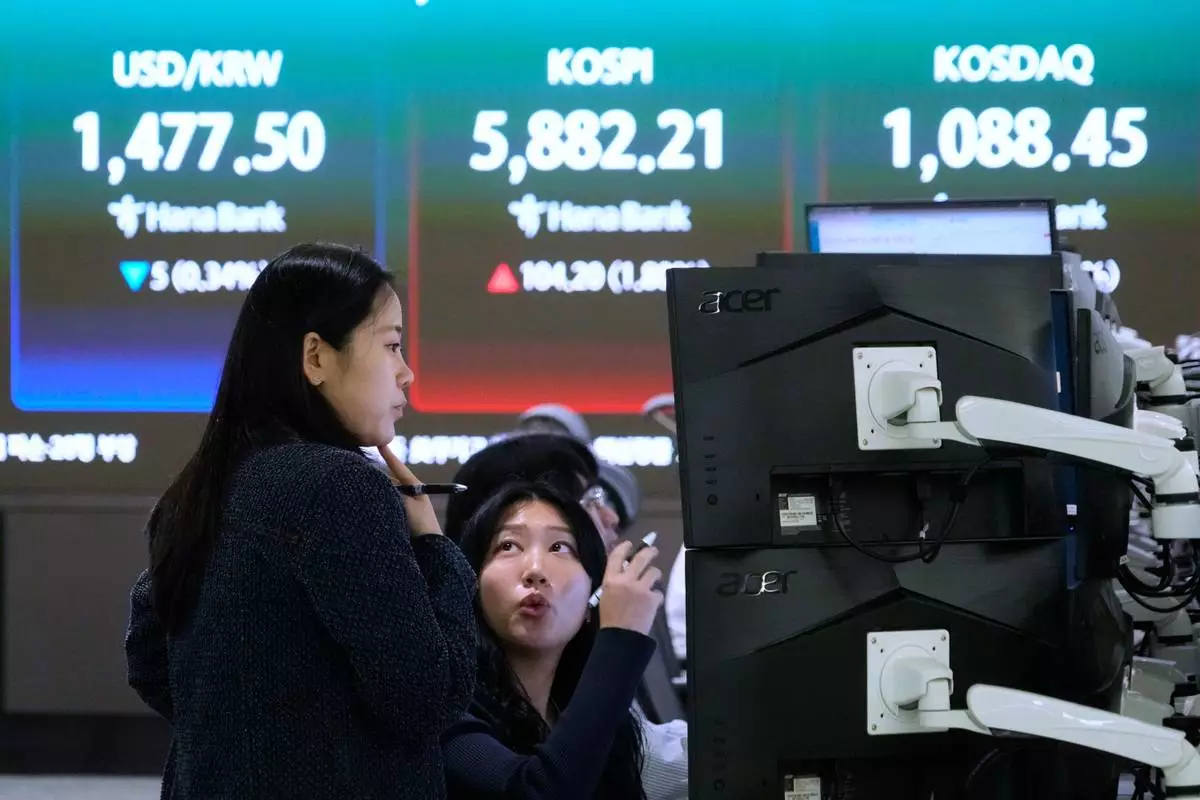
Currency traders work near a screen showing the Korea Composite Stock Price Index (KOSPI), top center, and the foreign exchange rate between U.S. dollar and South Korean won, top center left, at the foreign exchange dealing room of the Hana Bank headquarters, in Seoul, South Korea, Friday, April 10, 2026. (AP Photo/Ahn Young-joon)
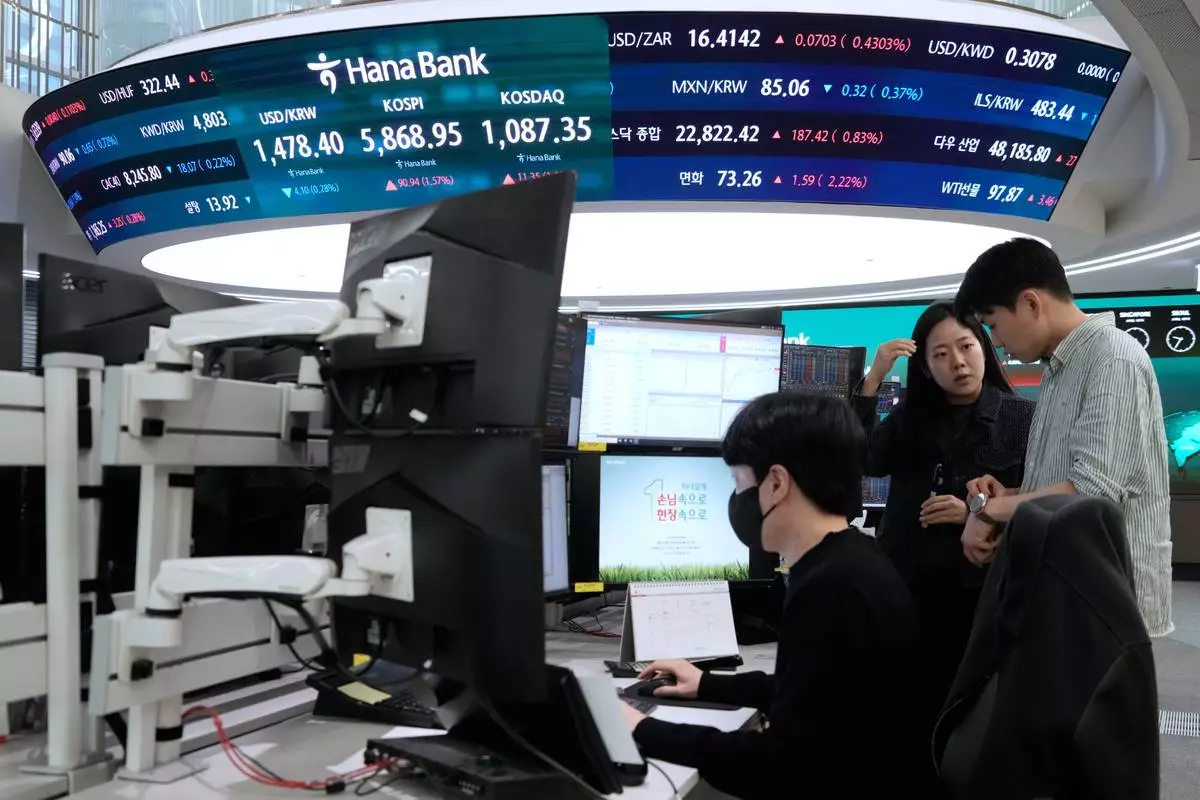
Currency traders work near a screen showing the Korea Composite Stock Price Index (KOSPI), top center, and the foreign exchange rate between U.S. dollar and South Korean won, top center left, at the foreign exchange dealing room of the Hana Bank headquarters, in Seoul, South Korea, Friday, April 10, 2026. (AP Photo/Ahn Young-joon)
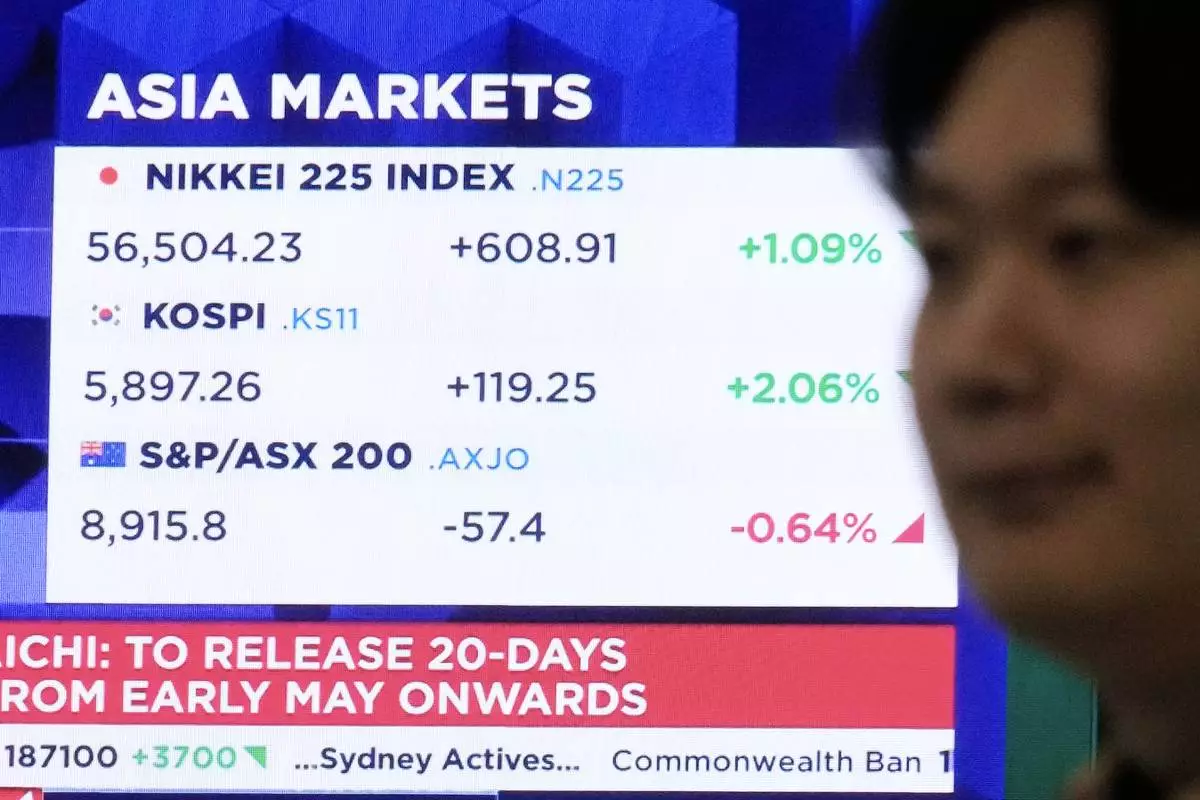
A screen showing Asia markets indexes at the foreign exchange dealing room of the Hana Bank headquarters, in Seoul, South Korea, Friday, April 10, 2026. (AP Photo/Ahn Young-joon)
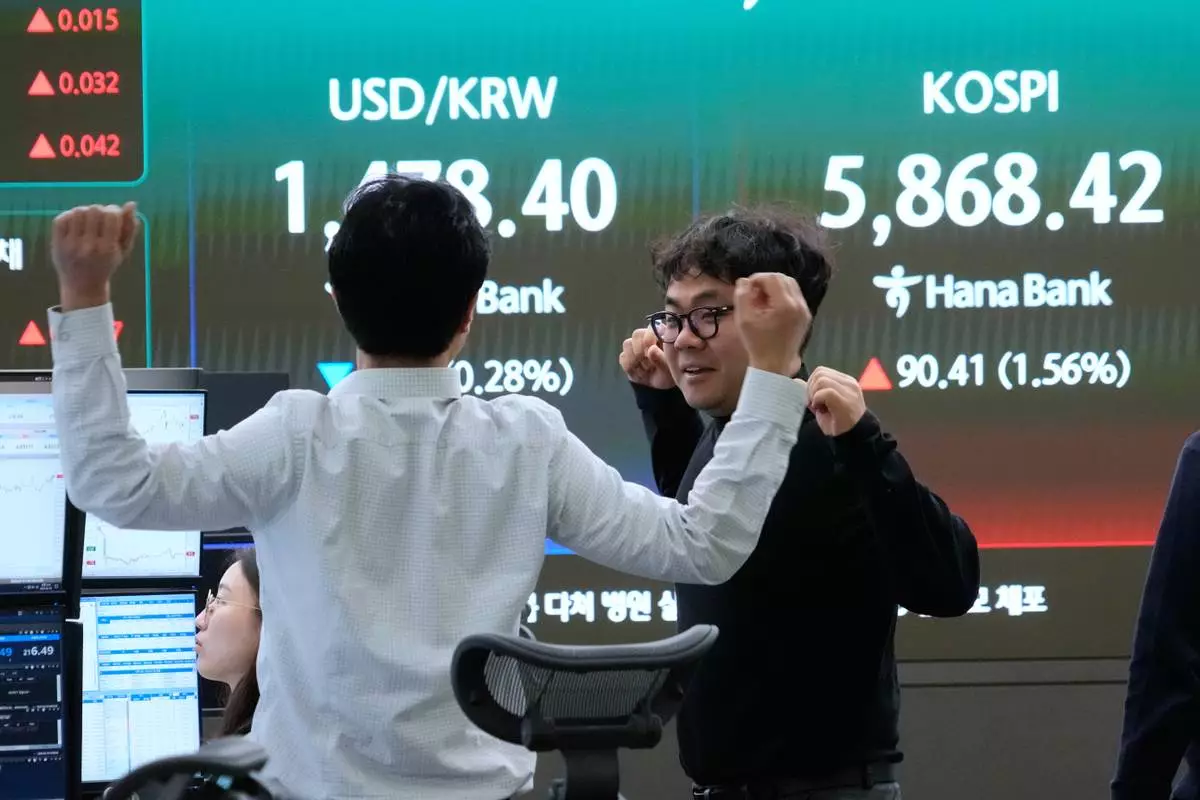
Currency traders stretch near a screen showing the Korea Composite Stock Price Index (KOSPI), right, and the foreign exchange rate between U.S. dollar and South Korean won at the foreign exchange dealing room of the Hana Bank headquarters, in Seoul, South Korea, Friday, April 10, 2026. (AP Photo/Ahn Young-joon)