LONDON (AP) — A charity co-founded by Prince Harry in Africa to honor his late mother, Princess Diana, has sued him for defamation after he stepped down as a patron last year.
Sentebale, which supports young people living with HIV in Botswana and Lesotho, filed suit last month in London’s High Court, according to court records viewed Friday. Online filings show Harry and his friend, Mark Dyer, a former trustee at the charity, are being sued for either libel or slander. No documents were available.
“The charity seeks the court’s intervention, protection, and restitution following a coordinated adverse media campaign conducted since 25 March 2025 that has caused operational disruption and reputational harm to the charity, its leadership, and its strategic partners,” Sentebale said Friday in a statement on its website.
A spokesperson for Harry and Dyer said the pair “categorically reject these offensive and damaging claims.”
The lawsuit puts the Duke of Sussex in an unaccustomed position as a defendant in the High Court. Over the past three years, he has repeatedly been on the other side of litigation as the leading claimant in invasion of privacy suits against Britain's most prominent tabloids over allegations of phone hacking and unlawful snooping by journalists and the private eyes they hired.
Harry co-founded Sentebale, which means “forget me not” in the language of Lesotho, about 20 years ago in memory of his mother, who was a prominent advocate for treatment of HIV and AIDS and helped reduce stigma around the disease. Prince Seeiso of Lesotho was the co-founder.
Disagreements at the charity surfaced in 2023 over a new fundraising strategy, and the two founders stepped down as patrons in March 2025 in support of trustees who had quit.
At the time, they said the relationship between the board and its chair, Sophie Chandauka, was beyond repair. Chandauka later accused Harry of orchestrating a campaign of bullying and harassment to try to force her out.
As the dispute unfolded, Chandauka told Sky News that filming for one of Harry's Netflix programs had interfered with a scheduled fundraiser for Sentebale and that an incident with his wife, Meghan, the Duchess of Sussex, became a source of friction.
The Charity Commission for England and Wales investigated and criticized both sides for allowing the issue to become public and damaging the organization’s reputation, but found no evidence of widespread bullying or misogyny at Sentebale.
“Sentebale’s problems played out in the public eye, enabling a damaging dispute to harm the charity’s reputation, risk overshadowing its many achievements, and jeopardizing the charity’s ability to deliver for the very beneficiaries it was created to serve,” commission CEO David Holdsworth said in a statement in August 2025.
Harry’s spokesperson had criticized the commission’s report while Chandauka welcomed it.
Gerald Imray in Cape Town, South Africa, contributed to this report.

FILE - Britain's Prince Harry arrives at London's High Court to lead a group accusing the Daily Mail's publisher of privacy invasion through unlawful tactics in a trial that is part of a wider phone hacking scandal in London, Jan. 21, 2026. (AP Photo/Kirsty Wigglesworth, File)
ISTANBUL (AP) — Riot police in Turkey used water cannons on Tuesday to prevent people from gathering to hear a speech by the deposed leader of the country's main opposition party.
Ozgur Ozel and the core leadership of the Republican People’s Party, or CHP, were removed from their posts on Thursday by a court order that many people consider to be politically motivated.
Ozel had intended to address supporters on Tuesday in the western Turkish city of Izmir, but those heading to the city's Cumhuriyet Square found their way blocked by steel barriers and riot police.
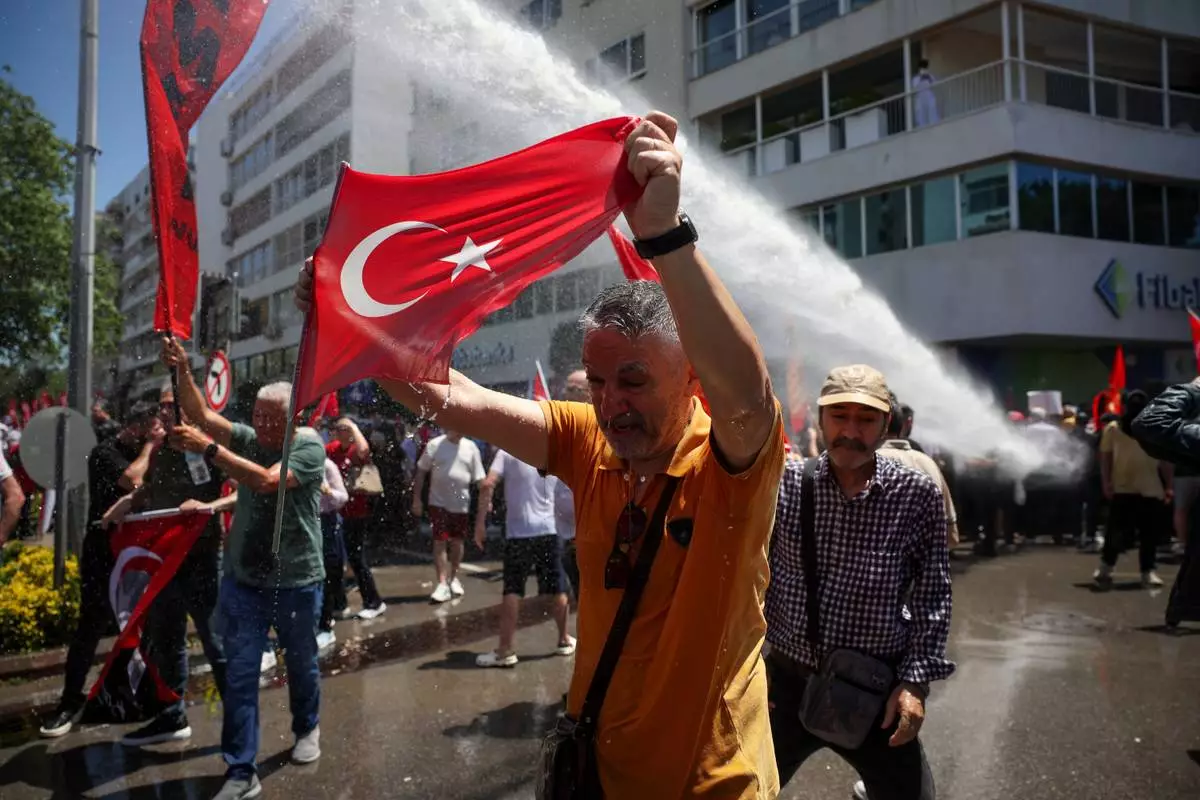
Pro-opposition broadcaster Halk TV showed many of the largely middle-aged crowd being soaked by water cannon as they tried to reach the square. Local media also reported that police deployed pepper spray.
The political crisis was sparked last week when an appeals court in Ankara overturned a 2023 party congress vote that appointed Ozel as CHP leader. The court decision replaced him with his predecessor, Kemal Kilicdaroglu, sparking outrage among party supporters.
Ozel, 51, who succeeded the 77-year-old Kilicdaroglu after 13 years of mostly ineffective opposition to President Recep Tayyip Erdogan, on Tuesday called on Kilicdaroglu to hold another party leadership vote. “Don’t divide the party, don’t stop our march to power,” he said. “Let’s ask the 2 million members (and) whoever they choose, let’s hold the congress immediately.”
The court case, which centered on irregularities in the congress vote, is seen by the president’s critics as the latest legal attack on the CHP, during which waves of elected officials and party members have been imprisoned.
Following the court ruling, Ozel and his supporters barricaded themselves inside the CHP headquarters in Ankara. Police stormed the building on Sunday, firing plastic pellets and pepper spray in a violent end to the standoff.
Ozel, who has vowed to take the struggle to the streets, said on arriving in Izmir that he would “go wherever the people are waiting.” He later arrived at Cumhuriyet Square before walking to another nearby square where he delivered a speech to thousands of cheering supporters.
The confrontation in Izmir — Turkey’s third-largest city and traditionally a CHP stronghold — came a day ahead of the official Eid al-Adha holiday, although many people had also taken Monday and Tuesday off work.
In a televised Eid message, Erdogan said he hoped the vacation would be “an occasion for hearts to soften, for those who are estranged to reconcile, for grievances to be resolved.”
The CHP is level with the ruling Justice and Development Party, or AKP, in most recent opinion polls and although the next election is not due until 2028, many expect Erdogan to push for early elections.
Ozel delivered a serious blow to the AKP in the 2024 municipal elections, strengthening the opposition’s grip on key cities it had won five years earlier, including Istanbul and Ankara.
The CHP mayor of Istanbul, Ekrem Imamoglu, emerged as the likeliest challenger to Erdogan, who has ruled Turkey since 2003, in the next presidential poll. But he has been imprisoned since March last year as he faces several criminal cases that could see him sentenced to decades behind bars.
Many observers have said the legal cases against the CHP — mostly centered on corruption allegations — are aimed at neutralizing the party. The government insists that Turkey’s courts are impartial and act independently of political pressure.
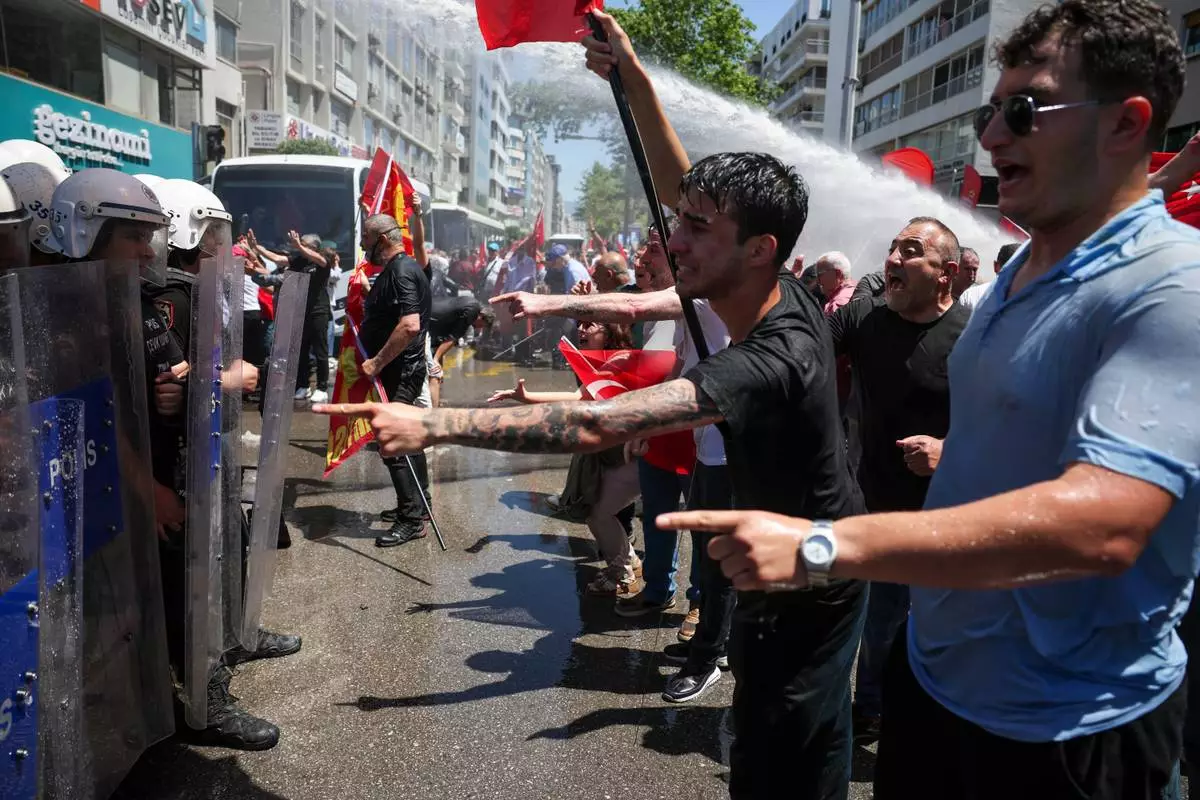
Police use water cannon to disperse supporters of Turkey's main opposition Republican People's Party (CHP) in Izmir, Turkey, Tuesday, May 26, 2026, during a rally in support of party's deposed leader Ozgur Ozel. (AP Photo/Erdem Sahin)
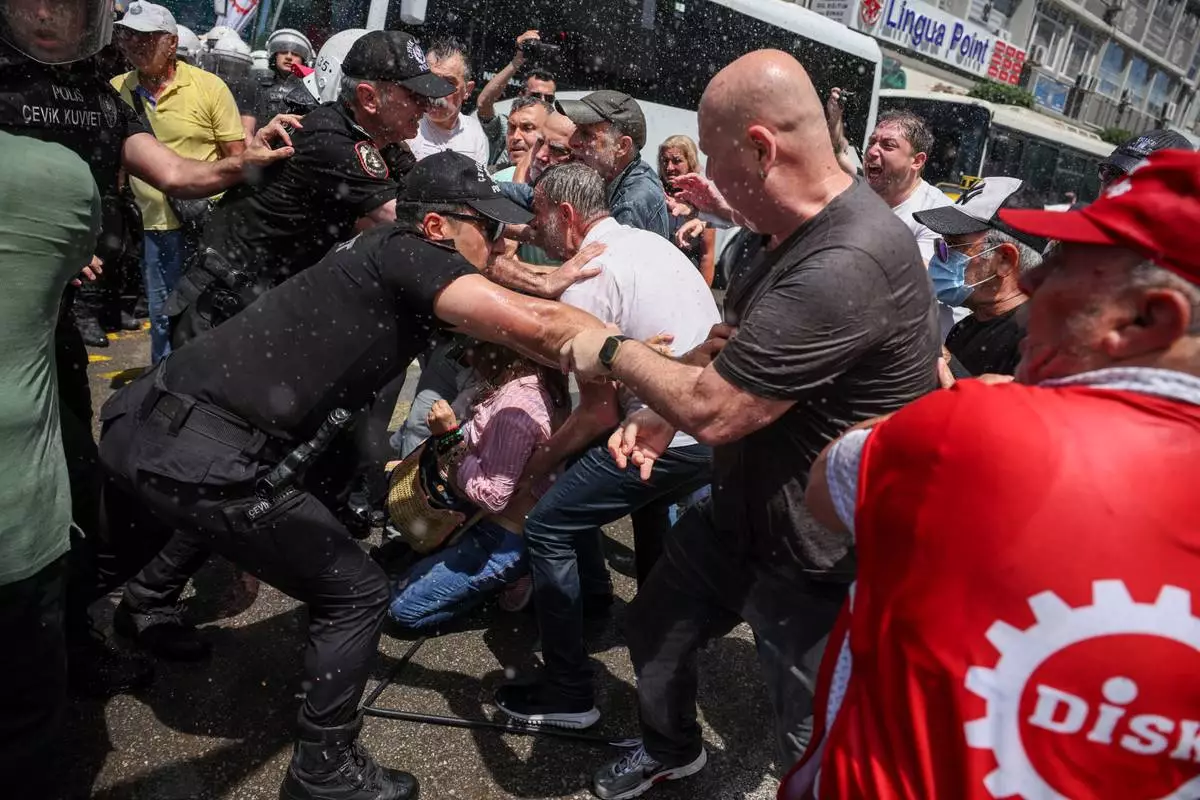
Police scuffle with supporters of Turkey's main opposition Republican People's Party (CHP) in Izmir, Turkey, Tuesday, May 26, 2026, during a rally in support of party's deposed leader Ozgur Ozel. (AP Photo/Erdem Sahin)
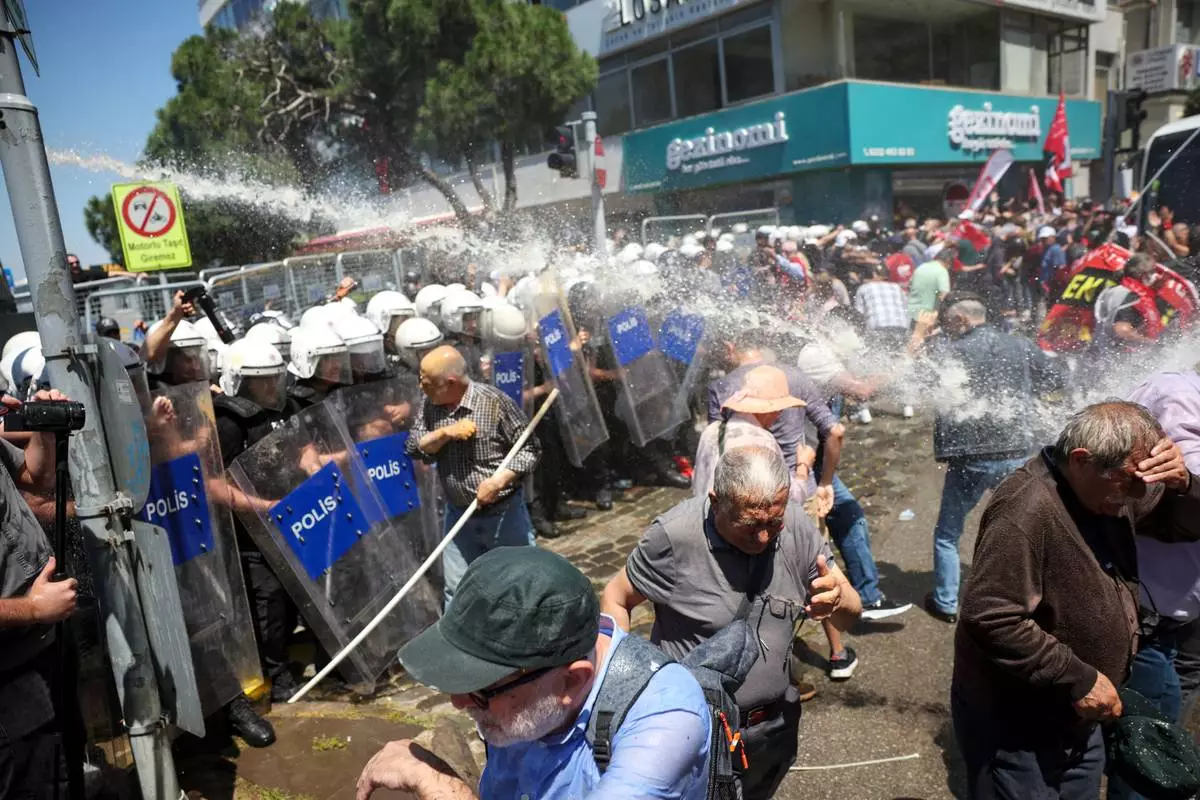
Police use water cannon to disperse supporters of Turkey's main opposition Republican People's Party (CHP) in Izmir, Turkey, Tuesday, May 26, 2026, during a rally in support of party's deposed leader Ozgur Ozel. (AP Photo/Erdem Sahin)
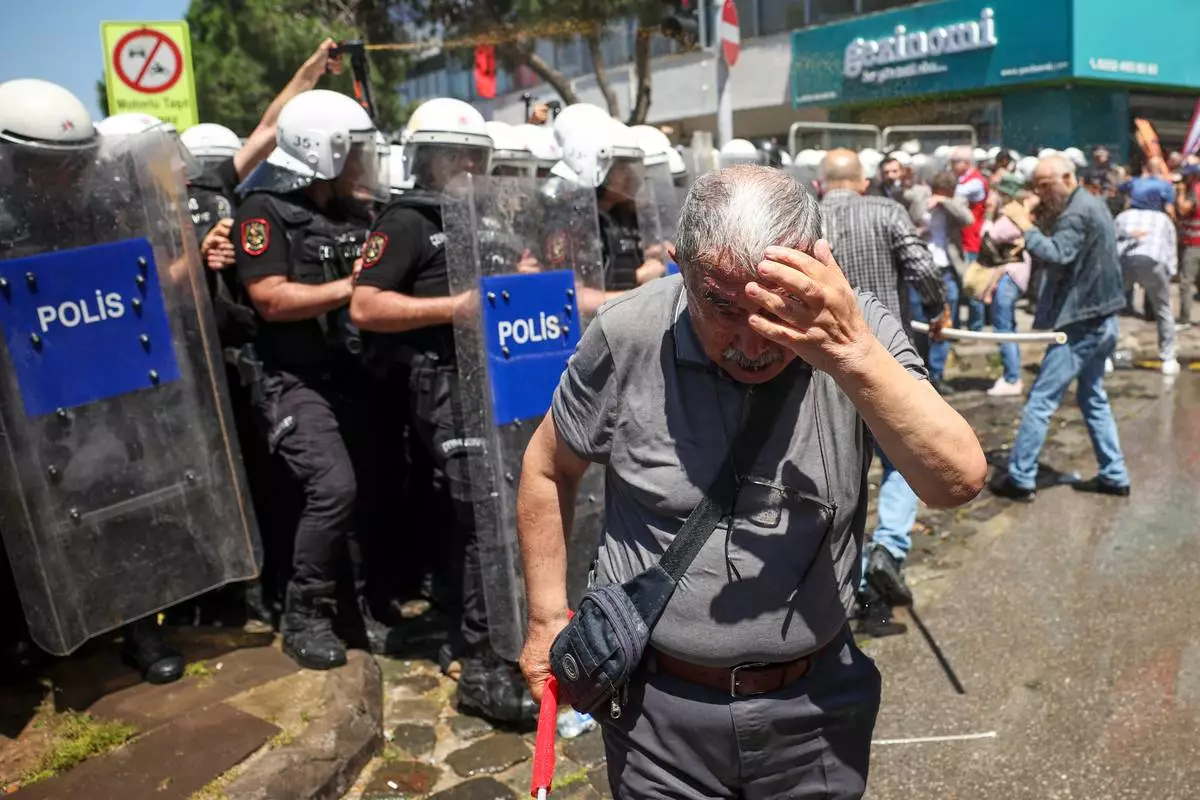
Police use water cannon and pepper spray to disperse supporters of Turkey's main opposition Republican People's Party (CHP) in Izmir, Turkey, Tuesday, May 26, 2026, during a rally in support of party's deposed leader Ozgur Ozel. (AP Photo/Erdem Sahin)
Police use water cannon to disperse supporters of Turkey's main opposition Republican People's Party (CHP) in Izmir, Turkey, Tuesday, May 26, 2026, during a rally in support of party's deposed leader Ozgur Ozel. (AP Photo/Erdem Sahin)