Skip to Content Facebook Feature Image

Worsening ocean heat waves are 'supercharging' hurricane damage, study finds

TECH

Worsening ocean heat waves are 'supercharging' hurricane damage, study finds
TECH

TECH

Worsening ocean heat waves are 'supercharging' hurricane damage, study finds

2026-04-11 02:02 Last Updated At:13:16

WASHINGTON (AP) — Marine heat waves are supercharging damage caused by hurricanes and tropical cyclones across the globe, a new study found.

Researchers looked at 1,600 tropical cyclones — the broader category of storms that includes hurricanes — that made landfall since 1981 and found those that went over the extra-hot water were more likely to intensify rapidly, a problem that's becoming more frequent. This resulted in 60% more disasters that caused at least $1 billion in damage — adjusted for inflation — when they hit land, according to a study in Friday's journal Science Advances.

More Images
FILE - The Hotel Flamingo is surrounded by debris in the aftermath of Hurricane Otis, in Acapulco, Mexico, Friday, Nov. 10, 2023. (AP Photo/Marco Ugarte, File)
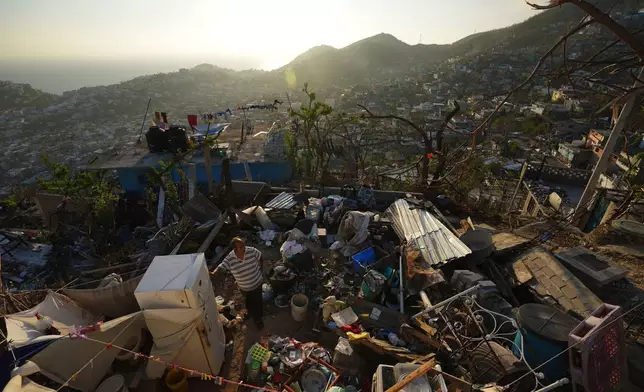
FILE - The Hotel Flamingo is surrounded by debris in the aftermath of Hurricane Otis, in Acapulco, Mexico, Friday, Nov. 10, 2023. (AP Photo/Marco Ugarte, File)

FILE - Jaime Sosa stands amid the ruins of his home nearly three weeks after Hurricane Otis hit as a Category 5 storm in the Alta Cuauhtemoc area of Acapulco, Mexico, Nov. 9, 2023. (AP Photo/Marco Ugarte, File)
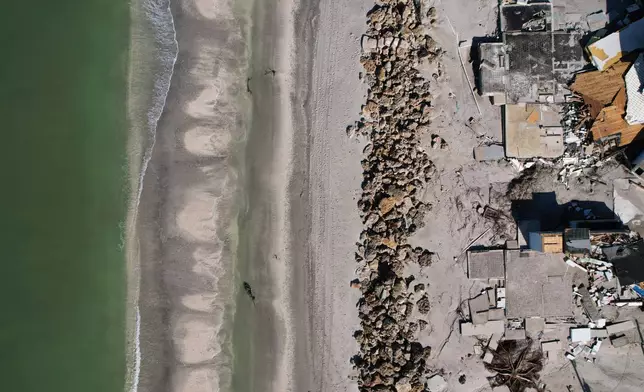
FILE - Jaime Sosa stands amid the ruins of his home nearly three weeks after Hurricane Otis hit as a Category 5 storm in the Alta Cuauhtemoc area of Acapulco, Mexico, Nov. 9, 2023. (AP Photo/Marco Ugarte, File)

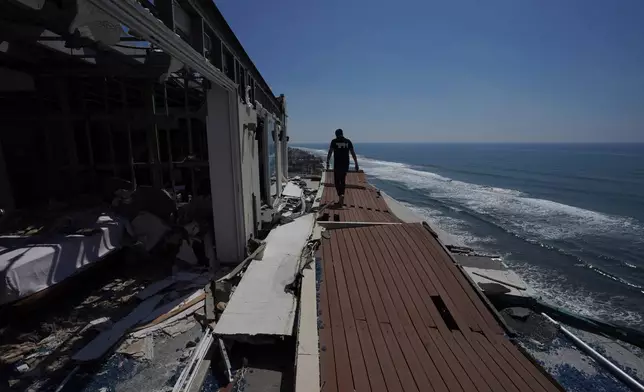
FILE - Waves lap on the beach in front of empty house foundations surrounded by debris, following the passage of Hurricane Milton, on Manasota Key, in Englewood, Fla., Oct. 13, 2024. (AP Photo/Rebecca Blackwell, File)
FILE - Waves lap on the beach in front of empty house foundations surrounded by debris, following the passage of Hurricane Milton, on Manasota Key, in Englewood, Fla., Oct. 13, 2024. (AP Photo/Rebecca Blackwell, File)

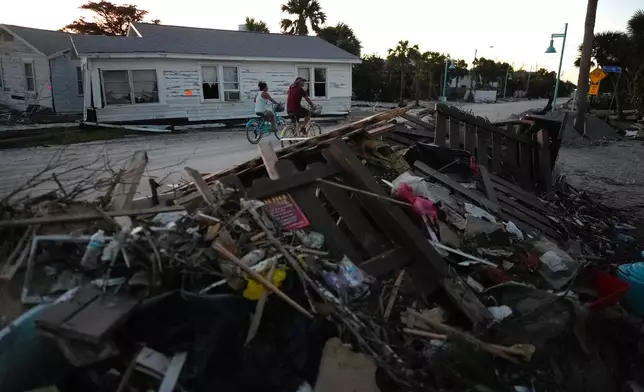
FILE - People bike past damaged homes and debris left by Hurricane Milton, on the sand-coated main road of southern Manasota Key, already cleared of feet of sand, in Englewood, Fla., Oct. 13, 2024. (AP Photo/Rebecca Blackwell, File)
FILE - People bike past damaged homes and debris left by Hurricane Milton, on the sand-coated main road of southern Manasota Key, already cleared of feet of sand, in Englewood, Fla., Oct. 13, 2024. (AP Photo/Rebecca Blackwell, File)

FILE - A man walks alongside damaged apartments in the aftermath of Hurricane Otis, in the Diamonds subdivision of Acapulco, Mexico, Nov. 9, 2023. (AP Photo/Marco Ugarte, File)

FILE - A man walks alongside damaged apartments in the aftermath of Hurricane Otis, in the Diamonds subdivision of Acapulco, Mexico, Nov. 9, 2023. (AP Photo/Marco Ugarte, File)

A better understanding of how marine heat waves amplify hurricanes could help forecasters, emergency officials and long-term planners prepare for future storms.

The study defined marine heat waves as long-lasting, large areas of water in the top 10% of historical heat. They are becoming more of a danger with climate change and ever hotter oceans, study authors said. Warm water is fuel for hurricanes.

“These marine heat waves affect more than half of landfalling tropical cyclones,'' said study co-author Gregory Foltz, an oceanographer at the National Oceanic and Atmospheric Administration. “They're happening closer to land and more frequently, so I think people need to pay attention and know that these are more likely to result in extreme damages when they make landfall.”

It's important for meteorologists forecasting the storm track to see if these hurricanes go over a marine heat wave because it is more likely to intensify rapidly which “can potentially have a bigger impact on landfall,” Foltz said.

Just look at damaging hurricanes that smacked the United States in 2023, said study co-author Hamed Moftakhari, a coastal engineering professor who studies compound hazards at the University of Alabama.

“The story of Helene and Milton is that if you've got a warmer ocean, you've got the fuel to supercharge tropical cyclones even in a cascade. So within a few weeks you could get two rapidly intensified hurricanes making landfall in the west coast of Florida,” Moftakhari said. “This is shocking but should also be alarming for people.”

The study also points to October 2023's Hurricane Otis, which rapidly intensified from a tropical storm to a top level Category 5 hurricane in one day, then caused about $16 billion in damage and 52 deaths when it made landfall near Acapulco, Mexico, with 165 mph (265 kph) winds.

Researchers said the higher damage, compared with storms that didn’t cross marine heat waves, wasn’t driven by increased coastal development. Storms that crossed hot water and hit developed coasts were contrasted with other storms that hit similarly urbanized areas but without crossing hot water, said study lead author Soheil Radfar, a scientist who does hurricane hazard modeling at Princeton University.

Science has long known that warm water fuels and often strengthens tropical cyclones, providing more of a link on causation.

That means the future looks more dangerous, Radfar said.

“All these pieces of the puzzle are going to be really challenging for the coastal environment in the next four decades when you have more rapid intensification, more marine heat waves," Radfar said. This “is going to be really costly and frightening for the coastline environment, and it’s going to cause more billion-dollar disasters in the future.”

Moftakhari said “from a coastal engineering and risk management perspective, this has important implications for how governments plan, design, and respond to these hazards.”

Evacuation planning must account for storms that cross ocean hot spots being more likely to intensify rapidly and pose greater threats, according to Moftakhari. Earlier warnings and triggers on when people leave may be needed when there are marine heat waves. Designs for flood protection, drainage system, sea walls all have to be updated to the new worsening storm reality, he said.

Outside scientists said the study fits with the known physics of hurricanes and climate change, while putting a more specific number on the likelihood for mega-damage when marine heat waves are present.

“Climate change is causing stronger and longer-duration marine heat waves. Tropical cyclones draw their energy and produce heavy rain via evaporation from warm ocean waters,” said University at Albany atmospheric sciences professor Brian Tang, who wasn't part of the study. “It’s reasonable that marine heat waves are turbocharging hurricanes, provided other environmental conditions are favorable for hurricanes to intensify. In effect, the dice is being loaded.”

The Associated Press’ climate and environmental coverage receives financial support from multiple private foundations. AP is solely responsible for all content. Find AP’s standards for working with philanthropies, a list of supporters and funded coverage areas at AP.org.
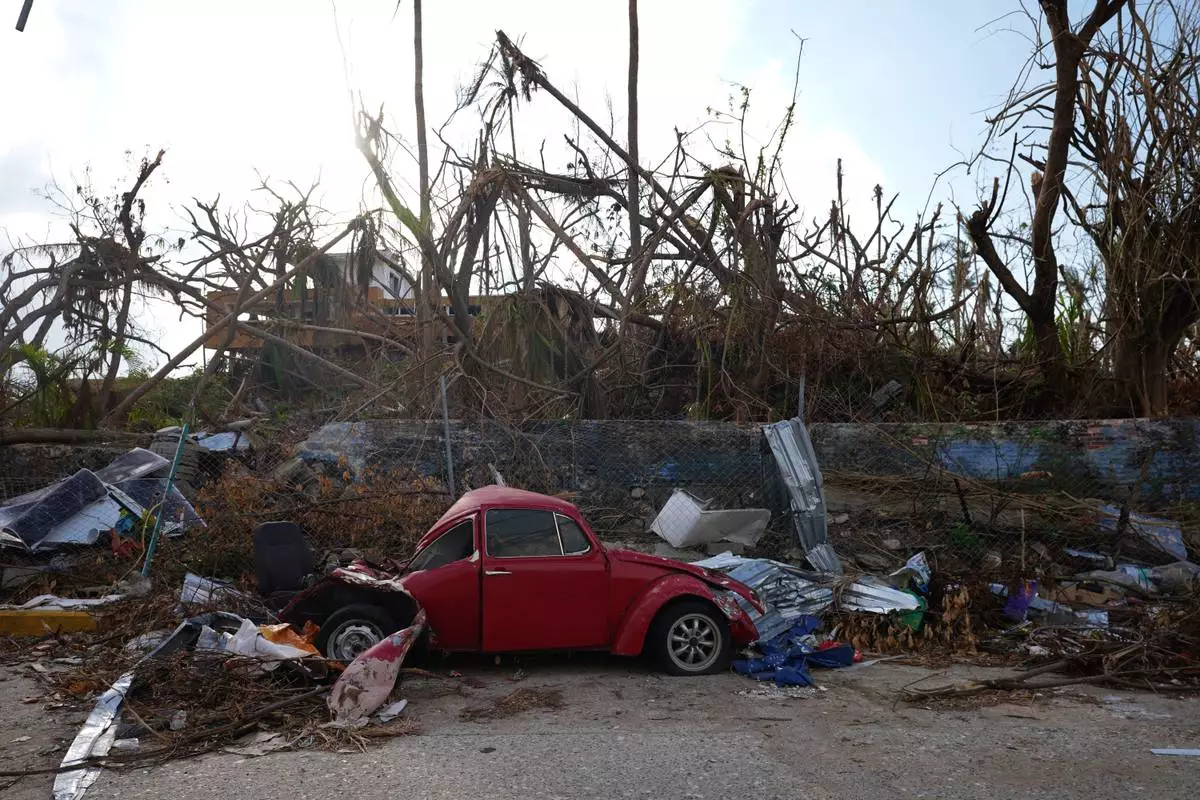
FILE - The Hotel Flamingo is surrounded by debris in the aftermath of Hurricane Otis, in Acapulco, Mexico, Friday, Nov. 10, 2023. (AP Photo/Marco Ugarte, File)
FILE - The Hotel Flamingo is surrounded by debris in the aftermath of Hurricane Otis, in Acapulco, Mexico, Friday, Nov. 10, 2023. (AP Photo/Marco Ugarte, File)

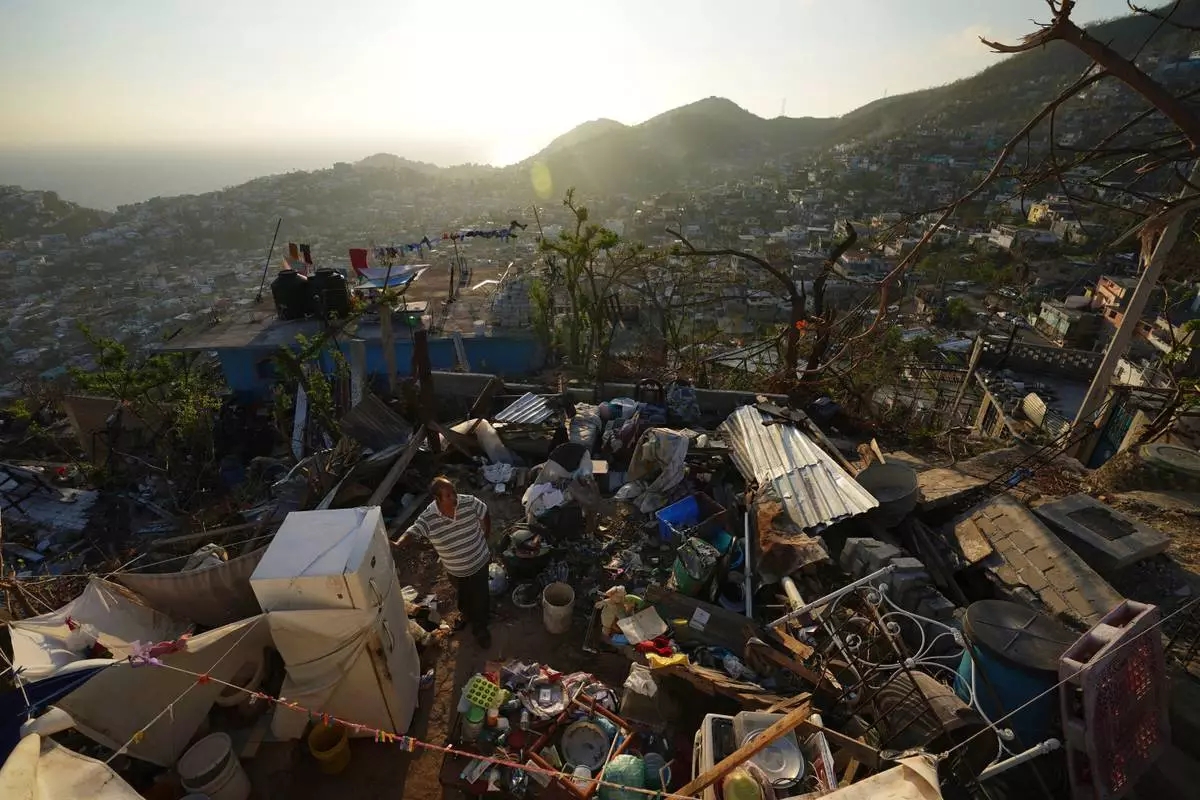
FILE - Jaime Sosa stands amid the ruins of his home nearly three weeks after Hurricane Otis hit as a Category 5 storm in the Alta Cuauhtemoc area of Acapulco, Mexico, Nov. 9, 2023. (AP Photo/Marco Ugarte, File)
FILE - Jaime Sosa stands amid the ruins of his home nearly three weeks after Hurricane Otis hit as a Category 5 storm in the Alta Cuauhtemoc area of Acapulco, Mexico, Nov. 9, 2023. (AP Photo/Marco Ugarte, File)

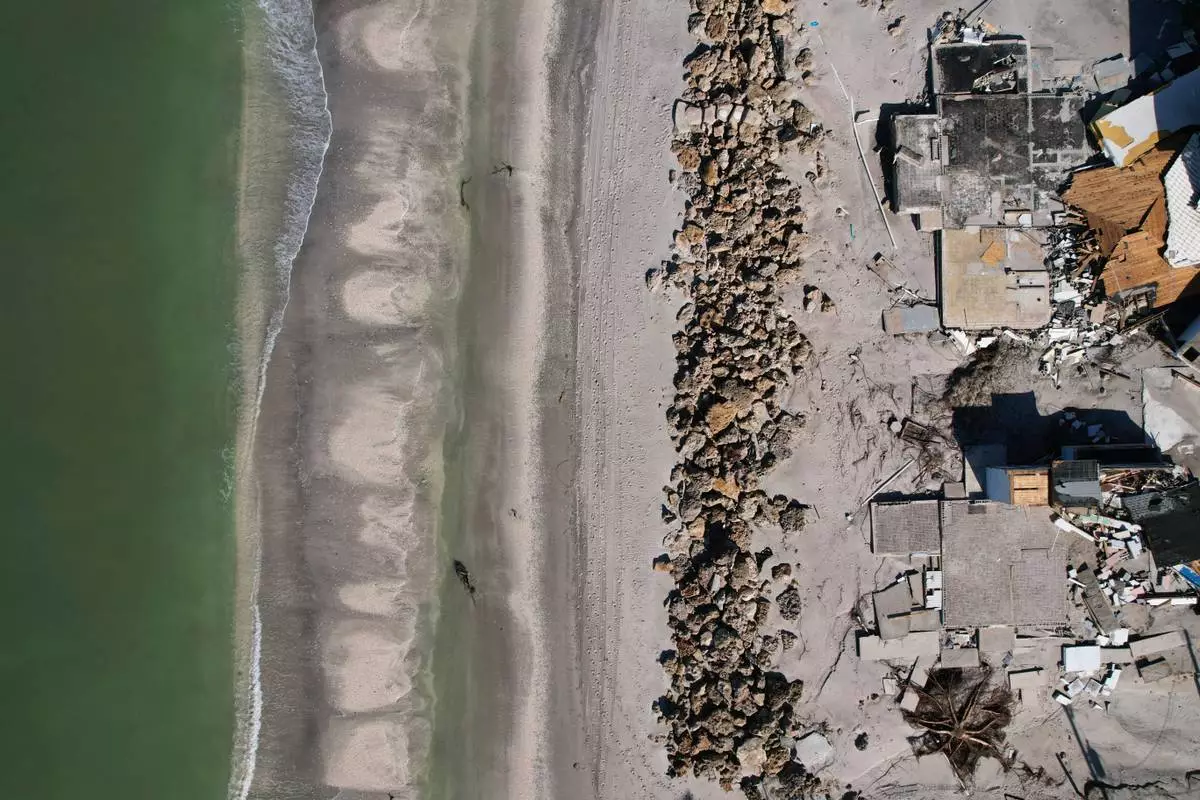
FILE - Waves lap on the beach in front of empty house foundations surrounded by debris, following the passage of Hurricane Milton, on Manasota Key, in Englewood, Fla., Oct. 13, 2024. (AP Photo/Rebecca Blackwell, File)
FILE - Waves lap on the beach in front of empty house foundations surrounded by debris, following the passage of Hurricane Milton, on Manasota Key, in Englewood, Fla., Oct. 13, 2024. (AP Photo/Rebecca Blackwell, File)

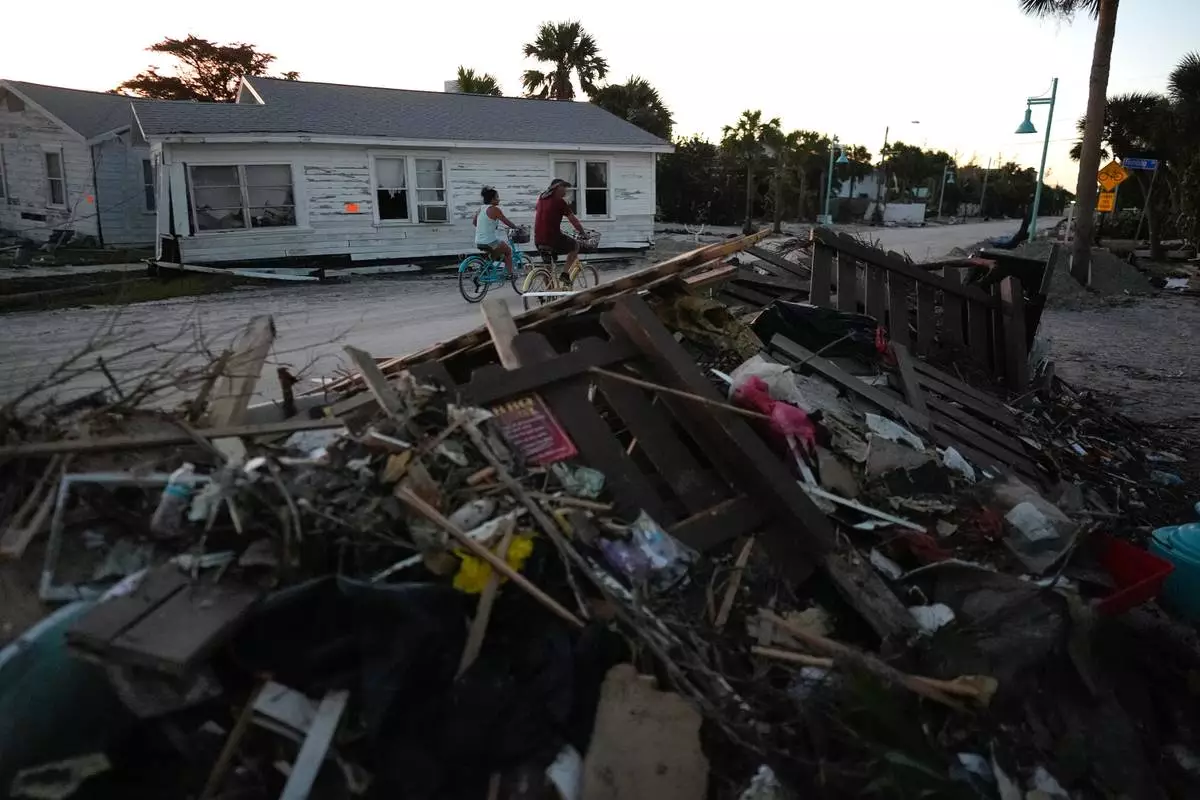
FILE - People bike past damaged homes and debris left by Hurricane Milton, on the sand-coated main road of southern Manasota Key, already cleared of feet of sand, in Englewood, Fla., Oct. 13, 2024. (AP Photo/Rebecca Blackwell, File)
FILE - People bike past damaged homes and debris left by Hurricane Milton, on the sand-coated main road of southern Manasota Key, already cleared of feet of sand, in Englewood, Fla., Oct. 13, 2024. (AP Photo/Rebecca Blackwell, File)

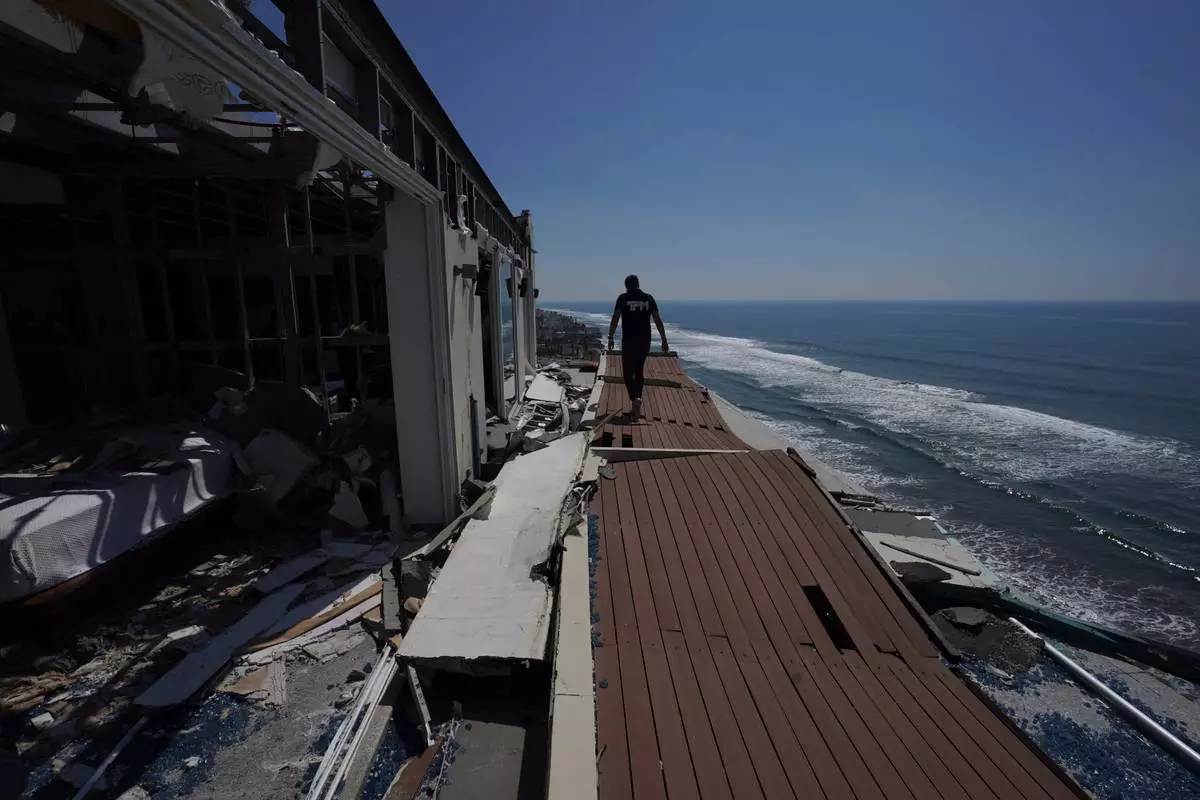
FILE - A man walks alongside damaged apartments in the aftermath of Hurricane Otis, in the Diamonds subdivision of Acapulco, Mexico, Nov. 9, 2023. (AP Photo/Marco Ugarte, File)
FILE - A man walks alongside damaged apartments in the aftermath of Hurricane Otis, in the Diamonds subdivision of Acapulco, Mexico, Nov. 9, 2023. (AP Photo/Marco Ugarte, File)

WASHINGTON (AP) — A novel pill helped people with advanced pancreatic cancer live longer, researchers reported Sunday, raising hopes of long-needed better treatments for one of the deadliest types of cancer.

“While not curing the cancer, it is a very large step forward,” said Dr. Zev Wainberg, of the University of California, Los Angeles, who helped lead the study.

The drug is called daraxonrasib and it blocks a mutated protein that fuels tumor growth in more than 90% of pancreatic cancer cases — a target that had eluded treatment for decades.

The daily pills nearly doubled survival time, with fewer severe side effects, in a study that randomly assigned the experimental drug or more chemotherapy to 500 patients whose metastatic, or spreading, cancer had quit responding to prior treatment. The findings were published in the New England Journal of Medicine and presented Sunday at the American Society for Clinical Oncology meeting in Chicago.

Those taking daraxonrasib lived for a median of 13.2 months compared with 6.7 months for chemotherapy recipients. While that may seem like a small improvement, Wainberg said it marked the first drug to show a substantial advantage over chemotherapy.

“Having treated pancreatic cancer for 16 years, I actually started crying" when first seeing the study results, Dr. Rachna Shroff of the University of Arizona Cancer Center, who wasn't involved with the research, said from the ASCO meeting. She was struck by how “patients stayed on this treatment because it was providing durable and meaningful benefit to them.”

The pills’ effects eventually wane but recipients used them for significantly longer than the comparison group stayed on chemotherapy, reporting less pain and a better quality of life as their tumors shrank. Many still were using the drug after the data was analyzed, which Wainberg said means the survival gap may widen as researchers continue tracking them.

Dr. Brian Wolpin, of the Dana-Farber Cancer Institute, presented the findings Sunday. He said the drug should become “a new standard of care” for previously treated metastatic pancreatic cancer, adding that researchers also will explore its use earlier in the disease, including to see if tumor shrinkage might let more patients qualify for surgery.

Side effects most likely to affect pill usage were a rash that can be severe and mouth sores, he said.

Maker Revolution Medicines funded the study and the Food and Drug Administration plans to expedite review of the drug. Meanwhile, the agency is allowing what’s called “expanded access” to the experimental drug for patients who meet certain criteria. The drug garnered public attention when former U.S. Sen. Ben Sasse described on “60 Minutes” how he's had less pain while taking it. Oncologists are being flooded with requests as the special access program gets started.

Pancreatic cancer is among the most deadly forms in large part because it’s hard to detect before it starts spreading to other organs. The American Cancer Society estimates about 67,000 new cases will be diagnosed in the U.S. this year and more than 52,000 people will die from the disease. The five-year overall survival rate is 13%.

Unlike with other cancers that have benefitted from a variety of chemotherapy alternatives, pancreatic cancer has been harder to tackle.

Cancer specialists not involved in the new research expressed optimism that this may be a turning point in the quest for new options, with dozens of experimental drugs in development.

The new drug targets mutations in the RAS gene family that normally regulates cell growth. So-called KRAS mutations are especially critical in fueling pancreatic cancer. But a structure that made it hard for drugs to stick to the mutated proteins meant this cancer driver was long considered “undruggable.”

Revolution Medicines’ drug uses what’s essentially a molecular glue to bind with multiple KRAS subtypes. Wainberg said researchers next will probe whether the drug worked better in certain of those subtypes.

The drug will change pancreatic cancer treatment, said Dr. Andrew Coveler of the Fred Hutchinson Cancer Center, who wasn’t involved in the research.

“This thing works drastically differently,” he said.

Wainberg said other drugs in development target specific KRAS subtypes. Other approaches in earlier stages of testing include vaccines designed to prevent recurrence after pancreatic cancer surgery by teaching the immune system to recognize the mutated protein.

The Associated Press Health and Science Department receives support from the Howard Hughes Medical Institute’s Department of Science Education and the Robert Wood Johnson Foundation. The AP is solely responsible for all content.

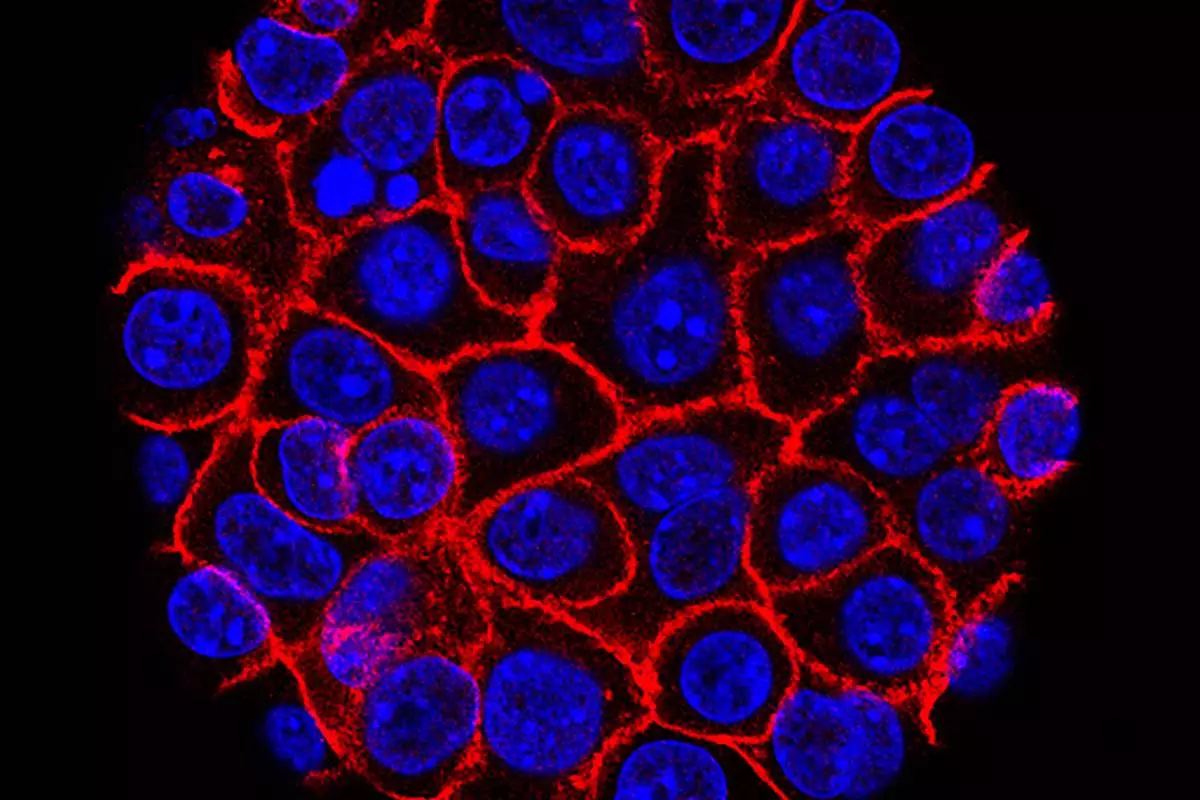
FILE - This undated microscope image from USC via the NIH shows pancreatic cancer cells, nuclei in blue, growing as a sphere encased in membranes, red. (Min Yu/Eli and Edythe Broad Center for Regenerative Medicine and Stem Cell Research at USC, USC Norris Comprehensive Cancer Center, File)

FILE - This undated microscope image from USC via the NIH shows pancreatic cancer cells, nuclei in blue, growing as a sphere encased in membranes, red. (Min Yu/Eli and Edythe Broad Center for Regenerative Medicine and Stem Cell Research at USC, USC Norris Comprehensive Cancer Center, File)

Recommended Articles