Skip to Content Facebook Feature Image

Unsettled and uncertain: What the Iran war means around the world as US and Iran enter talks

News

Unsettled and uncertain: What the Iran war means around the world as US and Iran enter talks
News

News

Unsettled and uncertain: What the Iran war means around the world as US and Iran enter talks

2026-04-11 12:05 Last Updated At:12:12

The long-term fallout of the war in Iran is only beginning to take shape, but this much is clear: The conflict has left the Middle East unsettled, alliances strained and the world facing uncertain shifts in the balance of economic and military power.

Iran’s theocracy is tattered but alive, with new economic leverage. The U.S. and Israel will hold elections this year, their leaders potentially facing voters having fallen short of their war aims. The NATO alliance, already strained, is under even more pressure. The Gulf Arab states face an emboldened Iran in their backyard.

More Images
A man fiills up a recreational vehicle at a gas station on Tuesday, April 7, 2026, in Aurora, Ore. (AP Photo/Jenny Kane)

A man fiills up a recreational vehicle at a gas station on Tuesday, April 7, 2026, in Aurora, Ore. (AP Photo/Jenny Kane)

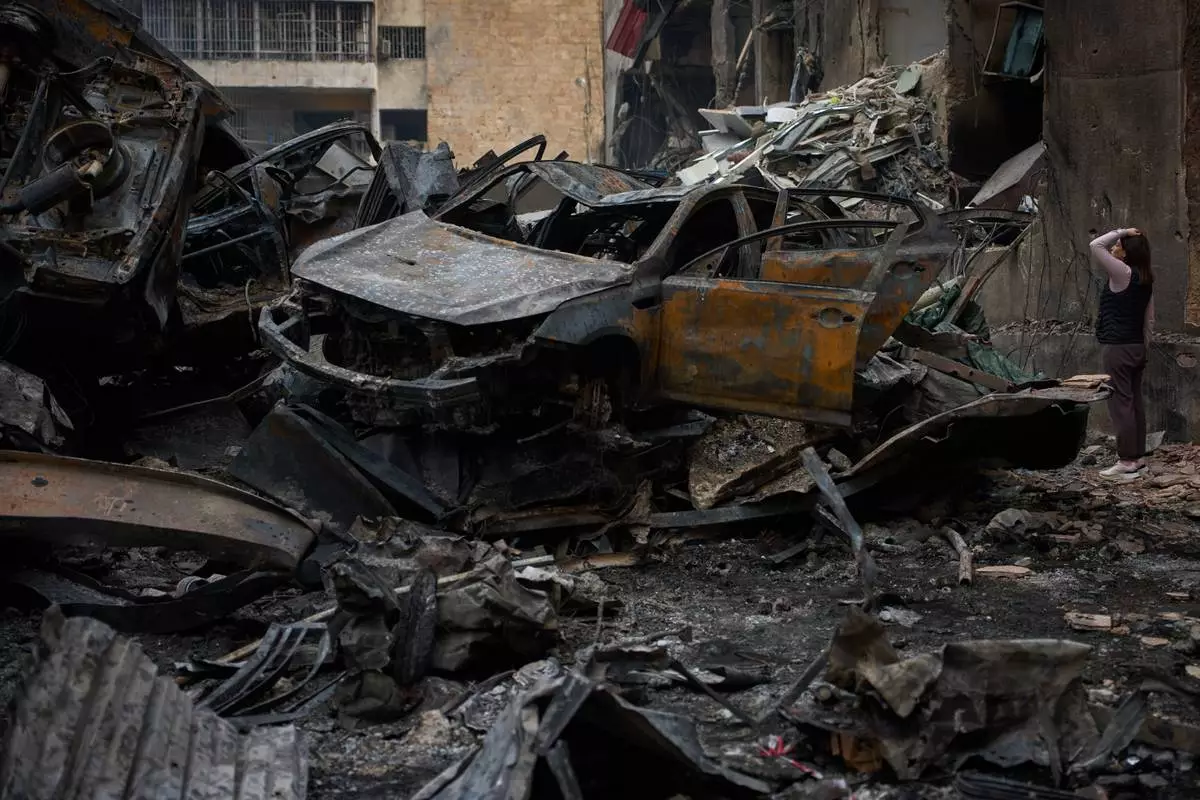
A resident checks damage to buildings as she walks near charred cars, at the site of Wednesday's Israeli airstrike, in Beirut, Lebanon, Friday, April 10, 2026. (AP Photo/Emilio Morenatti)

A resident checks damage to buildings as she walks near charred cars, at the site of Wednesday's Israeli airstrike, in Beirut, Lebanon, Friday, April 10, 2026. (AP Photo/Emilio Morenatti)

Government supporters gather to mark the 40th day since the death of Supreme Leader Ayatollah Ali Khamenei in Tehran, Iran, Thursday, April 9, 2026. (AP Photo/Vahid Salemi)
Government supporters gather to mark the 40th day since the death of Supreme Leader Ayatollah Ali Khamenei in Tehran, Iran, Thursday, April 9, 2026. (AP Photo/Vahid Salemi)

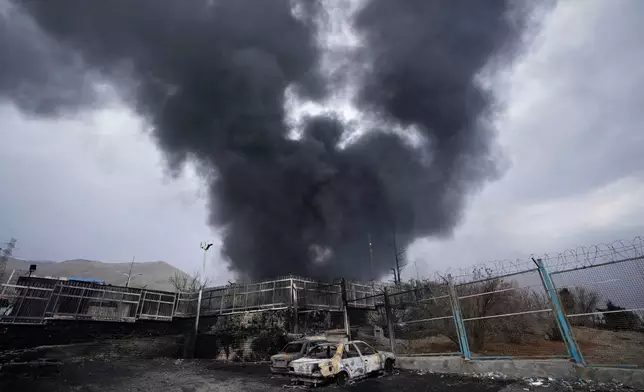
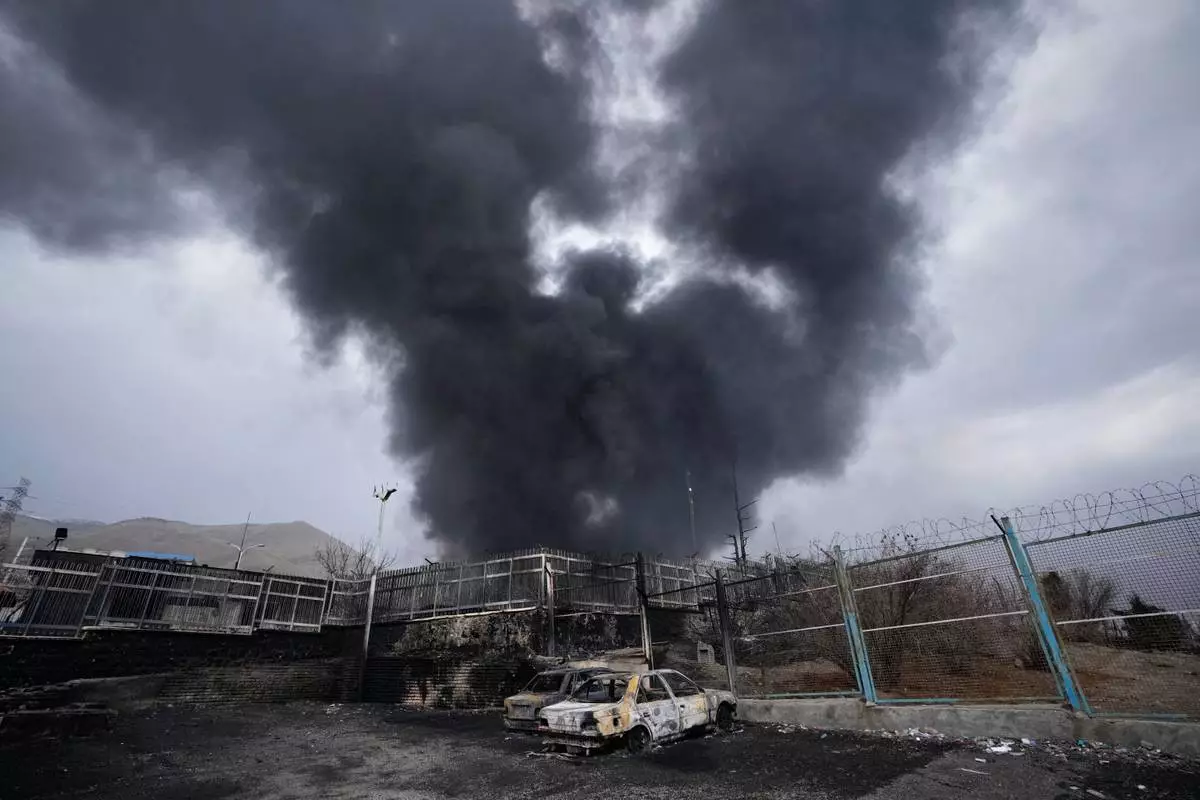
FILE - A thick plume of smoke rises from an oil storage facility hit by a U.S.-Israeli strike in Tehran, Iran, March 8, 2026. (AP Photo/Vahid Salemi, File)

FILE - A thick plume of smoke rises from an oil storage facility hit by a U.S.-Israeli strike in Tehran, Iran, March 8, 2026. (AP Photo/Vahid Salemi, File)

At this inflection point, as the U.S. and Iran prepare for talks this weekend in Pakistan, AP journalists in the Middle East and Washington share their assessments on how the war is still reverberating across the world during the tenuous ceasefire:

If Prime Minister Benjamin Netanyahu were to be graded for the war, he would get an “incomplete.”

Netanyahu set some ambitious goals at the outset of the fighting on Feb. 28, saying he wanted to remove the threats posed by Iran’s missile and nuclear programs and its support for hostile proxy groups. He also vowed to create the conditions for a popular uprising against the Iranian government. None of these goals were fully achieved.

In a televised address after the ceasefire, Netanyahu acknowledged “we still have goals to complete.” But he nonetheless claimed “immense achievements.”

“Iran is weaker than ever, and Israel is stronger than ever. This is the bottom line of this campaign,” he said.

With elections looming later this year, the question for Netanyahu is whether the Israeli public agrees with his assessment.

Israelis overwhelmingly supported the war against archenemy Iran, especially in the early days of the campaign. But as the war dragged on, Israelis also grew tired as nonstop air-raid sirens disrupted daily life and sent people scrambling into bomb shelters around the clock.

Netanyahu is now hoping that in the coming ceasefire talks the U.S. will shore up the battlefield gains into a permanent agreement that guards Israel’s interests. He also must ensure that his relationship with President Donald Trump remains strong after an inconclusive war that was deeply unpopular in the U.S.

Otherwise, Netanyahu could find himself struggling for his job when his war-weary nation heads to the polls.

— Josef Federman, deputy news director for the Middle East

Iran, battered by nationwide protests in January and heavy airstrikes in the war, suddenly finds itself in a position of power.

Just the threat of sea mines and possible attacks from Iran’s paramilitary Revolutionary Guard has ships staying away from the Strait of Hormuz, in effect keeping the waterway crucial for international energy shipments closed.

Even hard-liners have spun the killing of 86-year-old Supreme Leader Ayatollah Ali Khamenei into the idea of replacing him with a younger, more hard-line version of himself in his son, Mojtaba.

The government has put forward its own maximalist demands ahead of the Islamabad talks — including continuing to enrich uranium in its nuclear program, one of the chief reasons Trump gave for going to war.

Yet Iran’s military sites now sit in ruins, its missile arsenal broadly depleted, and the threat of more protests by its people still looms in the future. That unrest could be spurred on by the sheer level of destruction in Iran’s oil and gas industry, as well as attacks targeting steel mills and other economic sites.

— Jon Gambrell, news director for the Gulf and Iran

After insisting and pleading with Iran to leave them out of the conflict, the Gulf Arab states still found themselves targeted by Iran, which rained down drone and missile fire on airports, energy sites, military bases and civilian targets across the region.

Many had to close refineries or declare themselves unable to meet their promised oil output due to the war. Even with a ceasefire in place, Iran’s new control of the Strait of Hormuz through threats alone means Gulf states still aren’t able to get their energy shipments out to market.

They aren’t a monolith though, with opinions ranging from Oman’s efforts at diplomacy to the United Arab Emirates denouncing Iranian aggression and insisting the status quo cannot stand.

— Jon Gambrell, news director for the Gulf and Iran

In Lebanon, the regional war has taken a devastating toll and the prospect of a ceasefire now leaves more questions than answers.

The U.S. and Israel are at odds with Iran over whether or not their ceasefire extends to the war between Israel and Hezbollah in Lebanon. Iran says it does; the U.S. and Israel say it does not.

In the meantime, Lebanese and Israeli officials have agreed to enter into direct negotiations, which Lebanon hopes will lead to a ceasefire and Israel hopes will lead to disarmament of Hezbollah. Netanyahu said the negotiations would also include talks about a potential peace agreement between the two countries, which do not have diplomatic relations.

While the talks represent a significant step, reaching an agreement will not be easy. Lebanon wants a halt to Israeli strikes before the talks start, a condition that Israel is unlikely to agree to.

In practice, most analysts say Lebanon does not have the capacity to disarm Hezbollah by force or to enforce any ceasefire agreement that Hezbollah does not agree to.

For now, the Israel-Hezbollah war that has displaced more than a million people and killed nearly 1,900 continues.

— Abby Sewell, news director for Lebanon, Syria and Iraq

Trump has repeatedly tested the 32-member alliance.

He cut off direct U.S. military assistance to Ukraine, threatened to take the Arctic territory of Greenland from NATO ally Denmark, and cajoled members to spend more on defense.

Now, his differences with NATO allies over Iran are raising new questions about whether the alliance, created as a curative to post World War II instability, can survive.

Since launching the war, Trump has derided allies as “cowards,” slammed NATO as “a paper tiger” and compared U.K. Prime Minister Keir Starmer to Neville Chamberlain, the former premier known for a policy of appeasement toward Nazi Germany.

Trump is angry at member countries ignoring his call to help as Iran effectively shut the the Strait of Hormuz, and at alliance members Spain and France restricting the use of their airspace or joint military facilities by U.S. forces supporting the operations in Iran.

Trump says the moment is “a mark on NATO that will never disappear.”

— Aamer Madhani, White House reporter, Washington

Trump won back the White House promising to curb inflation, bring down prices many Americans saw as too high and trigger a jobs boom. The war in Iran has done exactly the opposite, raising gas prices, leaving stock markets reeling and sending shockwaves through the rest of the economy as the labor market weakens and inflation begins rising anew.

With November’s midterms looming, none of that is good for Republicans trying to keep control of Congress. Trump initially tried to calm economic fears by visiting swing states. But he first scoffed at affordability worries as a hoax, then stopped those trips altogether as the war consumed his administration.

Making a ceasefire stick might eventually stabilize oil prices and financial markets, but reversing economic pain around the globe may take far longer, potentially affecting voters closer to Election Day.

Polling also shows that most Americans believe U.S. military action in Iran went too far. And the war has even caused a rift within Trump’s once seemingly unflappable MAGA base.

— Will Weissert, White House reporter, Washington

The conflict has largely shut down the flow of ships through the Strait of Hormuz, through which about one-fifth of the world’s oil travels, and has damaged oil and gas production facilities across the Middle East.

In response, oil prices have shot higher all over the world. Brent crude oil, the international standard, has gone from roughly $70 per barrel before the war in late February to more than $119 at times. Brent rose 0.7% to $96.58 Friday.

Prices at the pump have jumped as well, reaching about $4.15 a gallon in the U.S., up from just under $3 before the conflict began. Higher gas costs can sap Americans’ ability to spend on other goods and services, slowing the economy and threatening to worsen unemployment.

U.S. consumer prices rose 3.3% in March from a year earlier, up sharply from just 2.4% in February and the biggest yearly increase since May 2024. The surge in gas prices will stretch the budgets of lower- and middle-income households.

— Christopher Rugaber, economics reporter, Washington

AP writers Jonathan J. Cooper and Mike Catalini contributed.
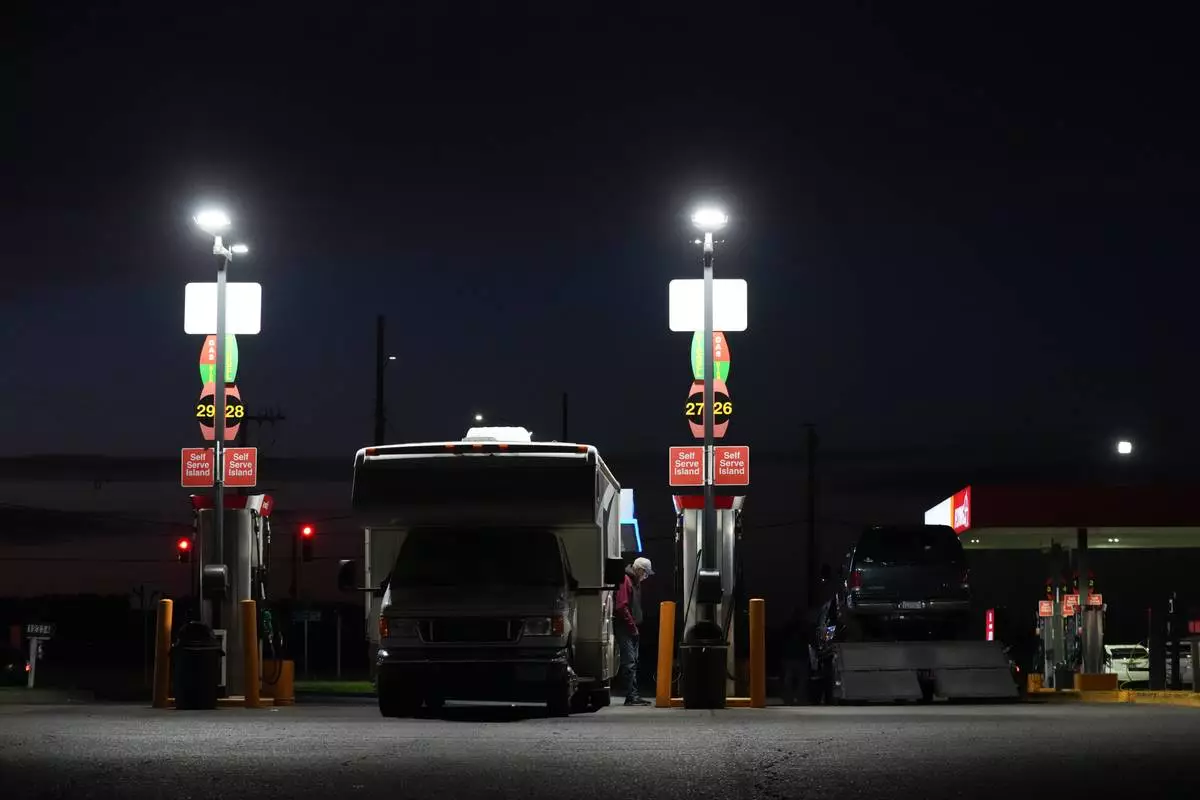
A man fiills up a recreational vehicle at a gas station on Tuesday, April 7, 2026, in Aurora, Ore. (AP Photo/Jenny Kane)
A man fiills up a recreational vehicle at a gas station on Tuesday, April 7, 2026, in Aurora, Ore. (AP Photo/Jenny Kane)

A resident checks damage to buildings as she walks near charred cars, at the site of Wednesday's Israeli airstrike, in Beirut, Lebanon, Friday, April 10, 2026. (AP Photo/Emilio Morenatti)

A resident checks damage to buildings as she walks near charred cars, at the site of Wednesday's Israeli airstrike, in Beirut, Lebanon, Friday, April 10, 2026. (AP Photo/Emilio Morenatti)

Government supporters gather to mark the 40th day since the death of Supreme Leader Ayatollah Ali Khamenei in Tehran, Iran, Thursday, April 9, 2026. (AP Photo/Vahid Salemi)
Government supporters gather to mark the 40th day since the death of Supreme Leader Ayatollah Ali Khamenei in Tehran, Iran, Thursday, April 9, 2026. (AP Photo/Vahid Salemi)

FILE - A thick plume of smoke rises from an oil storage facility hit by a U.S.-Israeli strike in Tehran, Iran, March 8, 2026. (AP Photo/Vahid Salemi, File)


FILE - A thick plume of smoke rises from an oil storage facility hit by a U.S.-Israeli strike in Tehran, Iran, March 8, 2026. (AP Photo/Vahid Salemi, File)

HOUSTON (AP) — Artemis II’s astronauts closed out humanity’s first lunar voyage in more than half a century with a Pacific splashdown on Friday, blazing new records near the moon with grace and joy.

It was a dramatic grand finale to a mission that revealed not only swaths of the lunar far side never seen before by human eyes, but a total solar eclipse and a parade of planets, most notably our own shimmering Earth against the endless black void of space.

With their flight now complete, the four astronauts have set NASA up for a moon landing by another crew in just two years and a full-blown moon base within the decade.

The triumphant moon-farers — commander Reid Wiseman, pilot Victor Glover, Christina Koch and Canada’s Jeremy Hansen — emerged from their bobbing capsule into the sunlight off the coast of San Diego.

In a scene reminiscent of NASA’s Apollo moonshots of yesteryear, military helicopters hoisted the astronauts one by one from an inflatable raft docked to the capsule, hauling them aboard for the short trip to the Navy’s awaiting recovery ship, the USS John P. Murtha.

“These were the ambassadors from humanity to the stars that we sent out there right now, and I can’t imagine a better crew,” NASA Administrator Jared Isaacman said from the recovery ship.

NASA's Mission Control erupted in celebration, with hundreds pouring in from the back support rooms. “We did it,” NASA's Lori Glaze rejoiced at a news conference. “Welcome to our moonshot.”

Their Orion capsule, dubbed Integrity, made the entire plunge on automatic pilot. The lunar cruiser hit the atmosphere traveling Mach 33 — or 33 times the speed of sound — a blistering blur not seen since the 1960s and 1970s Apollo.

The tension in Mission Control mounted as the capsule became engulfed in red-hot plasma during peak heating and entered a planned communication blackout. All eyes were on the capsule’s life-protecting heat shield that had to withstand thousands of degrees during reentry.

Watching the drama unfold nearly 2,000 miles (3,200 kilometers) away, the astronauts’ families huddled in Mission Control's viewing room, cheering when the capsule emerged from its six-minute blackout and again at splashdown.

The last time NASA and the Defense Department teamed up for a lunar crew’s reentry was Apollo 17 in 1972. Artemis II came screaming back at 36,174 feet (11,026 meters) per second — or 24,664 mph (39,693 kph) — just shy of the record before slowing to a 19 mph (30 kph) splashdown.

Until Artemis II, NASA’s fresh-from-the-moon homecomings starred only white male pilots. Intent on reflecting changes in society, NASA chose a diverse, multinational crew for its lunar comeback.

Koch became the first woman to fly to the moon, Glover the first Black astronaut and Hansen the first non-U.S. citizen, bursting Canada with pride. They laughed, cried and hugged all the way there and back, striving to take the entire world along with them.

Launched from Florida on April 1, the astronauts racked up one win after another as they deftly navigated NASA’s long-awaited lunar comeback, the first major step in establishing a sustainable moon base.

Artemis II didn't land on the moon or even orbit it. But it broke Apollo 13's distance record and marked the farthest that humans have ever journeyed from Earth when the crew reached 252,756 miles (406,771 kilometers). Then in the mission's most heart-tugging scene, the teary astronauts asked permission to name a pair of craters after their moonship and Wiseman's late wife, Carroll.

During Monday's record-breaking flyby, they documented scenes of the moon's far side never seen before by the human eye along with a total solar eclipse. The eclipse, in particular, “just blew all of us away,” Glover said.

Their sense of wonder and love awed everyone, as did their breathtaking pictures of the moon and Earth. The Artemis II crew channeled Apollo 8's first lunar explorers with Earthset, showing our Blue Marble setting behind the gray moon. It was reminiscent of Apollo 8’s famous Earthrise shot from 1968.

Born a decade after Apollo, Isaacman greeted the astronauts with hugs as they headed from the helicopters to the ship’s medical bay for routine checks. They walked by themselves, refusing the wheelchairs offered them.

“We are back in the business of sending astronauts to the moon, bringing them back safely and to set up for a series more,” Isaacman said. “This is just the beginning.”

Their moonshot drew global attention as well as star power, earning props from President Donald Trump; Canadian Prime Minister Mark Carney; Britain's King Charles III; Ryan Gosling, star of the latest space flick “Project Hail Mary”; Scarlett Johansson of the Marvel Cinematic Universe; and even Captain Kirk himself, William Shatner of TV’s original “Star Trek.”

Despite its rich scientific yield, the nearly 10-day flight was not without technical issues. Both the capsule’s drinking water and propellant systems were hit with valve problems. In perhaps the most high-profile predicament, the toilet kept malfunctioning, but the astronauts shrugged it all off.

As for the heat shield, military aircraft crews photographed it from afar during reentry, and divers checked it from underneath as the capsule floated in the Pacific. More detailed examinations are planned.

“We can’t explore deeper unless we are doing a few things that are inconvenient,” Koch said, “unless we’re making a few sacrifices, unless we’re taking a few risks, and those things are all worth it.”

Added Hansen: “You do a lot of testing on the ground, but your final test is when you get this hardware to space and it’s a doozy.”

Under the revamped Artemis program, next year’s Artemis III will see astronauts practice docking their capsule with a lunar lander or two in orbit around Earth. Artemis IV will attempt to land a crew of two near the moon’s south pole in 2028.

The Artemis II astronauts' allegiance was to those future crews, Wiseman said.

“But we really hoped in our soul is that we could for just for a moment have the world pause and remember that this is a beautiful planet and a very special place in our universe, and we should all cherish what we have been gifted,” he said.

The Associated Press Health and Science Department receives support from the Howard Hughes Medical Institute’s Department of Science Education and the Robert Wood Johnson Foundation. The AP is solely responsible for all content.

People wait for a glimpse of the return of NASA's Artemis II Friday, April 10, 2026, along the beach in Coronado, Calif. (AP Photo/Gregory Bull)

People wait for a glimpse of the return of NASA's Artemis II Friday, April 10, 2026, along the beach in Coronado, Calif. (AP Photo/Gregory Bull)

In this photo provided by NASA, the Orion spacecraft with Artemis II crewmembers aboard approaches the surface of the Pacific Ocean for splashdown off the coast of California, Friday, April 10, 2026. (Bill Ingalls/NASA via AP)

In this photo provided by NASA, the Orion spacecraft with Artemis II crewmembers aboard approaches the surface of the Pacific Ocean for splashdown off the coast of California, Friday, April 10, 2026. (Bill Ingalls/NASA via AP)

In this photo provided by NASA, the Orion spacecraft with Artemis II crewmembers aboard approaches the surface of the Pacific Ocean for splashdown off the coast of California, Friday, April 10, 2026. (Bill Ingalls/NASA via AP)

In this photo provided by NASA, the Orion spacecraft with Artemis II crewmembers aboard approaches the surface of the Pacific Ocean for splashdown off the coast of California, Friday, April 10, 2026. (Bill Ingalls/NASA via AP)

In this image from video provided by NASA, the Artemis II Orion capsule splashes down in the Pacific Ocean, on Friday, April 10, 2026. (NASA via AP)

In this image from video provided by NASA, the Artemis II Orion capsule splashes down in the Pacific Ocean, on Friday, April 10, 2026. (NASA via AP)

In this photo provided by NASA, U.S. Navy divers prepare to deploy in small boats from the well deck of USS John P. Murtha to recover Artemis II crew members NASA astronauts Reid Wiseman, commander; Victor Glover, pilot; Christina Koch, mission specialist; and CSA (Canadian Space Agency) astronaut Jeremy Hansen, mission specialist and NASA's Orion spacecraft in the Pacific Ocean off the coast of California, Friday, April 10, 2026. (Bill Ingalls/NASA via AP)

In this photo provided by NASA, U.S. Navy divers prepare to deploy in small boats from the well deck of USS John P. Murtha to recover Artemis II crew members NASA astronauts Reid Wiseman, commander; Victor Glover, pilot; Christina Koch, mission specialist; and CSA (Canadian Space Agency) astronaut Jeremy Hansen, mission specialist and NASA's Orion spacecraft in the Pacific Ocean off the coast of California, Friday, April 10, 2026. (Bill Ingalls/NASA via AP)

In this image from video provided by NASA, the Artemis II Orion capsule, right, separates from the service module above the Earth in preparation for splash down in the Pacific Ocean. (NASA via AP)

In this image from video provided by NASA, the Artemis II Orion capsule, right, separates from the service module above the Earth in preparation for splash down in the Pacific Ocean. (NASA via AP)

In this image provided by NASA, the Artemis II crew, counterclockwise from top left, Mission Specialist Christina Koch, Mission Specialist Jeremy Hansen, Commander Reid Wiseman, and Pilot Victor Glover pose with eclipse viewers during a lunar flyby, Monday, April 6, 2026. (NASA via AP)

In this image provided by NASA, the Artemis II crew, counterclockwise from top left, Mission Specialist Christina Koch, Mission Specialist Jeremy Hansen, Commander Reid Wiseman, and Pilot Victor Glover pose with eclipse viewers during a lunar flyby, Monday, April 6, 2026. (NASA via AP)

In this image provided by NASA, the Artemis II crew photographed the Moons curved limb during their journey around the far side of the Moon on April 6, 2026. (NASA via AP)

In this image provided by NASA, the Artemis II crew photographed the Moons curved limb during their journey around the far side of the Moon on April 6, 2026. (NASA via AP)

In this image provided by NASA, the Artemis II crew photographed a bright portion of the Moon on April 6, 2026. (NASA via AP)

In this image provided by NASA, the Artemis II crew photographed a bright portion of the Moon on April 6, 2026. (NASA via AP)

In this image provided by NASA, the Artemis II crew captured this view as the Earth sets behind the Moon during a lunar flyby, Monday, April 6, 2026. (NASA via AP)

In this image provided by NASA, the Artemis II crew captured this view as the Earth sets behind the Moon during a lunar flyby, Monday, April 6, 2026. (NASA via AP)

Recommended Articles