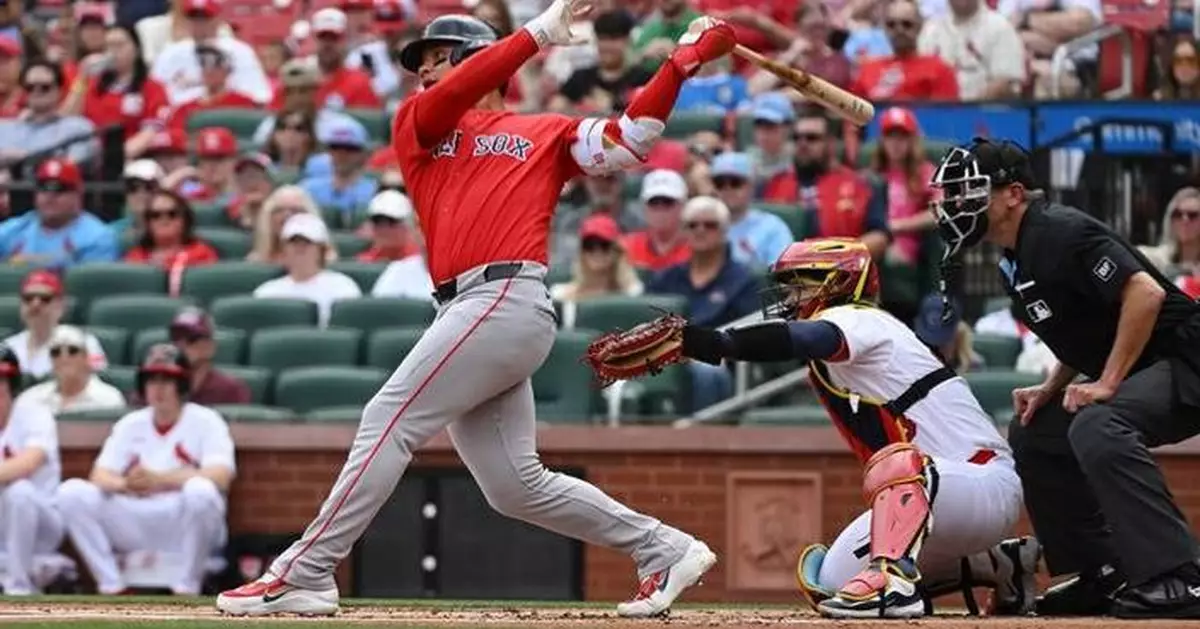
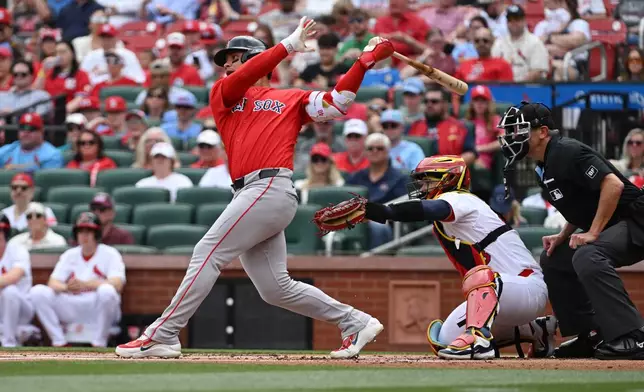
ST. LOUIS (AP) — Willson Contreras homered against his former team and matched a career high with four hits, leading the Boston Red Sox past the St. Louis Cardinals 9-3 on Sunday.
Trevor Story also had four hits for the Red Sox. Contreras launched a two-run shot in the second inning and finished with three RBIs. He was acquired by Boston from St. Louis in a December trade.
Click to Gallery
St. Louis Cardinals' Andre Pallante delivers a pitch in the first inning of a baseball game against the Boston Red Sox, Sunday, April 12, 2026, in St. Louis. (AP Photo/Michael Thomas)
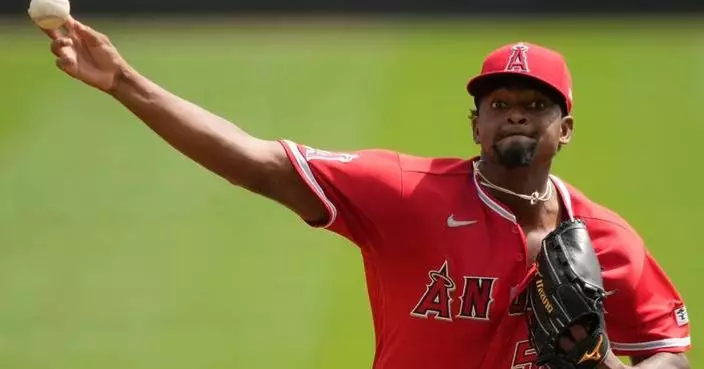
Boston Red Sox's Brayan Bello delivers a pitch in the first inning of a baseball game against the St. Louis Cardinals, Sunday, April 12, 2026, in St. Louis. (AP Photo/Michael Thomas)
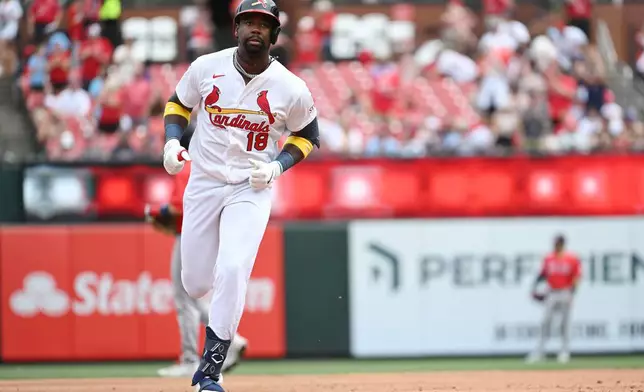
St. Louis Cardinals' Jordan Walker rounds the bases after hitting a solo home run in second inning of a baseball game against the Boston Red Sox, Sunday, April 12, 2026, in St. Louis. (AP Photo/Michael Thomas)
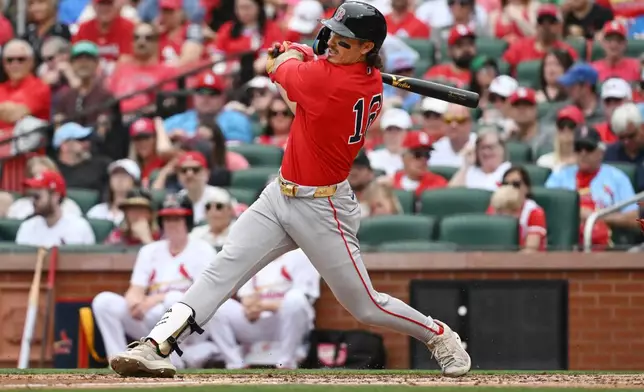
Boston Red Sox's Jarren Duran hits a three-RBI double in the fourth inning of a baseball game against the St. Louis Cardinals, Sunday, April 12, 2026, in St. Louis. (AP Photo/Michael Thomas)
Boston Red Sox's Willson Contreras, left, hits a two-run home run in the first inning of a baseball game St. Louis Cardinals, Sunday, April 12, 2026, in St. Louis. (AP Photo/Michael Thomas)
Contreras singled in the third, fourth and seventh before popping out to left field in the ninth. It was his eighth career four-hit game and first since June 2023 with the Cardinals against the Chicago Cubs in London.
Brayan Bello (1-1) allowed two runs and six hits over 6 2/3 innings in his 100th career start.
Jordan Walker hit his major league-leading seventh home run in the second for St. Louis. Alec Burleson also went deep, but Andre Pallante (1-1) gave up seven runs and 10 hits in five innings.
Jarren Duran lined a three-run double over Cardinals center fielder Victor Scott II’s head and later scored in the fourth to put Boston ahead 7-1.
Roman Anthony gave the Red Sox a 3-0 lead in the second when he drove in Trevor Story on a one-out, bases-loaded grounder to shortstop Thomas Saggese, who was forced to throw to first after Cardinals second baseman JJ Wetherholt was tardy covering the bag at second.
Cardinals shortstop Masyn Winn missed his second consecutive game with a bruise below his left knee after he was hit by a pitch Friday night.
Red Sox: Open a three-game series at Minnesota on Monday night when LHP Garrett Crochet (2-1, 3.12 ERA) opposes Twins RHP Bailey Ober (1-0, 5.27).
Cardinals: LHP Matthew Liberatore (0-0, 3.38 ERA) faces Cleveland RHP Gavin Williams (1-1, 2.04) to begin a three-game home series Monday night.
AP MLB: https://apnews.com/hub/mlb

St. Louis Cardinals' Andre Pallante delivers a pitch in the first inning of a baseball game against the Boston Red Sox, Sunday, April 12, 2026, in St. Louis. (AP Photo/Michael Thomas)

Boston Red Sox's Brayan Bello delivers a pitch in the first inning of a baseball game against the St. Louis Cardinals, Sunday, April 12, 2026, in St. Louis. (AP Photo/Michael Thomas)
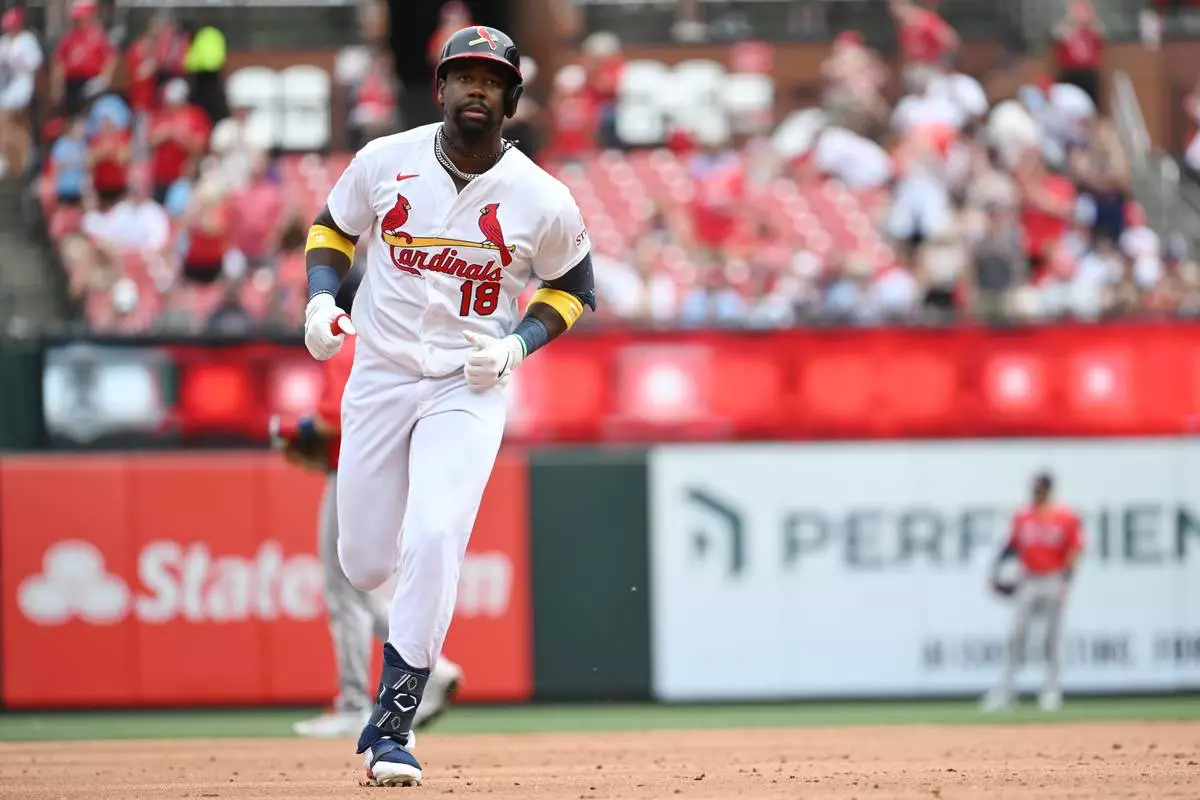
St. Louis Cardinals' Jordan Walker rounds the bases after hitting a solo home run in second inning of a baseball game against the Boston Red Sox, Sunday, April 12, 2026, in St. Louis. (AP Photo/Michael Thomas)
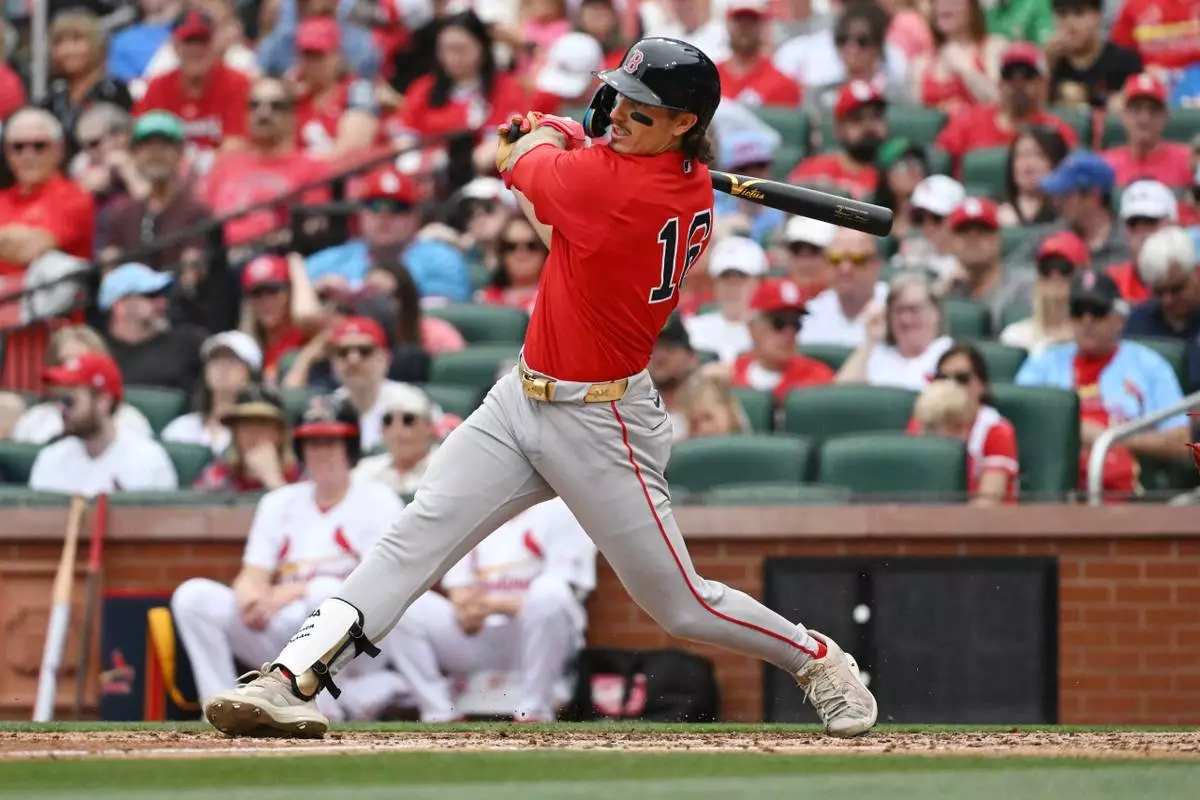
Boston Red Sox's Jarren Duran hits a three-RBI double in the fourth inning of a baseball game against the St. Louis Cardinals, Sunday, April 12, 2026, in St. Louis. (AP Photo/Michael Thomas)
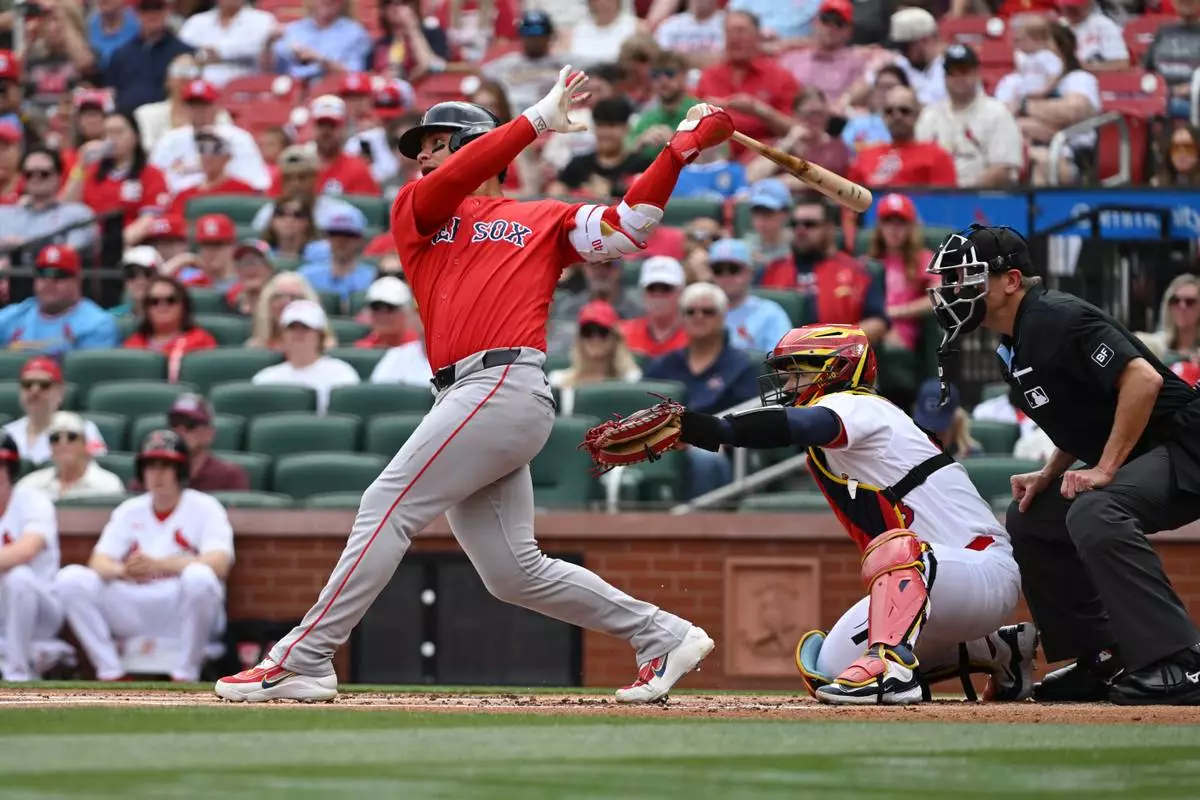
Boston Red Sox's Willson Contreras, left, hits a two-run home run in the first inning of a baseball game St. Louis Cardinals, Sunday, April 12, 2026, in St. Louis. (AP Photo/Michael Thomas)
ISLAMABAD (AP) — President Donald Trump on Sunday said the U.S. Navy would “immediately” begin a blockade of ships entering or leaving the Strait of Hormuz, after U.S.-Iran ceasefire talks in Pakistan ended without an agreement.
U.S. Central Command announced that it will blockade all Iranian ports beginning Monday at 10 a.m. ET.
CENTCOM said the blockade will be “enforced impartially against vessels of all nations.” It said it would still allow ships traveling between non-Iranian ports to transit the Strait of Hormuz.
Trump wants to weaken Iran’s key leverage in the war after demanding that it reopen the strait to all global traffic on the waterway that was responsible for 20% of global oil shipping before fighting began.
Traffic in the Strait has been limited even in the days since the ceasefire. Marine trackers say over 40 commercial ships have crossed since the start of the ceasefire.
A U.S. blockade could further rattle global energy markets. “It’s going to be all or none, and that’s the way it is," Trump told Fox News.
Trump said on social media that he told the Navy to "seek and interdict every vessel in International Waters that has paid a toll to Iran. No one who pays an illegal toll will have safe passage on the high seas.” He said other nations would be involved but did not name them.
Freedom of peaceful navigation is a basic principle of international maritime trade.
Iran’s Revolutionary Guard later said the strait remained under Iran’s “full control” and was open for non-military vessels, but military ones would get a “forceful response,” two semi-official Iranian news agencies reported.
During the 21-hour talks, the U.S. military said two destroyers had transited the strait ahead of mine-clearing work, a first since the war began. Iran denied it.
Trump’s plan to use the Navy to block the strait is unrealistic and he will have to concede on some issues with Iran, said Andreas Krieg, a senior lecturer in security studies at Kings College London. “There isn’t any tool in the toolbox in terms of the military lever that he could use to get his way,” Krieg said.
Trump said Tehran’s nuclear ambitions were at the core of the talks' failure. In comments to Fox News, he again threatened to strike civilian infrastructure.
Parliament speaker Mohammad Bagher Qalibaf, who led Iran’s side, addressed Trump in a new statement on his return to Iran: “If you fight, we will fight.”
The face-to-face talks that ended early Sunday were the highest-level negotiations between the longtime rivals since the 1979 Islamic Revolution.
Neither indicated what will happen after the ceasefire expires on April 22.
“We need to see an affirmative commitment that they will not seek a nuclear weapon,” said Vice President JD Vance, leading the U.S. side.
Iranian negotiators could not agree to all U.S. “red lines,” said a U.S. official who spoke on condition of anonymity because they were not authorized to describe positions on the record. These included Iran never obtaining a nuclear weapon, ending uranium enrichment, dismantling major enrichment facilities and allowing retrieval of its highly enriched uranium, along with opening the Strait of Hormuz and ending funding for Hamas, Hezbollah and Houthi rebels.
Iranian officials said talks fell apart over two or three key issues, blaming what they called U.S. overreach. Qalibaf, who noted progress in negotiations, said it was time for the United States “to decide whether it can gain our trust or not.”
Pakistani Foreign Minister Ishaq Dar said his country will try to facilitate a new dialogue in the coming days. Iran said it was open to continuing dialogue, state-run IRNA news agency reported.
The European Union urged further diplomatic efforts. The foreign minister of Oman, located on the Strait of Hormuz's southern coast, called for parties to “make painful concessions." The Kremlin said Russian President Vladimir Putin “emphasized his readiness” to help bring about a diplomatic settlement in a call with Iran's president.
Iran’s nuclear program was at the center of tensions long before the U.S. and Israel launched the war on Feb. 28. The fighting has killed at least 3,000 people in Iran, 2,055 in Lebanon, 23 in Israel and more than a dozen in Gulf Arab states, and damaged infrastructure in half a dozen countries.
Tehran has long denied seeking nuclear weapons but insists on its right to a civilian nuclear program. The landmark 2015 nuclear deal, which Trump later pulled the U.S. out of, took well over a year of negotiations. Experts say Iran's stockpile of enriched uranium, though not weapons-grade, is only a short technical step away.
An Iranian diplomatic official, speaking on condition of anonymity because of the sensitivity of closed-door talks, denied that negotiations had failed over Iran's nuclear ambitions.
Inside Iran, there was new exhaustion and anger after months of unrest that began with nationwide protests against economic issues and then political ones, followed by weeks of sheltering from U.S. and Israeli bombardment.
“We have never sought war. But if they try to win what they failed to win on the battlefield through talks, that’s absolutely unacceptable,” Mohammad Bagher Karami said in Tehran.
Elsewhere in the region, airstrikes calmed over the past day except in Lebanon.
Iran’s 10-point proposal for the talks called for a halt to Israeli strikes on the Iranian-backed Hezbollah in Lebanon. Israel has said the ceasefire did not apply there, but Iran and Pakistan said it did.
Israeli Prime Minister Benjamin Netanyahu visited parts of southern Lebanon under Israeli control on Sunday, for the first time since the current fighting. Attacks on southern Lebanon have intensified alongside the ground invasion renewed after Hezbollah launched rockets toward Israel in the war’s opening days.
Negotiations between Israel and Lebanon are expected to begin Tuesday in Washington after Israel’s surprise announcement authorizing talks despite their lack of official relations. Israel wants Lebanon to assume responsibility for disarming Hezbollah, but the militant group has survived efforts to curb its strength for decades.
The day the Iran ceasefire deal was announced, Israel pounded Beirut with airstrikes, killing more than 300 people, according to the Health Ministry.
Lebanon’s state-run National News Agency reported six people were killed Sunday in Maaroub village near the coastal city of Tyre.
Metz reported from Ramallah, West Bank, Boak from Miami and Magdy from Cairo. E. Eduardo Castillo in Beijing, Collin Binkley and Ben Finley in Washington, Kareem Chehayeb in Beirut, Brian Melley in London, Ghaya Ben MBarek in Tunis and Hannah Schoenbaum in Salt Lake City contributed.
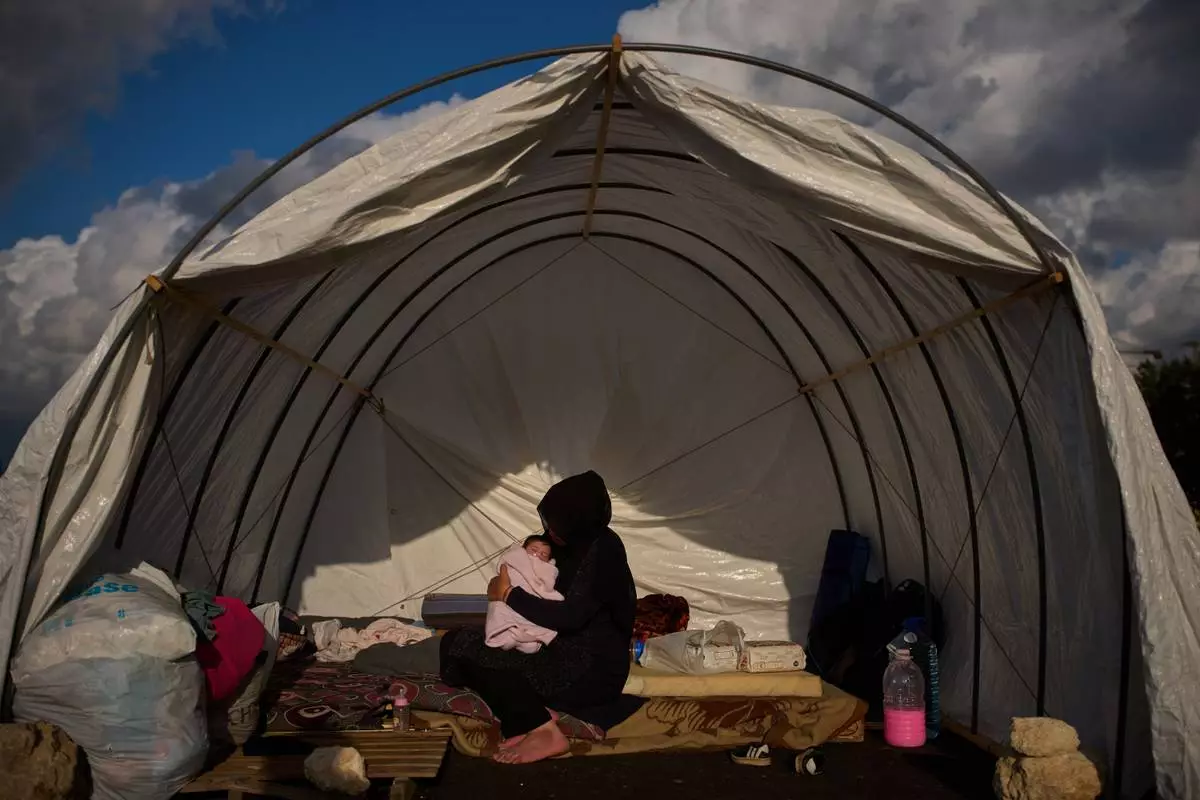
Haifa Kenjo, who fled Israeli airstrikes on the southern suburbs of Beirut, holds her 15-day-old daughter Shiman inside the tent she uses as a shelter and where she gave birth to her in Beirut, Sunday, April 12, 2026. (AP Photo/Emilio Morenatti)
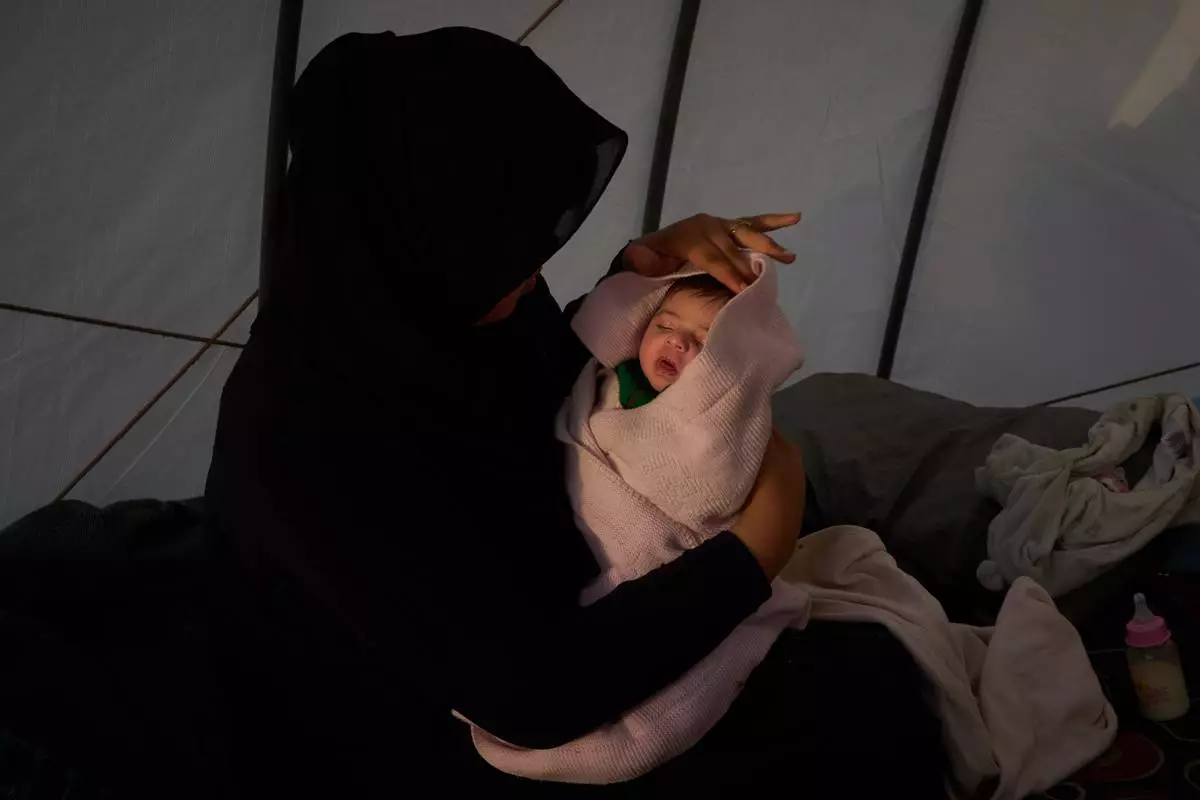
Haifa Kenjo, who fled Israeli airstrikes on the southern suburbs of Beirut, holds her 15-day-old daughter Shiman inside the tent she uses as a shelter and where she gave birth to her in Beirut, Sunday, April 12, 2026. (AP Photo/Emilio Morenatti)
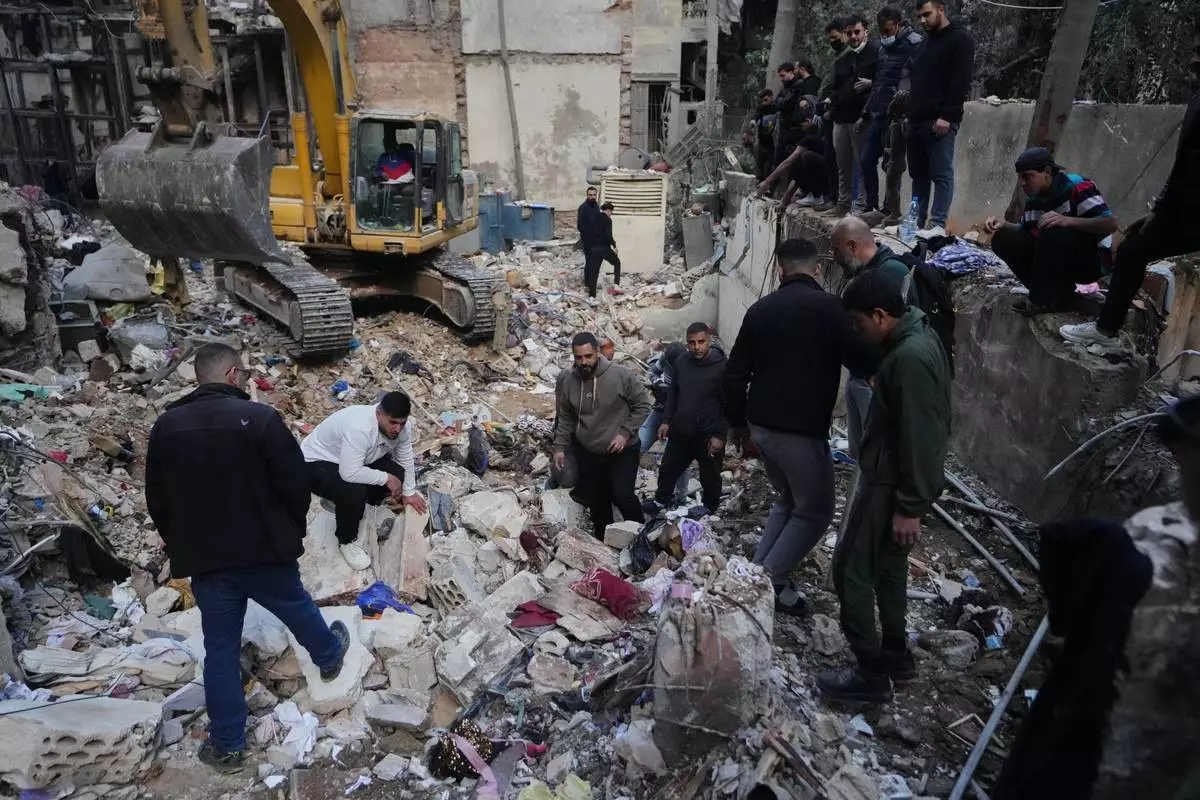
Civilians and rescue workers search through rubble at the site of a building where efforts continue to recover the body of missing woman Zahraa Aboud, 26, after it was destroyed in an Israeli airstrike on Wednesday, in central Beirut, Sunday, April 12, 2026. (AP Photo/Hassan Ammar)

A women sits at a cafe in northern Tehran, Iran, Sunday, April 12, 2026. (AP Photo/Vahid Salemi)
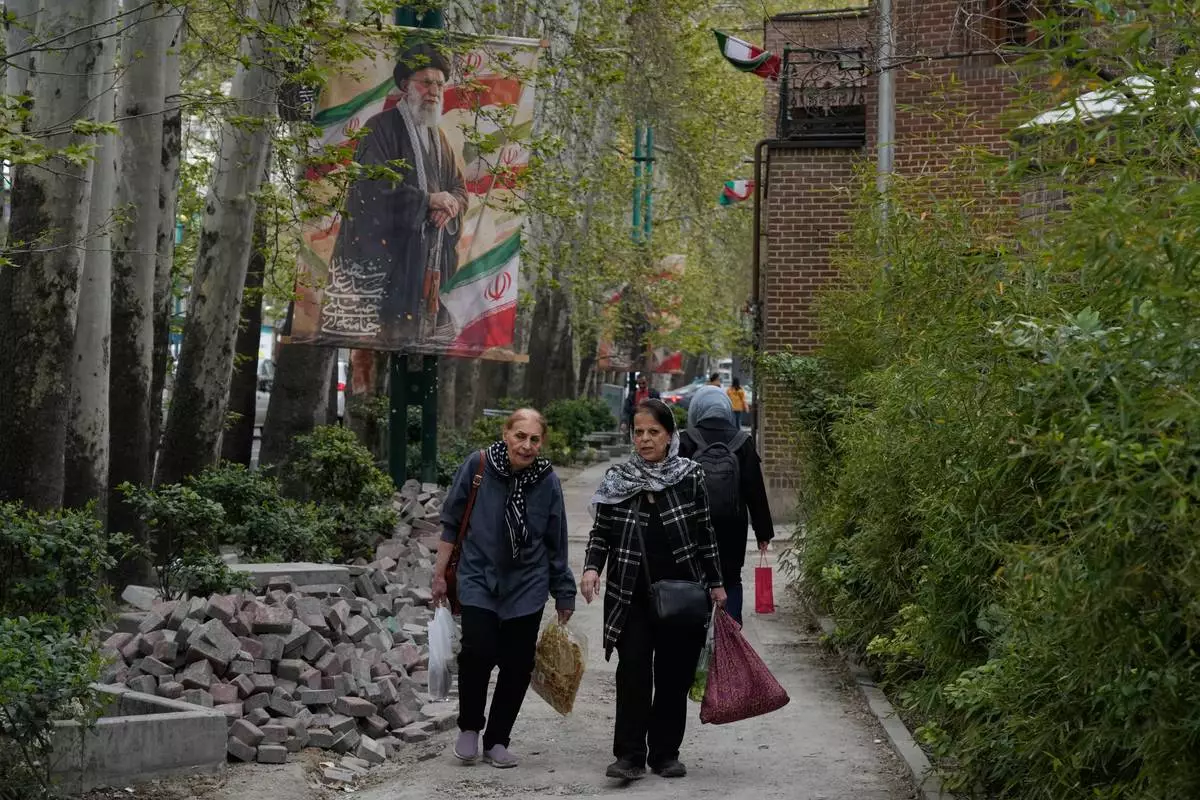
Women walk past a banner depicting the late Iranian Supreme Leader Ayatollah Ali Khamenei, who was killed in the U.S. and Israel strikes on Feb. 28, in northern Tehran, Iran, Sunday, April 12, 2026. (AP Photo/Vahid Salemi)

Vice President JD Vance walking on the tarmac for a planned refueling stop in Ramstein Air Base in Germany, Sunday, April 12, 2026, after attending talks on Iran. (AP Photo/Jacquelyn Martin, pool)
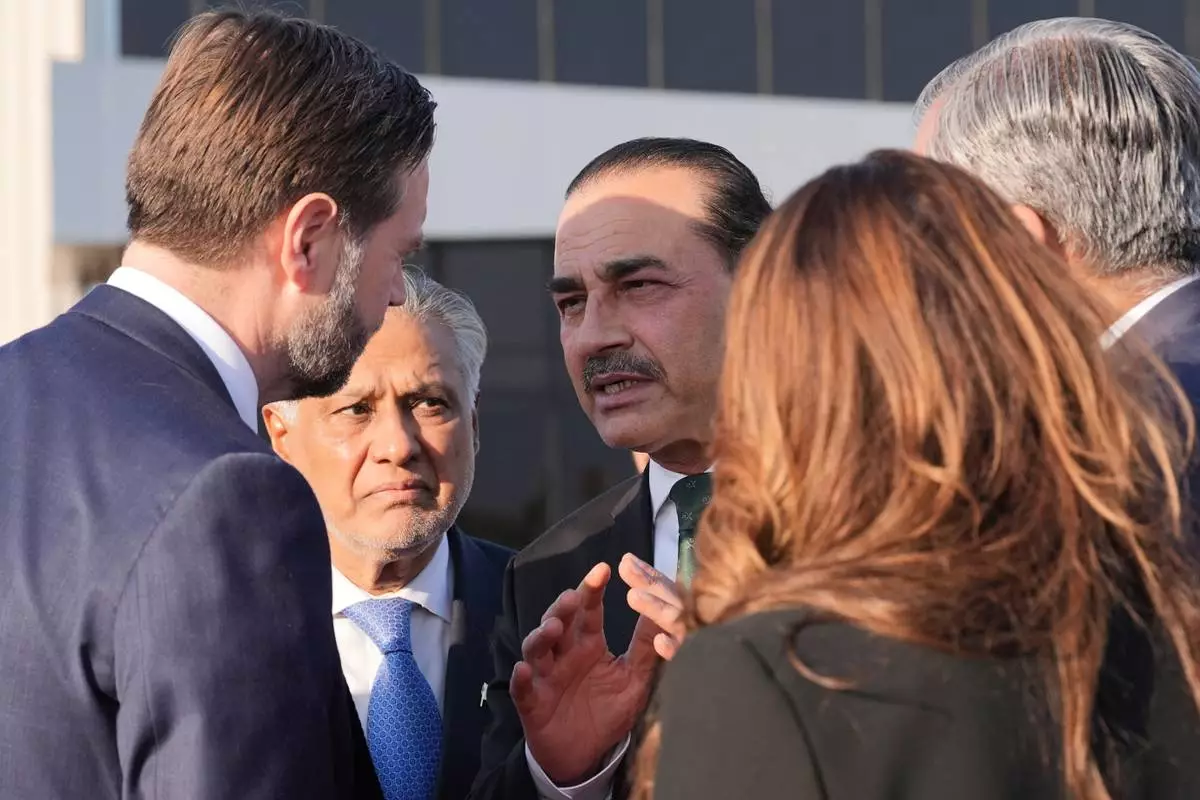
Vice President JD Vance, left, talks to Pakistan's Chief of Defence Forces and Chief of Army Staff Field Marshall Asim Munir, right, and Pakistani Deputy Prime Minister and Foreign Minister Mohammad Ishaq Dar, center, before boarding Air Force Two after attending talks on Iran in Islamabad, Pakistan, Sunday, April 12, 2026. (AP Photo/Jacquelyn Martin, Pool)
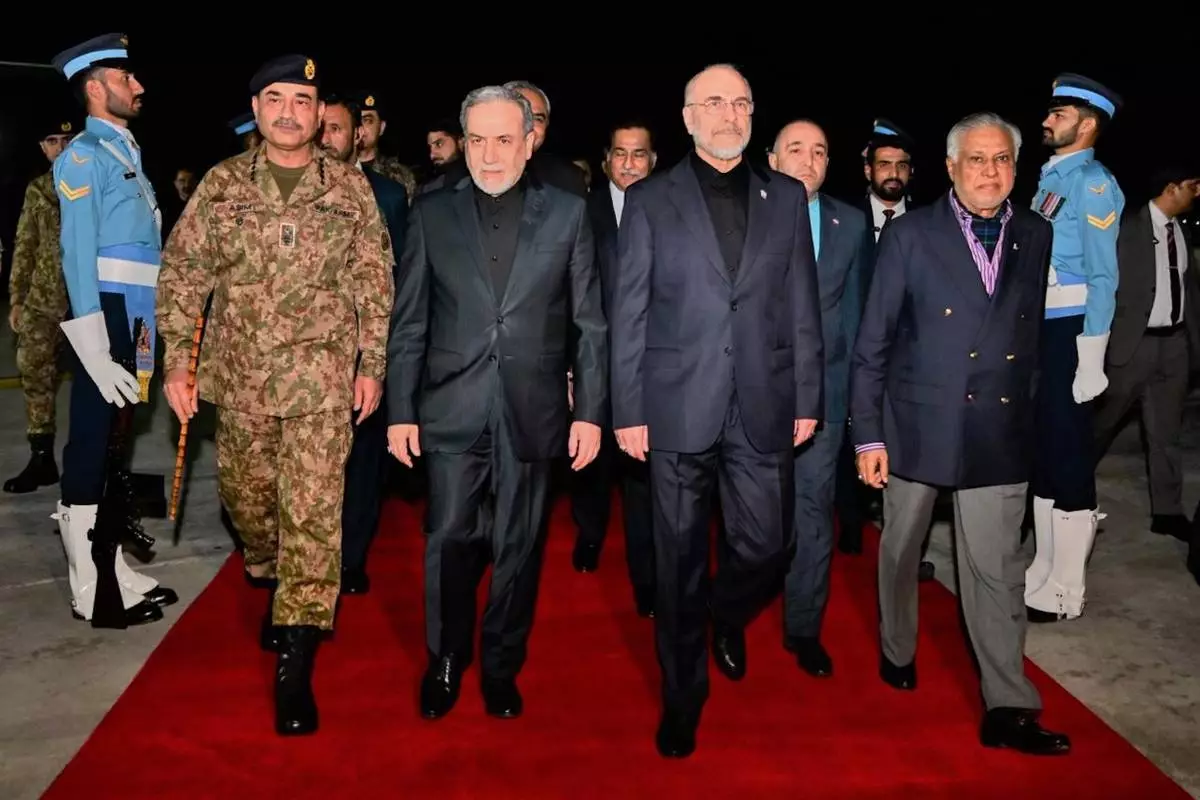
In this photo released by the Pakistan Foreign Ministry, Iran's Parliament Speaker Mohammad Bagher Qalibaf, center right, and Iran's Foreign Minister Abbas Araghchi, center left, are greeted by Pakistan Foreign Minister Ishaq Dar, right, and Army Chief Field Marshal Gen. Asim Munir, left, upon their arrival at Nur Khan airbase in Rawalpindi, Pakistan, Saturday, April 11, 2026. (Pakistan Ministry of Foreign Affairs via AP)
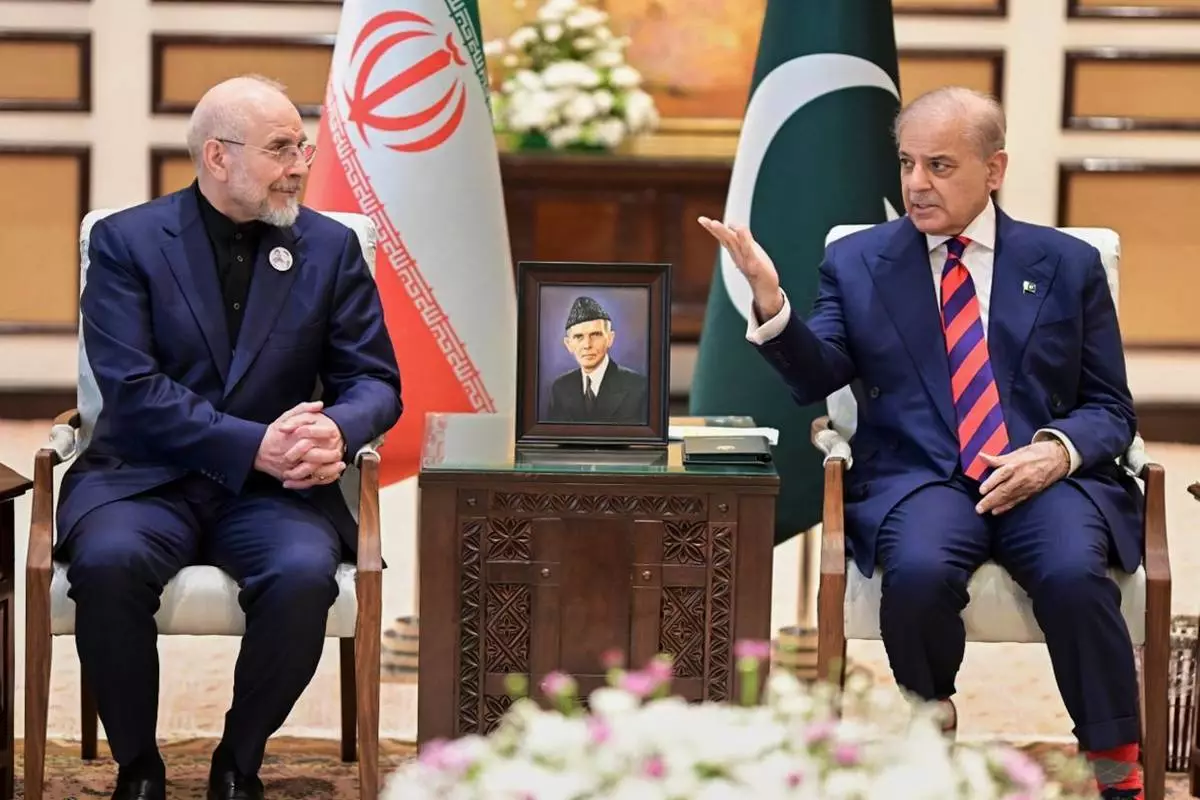
In this photo released by the Pakistan Prime Minister Office, Iran's Parliament Speaker Mohammad Bagher Ghalibaf, left, meets with hand with Pakistani Prime Minister Shehbaz Sharif, in Islamabad, Pakistan, Saturday, April 11, 2026 (Pakistan Prime Minister Office via AP)
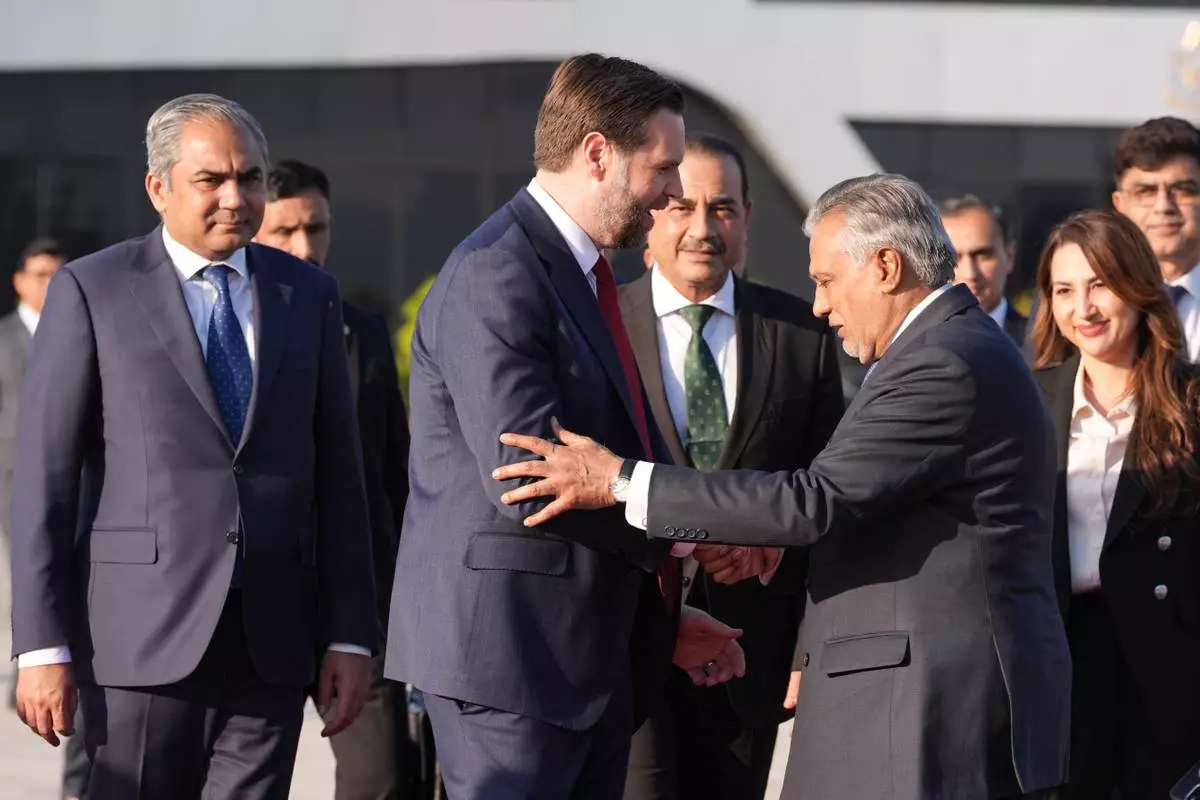
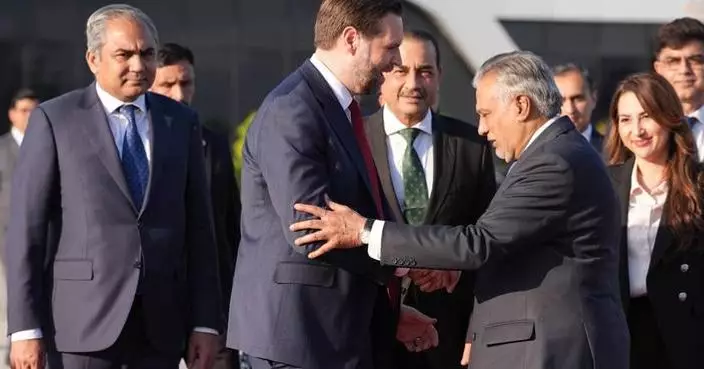
Vice President JD Vance, second left, shakes hands with Pakistani Deputy Prime Minister and Foreign Minister Mohammad Ishaq Dar, as Pakistan's Interior Minister Mohsin Naqvi, left, Pakistan's Chief of Defence Forces Chief of Army Staff Field Marshall Asim Munir, third left, and Charge d'Affaires of the U.S. Embassy in Islamabad Natalie A. Baker, right, look on, as he prepares to board Air Force Two after attending talks on Iran in Islamabad, Pakistan, Sunday, April 12, 2026. (AP Photo/Jacquelyn Martin, Pool)
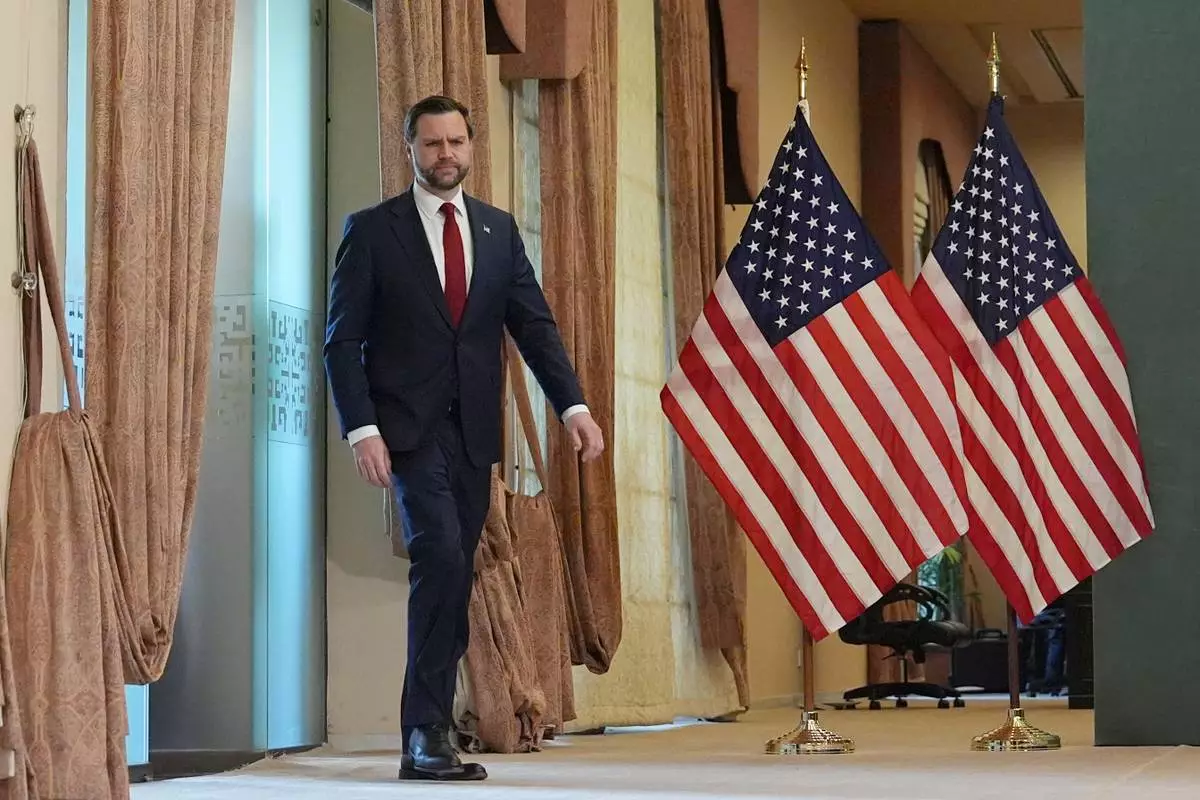
Vice President JD Vance arrives for news conference after meeting with representatives from Pakistan and Iran, Sunday, April 12, 2026, in Islamabad, Pakistan. (AP Photo/Jacquelyn Martin, Pool)
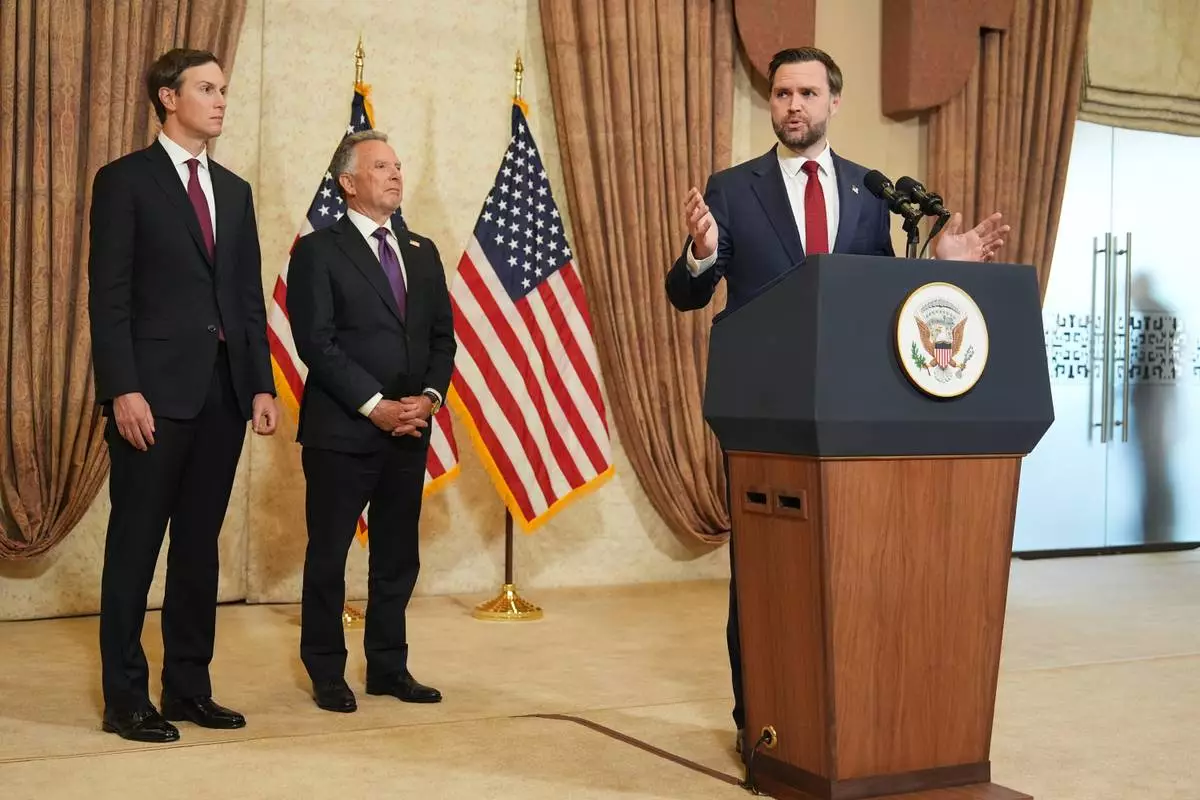
Vice President JD Vance, right, speaks during a news conference after meeting with representatives from Pakistan and Iran as Jared Kushner, left, and Steve Witkoff, Special Envoy for Peace Missions listen, on Sunday, April 12, 2026, in Islamabad, Pakistan. (AP Photo/Jacquelyn Martin, Pool)