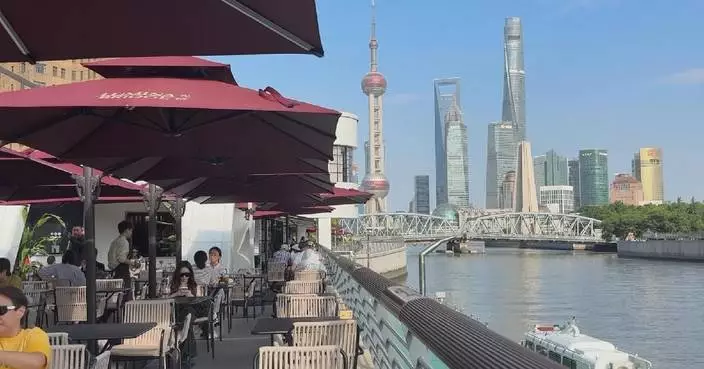
A Chinese community in Madrid has become a witness to the growing ties between China and Spain.
Spanish Prime Minister Pedro Sanchez is on a five-day official visit to China from Saturday to Wednesday. This visit marks Sanchez's fourth visit to China in a four-year period, and it represents another significant high-level exchange between China and Spain in a short period, following the visits by Spanish King Felipe VI and Sanchez last year.
The Usera neighborhood in southern Madrid is the heart of the Chinese community - a living example of peaceful and prosperous coexistence and cooperation, which also proves the relations between the two nations continue to develop in a deeper level.
"More than 40,000 Chinese people live in this neighborhood that has a unique and different identity where two cultures coexist peacefully and that represents what Madrid is all about - an open and welcoming city," said Almudena Maillo, Councilor for Tourism of Madrid Town Hall.
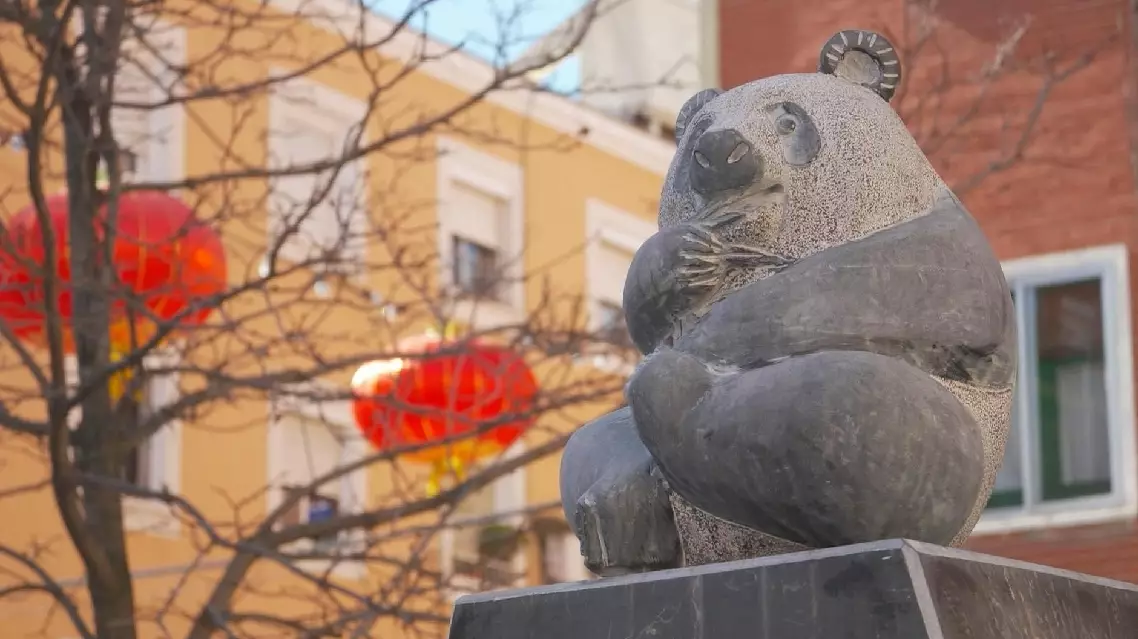
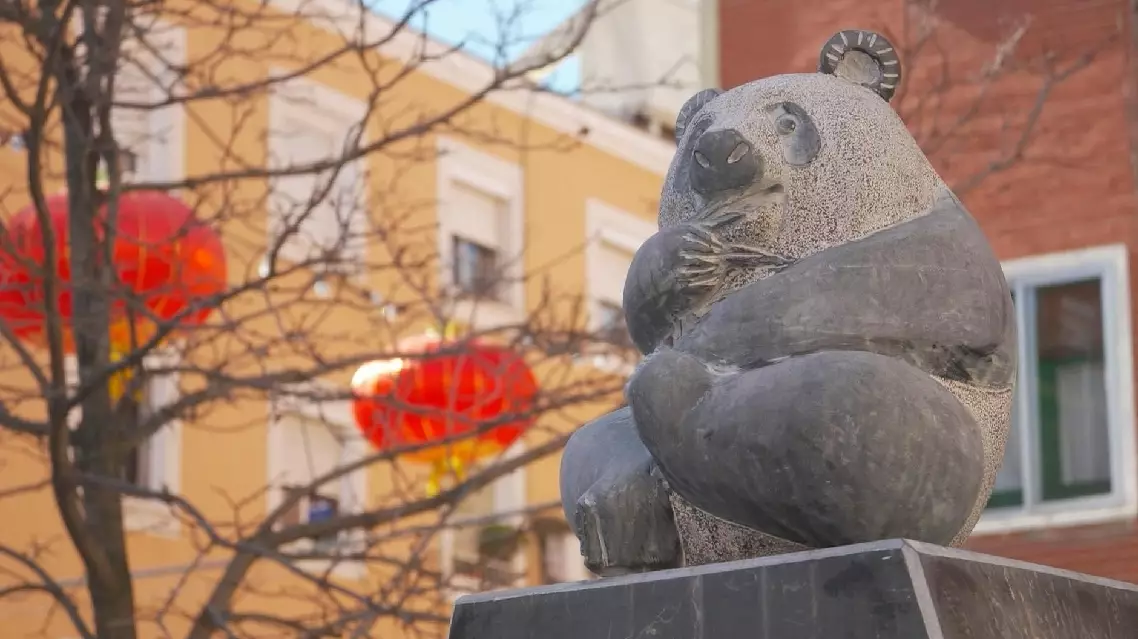
A giant 15-by-20-meter dragon is part of a new 12-million-U.S. dollar investment into the neighborhood, a spectacular stop on a 1,700-meter pedestrian route that features Chinese characters and Confucian phrases on the street, with 290 new trees and 11,000 plants, a brand new 500kg marble panda, and an iconic paifang, or gateway, reminiscent of the ones at the London and New York Chinatowns.
The project received EU funding and won an award for its urban transformation from Catedra China in February, a Spanish organization set up to bolster Spain-China ties.
"It's beautiful, really original. It just looks great, brightens up the place," said a local resident.
China's ambassador to Spain sees China-Spain relations at an all-time high.
"This is the best time as far as the relations between China and Spain are concerned. So I think that we are lucky to have a partner like Spain in Europe. We hope that the partners like Spain in Europe could be also increasing in the future time," said Yao Jing, Chinese Ambassador to Spain.
Chinese community in Madrid witnesses closer China-Spain ties
Chinese community in Madrid witnesses closer China-Spain ties
Colombians are heading to the polls on Sunday to elect their next president. The country's constitution prevents the current President, Gustavo Petro, from running for a second term.
Yet, many see this election as a referendum on the policies of Gustavo Petro, Colombia's first leftist president.
There are 14 candidates on Sunday's ballot, but the polls show it will likely be a tight three-way race.
The frontrunner is Ivan Cepeda, a 63-year-old three-term senator, representing President Gustavo Petro's party, the Historic Pact coalition. Cepeda has vowed to defend and deepen Petro's progressive reforms and social justice policies to reduce inequality. He also promises to continue the government's controversial "Total Peace" strategy to negotiate the disarmament of remaining guerrilla groups and criminal gangs.
"True prosperity comes from equality, from access to rights, and from transforming the peripheral and excluded territories of the rural world," Cepeda said at a campaign rally.
Running as a political outsider and independent is Abelardo de la Espriella, a 47-year-old lawyer, nicknamed "The Tiger." He has presented himself as the "authority and order" candidate who will reduce state spending by up to 40 percent in the next four years.
"(First,) we must fight insecurity. Colombia is suffering today from a pandemic of insecurity. Crime is out of control: extortion, cattle theft, smuggling, drug trafficking," he said to his supporters at an election event.
According to polls, the third candidate with strong support is Paloma Valencia. The 48-year-old senator represents the Democratic Center party led by popular former President Alvaro Uribe Velez. Her candidacy is backed by politicians and economists who are concerned with growing levels of public debt. They want to see a return to more conservative fiscal policies.
"I don't want to be a president who governs alone, locked away in glass offices. I want to be a president who stands with citizens, who embraces them, who reaches out to them, who has a team, and who governs to transform Colombia," the candidate said at the campaign event
According to polls earlier in the year, many voters are expressing concerns about unemployment, rising living costs, corruption, and, above all, public security.
The election comes after a turbulent year that the International Committee of the Red Cross has called "the worst humanitarian consequences of armed conflict over the past decade."
"(We arrive at this election in a tense atmosphere - tense) because of the economic situation, because of the security situation, and because of the narratives that have been built around the country's main problems. On top of that, emotions, ideas and social media have all helped raise (the tone,)" said Eduardo Velosa, associate professor from International Studies Javeriana University.
If no candidate receives 50 percent of the vote, a runoff election will be held between the top two finishers on June 21st.
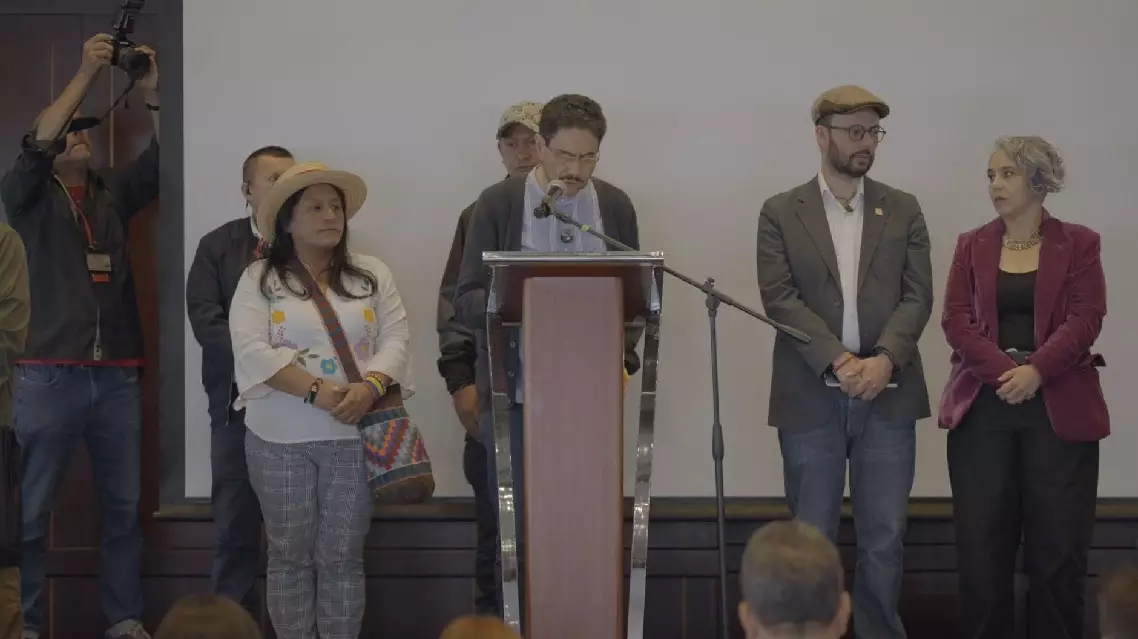
Colombians prepare to choose their next president