DH announces latest situation regarding Legionnaires' disease case
The Centre for Health Protection (CHP) of the Department of Health (DH) today (April 13) reported the latest number of Legionnaires' disease (LD) cases, and reminded the public of the importance of using and maintaining properly designed man-made water systems, adding that susceptible groups should strictly observe relevant precautions.
From April 5 to 11, the CHP recorded four community-acquired and one imported LD cases. The details are as follows:
Community-acquired cases
---------------------------------
a 75-year-old female with underlying illnesses living in Yau Tsim Mong District;
a 54-year-old male with good past health living in Yau Tsim Mong District;
a 63-year-old male with underlying illnesses living in North District; and
a 77-year-old male with underlying illnesses living in Sai Kung District.
Imported case
------------------
a 56-year-old female with good past health who travelled to France and Italy during the incubation period.
The CHP is conducting epidemiological investigations to identify the potential sources of infection and high-risk exposure. An initial investigation revealed that the aforesaid community-acquired cases are sporadic cases. No epidemiological linkages have been established between these cases and other confirmed cases previously recorded in Hong Kong.
As of April 11, 27 LD cases had been recorded this year. In 2025 and 2024, there were 167 and 135 LD cases respectively.
Men, people aged over 50, smokers, alcoholics and persons with weakened immunity are more susceptible to LD. Some situations may also increase the risk of infection, including poor maintenance of water systems; living in areas with old water systems, cooling towers or fountains; using electric water heaters, whirlpool spas or hot water spring spas; and recent stays in hotels or ships.
Legionellae are found in various environmental settings and grow well in warm water (20 to 45 degrees Celsius). They can be found in aqueous environments such as water tanks, hot and cold water systems, cooling towers, whirlpool spas, water fountains, humidifiers and home respiratory devices that support breathing. People may become infected when they breathe in contaminated droplets (aerosols) and mist generated by artificial water systems, or when handling garden soil, compost and potting mixes.
Immunocompromised persons should:
Use sterile or boiled water for drinking, tooth brushing and mouth rinsing;
Avoid using humidifiers, or other mist- or aerosol-generating devices; and
If using humidifiers, or other mist- or aerosol-generating devices, fill the water tank with only sterile or cooled freshly boiled water, and not water directly from the tap. Also, clean and maintain humidifiers/devices regularly according to manufacturers' instructions. Never leave stagnant water in a humidifier/device. Empty the water tank, wipe all surfaces dry, and change the water daily.
The public should observe the health advice below:
Observe personal hygiene;
Do not smoke and avoid alcohol consumption;
Strainers in water taps and shower heads should be inspected, cleaned, descaled and disinfected regularly or at a frequency recommended by the manufacturer;
If a fresh-water plumbing system is properly maintained, it is not necessary to install domestic water filters. Use of water filters is not encouraged as clogging occurs easily, which can promote growth of micro-organisms. In case water filters are used, the pore size should be 0.2 micrometres (µm) or less and the filter needs to be changed periodically according to the manufacturer's recommendations;
Drain and clean water tanks of buildings at least quarterly;
Drain or purge for at least one minute infrequently used water outlets (e.g. water taps, shower heads and hot water outlets) and stagnant points of the pipework weekly or before use;
Seek and follow doctors' professional advice regarding the use and maintenance of home respiratory devices and use only sterile water (not distilled or tap water) to clean and fill the reservoir. Clean and maintain the device regularly according to the manufacturer's instructions. After cleaning/disinfection, rinse the device with sterile water, cooled freshly boiled water or water filtered with 0.2 µm filters. Never leave stagnant water in the device. Empty the water tank, keep all surfaces dry, and change the water daily; and
When handling garden soil, compost and potting mixes:
Wear gloves and a face mask;
Water gardens and compost gently using low pressure;
Open composted potting mixes slowly and make sure the opening is directed away from the face;
Wet the soil to reduce dust when potting plants; and
Avoid working in poorly ventilated places such as enclosed greenhouses.
The public may visit the CHP'sLD page, theCode of Practice for Prevention of LDand theHousekeeping Guidelines for Cold and Hot Water Systems for Building Managementof the Prevention of LD Committee, and the CHP'srisk-based strategyfor prevention and control of LD.
Additionally, as smokers and alcoholics are more susceptible to LD, the Government urgesmembers of the public to quit smoking and avoid drinking. Members of the public may call the DH Integrated Smoking Cessation Hotline at 1833 183, which is answered by registered nurses who provide professional counselling and referral to a wide range of free smoking cessation services. The public may also visit the smoking cessation thematic website (www.livetobaccofree.hk) for more information on smoking cessation. The DH has also developed and promulgated the Alcohol Screening and Brief Intervention tool to primary healthcare service providers to facilitate the early identification and management of at-risk drinkers. For information on alcohol-related harm, please visit the DH'sChange for Health website.
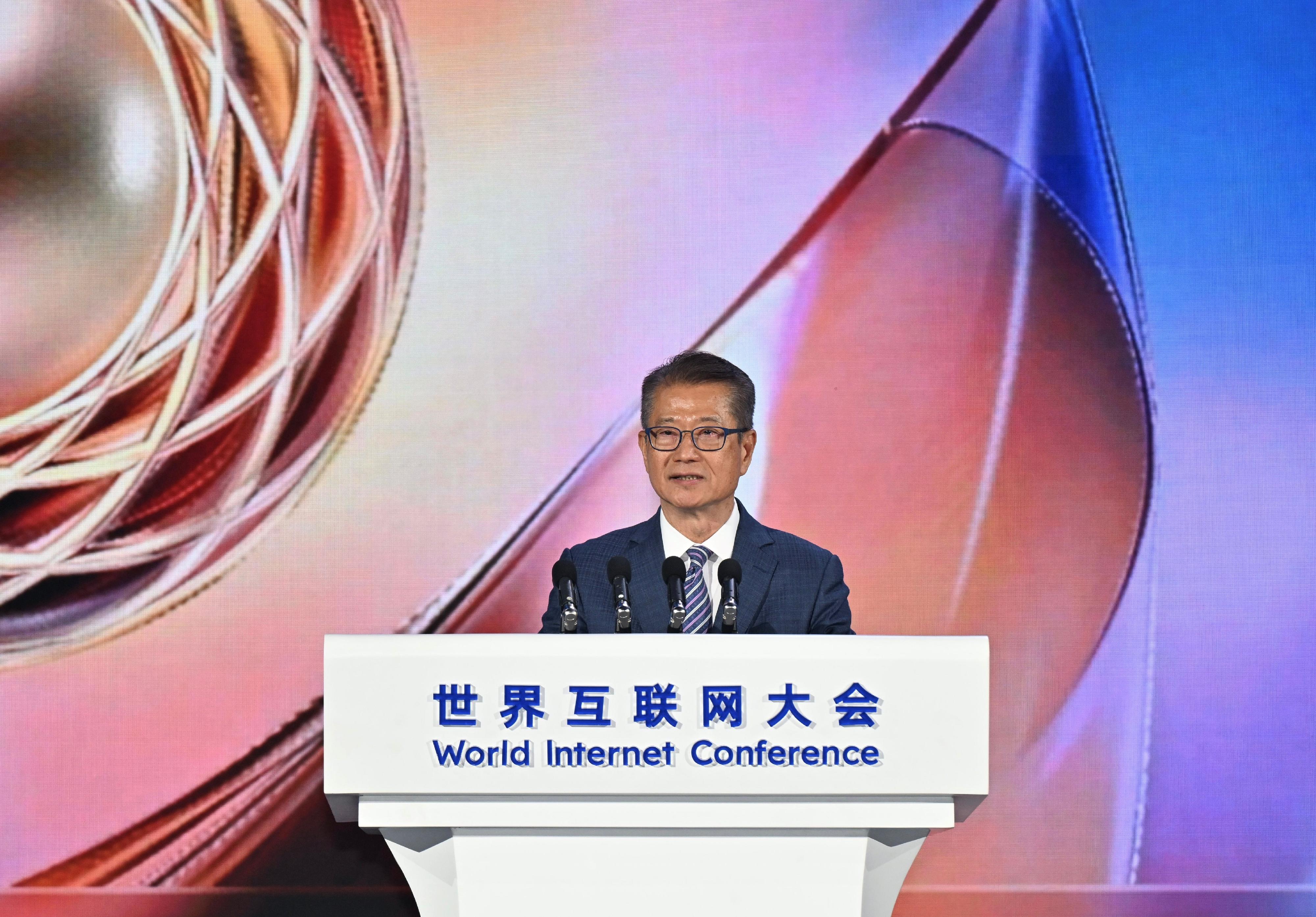
Speech by FS at 2026 World Internet Conference Asia-Pacific Summit Main Forum (with photo/video)
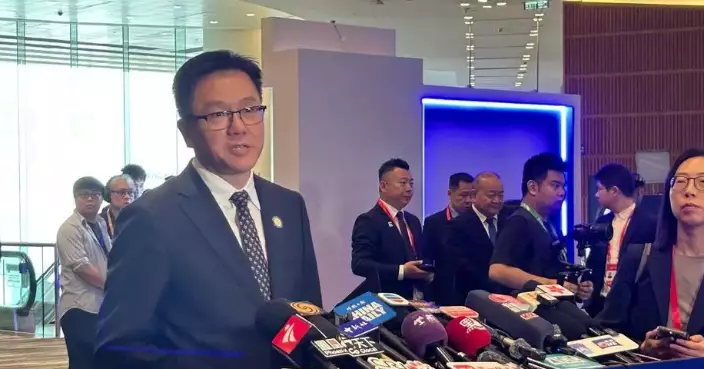
Following is the speech by the Financial Secretary, Mr Paul Chan, at the 2026 World Internet Conference Asia-Pacific Summit Main Forum today (April 13):
(Deputy Director of the Cyberspace Administration of China, Mr Wang Jingtao), (Secretary-General of the World Internet Conference, Mr Ren Xianliang), Professor Francis Gurry (Vice-Chairman of the World Internet Conference), Honourable Ministers, distinguished guests, ladies and gentlemen,
It is both a pleasure and an honour to join you today. Allow me to offer my warmest welcome to everyone here for this important summit.
The era of digital intelligence
We meet at a moment when digitalisation and intelligent empowerment are reshaping every sector of our economies and our societies. In this process, there is no force as pivotal and transformative as artificial intelligence.
Today, we are witnessing a redefinition of connectivity - one that is no longer characterised by digital links, but bydigitalintelligence. The emergence of agentic AI, which has become a hot topic this year, marks a clear leap forward. We now see systems that do not simply execute instructions, but can plan, co-ordinate and act towards a goal.
I believe we are entering an era of digital intelligence, one marked by several defining features.
First, universal connection. The Internet of Things is steadily becoming a reality. With AI, the scale and depth of connectivity will grow, as more data and more devices are drawn into an integrated network. New forms of connection will emerge. For end users, we can expect more seamless and personalised devices, including, in time, direct interfaces between the human brain and the digital world.
Second, convergence of data. New layers of data generated by constant interaction will inspire new products, new services and new patterns of consumption. The ability to integrate data across sectors, interfaces and platforms will become a critical resource and asset for business development and innovation.
Third, interoperable AI. The rapid progress of large language models has shown us that no single model is perfect. Different systems have different strengths - and limitations. We can expect a future in which models compete and collaborate at the same time, with different AI systems working together to combine their best capabilities and applications and, in doing so, to accelerate innovation.
Finally, more intelligent decision-making. AI is already helping us make better and faster decisions in many fields. But it is worth stressing that, no matter how advanced the technology, it is people who must make the final judgment. Human responsibility, values and wisdom must guide how we design, deploy and govern these powerful tools.
Opportunities and challenges
The potential benefits brought by this era are enormous. Agentic AI is enabling new products, services and applications across the economy. It is also lowering barriers of entry to smaller players. One-person companies and small enterprises, with access to advanced analytics and automated operations, can now run lean, high-impact businesses with far lower cost.
At the same time, we are all familiar with the risks, from algorithm bias and cybersecurity threats to misinformation and deepfakes brought by AI. These risks may well be amplified as AI becomes more pervasive, and they remind us that several key issues must be addressed. They include the ultimate human control of AI systems, data security, resilience of digital infrastructure, as well as accountability and governance for agentic AI.
Hong Kong's value proposition
Ladies and gentlemen, against this backdrop, allow me to share how Hong Kong is positioning ourselves, and the value we seek to create in this new era.
First, we are taking forward an "AI+" strategy. AI has tremendous transformative power across industries, and across both public and private sectors. Hong Kong is determined to enable more AI applications to be developed, tested and deployed in real-world settings.
That is why, as announced in this year's Budget, we have set up the Committee on AI+ and Industry Development Strategy, which I chair. This Committee brings together leaders from industry and academia to explore how AI can best transform key sectors, such as life and health technology and embodied AI.
Nurturing talent and raising digital literacy are central to this strategy. In the age of digital intelligence, our community must know how to work with AI agents, using them to create value, while remaining alert to their risks.
This is a twin-track effort, focused on both specialist talent and the wider public. On the one hand, Hong Kong is building a strong AI talent pipeline by attracting top minds to our universities, research institutes and technology companies. On the other, we have launched the "AI Training for All" initiative to promote broad-based understanding and application of AI across society, so that students, professionals and the broader community are ready to seize the opportunities of the AI age.
Second, we are advancing a "Finance+" strategy. Hong Kong is an international financial centre, with a comprehensive funding ecosystem that serves companies and projects at every stage of development. The era of digital intelligence will bring forward new and frontier applications that require patient and sophisticated capital. Our task is to put Hong Kong's financial strengths to full use, helping technology enterprises capture this window of opportunity and providing the funding support they need to accelerate innovation.
Third, Hong Kong is developing as a hub for data and innovative applications. We are where Mainland and international data, talent and capital converge. This gives us a unique vantage point to develop new applications that can serve both domestic and global markets.
At the same time, we recognise that innovation often comes with new risks. Here in Hong Kong, sandboxes have become a defining feature of our regulatory approach across sectors. They allow regulators to work side-by-side with innovators, testing new tools in a controlled environment, identifying risks early and providing timely, practical feedback. We believe this approach encourages more responsible innovation, and Hong Kong can be a trusted centre for AI innovation.
Closing
Ladies and gentlemen, looking ahead, the era of digital intelligence will offer vast opportunities - with AI as a force for all, and a force for good. To realise this, we will need imagination, the courage to experiment, and, above all, sound human judgment to guide the way forward.
To capture this moment, we must work together. By sharing experience, developing good practices and building concrete partnerships, we can ensure that technological progress remains sustainable, responsible and inclusive. Hong Kong is ready and willing to deepen its engagement with regional and international partners in this endeavour.
That is why platforms like the Summit today are so important. I wish it every success, and all of you good health and the best of business. Thank you very much.
Photo

Source: AI-found images