China is moving faster to develop a tiered diagnosis and treatment system, which will make healthcare more accessible and convenient for the public, according to a press briefing by the National Health Commission on Monday.
The Chinese government has rolled out a set of measures to speed up the development of a tiered diagnosis and treatment system.
Click to Gallery
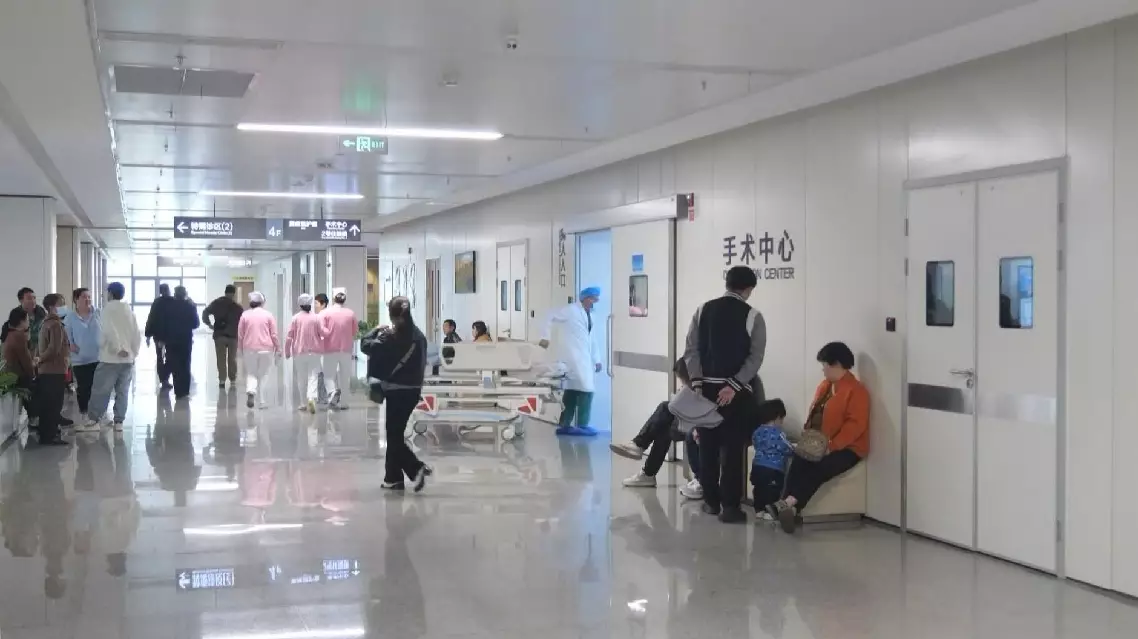
China's tiered diagnosis, treatment system to make healthcare more accessible, convenient: official
China's tiered diagnosis, treatment system to make healthcare more accessible, convenient: official
China's tiered diagnosis, treatment system to make healthcare more accessible, convenient: official
China's tiered diagnosis, treatment system to make healthcare more accessible, convenient: official
The measures, recently released by the State Council, focus on encouraging people to seek initial diagnosis at grassroots-level medical institutions, especially for common and chronic diseases, while directing top-tier hospitals to focus on treating severe, critical and complex cases.
Under the measures, expert outpatient services will be extended to local medical centers to attract more patients, with higher-level hospitals providing support to enhance the service capacity of grassroots healthcare institutions.
The measures also include improving the quality and effectiveness of family doctor contract services.
To facilitate patient referrals, medical institutions will set up more referral centers and improve referral rules, while promoting the integration of medical treatment, operation and information management within tightly knit medical consortia.
"We will work with relevant departments to implement government-subsidy policies for medical and healthcare institutions that are covered by area-based health planning in accordance with regulations, improve a remuneration system that meets the requirements in development of tightly knit medical consortia, timely include eligible community-level medical and healthcare institutions in medical insurance management, and optimize policies of the basic medical insurance scheme such as differential payments and medical service prices, so as to provide stronger guarantees for the tiered diagnosis and treatment system," said Zheng Zhe, deputy head of the National Health Commission, at the press conference on the measures.
The construction of China's tiered diagnosis and treatment system is gradually shifting from the foundation-laying stage to the stage of comprehensive improvement in quality and efficiency, with one highlight being increased accessibility of medical and health services, according to the National Health Commission.
More than 1.1 million medical and healthcare institutions are covering both urban and rural areas in China, and over 90 percent of the residents can reach the nearest medical service point within 15 minutes, said the commission.
China's tiered diagnosis, treatment system to make healthcare more accessible, convenient: official
China's tiered diagnosis, treatment system to make healthcare more accessible, convenient: official
China's tiered diagnosis, treatment system to make healthcare more accessible, convenient: official
China's tiered diagnosis, treatment system to make healthcare more accessible, convenient: official