ATLANTA--(BUSINESS WIRE)--Apr 13, 2026--
Stryten Energy LLC, a U.S-based energy storage solutions provider, today announced the launch of its new M‑Series Li610 lithium‑ion battery, expanding its motive power portfolio with a high‑performance solution designed for demanding Class I forklift applications.
This press release features multimedia. View the full release here: https://www.businesswire.com/news/home/20260413514429/en/
In addition to the Li610 battery, the company is showcasing its latest advancements in lead and lithium batteries, intelligent chargers, new web-based battery finder and comparison tool, and energy performance management tools at MODEX 2026 in Booth #B9325.
Key Features of the M-Series Li610
Learn more about the M-Series Li610.
Also Showcased at MODEX: Charging, Fleet Intelligence and Product Selection Tools
MODEX attendees also can learn about Stryten Energy’s comprehensive motive power lineup, including:
Together, these technologies create a connected ecosystem that supports smarter decision‑making, simplifies fleet management, and optimizes total cost of ownership.
“Material handling operations are demanding more choice, more flexibility and more performance from their energy systems,” said Matt Gould, Vice President, Sales, Industrial Power at Stryten Energy. “The Li610 launch reflects our commitment to providing advanced, reliable solutions that help customers achieve higher uptime and greater productivity. Combined with our lead and lithium battery portfolio, next‑generation chargers and fleet intelligence tools, we are delivering a complete motive power platform that supports the evolving needs of warehouses and distribution operations.”
Battery Energy Storage System (BESS) Solutions
Stryten Energy will also feature its Battery Energy Storage System (BESS) offerings, which integrate both lead and lithium technologies to deliver dependable backup power and grid‑support capabilities. BESS solutions provide strong performance under high discharge rates and offer the benefits of mature technology, simplified maintenance and high surge‑current capabilities—making them well‑suited for short‑ to medium-duration energy storage and high‑power applications.
MODEX attendees can explore the full lineup of Stryten Energy technologies, including the new M‑Series Li610, at Booth #B9325.
About Stryten Energy
Stryten Energy helps solve the world’s most pressing energy challenges with a broad range of energy storage solutions across the Essential Power, Motive Power, Transportation, Military and Government sectors. Headquartered in Alpharetta, Georgia, we partner with some of the world’s most recognized companies to meet the growing demand for reliable and sustainable energy storage capacity. Stryten powers everything from submarines to subcompacts, microgrids, warehouses, distribution centers, cars, trains and trucks. Our stored energy technologies include advanced lead, lithium and vanadium redox flow batteries, intelligent chargers and energy performance management software that keep people on the move and supply chains running. An industry leader backed by more than a century of expertise, Stryten has The Energy to Challenge the status quo and deliver top-performing energy solutions for today and tomorrow. Learn more at stryten.com.
Frequently Asked Questions (FAQ)

Stryten Energy's M-Series Li610 lithium-ion battery for material handling applications.
KYIV, Ukraine (AP) — Ukraine denied Moscow's claims that a Ukrainian drone struck the Russian-controlled Zaporizhzhia nuclear plant, as Kyiv on Sunday launched new strikes overnight on Russian energy sites.
Ukraine’s General Staff said Ukrainian drones struck the Saratov oil refinery in southwestern Russia, causing a large-scale fire. It said the extent of the damage was being clarified, and claimed the refinery has been supplying Moscow’s war effort.
The refinery belongs to Russia’s state oil enterprise, Rosneft. Local Russian Gov. Roman Busargin, said Ukrainian drones had damaged civilian infrastructure, but did not immediately give details. Astra, an independent Russian news channel, said an oil refinery was on fire in the city of Saratov.
Ukraine has stepped up its attacks on Russia’s oil and gas facilities in recent months, arguing the energy sector both funds and directly fuels Moscow’s more than four-year invasion.
“Tonight, our soldiers applied Ukraine’s long-range sanctions against an oil refinery in Saratov, Russia — approximately 700 kilometers (435 miles) from the front line. A significant achievement,” Ukrainian President Volodymyr Zelenskyy wrote on social media later on Sunday.
Drone debris also set fire to a fuel depot in Russia’s southwestern Rostov region, which borders Russian-occupied eastern Ukraine, Gov. Yuriy Slyusar reported on Telegram on Sunday. He said residents of nearby homes were evacuated.
Ukraine's General Staff on Sunday confirmed its forces were behind the strike on the facility in the town of Matveev Kurgan. Local authorities said a drone strike on the depot had caused a large-scale fire across a wide area.
According to its General Staff, Ukraine also struck the Lazarevo pumping station in Russia's Kirov region northeast of Moscow, more than 1,200 kilometers (745 miles) from Ukrainian-controlled land. The station helps ship Russian oil from Siberia to Belarus.
Regional Gov. Alexander Sokolov said drones had hit a facility in the Kirov region, without giving further details.
Kyiv denied that a Ukrainian drone struck the Zaporizhzhia nuclear plant, Europe’s largest.
Russia’s state nuclear energy company, Rosatom, said on Saturday that the drone exploded after tearing a hole in the wall of a turbine hall. Rosatom’s CEO Alexei Likhachev accused Ukraine of a deliberate attack.
“This afternoon, a Ukrainian kamikaze combat drone struck the turbine hall building of Power Unit No. 6, resulting in a detonation,” Likhachev said. He added there was no damage to main equipment.
Ukraine’s military said it did not target or strike the plant, describing the Russian claim as “yet another propaganda ploy.” A military statement said that it adheres to international humanitarian law and is aware of the "consequences of any actions targeting nuclear facilities.”
“Along the relevant section of the front line, there was no active fighting at the time of the incident, and no weapons were used,” it added.
Rafael Grossi, head of the U.N. nuclear watchdog — the International Atomic Energy Agency — expressed “serious concern” in a post on X following the incident.
The IAEA said in a statement Sunday that its inspectors at the plant “observed damage to the exterior of a turbine building” that was “consistent with the impact" of a drone. It gave no details of where the drone may have come from, but said radiation levels at the site remained normal.
“During a site walk down, the team saw damage to a metal access hatch located several levels up in the building, as well as a few pieces of debris and burned optical fiber remains on the ground," the agency said in a post on X. It added that its inspectors had requested access to the inside of the turbine hall for further examination.
Russian forces captured the Zaporizhzhia plant in the early weeks of the war, and it remains close to the front lines in the southern Zaporizhzhia region, one of four Russia has formally annexed despite lacking full military control or international recognition for its actions.
The nuclear plant has repeatedly come under fire since Russia's full-scale invasion in February 2022, sparking fears of a nuclear accident. Moscow and Kyiv have blamed each other for targeting the plant.
Elsewhere, Ukraine’s air force said Sunday that it had shot down 212 of 299 drones launched by Russia overnight. It said 14 drones had reached their targets, while drone debris fell in five locations.
A truck driver died early on Sunday as drones hit a parking lot in Ukraine's northern Chernihiv region, according to local administration head Vyacheslav Chaus.
Russian drones struck the city of Dnipro and an oil refinery in Ukraine’s Rivne region, causing fires, authorities said. The head of the Dnipropetrovsk region, of which Dnipro is the capital, said later on Sunday that one person was killed and nine were injured in Russian attacks earlier in the day on various parts of the province.
Follow the AP’s coverage of the war in Ukraine at https://apnews.com/hub/russia-ukraine
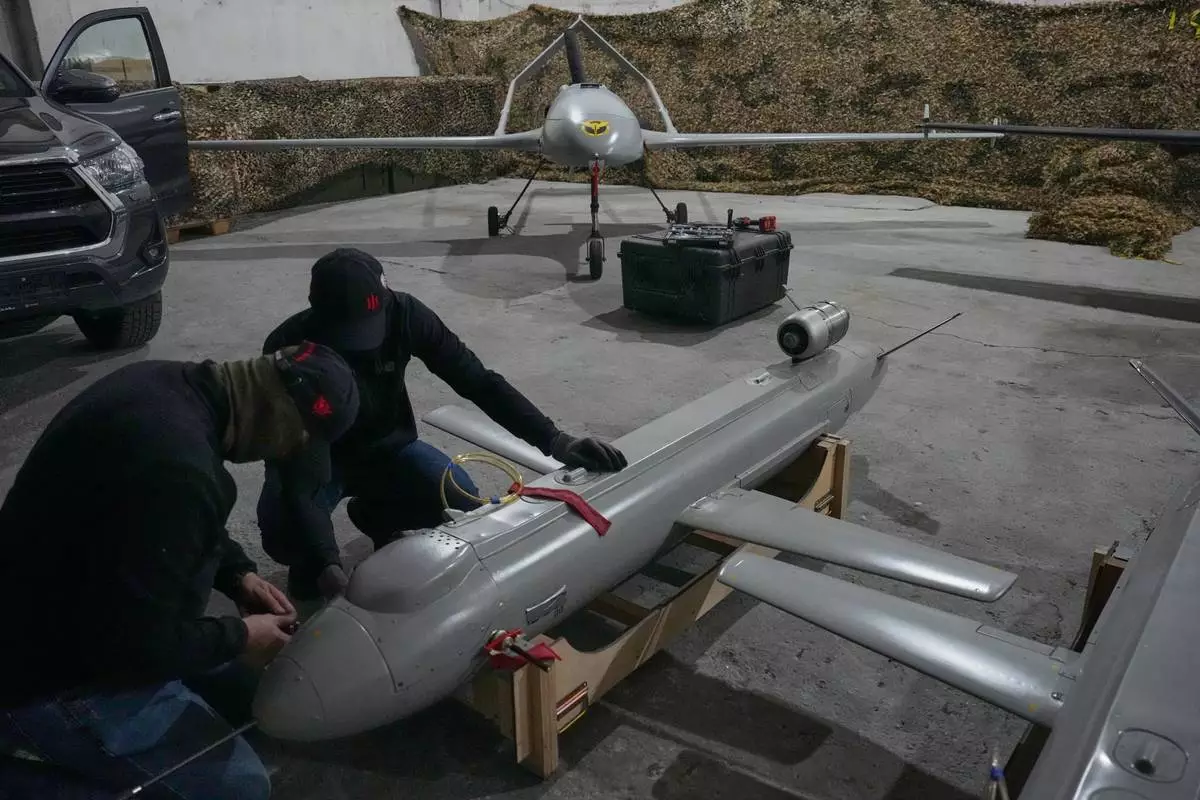
Servicemen of Ukraine's defense intelligence set up the Peklo (Hell) missile drone against Russian in an undisclosed location in Ukraine late Thursday, May 28, 2026. (AP Photo/Efrem Lukatsky)
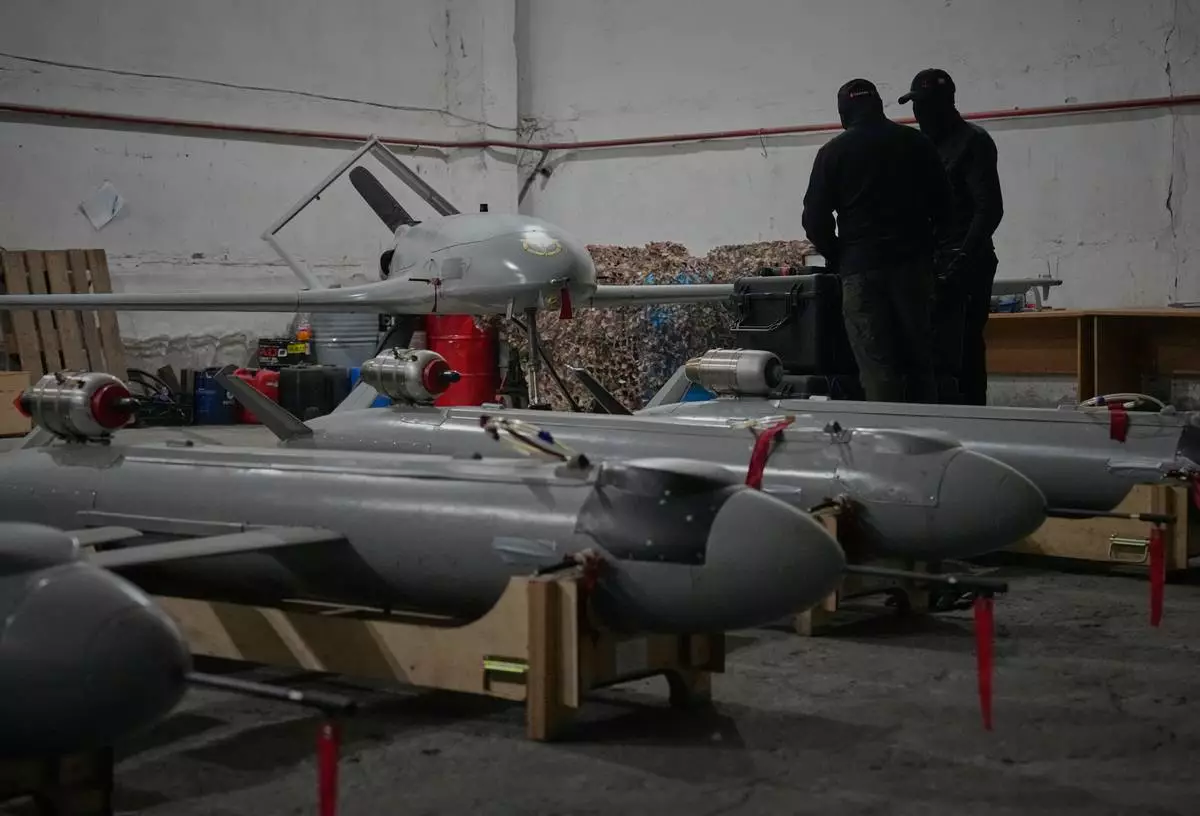
Servicemen of Ukraine's defense intelligence set up drones against Russian in an undisclosed location in Ukraine late Thursday, May 28, 2026. (AP Photo/Efrem Lukatsky)