The 2026 World Internet Conference Asia-Pacific Summit opened on Monday in Hong Kong, drawing participants from around 50 countries and regions to explore digital cooperation and technological innovation with the Internet.
Among those attending the two-day event were John Lee, chief executive of the Hong Kong Special Administrative Region (HKSAR), alongside officials from central government offices in Hong Kong and representatives from across various sectors.
In his opening remarks, Lee said the summit has brought together more than 1,000 participants to seeks cooperation and opportunities, underscoring Hong Kong's unique role within the One Country, Two Systems framework and its growing influence as an international hub for innovation and technology.
Alongside the main forum, the summit features six sub-forums focusing on innovation and application of AI agent, digital finance, AI security and governance, AI for better life, digital and intelligent health and the digitalization and dissemination of classical texts.
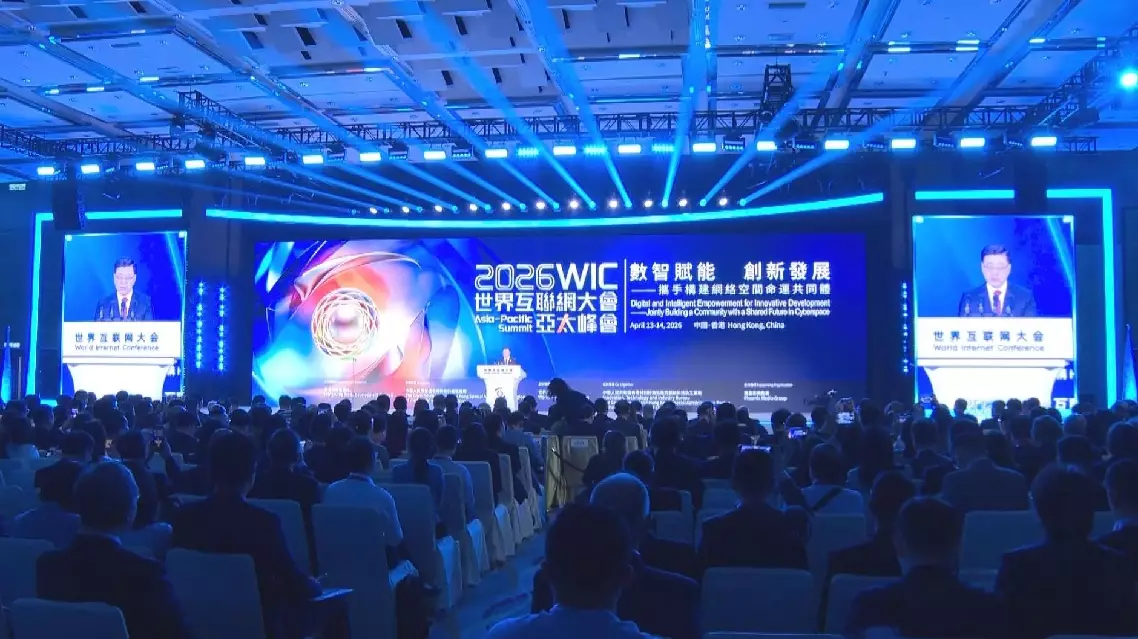
2026 World Internet Conference Asia-Pacific Summit opens in Hong Kong
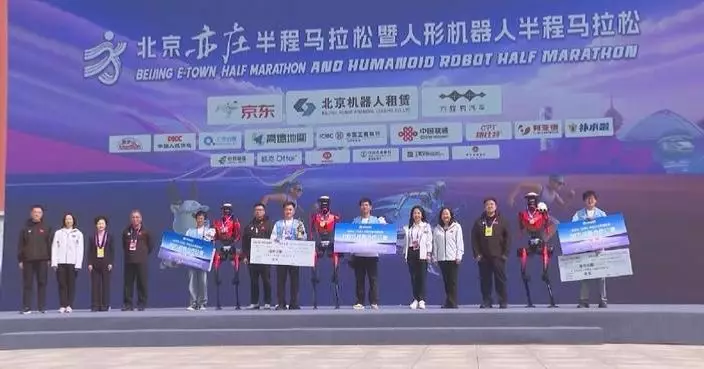
The record-setting humanoid robot half-marathon held in Beijing on Sunday highlights China's push to reward scientific breakthroughs that have a real-world impact, said an innovation expert.
The race involved over 100 humanoid robot teams, featuring an autonomous navigation group and a remote control group.
Humanoid robot model "Lightning", designed and produced by the Chinese smart device maker Honor, claimed victory with a time of 50 minutes and 26 seconds in autonomous navigation, beating the human world record of 57minutes and 20 seconds.
The model swept the podium, as it was also used by the teams who placed second and third in the race.
In an interview with China Global Television Network (CGTN) on Sunday, Andy Mok, Senior Research Fellow at the Center for China and Globalization and author of The Innovation Machine, said that the competition exemplifies China's creative efforts to promote breakthroughs in science and technology, pointing to the unique incentive for the maker of the winning robot.
"We can see these really exciting results. But I think what's important to point out is what's underneath and behind them. Because if we look at how this race was structured, we would expect there to be a cash prize. That's how these typically work. But in fact, the prize for the fastest robot was a tender, meaning that the opportunity to sell a certain number of robots -- a guarantee to purchase a certain number of robots in the million RMB range. And we look at some of the other prizes available for endurance, for gate, for perception, again, what we see is the Chinese system rewarding certain behaviors, directing research and development efforts to practical breakthroughs," said Mok.
The race drew substantial attention from global media. Reuters noted in a report that this year's event has made much progress over the last one in both the performance and speed of the robots, as well as the number of participating teams.
British media Finimize cited a report from CounterPoint Research, saying that in 2025, about 16,000 units of humanoid robots were installed worldwide, with China taking up over 80 percent of the total. The humanoid robot industry has taken a giant step forward in commercialization, it said.
According to a report by MarketsandMarkets, a global market research and consulting company, the global humanoid robot market is projected to grow from 2.92 billion U.S. dollars in 2025 to 15.26 billion U.S. dollars by 2030.

Beijing's robot half-marathon signals drive for tangible innovation: expert