Skip to Content Facebook Feature Image

Chinese motorcycle brand ZXMOTO breaks monopoly as founder calls for license grading

China

China

China

Chinese motorcycle brand ZXMOTO breaks monopoly as founder calls for license grading

2026-04-13 17:49 Last Updated At:04-14 12:01

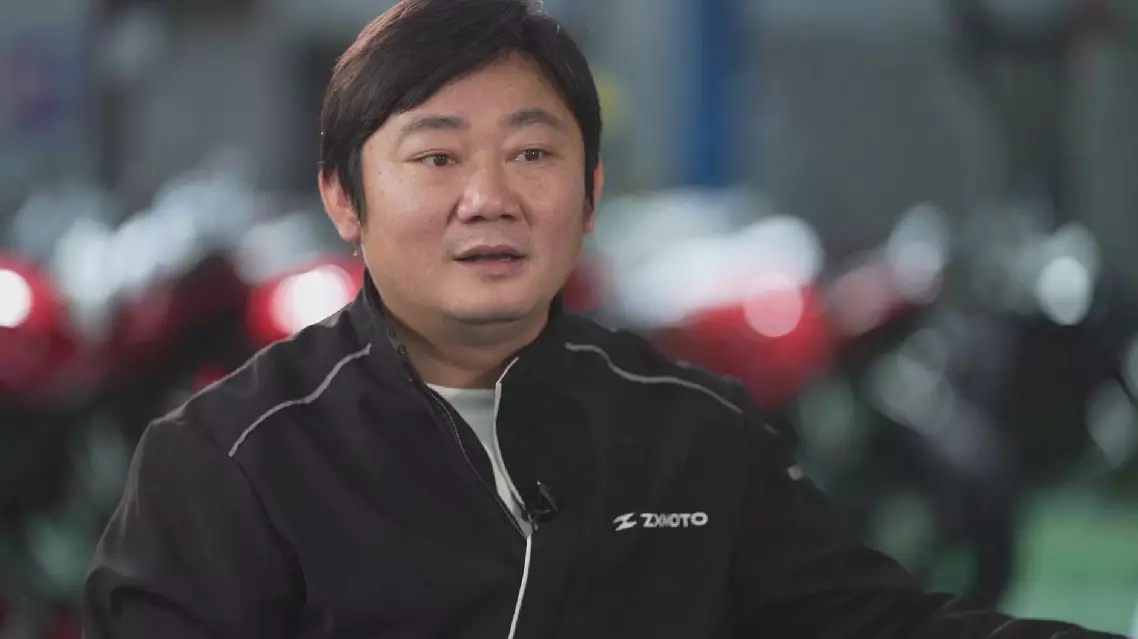
Zhang Xue, founder of a rising Chinese motorcycle brand ZXMOTO, has voluntarily restricted sales of high-powered bikes to inexperienced riders, using his company's recent historic victory at a world championship to push for a graded licensing system in China.

Zhang's call for reform came shortly after his brand shattered the long-standing dominance of European and Japanese manufacturers at the World Superbike Championship (WorldSBK) in Portugal. French rider Valentin Debise, riding a ZXMOTO machine, won two consecutive races, the first time a Chinese brand has ever won in the category.

The victories triggered a surge in pre-orders, with estimated annual sales of nearly 60,000 units and revenue of about 1.8 billion yuan (about 263.6 million U.S. dollars).

"Our current daily output from the first production line is 200 units. The second line is expected to be completed around the middle of this month, and once it's ready, it will add another 100 units per day. We are still unable to meet the surging demand though. This month alone we've sold the equivalent of half our annual production volume," Zhang said.

Despite booming demand, Zhang remains firm on limiting sales to inexperienced riders, a stance that comes at a substantial cost, yet one he considers a worthwhile sacrifice.

"For our ZXMOTO 820RR, we refuse to sell it to anyone with less than a year of riding experience. And guess what? We've even gotten complaints. We thought this restriction might cut our orders by about 10 percent. But now it looks like the hit is even bigger, more than 10 percent," Zhang said.

When asked why he would choose to stick to the decision, Zhang said, "I know these bikes are dangerous. Big-displacement motorcycles are thrilling. The higher the revs, the more intense the excitement. Young riders can easily get carried away, and that's when accidents happen. This move might cost me some money now, but if it sparks public debate and actually pushes China toward a graded licensing system, that would be a great thing. Sure, I might make less this year, that stings a bit. But I have my eyes on becoming a world-class premium brand. Ten years from now, when I look back at this decision, I'll know I did the right thing. The loss will be like nothing."

Zhang has set a goal of ranking among the world's top ten motorcycle brands within a decade, using top-tier competitions such as WorldSBK, the Dakar Rally and MotoGP as proving grounds for technology.

"There will definitely be times when we build a bike just for a race, like the 450 RALLY, born for the Dakar. It's not something you'd ever use in daily life. It's pure racing machine. It barely makes any money, but it's a flagship product, a symbol of the brand. Taking on that kind of challenge pushes our entire research and development team. I deliberately set the bar high to test their limits. Pulling off something truly exciting helps the team grow. If all we did year after year was crank out unchallenging products, the team's passion would slowly fade away," he said.
Chinese motorcycle brand ZXMOTO breaks monopoly as founder calls for license grading

Chinese motorcycle brand ZXMOTO breaks monopoly as founder calls for license grading

Colombians are heading to the polls on Sunday to elect their next president. The country's constitution prevents the current President, Gustavo Petro, from running for a second term.

Yet, many see this election as a referendum on the policies of Gustavo Petro, Colombia's first leftist president.

There are 14 candidates on Sunday's ballot, but the polls show it will likely be a tight three-way race.

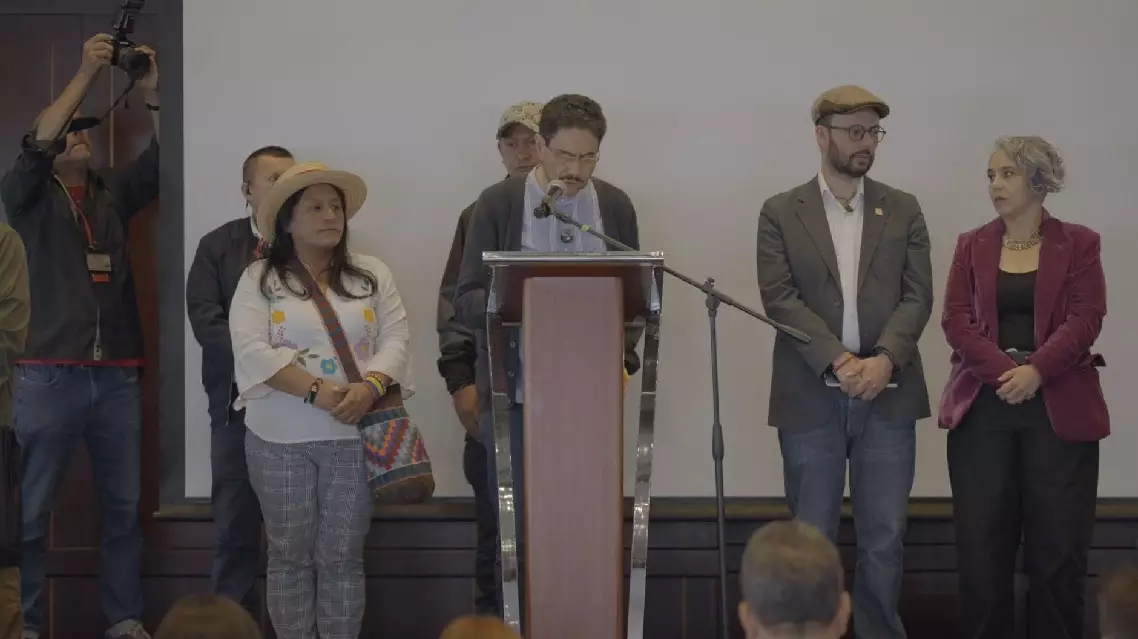
The frontrunner is Ivan Cepeda, a 63-year-old three-term senator, representing President Gustavo Petro's party, the Historic Pact coalition. Cepeda has vowed to defend and deepen Petro's progressive reforms and social justice policies to reduce inequality. He also promises to continue the government's controversial "Total Peace" strategy to negotiate the disarmament of remaining guerrilla groups and criminal gangs.

"True prosperity comes from equality, from access to rights, and from transforming the peripheral and excluded territories of the rural world," Cepeda said at a campaign rally.

Running as a political outsider and independent is Abelardo de la Espriella, a 47-year-old lawyer, nicknamed "The Tiger." He has presented himself as the "authority and order" candidate who will reduce state spending by up to 40 percent in the next four years.

"(First,) we must fight insecurity. Colombia is suffering today from a pandemic of insecurity. Crime is out of control: extortion, cattle theft, smuggling, drug trafficking," he said to his supporters at an election event.

According to polls, the third candidate with strong support is Paloma Valencia. The 48-year-old senator represents the Democratic Center party led by popular former President Alvaro Uribe Velez. Her candidacy is backed by politicians and economists who are concerned with growing levels of public debt. They want to see a return to more conservative fiscal policies.

"I don't want to be a president who governs alone, locked away in glass offices. I want to be a president who stands with citizens, who embraces them, who reaches out to them, who has a team, and who governs to transform Colombia," the candidate said at the campaign event

According to polls earlier in the year, many voters are expressing concerns about unemployment, rising living costs, corruption, and, above all, public security.

The election comes after a turbulent year that the International Committee of the Red Cross has called "the worst humanitarian consequences of armed conflict over the past decade."

"(We arrive at this election in a tense atmosphere - tense) because of the economic situation, because of the security situation, and because of the narratives that have been built around the country's main problems. On top of that, emotions, ideas and social media have all helped raise (the tone,)" said Eduardo Velosa, associate professor from International Studies Javeriana University.

If no candidate receives 50 percent of the vote, a runoff election will be held between the top two finishers on June 21st.

Colombians prepare to choose their next president

Colombians prepare to choose their next president

Recommended Articles