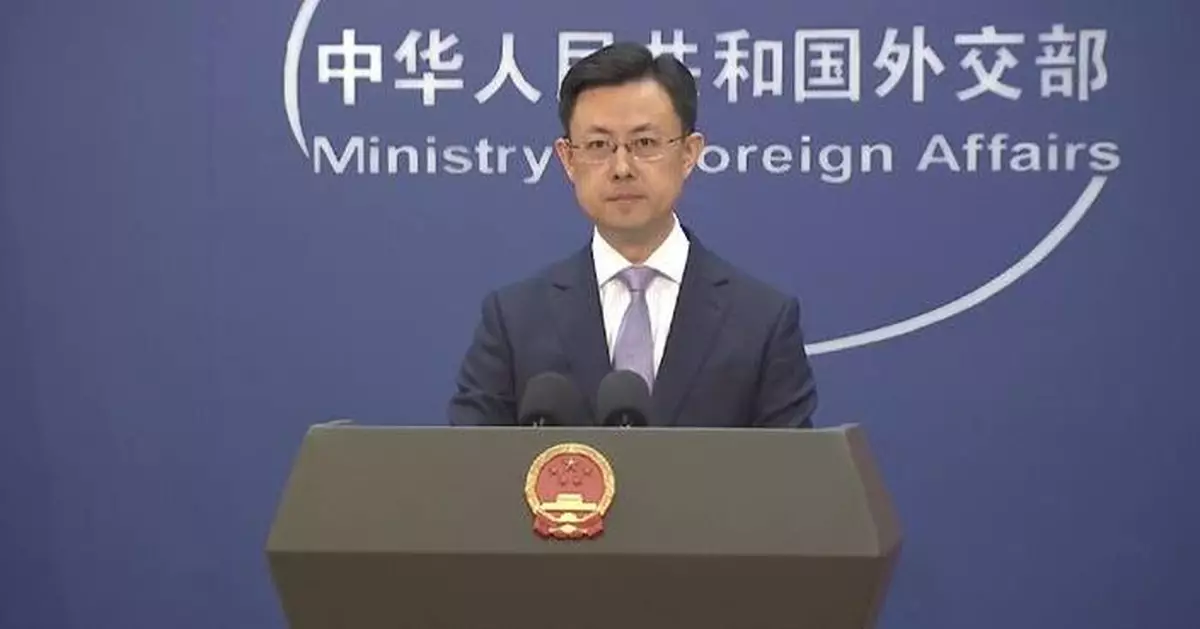
More efforts should be made to help China-U.S. Ping-Pong Diplomacy shine anew in the new era, injecting new momentum into the stable, sound and sustainable development of bilateral ties, Foreign Ministry spokesman Guo Jiakun said on Monday.
Guo made the statement at a press conference in Beijing in response to an event commemorating the 55th anniversary of China-U.S. Ping-Pong Diplomacy.
The Commemoration of the 55th Anniversary of China-U.S. Ping-Pong Diplomacy and the launching ceremony of the China-U.S. Youth Sports Exchange Events were held in Beijing on April 10. Chinese President Xi Jinping sent a congratulatory letter to the event.
"Fifty-five years ago, ping-pong diplomacy thawed the ice of estrangement between China and the U.S. It opened the door to exchanges and effectively helped increase mutual understanding between the people of the two countries. Fifty-five years on, the bond built through the sport of ping pong has been carried on from generation to generation and expanded to other sports such as basketball, football and the newly popular pickleball and many other areas. The Bond with Kuliang: China-U.S. Youth Choir Festival, for example, brought together young people from both countries to sing for youth and friendship. The event went viral on social media platforms. Those sports competitions, singing and academic exchanges convey the hope and faith of Chinese and American youths for peaceful coexistence between the two countries," said Guo.
"As President Xi Jinping wrote in the congratulatory letter, the foundation of China-U.S. relations was laid by the people, and their future will be shaped by the youth. We hope various sectors of the two countries, young people in particular, will enhance exchanges, give new dynamism to the spirit of ping-pong diplomacy in the new era, jointly write a new chapter of China-U.S. friendly ties, and provide new impetus for the steady, sound and sustainable development of the China-U.S. relations," he said.
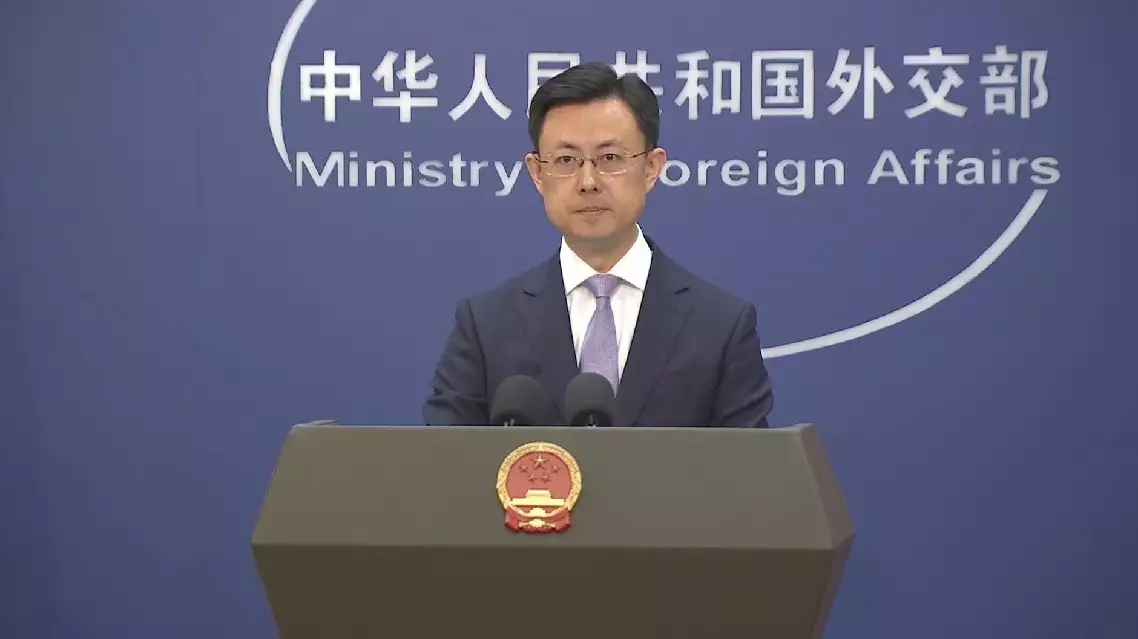
Ping-Pong Diplomacy injects new vitality into China-US friendship: FM spokesman
Artists have reimagined ancient themes through a modern lens at the 60th Venice Biennale China National Pavilion Exhibition, now underway in Shanghai.
The main feature of the exhibition is a fully immersive project by artist Che Jianquan, who has placed consecutive screens placed side by side to present his two-decade-long documentation of the same pavilion since 2003.
Through his lens, the artist captures the pavilion, as it emerges and disappears amidst mist and clouds, evoking the aesthetic of misty landscapes in traditional Chinese ink paintings.
"At the beginning, I wanted to use painting to document my feeling, but later I realized that painting was somewhat powerless. So, starting in 2003, I began using the earliest video equipment to start recording. What I care about more is a place—a very small location—and the unique connection it has within that field to history and to the culture of that region. I think this is something I hope to achieve: through a seemingly ordinary scene, to uncover the stories behind it, as well as its possible influence on both the past era and the present," said Chen.
Established in 1895, the Venice Biennale is one of the premier events in the global art world. This year, the China National Pavilion Exhibition, under the theme "Atlas: Harmony in Diversity," presents not only the documentary archives of 100 Chinese paintings held overseas, but also seven contemporary artworks created by seven Chinese artists exploring themes, such as architecture, landscapes, figures, flora and fauna.
"The core of the Venice Biennale is contemporary art, reflecting the spirit of the present era—yet the present and history cannot be separated. This exhibition is rooted in the tradition of Chinese painting across dynasties, drawing from over 20,000 individual works that took us twenty years to collect globally," said Wang Xiaosong, an artist and the curator of the exhibition.
"Notably, we discovered that more than 3,000 of these paintings had been lost overseas, which we spent two decades retrieving through digital tools. This is how we engage with traditional art: through each artist's reflection and a new understanding of the relationship between the ancients, the present, and the future," he added.
Wang drew special attention to a piece by the modern artist Qiu Zhenzhong, who he said merges the art of Chinese gardens with calligraphy using traditional methods to showcase contemporary issues such as environmental and ecological change.
"It's like a dialogue with nature," Wang said.
The exhibition in Shanghai is the final stop of the national tour, following the legs in the southwest Chinese city of Chongqing and the southern Chinese city of Guangzhou, and will run until May 31.
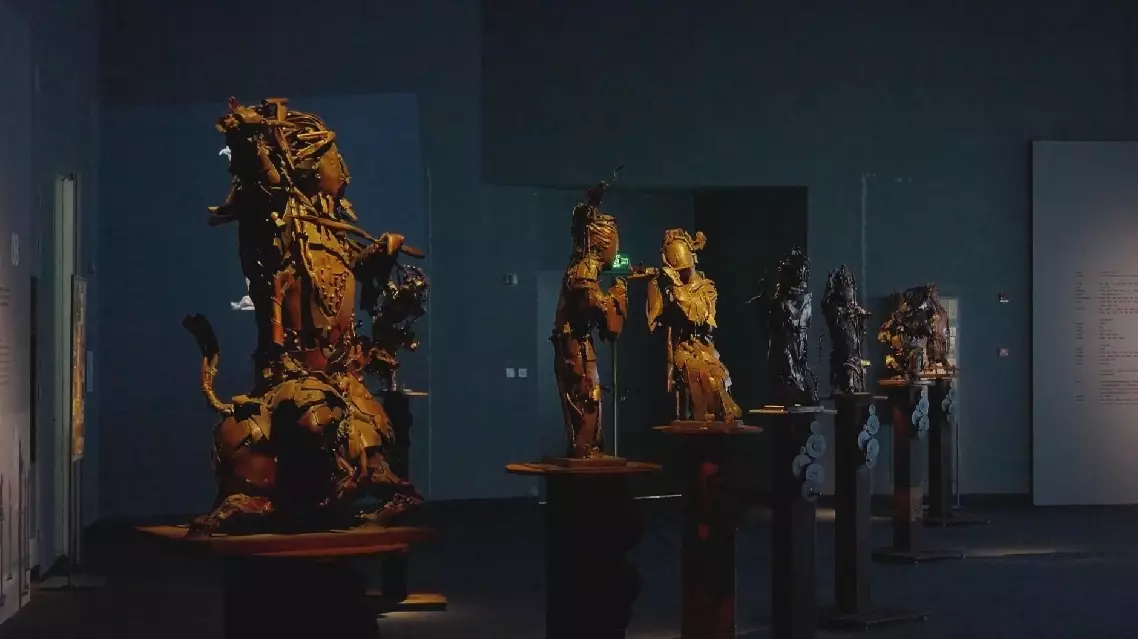
Exhibition in Shanghai bridges contemporary art with centuries of Chinese artistic tradition