Midwest soybean farmers have faced persistent financial headwinds in recent years, which were compounded by tariffs and the war in the Middle East, reporting from Lee Enterprises and The Associated Press found.
Farmers' costs, such as equipment, have crept up over time while soybean prices have stayed low. Tariffs levied by the Trump administration last year and the monthslong trade war with China only made things worse, soybean producers say. Then the Iran war bottled up shipping through the Strait of Hormuz, restricting global fertilizer supplies and sending fuel and fertilizer prices soaring. A ceasefire deal announced April 7 raised hope that bottlenecks in the strait would abate, but the future of the agreement was uncertain and experts say it will take time for global supply chains to recover.
The AP and Lee Enterprises interviewed experts and soybean farmers across multiple Midwest states.
Here are key takeaways from the report:
Soybeans, which are used for livestock feed, food and biofuels, are among the top U.S. agricultural exports. But soybean prices have been persistently low in recent years. The global market has been awash in soybeans, driven in part by Brazil, which surpassed the U.S. as the world’s largest soybean producer years ago.
“If we look at global soybean production over the past several years, it continues to set record, after record, after record,” said Chad Hart, an agricultural economist at Iowa State University. “There’s been just large supplies globally, and that has led to depressed prices.”
Meanwhile, Midwest soybean farmers’ costs have risen. Overall farm production expenses, including seed and pesticide, have increased over time, according to the U.S. Department of Agriculture. Operating costs for soybean production have stayed elevated since 2020 and are projected to increase again in 2026, according to the agency.
The cost of land also is a major issue for farmers, experts say. Midwest crop land values have increased. And most regional farmers rent some of their land, according to Joana Colussi, research assistant professor in the department of agricultural economics at Purdue University.
Sweeping tariffs levied by President Donald Trump in April 2025 exacerbated a trade war with China, the top buyer of U.S. soybeans. China responded with retaliatory tariffs and effectively boycotted U.S. soybeans, cutting off a major export market for Midwest farmers and driving the price of soybeans even lower. The U.S. and China eventually reached a deal in late 2025. Beijing committed to buying 12 million metric tons of soybeans by January and at least 25 million metric tons annually for the next three years. China has since met its initial soybean purchase goal and the Trump administration also rolled out a $12 billion temporary aid package in December to boost farmers affected by the trade war.
But the damage is already done, experts and farmers say. While China’s renewed purchases and the federal payments are helping, it’s not enough to recover farmers’ losses. Even after federal assistance, farmers still lost almost $75 per harvested acre of soybeans in the 2025 crop, according to the American Soybean Association. And the trade war further pushed China toward competing soybean exporters, such as Brazil — accelerating a trend of declining U.S. soybean exports to China.
Joseph Glauber, former chief economist at the Department of Agriculture between 2008 and 2014, said global competitors to U.S. soybean farmers gained from the trade war. The U.S. is not as dominant in the global soybean export market as it used to be, Glauber added.
After the U.S. and Israel attacked Iran on Feb. 28, a severe slowdown in shipping traffic through the Strait of Hormuz sent the price of oil soaring. The shipping disruption also largely stopped the export of nitrogen fertilizers manufactured in the Persian Gulf and limited access to key fertilizer ingredients. The price of urea, the most widely traded nitrogen fertilizer, skyrocketed.
Soybeans don’t require nitrogen fertilizer, but it’s vital for corn and most soybean farmers also grow corn. About half the global supply of urea comes from the Middle East, and Qatar and Saudi Arabia are two of the top sources of U.S. fertilizer imports, according to the American Farm Bureau Federation.
The U.S. and Iran agreed to a two-week ceasefire last week that included reopening the strait of Hormuz, but traffic remained slowed amid disagreements over Israeli attacks in Lebanon, and the price of urea remains elevated.
Many Midwest farmers bought their fertilizer well in advance of the spring planting season. But some farmers who didn’t buy early face elevated prices.
The war also caused gasoline and diesel prices to surge, causing further headaches for farmers. Oil prices dropped following the ceasefire announcement, but the war and the closure of the strait will have lasting impacts on farmers, said Seth Goldstein, a senior equity analyst at Morningstar, an investment research company. Facilities in the Middle East that are critical for exporting chemicals, oil and other commodities were damaged or destroyed during the war and it will take time for supply chains to recover, he said.
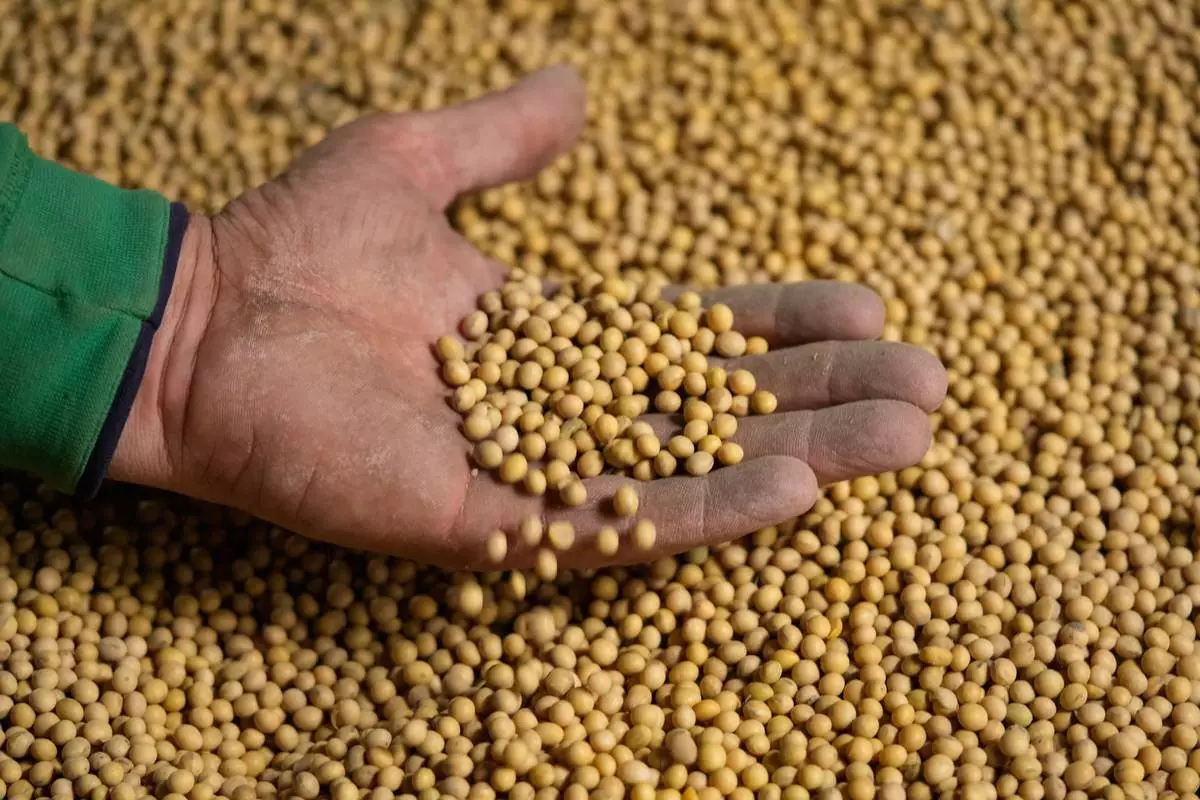
Doug Bartek displays soybeans on his farm near Wahoo, Neb., on Monday, April 6, 2026. (AP Photo/Charlie Riedel)