PHILADELPHIA (AP) — Kyle Schwarber homered twice and drove in three runs, Cristopher Sánchez pitched six strong innings and the Philadelphia Phillies defeated the Chicago Cubs 13-7 on Monday night.
JT Realmuto had three hits and three RBIs for the Phillies, who got back to .500 with just their second win in the last six games.
Click to Gallery
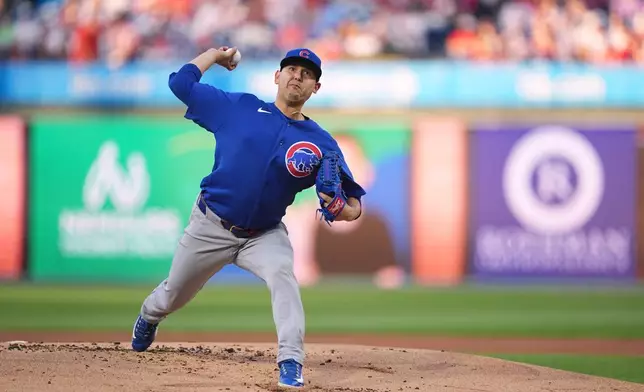
Chicago Cubs' Javier Assad pitches during the first inning of a baseball game against the Philadelphia Phillies, Monday, April 13, 2026, in Philadelphia. (AP Photo/Matt Rourke)
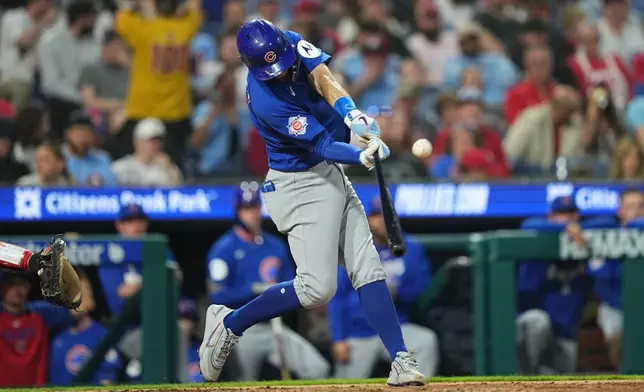
Chicago Cubs' Dansby Swanson hits a two-run home run off Philadelphia Phillies pitcher Cristopher Sánchez during the fourth inning of a baseball game, Monday, April 13, 2026, in Philadelphia. (AP Photo/Matt Rourke)
Philadelphia Phillies' J.T. Realmuto hits a one-run single off of Chicago Cubs pitcher Javier Assad during the second inning of a baseball game, Monday, April 13, 2026, in Philadelphia. (AP Photo/Matt Rourke)
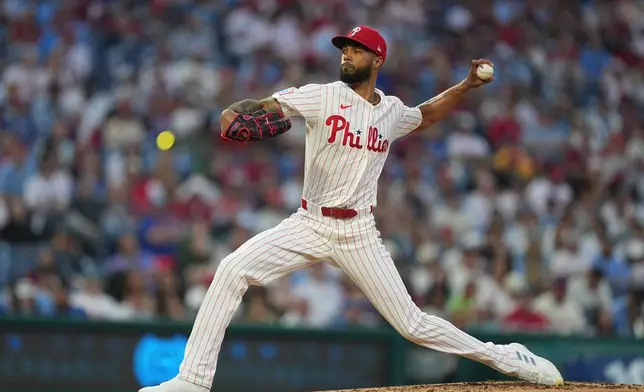
Philadelphia Phillies' Cristopher Sánchez pitches during the third inning of a baseball game against the Chicago Cubs, Monday, April 13, 2026, in Philadelphia. (AP Photo/Matt Rourke)
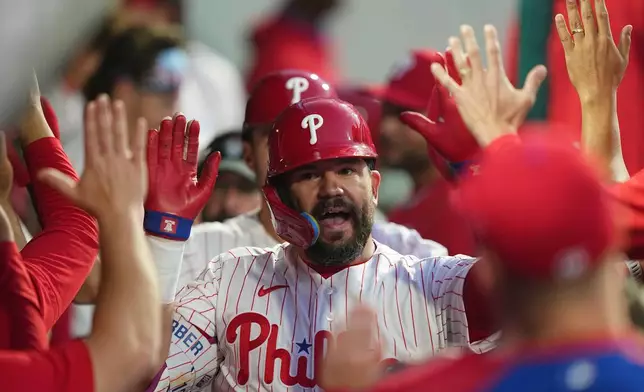
Philadelphia Phillies' Kyle Schwarber celebrates after his two-run home run off Chicago Cubs pitcher Javier Assad during the third inning of a baseball game, Monday, April 13, 2026, in Philadelphia. (AP Photo/Matt Rourke)
Dansby Swanson hit a two-run homer for the Cubs, who have lost three of four.
Schwarber got Philadelphia started with one out in the first inning when he drove an 0-1, 86-mph changeup from Javier Assad (1-1) an estimated 414 feet over the wall in center field, extending his on-base streak to 14 straight games. Two innings later, Schwarber launched a two-run drive off a 93-mph sinker from Assad into the seats in right field for his 37th career multi-homer game.
Swanson pulled Chicago within 4-2 with an opposite-field shot on a 95-mph sinker from Sánchez (2-1). But the Phillies blew the game open in the fifth when they chased Assad with five runs on five hits, highlighted by Brandon Marsh’s two-run double.
Sánchez, who made his first All-Star team last season and finished as the NL Cy Young runner-up, struck out eight and walked three while allowing six hits.
Assad was battered for nine runs on 11 hits in 4 1/3 innings.
Marsh also had three hits and scored twice, making amends for his eighth-inning baserunning mistake in Philadelphia’s 4-3 loss to the Arizona Diamondbacks on Sunday.
Philadelphia pounded out season highs in runs and hits (15). Adolis Garcia also had two hits and an RBI for the Phillies, who also got run-scoring hits from Alec Bohm and Bryson Stott.
After Schwarber walked in the fifth inning, he was hit by a pitch by Charlie Barnes in the sixth. In the eighth, Phillies reliever Seth Johnson hit Miguel Amaya with a pitch.
Chicago's Nico Hoerner went 0 for 3, halting his on-base streak at 14 consecutive games.
Cubs RHP Coliin Rea (1-0, 3.18) opposes Phillies RHP Aaron Nola (1-1, 3.63)) in the second game of the three-game series on Tuesday night.
AP MLB: https://apnews.com/hub/mlb

Chicago Cubs' Javier Assad pitches during the first inning of a baseball game against the Philadelphia Phillies, Monday, April 13, 2026, in Philadelphia. (AP Photo/Matt Rourke)
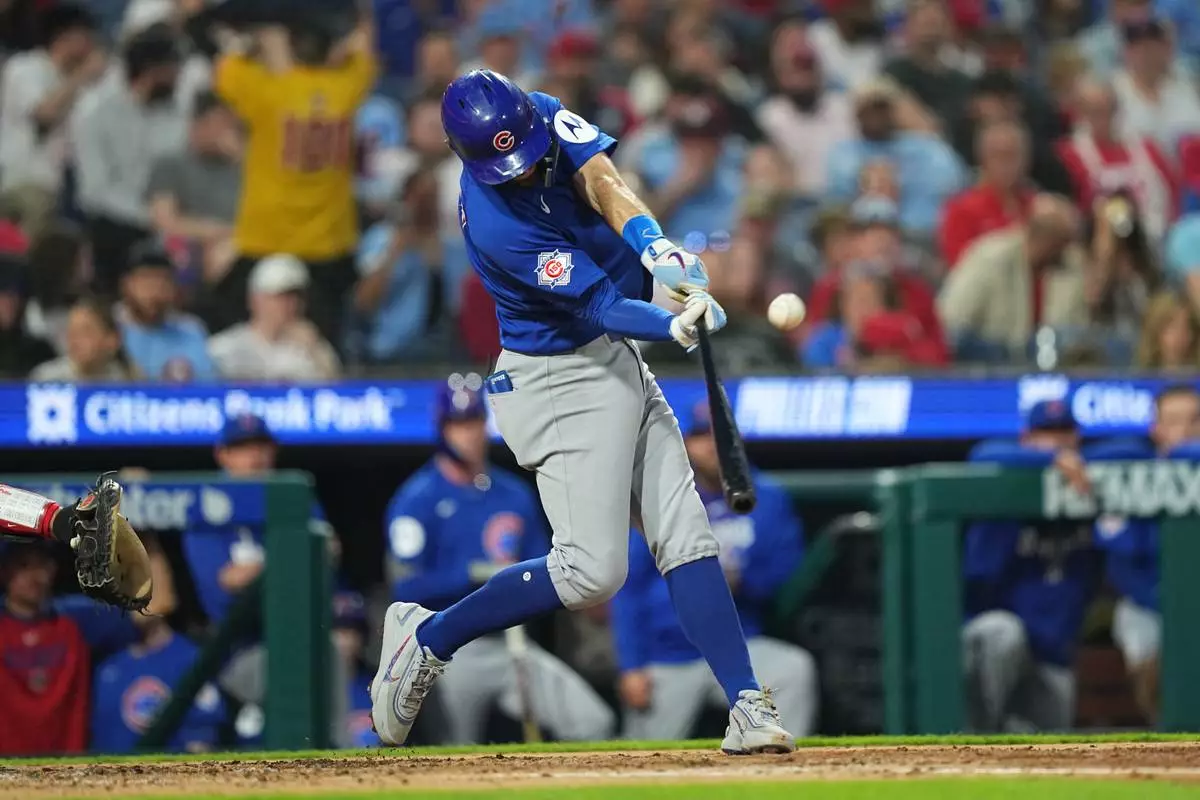
Chicago Cubs' Dansby Swanson hits a two-run home run off Philadelphia Phillies pitcher Cristopher Sánchez during the fourth inning of a baseball game, Monday, April 13, 2026, in Philadelphia. (AP Photo/Matt Rourke)

Philadelphia Phillies' J.T. Realmuto hits a one-run single off of Chicago Cubs pitcher Javier Assad during the second inning of a baseball game, Monday, April 13, 2026, in Philadelphia. (AP Photo/Matt Rourke)

Philadelphia Phillies' Cristopher Sánchez pitches during the third inning of a baseball game against the Chicago Cubs, Monday, April 13, 2026, in Philadelphia. (AP Photo/Matt Rourke)
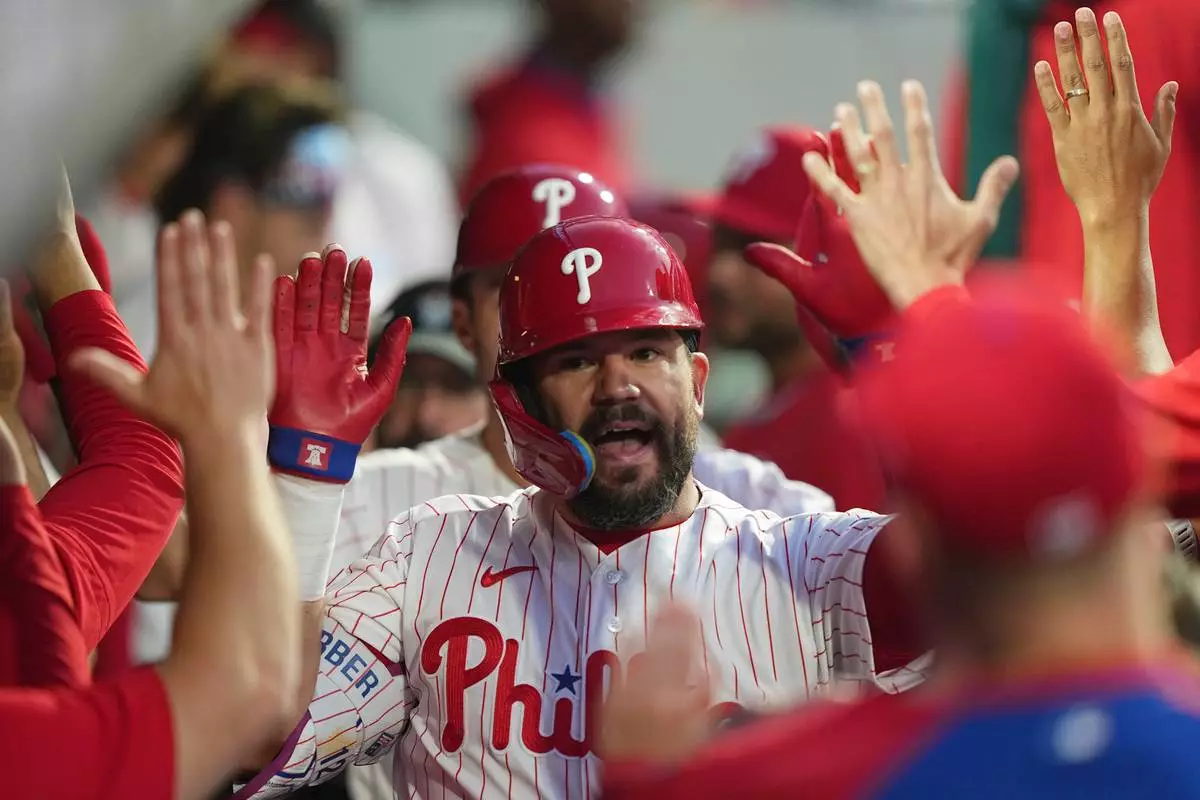
Philadelphia Phillies' Kyle Schwarber celebrates after his two-run home run off Chicago Cubs pitcher Javier Assad during the third inning of a baseball game, Monday, April 13, 2026, in Philadelphia. (AP Photo/Matt Rourke)
ISLAMABAD (AP) — The standoff between the United States and Iran deepened Tuesday as the U.S. declared it had blockaded Iran's ports, Tehran threatened to strike targets across the region, and Pakistan said it was racing to bring the sides together for more talks.
Though last week's ceasefire appeared to hold, the showdown over the Strait of Hormuz risked reigniting hostilities and deepening the regional war's economic fallout.
Meanwhile in Washington, direct talks between the Israeli and Lebanese ambassadors to the U.S. were set to begin, the first such negotiations in decades.
Talks aimed at permanently ending the conflict in Iran — which began Feb. 28 with U.S. and Israeli strikes on Iran — failed to produce an agreement last weekend, though Pakistan has proposed hosting a second round in the coming days.
Two Pakistani officials, who spoke on condition of anonymity because they were not authorized to discuss the matter with the media, said the first talks were part of an ongoing diplomatic process rather than a one-off effort.
Two U.S. officials said Monday that discussions were still underway about a new round of talks. A diplomat from one of the mediating countries said that Tehran and Washington had agreed to it.
The talks could happen Thursday, according to the U.S. officials. The location, timing and composition of the delegations had not been decided, although Islamabad and Geneva are being considered as host cities.
The U.S. officials and the diplomat spoke on condition of anonymity to discuss sensitive diplomatic negotiations.
The war, now in its seventh week, has jolted markets and rattled the global economy as shipping has been cut off and airstrikes have torn through military and civilian infrastructure across the region.
The fighting has killed at least 3,000 people in Iran, more than 2,000 in Lebanon, 23 in Israel and more than a dozen in Gulf Arab states. Thirteen U.S. service members have also been killed.
The blockade is intended to pressure Iran, which has exported millions of barrels of oil, mostly to Asia, since the war began. Much of it has likely been carried by so-called dark transits that evade sanctions and oversight, providing cash flow that’s been vital to keeping Iran running.
Both the nature of enforcement and the extent to which ships will comply remained unclear during the first full day of the blockade Tuesday. Tankers approaching the strait Monday turned around shortly after it took effect, though one reversed course again and transited the waterway.
The tanker Rich Starry had been waiting off the coast of the United Arab Emirates, according to shipping data firm Lloyd’s List, which cited data from the energy cargo-tracking firm Vortexa. It was not immediately clear whether the tanker had earlier docked in Iran. Yet it was listed by the U.S. Treasury’s Office of Foreign Assets Control as linked to Iranian shipping.
Lloyd’s List, citing ship registry and tracking data, reported that the vessel is owned by a Chinese shipping company and ultimately bound for China.
U.S. Central Command did not immediately respond to questions about the tanker after it cleared the 21-mile-wide (nearly 34-kilometer) waterway. A day earlier, Central Command said the blockade applied to vessels going to and from Iranian ports.
U.S. Treasury Secretary Scott Bessent said Chinese tankers will not be allowed passage through the strait. "So they're not going to be able to get their oil,” he told reporters Tuesday on the sidelines of IMF-World Bank meetings.
Since the start of the war, Iran has curtailed maritime traffic, with most commercial vessels avoiding the waterway.
Iran’s effective closure of the strait, through which a fifth of global oil transits in peacetime, has sent oil prices skyrocketing, pushing up the cost of gasoline, food and other basic goods far beyond the Middle East.
U.S. President Donald Trump said Monday that Iran's control of the strait amounted to blackmail and extortion as the U.S. blockade took effect. He said in a social media post that Iran’s navy had been "completely obliterated,” but it still had “fast attack ships.”
He warned that “if any of these ships come anywhere close to our BLOCKADE, they will be immediately ELIMINATED."
Iran threatened to retaliate against Persian Gulf ports if attacked.
“If you fight, we will fight," Iran's parliamentary speaker, Mohammad Bagher Qalibaf, said in a statement addressed to Trump.
French President Emmanuel Macron and British prime Minister Keir Starmer will co-chair a conference Friday for nations willing to deploy warships to escort oil tankers and container ships through the Strait of Hormuz. The deployment will happen “when security conditions allow,” Macron’s office said Tuesday.
The talks in Washington between Israel and Lebanon were expected to be preliminary, focused on setting parameters rather than resolving core issues.
After more than a year of near-daily strikes in southern Lebanon, Israel escalated its offensive in the early days of the Iran war following Hezbollah launching rockets into Israel. The fighting has carved a path of destruction from agricultural towns near the border to Beirut, killing more than 2,000 people and displacing in excess of 1 million others, according to Lebanese authorities.
After the ceasefire in Iran, Israel pressed ahead with its air and ground campaign, insisting that the truce does not apply to fighting in Lebanon. It has, however, halted strikes in the country’s capital since April 8, after a deadly bombardment that hit several crowded commercial and residential areas in central Beirut and killed more than 350 people in one day.
It sparked an international outcry and threats by Iran that it would end the ceasefire.
The fighting has intensified in and around the Lebanese town of Bint Jbeil. The Israeli military said Tuesday that it killed three Hezbollah militants after they fired on troops, wounding 10.
Fighting has intensified in recent days between Israeli ground forces and Hezbollah militants in and around Bint Jbeil, with the army saying Monday it had killed over 100 Hezbollah fighters over the past week.
Lebanese officials have pushed for a ceasefire. Israel has framed the negotiations around Hezbollah’s disarmament and a potential peace deal, without publicly committing to halting hostilities or withdrawing its forces.
Israel wants Lebanon’s government to assume responsibility for disarming Hezbollah, much as was envisaged in a November 2024 ceasefire. But the militant group has survived efforts to curb its strength for decades and said on Monday that it will not abide by any agreements that may result from the talks.
Israeli Foreign Minister Gideon Saar on Tuesday floated the idea of cooperation with the Lebanese government to dismantle Hezbollah.
Metz reported from Ramallah, West Bank. Associated Press writers Aamer Madhani, Matthew Lee, and Fatima Hussein in Washington, Sylvie Corbet in Paris, Toqa Ezzidin in Cairo, Natalie Melzer in Jerusalem and Farnoush Amiri at the United Nations contributed to this report.
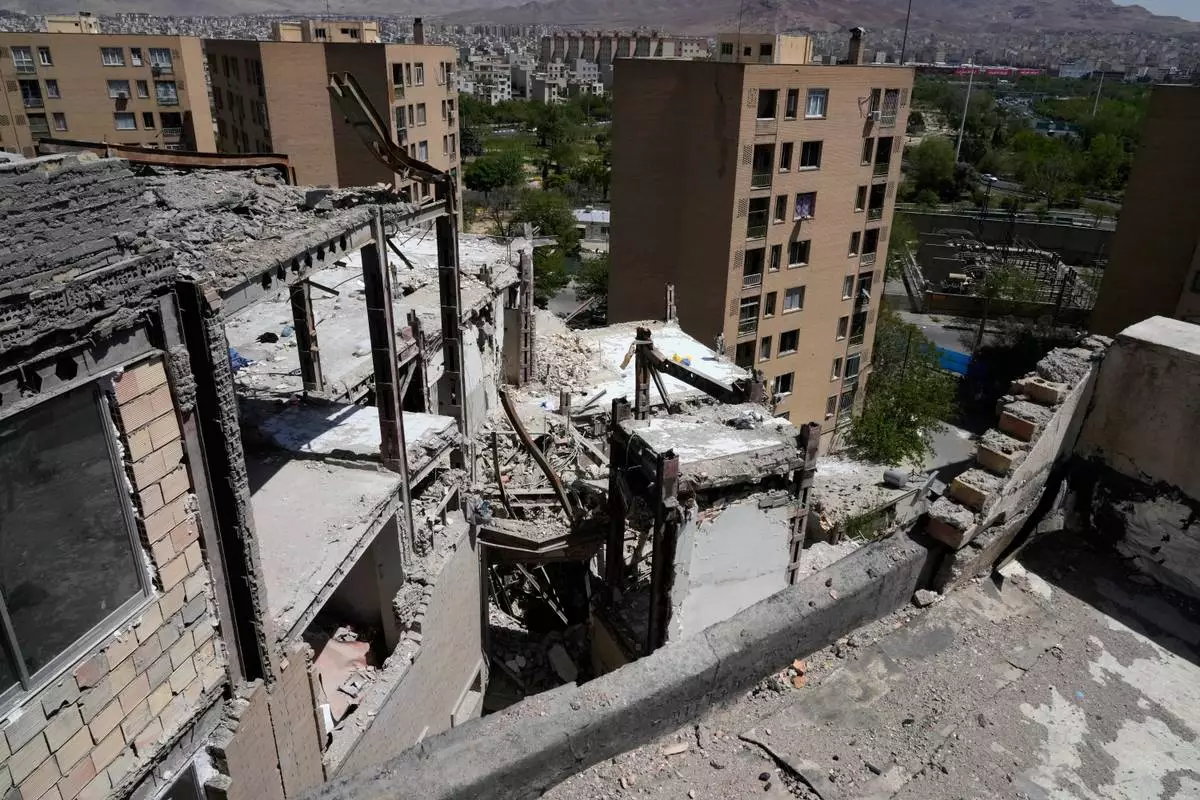
Damage is visible on a residential building that, according to Iranian authorities, was hit by a strike on March 4 during the U.S.-Israeli military campaign, in southeastern Tehran, Iran, Tuesday, April 14, 2026. (AP Photo/Vahid Salemi)
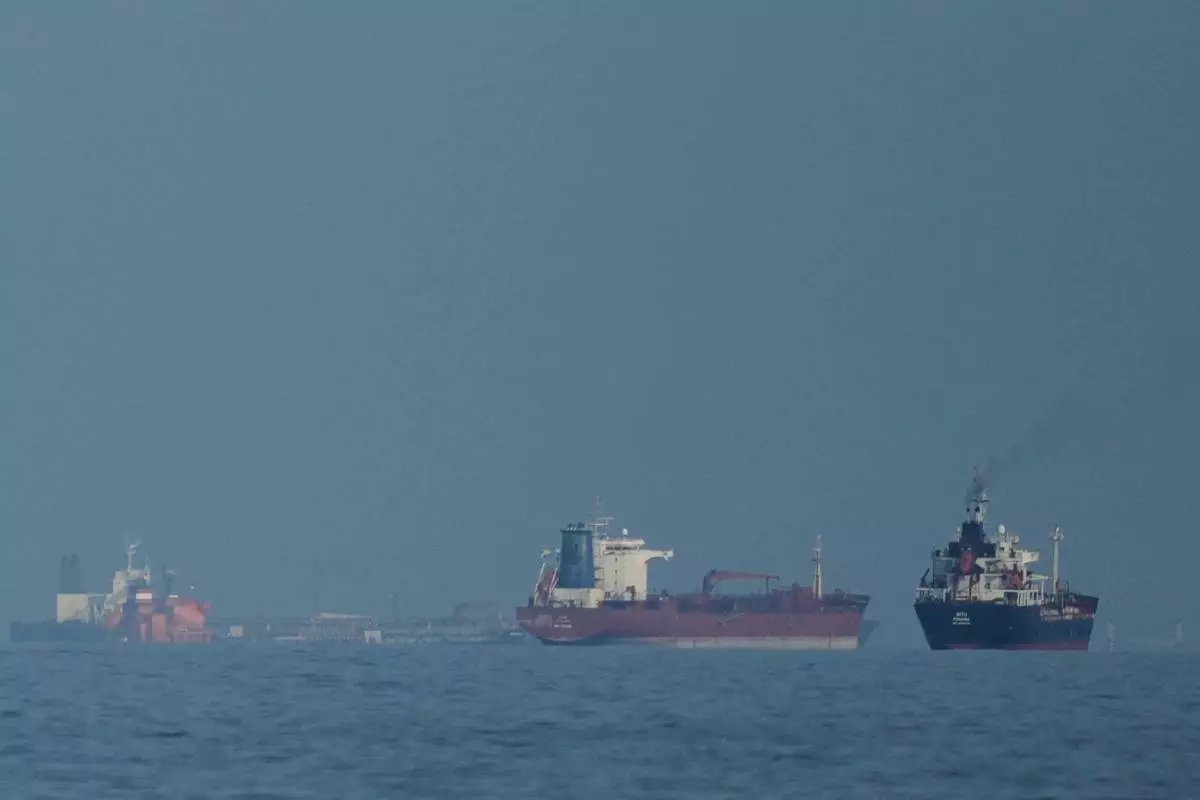
FILE - Oil tankers and cargo ships line up in the Strait of Hormuz as seen from Khor Fakkan, United Arab Emirates, Wednesday, March 11, 2026. (AP Photo/Altaf Qadri,File)
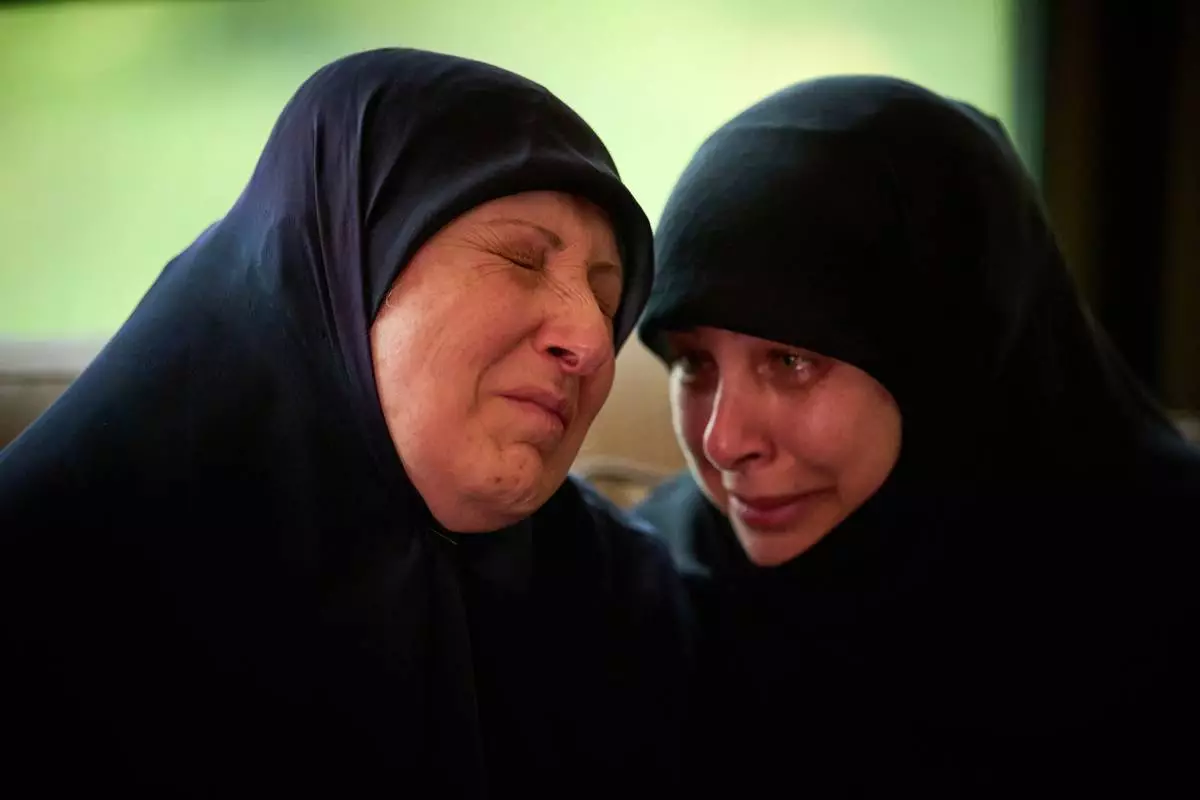
Ahlam Badawi, 51, left, mother of Hassan Ali Badawi, 31, a paramedic of the Lebanese Red Cross killed in a Israeli strike, cries during his funeral in Choueifat, Lebanon, Monday, April 13, 2026. (AP Photo/Emilio Morenatti)
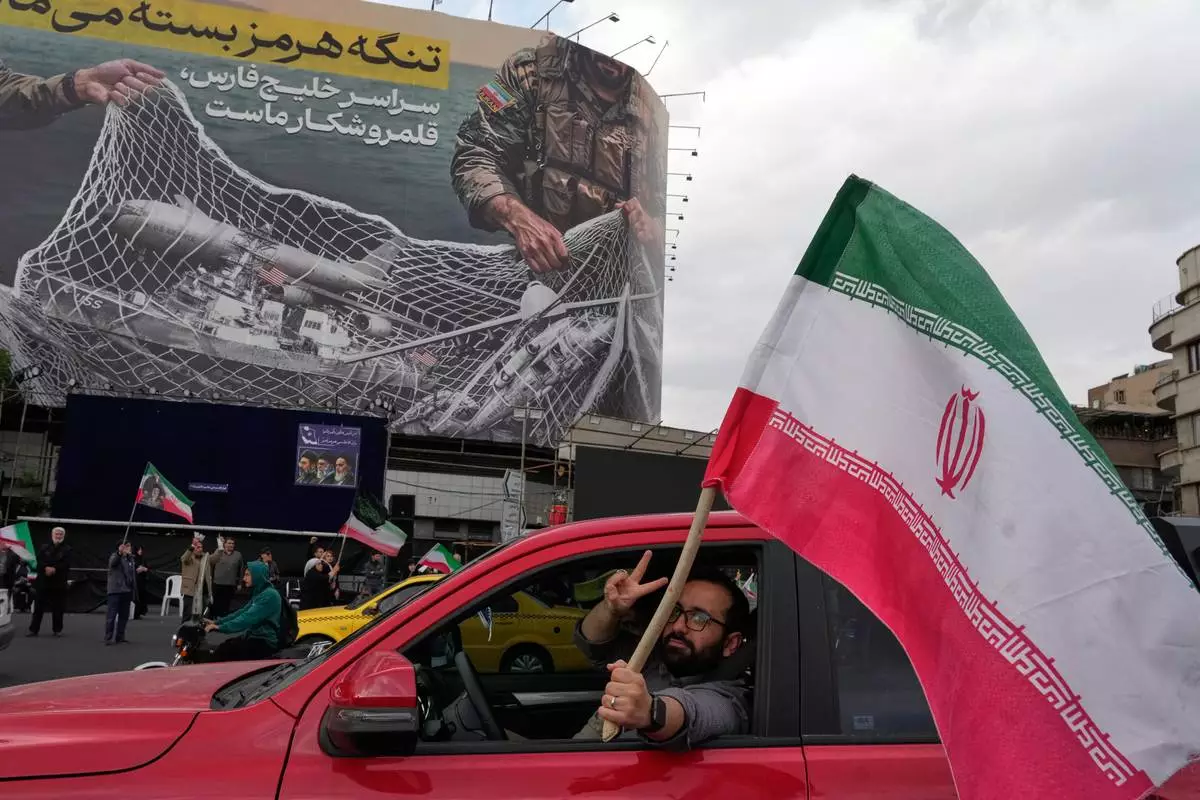
A man flashes a victory sign as he carries an Iranian flag in front of an anti-U.S. billboard depicting the American aircrafts into the Iranian armed forces fishing net with signs that read in Farsi: "The Strait of Hormuz will remain closed, The entire Persian Gulf is our hunting ground," at the Eqelab-e-Eslami, or Islamic Revolution Square in downtown Tehran, Iran, Monday, April 13, 2026. (AP Photo/Vahid Salemi)
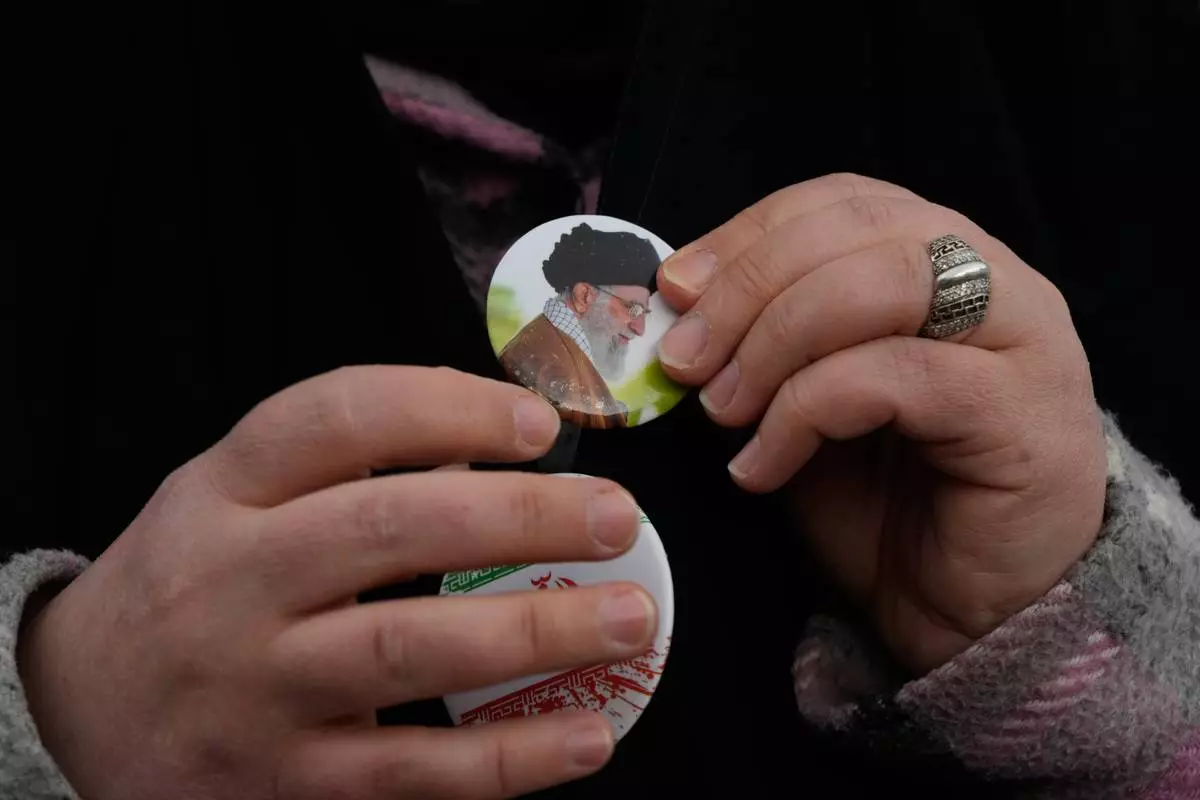
A woman wears a badge with a portrait of the late Iranian Supreme Leader Ayatollah Ali Khamenei, who was killed in the U.S. and Israel strikes on Feb. 28, during a campaign in support of the government at the Enqelab-e-Eslami, or Islamic Revolution, Square in downtown Tehran, Iran, Monday, April 13, 2026. (AP Photo/Vahid Salemi)
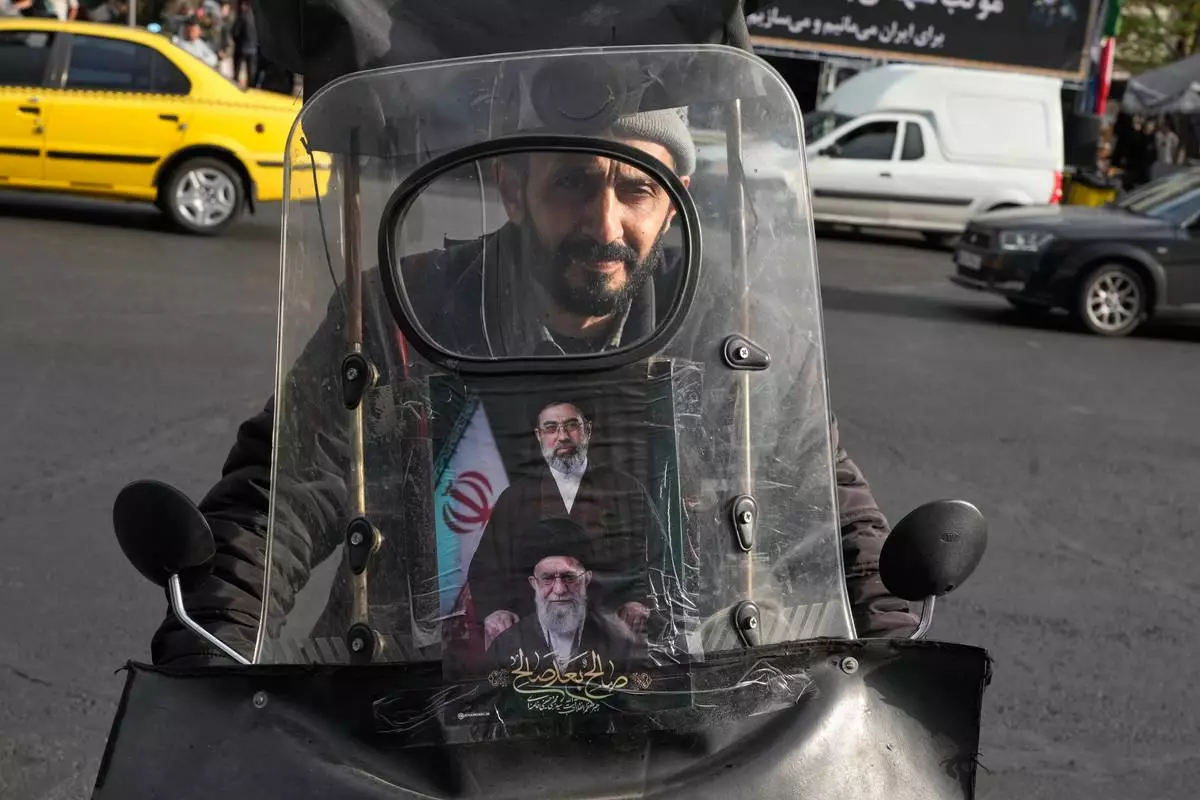
A man drives his motorbike with a poster on its windshield depicting Iran's Supreme Leader Ayatollah Mojtaba Khamenei, top, and his father, the slain Supreme Leader Ayatollah Ali Khamenei, who was killed in the U.S. and Israel strikes on Feb. 28, in downtown Tehran, Iran, Monday, April 13, 2026. (AP Photo/Vahid Salemi)
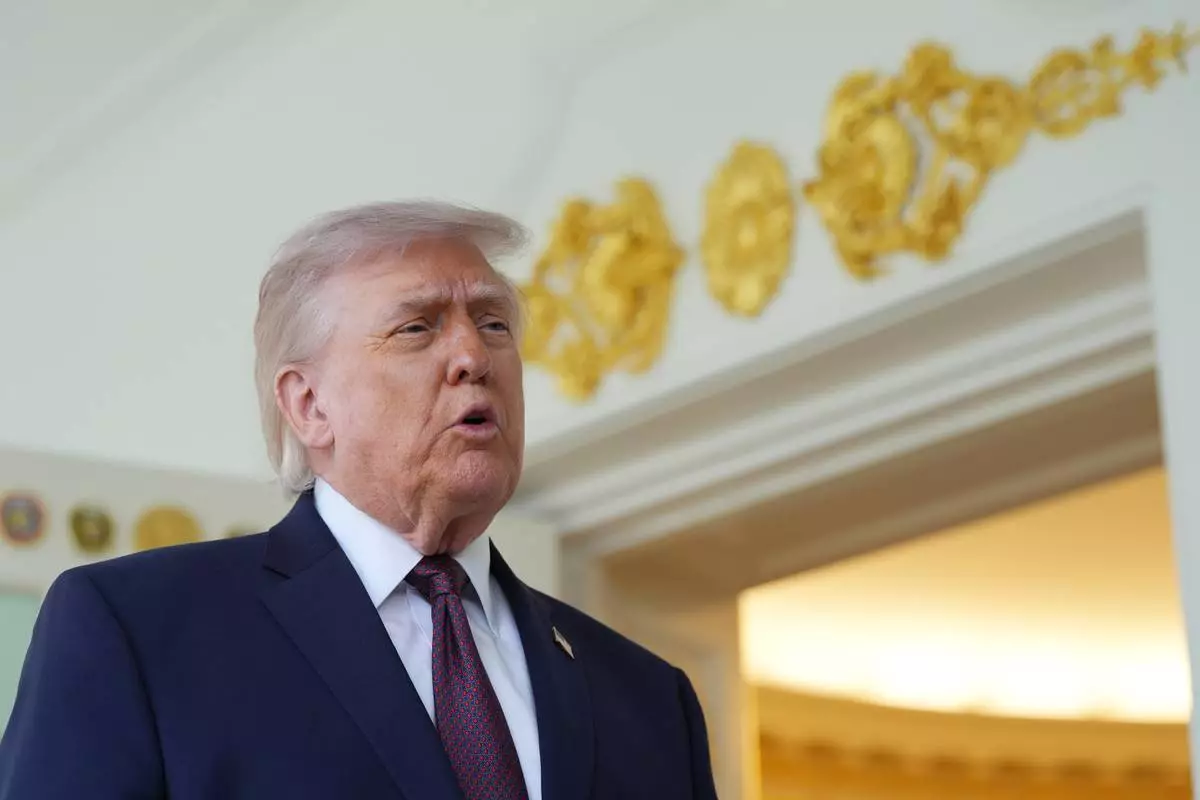
President Donald Trump speaks outside the Oval Office of the White House, Monday, April 13, 2026, in Washington. (AP Photo/Alex Brandon)