RIO DE JANEIRO, April 14, 2026 /PRNewswire/ -- The digital transformation of the Brazilian power sector is underway, driven by two fundamental forces: the digitization of infrastructure and the mass integration of renewable energy sources. In this new paradigm, critical communication shifts from a supporting role to become the foundation upon which an intelligent, secure, and resilient power grid is built. It is in this context that private wireless networks are emerging as a central technology to enable automation, real-time monitoring, and the operational reliability required by modern utilities.
More than just an environmental goal, the journey to green energy is an imperative for energy security and structural optimization. And at the heart of this evolution is the power communication network — the true "nervous system" that transmits critical data, delivers commands in milliseconds, and ensures the stability of the new electrical system. The quality of this connectivity infrastructure ultimately determines the success or failure of future power grid operations.
It is precisely in the "last kilometer" of the distribution network that the challenges intensify. As the final link between the power grid and end users, the distribution network concentrates the most pressing demands for reliable connectivity: geographically distributed nodes, challenging operating and maintenance conditions, and the need to support a surge in IoT devices and automation systems. Traditional technologies no longer meet the latency, security, and scalability requirements that this scenario demands.
The answer to this historical bottleneck lies in private wireless networks (such as private LTE and 5G). Combining mission-critical security, operational reliability, deployment flexibility, and strategic cost-effectiveness, these solutions effectively meet the communication needs of distribution networks, enabling use cases such as teleprotection, smart metering, field control, and predictive monitoring.
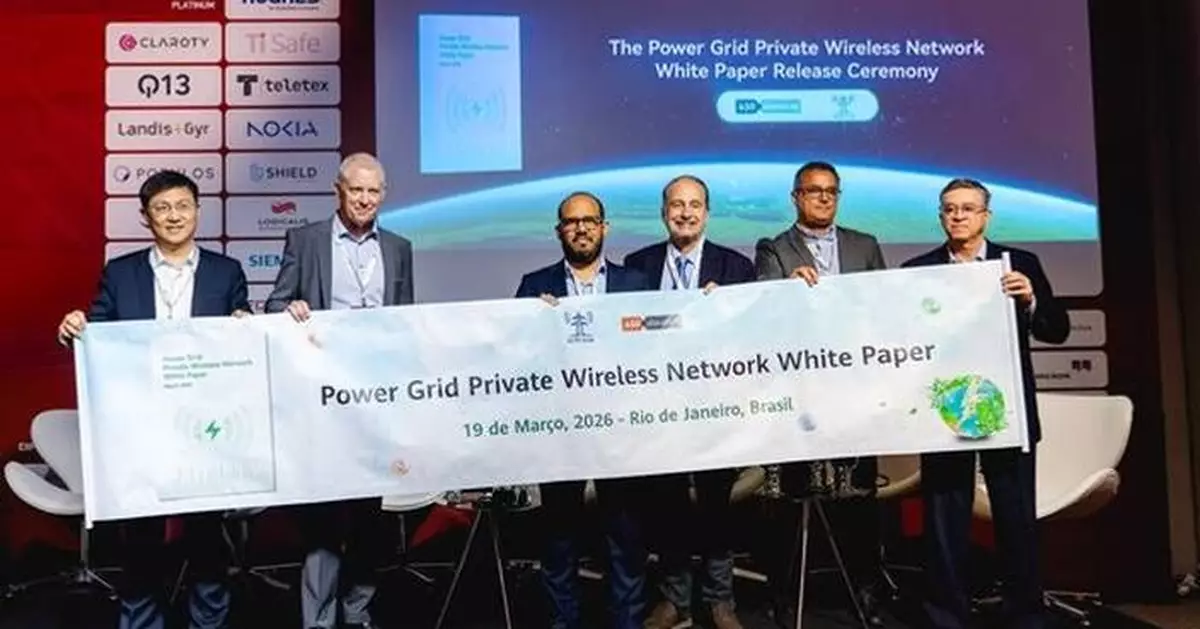
To deepen this discussion and present the technical and regulatory roadmap for this silent revolution, Huawei and the 450 MHz Alliance launched the white paper "Private Wireless Network for Power Grids" at the UTCAL 2026 summit, held in Rio de Janeiro on March 17. In this exclusive document, the white paper details how private wireless networks overcome the limitations of legacy technologies, ensuring the resilience and intelligence required to support the future of energy in Brazil.
Download here:
https://www-file.huawei.com/admin/asset/v1/pro/view/43b7da69b5ef4de7883f841e0f3bb8b2.pdf
Learn more
https://e.huawei.com/en/solutions/enterprise-wireless/industry-wireless/power-wireless-lte-g
** This press release is distributed by PR Newswire through automated distribution system, for which the client assumes full responsibility. **
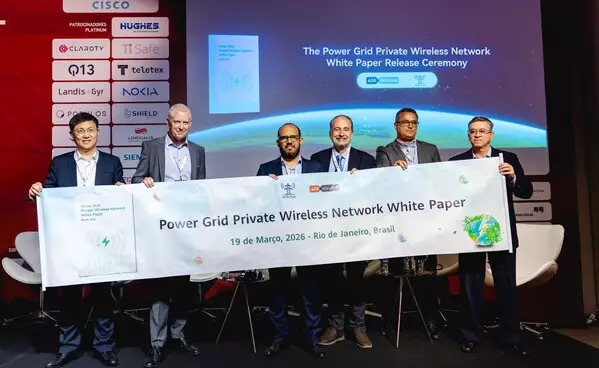
White Paper: Power Grid Private Wireless Network -- The Future of Critical Communication in the Power Sector
SINGAPORE, April 14, 2026 /PRNewswire/ -- Singapore is fast becoming a testbed for next-generation logistics—and the latest deployment by Hai Robotics and Maersk signals a clear shift in how fashion supply chains are being rebuilt.
In a newly launched fulfilment centre opened in February 2026, high-density robotics now powers the movement of tens of thousands of SKUs—supporting both retail distribution and e-commerce orders within a single, tightly integrated operation.
At a time when fashion brands are under pressure to deliver more variety, faster turnaround, and seamless omnichannel fulfilment, this project moves beyond traditional automation trade-offs.
"Most operations still compromise between storage density and throughput," said Nathan Zeng, President of Hai Robotics SEA, ANZ, and South Korea. "What we're seeing here is the ability to achieve both—at scale."
Inside the facility, a coordinated fleet of robotic systems handles storage and movement as separate but synchronised functions. High-density storage robots operate across racks reaching over 10 metres, while autonomous mobile robots (AMRs) maintain fast, continuous flow between storage and workstations. The system is designed to move more than 1,000 totes per hour—without the congestion that often limits high-density environments.
But the bigger shift is operational, not just technological.
Workstations are no longer fixed to a single fulfilment model. They can be reconfigured dynamically handling bulk retail shipments one moment, and individual e-commerce orders the next. As demand shifts, so does the operation, without requiring physical reconfiguration.
Behind it all is a deeply data-driven approach. From early-stage simulation to live operations, data has shaped how the system is designed, deployed, and continuously optimised. Inventory placement, order sequencing, and even maintenance cycles are informed by real-time system insights.
Engineering this level of density at height also brings new challenges. Rack design, floor precision, and safety compliance all become critical factors when operating at over 10 metres. The system is built to meet these demands, including automated responses that align with fire safety and evacuation requirements.
Seamless integration with Maersk's warehouse systems ensures real-time coordination across the operation. Notably, much of this integration was validated in a virtual environment before deployment—accelerating implementation and reducing on-site risk.
For Maersk and its fashion partner, the facility represents more than a technology upgrade—it's a new operating model for handling complexity at scale.
And for the broader APAC market, it signals where fulfilment is heading next: denser, faster, and built to adapt.
** This press release is distributed by PR Newswire through automated distribution system, for which the client assumes full responsibility. **
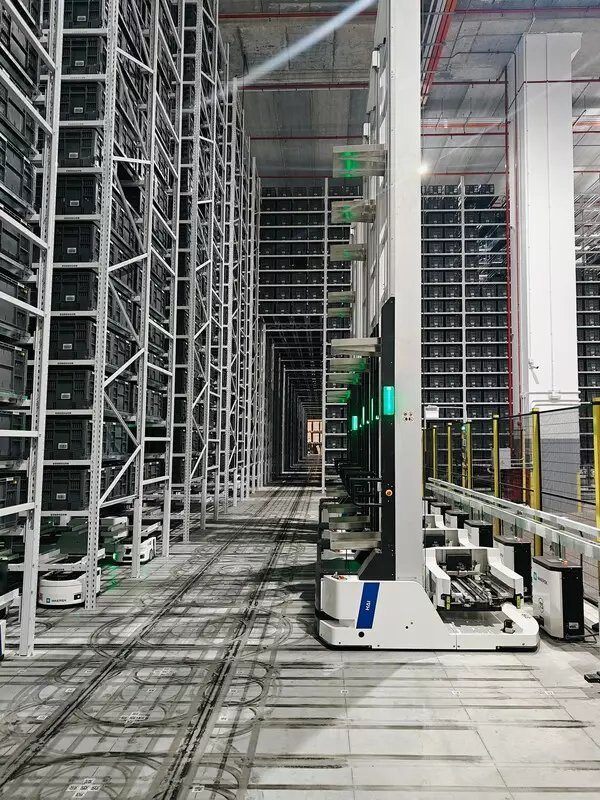
Hai Robotics and Maersk Redefine Fashion Fulfilment with High-Density Robotics at 10-Metre Scale in Singapore