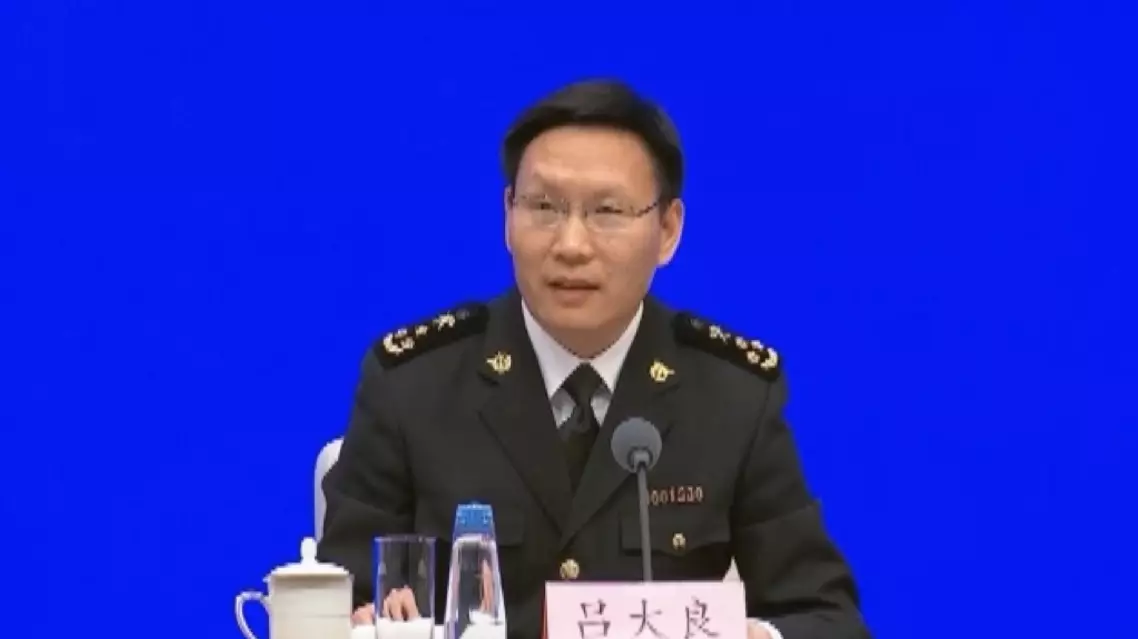
China's trade with the Middle East shifted from growth in the first two months of 2026 to a year-on-year decline in March, according to the General Administration of Customs (GACC) on Tuesday.
Speaking at a press conference in Beijing, GACC spokesman Lyu Daliang attributed the downturn primarily to escalating tensions and disruptions in the Strait of Hormuz, a critical artery for global energy and goods transport.
Citing a report by the United Nations Conference on Trade and Development (UNCTAD), Lyu noted that the strait handles 25 percent of global seaborne oil trade, 19 percent of liquefied natural gas (LNG), 29 percent of liquefied petroleum gas (LPG), and 13 percent of related chemical products. He described the waterway as a vital "maritime chokepoint" for international logistics.
Lyu further referenced UNCTAD analysis and the latest World Trade Organization (WTO) forecast to illustrate the broader impact.
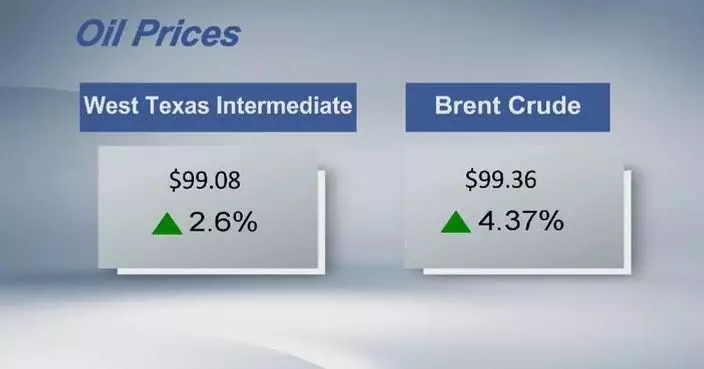
"[The UNCTAD report's analysis pointed out that] following the outbreak of the Iran war, fuel prices have surged sharply and remained at high levels, while oil transportation costs have risen significantly. These factors are driving up the cost of global goods production and transportation through the supply chain. Global trade in goods is expected to decline substantially," he said.
He added that the WTO's latest Global Trade Outlook and Statistics has sharply revised down its growth forecasts for global goods trade. "Our data confirms this trend: China's imports and exports with the Middle East turned from year-on year growth in the first two months to a decline in March," said the spokesman.
On the diplomatic front, Lyu reiterated China's position.
"China always advocates resolving disputes through political and diplomatic channels and has been actively committed to promoting peace and ending conflict. We hope all parties can work together to ease tensions as soon as possible and restore peace and stability in the strait and the Middle East," he added.
China's trade with Middle East declines in March amid hostilities
Hezbollah leader Naim Qassem on Monday rejected direct talks with Israel and vowed continued resistance, just a day before Lebanon and Israel are due to hold their first direct negotiations in decades in Washington with U.S. officials participating.
His declaration came as Israel continued strikes across Lebanon on Monday. The Israel Defense Forces (IDF) said in a statement on Monday evening that the Israeli air force struck about 150 Hezbollah targets in southern Lebanon in the past 24 hours and said it would continue striking Hezbollah targets.
Meanwhile, its 98th Division was expanding ground operations against Hezbollah in southern Lebanon, the IDF said.
Earlier in the day, the Israeli military said five rockets were fired from Lebanon into northern Israel, triggering air defense systems. State-funded radio network Israeli Army Radio reported that debris from an interception injured one person.
Ahead of talks schedule on Tuesday in Washington between Israel and Lebanon, Hezbollah leader Naim Qassem made a televised speech on al-Manar TV, saying that Hezbollah would not be disarmed and called on the Lebanese government to withdraw from the Washington talks.
Qassem said that Israel has been trying to weaken Lebanon to achieve its "Greater Israel" ambitions, and that U.S. efforts to bolster the Lebanese army to disarm Hezbollah and push the Lebanese army to fight its people were destined to fail.
He stated that the "U.S.-backed Israeli aggression" was against Lebanon as a whole, not just Hezbollah, and he urged the Lebanese government to its military and security forces to respond instead of exerting political pressure on the "resistance forces".
He asserted that national unity would be undermined by any forces within Lebanon that submit to the will of the United States.
Qassem also said that Hezbollah had shown patience over the past 15 months while Israel violated the ceasefire agreement, but that diplomatic efforts had proven futile.
He accused Israel of failing to uphold a November 2024 ceasefire agreement, alleging more than 10,000 violations. Hezbollah responded with a counter attack on March 2, aiming to force Israel to abide by the ceasefire and thwarting its "major aggressive plans," Qassem said.
He laid out five conditions to end the conflict: a complete halt to attacks by land, sea and air; immediate withdrawal from occupied Lebanese territory; the release of prisoners; the return of displaced people; and reconstruction with international support.
The Israeli strikes on Lebanon have killed 2,089 people and wounded 6,762 since March 2, the Lebanese health ministry said on Monday.
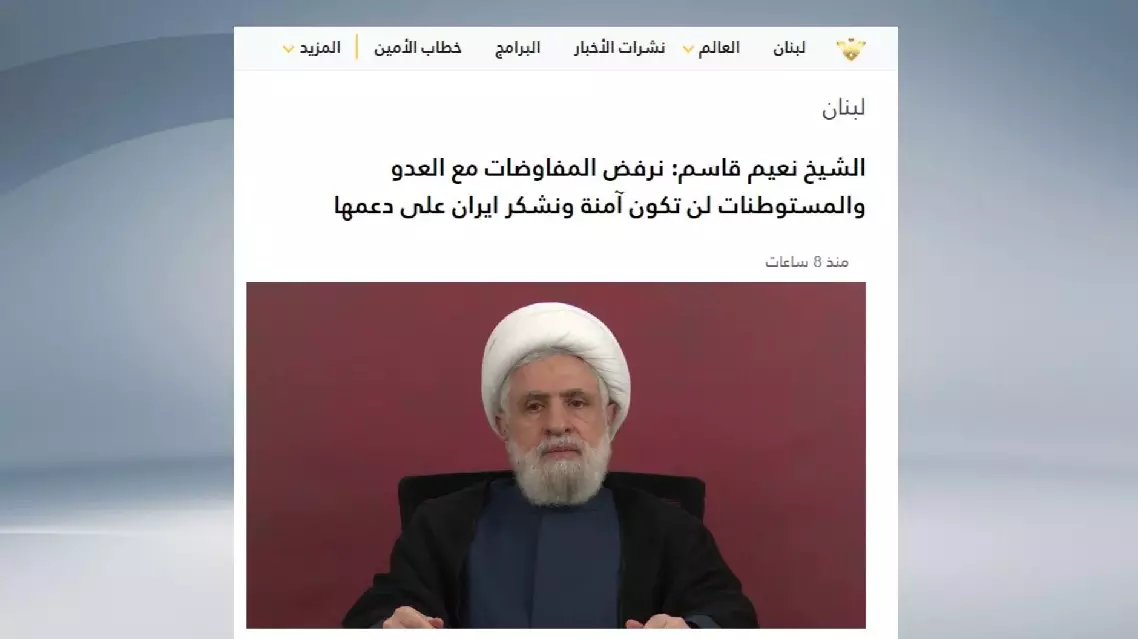
Hezbollah leader rejects Israel talks, vows continued resistance ahead of Washington negotiations as strikes continue