Concerns are mounting over a potential humanitarian crisis in Lebanon, which is facing growing food insecurity amid a continuing barrage of Israeli air strikes, as many families struggle with rising food prices and disrupted supplies as a result of the wider conflict in the Middle East.
Lebanon's Public Health Emergency Operation Center reported on Sunday that Israeli strikes on Lebanon have killed over 2,000 people and wounded more than 6,500 others since fighting between Israel and Hezbollah resumed on March 2.
The latest round of Israeli attacks have been widely condemned by the international community and amid these growing casualty numbers, fears are also growing about the wider, long-term impact of the conflict.
Lebanon has said its reserves of strategic food supplies can last for up to four months, after a surge in demand due to the Israeli attacks. But the United Nations World Food Programme (WFP) has warned that some locations in the south of the country may be in danger of running out of food by the end of the week.
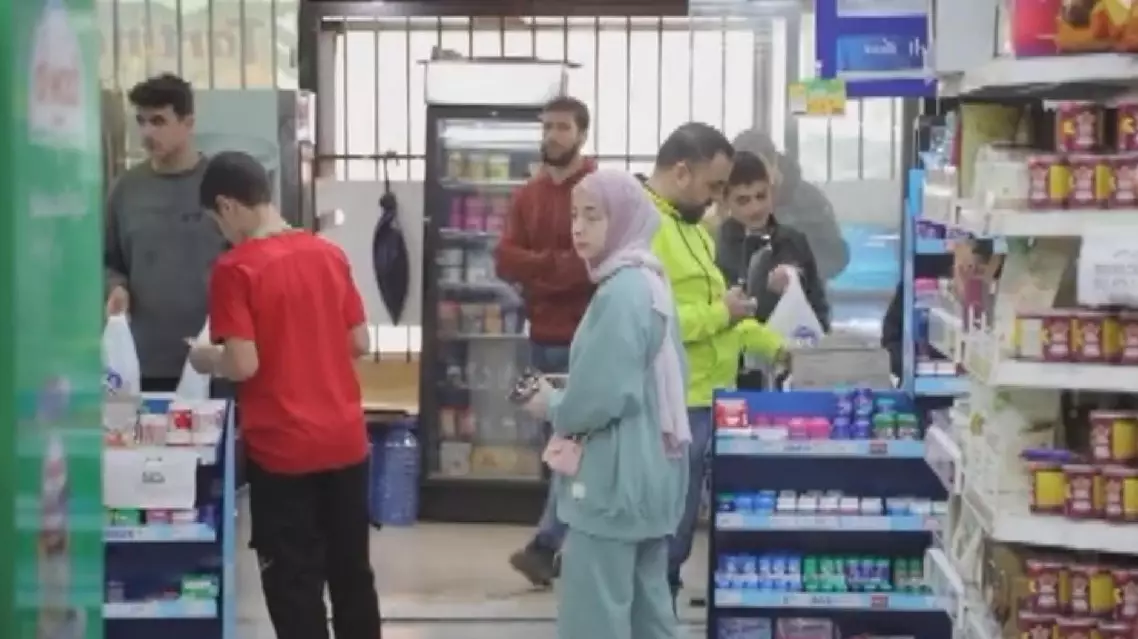
Despite these worries, at a local supermarket in Beirut, shelves are still stacked with all kinds of goods and local people are confident that should remain the case as long as the seaports and the main airport stay open.
However, challenges may emerge at the ground level, particularly in specific districts which could come under threat of attack, as the basic logistics of delivering food is made all the more dangerous and could lead to some supply chain interruptions.
"Products are available, but we are facing problems with traders coming to handover goods. Last Thursday, our neighborhood became included in areas that can be attacked," said Mohamed Eideh, a supermarket owner.
He said the abrupt and changing nature of the conflict presents difficulties for businesses, and noted many of his employees are now too afraid to come to work.
The Lebanese government insists that it is facing no shortages in food supply, thanks to a resilient strategy built through years of hardships the country has been facing.
"We traders have always been working with the war in mind. So we always have, or are thinking of having, contingency plans, strategic reserves, extra stocks, and distributing our goods into several locations," said Hani Bohsali, president of the Syndicate of Food Importers in Lebanon.
But the WFP is warning of a crisis emerging in southern Lebanon, where the fighting with Israel intensifies. In these areas, 80 percent of the markets are now nonfunctional and some isolated locations may run out of food by the end of this week, according to the WFP.
Moreover, Israel has bombarded most of the bridges over the Litani River which is isolating the southern territories from the rest of the country.
"In the hit areas like south of Sidon and south of Litani, there is no more accessibility. So we are not able to send our goods there. What happens is that whoever is left in this region as traders are sending their own trucks. The quantity of people is less and the difficulties to secure these [areas] are there, they are present, but they are not a major problem," Bohsali said.
The WFP says around 900,000 people were facing food insecurity even before the latest escalation between Israel and Hezbollah. In addition, the war on Iran has fueled inflation, pushing food prices by up to 20 percent.
As these struggles grow, many are doing whatever they can to help those in need. Among them is Nader Sabrah, a public servant who has been assigned to lift some pressure off the surging demand on food.
Alongside a team of volunteers, he is helping cook up to 5,000 meals daily to feed the many displaced people.
"We cook vegetables with curry flavor, in addition we make chicken sandwiches. We use garlic, pickles and so on. In principle all products are available and we manage to secure them. International organizations like the WFP and UNICEF are helping us? We are not worried about food supply," said Sabrah, who is the manager of Beir Hassan Hospitality School.
But while some are staying calm, many others are stockpiling canned and dried food to prepare for future emergencies as concerns rise about how the continuing Israeli bombardment may impact on supplies to several parts of southern Lebanon.
Fears over food insecurity rise in Lebanon as Israeli bombardment continues