LONDON (AP) — The Irish government survived a confidence vote Tuesday over how it handled a week of disruptive fuel protests that blocked access to oil supplies, caused gas pumps to run dry and created massive traffic jams.
Irish Prime Minister Micheál Martin defended his coalition government by saying it had acted to end the “destructive blockade which threatened to cause much deeper damage."
The 92-78 vote in support of the government preserved his leadership. If the confidence vote failed, his government would have been forced to resign and Parliament would have either elected a new prime minister or called a general election.
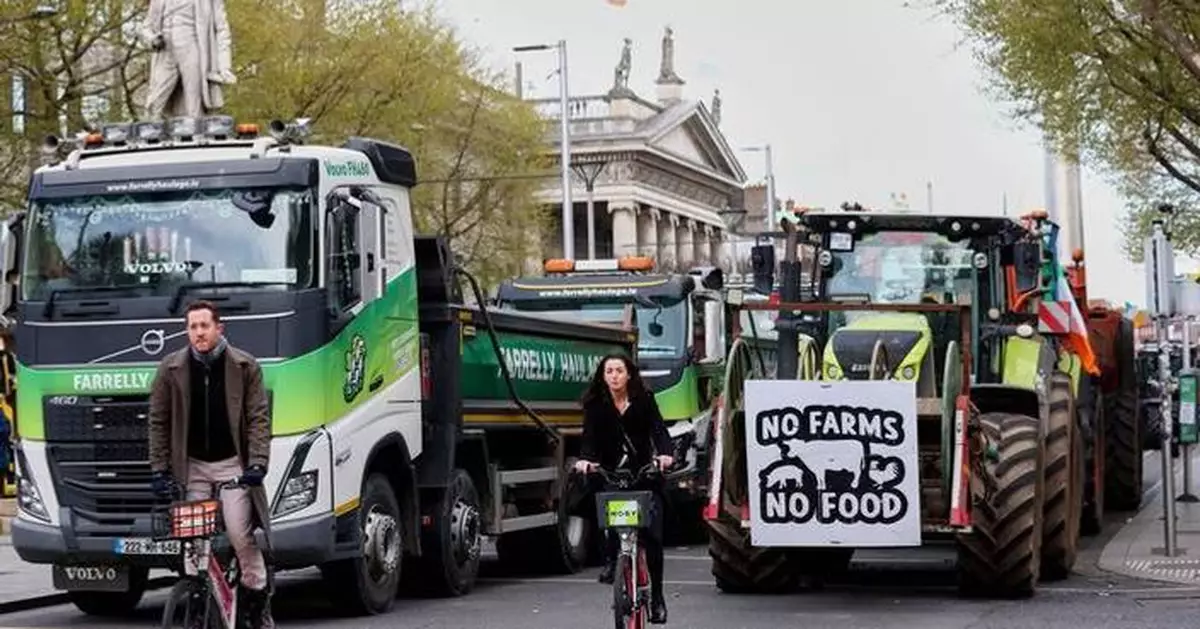
Protests began April 7 with slow-moving convoys clogging roadways. They grew as word spread on social media as truckers, farmers and taxi and bus operators blocked key infrastructure and the main thoroughfare in the capital, Dublin.
Demonstrators called for price caps or tax cuts to alleviate soaring fuel costs they said would drive people out of business.
After the vote, a crowd of protesters gathered outside the Dáil, the parliament building in Dublin, chanted “sell out” and “get them out.”
Opposition politicians blasted Martin for failing to respond sooner to the protests, criticized the aid package he offered as insufficient and said the government was failing to tackle the broader cost-of-living crisis in Ireland.
Sinn Fein Leader Mary Lou McDonald said it was brazen of the coalition to bring the confidence vote after abandoning struggling, hardworking people.
“Beyond your bubble people see a government out of touch,” McDonald said. “It is your own arrogance, your lack of judgment, your lack of any empathy that has left people with no conclusion other than this: Your time is up.”
Social Democrats, Labour, People Before Profit, Aontu, The Green Party and Independent Ireland supported the vote against the government.
The protests reflect the deep concern voters around the world have about living expenses since the inflation spikes that followed the COVID-19 pandemic and Russia’s invasion of Ukraine. The war in Iran has exacerbated fears after gas and diesel prices have risen steeply.
Cost of living was the top issue for Irish voters in 2024 that put Martin and Deputy Prime Minister Simon Harris back into a power-sharing government shored up with help of several independents.
Martin defended the tax cuts the government was offering as the largest in Europe to help cope with fuel prices that have soared after the U.S.-Israel war on Iran led to the closure of the Strait of Hormuz, a vital channel for the world’s oil.
“The basic core claim that we are doing nothing and are falling behind other countries is simply untrue,” Martin said.
Martin led a motion to support his coalition made up mainly of the center-right Fianna Fáil and Fine Gael parties ahead of a no-confidence vote brought by Sinn Fein, the largest opposition party.
One of Martin's junior ministers, Michael Healy-Rae, an independent from Kerry, surprised his peers by saying he would vote against the government and resign because it had let down the people.
“I’ve always looked at myself as a gauge of the people of rural Ireland," he said. “When I met tractor men, lorry men, farmers and when they were telling me how unhappy they were, the leader of the country should have listened.”
Martin said the government can learn from the protests, but defended the response by police and military to clear roadblocks at the country's sole oil refinery at Whitegate in County Cork and at several depots. They caused more than a third of gas pumps to run dry.
“We had to clear Whitegate and the ports because we export about 90% of everything we make in this country,” Martin said. “The ports are the lifeblood of economy, and if the ports were blockaded for any length of time, people would have lost jobs, part-time production would have ceased, and it would have been very, very serious."
The demonstrations were tolerated until the weekend, when police used pepper spray in clashes with some protesters and an army truck knocked down a log barricade at the Galway port. Some protesters said they achieved their goal in getting the government to compromise.
Lawmakers were also scheduled to vote Tuesday on the fuel support package amounting to 505 million euros ($595 million) that Martin said will ease some cost-of-living pressures.
The package would include direct payments to truckers and school bus operators and fuel subsidies for agricultural and fishing industries. The relief measure would follow a 250 million euro tax break approved three weeks ago.
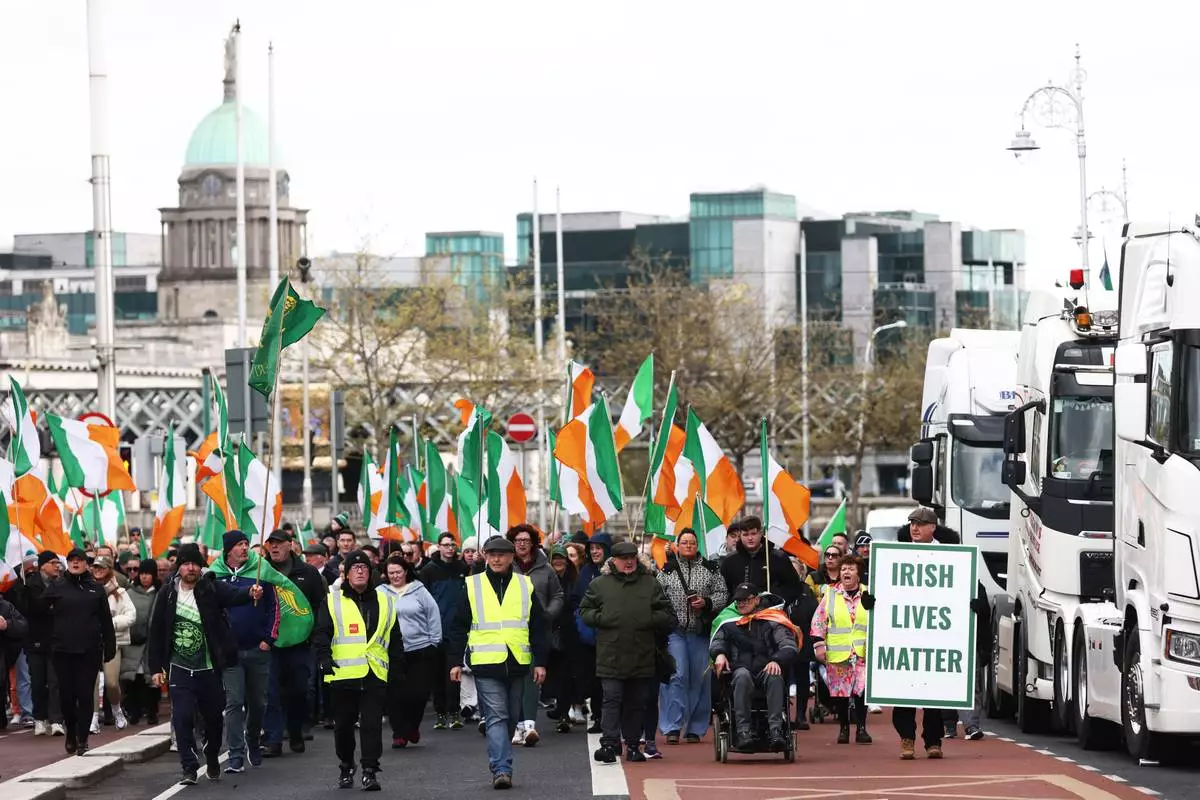
Protesters make their way to O'Connell Street during the fifth day of a National Fuel Protest, in Dublin, Ireland, Saturday, April 11, 2026. (AP Photo/Peter Morrison)

Tractors block O'Connell Street on the fifth day of the National Fuel Protest, in Dublin, Ireland, Saturday, April 11, 2026. (AP Photo/Peter Morrison)
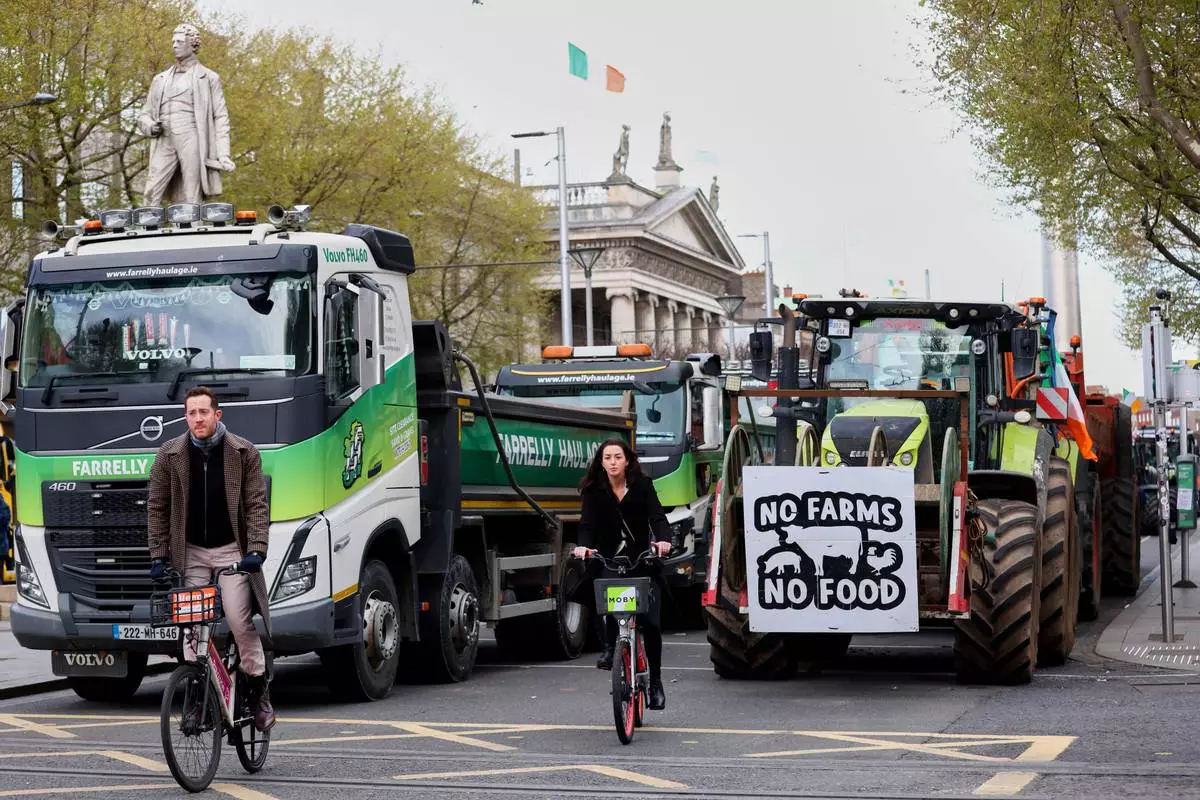
Cyclists ride past tractors blocking O'Connell Street on the fifth day of the National Fuel Protest, in Dublin, Ireland, Saturday, April 11, 2026. (AP Photo/Peter Morrison)
SpaceX launched its enormous Starship into orbit for the first time Monday and successfully delivered the most advanced Starlinks yet, but cut the flight short to ensure safety.
The spacecraft reentered over the Pacific and splashed down north of Hawaii three hours after blasting off from Texas. The company had been aiming for a 10-hour flight, spanning six full laps around Earth, to prove its readiness for NASA’s Artemis moon program.
Starship tipped over and erupted in flames upon splashdown, a dramatic end to the mission.
Founder Elon Musk's Starship almost didn't make it to orbit when one of its engines shut down too soon. But with everything else working well and the bad engine no longer needed, flight controllers decided after several tense minutes to proceed as planned.
“Starship is orbital,” Mission Control announced to cheers.
NASA Administrator Jared Isaacman congratulated SpaceX on reaching orbit and “managing every step in a safe, responsible and especially inspirational way.”
Musk’s showpiece rocket — the biggest and most powerful ever built — carried 26 of the latest Starlink satellites to join the 11,000 older models already providing internet service. They popped out of the spacecraft one by one, drawing more cheers from the SpaceX crowds looking on from the launch site at Starbase, Texas.
The decision to end the flight early came soon afterward. No reason was provided.
It was Starship’s 14th full-scale launch from Texas’ southern tip in three years. The earlier test flights ventured no farther than the Indian Ocean halfway around the world, often crashing in flames and briefly skimming space.
This time, SpaceX was intent on circling the globe from an altitude of 170 miles (275 kilometers) — not just once but six times over almost 10 hours, ending with a Pacific splashdown near Chile. While Starship achieved the proper orbit zipping along at 17,500 mph (28,000 kph), flight controllers opted to play it safe and bring it back several hours sooner, after just a couple laps.
The first-stage booster was never meant to return to the Starbase launch site either, instead dropping into the Gulf of Mexico within minutes of the morning liftoff.
SpaceX wants to ensure that everything works before flying Starship back to Starbase. If the spacecraft breaks apart over land and rains debris onto people, “our popularity would diminish very rapidly,” Musk said at a business summit earlier this month. “That’s why we’re being extremely cautious here.”
Depending on the findings from Monday's orbital debut, the next Starship could return to the launch pad with giant mechanical arms grabbing the hovering spacecraft. If the catch works — Musk gives it even or slightly better odds — then SpaceX will refly the spacecraft by year’s end or early next year.
The 407-foot (124-meter) rocket was designed from the start to be fully reusable — a key to lowering launch costs. SpaceX managed to salvage the last Starship from the Indian Ocean in July. Engineers modified the newly launched Starship’s heat shield based on hands-on inspections from the recovered spacecraft, which is being tugged back to Starbase.
SpaceX is pressing hard to certify Starship for orbital flight, a vital step toward moon and Mars travel.
NASA’s Artemis III mission is coming up as soon as next summer, a triple-launch docking exercise in orbit around Earth between an Orion capsule full of astronauts and competing lunar landers. Jeff Bezos’ Blue Moon will blast off first, then Orion — which will close in for a linkup — then Musk’s Starship for a docking with Orion once Blue Moon is unleashed.
The next mission — Artemis IV slated for no sooner than 2028 — would have astronauts landing on the moon in either Blue Moon or Starship, whichever is ready first. Subsequent moonshots will alternate between the two billionaires’ landers.
Musk originally developed Starship for Mars, intending to launch scores of them with the red planet’s first settlers. For now, he plans to focus on the moon and use Starship to haul satellites into orbit by the truckload, phasing out the company’s frailer Falcon 9 rocket within several years. A second Starship launch site is nearing completion at Florida’s Kennedy Space Center and a third is planned for Louisiana.
The Associated Press’ health and science coverage receives financial support from the AP Fund for Journalism and private foundations. AP is solely responsible for all content. Find AP’s standards for working with philanthropies, a list of supporters and funded coverage areas at AP.org.
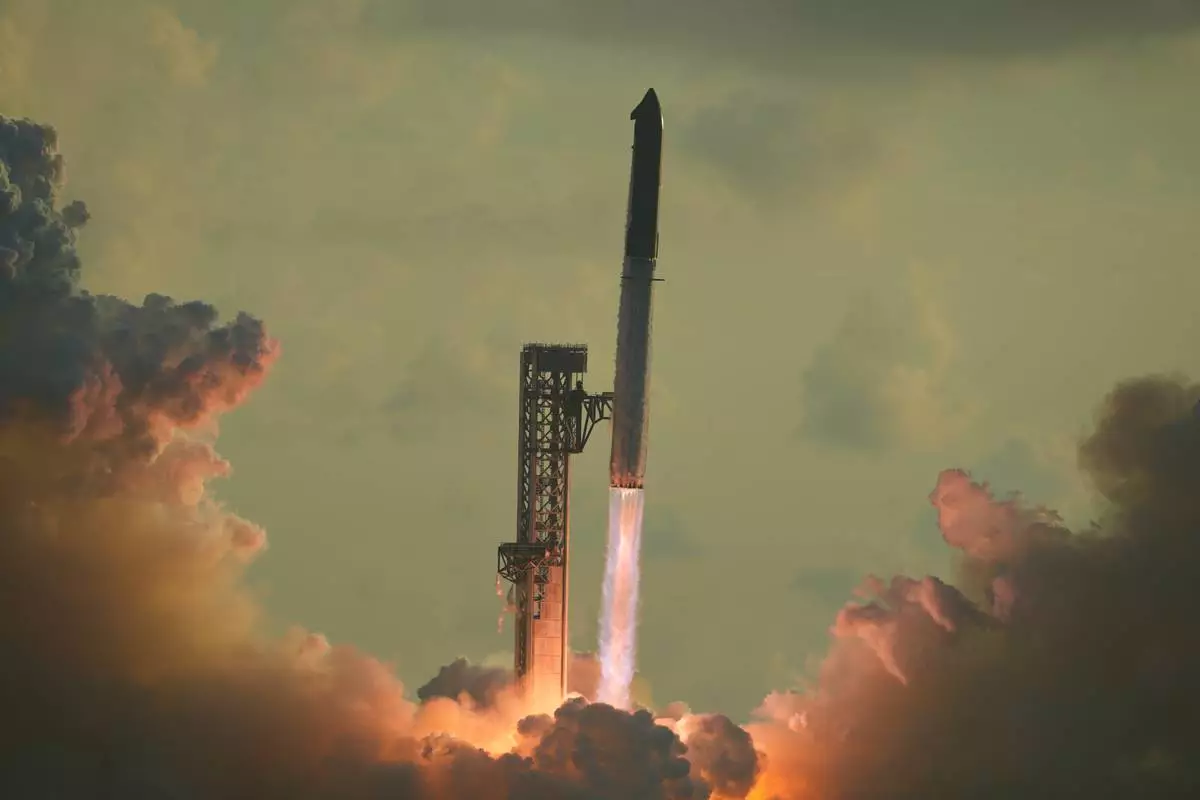
SpaceX's mega rocket Starship makes a test flight from Starbase, Texas, Monday, Sept. 28, 2026. (AP Photo/Eric Gay)
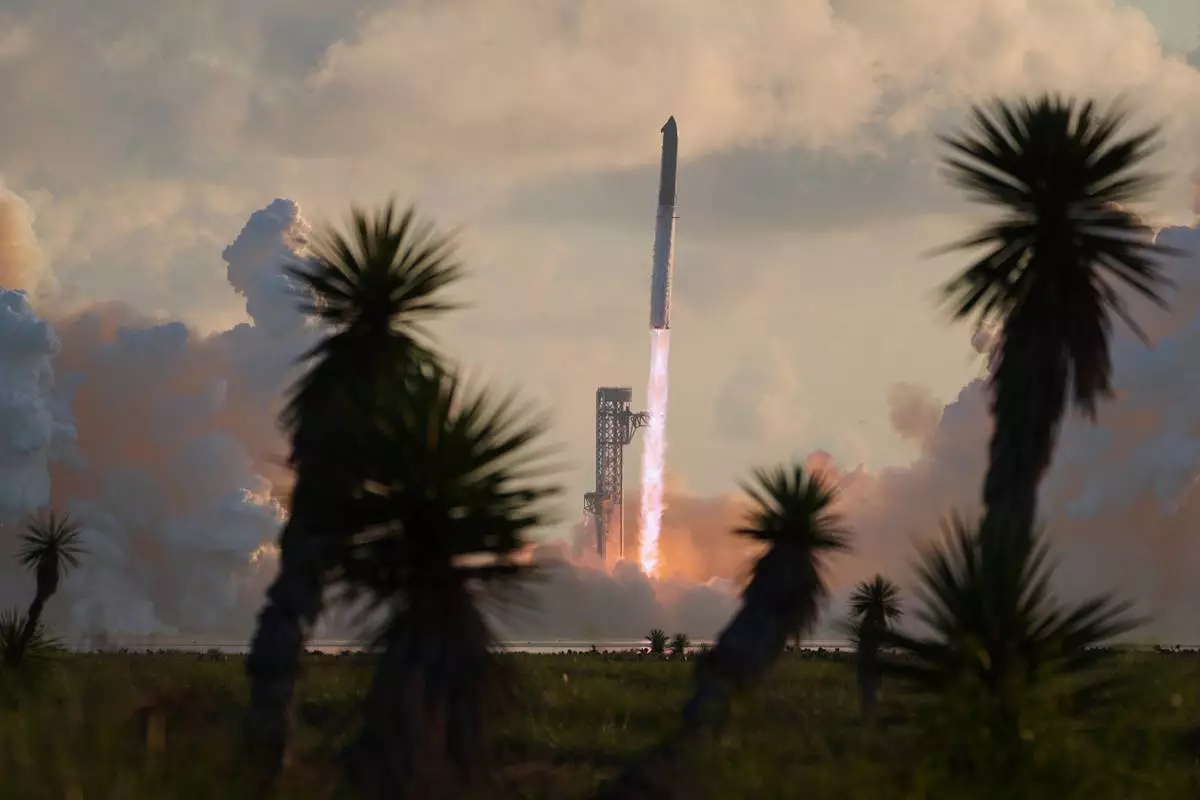
SpaceX's mega rocket Starship makes a test flight from Starbase, Texas, Monday, Sept. 28, 2026. (AP Photo/Eric Gay)
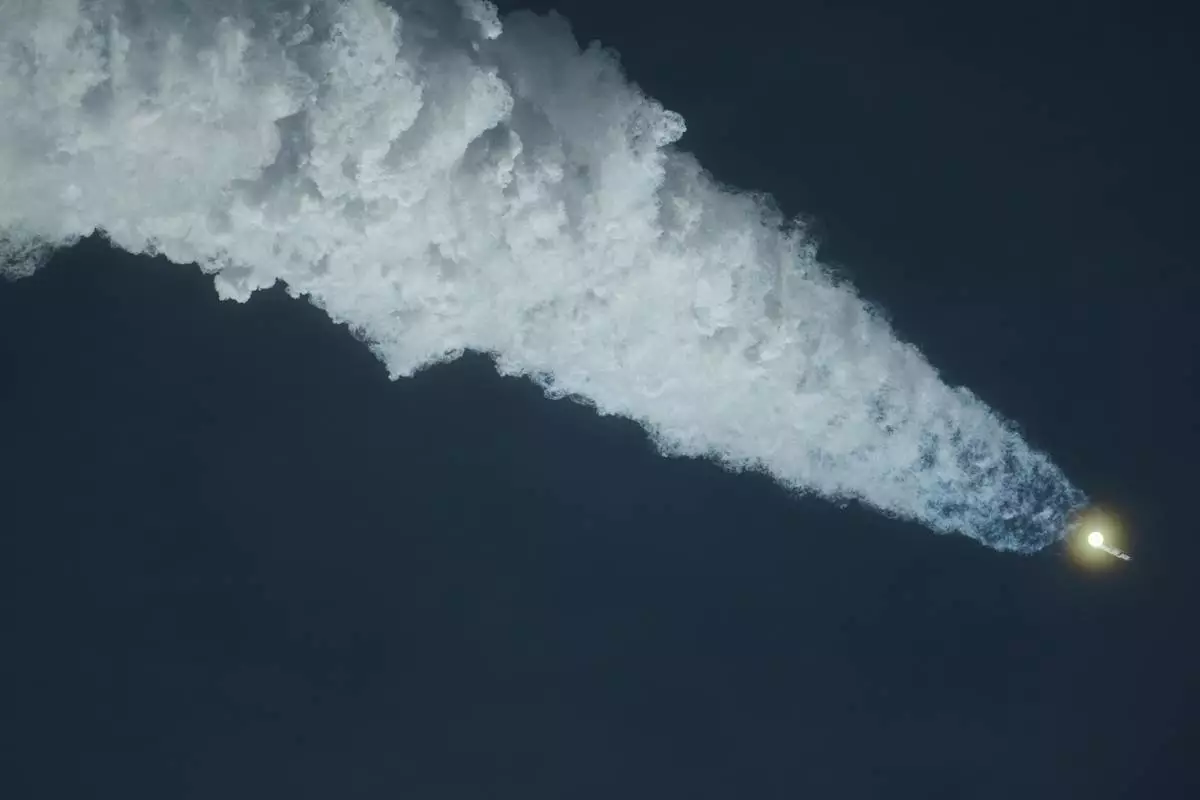
SpaceX's mega rocket Starship makes a test flight from Starbase, Texas, Monday, Sept. 28, 2026. (AP Photo/Eric Gay)
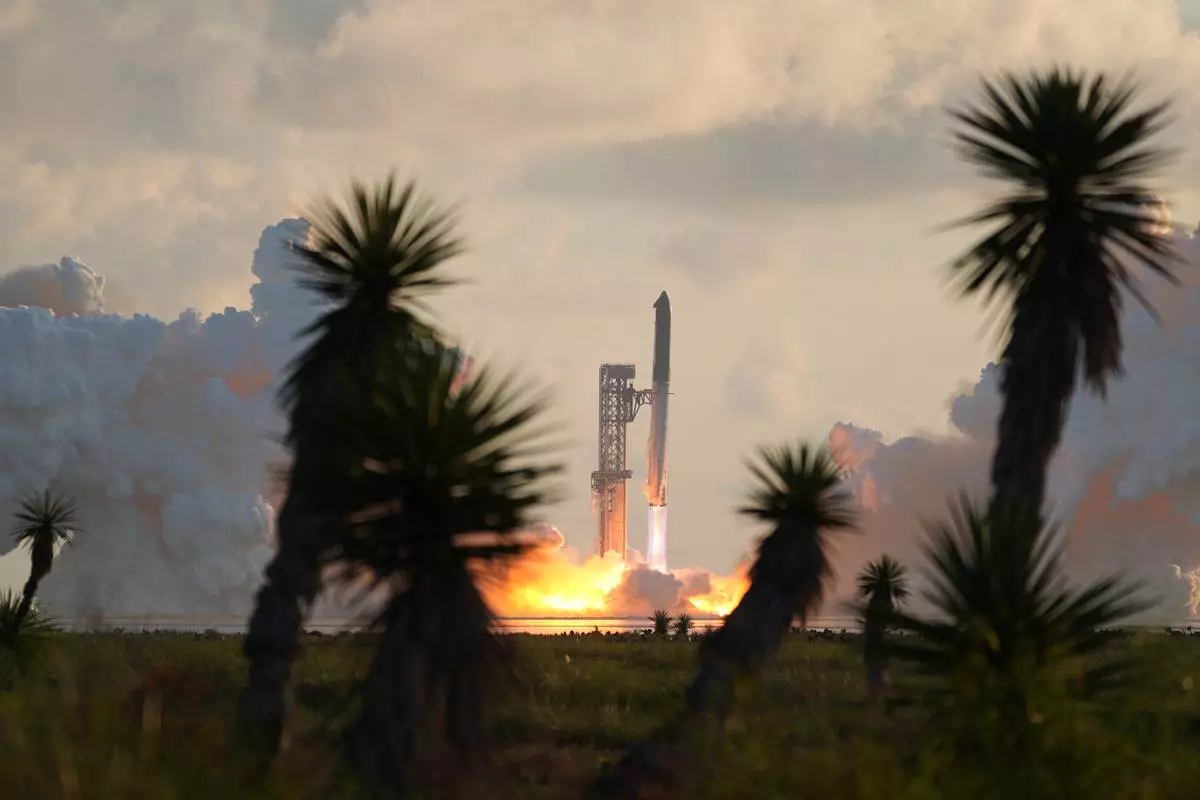
SpaceX's mega rocket Starship lifts off for a test flight from Starbase, Texas, Monday, Sept. 28, 2026. (AP Photo/Eric Gay)
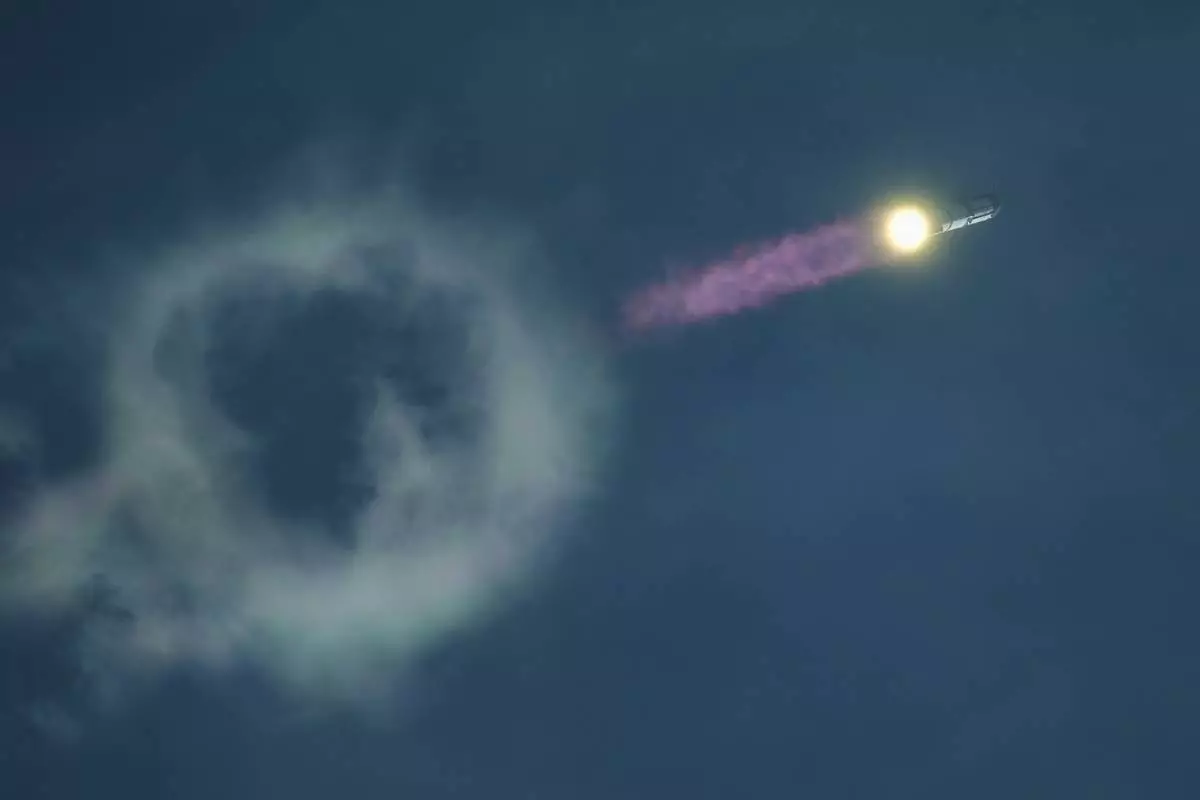
SpaceX's mega rocket Starship makes a test flight from Starbase, Texas, Monday, Sept. 28, 2026. (AP Photo/Eric Gay)
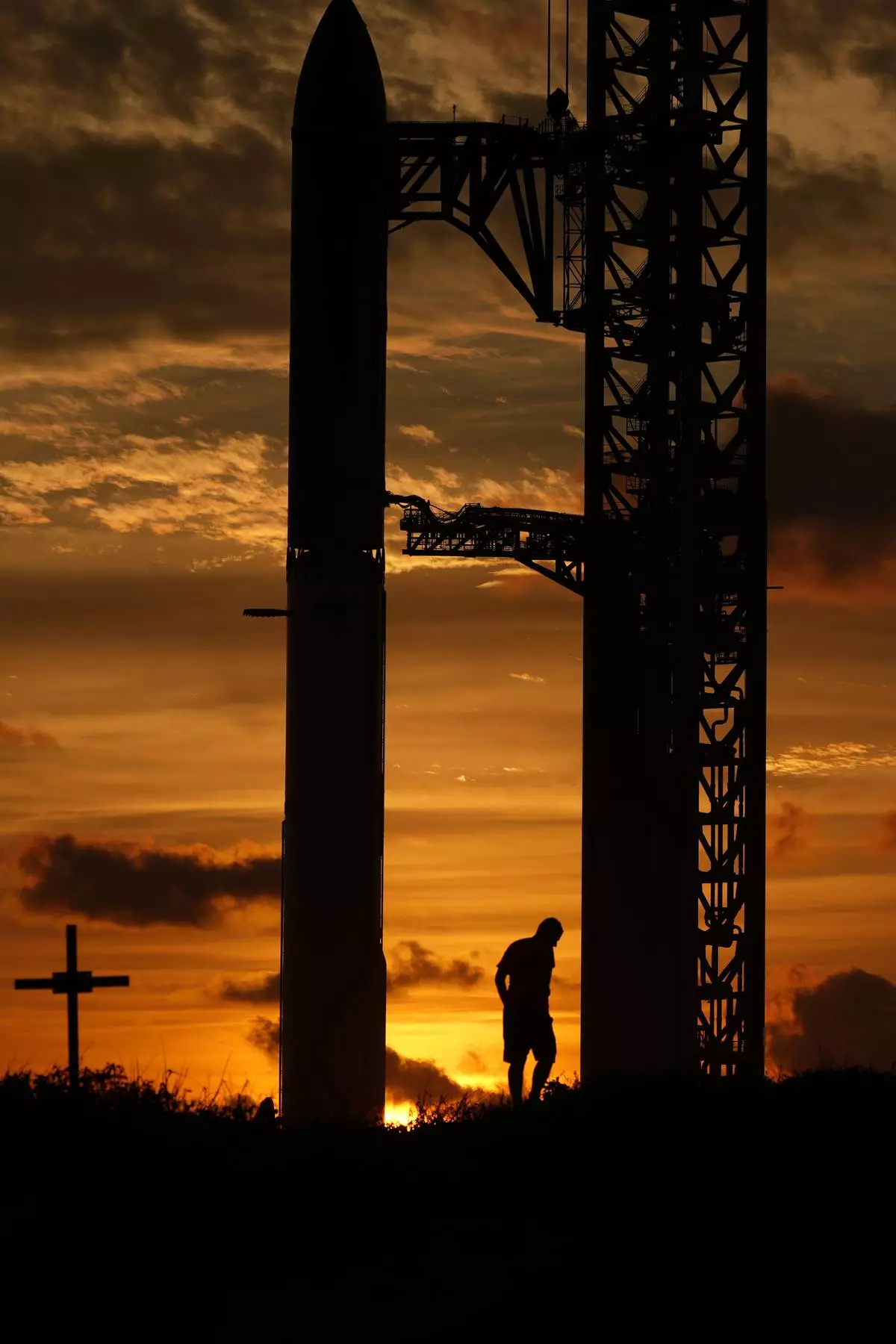
A man watches at sunset as SpaceX's mega rocket Starship is prepared for a test flight from Starbase, Texas, Sunday, Sept. 27, 2026. (AP Photo/Eric Gay)
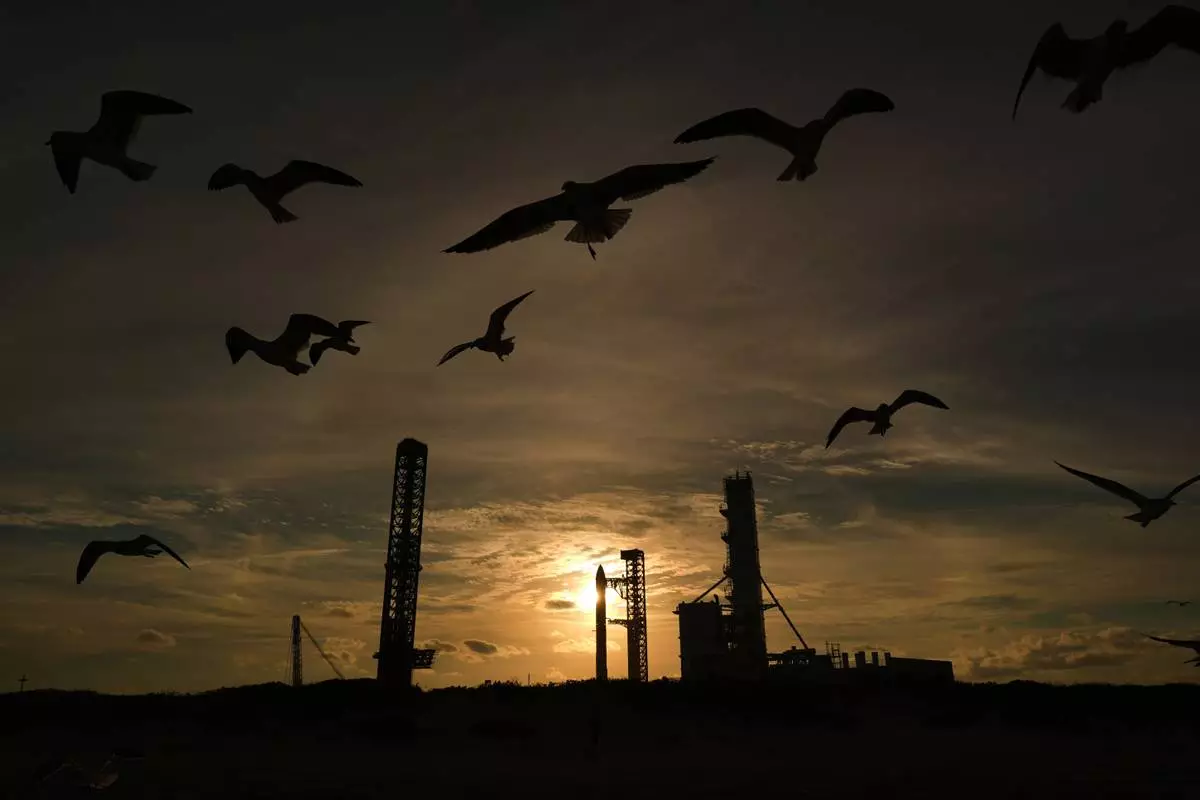
Seagulls fly near the site of SpaceX's mega rocket Starship as it is prepared for a test flight from Starbase, Texas, Sunday, Sept. 27, 2026. (AP Photo/Eric Gay)
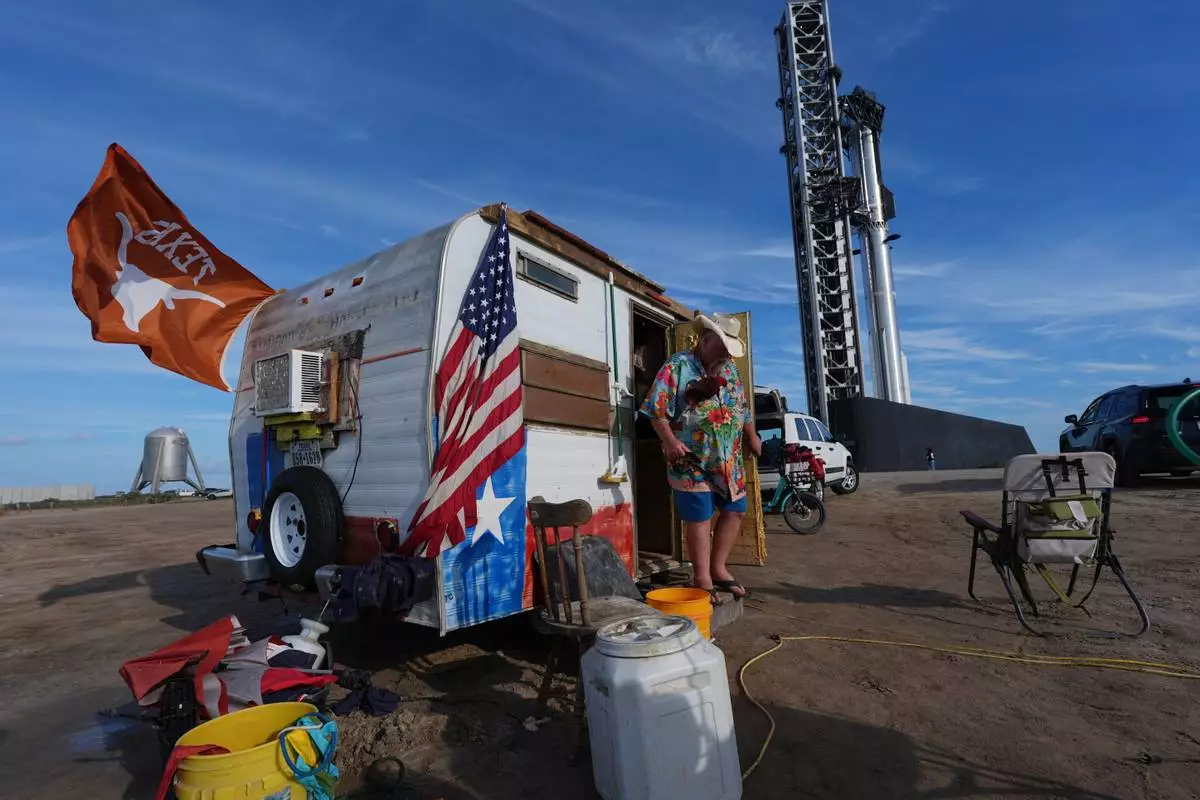
David Orr camps out near the site where SpaceX's mega rocket Starship, behind right, is preparing for a test flight from Starbase, Texas, Sunday, Sept. 27, 2026. (AP Photo/Eric Gay)
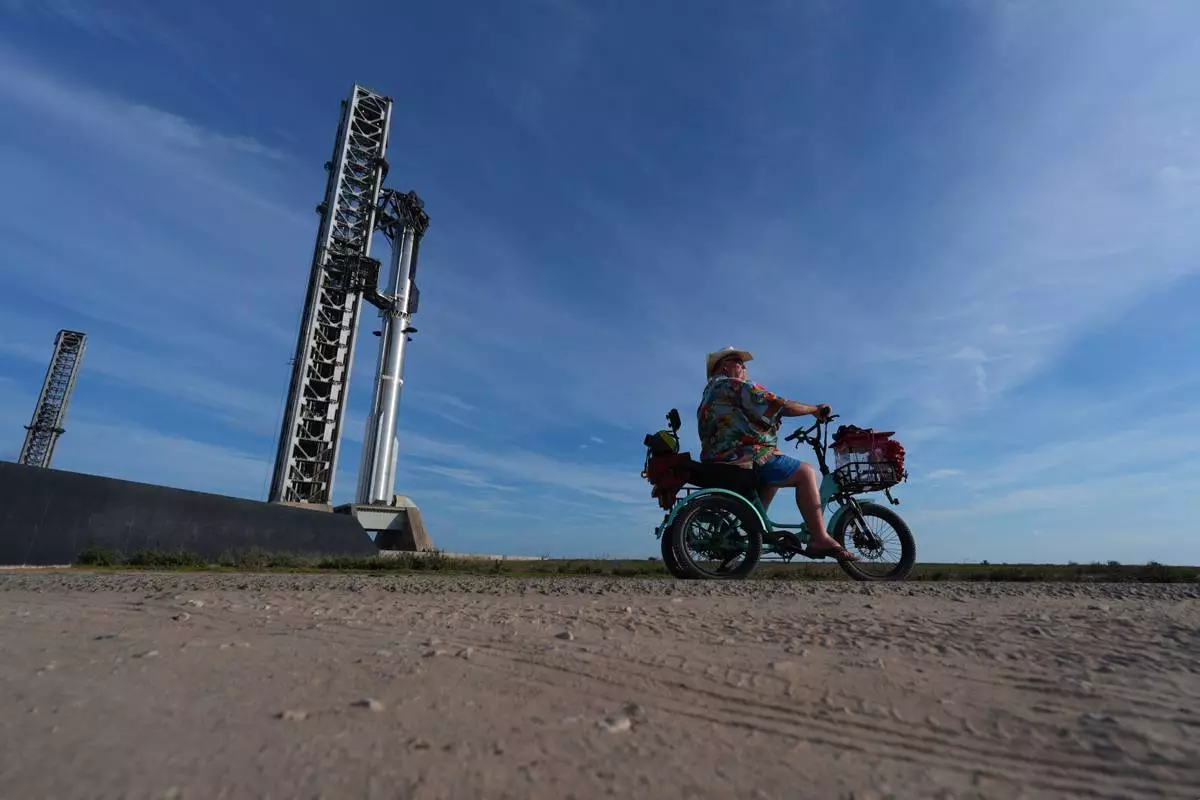
David Orr rides his bike past SpaceX's mega rocket Starship as it is prepared for a test flight from Starbase, Texas, Sunday, Sept. 27, 2026. (AP Photo/Eric Gay)