China's top political advisor Wang Huning met with Speaker of the New Zealand House of Representatives Gerry Brownlee in Beijing on Tuesday.
Wang, chairman of the Chinese People's Political Consultative Conference (CPPCC) National Committee, said that President Xi Jinping had an in-depth communication with Prime Minister Christopher Luxon last June, which provided new strategic guidance for the development of China-New Zealand relations.
China is willing to work with New Zealand to implement the important consensus reached by the leaders of the two countries, consolidate the political foundation for bilateral relations, firmly keep to the right direction of win-win cooperation, jointly practice true multilateralism, and promote the continuous development of the China-New Zealand comprehensive strategic partnership, Wang said, adding that the CPPCC stands ready to play a positive role in this regard.
Brownlee said the friendship between New Zealand and China has a long history, and the two countries trust each other and strive for win-win cooperation, hailing the rapid development and changes in China as impressive.
New Zealand adheres to the one-China principle and is willing to enhance cooperation with China in areas including trade, science and technology, environment, climate change, tourism and education, he said.
Brownlee said the New Zealand Parliament is ready to deepen exchanges with the Chinese side, enhance understanding of China, strengthen the cultural and people-to-people exchanges, and promote the development of New Zealand-China relations.
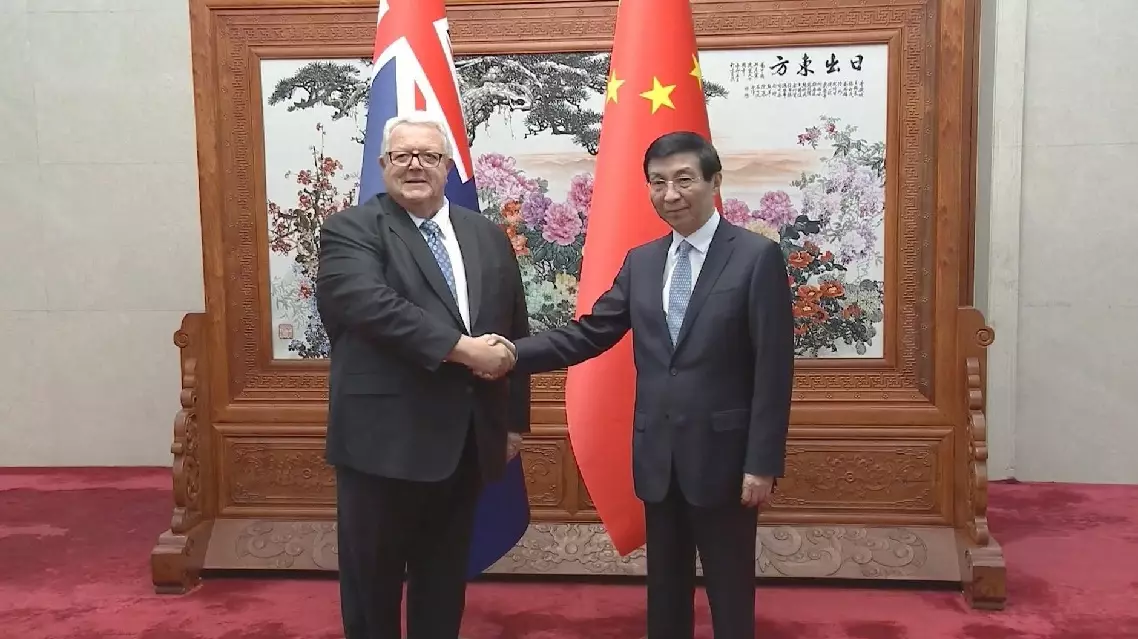
China's top political advisor meets New Zealand House of Representatives speaker
The China-Laos Railway marked the third anniversary of its international passenger service on Monday, having carried over 840,000 cross-border travelers.
The flagship project under the Belt and Road Initiative has made cross-border travel faster and more convenient, while reshaping regional connectivity.
Since April 2023, some 3,200 cross-border passenger trains have operated on the China-Laos Railway, servicing passengers from 120 countries and regions.
"Before the railway opened, traveling from Laos to China was quite difficult. Now taking the train makes everything much easier, whether it's for tourism, study, or business," said Phout, a Lao passenger.
"This is my first time taking the China-Laos Railway, and my favorite part about it is how easy it is to use, and I love how connected it makes the world feel," said Feili Johnson, an Australian Passenger. Currently, four international passenger trains run daily between Kunming in China and the Lao capital, Vientiane, with seating capacity increasing from 250 at launch to 420 per train.
Data from the operator shows that in the first quarter of this year, the railway handled 112,000 cross-border passengers, up 32 percent year on year.
With policies such as 240-hour visa-free transit now in place, cross-border travel has become significantly easier and more efficient for international travelers.
"I think it's very convenient with the visa-free arrival in China, because you can see the whole country. Instead of going for one single purpose, you're more free to do a little bit of what you want," said Gabriel Andersson, a Swedish traveler.
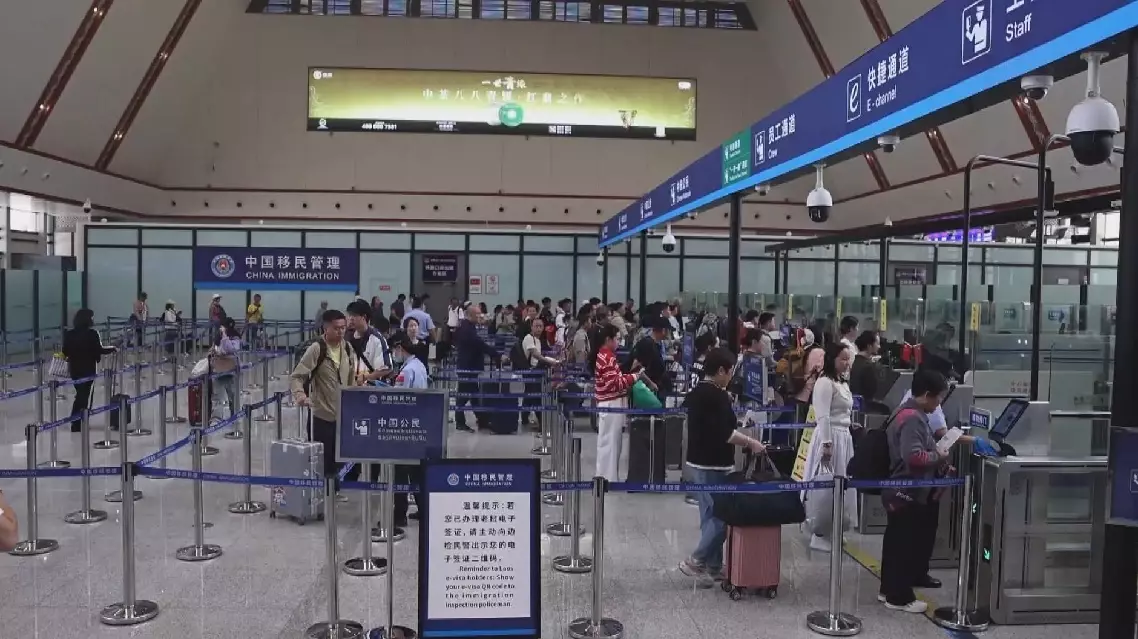
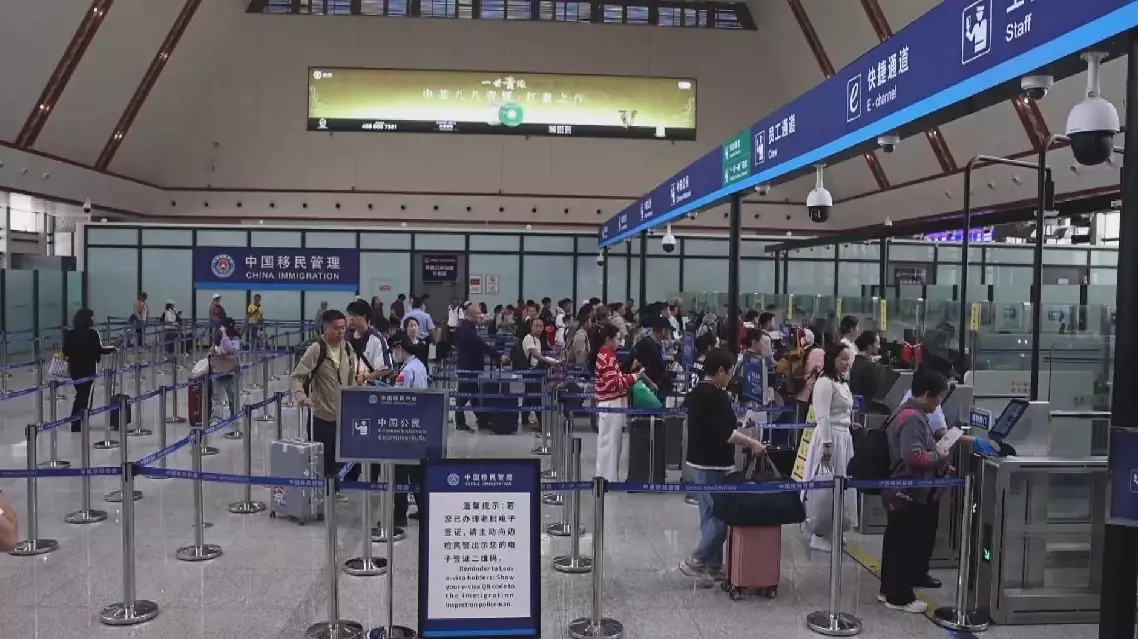
Adding to the convenience, immigration authorities have rolled out a range of measures to streamline border clearance. At the Mohan railway port, processing time has now been reduced to around 50 minutes.
"We've introduced more than a dozen measures to facilitate customs clearance, such as passenger classification and diversion, group booking for clearance, establishment of special channels for 240-hour visa-free transit, and pre-arrival entry card service," said Yang Xueqin, an officer from Mohan Immigration Inspection Station.
The port has also adopted smart technologies, including automated verification systems and real-time translation devices, cutting inspection time by more than 30 percent, Yang said.
With a steady rise in cross-border travelers, tourism in cities along the route — such as Xishuangbanna and Luang Prabang — is experiencing robust growth. As further facilitation measures advance between the two countries, the railway corridor is expected to unlock even greater vitality for regional tourism and economic exchanges.
China-Laos Railway marks three years of cross-border passenger services
China-Laos Railway marks three years of cross-border passenger services