The United States said no vessels broke through its blockade of Iranian ports in the initial 24 hours, while maritime analysts report that a limited number of vessels continued to transit the Strait of Hormuz.
U.S. forces began implementing a blockade of "all maritime traffic entering and exiting Iranian ports" on Monday at 10:00 Eastern Time (14:00 GMT), covering areas in the Gulf of Oman and the eastern Arabian Sea adjacent to the Strait of Hormuz.
U.S. Central Command (CENTCOM) stated on Tuesday via social media that no vessels breached the U.S. blockade during the first 24 hours of enforcement.
CENTCOM added that six merchant vessels complied with instructions from U.S. forces and turned back to Iranian ports in the Gulf of Oman.
According to two U.S. officials, any Iran-related vessels seized during the blockade will be moved to temporary holding areas in the Arabian Sea or Indian Ocean until a permanent location is determined.
The officials also indicated that while the U.S. military may use drones against Iranian Islamic Revolutionary Guard Corps fast boats, there are currently no plans to fire at oil tankers departing Iranian ports.
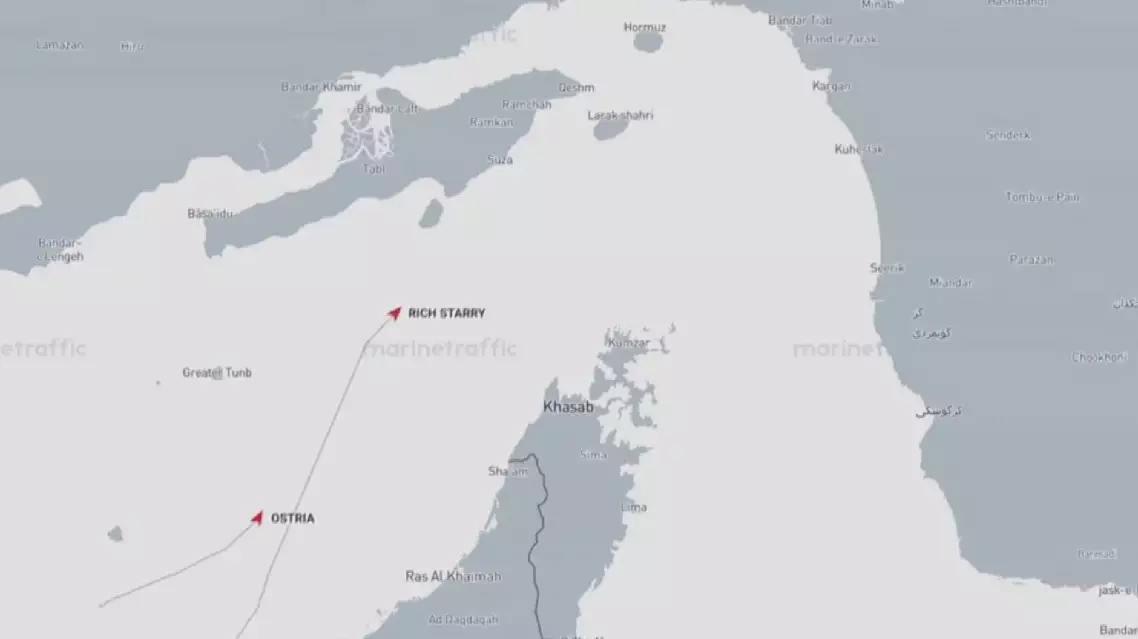
Meanwhile, British maritime intelligence company Windward released a report on Tuesday stating that navigation through the Strait of Hormuz has not completely halted despite the U.S. blockade.
The firm observed unusual vessel behaviors, including ships turning away, switching off their automatic identification systems, and reducing speed, which are signs that vessels are reassessing routes due to heightened risks.
Shipping analytics firm Kpler said at least nine merchant vessels passed through the Strait of Hormuz since the blockade began.
Before the recent U.S. and Israeli military strikes on Iran, more than 100 vessels transited the Strait of Hormuz each day. Current traffic has fallen to less than 10 percent of that level, according to shipping data.
The U.S. blockade aims to prevent ships traveling to and from Iranian ports from transiting the Strait of Hormuz. It took effect after peace talks between the Iranian and U.S. delegations in Pakistan's capital Islamabad failed to reach a consensus late last week.
On Feb. 28, Israel and the U.S. launched joint attacks on Tehran and several other Iranian cities, killing Iran's then Supreme Leader Ali Khamenei, along with senior military commanders and civilians.
Iran responded with waves of missile and drone strikes targeting Israel and U.S. assets in the Middle East, and tightened control over the Strait of Hormuz by restricting passage by vessels belonging to or affiliated with Israel and the United States.
U.S. says zero vessels broke Hormuz blockade in first 24 hours, UK maritime firm reports limited passages