LONDON (AP) — Fans of William Shakespeare know that the great playwright came from Stratford-upon-Avon, the riverside English town where tourists still throng to see his childhood home.
But he made his name in London — though few traces of him remain in the British capital.
A newly discovered 17th-century map sheds new light on the Bard’s London life, pinpointing for the first time the exact location of the only home Shakespeare bought in the city, and where he may have worked on his final plays.
Shakespeare scholar Lucy Munro, who found the document, said that it supplies “extra bits of the jigsaw puzzle” of Shakespeare's life. And as with so many discoveries, it was partly due to luck.
“I came across it in the London Archives when I was looking for other things," Munro said.
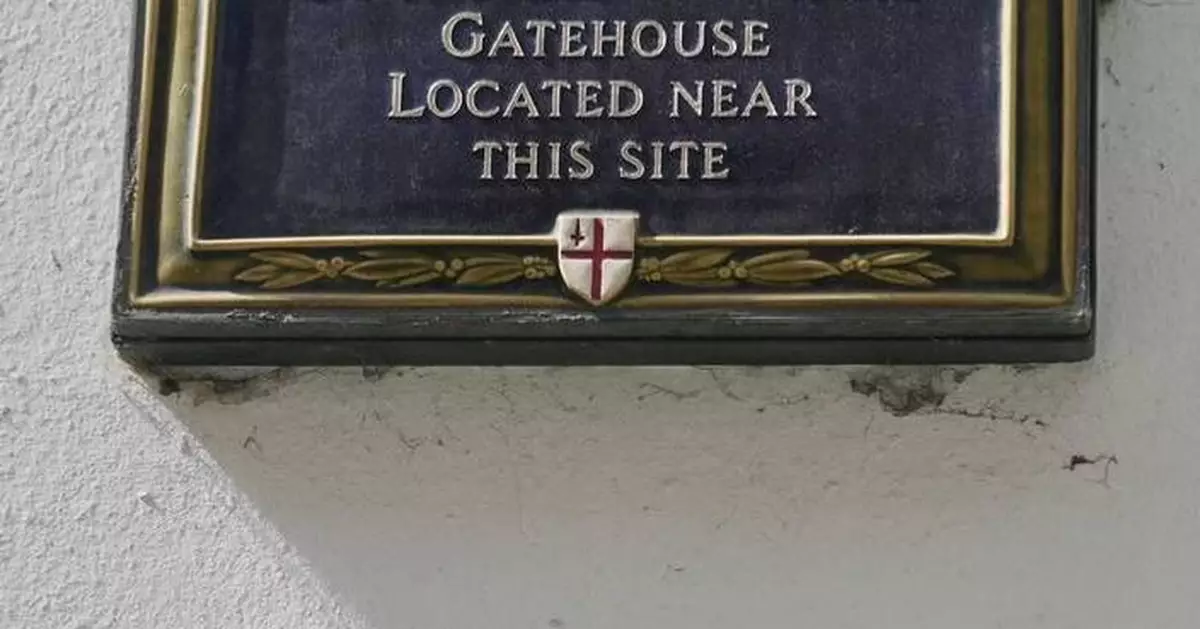
Historians have long known that Shakespeare bought property in 1613 near the Blackfriars Theatre, but the exact location was a mystery. A plaque on a 19th-century building records only that the playwright had lodgings “near this site.”
A plan of the Blackfriars precinct found by Munro and disclosed Thursday by King's College London shows in detail Shakespeare’s house, a substantial L-shaped dwelling carved from a former medieval monastery, including its gatehouse.
The 13th-century Dominican friary had been redeveloped for more secular uses after the dissolution of the monasteries by King Henry VIII in the mid-16th century. The precinct included the Blackfriars playhouse, which Shakespeare part-owned.
Munro, professor of Shakespeare and early modern literature at King’s College London, said it was a desirable area moving slightly down-market – due to people like Shakespeare, who was affluent but associated with the slightly déclassé world of the stage.
“After the dissolution of the monasteries, a lot of the nobility, quite high-ranking courtiers, court officials are living in the Blackfriars,” Munro said. By the time Shakespeare bought his property, “there are still a lot of important people living there, people who make protests against the playhouses at various points, because they see the playhouses as a bit of a public nuisance.”
Shakespeare used the profits of his plays to build a fine family house, now demolished, in Stratford, about 100 miles (160 kilometers) northwest of London. He died there in 1616 at the age of 52.
It’s not certain whether Shakespeare lived in his London property or just rented it out. But Munro said that the size of the house and its location a five-minute walk from the Blackfriars Theatre suggest he may have spent more time in London toward the end of his life than is widely assumed. She said that he may have worked here on his final plays, “Henry VIII” and “The Two Noble Kinsmen,” both co-written with John Fletcher.
Will Tosh, director of education at Shakespeare’s Globe — a reconstruction of the open-air Elizabethan playhouse where many of the Bard’s plays were first performed — said that Munro’s discovery provides a “dazzling new sense of Shakespeare the London writer. She’s helped us to understand how much the city meant to our greatest ever dramatist, as a professional and personal home.”
Shakespeare left the property to his daughter Susanna, and it remained in the family for another half-century. Munro also found two archival documents detailing its sale by the playwright’s granddaughter Elizabeth Hall Nash Barnard in 1665. A year later, the building burned to the ground in the Great Fire of London, which destroyed much of the medieval city.
Only a few remnants of Shakespeare’s London remain in the area, now part of the city's financial district, including a fragment of wall from the medieval friary. Nearby, the name Playhouse Yard is a reminder that a theater once stood here.
And visitors can have a pint in the Cockpit pub across the street from the site of Shakespeare’s house. The 1600s map shows it as a building called the Sign of the Cock, likely a tavern. It’s not difficult to imagine Shakespeare and his colleagues carousing there.
“There are certainly complaints in the period about the playhouses leading to the opening of more and more drinking houses — ‘houses for tippling,’ as they call them in one of the documents I was looking at,” Munro said.
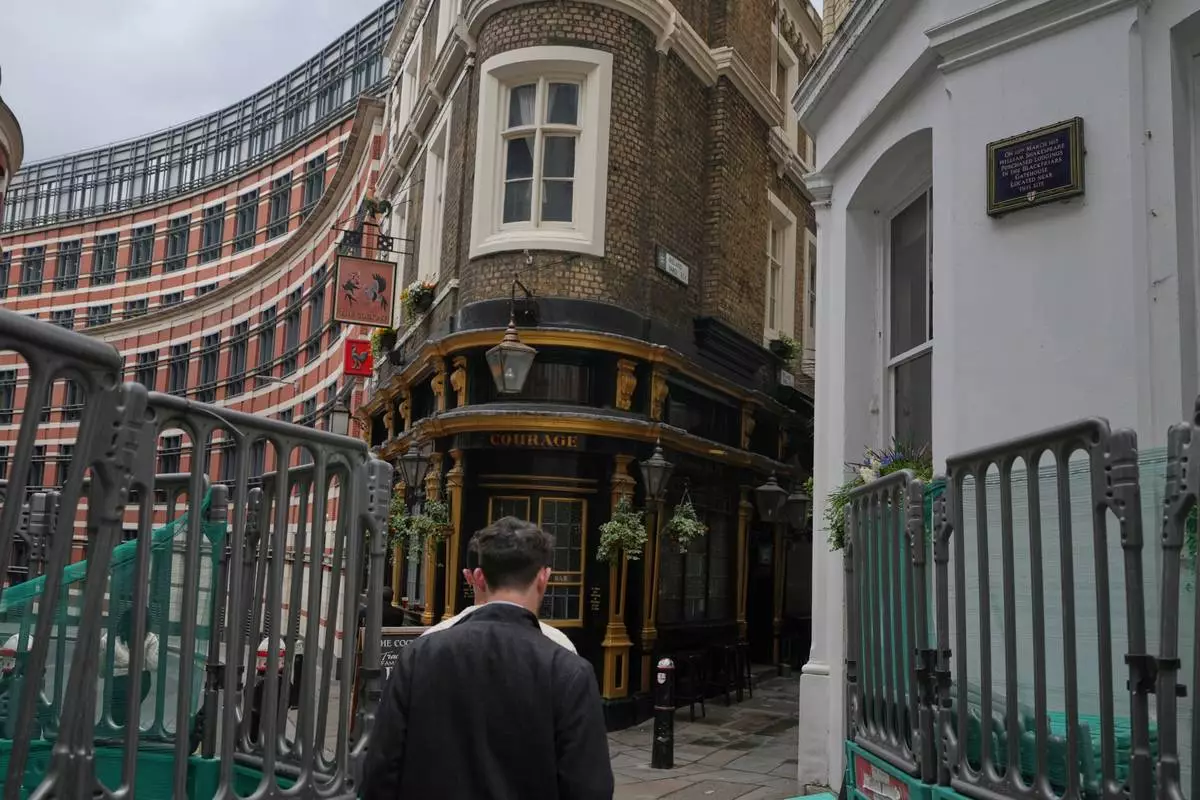
A plaque erected by the City of London to commemorate where William Shakespeare lived on a wall, top right, is pictured in London, Wednesday, April 15, 2026, he purchased lodgings in the Blackfriars Gatehouse, which was located close by. (AP Photo/Alastair Grant)
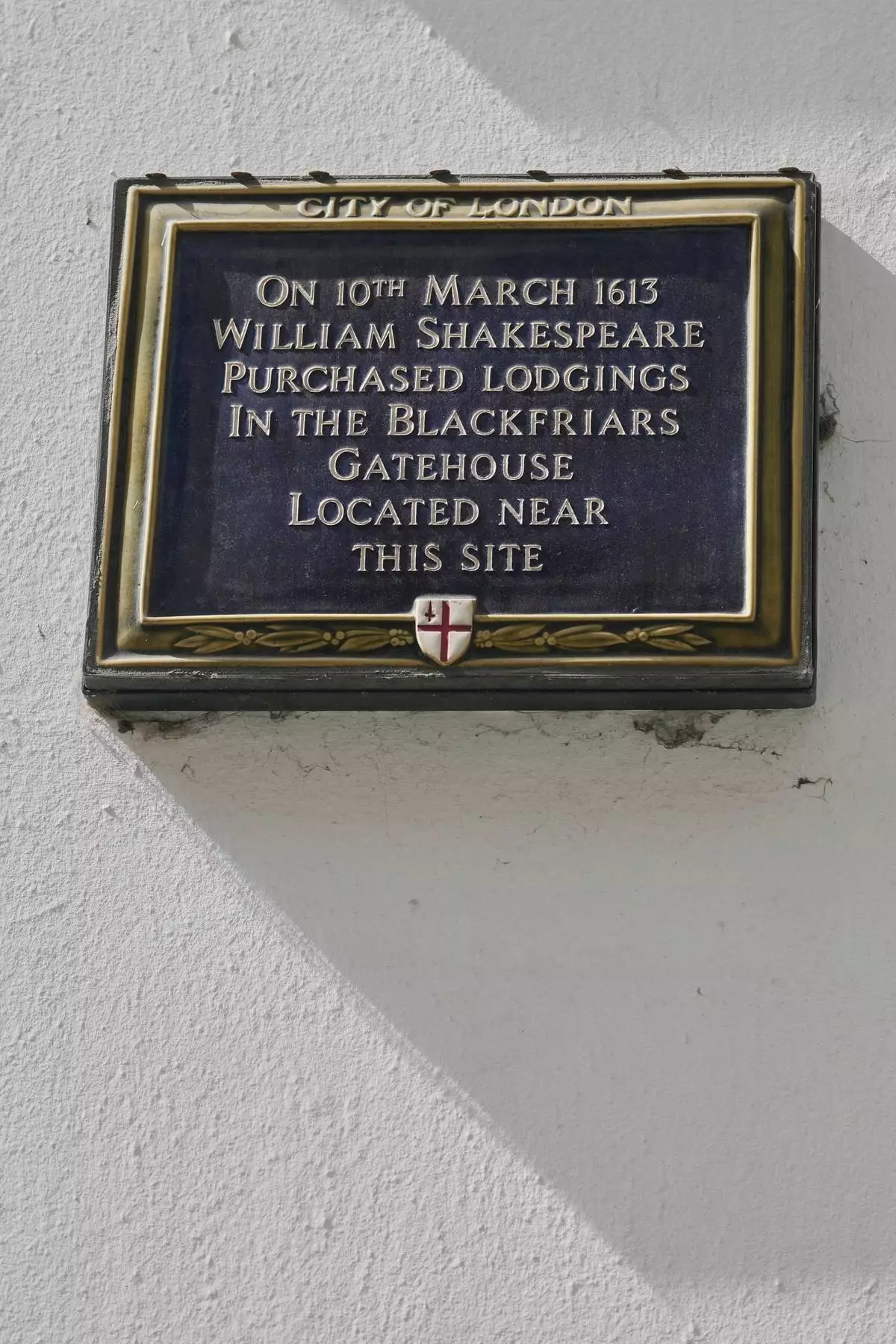
A plaque erected by the City of London to commemorate where William Shakespeare lived on a wall is pictured inLondon, Wednesday, April 15, 2026 he purchased lodgings in the Blackfriars Gatehouse, which was located close by. (AP Photo/Alastair Grant)

NEW YORK (AP) — A jury found Wednesday that entertainment giant Live Nation, which hosts tens of thousands of concerts a year, and its Ticketmaster subsidiary had a harmful monopoly over big venues.
The ruling, in a lawsuit brought by dozens of states, won’t immediately bring relief for concertgoers who have long complained about high ticket prices. But it could cost Live Nation hundreds of millions of dollars and perhaps force the company to sell some of its concert venues when the judge hands out penalties later.
Among other things, the jury found Ticketmaster's anticompetitive practices led to people in 22 states paying an extra $1.72 per ticket, which the judge could order the companies to pay back.
A jury in New York deliberated for four days before reaching its decision. State attorneys general who sued Live Nation said the verdict could potentially lead to lower ticket prices for music fans.
Live Nation said in a statement that the verdict “is not the last word on this matter.”
The company predicted that once a remedy phase of the litigation is completed before the judge and all appeals are resolved, the outcome likely won't be much different from what the federal government achieved with a settlement it reached with the company just after the trial began.
That deal included a cap on service fees at some amphitheaters, plus some new ticket-selling options for promoters and venues — potentially allowing, but not requiring, them to open doors to Ticketmaster competitors such as SeatGeek or AXS.
The trial gave fans the equivalent of a backstage pass to a business that dominates live entertainment in the U.S. and beyond.
Live Nation CEO Michael Rapino testified, answering questions about matters including the company’s Taylor Swift ticket debacle in 2022. Rapino blamed a cyberattack.
Jurors also got to see a Live Nation employee’s internal messages to another employee declaring some prices “outrageous,” calling customers “so stupid” and boasting that the company was “robbing them blind, baby.” The employee, Benjamin Baker, who has since been promoted to a position as a ticketing executive, apologetically testified that the messages were “very immature and unacceptable.”
Live Nation Entertainment owns, operates, controls booking for or has an equity interest in hundreds of venues. Its subsidiary Ticketmaster is widely considered to be the world’s largest ticket-seller for live events.
The verdict could cost Live Nation and Ticketmaster hundreds of millions of dollars, based on the jury's estimate that customers paid an extra $1.72 per ticket. The companies could also be assessed penalties. In addition, sanctions could result in court orders that they divest themselves of some entities, including venues such as amphitheaters that they own.
In its statement, Live Nation said the jury's award of $1.72 per ticket applied to “a limited number of tickets” sold at 257 venues and representing about 20% of total tickets sold. The company estimated the aggregate single damages figure would be below $150 million, though it would be trebled.
The civil case, initially led by the U.S. government, accused Live Nation of using its reach to smother competition — by blocking venues from using multiple ticket sellers, for example.
Live Nation insisted it is not a monopoly, saying that artists, sports teams and venues decide prices and ticketing practices. A company lawyer said its size was simply a function of excellence and effort.
“Success is not against the antitrust laws in the United States,” attorney David Marriott said in his summation.
Ticketmaster was established in 1976 and merged with Live Nation in 2010. The company now controls of 86% of the market for concerts and 73% of the overall market when sports events are included, according to an attorney for the states, Jeffrey Kessler.
Ticketmaster has long drawn ire from fans and some artists. Grunge rock titans Pearl Jam battled the business in the 1990s, even filing an anti-monopoly complaint with the U.S. Department of Justice, which declined to bring a case then.
Decades later, the Justice Department, joined by dozens of states, brought the current lawsuit during Democratic former President Joe Biden's administration.
Days into the trial, Republican President Donald Trump's administration announced it was settling its claims against Live Nation.
A handful of the states joined the settlement. But more than 30 pressed ahead with the trial, saying the federal government hadn't gotten enough concessions.
New Jersey Attorney General Jennifer Davenport said in a release after the verdict that Live Nation's “illegal, anti-competitive practices” had driven up ticket prices and made it harder for fans to see their favorite acts.
New York Attorney General Letitia James called the verdict “a landmark victory.”
After the victory, Kessler would not say specifically what the states will seek in the next phase of the litigation, which was expected to involve another lengthy legal proceeding before penalties are decided.
But he celebrated the moment.
“It’s a great day for consumers," he said.
FILE - The Ticketmaster logo is seen along the sideline of the field before an NFL football game, Sept. 15, 2024, in Jacksonville, Fla. (AP Photo/Phelan M. Ebenhack, File)