NEW YORK (AP) — Los Angeles Angels slugger Jorge Soler began serving a four-game suspension Wednesday night against the New York Yankees after his penalty for getting into a fight with Atlanta Braves pitcher Reynaldo López was reduced.
Hours earlier, Soler's punishment was cut by three games in an agreement between Major League Baseball and the Major League Baseball Players Association.
“Obviously, Jorgie’s been swinging the bat really hot now, so it’s unfortunate that we have to miss him for four games,” Angels manager Kurt Suzuki said at Yankee Stadium. “But, you know, it is what it is and we have to deal with it. And we definitely will be waiting for him to come back.”
Both players were initially suspended seven games and fined by MLB last week after they got into a brawl on the field and were ejected from a game between the Braves and Angels in Anaheim, California.
Each player appealed, and an agreement was quickly reached between MLB and the MLBPA that trimmed López’s ban to five games. That penalty took effect immediately, and López was able to make his scheduled next start Tuesday against Miami thanks to an off day in Atlanta's schedule.
Soler is batting .231 with five homers, 18 RBIs and an .849 OPS. He went deep Tuesday night, the last of three straight solo homers by the Angels in the first inning of a 7-1 victory at Yankee Stadium.
The 34-year-old Soler had started all 18 games for the Angels this season — 15 at designated hitter and three in right field.
Third baseman Yoán Moncada was the DH on Wednesday night, with Oswald Peraza at the hot corner. Right fielder Jo Adell moved into Soler's cleanup spot in the lineup, and the Angels were forced by rule to play a man short on the bench.
“I just try to tell ’em wherever they are in the lineup, just be themselves,” Suzuki said. “I think sometimes you can tend to overdo things if you’re in that spot or mentality, but I think Jo’s at a place now where he’s comfortable with what he’s doing. He knows what he has to do. He knows just being himself is plenty.”
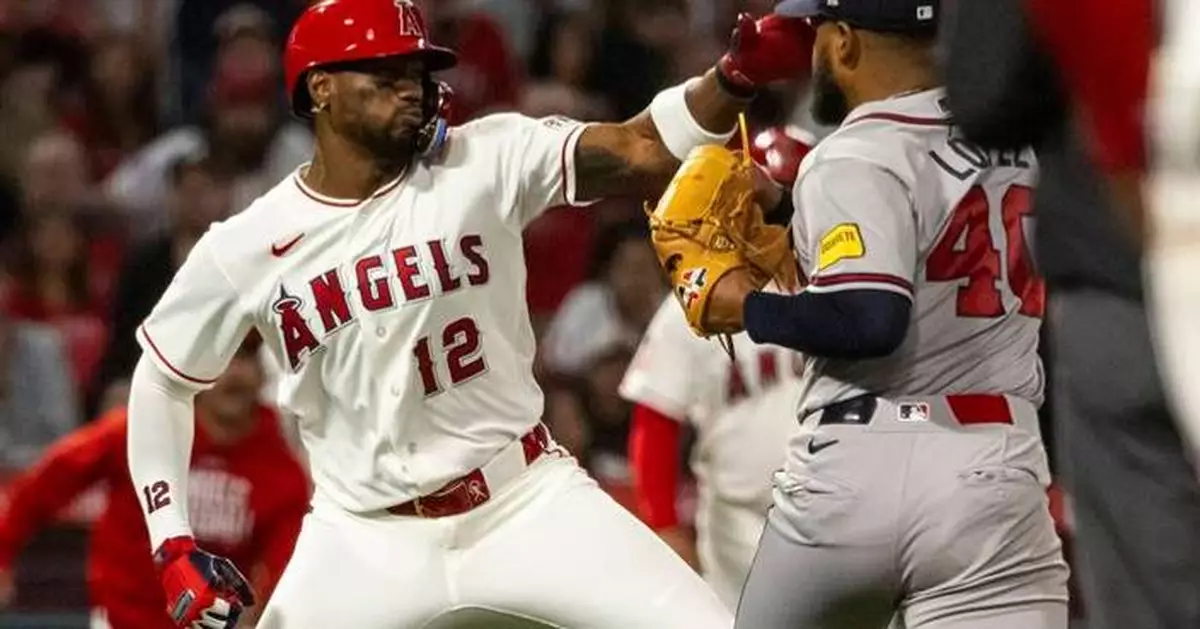
Soler homered off López in the first inning April 7, then was hit by a 96 mph fastball from the right-hander his next time up. In the fifth, Soler charged the mound after López threw a high-and-inside wild pitch that tipped off catcher Jonah Heim’s mitt.
At first, López held up his hands as the two glared at each other before both started throwing punches.
“I asked him if everything was OK and the answer he gave me, I didn’t like it,” Soler said that night through an interpreter, according to MLB.com. “That’s why I went out there.”
The benches and bullpens emptied as players from both teams tried to separate the two. Atlanta manager Walt Weiss was among those who tackled Soler, the 2021 World Series MVP with the Braves.
López was still holding the baseball when he landed a punch on Soler’s batting helmet. The two were teammates in Atlanta during the second half of the 2024 season, and López said through an interpreter there was “never any intent” to plunk Soler.
Atlanta led 4-2 when the fight occurred and went on to a 7-2 victory.
Soler’s two-run shot in the first inning made him 14 for 23 with five homers and three doubles against López.
AP MLB: https://apnews.com/hub/mlb
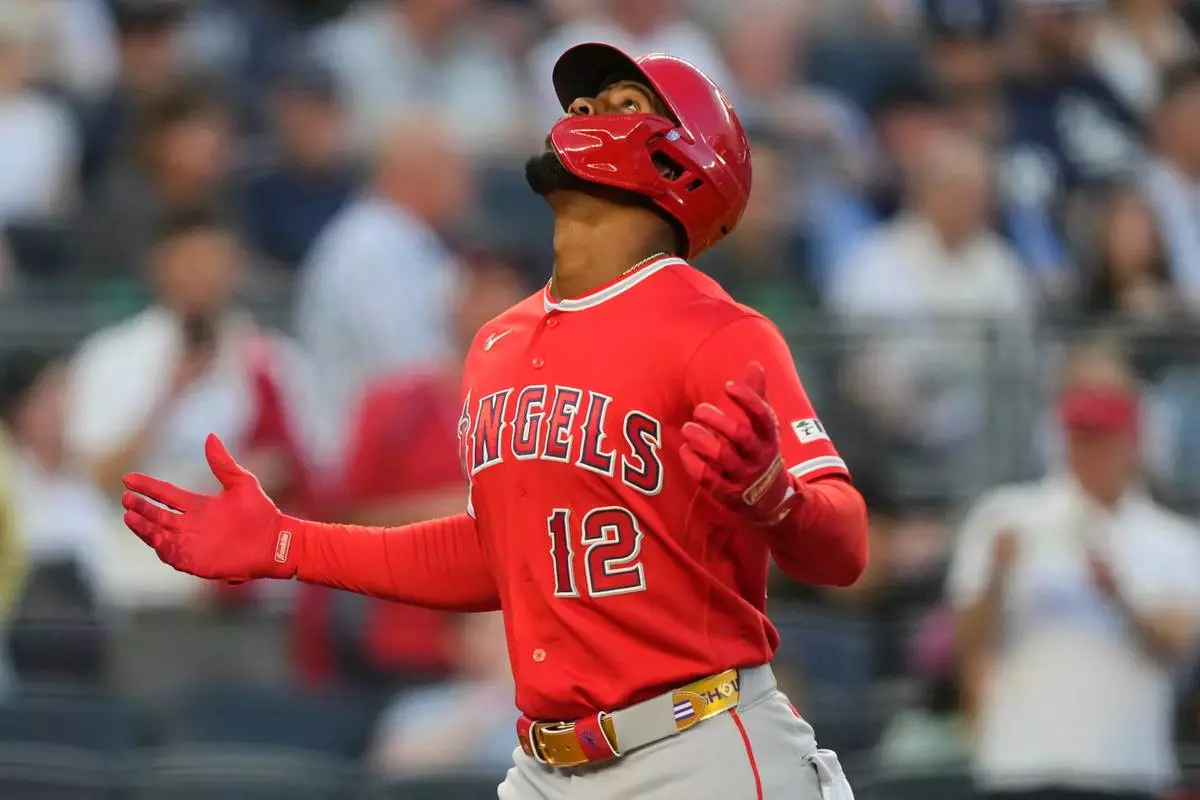
Los Angeles Angels' Jorge Soler (12) reacts after hitting a home run during the first inning of a baseball game against the New York Yankees , Tuesday, April 14, 2026, in New York. (AP Photo/Yuki Iwamura)
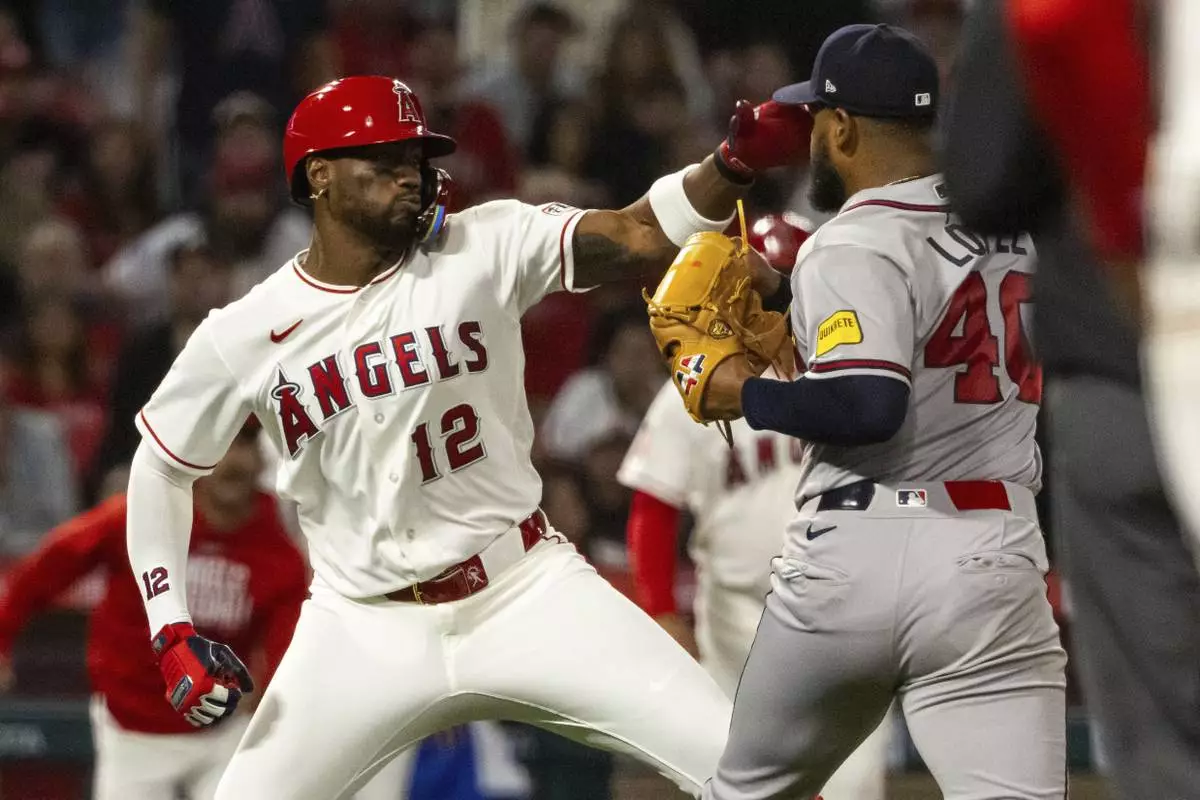
Los Angeles Angels' Jorge Soler (12) and Atlanta Braves' Reynaldo López (40) fight during the fifth inning of a baseball game, Tuesday, April 7, 2026, in Anaheim, Calif. (AP Photo/Ethan Swope)
NEW YORK (AP) — A jury found Wednesday that entertainment giant Live Nation, which hosts tens of thousands of concerts a year, and its Ticketmaster subsidiary had a harmful monopoly over big venues.
The ruling, in a lawsuit brought by dozens of states, won’t immediately bring relief for concertgoers who have long complained about high ticket prices. But it could cost Live Nation hundreds of millions of dollars and perhaps force the company to sell some of its concert venues when the judge hands out penalties later.
Among other things, the jury found Ticketmaster's anticompetitive practices led to people in 22 states paying an extra $1.72 per ticket, which the judge could order the companies to pay back.
A jury in New York deliberated for four days before reaching its decision. State attorneys general who sued Live Nation said the verdict could potentially lead to lower ticket prices for music fans.
Live Nation said in a statement that the verdict “is not the last word on this matter.”
The company predicted that once a remedy phase of the litigation is completed before the judge and all appeals are resolved, the outcome likely won't be much different from what the federal government achieved with a settlement it reached with the company just after the trial began.
That deal included a cap on service fees at some amphitheaters, plus some new ticket-selling options for promoters and venues — potentially allowing, but not requiring, them to open doors to Ticketmaster competitors such as SeatGeek or AXS.
The trial gave fans the equivalent of a backstage pass to a business that dominates live entertainment in the U.S. and beyond.
Live Nation CEO Michael Rapino testified, answering questions about matters including the company’s Taylor Swift ticket debacle in 2022. Rapino blamed a cyberattack.
Jurors also got to see a Live Nation employee’s internal messages to another employee declaring some prices “outrageous,” calling customers “so stupid” and boasting that the company was “robbing them blind, baby.” The employee, Benjamin Baker, who has since been promoted to a position as a ticketing executive, apologetically testified that the messages were “very immature and unacceptable.”
Live Nation Entertainment owns, operates, controls booking for or has an equity interest in hundreds of venues. Its subsidiary Ticketmaster is widely considered to be the world’s largest ticket-seller for live events.
The verdict could cost Live Nation and Ticketmaster hundreds of millions of dollars, based on the jury's estimate that customers paid an extra $1.72 per ticket. The companies could also be assessed penalties. In addition, sanctions could result in court orders that they divest themselves of some entities, including venues such as amphitheaters that they own.
In its statement, Live Nation said the jury's award of $1.72 per ticket applied to “a limited number of tickets” sold at 257 venues and representing about 20% of total tickets sold. The company estimated the aggregate single damages figure would be below $150 million, though it would be trebled.
The civil case, initially led by the U.S. government, accused Live Nation of using its reach to smother competition — by blocking venues from using multiple ticket sellers, for example.
Live Nation insisted it is not a monopoly, saying that artists, sports teams and venues decide prices and ticketing practices. A company lawyer said its size was simply a function of excellence and effort.
“Success is not against the antitrust laws in the United States,” attorney David Marriott said in his summation.
Ticketmaster was established in 1976 and merged with Live Nation in 2010. The company now controls of 86% of the market for concerts and 73% of the overall market when sports events are included, according to an attorney for the states, Jeffrey Kessler.
Ticketmaster has long drawn ire from fans and some artists. Grunge rock titans Pearl Jam battled the business in the 1990s, even filing an anti-monopoly complaint with the U.S. Department of Justice, which declined to bring a case then.
Decades later, the Justice Department, joined by dozens of states, brought the current lawsuit during Democratic former President Joe Biden's administration.
Days into the trial, Republican President Donald Trump's administration announced it was settling its claims against Live Nation.
A handful of the states joined the settlement. But more than 30 pressed ahead with the trial, saying the federal government hadn't gotten enough concessions.
New Jersey Attorney General Jennifer Davenport said in a release after the verdict that Live Nation's “illegal, anti-competitive practices” had driven up ticket prices and made it harder for fans to see their favorite acts.
New York Attorney General Letitia James called the verdict “a landmark victory.”
After the victory, Kessler would not say specifically what the states will seek in the next phase of the litigation, which was expected to involve another lengthy legal proceeding before penalties are decided.
But he celebrated the moment.
“It’s a great day for consumers," he said.
FILE - The Ticketmaster logo is seen along the sideline of the field before an NFL football game, Sept. 15, 2024, in Jacksonville, Fla. (AP Photo/Phelan M. Ebenhack, File)