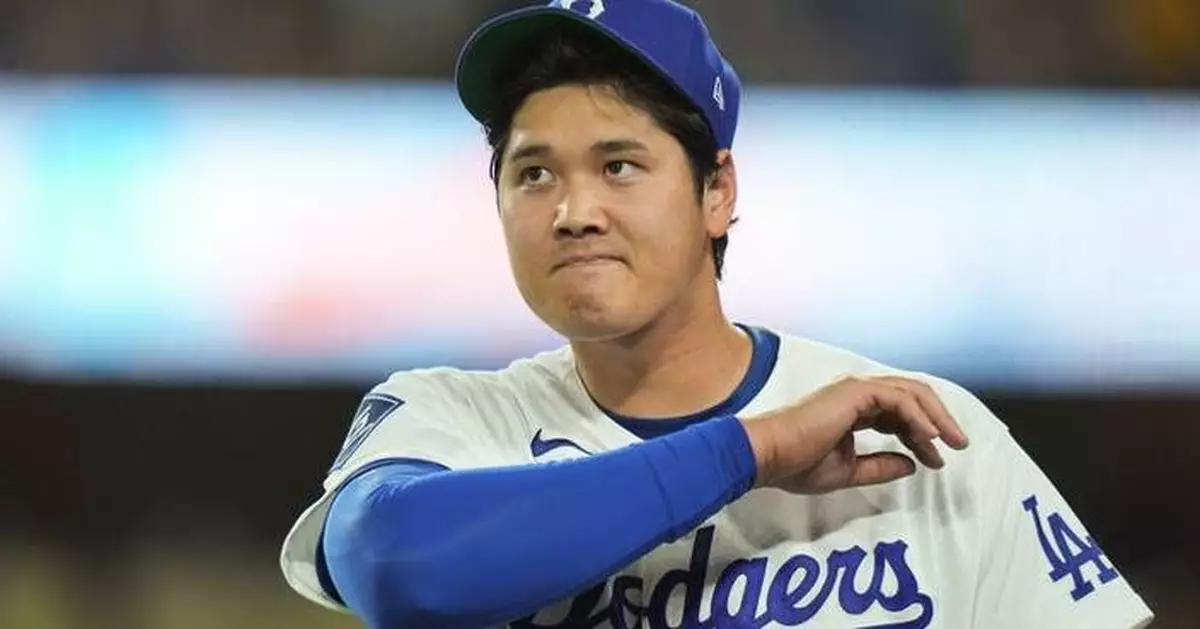
LOS ANGELES (AP) — Shohei Ohtani struck out 10 as the starting pitcher for the Los Angeles Dodgers on Wednesday night, when he was held out of the lineup as designated hitter after getting hit by a pitch this week.
His 22 swing and misses against the New York Mets were a career high with the Dodgers. He struck out the side in the sixth inning on 14 pitches in the Dodgers' 8-2 victory. The right-hander allowed one run and two hits in six innings.
Click to Gallery
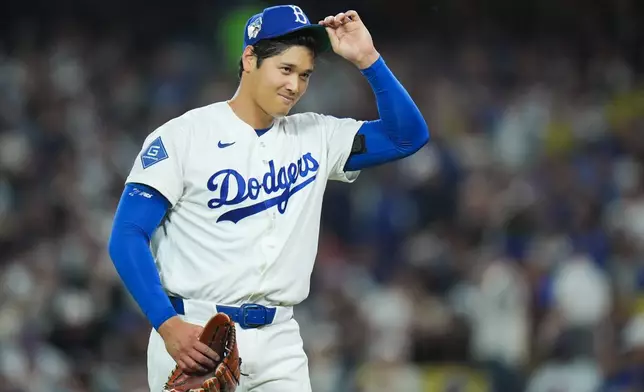
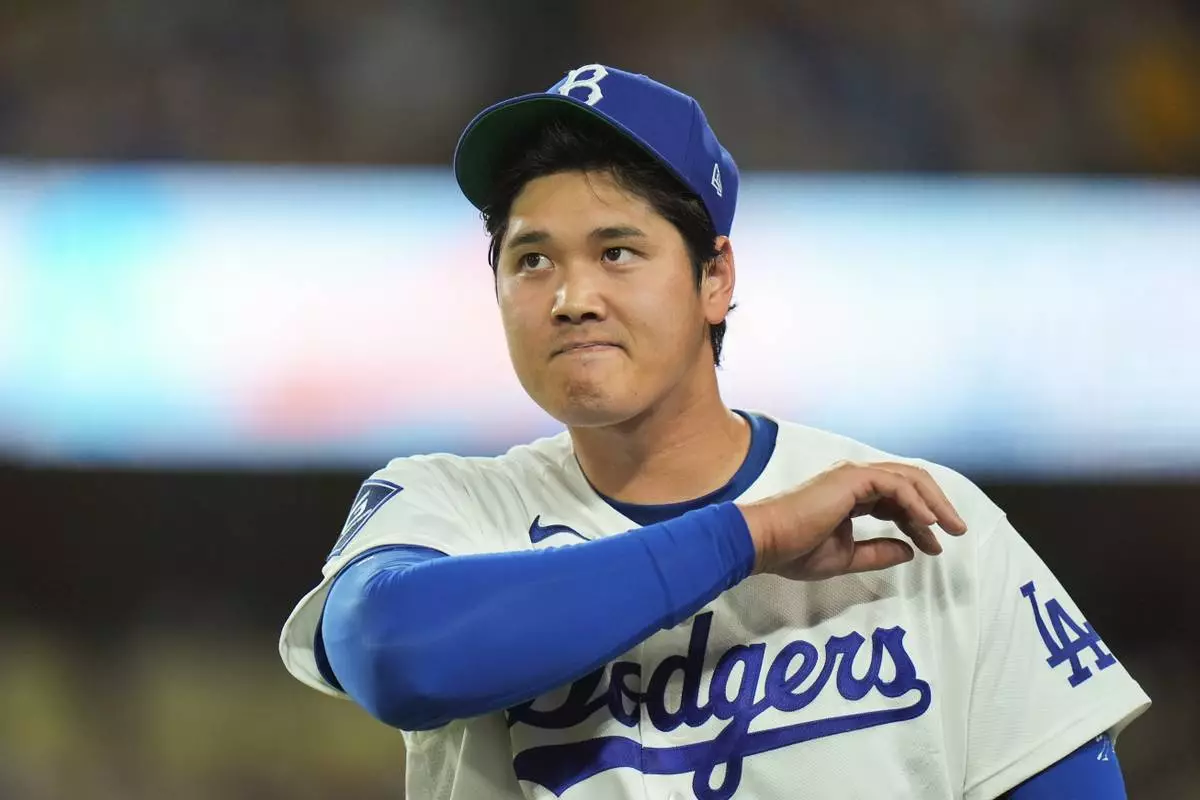
Los Angeles Dodgers starting pitcher Shohei Ohtani adjusts his hat as he walks off the field after the third inning of a baseball game against the New York Mets Wednesday, April 15, 2026, in Los Angeles. (AP Photo/Jae C. Hong)
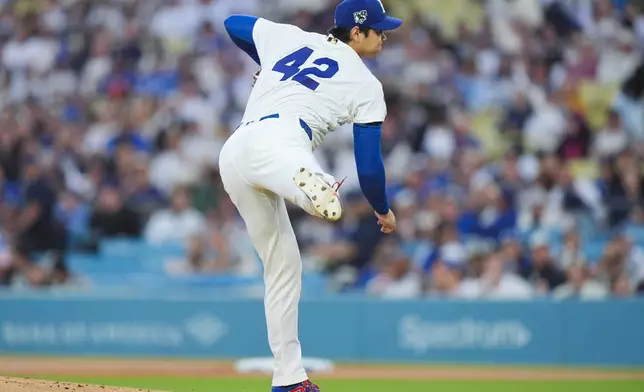
Los Angeles Dodgers starting pitcher Shohei Ohtani follows through on his pitch against the New York Mets during the first inning of a baseball game Wednesday, April 15, 2026, in Los Angeles. (AP Photo/Jae C. Hong)
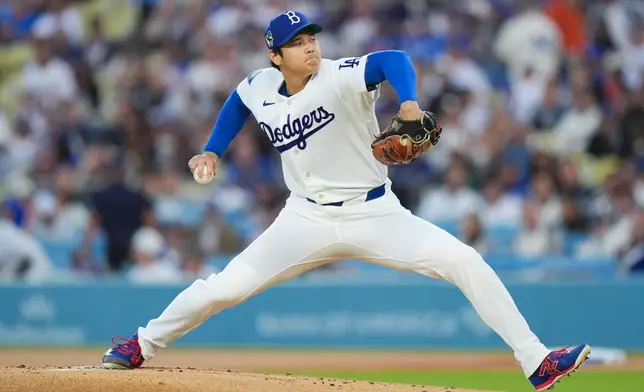
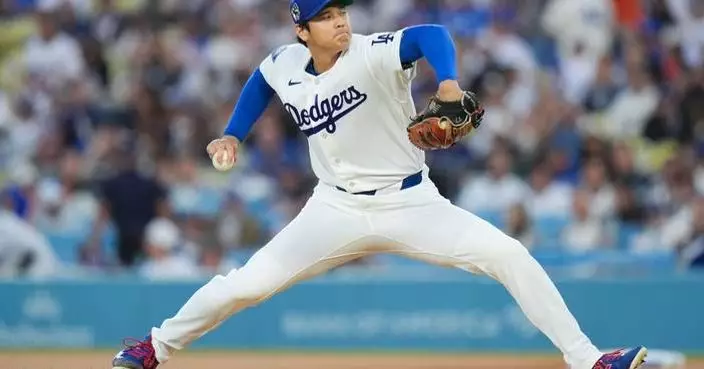
Los Angeles Dodgers starting pitcher Shohei Ohtani throws against the New York Mets during the first inning of a baseball game Wednesday, April 15, 2026, in Los Angeles. (AP Photo/Jae C. Hong)
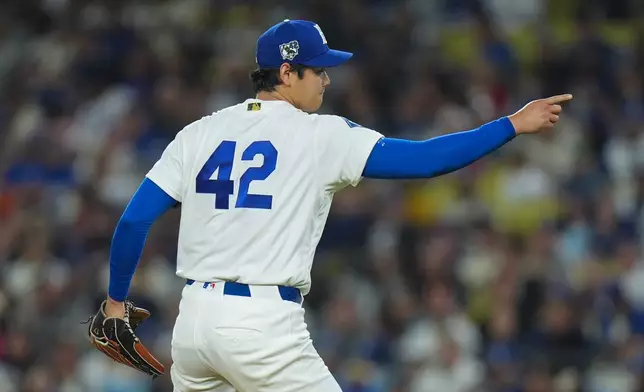
Los Angeles Dodgers starting pitcher Shohei Ohtani points to catcher Will Smith after striking out New York Mets' Bo Bichette to end the sixth inning of a baseball game Wednesday, April 15, 2026, in Los Angeles. (AP Photo/Jae C. Hong)
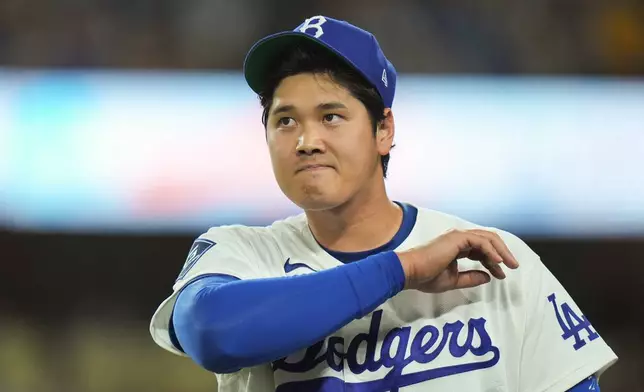
Los Angeles Dodgers starting pitcher Shohei Ohtani walks toward the dugout after the fourth inning of a baseball game against the New York Mets Wednesday, April 15, 2026, in Los Angeles. (AP Photo/Jae C. Hong)
“It was really good to watch him just focus on one thing,” manager Dave Roberts said. “Just channeling all that energy into pitching was helpful. The last couple outings I felt he was fighting himself a little bit at times, but tonight he was unusually good.”
It was the first time since May 28, 2021, with the Los Angeles Angels that Ohtani has not been in the batting lineup during a mound start.
“In between innings felt a little longer than normal. That was really the only difference,” Ohtani said through a translator. “I had pretty productive time being able to spend time on the game-planning side of things.”
Ohtani is still sore from being struck on the back of his right shoulder by a pitch from the New York Mets' David Peterson on Monday. The Japanese superstar let out a howl, but stayed in the game.
“If it weren’t for the hit by pitch, he would’ve been DHing and pitching tonight,” Roberts said before the game. “But I do think that just to be able to pitch and focus on that will be a benefit for the mind and the body, and hopefully, we’re just in a little moment of fatigue and we can get past it.”
Ohtani didn't ice his shoulder after the game, which Roberts said was a good sign.
Roberts said Ohtani has felt progressively better since Monday. But the training staff, coaches and Roberts felt it was better for him not to hit in the series finale, although Ohtani was initially surprised to hear the decision.
“Because I’ve never asked him to pitch and not hit,” Roberts said. “I think that he understands that I’m making a decision that’s best for the player, for him, and for the team.”
Ohtani is 0 for 7 at the plate since getting hit.
His career-best on-base streak reached 48 games after he was intentionally walked in the eighth inning Tuesday. It's the fourth-longest streak in franchise history.
Roberts expects Ohtani to be back hitting and pitching in his next start, although he said he would consider giving Ohtani a hitting break again on a night when he's pitching at some point in the future.
“It's got to make sense to not have your best hitter not in the lineup,” Roberts said. “Then the question is when he does hit, on days that he pitches, where’s the best for him to hit in the order? I think there’s fair arguments to both, to moving him down a little bit, give him a breather, let him get into the game. But I’m not prepared to make that decision quite yet. But it is something that I’m mindful of it.”
Dalton Rushing replaced Ohtani at designated hitter, and blasted a grand slam in the eighth inning.
“I'm not getting used to it,” Rushing said, chuckling. “He told me to hit a homer for him. I guess it worked out in the end.”
Asked if he would be a one-way player again, Ohtani smiled and said, “Yeah, totally. We have a really good DH hit today, so I’m very open to that.”
On the mound, Ohtani had his streak of 28 2/3 innings without allowing an earned run snapped on MJ Melendez's RBI double in the fifth.
“Just added a little more intensity after they scored a run,” Ohtani said. “But overall it felt really nice and easy and loose throughout the whole outing. So I think that’s the reason why I threw a little harder.”
Roberts noticed Ohtani dig deeper after giving up a second double to Melendez.
“It was 98 all night, some 99s and then in the fifth inning reaches back for 100,” Roberts said. “That's nice.”
Ohtani made his Dodgers pitching debut last season, going 1-1 with a 2.87 ERA and 62 strikeouts in 47 innings over 14 starts. His four-seam fastball averaged a career-best 98.4 mph last year.
Ohtani owns the longest on-base streak by a Japanese-born player at 48 games, surpassing Hall of Famer Ichiro Suzuki, who reached in 43 straight games in 2009.
AP MLB: https://apnews.com/hub/mlb
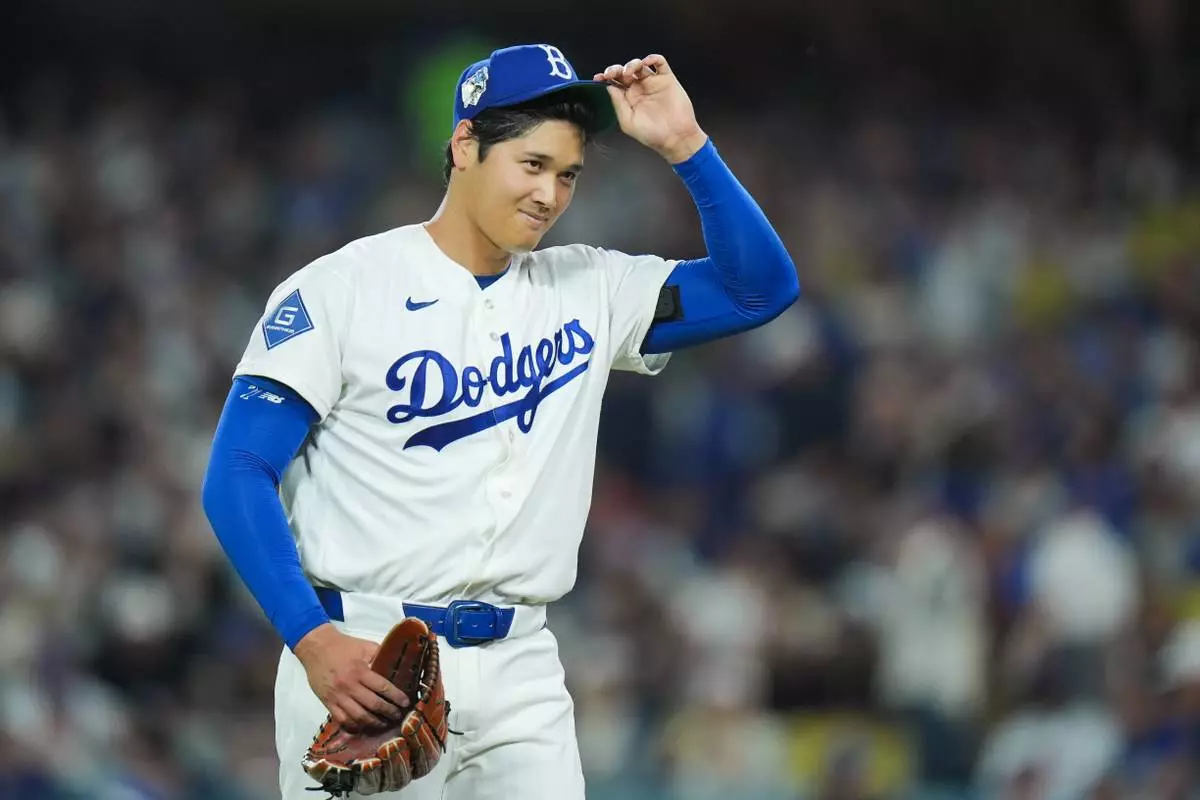
Los Angeles Dodgers starting pitcher Shohei Ohtani adjusts his hat as he walks off the field after the third inning of a baseball game against the New York Mets Wednesday, April 15, 2026, in Los Angeles. (AP Photo/Jae C. Hong)
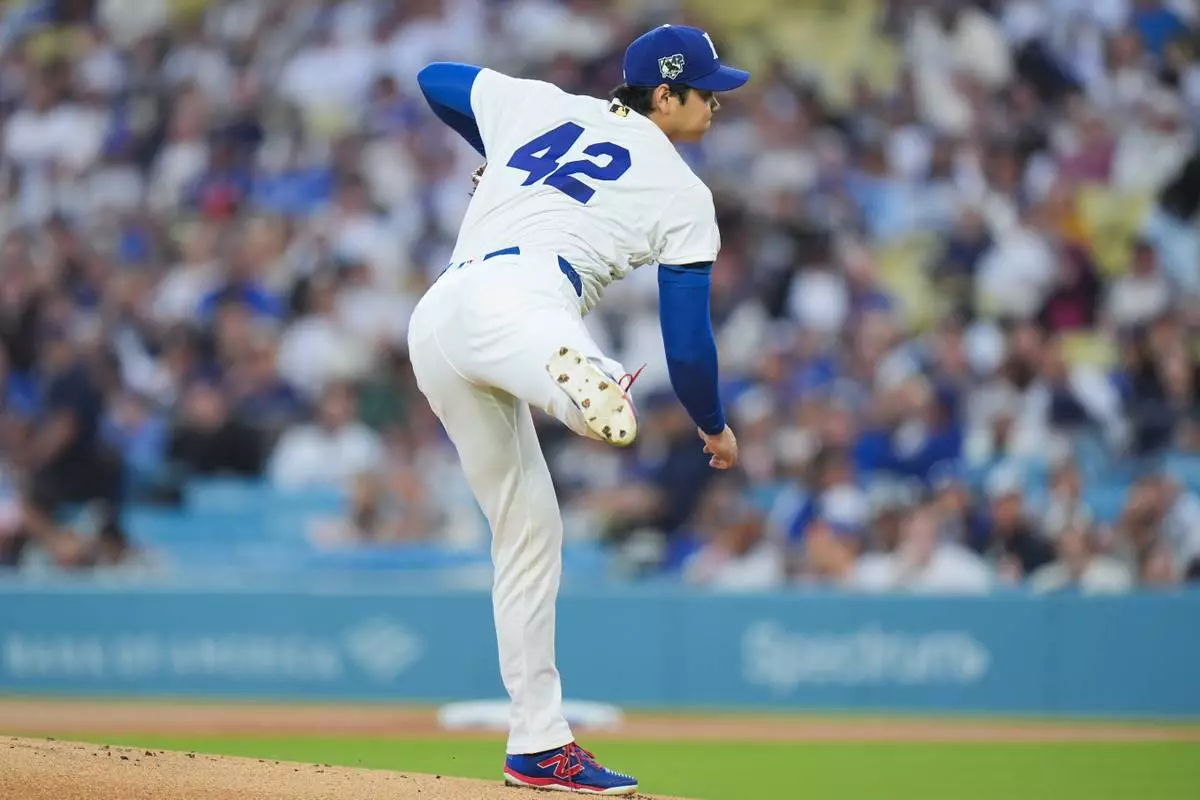
Los Angeles Dodgers starting pitcher Shohei Ohtani follows through on his pitch against the New York Mets during the first inning of a baseball game Wednesday, April 15, 2026, in Los Angeles. (AP Photo/Jae C. Hong)
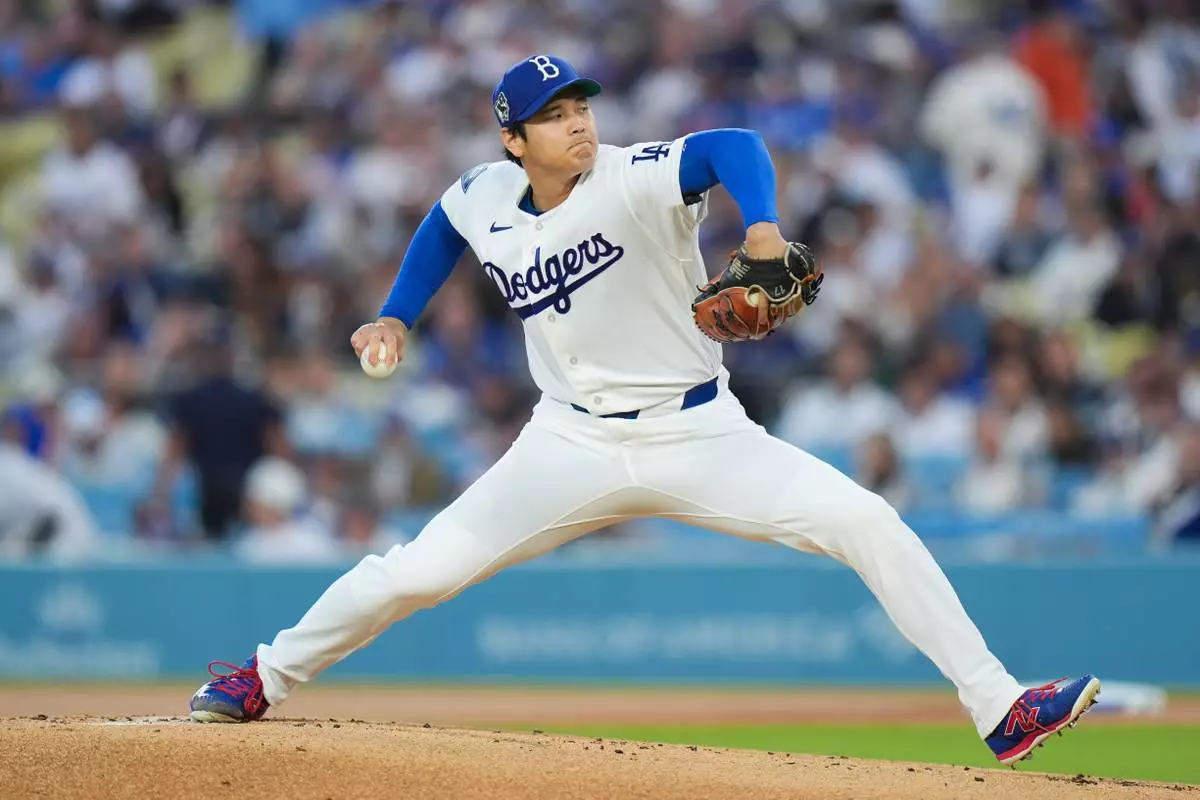
Los Angeles Dodgers starting pitcher Shohei Ohtani throws against the New York Mets during the first inning of a baseball game Wednesday, April 15, 2026, in Los Angeles. (AP Photo/Jae C. Hong)
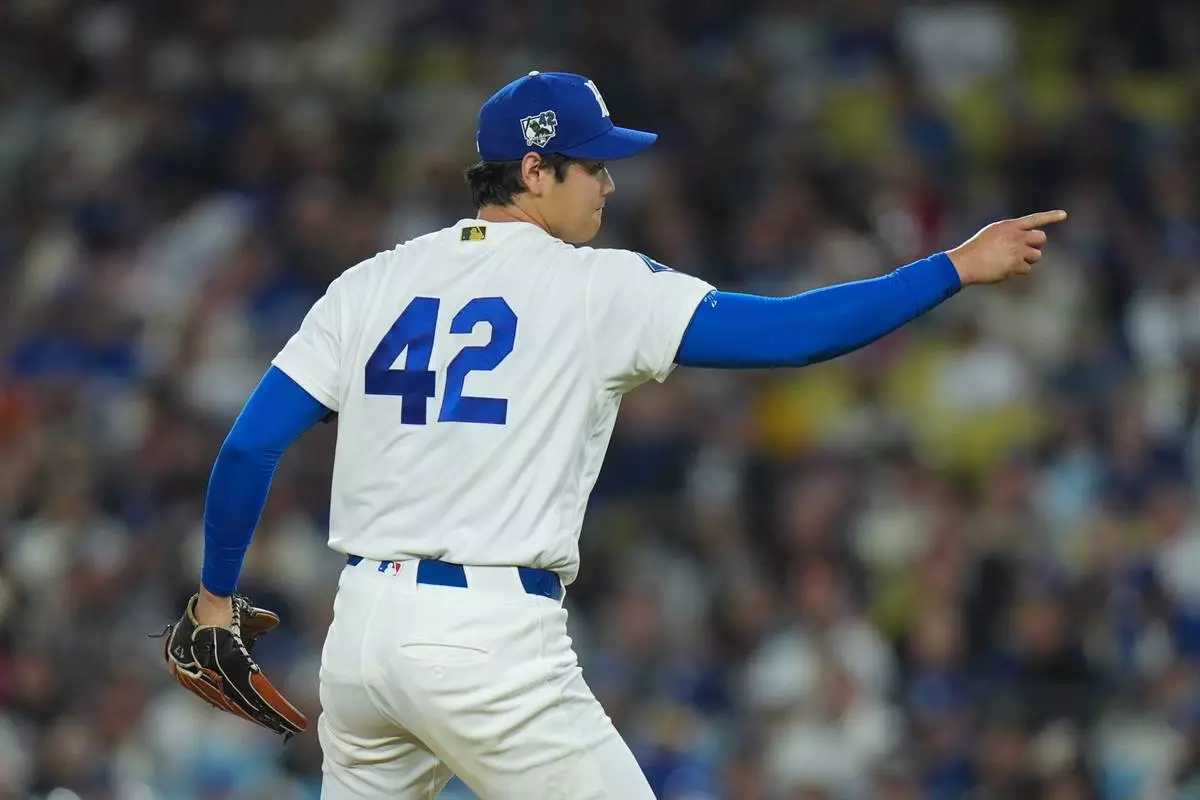
Los Angeles Dodgers starting pitcher Shohei Ohtani points to catcher Will Smith after striking out New York Mets' Bo Bichette to end the sixth inning of a baseball game Wednesday, April 15, 2026, in Los Angeles. (AP Photo/Jae C. Hong)
Los Angeles Dodgers starting pitcher Shohei Ohtani walks toward the dugout after the fourth inning of a baseball game against the New York Mets Wednesday, April 15, 2026, in Los Angeles. (AP Photo/Jae C. Hong)